Tag Archives: St. Louis Cardinals

Pete Childs’ Pitch

27 Feb

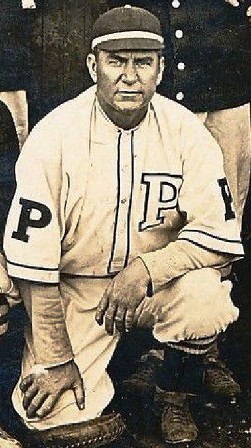
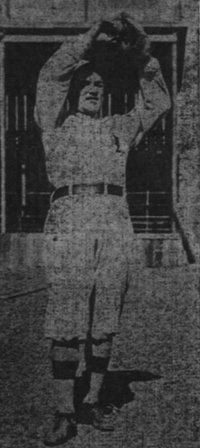
After seven seasons in the minor leagues, 29-year-old Peter Pierre “Pete” Childs made his debut with the St. Louis Cardinals had a brief big league career as a second baseman with the Cardinals. Chicago Orphans and Philadelphia Phillies in 1901 and ’02.

Pete Childs

Pete Childs

He then returned to the minor leagues for more than a decade and became manager with the Portsmouth Cobblers in the Ohio State League, where he also played infield and occasionally pitched in relief.  It was as a member of the Cobblers where he had, arguably, the most efficient relief appearance in the history of organized baseball.

On June 18, 1910, Portsmouth was losing 4 to 3 to the Marion Diggers when the diggers came to bat in the bottom of the eighth.  Portsmouth pitcher Frank Harter gave up four hits and hit a batter; the Cobblers also committed an error.  Three runs had scored and the bases were loaded with no one out.

With his team down 7 to 3 The Marion Star said the manager and second baseman “Childs essayed to do the pitching and traded places with Harter.”

With the bases loaded, Childs faced Marion outfielder William Colligan. He threw one pitch.  The Portsmouth Evening Times said:

“Colligan smashed the first ball to the fence in center field, and (Portsmouth’s Frank) O’Day went up against the fence and made the catch with one hand.  (Emmett “Turk”) Reilly had gone to second and (August “Gus”) Epler counted from third.”

O’Day threw to the cutoff man, Wesley Hornung; he threw to first to put out Reilly, who stood on second with teammate Al Hummel, and first baseman William Scudder threw to third baseman Ed Conwell for the triple play.

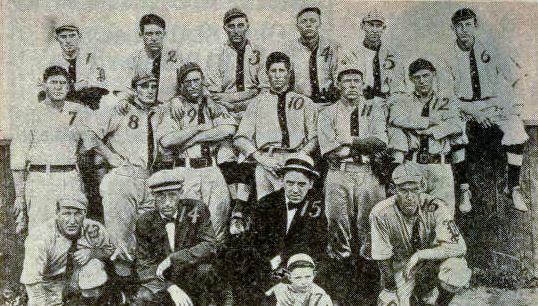
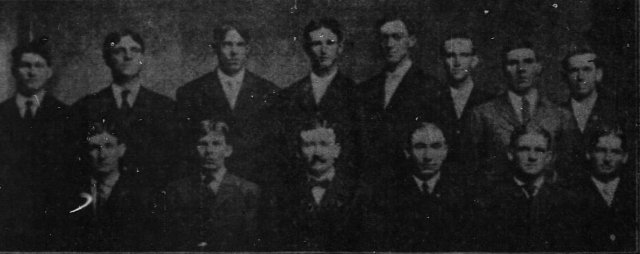
The 1910 Portsmouth Cobblers, Manager Pete Childs 7.  Wesley Hornung 1, Frank Harter 4, William Scudder 5, Frank O'Day 8 and Ed Conwell 16.

The 1910 Portsmouth Cobblers, Manager Pete Childs 7. Wesley Hornung 1, Frank Harter 4, William Scudder 5, Frank O’Day 8 and Ed Conwell 16.

Despite the triple play, Childs’ Cobblers dropped a doubleheader that day but went on to win the Ohio State League championship with an 86-52 record.  Childs won three championships during his five seasons as Portsmouth’s manager.

Lost Pictures: Dode Paskert Plays Ice Baseball

20 Feb

dode

Ice Baseball made its first appearance in the winter of 1866 when the Athletic Baseball Club of Philadelphia played a game on ice against a “picked nine’ comprised of other local baseball teams.  Games were played occasionally over the next 50 years, but the game never caught on.

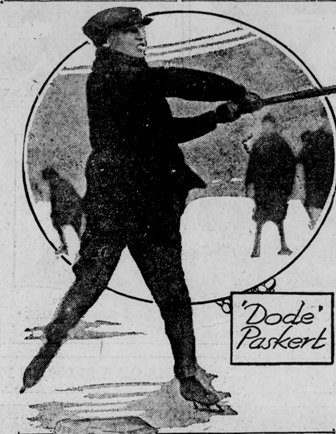
That changed briefly the winter following the 1919 season when the game, along with Ice Boxing, became a sensation in Cleveland.  The Cleveland Press said the biggest star among the “many ice baseball clubs” was Chicago Cubs centerfielder, and Cleveland native,  George “Dode” Paskert “an expert skater (who) says the exercise he is getting is going to put him about a month ahead” of his teammates.

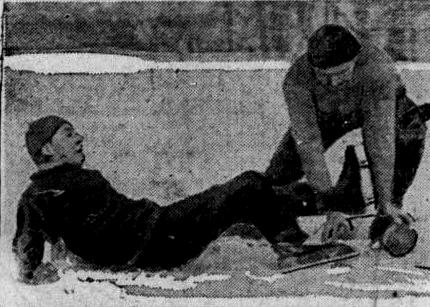
Unidentified Ice Baseball players in 1920 photo.

Unidentified Ice Baseball players in 1920 photo.

The paper said Cleveland Indians players Bill Wambsganss and Jack Graney played, and that Ray Chapman, the Indians second baseman,  and William “Pickles” Dillhoefer, catcher for St. Louis Cardinals would be joining teams.

Indians Manager Tris Speaker umpired at least one game.

Like every other short-term Ice Baseball craze, the game quickly faded in Cleveland.

Dode Paskert

Dode Paskert

As for Paskert, after a horrible 1919 season–.196 in 88 games–the 38-year-old seems to have benefitted from his “extra exercise.”  He hit .279 in 139 games in his final full season in the major leagues.


“Signals had a lot to do with our Winning the Championship”

16 Jan

George Stallings had been accused of being a sign stealer.  And, when he finally won his first and only championship with the miracle Boston Braves in 1914—the team was 35-43 and in eighth place on July 18—his shortstop, Walter “Rabbit” Maranville claimed sign stealing was a part of the team’s success.

Rabbit Maranville

Rabbit Maranville

The Boston Post quoted Maranville speaking to a group from Boston College during the winter after the team’s World Series victory:

“Signals had a lot to do with our winning the championship.  We had signals of our own, of course, and so far as I know they never were solved consistently.  We were able to get the meaning of the signals of the other team in nearly every other city of the league.  In St. Louis we knew almost every move that the other fellow was going to make, and that helped a lot.  Their signals were very easy.  Other teams had harder signals, but we managed to get most of them, while the other side was doing the guessing.”

Whether or not sign stealing played a part, the Braves were 9-1 (with one game ending in a tie) in their last 11 games against the St. Louis Cardinals and their “very easy” signals.

While Stallings never confirmed Maranville’s claim, he did tell The Boston Globe that winter that took great pains to ensure that their signs weren’t stolen in the World Series:

George Stallings

George Stallings

“Although we had a set of signals that I don’t think any ballclub in the world could have gotten on to we heard rumors that the (Philadelphia) Athletics had been tipped off to them.  We framed up an entire new set, and a coacher or base runner could have looked square into the catcher’s glove and never had gotten these.  (Connie) Mack’s men failed to get a sign of ours in the series so far as I know.”

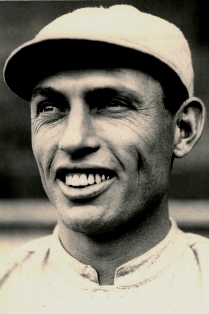
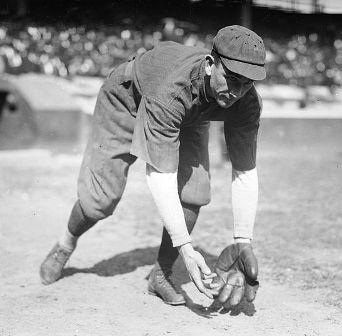
Homer Hausen

14 Jan

When Homer Hausen of the Sioux City Cornhuskers hit Omaha Omahogs catcher Bill Wilson in the head with a bat it was the culmination of a feud a over a woman.

While initial reports said Wilson was near death, the catcher made a full recovery.

In the aftermath of the July 1900 incident, Hausen was blacklisted by the Western League, joined a semi-pro team in Rock Rapids, Iowa, and was reported to have married the object of the feud.

If the wedding happened, as reported by The Associated Press, it didn’t last—there is no record confirming the marriage took place, and there is a record, six years later, for Hausen’s marriage to his wife Nellie.

Hausen went to Utah in 1901 and joined the Ogden club in the newly formed Inter-Mountain League; then returned to the Western League in 1902, splitting time between the Denver Grizzlies and Colorado Springs Millionaires.

During his time in Ogden in 1901 The Deseret News said Hausen seemed to “have trouble wherever he goes,’ with Utah fans:

“This happened again yesterday afternoon at Lagoon and Hausen attempted to reply to the taunt.  That only made matters worse and he got it harder than ever.  He remarked that some of the rooters were ‘Salt Lake curs,’ and said that he would ‘spoil the face of one dirty cur.’ before he left the state.”

Despite his problems with the state’s  fans, he returned to Utah in 1903, and became involved in another incident involving a bat to the head.

Homer Hausen

Homer Hausen

This time he was on the receiving end.

On June 28 Hausen was behind the plate for the Ogden team in a Utah State League game against Salt Lake City in Ogden.

The Desert News said:

“A most brutal and murderous assault took place yesterday afternoon on the Glenwood park ball grounds when George Marshall, one of the Salt Lake baseball team maliciously struck Hausen of the Ogden baseball team over the right side of the head with a baseball bat, breaking Hausen’s upper jaw and terribly battering his face.“

The Salt Lake Herald said:

“(Pitcher Erven “Si”) Jensen delivered one that went wide of the plate and was called a ball…Hausen had returned the sphere to Jensen and was squatting back, apparently giving the signal to Jensen for the next delivery when Marshall whirled and brought his bat down on the catcher’s face…Marshall was quite excited and shouted to the grandstand that Hausen had called him an insulting name.”

The blow broke his cheek bone below his right eye—rather than his “upper jaw”—had been broken, and “But for the mask the blow might have killed Hausen.”

From an Ogden jail cell, Marshall told a reporter from The Herald he “resented” a name Hausen had called him but, “did not mean to strike hard enough to break any bones.”

The Deseret News said the incident was the result of a long-standing feud between the players:

“Yesterday morning, it is stated, the two men had words in a cigar store, in this city, which almost resulted in blows, and it is also stated that the police have proof that Marshall has made the statement that he would hit Hausen the first chance he got, and it is fully believed by those who saw the murderous blow struck yesterday that Marshall intended to kill Hausen.”

Unlike Hausen, who three years earlier, avoided any legal action in Iowa, Marshall was charged with assault with a deadly weapon, and was unable to make bail.  Despite the serious charge, and the alleged “proof” of intent the police were said to have, the charges were reduced to assault and battery and a sympathetic judge “took into consideration the boy’s age—18—and the fact that he had already served considerable time in jail (nine days)” and sentenced Marshall to time served and a $50 fine.

It’s unknown what became of Marshall after his release.

Hausen continued the life of an itinerant early 20th Century ballplayer.  He returned to Iowa late in 1903, then back to Salt Lake City in 1904, for his best season.  He hit .318 for the Salt Lake City Elders in the Pacific National League, and his contract was purchased by the St. Louis Cardinals, but was returned to the minor leagues early in the spring.

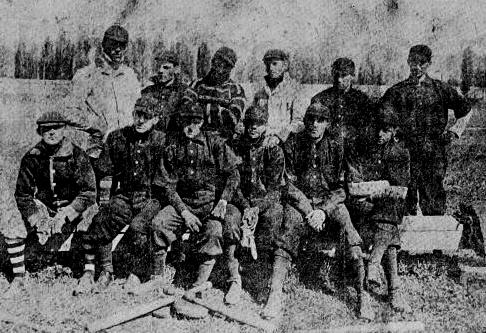
The 1904 Salt Lake Elders, Hausen is standing second from the left

The 1904 Salt Lake Elders, Hausen is standing second from the left

Hausen spent time in the Southern Association and Central League before returning to Utah in 1909.  He played several more seasons of semipro ball until retiring to a farm in Rupert, Idaho.  He died there in 1935.

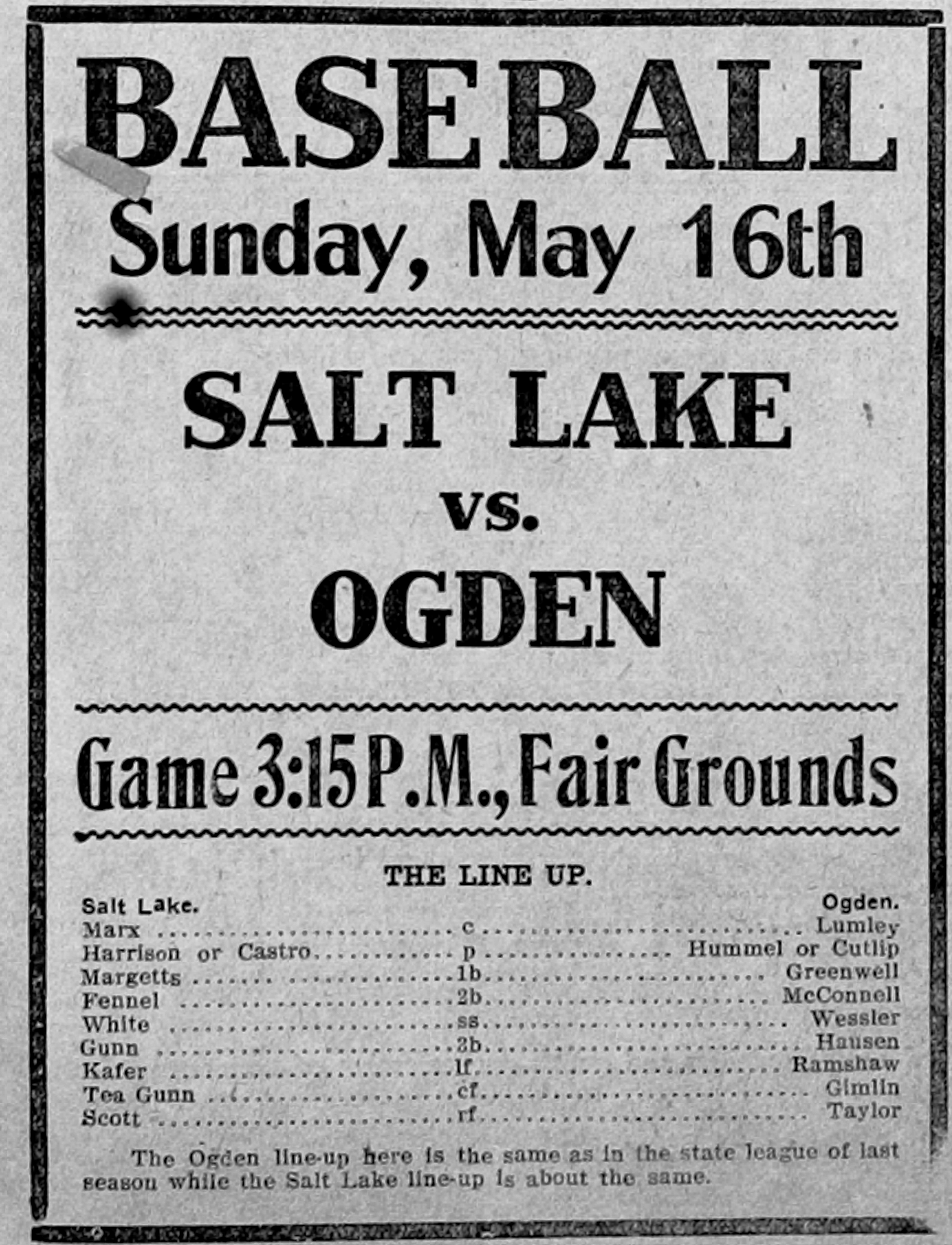
Advertisement for a 1909 Utah State League game between Salt Lake City and Ogden.  Hausen played third base.

Advertisement for a 1909 Utah State League game between Salt Lake City and Ogden. Hausen played third base for Ogden

Despite his early trouble with fans in Utah, they seemed to have warmed to him later in his carer;

During one of his many stints playing in the state, The Salt Lake Tribune said of Hausen:

“No better or more faithful ball player ever stepped on a Utah diamond.”

Things I Learned on the Way to Looking up other Things #13

22 Dec

Chief Meyers on the Plight of the Native American, 1913

John W. McConaughy, the former sports editor of The St. Louis Post-Dispatch, was no longer writing about baseball regularly as the New York Giants prepared to face the Philadelphia Athletics in the 1913 World Series.  McConaughy, who was the Washington correspondent for The New York Journal, was enlisted by the paper to write about some of the key figures of the series.

The result was, in the case of John “Chief” Meyers, a profile that went beyond a typical baseball story:

Chief Meyers

Chief Meyers

“Meyers is one of the coolest, shrewdest and quickest thinking catchers that ever came to the big leagues.  He has both gray matter and gumption, and the one is useless without the other in baseball as elsewhere.  He has a fund of general information that runs from national politics to the philosophy of Plato, and a delicately adjusted sense of humor, and these two combine to give him a good perspective of the national game.”

[…]

He is ready to fight any time for justice and fair play and he is so good-natured that he isn’t seriously annoyed when the fans perpetrate that bum war-whoop every time he comes to bat.

[…]

“One day in Cincinnati he asked the writer to go out to the art museum with him.  We came upon a bronze—an Indian turning to shoot an arrow at his pursuers.

“’There’s the idea.’ He said, pointing to the warrior.  ‘They never learned how to fight.  They had nothing but the willingness.  If Tecumseh had been as big a man as Napoleon he would have killed off the medicine men as his first official act, learned the white man’s style of warfare—and there would have been an Indian nation here today.

“’I don’t mean that the white man would not have been here, too.  But with a few leaders—real big men—our fathers would have come to see that the white man’s type of civilization was the highest, just as the (Japanese) have done.  We would have had great states and communities in the union, and we would have been useful, progressive citizens.

“’As it is the Indian is robbed by agents and shifted from reservation to reservation whenever anyone happens to want their land.  Tribe after tribe is scattered, and in another hundred years my people will have gone the way of the Aztecs.’

“Still, there will always probably be a few fans who will think it bright to pull the war-whoop when the Chief comes to bat.”

Tom Lynch Cracks Down, 1910

In June of 1910, The Associated Press said that after a 5 to 4 New York Giants victory over the St. Louis Cardinals, umpires Jim Johnstone and August Moran “stood in front of the press box and made remarks about the baseball writers.”

National League President Thomas Lynch, who had announced his intention to “break this habit of having players call the arbitrators bad names” said in response:

“I also will not stand for umpires talking back to spectators or taking it upon themselves to criticize newspaper men.”

National League President Thomas Lynch

National League President Thomas Lynch

He fined Johnstone and Moran $25 and $15 respectively for the incident.

In that era of newspapermen as frustrated poets, George E. Phair, then of The Milwaukee Sentinel, was one of the most prolific, often including a poem in his articles.  He dedicated the following verse to the National League President:

Old Thomas Lynch, who runs a league,

     Would propagate urbanity;

In fact, Sir Thomas would intrigue

     To curb the umps’ profanity.

He warns his umpires while within

     The baseball scribes vicinity

To speak no words that reek of sin,

     But emulate divinity.

He tells them not to harm the scribes,

     Nor flout at their ability;

Nor pester them with jokes or jibes;

     Nor laugh at their senility.

He plasters fines upon his umps

     For showing their ferocity

And calling scribblers ‘mutts’ and ‘chumps’

      With Teddy-like verbosity.

The veteran Sir Thomas is

     Most generous and affable,

But we’re inclined to think that his

     Solicitude is laughable.

The ump may blunder now and then

     And break into profanity;

The scribbler jabs him with his pen

     And drives him to urbanity.

Comiskey Tells a Tommy McCarthy Story, 1899

George Erskine Stackhouse, the baseball editor of the editor of The New York Tribune, spoke to Charles Comiskey in 1899 and found him in a “somewhat reminiscent mood.”  Comiskey told a story Tommy McCarthy when the two were with the St. Louis Browns:

Tommy McCarthy

Tommy McCarthy

“I heard in Chicago the other day that tom is in Boston, as fat as a Tammany alderman, and making money out of a big bowling alley.  (Hugh) Duffy owned an interest in it, but they say Tom bought him out.  I had Tom with me in St. Louis.  And say, St. Louis is the best town on earth for a winner.  They used to distribute among the players every season watches and rings and studs and pins enough to stock a jewelry store.  There was a diamond medal offered one year for the best base runner on the Browns.

“Tom McCarthy was quite a boy to steal bases, and after the medal was offered he wouldn’t run out his hits.  If he made a two-bagger, he would stop at first, and if he slammed the ball for a triple, he would manage to bring up at second, so as to get a chance to steal a base.  Of course, after a bit, I got on to him, and I had to warn him that if he didn’t stretch those hits I would have to lay him off altogether.  That helped some, but he was always hanging back when he thought he could get away with it.  I remember once that he had a chance to go down to second on a wild throw to first, and what does he do but toss his head and drop off his cap, so that he could stop and come back after it and stick at first.  He won that medal.”

“This Fellow has about as much Judgment of Balls and Strikes as a Six-year-old Kid”

10 Sep

Umpire baiting was an art form for managers like John McGraw.  In 1906 Tim Murnane wrote in The Boston Globe about the way McGraw, and his players, intimidated a first-year umpire named John Conway during a game between the New York Giants and Boston Beaneaters.

On May 1 the Giants had defeated the Beaneaters 7 to 5, and according to Murnane:

“I was very much interested with the tactics of the Giants in a game here, when they found the clever Irvin Young in the box, and knew it would take extra work to defeat the local team.

“Umpire Conway was behind the bat in this game, and the New York boys went after the young umpire from the first ball pitched until the last man went out.  Conway was consistently giving Young the small end of the decisions on balls and strikes, and yet the New York men tried to make it appear that he was giving them a terrible roast.  The Giants worked like sailors, never letting up;  in fact, their good work with the stick and on the bases was commendable in every way, and what they were saying to the umpire could only be heard in the front seats, and perhaps that was a good thing for the game.”

Tim Murnane

Tim Murnane

Murnane said the actions of the Giants were reminiscent of those of McGraw and other members of the Baltimore Orioles in the 1890s, but “this time it was umpire and not their fellow players,” who were the target:

“As each man passed the umpire they would make some remark, until finally (Dan) McGann, (Roger) Bresnahan and McGraw were put out of the grounds by Conway.  Note the four names, all of Celtic origin, every man out for a salary, the umpire doing his best to please, and doing it certainly in a fair way to the visitors, and yet the trio must be doing something for effect, perhaps to give the umpire something to think of when he went to New York, or perhaps to affect his work in the next game.  There was an object in the uncalled-for nagging.  The result was that Pitcher Young was actually affected, and put up a weak all-round game as the contest went along, the Giants finally winning out as a result of his poor work.”

The Giants doubled-down on their harassment of Conway after the game was over.  Murnane said Fred Knowles, the Giants Secretary,

“(I)nformed me that the New York players complained of Conway’s breath, saying that he had been drinking and was under the influence of liquor during the game.  What are the honest facts?  A friend of mine at the same hotel with Conway and Bob Emslie (the other umpire) told me that he was with the umpires the night before, as well as that morning, and heard them refuse to take a drink of any kind.  I was speaking to Conway just before the game, and took pains to note if he had been drinking, and I can say positively that he had not.”

Murnane’s comments are curious, given that he said Knowles informed him of the accusation after the game, yet he claims he “took pains” to confirm whether Conway was drinking before the game began.

“Now, doesn’t it seem unfair to pass around cold-blooded lies about an umpire doing his duty, to a management who naturally listens to stories of this kind, and then tries to make it easy for players?  I could forgive every act of the New York men, as they are out for blood, and are fine ballplayers, but I must pass up players who will try to harm a good, honest fellow, for Conway is a good umpire and had the nerve to pick the big fellows out, and no two men in the business need the call-downs that McGann and Bresnahan do.”

Murnane’s Boston colleague, Jacob Charles Morse of The Herald, called the Giants actions “reprehensible,” but said the umpire was partially to blame:

“Had Conway started in at the very first a lot of trouble might have been obviated, but it was not until he had allowed the New Yorks to kick at strikes and decisions, to leave their places, something strictly forbidden by the rules, and to bellow like bulls.  Bresnahan could be heard all over the field telling the umpire to ‘get out.’  Early in the game a bunch gathered around the umpire without the least expostulation, and went back to their places when the seemingly felt like it.”

Despite McGraw, McGann and Bresnahan receiving three-game suspensions for their actions, Morse said “The penalty imposed for the actions of the individuals was ridiculously light; not at all commensurate with the gravity of the offense.”

Things did not get any easier for Conway.

He had another run-in with the Giants at the end of June which resulted in another McGraw ejection.

He was also assaulted by two different St. Louis Cardinals; William “Spike” Shannon in June, and Mike Grady in August.  The August incident, during a game in Boston, required police to escort Conway from the field and resulted in a three game suspension for Grady.

Mike Grady had two altercations with Conway

Mike Grady had two altercations with Conway

After a second incident with Grady; this time in Pittsburgh on September 4, The Pittsburgh Press took the side of the Cardinals catcher, and harshly criticised Conway:

 “Umpire Conway officiated the game at Exposition Park yesterday afternoon.  To be more exact, a man named Conway attempted to imitate a real umpire, but the attempt was a failure…this fellow has about as much judgment of balls and strikes as a six-year-old kid, and he makes some of the weirdest mistakes ever seen.  To make matters worse, Conway thinks he is funny and laughs at his poor decisions…The Press never condones umpire baiting, but Conway called one strike on Grady that was not within two feet of the plate, and it is little wonder indeed that Michael was exasperated.

“It is to be hoped that Conway’s career as an umpire in the National League will end with the present season.  There are a score more competent men umpiring in the minor leagues today.  Conway is not fit for the position he occupies.  He takes trouble with him wherever he goes, owing to his inefficiency.”

National League President Harry Pulliam apparently agreed; Conway was not retained for the 1907 season.

He joined the Eastern League in 1907, but trouble continued to follow him.  In June he was assaulted by Toronto Maple Leafs second baseman Tim Flood—which resulted in Flood serving 10 days in jail.

Tim Flood

Tim Flood


Less than a week later, after the Jersey City Skeeters scored a run in the ninth inning to beat the Newark Sailors 2 to 1, Conway was attacked by fans in Newark’s Wiedenmayer Park.  The New York Times said:

 “A mob waited after the game until Umpire Conway left the dressing room on the grounds for the train, and when he appeared in the street the mob hooted, hissed and threw mud at him.”

He was escorted to the train station by “a squad of policemen.”

Just weeks into the 1908 season Conway decided he had enough, and resigned.  The Sporting Life said he “quit umpiring to go into business.”

Conway never worked a professional game again, although he worked several Ivy League games before giving it up all together in 1910.  He died in Massachusetts in 1932–the same year McGraw, too ill to continue baiting umpires, resigned as manager of the Giants.

“Monte’s Baseball Religion”

27 Jun


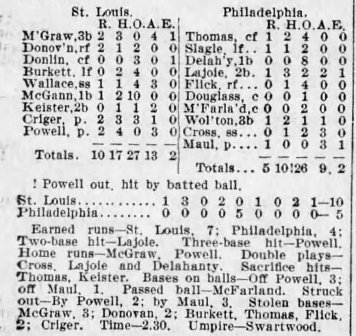
Even in a game dominated by superstitions some stood out.  The St. Louis Star reported on what Philadelphia Phillies shortstop Montford Montgomery “Monte” Cross thought was necessary for a rally—to the annoyance of some teammates– during a game with the St. Louis Cardinals in May of 1900:

Monte Cross

Monte Cross

“One of Monte Cross’ queer hobbies is that the bats must not be crossed when they lie in front of the bench…just as (Harry) Wolverton, the first man up in the fifth inning, stepped to the plate,  Cross looked at the pile of bats, and at one jumped into the air, shouting: ‘Four runs this time.  It’s a cinch.  Never failed yet.’

“’Sit down, you’re crazy,’ said (Al) Maul.

“’I tell you we’re going to get four runs this time.  Do you see that?’ he asked, pointing to the pile of bats.

“’See what?’

“’Why those four bats sticking out further than the rest.  That means we’ll get just as many runs.  Just you wait and see.’  Everybody laughed, but Monte was evidently very much in earnest, so they waited, all thinking how they’d kid him when the side was out.  Then Wolverton made a hit.

“’It’s a starter!’ cried Cross. ‘Now watch me.’ But Cross aired to (Mike) Donlin.  Then the next man walked.

“’There’s four hits coming sure,’ said Cross.  Just then (Roy) Thomas cracked a single scoring Wolverton.  Then (Napoleon) Lajoie and (Elmer) Flick got in their work, and the five runs were scored.

“’Whenever you see bats fixed that way look out for runs,’ observed Cross, triumphantly.

“’All right,’ replied (Ed) McFarland.  ‘Shove out about six of those sticks and we’ll win sure.’

“’That doesn’t go.  Don’t touch them for heaven’s sake!’  Fairly screamed Cross.  ‘The bat boy has to do it when he isn’t thinking.’

“The players all had a good laugh over the circumstance, and no doubt some of them became converts to Monte’s baseball religion.”

While the Phillies scored five runs during Cross’ “lucky” inning, it didn’t seem to matter to him that he failed to contribute to the rally, and the Phillies lost the game 10 to 5.

The Box Score

The Box Score

Jack Grim

2 Jun

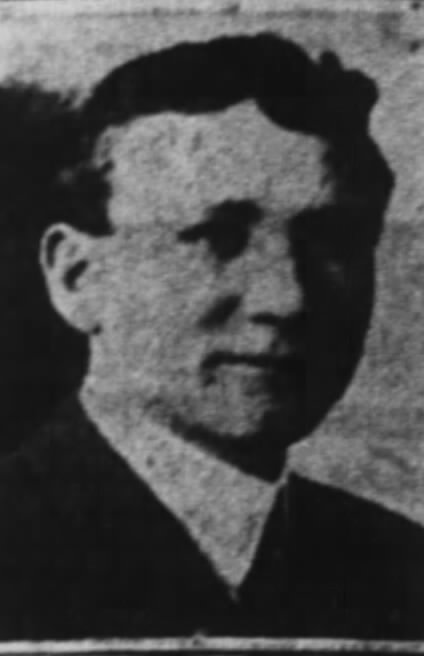
John J. “Jack” Grim never amounted to much as a player.  Statistics are nearly nonexistent for his playing career, and those that do survive are unimpressive; primarily a catcher, he played for all, or parts of nine seasons from 1894 until 1902.  The Cincinnati native made his mark, now all but forgotten, as a manager and executive.
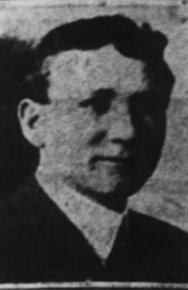
John J. "Jack" Grim

John J. “Jack” Grim

Often confused with former major league catcher John Helm “Jack” Grim—for example, most sources list John H. Grim as the manager of the 1904 Columbia Skyscrapers in the South Atlantic League, it was John J. Grim who managed that team, and during that season might have made his greatest contribution to the game.

Grim’s first managerial appointment was with the Anaconda Serpents in the Montana State League in 1900.  He guided the team to a second-place finish in the first half, and the club was in first place in the second half race on August 11, when Grim abruptly resigned.  The Anaconda Standard said Grim sent a letter to the team directors in which he charged “there is a feeling in certain quarters, against me.” He said:

“I cannot do myself justice while laboring under these conditions.”

Arthur “Dad” Clarkson, brother of Hall of Famer John Clarkson, replaced Grim; the team finished the second half of the season in second place under Clarkson.  Grim became an umpire in the league for the remainder of the season.

In 1901 Grim went to the West Coast with William H. Lucas, a former minor league pitcher who had been president of the Montana State League, to join Dan Dugdale to reestablish  the Pacific Northwest League; Lucas served as league president and Grim managed the Portland Webfoots to the championship, winning the pennant by 16 games.

The league expanded from four to six teams for 1902, and Grim was hired to manage the Spokane franchise, which had finished in last place (41-67) under three different managers in 1901.  The Sporting News said:

“(Spokane’s) stockholders have given (Grim) full power to act in signing players.”

The Sporting Life said Spokane fans were “feeling confident that (Grim) will this year sustain his reputation for always piloting winners.”  Despite the free reign, and high hopes, Spokane struggled, finishing in last place with a 46-75 record.

The following season, as a result of the West Coast baseball war—the California League expanded to the Pacific Northwest, becoming the Pacific Coast League—the Pacific Northwest League expanded into California and became the Pacific National League.  Grim managed the Portland Green Gages.

On July 1 the Portland franchised was, according to, The Oregon Journal “transferred bag and baggage to Salt Lake City.” In Salt Lake City Grim quickly wore out his welcome.

After it was reported in late July that Grim might be let go, six players, including the team’s star shortstop Charles “She” Donahue, went on strike.  They missed two games, but returned after the team’s president said: “he has no intention of letting Grim out.”  The harmony didn’t last and just weeks later Grim was released and fined $100 for what The Salt Lake Herald called “starting a mutiny within the ranks of the club.”

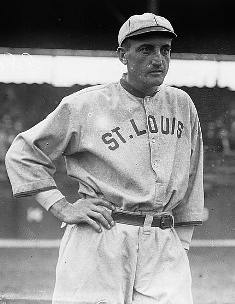
The trouble in Salt Lake wasn’t over.  Near the end of the season, Donahue’s contract was sold to the St. Louis Cardinals.  The sale was reportedly engineered by Grim after he was let go as manager.

The Herald said:

“What kind of a con game is Jack Grim trying to work on the Salt Lake ball club?  What right had Jack Grim, who was fired…got to sell Donahue to the St. Louis club?  How many more of the Salt Lake’s players is Grim trying to dispose of in the same way?  What did Grim do with the money he received from (Cardinals President Benjamin) Muckenfuss of the St. Louis team?”

Grim told The Cincinnati Enquirer he entered into negotiations with the Cardinals over Donahue on September 14. But The Herald noted:

“At that time Grim’s sole business in Salt Lake was to hang around with the ballplayers and try his best to create discord among them.  He had been fired long before.”

The National Commission ruled the sale/signing legal.  Garry Herrmann, chairman of the commission, said that in the contract he signed with Portland for 1903 “Donahue had a specified agreement that he was not (placed on the reserve list)” despite the fact that the Salt Lake team claimed he had already signed a contract for the following season.  As a result, there was nothing stopping Grim from delivering Donahue to the Cardinals, and the money he received—the amount was never reported—was his.

Grim was again involved in a new league in 1904, when he and fellow Cincinnati native Ed Ashenbach, helped form the first incarnation of the South Atlantic League—Grim managed the Columbia Sky Scrapers and Ashenbach managed the Charleston Sea Gulls in the six-team circuit.  Grim only lasted until mid-July as manager and finished the year as an umpire in the league.

It was that season that that he claimed he made his great contribution to the game.  According to Grim, he was the first person to alert the Detroit Tigers about a 17-year-old outfielder for the Augusta Tourists named Tyrus Raymond Cobb.

While Cobb was not sold to the Tigers until August of 1905, some credence for the claim was provided by Cobb himself in 1910, when an article appearing under his name—likely ghostwritten by Roger Tidden of The New York World—said Grim had tried to purchase his contract when he was struggling at Augusta, shortly after “I left home to show up the league.”

In 1905 Grim was one of the principal organizers of the Virginia-North Carolina League and managed the Greensboro Farmers—Grim lasted less than half a season and by August The Sporting Life said he was scouting for the Cincinnati Reds.

Grim finally found some stability in 1906.  He again helped found a league and owned and managed a club.  Grim’s Lynchburg Shoemakers won the Virginia League pennant in 1906—the team was led by pitcher Walter Moser (24-8), who would make the jump from the C-league Shoemakers to the Philadelphia Phillies in August.   But after a fifth-place finish and 1907, and a slow start the next season, Grim sold the team in July of 1908.
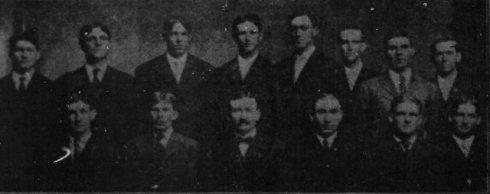
1906 Lynchburg Shoemakers, Virginia League champions. Grim is third from left on the bottom row.

1906 Lynchburg Shoemakers, Virginia League champions. Grim is third from left on the bottom row.

Just after selling the team, Grim’s wife reported him missing.  She told police in Louisville, Kentucky that she hadn’t heard from him for three weeks and thought he might be in Louisville after visiting family in Cincinnati.  Al Orth, the New York Highlanders pitcher, said he saw Grim in New York and told The Associated Press “He did not look like a man who was missing from anywhere.”
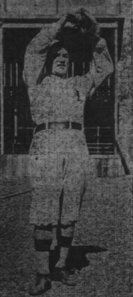
Al Orth

Al Orth


Grim eventually returned to Virginia and his disappearance was never explained.  Orth, who was from Lynchburg, returned there later that summer purchased an interest in the team and managed the club until early 1909 when he returned to the Highlanders.

For the next four years Grim bounced back and forth from team ownership (he managed, and owned part of two more Virginia League franchises (Portsmouth in 1910 and Newport News in 1912) and real estate speculating on the West Coast and in Virginia.

At the beginning of the 1912 season a small item in The Richmond Times-Dispatch hinted that there was trouble ahead:

“Jack Grim has a combination of troubles.  One is of the financial variety—well the other is nobody’s business.”

The financial troubles came to a head in August.  The Times-Dispatch said:

 “Because Manager J.J. Grim would not pay their salaries, all of the players of the Newport News baseball club except (Frank) ‘Deacon’ Morrissey, struck just before the scheduled double header between Newport News and Petersburg.”

After the game was awarded to Petersburg by forfeit, Grim’s co-owners removed him—outfielder William “Buck” Hooker was named manager for the remainder of the season.

At the end of the 1912 season, Grim found himself in an odd predicament.  The Cincinnati Enquirer said:

“Though minus a franchise, Jack Grim, formerly of Cincinnati, has a ball team under reservation, for he owns title to the players of the Newport News club…It develops that in the adjustment of the club’s affairs in August, Grim who was manager and part owner, got out without losing title to the players, though he lost the franchise.”

As a result, when the Cleveland Naps drafted third baseman Ray Bates from Newport News after the 1912 season, the draft price went to Grim.

It was the last good thing to happen to him; from there, Grim’s life spun out of control.

In October, he attended the World Series in New York (his wife later said he attempted to kill her during that trip).

In November of 1912 the Virginia League turned down his attempt to secure a franchise for 1913; next his effort to start a new league with teams in Virginia and the Carolinas fell through.

In addition to being unable to secure a franchise and running out of money—an effort to secure the New York-New Jersey League franchise in Kingston, New York also fell through–Grim’s wife had him arrested  during the first week of March 1913, and told a Lynchburg judge he had repeatedly “threatened Mrs. Grim with bodily harm.”  Grim was held in jail, but according to The Times-Dispatch “is doing everything possible to effect a reconciliation with his wife.”

Grim was released on bond after a week, but quickly rearrested, and by March 23 The Times Dispatch said:

“That a commission of lunacy will be summoned early this week to investigate the Sanity of john J. Grim, the well-known minor league baseball magnate , seems now to be a foregone conclusion…Since his incarceration Grim’s condition has grown so bad that there is no doubt in the minds of the jail attaches that he is insane…Grim has not had his clothes off in a week, and he spends his time in his cell singing, shouting, talking and pacing up and down, begging to be liberated.”

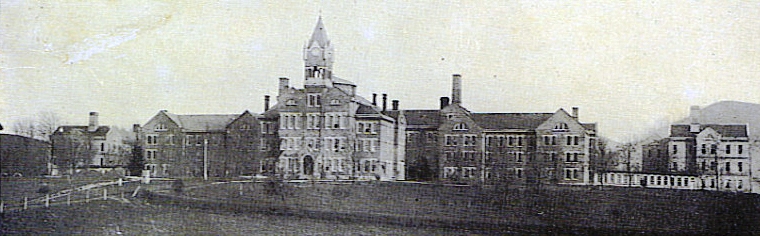
The “commission of lunacy” found Grim insane based on the testimony of Grim’s wife and a doctor named Albert Priddy, and ordered him sent to Virginia’s Southwestern State Hospital in Marion.  It was in front of the commission that Mrs. Grim related the story of the “attempt to murder her with a razor in New York City.”
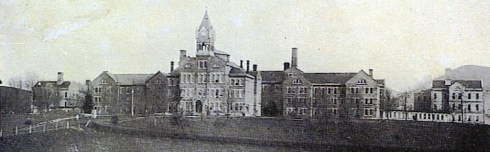
Southwest State Hospital, Marion, Virginia

Southwest State Hospital, Marion, Virginia

Contradictory reports about Grim’s condition came out during the next year.  The Associated Press said in August Grim was “A raving maniac…not far from death.”  A December story in The Cincinnati Enquirer said “he is improving rapidly and probably will be discharged at an early date…Grim expects to return to Cincinnati.”

Almost a year later, he was still in the hospital, and The Enquirer reported that “Grim is improving in health and expects to visit his Cincinnati friends soon.”

That item was the last newspaper reference to Grim; he was never released and died in the state hospital.

The doctor who testified that Grim was insane, Albert Sidney Priddy, was superintendent of the Virginia State Colony for Epileptics and Feebleminded in Madison Heights, Virginia.  The doctor, and that institution became infamous in the case of Buck v. Bell (the case was Buck v. Priddy until Priddy’s death in 1925; Bell was his successor at the State Colony).  The Supreme Court’s decision in the case–upholding the Virginia’s compulsory sterilization law– resulted in the forced sterilization of more than United States citizens in Virginia and states that enacted similar laws.

Baseball’s “Fountain of Youth”

16 Apr

John Brinsley “J.B.” Sheridan wrote for several St. Louis newspapers and The Sporting News from 1888-1929.

In 1917 he asked in The St. Louis Globe-Democrat:

“How is it that two young chaps come up together, one lasts a year or two, the other keeps on playing until he meets his sons and the sons of his pals coming up?”

Sheridan noted that Bobby Wallace was 43-year-old and in his twenty-fourth season–albeit as a reserve who appeared in just eight games for the Cardinals–while contemporaries like Jimmy Collins were out of the game for nearly a decade.  (Sheridan failed to mention or notice that Wallace was three years younger and started his professional career at age 20 while Collins began his at 23):

“Wallace has had a great career in baseball.  Only one man, A. C. (Cap) Anson has played longer than Wallace in the major leagues (Sheridan didn’t mention Deacon McGuire who also had Wallace beaten in years of service with 26—but he only played a total of 20 games in his final eight “seasons”) Anson did twenty-seven seasons, but had he not been his own manager he would not have done so many.  The old man could hit to the end, but for the last ten years of his major league career Anson was so slow and stiff that it is doubtful if any manager, other than himself would have employed him.”

Booby Wallace

Booby Wallace

Sheridan neglected to mention that “slow and stiff” Cap Anson managed to play in more than 1100 games in those last ten seasons when no manager “other than himself would have employed him,” and hit better than .330 in five of them–and would contradict himself on the “slow and stiff” part later in the same article.

He said, “Jack O’Connor did twenty-two years in the majors and was useful to the end.” (O’Connor only hit better .250 twice in his last ten seasons, never appearing in more than 84 games during that period)”

Despite the many misstatements, Sheridan’s article included interesting character sketches of several 19th and early 20th Century players (the veracity of those sketches can be judged with the above misstatements in mind).

“O’Connor was a really wonderful man.  He always retrained his diet during the playing season, but gave it full rein during the off season.  O’Connor had some appetite, too.  Usually he put on 20 pounds of extra weight every winter and regularly took it off every spring.  O’Connor must have taken off 500 pounds of flesh in the twenty-two years of his baseball playing.  He ate and drank like Gargantua during the winter, but denied himself like a monk in the spring, summer and fall.

(Napoleon) Lajoie, who did his 20 years [sic 21] in the majors, was like Wallace and (Jake) Beckley, an iron man.  (Lajoie) came from Breton peasant stock…The Bretons lived off the rocks and fishing grounds of Brittany, beaten by Atlantic spray long before the dawn of history.  No wonder then, that Lajoie is a hardy man (who) needed no conditioning in his youth.  He threw a couple, hit a couple and was ready for the fray.”

Sheridan said O’Connor’s former battery-mate Cy Young was “another physical wonder” despite being “rather soft and inclined to obesity later in life.”

“Cy never cared much for beer, the beverage of the old-time ballplayer, but he did not mind a little ‘red eye’ now and then In fact, the old boys say the farmer could pack more whiskey about him than any man they had ever known.”

As an example of Young’s prowess Sheridan said O’Connor told him a story about a night out in Boston:

“I drank beer while Cy drank whiskey. Drink for drink with me, but the last thing I remembered that night was that Cy put me to bed.

“I got up the next morning looking for sedlitz powder and something cooling.  I got the powder and I went into the breakfast room to get a grapefruit.  Then I saw Young behind a big plate of beefsteak with onions.  I turned and ran for the fresh air…Cy ate the entire steak, all the onions, a lot of bread and butter, stuck a strong cigar in his mouth and joined me on the sidewalk.

“What made you quit so early last night, Jack?  I was just getting’ goin’ good, when you said ‘Let’s go home I’m sleepy.’”

Jack O'Connor

Jack O’Connor

Sheridan compared Young’s career to that of Bill Dinneen:

“Dinneen came into the game seven [sic–nine] years after Young, was Cy’s teammate for four years [sic–five and part of a sixth] then dropped out (Dinneen played three more seasons with the St. Louis Browns, but his career was over after 12 seasons at age 33)

“Dinneen ate too well, and what ballplayers call the ‘old uric acid’ got him in the arm.  Yet Dinneen was one of the finest physical specimens that ever played ball.

“Some big fellows look strong but prove to be soft and unenduring.  Jack Chesbro was one of these.  Chesbro had three great years as a pitcher, and then broke down.  Jack was a soft-boned boy, with bad ankles and could not stick the route.

“Some men hold out in arm, legs and bone, but lose the keenness of vision essential to good batting, Willie Keeler, was one of these.  Keeler’s legs were good to the end and his arm worked all right, but his eyes went back on him and he had to quit…(Art) Devlin was one of the three great third basemen of his time.  He was a star, but endured only a few years.  Bad Digestion stopped him when he was at the height of his fame, and when he should have been good for many more years.”

Sheridan claimed to know the secret of a ballplayer’s longevity: the waters of Hot Springs, Arkansas.

“Each January 1 for twenty-two years saw (Young) at Hot Springs…O’Connor and (Jake) Beckley were always at Hot Springs, too.  These three men never missed a season at the Arkansas resort, while they were playing ball…Fred Clarke, too, was a great advocate of Hot Springs as a training resort, and the Pirates always fitted in there when Clarke was manager.  That took (Honus) Wagner, another long liver, there too.

“Anson always took a season at Hot Springs.  It is pretty well established that the Arkansas resort is the location of Ponce de Leon’s famous “Fountain of Youth.”  It may or may not be a coincidence, but the fact remains that Young, O’Connor, Beckley, Anson, Clarke, Wallace and Wagner, men who played from seventeen to twenty-two years of major league baseball, have all been frequenters of or habitues of Hot Springs.”

Cy Young, third from left, with Bill Carrigan, Jake Stahl and Fred Anderson at Hot Springs in 1912

 Cy Young, third from left, with Bill Carrigan, Jake Stahl and Fred Anderson at Hot Springs in 1912

The St. Louis sportswriter was certain the springs were a magic “Fountain of Youth, “and said he was only aware of one exception to his rule:

“Every iron man of baseball, except Lajoie, has been a yearly visitant.”

“In Baseball there is no such Advantage”

8 Oct

John Henry Mohardt was, with George Gipp, a member of the backfield on Knute Rockne‘s undefeated 1920 Notre Dame football team, and would go on to play for the Chicago Cardinals, Racine Legion and Chicago Bears in the NFL.

He also played baseball in at Notre Dame and was a highly sought after prospect.  Contemporary reports said he received offers from the Pittsburgh Pirates, Cleveland Indiana, Cincinnati Reds, Chicago Cubs, St. Louis Cardinals and Detroit Tigers.  He signed with the Tigers and manager Ty Cobb.

When it was announced that he would open the season as a member of the Tigers Mohardt was asked by reporters which sport was more difficult:

“Baseball, of course.  Football is team play, baseball largely individual effort.

“In football there is time enough to get set after each signal.  The calling of the signal tells you just what you are expected to do to put over the play.  Every player has a chance to firmly concentrate on his task.

“In baseball there is no such advantage.  There is never an opportunity to get set.

“In baseball the great weight is on the individual.  When I go to bat I am up there along.  I cannot depend on anybody but myself for help. “

Johnny Mohardt

Johnny Mohardt

Mohardt had never played football before entering Notre Dame and “Inside a week he was a first-string player,” as a result he said:

“It is easy to make football players, but from what I know of baseball it is necessary to have natural ability and also be able to think quickly.  Developing football players is easy.  If a fellow is physically fit the coach will do the rest.

“I have seen Coach Rockne make stars almost overnight at Notre Dame.  Every season brings forth scores of new stars in the football world.  In baseball I understand a new star a year is the exception.”

Mohardt was not the exception; he was 1 for 1 with a walk and 2 runs scored for the Tigers in five games in April, and after he was released hit .185 in 21 games for the Syracuse Stars in the International League—then returned to football.

Mohardt became a physician, served in the military in World War II and died in 1961.

An excellent biography of Mohardt written by Dan Cichalski appears on Gary Joseph Cieradkowski’s Infinite Baseball Card Set blog.