Tag Archives: Walter Johnson

“Three of the Greatest Pitchers the Game ever has Produced”

15 Jul

In 1915, Frank G. Menke, who wrote for the Heart Newspaper’s International News Service told readers:

“The color line drawn so tightly around major league baseball has barred from major league fields three of the greatest pitchers the game ever has produced.”

The three were John Donaldson, Frank Wickware, and Jose Mendez.

In May, Donaldson, who pitched for the All Nations, had thrown 30 consecutive no-hit innings against Kansas City based semi-pro clubs.

Sketchy contemporary accounts with some transposed numbers in newspaper articles seem to have led to confusion about Donaldson’s feat in later years: some sources claim the streak was over two games—a regulation contest and a 21-inning game , but it appears from the earliest reports in The Kansas City Times and The Indianapolis Freeman that he pitched a nine-inning and 12-inning no-hitter against the Schmelzers, a powerful semi-pro club sponsored by the Schmelzer Arms Sporting Goods Company in Kansas City and another no-hitter against a team called the KCK (Kansas City, Kansas) All-Stars.  (Later in the summer of 1915, Schmelzers became the sponsor of the All Nations after the club lost their original sponsor, Hopkins Brothers Sporting Goods).

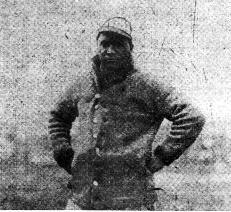
John Donaldson

John Donaldson

Menke quoted New York Giants Manager John McGraw’s assessment of the All Nations’ star after having watched him pitch in Cuba:

“If Donaldson were a white man, or if the unwritten law of baseball didn’t bar Negroes from the major leagues, I would give $50,000 for him—and think I was getting a bargain.”

Menke said of Wickware of the Chicago American Giants:

“(He) is another Negro pitcher who would rank with the Walter Johnsons, Joe Woods and Grover Alexanders if he were a white man…Wickware has marvelous speed, a weird set of curves and wonderful control.  And he has a trick that has made him feared among batters.  He throws what seems like a ‘bean ball,’ but his control is so perfect that he never yet has hit a batter in the head.  But when the batters see the ball, propelled with mighty force, come for their heads, they jump away, and the ball, taking its proper and well-timed curve, arches over the plate for a strike.”

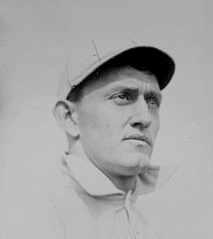
Frank Wickware
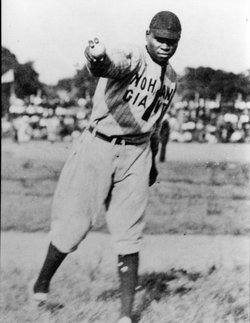
Frank Wickware

The final pitcher on Menke’s list was Mendez,  another member of the All Nations:

“He’s known as “The Black Matty” and his work has been almost as brilliant as that of “The Big Six” of the Giants.  Mendez is only of medium height (5′ 9”), but he has terrific power in his arm.

“The Cuban Negro has a canny brain and he always has used it.  He has mixed his fastball with his slow one, has an assortment of beautiful curves and perfect control…Like Mathewson, he never pitches air-tight ball unless he has to.  He conserves his strength.  But when he needs to pitch hitless ball he does it.  When he needs to strike out a man he usually succeeds.”

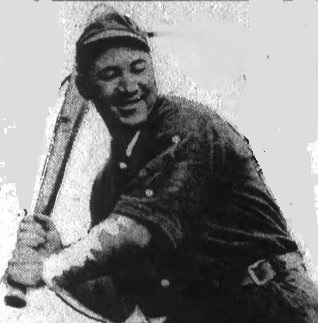
Jose Mendez
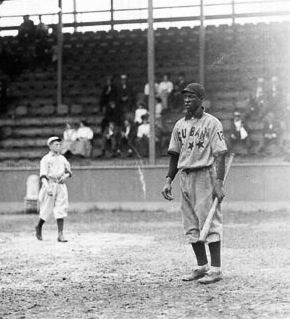
Jose Mendez

Incredibly, a story about three pitchers who deserved notice by the major leagues written by an influential white sportswriter received barely a notice in the black press.

The Indianapolis Freeman ran the story with no further comment, and no mention of who wrote the original story, simply attributing it to The Indiana Daily Times which had run Menke’s piece.

The Chicago Defender and The Pittsburgh Courier ignored the story entirely.  The New York Age didn’t mention Menke’s story, but the same week did make a pitch for black players—not with the positive portrayal of three great pitchers as Menke had done, but by highlighting the bad behavior of some major leaguers.

Lester Aglar Walton, who wrote about baseball and theater for The Age and later became the United States Ambassador to Liberia, said:

“(I)f baseball magnates are not color prejudiced can it be that they have misgivings as to how Negro players would conduct themselves on and off the field if permitted to play in the big leagues?  However, if this is their chief cause of concern and the stumbling block in the way of crack Negro players, big league managers should be reminded of the Ty Cobbs, Larry McLeans and others who have distinguished themselves by acts of ruffianism on and off the diamond.”

Lester Aglar Watson
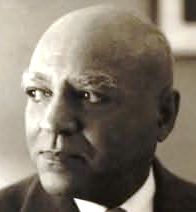
Lester Aglar Watson

Walton related the story of McLean’s recent fight with Giants Manager John McGraw and coach “Sinister” Dick Kinsella in the Buckingham Hotel in St. Louis.

“(H)ad McLean been a colored player the incident in St. Louis would have brought about the disbarment of all Negroes from hotels in St. Louis—had a policy of accommodating Negroes existed.”

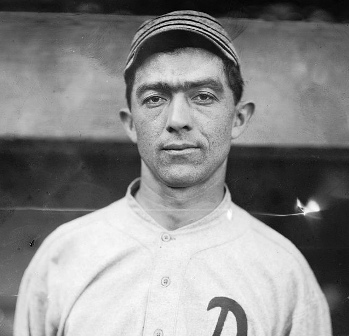
Larry McLean

Larry McLean

Walton also noted that when white teams met black teams on the field after the regular season, “The mixing of the races does not provoke racial conflicts and the best of feelings exist” among the players.

Then, he asked the men who owned major league clubs:

“The question is therefore put up to big league magnates that if the Indian with his dark skin and the Cuban are permitted to play in the big leagues, and if there is not the least possibility of the record for ruffianism established by the Ty Cobbs and Larry McLeans being eclipsed, why not give the Negro player a chance?”

As would be the case for three more decades, there was no reply.
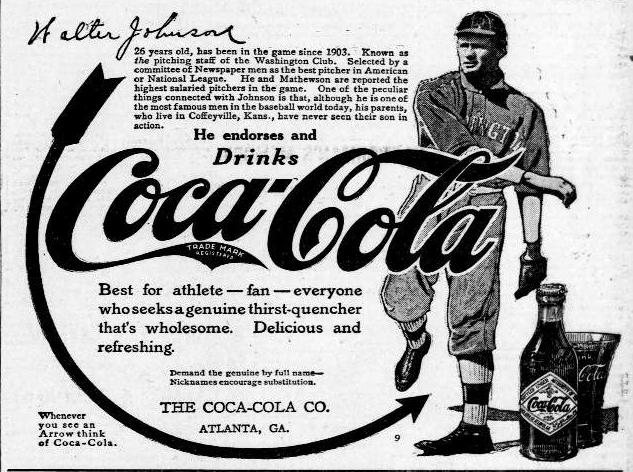
Lost Advertisements–The Big Train for Coca-Cola

12 Jun

bigtrainA 1915 advertisement for Coca-Cola featuring Walter Johnson.

“26 years old (Johnson was 27 when the ad appeared, but fact-checking was a bit loose in ads of the era)  has been in the game since 1903, Selected by a committee of newspaper men as the best pitcher in American or National League.  He and Mathewson are reported the highest salaried pitchers in the game.  One of the peculiar things connected with Johnson is that, although he is one of the most famous men in the world today, his parents, who live in Coffeyville, Kans. have never seen their son in action.”


Cy Swain

8 Jun

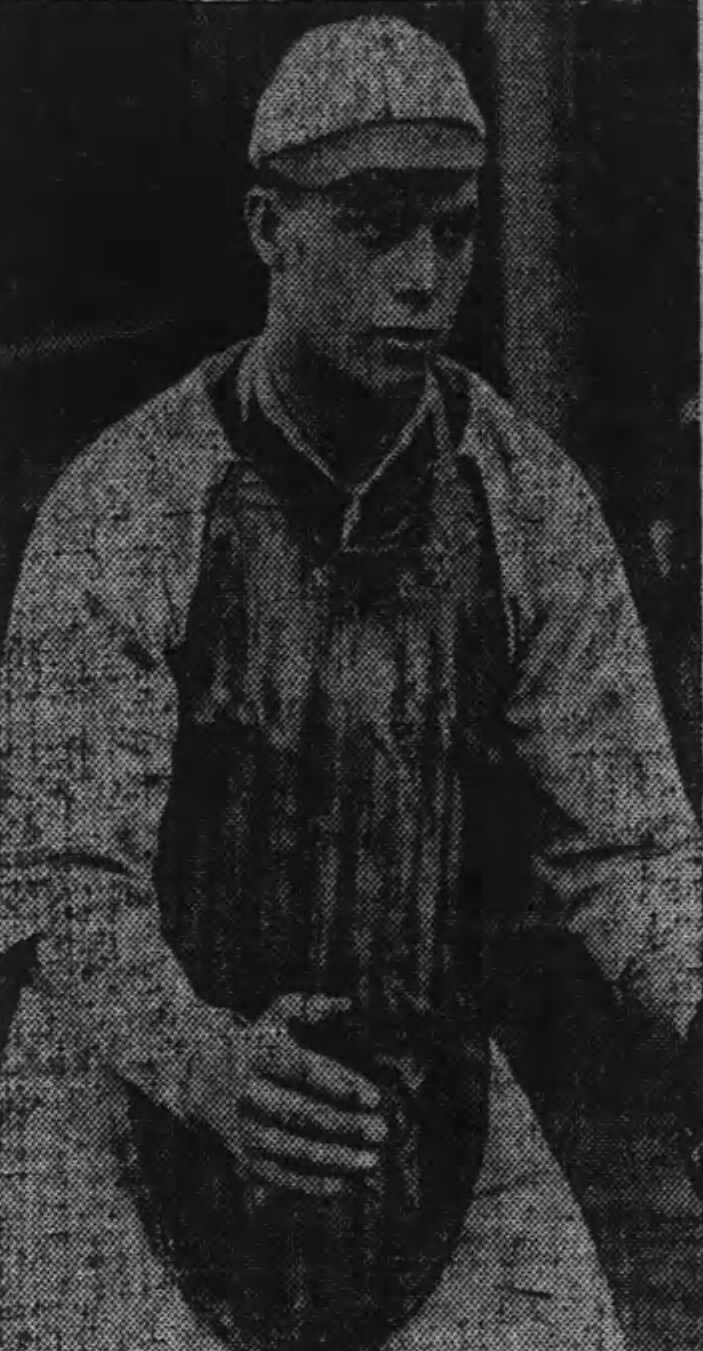
Charles R. “Moose” “Cy” Swain was for a short time, one of the best-known players on the West Coast and his brief time as the West’s home run king is all but forgotten.

Born in Palo Alto, California, Swain made his professional debut with San Jose franchise in the California State League in 1904.  Years later, Mike Steffani, San Jose manager, told The San Jose Evening News that his “discovery” of Swain was an accident.

Steffani was in need of a shortstop, and Swain’s brother Ira, who played at Stanford University,  was recommended to him by pitcher Win Cutter.  Cy, who accompanied his brother to San Jose, played first while Steffani worked out Ira at short.  Steffani said he told Cutter:

“I think young Cy is the best player.  I like the way he handles the ground balls.  He acts like (Charles) Truck Eagan to me.”

Cy Swain was signed.  Ira was sent home.

Charles "Cy" Swain

Charles “Cy” Swain

Swain was called “a hard hitter,” who struck out often.  He also apparently enjoyed a drink.  After hitting a disappointing .239 for the Spokane Indians in The Northwestern League in 1907, Swain was traded to the Butte Miners.

In announcing the news, The Spokane Press said, “Charley isn’t exactly a temperance man.”   The paper said that when the Spokane owner sent him a contract with a temperance clause, Swain wired back, “Send me two of those; I may break one.”

Swain, who also struggled with weight issues, went from Butte to the Tacoma Tigers, then the Vancouver Beavers.

In July of 1910, he was leading the league with a .298 batting average when the Washington Senators offered $1800 for his contract.  The Vancouver Daily World said the offer was turned down.  The club’s owner/manager/shortstop Bob Brown told the paper:

“That pennant looks awfully good to me, and until I have it clinched I intend to hold the team intact.  There have been numerous other clubs after Charlie’s services, but they will all have to wait until the season is over.”

Swain slumped badly the rest of the year and finished with a .250 average (and a league-leading 11 home runs). The Beavers finished second, six and a half games behind the Spokane Indians.

Despite Swain’s sluggish finish and questions about his weight—The Seattle Star said he was “carrying 220 pounds”– Washington purchased his contract at the end of the season.  Just before he reported to the team in Atlanta in February of 1911, The Washington Herald said:

“There is a reason why this man Swain should not be overlooked when the time comes for the final selection of the Nationals.  It was Cliff Blankenship who was sent scouting for Walter Johnson five years ago and who signed him…and Blankenship is sponsor for Swain.”

Cliff Blankenship

Cliff Blankenship

Swain responded to a letter from William Peet, The Herald’s baseball writer, about his weight:

“I note what you say about certain of my friends on the Western papers claiming I have taken on so much weight that I am handicapped thereby.  Just write them a personal letter and bet them all you’ve got that I haven’t taken on more than five pounds since I quit playing last fall…I will join the Washington club in shape and try my best to make good.”

Early reports from Atlanta in the Washington papers, The Post, The Times, and The Herald sounded promising:

“For a big fellow Swain is a wonder when it comes to covering ground in the outfield.”

“Though a six-footer, weighing 200 pounds, he runs like a sprinter.”

“He hits hard…his most distinguishing trait (is) a willingness to work and an inexhaustible fund of good humor.”

Swain was hitting .273 in spring games when he became sick (either a cold or the flu, depending on the source) and did not appear in a game, or practice with the team for a week.

Swain in Atlanta with the Senators

Swain in Atlanta with the Senators

On April 6 The Herald said:

“Swain and Manager Jim (McAleer) had a long talk this morning in the clubhouse and when the Vancouver husky emerged his face was wreathed in smiles.

“’It’s all right, boys,’ he said.  ‘I will probably go back to the Pacific Coast.  Had a nice chat with the boss and told him that if he decided he couldn’t use me to ship me (West) and he promised to do so.”

Swain was returned to Vancouver, where he hit. 309 and helped lead the Beavers to the Northwestern League pennant.  After hitting .286 for the last place Sacramento Sacts in the Pacific Coast league in 1912, Swain was sold to the Victoria Bees in Northwestern League in May of 1913, setting the stage for his record-breaking season.

On August 1, The Oakland Tribune said:

“(Swain) is electrifying the natives in the Northwestern League.  Playing for Victoria, up to last Sunday, Cy had connected with 17 home runs and was hitting .329.”

He hit 17 more by September 18.  Swain’s 34 home runs broke the previous West Coast high—Ping Bodie hit 30 for the San Francisco Seals in 1910 (Art Bues had the previous league record with 27 in 1910)—and his .329 average was a career high.

He benefitted from the small dimensions of the league’s parks; The (Portland) Oregonian said fourteen of his 34 home runs cleared Victoria’s 270 foot center field fence and 11 more came at Seattle where the left and right field fences were just 237 feet from home plate.

After another solid season in the Northwestern League in 1914–.310 with 12 homeruns—Swain was traded to the Minneapolis Millers in the American Association for Fred “Newt” Hunter on November 24.

While most of the newspapers in Northwestern League cities shared the view of The Spokane Chronicle, that “The exchange will effect a promotion for Swain as he will play in a class AA league, which has been his ambition.”  The Seattle Star, however, despite the numbers he put up, raised some doubts about Swain:

“It is not likely that Seattle will be disappointed in the trade…Swain did not deliver last season like the fans had hoped and expected.  He was the joke of the league in the pinches.”

Swain

Swain

Just three days after the trade, Swain was working his off-season job for the Pacific Telephone and Telegraph Company in San Francisco, when he fell from the back of a company truck which ran over his right leg.  On December 4, the leg was amputated.

The San Francisco Chronicle said:

“He was counting on making good with Minneapolis with the view of someday stepping into the big league, the dream of every ballplayer.  What Swain will do now with one limb lost has not been decided, for the unfortunate player is overwhelmed with grief at the sudden termination of his diamond career.”

Benefit games were held in San Francisco and Tacoma, drawing 4000 and 7000 fans; the games raised more than $4000 for Swain.

He used the money to open a cigar store in San Francisco with another former player, Tommy Sheehan.  The two also organized a team, managed by Swain, called the Independents.  The team was comprised of West Coast professionals—including Ping Bodie, Spider Baum, and Biff Schaller–and played during the winter and early spring.  One of their games in the spring of 1916 was the first game ever played by an outside team on the grounds of San Quentin Prison.  Swain’s team won 15 to 10.

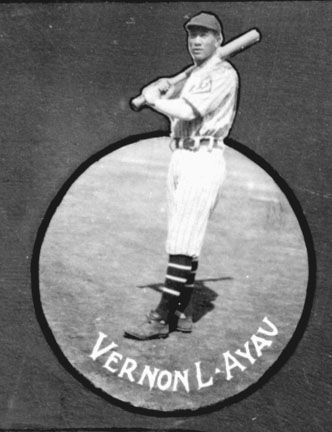
In November of 1916, Swain and Sheehan organized team made up of major leaguers and West Coast players to travel to Hawaii for a series of games.  The team played local and military teams, as well as the All-Chinese team which included Vernon Ayau, the first Chinese player to have appeared in a professional game.

Ayau, played against Swain's team in Hawaii

Ayau, played against Swain’s team in Hawaii

News of the games in Hawaii was sketchy; based on various reports the team played between eight and 12 games on the trip; all sources agree the only game they lost was against a US Army Infantry team.

Swain continued to manage the Independents in 1917 and ’18.  He and Sheehan also sold the cigar store and opened the Maryland Bowling Alleys in Oakland with Cliff Blankenship, the former catcher who recommended Swain to the Washington Senators in 1910.

Early in the fall of 1918, Swain’s brother, Ira, who accompanied to the tryout in San Jose in 1904, contracted the Spanish Flu and died on October 21.  On November 5, The Oakland Tribune said:

“Charlie Swain, one of the most popular ball players in the history of the game in the West, died here last night, a victim of Spanish Influenza.  Two weeks ago today Charlie’s brother Ira fell victim to the malady.”

Swain was 36-years-old.  The Tribune said:

“Good-bye, Charlie, we’re going to miss that happy smile.”

“Shows Big Leaguers how to Catch Flies”

15 May

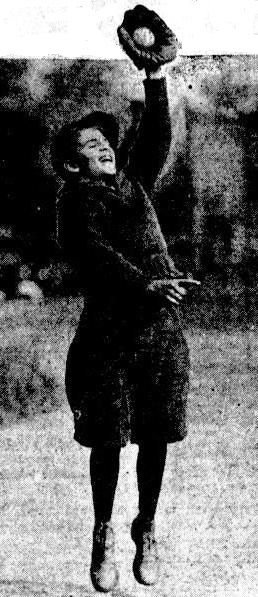
During the summer of 1921, The Washington Times told their readers about a new figure seen working out with the Senators at Griffith Stadium. who “caused no little comment among fans.”

Under the headline: “Shows Big Leaguers how to Catch Flies.” The Times said:

“Big things as a ballplayer are predicted for Walter Morris, twelve years old…Walter is pronounced by members of the Washington team a natural-born ball player.  With the crack of the bat, he starts skinning in the general direction of the sphere’s destination and seems to get there just in time, without apparent effort to remove the old apple from the atmosphere.”

Walter Morris, the Senators 12-year-old phenom

Walter Morris, the Senators 12-year-old phenom

Outfielder Bing Miller told the paper:

“That kid shows a lot of talent.”

[…]

“Bing lives in Walter’s neighborhood and takes an interest in him.  His attention was attracted by the lad’s performances on the neighborhood sand lots.  Groundskeeper (Reddy) O’Day also is a neighbor and Walter Johnson lives not far away, all of which accounts largely for young Morris’ privileges at the ballpark.  Sometimes Johnson drives the kid to the game in his auto.”

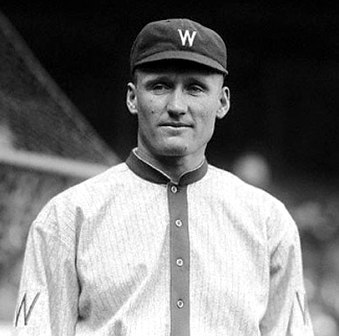
Morris' ride, Walter Johnson

Morris’ ride, Walter Johnson

Despite the high expectations for the 12-year-old, Walter Morris would never play for the Senators or anyone else.

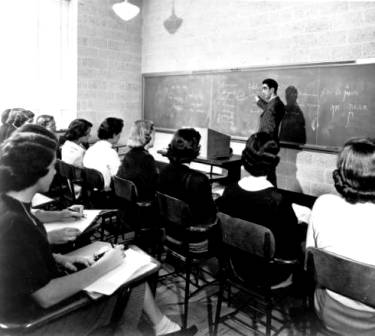
He traded baseball for academics;  Morris was a professor of Religion at Goucher College in Baltimore from 1949 until 1971.  He died in Maryland in 1991.

Walter Morris--post baseball at Goucher College.

Walter Morris–post-baseball, teaching at Goucher College.

Lost Pictures–Walter Johnson Steamrolls the American League

20 Jun

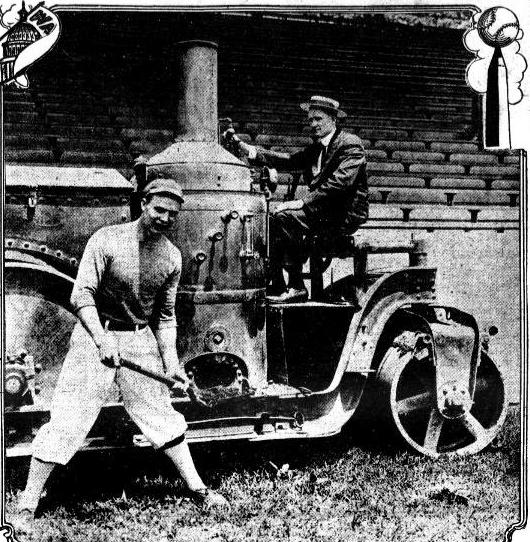
walterjohnsonsteam

A 1912 publicity photo featuring Walter Johnson at the wheel of a steamroller, and Senators catcher Eddie Ainsmith with the shovel at Griffith Stadium in Washington.  The photo was taken on June 17; the Senators had just returned from Cleveland having won 16 straight games–all on the road.  During the streak, the Senators had gone from 17-21 in sixth place, to 33-21, just one and a half games behind the Boston Red Sox.

The Washington Times said “It was considered an omen of continued triumph” that the steamroller was “found on the grounds.”

The Senators won the following day and continued playing well the rest of the way, finishing 91-61, their first winning season in the team’s 12-year history.  But, it was not good enough to catch the Red Sox who finished 14 games in front.

Johnson had his first of two 30-win seasons, finishing 33-12 with a league-leading 1.39 ERA.

Ainsworth played in the major leagues for 15 years, the first nine with the Senators.  The Washington Post said before the season opener in 1915:

“For the seventh consecutive year Walter Johnson will work in the opening clash for the home folks, and in nearly as many seasons will Eddie Ainsworth be his battery mate.  This pair always work together and no pitcher and catcher in either league are better acquainted when it comes to baseball.”

Eddie Ainsmith

Eddie Ainsmith

Several weeks after Ainsmith was traded to Boston (then to Detroit on the same day) in January of 1919, Louis Dougher a writer for The Washington Times said:

“When Eddie Ainsmith was traded to Detroit via Boston, Clark Griffith shattered on of the crack batteries…it was Johnson and (Charles “Gabby”) Street.  Then when Gabby slowed up and gave way to a successor, it rapidly became Johnson and Ainsmith.”

Age, more than the departure of Ainsmith slowed Johnson down, but he still won 140 games and posted three 20-win seasons after his personal catcher was traded.

The Occidentals

14 May

Billed as the “Colored World Champions” during their barnstorming tours of the West, The Salt Lake City-based Occidentals were also members of the otherwise all-white Utah State League.  Despite being forced to play additional road games, the team was very competitive.  In 1908 The Deseret News said:

“The colored boys have paid no attention to handicaps under which they had to enter the league; they have played good, earnest ball and provide the fans with their money’s worth every time they play.”

The paper acknowledged that the team’s manager Frank Black was correct when he said the team could “make more money by traveling throughout the inter-mountain region on a pick-up schedule than he will make in the league,” and made a “plea for fair play to all men, no matter who they may be.”

In 1909, the Occidentals won the Utah State League and then headed west.

The team arrived in Los Angeles in late October.  The Los Angeles Herald said:

“The Occidentals are a colored team, and after cleaning up everything in sight in the Mormon state decided that Southern California would afford new fields to conquer.”

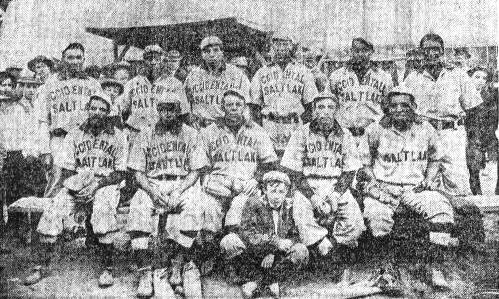
Among the players on the Occidentals’ roster were second baseman/manager Black and pitcher/outfielder Louis “Ad” Lankford (contemporaneous accounts, including coverage of his brief boxing career in Salt Lake City, usually call him “Langford”)—in December catcher/first baseman Bill Pettus joined the team.

The Occidentals--Frank Black is standing far left, Ad Lankford is seated second from left.

The Occidentals–Frank Black is standing far left, Ad Lankford is seated second from left.

The team opened their tour with a series with the Los Angeles Giants billed as the “Colored Championship of the Pacific Coast.”  The Occidentals swept the best of five series with 9 to 2, 7 to 1 and 4 to 2 victories.

After winning the series, the team from Salt Lake City played a team dubbed as the “Japanese All-Stars of Los Angeles,” organized by Los Angeles Angels catcher Jesse Orndorff—the team was all Japanese except for the battery which consisted of Orndorff and Angels’ pitcher Bill TozerThe Herald said, “The game was fast and witnessed by a crowd of 1500.” The Occidentals won 7 to 3.

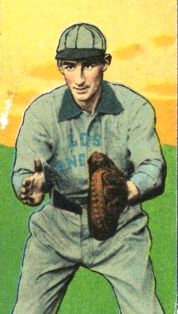
Jesse Orndorff

Jesse Orndorff

Two days later the barnstormers lost 6 to 1 to the Angels (the team was billed as the Los Angeles Angels, but was more accurately a current and former Pacific Coast League all-star team), with St. Louis Cardinals pitcher John Raleigh on the mound.

The Occidentals spent another six weeks in Los Angeles and had three well-publicized games with  McCormick’s Shamrocks, managed by local pool hall operator and promoter Jim McCormick.  The teams met for the first time on Thanksgiving and were tied 0-0 after five innings when the game was called.  The two teams met again at Chutes Park on Christmas.

The two managers tried to build attendance with quotes in The Herald, and The Los Angeles Times.  Black said:

“If you want to be a few beans ahead when the sun goes down on Christmas day, put a few cartwheels on the colored boys to win from the Winter League aggregation.”

McCormick countered:

“Nothing to it but shouting, and we will win in a walk.”

McCormick promised to get the “Occidental’s goat.”

When the sun set on Christmas The Herald said: And Manager Black’s goat is still grazing unmolested at Chutes Park.”  The Occidentals won 3 to 2.

Frank Black poses at Chutes Park with Jim McCormick's "goat" after the victory.

Frank Black poses at Chutes Park with Jim McCormick’s “goat” after the victory.

After a New Year’s Day rain out, the teams met again on January 8.  The McCormick’s recruited Tozer from the Angels to pitch; the game was tied 1 to 1 when called after twelve innings.

The following day the Occidentals played another twelve inning game, this one a 0-0 tie against an all-star team composed of Pacific Coast League, California League and major league players, including William “Brick” Devereaux, Eli Cates, Ed McDonough, Charles “Truck” Eagan and Elmer Rieger.

According to The Herald the team was 14-2-2 on the California tour when they departed for San Diego on January 22, where they lost 1-0 in 10 innings.

The final game of the trip was played against the Santa Ana Winter League Team—the Yellow Sox– which was made up of Pacific Coast League players including Arnold “Chick” Gandil—then a second baseman, as well as St. Louis Cardinals outfielder George “Rube” Ellis and future Hall of Famer Walter Johnson on the mound.

Johnson shut out the Occidentals 2 to 0, striking out 15 (The Times said he finished the winter league season 9-0—with nine complete games, giving up just 21 hits and 5 runs in 81 innings) The Herald said the team “did not take very lovingly to the slants of the mighty Walter, who had them well in hand throughout the contest.”

The team was generally well received by fans on the coast—notwithstanding The Herald’s habit of referring to them as “the dinges.”

Black and the Occidentals returned to Salt Lake City and rejoined the Utah State League for the 1910 season, finishing in second place.

The following year Frank Leland’s Chicago Giants entered the California Winter League, posting a 10-7-2 record.

Irwin Howe

3 Feb

irwinhowebb


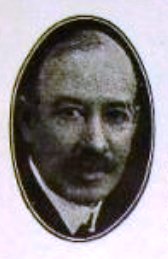
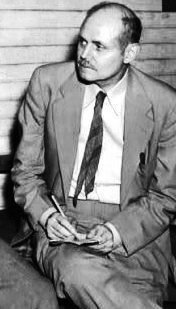
Irwin M. Howe founded Howe News Service in Chicago in 1910, published an annual record book and served as the primary statistician for several minor leagues, including the Western and the Three-I leagues.

After the 1911 season American League Secretary Robert McRoy, who was responsible for compiling statistics, left the league office to become an executive with the Boston Red Sox.  President Ban Johnson named Howe the league’s statistician; he served in that capacity until his death in 1934.

Irwin Howe

Irwin Howe

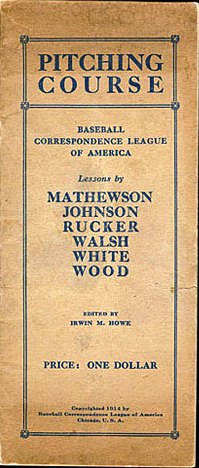
Howe leveraged his position with the American League.  He became the official statistician of several more leagues, including the American Association and the Federal League, wrote a nationally syndicated column called “Pennant Winning Plays,” became editor of the annual “Wilson Baseball Record and Rule Book,” and published an instructional pamphlet for kids.

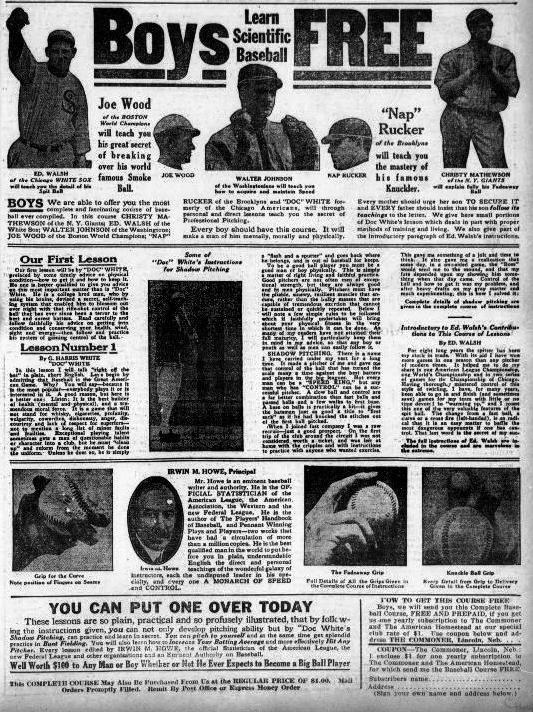
The ad from 1914 pictured above is for Howe’s 48-page “Pitching Course,” which he called “A correspondence school for baseball.” The pamphlets sold for one dollar, but were also offered by many small newspapers across the country for free to children who signed up subscribers (the pictured ad is from The Commoner, the Lincoln, Nebraska newspaper published by William Jennings Bryan).

Boys Learn Scientific Baseball Free

Ed Walsh of the Chicago White Sox will teach you the detail of his Spit Ball

Joe Wood of the Boston World Champions (1912) will teach you his great secret of breaking over his world famous Smoke Ball

Walter Johnson of the Washingtonians will teach you how to acquire and maintain speed

“Nap” Rucker of the Brooklyns will teach you the mastery of his famous knuckler

Christy Mathewson of the N.Y. Giants will explain fully his Fadeawy Ball

These lessons are so plain, practical and so profusely illustrated, that by following the instructions given, you can not only develop pitching ability…You will also learn to Increase Your Batting Average and more effectively Hit Any Pitcher.  Every lesson edited by Irwin M. Howe, the official statistician of the American League, the new Federal League and there organizations and an Eminent Authority on Baseball.

The pamphlet also included a lesson from Guy Harris “Doc” White of the Chicago White Sox “which deals in part with proper methods of training and living.”

Howe claimed his one dollar pamphlet was “Well worth $100 to any man or boy whether or not he ever expects to become a big ball player.”

Howe's pamphlet

Howe’s pamphlet

Perhaps Howe’s most famous contribution to baseball was certifying Ty Cobb as a .400 hitter in 1922.

On a rainy day in New York (years later in his book “Baseball as I Have Known It,” Fred Lieb said the game took place in August—contemporary newspaper accounts say it was May 15), Cobb beat out a ground ball hit to Yankee shortstop Everett Scott.  John Kieran of The New York Tribune (he was later a columnist with The New York Times) was the official scorer.  He charged Scott with an error.

Fred Lieb of The New York Telegram, who was compiling The Associated Press (AP) box score for the game, credited Cobb with a hit.  Lieb said “Considering the soggy field and Cobb’s speed, I gave it a hit.”

Fred Lieb

Fred Lieb

Howe’s habit was to rely upon The AP box score that appeared in the Chicago newspapers while awaiting the arrival of the “official” box score by mail.

When compiling the final averages at the end of the season Howe chose to accept Lieb’s scoring of the game rather than Kieran’s, and released a statement with the season’s final statistics:

 “I noted that the averages reached from my official scoring sheets had Cobb hitting .3995 (actually .3992).  With the unofficial averages giving him .401, I felt how can we deprive this great player of a third .400 average over a fractional point.”

Ban Johnson approved Howe’s decision.  Lieb, as president of the Baseball Writers Association of America’s (BBWAA) New York chapter was put in the uncomfortable position of attempting to repudiate his own scoring judgment.  He argued that the Kieran’s “official” score should be accepted, and said in a statement:

“Obviously, when there was a difference of opinion between the two scorers, the official and not the unofficial decision, should have been accepted.  There would be no further need for members of the Baseball Writers Association serving as official scorers if they were regulated to a secondary position.”

In a letter to Lieb, Ban Johnson said the “official” box score “was plainly in error in one other particular” besides the Cobb “hit” and “I requested a report of the official score of the game of May 15.  Mr. Howe had previously made a careful investigation of all facts surrounding the scoring.”  Johnson also chided Lieb asking “Are we to believe that you reversed your judgment at this late date?”

The 1923 “Wilson Record and Rule Book”–edited by Howe–contained an asterisk next to Cobb’s .401 average and noted that it was “not recognized” by the BBWAA—Howe was secretary of the association’s Chicago chapter.

The asterisk eventually disappeared, and Ty Cobb, thanks to Howe’s decision,  remains a .400 hitter for the 1922 season.

Lost Advertisements–Mike Martin’s Liniment

27 Dec

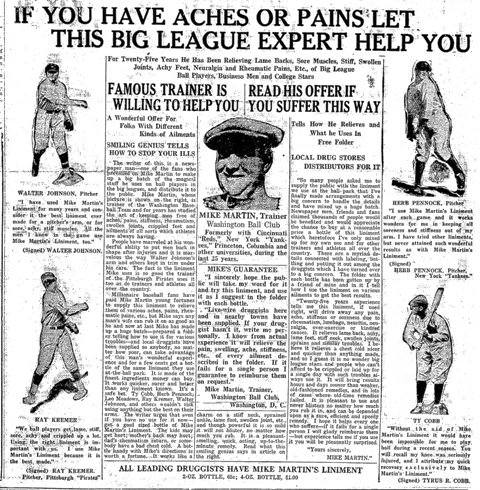
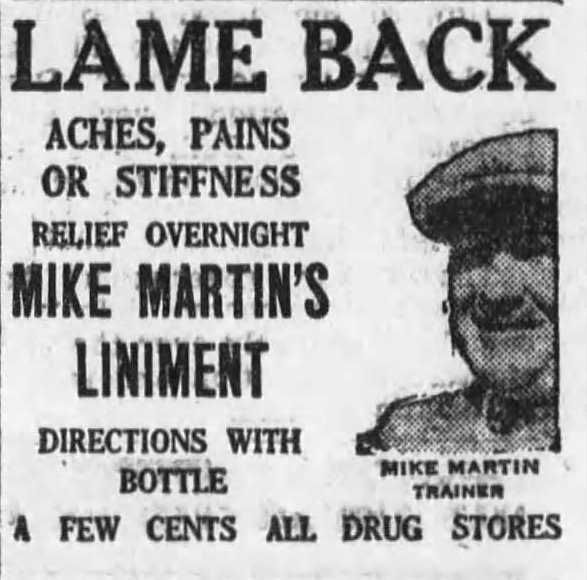
martinlinMike Martin spent 40 years with the Washington Senators as a trainer and scout; he was one of baseball’s first full-time trainers.  Martin was working as the athletic trainer at Columbia University when Clark Griffith hired him to work with the New York Highlanders, he followed Griffith to Cincinnati and then finally to Washington.

Martin began marketing the liniment he used on Walter Johnson and the rest of the Senators staff in the 1920s.  This 1925 ad featured testimonials from his good friend, Senator pitcher Walter Johnson, Herb Pennock of the Yankees, Ray Kremer of the Pirates and Ty Cobb (who rarely met a “cure” he couldn’t endorse):

“I have used mike Martin’s Liniment for many years and consider it the best liniment ever made for a pitcher’s arm, or for sore, achy, stiff muscles.  All the men i know in the game use Mike Martin’s Liniment too.”

(Signed) Walter Johnson

“I use Mike Martin’s Liniment after each game and it works wonders for me in keeping all soreness and stiffness out of my arm.  I have tried other liniments, but never attained such wonderful results as with Mike Martin’s Liniment.”

(Signed) Herb Pennock 

“We ball players get lame, stiff, sore, achy and crippled a lot.  Using the right liniment is important with us.  I use Mike Martin’s Liniment because it is the best made.”

(Signed) Ray Kremer

“Without the aid of Mike Martin’s Liniment it would have been impossible for me to play ball during the recent season.  You will recall my knee was seriously injured, and I attribute my quick recovery exclusively to Mike Martin’s Liniment.”

(Signed) Tyrus R. Cobb

mikemartin1930

1930 advertisement

Martin remained the Washington trainer until 1946 when Griffith made him a scout.  He was still working for the Senators, and his liniment was still a popular product, in June of 1952 when the 67-year-old Martin was killed in a traffic accident near his Maryland home while driving to Griffith Stadium.


Lost Advertisements–“Kid” Gleason for Cat’s Paw Rubber Heels

22 Nov

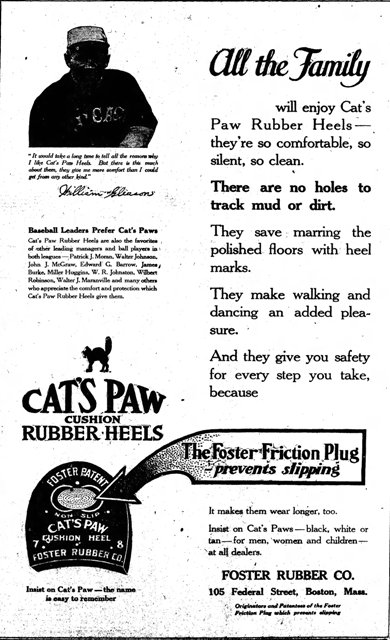
cat'spawA 1920 advertisement featuring William “Kid” Gleason, manager of the defending American League Champion Chicago White Sox–the ad appeared in July, two months before the first grand jury was convened to investigate the 1919 World Series.

“It would take a long time to tell all the reasons why I like the Cat’s Paw Heels.  But there is this much about them, they give me more comfort than I could get from any other brand.”  William Gleason

Baseball Leaders Prefer Cat’s Paws

Cat’s Paw Rubber Heels are also the favorites of other leading managers and ball players in both leagues–Patrick J. Moran, Walter Johnson, John J. McGraw, Edward G. Barrow, James Burke, Miller Huggins, W.R. Johnston, Wilbert Robinson, Walter J. Maranville and many others who appreciate the comfort and protection which Cat’s Paw Rubber Heels give them.

“I’d be Perfectly Willing to Split with Uncle Sam”

14 Nov

In 1915, The Chicago Eagle reported on the difficulty the government was having “getting at the facts,” in order to collect income taxes from ballplayers after the passage of the 16th Amendment two years earlier.   But the paper predicted that  players in the three major leagues “will pay into the internal revenue department something like $5,000 in income tax.”  Five thousand dollars total.

“But for the fact that 50 per cent of the players in the American, National and Federal leagues are married and thereby permitted to claim an exemption of $4,000 in salary, the sum exacted by the government would be considerably greater.”

The Eagle said there were approximately 300 players in the three leagues who earned more than $3000 per season and were subject to pay income tax, but half of those were exempt because they were married and could claim an exemption up to $4,000.

“(T)here are about 200 who earn more than $4,000.  There are close to 100 who draw more than $5,000 and 50 whose contracts call for amounts ranging between $6,000 and $10,000.  There are less than a dozen who make more than that.  The notable ones are Eddie Collins, Ty Cobb, Tris Speaker, Walter Johnson and a few managers.  (John) McGraw is reputed to make $25,000 in salary.”

Tris Speaker was “the hardest hit” bachelor.  At a salary of $15,000 Speaker was taxed on $12,000 and paid income taxes for the year totaling $120.

Tris Speaker "hardest hit"

Tris Speaker “hardest hit”

Frank “Home Run” Baker of the Philadelphia athletics, who earned between $8,000 and $9,000, and was sitting out the 1915 season in a salary dispute said regarding his teammate Eddie Collins, who earned $15,000:

“Still, if they raise mine up to that of Eddie Collins I’ll be perfectly willing to split with Uncle Sam.”

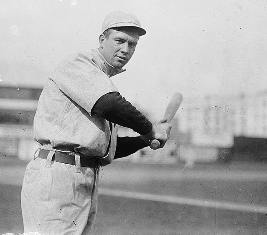
Frank "Home Run" Baker, "willing to split with Uncle Sam"

Frank “Home Run” Baker, “willing to split with Uncle Sam”