Tag Archives: Washington Senators

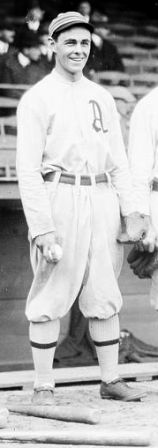
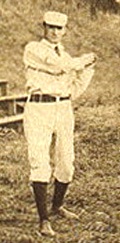
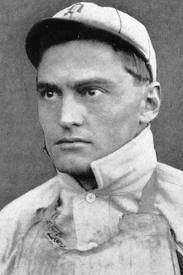
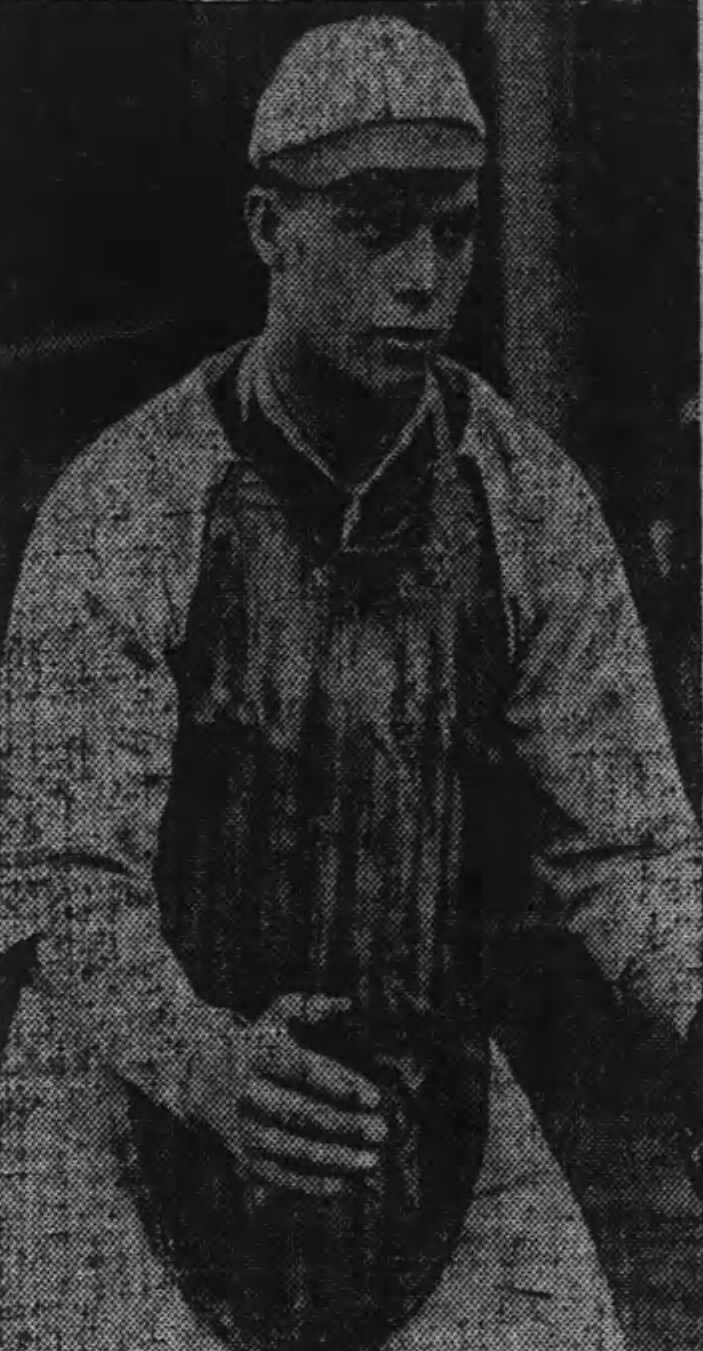
Cy Swain

8 Jun

Charles R. “Moose” “Cy” Swain was for a short time, one of the best-known players on the West Coast and his brief time as the West’s home run king is all but forgotten.

Born in Palo Alto, California, Swain made his professional debut with San Jose franchise in the California State League in 1904.  Years later, Mike Steffani, San Jose manager, told The San Jose Evening News that his “discovery” of Swain was an accident.

Steffani was in need of a shortstop, and Swain’s brother Ira, who played at Stanford University,  was recommended to him by pitcher Win Cutter.  Cy, who accompanied his brother to San Jose, played first while Steffani worked out Ira at short.  Steffani said he told Cutter:

“I think young Cy is the best player.  I like the way he handles the ground balls.  He acts like (Charles) Truck Eagan to me.”

Cy Swain was signed.  Ira was sent home.
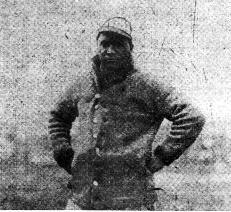
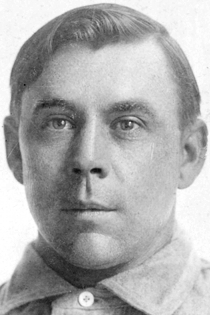
Charles "Cy" Swain

Charles “Cy” Swain

Swain was called “a hard hitter,” who struck out often.  He also apparently enjoyed a drink.  After hitting a disappointing .239 for the Spokane Indians in The Northwestern League in 1907, Swain was traded to the Butte Miners.

In announcing the news, The Spokane Press said, “Charley isn’t exactly a temperance man.”   The paper said that when the Spokane owner sent him a contract with a temperance clause, Swain wired back, “Send me two of those; I may break one.”

Swain, who also struggled with weight issues, went from Butte to the Tacoma Tigers, then the Vancouver Beavers.

In July of 1910, he was leading the league with a .298 batting average when the Washington Senators offered $1800 for his contract.  The Vancouver Daily World said the offer was turned down.  The club’s owner/manager/shortstop Bob Brown told the paper:

“That pennant looks awfully good to me, and until I have it clinched I intend to hold the team intact.  There have been numerous other clubs after Charlie’s services, but they will all have to wait until the season is over.”

Swain slumped badly the rest of the year and finished with a .250 average (and a league-leading 11 home runs). The Beavers finished second, six and a half games behind the Spokane Indians.

Despite Swain’s sluggish finish and questions about his weight—The Seattle Star said he was “carrying 220 pounds”– Washington purchased his contract at the end of the season.  Just before he reported to the team in Atlanta in February of 1911, The Washington Herald said:

“There is a reason why this man Swain should not be overlooked when the time comes for the final selection of the Nationals.  It was Cliff Blankenship who was sent scouting for Walter Johnson five years ago and who signed him…and Blankenship is sponsor for Swain.”

Cliff Blankenship
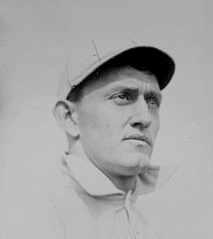
Cliff Blankenship

Swain responded to a letter from William Peet, The Herald’s baseball writer, about his weight:

“I note what you say about certain of my friends on the Western papers claiming I have taken on so much weight that I am handicapped thereby.  Just write them a personal letter and bet them all you’ve got that I haven’t taken on more than five pounds since I quit playing last fall…I will join the Washington club in shape and try my best to make good.”

Early reports from Atlanta in the Washington papers, The Post, The Times, and The Herald sounded promising:

“For a big fellow Swain is a wonder when it comes to covering ground in the outfield.”

“Though a six-footer, weighing 200 pounds, he runs like a sprinter.”

“He hits hard…his most distinguishing trait (is) a willingness to work and an inexhaustible fund of good humor.”

Swain was hitting .273 in spring games when he became sick (either a cold or the flu, depending on the source) and did not appear in a game, or practice with the team for a week.

Swain in Atlanta with the Senators

Swain in Atlanta with the Senators

On April 6 The Herald said:

“Swain and Manager Jim (McAleer) had a long talk this morning in the clubhouse and when the Vancouver husky emerged his face was wreathed in smiles.

“’It’s all right, boys,’ he said.  ‘I will probably go back to the Pacific Coast.  Had a nice chat with the boss and told him that if he decided he couldn’t use me to ship me (West) and he promised to do so.”

Swain was returned to Vancouver, where he hit. 309 and helped lead the Beavers to the Northwestern League pennant.  After hitting .286 for the last place Sacramento Sacts in the Pacific Coast league in 1912, Swain was sold to the Victoria Bees in Northwestern League in May of 1913, setting the stage for his record-breaking season.

On August 1, The Oakland Tribune said:

“(Swain) is electrifying the natives in the Northwestern League.  Playing for Victoria, up to last Sunday, Cy had connected with 17 home runs and was hitting .329.”

He hit 17 more by September 18.  Swain’s 34 home runs broke the previous West Coast high—Ping Bodie hit 30 for the San Francisco Seals in 1910 (Art Bues had the previous league record with 27 in 1910)—and his .329 average was a career high.

He benefitted from the small dimensions of the league’s parks; The (Portland) Oregonian said fourteen of his 34 home runs cleared Victoria’s 270 foot center field fence and 11 more came at Seattle where the left and right field fences were just 237 feet from home plate.

After another solid season in the Northwestern League in 1914–.310 with 12 homeruns—Swain was traded to the Minneapolis Millers in the American Association for Fred “Newt” Hunter on November 24.

While most of the newspapers in Northwestern League cities shared the view of The Spokane Chronicle, that “The exchange will effect a promotion for Swain as he will play in a class AA league, which has been his ambition.”  The Seattle Star, however, despite the numbers he put up, raised some doubts about Swain:

“It is not likely that Seattle will be disappointed in the trade…Swain did not deliver last season like the fans had hoped and expected.  He was the joke of the league in the pinches.”

Swain
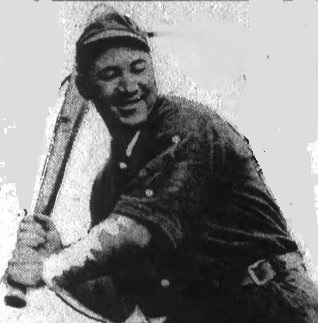
Swain

Just three days after the trade, Swain was working his off-season job for the Pacific Telephone and Telegraph Company in San Francisco, when he fell from the back of a company truck which ran over his right leg.  On December 4, the leg was amputated.

The San Francisco Chronicle said:

“He was counting on making good with Minneapolis with the view of someday stepping into the big league, the dream of every ballplayer.  What Swain will do now with one limb lost has not been decided, for the unfortunate player is overwhelmed with grief at the sudden termination of his diamond career.”

Benefit games were held in San Francisco and Tacoma, drawing 4000 and 7000 fans; the games raised more than $4000 for Swain.

He used the money to open a cigar store in San Francisco with another former player, Tommy Sheehan.  The two also organized a team, managed by Swain, called the Independents.  The team was comprised of West Coast professionals—including Ping Bodie, Spider Baum, and Biff Schaller–and played during the winter and early spring.  One of their games in the spring of 1916 was the first game ever played by an outside team on the grounds of San Quentin Prison.  Swain’s team won 15 to 10.

In November of 1916, Swain and Sheehan organized team made up of major leaguers and West Coast players to travel to Hawaii for a series of games.  The team played local and military teams, as well as the All-Chinese team which included Vernon Ayau, the first Chinese player to have appeared in a professional game.
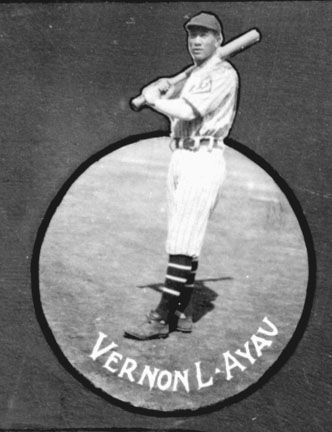
Ayau, played against Swain's team in Hawaii

Ayau, played against Swain’s team in Hawaii

News of the games in Hawaii was sketchy; based on various reports the team played between eight and 12 games on the trip; all sources agree the only game they lost was against a US Army Infantry team.

Swain continued to manage the Independents in 1917 and ’18.  He and Sheehan also sold the cigar store and opened the Maryland Bowling Alleys in Oakland with Cliff Blankenship, the former catcher who recommended Swain to the Washington Senators in 1910.

Early in the fall of 1918, Swain’s brother, Ira, who accompanied to the tryout in San Jose in 1904, contracted the Spanish Flu and died on October 21.  On November 5, The Oakland Tribune said:

“Charlie Swain, one of the most popular ball players in the history of the game in the West, died here last night, a victim of Spanish Influenza.  Two weeks ago today Charlie’s brother Ira fell victim to the malady.”

Swain was 36-years-old.  The Tribune said:

“Good-bye, Charlie, we’re going to miss that happy smile.”
“I mentioned Satchel and Josh and Cool Papa, I told Him he was Missing the boat”

18 May

After Heywood Broun’s remarks at the 1933 Baseball Writers Association dinner about integrating the game, The Pittsburgh Courier initiated a campaign to push the issue.  Despite some support inside baseball and from well-known newspapermen, the effort fell flat by opening day.

That summer, after the first East-West Game—won by the West All-Stars 11 to 7—at Comiskey Park, Henry L. Farrell of The Chicago Daily News suggested several “(M)ajor league club owners who are now on their knees might have their prayers answered,” by signing some the Negro League stars.

In the fall, The Chicago Defender briefly picked up the mantle from The Courier.  The paper asked their readers:

“How would you like to see the great baseball players of the Race performing in the major leagues? Wouldn’t you like to see Willie Foster, Satchel Paige and (Sam) Streeter pitch to Babe Ruth?”

If so:

“Sit down and write K.M. Landis commissioner of baseball, 333 N. Michigan Ave., Chicago.”

The following week, the paper reported that Landis’ office had refused to comment.  When baseball’s winter meetings commenced in Chicago in December, The Defender promised readers that the letters they had sent:

“(A)re not being passed on lightly as many suggested would be the case.  On the contrary, the club owners are downright concerned and from the inside word leaked out that some action would be taken.”

The optimism was tempered later that week when their reporter was barred from covering a meeting where he was told “vital points were discussed.”  The Defender reporter was told no newspapermen would be admitted, but:

“That sinister moves were being made against your author’s admission became a certainty when a well-known writer from one of the downtown papers came along, gave the high sign and was admitted.”

When 1933 came to a close, integration was no closer to being a reality than it was 11 months earlier as Broun stood to deliver his remarks to the baseball writers.

Four years later, Sam Lacy from The Baltimore Afro-American met with Washington Senators owner Clark Griffith in an attempt to revive the subject:

“I mentioned Satchel and Josh and Cool Papa, I told him he was missing the boat.”

Sam Lacy

Sam Lacy

Griffith, he said, told him the timing was wrong, and that Southern-born players would not accept integration.

The next major effort came in 1939.

Political support had generally been limited to socialist and communist organizations—the Young Communist League spent the summer of ’39 gathering signatures to present to Commissioner Landis.  But, in July of that year, the Illinois House of Representatives adopted a resolution which read in part:

“Resolved, by the House of Representatives of the Sixty-first General Assembly.  That the owners of all professional baseball teams in the United States, both in the major and minor leagues be strongly urged to give baseball players of the colored race the same opportunity of becoming players on their respective teams as is accorded to such players of the white race.”

Another push came from Pittsburgh as well.

Wendell Smith, who was playing baseball at West Virginia State College when Broun made his speech in 1933, was now a reporter for The Courier. In July, he promised readers:

“The most exclusive, startling and revealing expose, of the attitude of the major league players and managers themselves, ever written.”

Wendell Smith

Wendell Smith

Over the course of several weeks Smith asked 40 players and eight managers as they passed through Pittsburgh, “Are Negro ballplayers good enough to ‘crash’ the majors?”

The Courier’s Chester Washington said in a column to introduce the series of articles:

“One of the major reasons why Mr. Smith’s discovery is so revolutionary is that the club owners, in trying to pass the buck, have blamed the ban on the players themselves.  They claimed that the injection of colored stars into the clubs would bring about friction and dissention… (Smith) practically disproves this contention.

“Fearlessly buttonholing the managers and outstanding players of all the National League clubs, Mr. Smith received scores of testimonials which should be a revelation to the owners.”

A sampling of the statements collected by Smith:

Ernie Lombardi, Cincinnati Reds:  “(Satchel) Paige is as good as (Dizzy) Dean.”

Johnny Vander Meer, Cincinnati Reds:  “I wouldn’t object.”

James “Doc” Prothro, Philadelphia Phillies: “If given permission I would jump at the opportunity to sign up a good Negro ballplayer.”

Leo Durocher, Brooklyn Dodgers:  “(Satchel) Paige, (Bill “Cy”) Perkins, (Mule) Suttles and (Josh) Gibson are good enough to be in the majors right now…I certainly would use a Negro ballplayer if the bosses said it was all right.”

Gabby Hartnett, Chicago Cubs:  “I am sure that if we were given permission to use them, there would be a mad scramble between managers to sign them.”

Gabby Hartnett

Gabby Hartnett

Dizzy Dean, Chicago Cubs: “If some of the colored players I’ve played against were given a chance to play in the majors they’d be stars as soon as they joined up.”

Pepper Martin, St. Louis Cardinals: “Some of the big league players would object, but on the whole I think they would be accepted.”

Pie Traynor, Pittsburgh Pirates: “believe me when I say I have seen countless numbers of Negro ball players who could have made the grade in the majors.  Only their color kept them out.  If given permission, I would certainly use a Negro player who had the ability.”

Honus Wagner, Pittsburgh Pirates:  “Yes, down through the years I have seen any number of Negro players who should have been in big league baseball.”

Over the next five years, Smith would interview more than 150 additional major leaguers, who would echo the sentiments of his original 40, keeping the pressure on professional baseball to desegregate.

1911 Washington Senators Season Ticket Contest

22 Apr

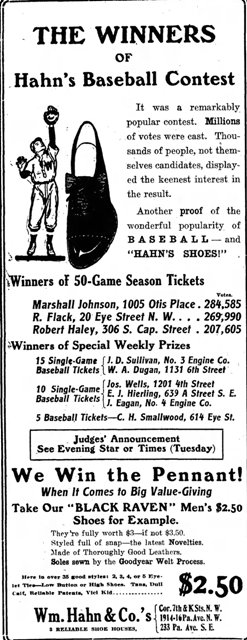
hahnscontest1


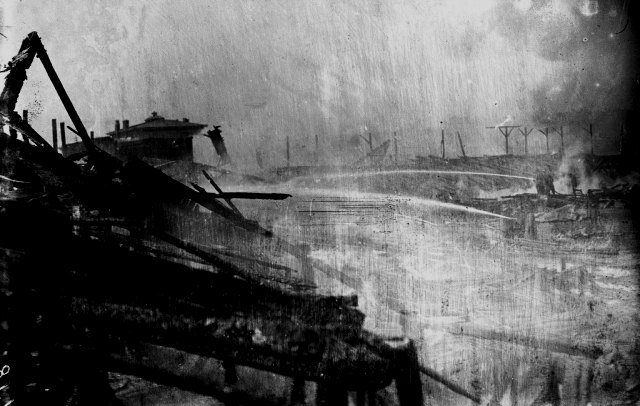
On March 17, 1911, a fire destroyed Washington D.C.’s Boundary Field, almost immediately construction began on a new ballpark on the site–what would become Griffith Stadium.

The Boundary Field fire.

The Boundary Field fire.

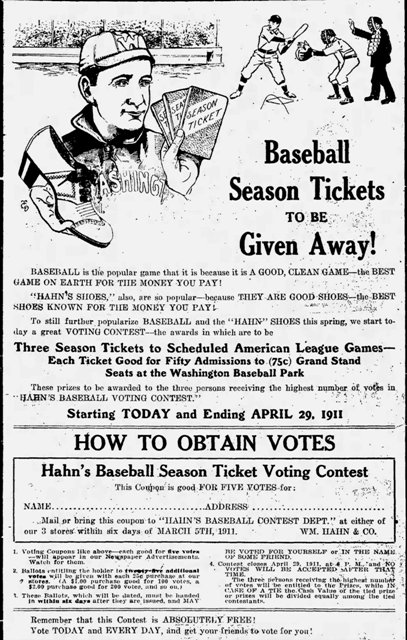
The Hahn Shoe Company took out advertisements in all of Washington’s daily newspapers announcing a promotion for the new ballpark:

Baseball Season Tickets To Be Given Away!

“Baseball is the popular game that it is because it is A GOOD, CLEAN GAME–the BEST GAME ON EARTH FOR THE MONEY YOU PAY!

“‘HAHN’S SHOES,’ also are so popular–because THEY ARE GOOD SHOES–the BEST SHOES KNOWN FOR THE MONEY YOU PAY!

“To still further popularize BASEBALL and the ‘HAHN’ SHOES this spring, we start today a great VOTING CONTEST–the awards in which are to be

“Three Season Tickets to Scheduled American League Games–Each Ticket Good for Fifty Admissions to (.75) Grand Stand Seats at the Washington Baseball Park.”

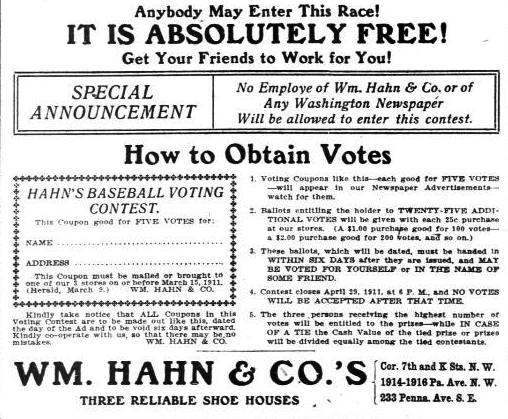
The contest called for fans to collect votes on their behalf–the three highest vote totals by April 29 would receive the tickets to 50 home games from May 4 through the end of the season.

The contest became very popular, and by April 9 The Washington Times said that a million votes had been cast,

hahnscontestformBallots were printed regularly in the newspapers and additional votes could be received for submitting bonus coupons and purchasing items in Hahn stores.

Leader boards were displayed in the windows of each Hahn store, and The Washington Herald said “So close to the present leaders are many of the other contestants that constant changes are likely.”

When the contest came to an end, The Times claimed “a total of 7,000,000 votes was [sic] cast by friends of the contestants.”

Hahn’s announced the winners in large ads in all of Washington’s newspapers:

hahnscontestwinners

The winning contestants each received more than 200,000 votes each.  Hahn’s said:

“That baseball and Hahn’s Reliable Shoes are both at the zenith of their popularity here in Washington was manifested by the phenomenal success of our Baseball Voting Contest, in which millions of votes were cast.”

Despite the claim that baseball was “at the zenith” of its popularity in the nation’s capital, or perhaps because construction of the new ballpark wasn’t completely finished until July 24, attendance dropped by nearly 10,000 from 1910 to 1911.

The Senators were no better either.  They followed their 66-85 record in 1910, with a slightly worse 64-90 mark in 1911.


Things I Learned on the Way to Looking up other Things #12

3 Nov

The Cost of Superstitions, 1913

John Phalen “Stuffy” McInnis his .324 and drove in 90 runs for the 1913 Philadelphia Athletics, but the first baseman hit just .118—2 for 17—during the World Series.

Stuffy McInnis

Stuffy McInnis

The Washington Post told how one superstition among the athletics players might have contributed to McInnis’ slump:

“Those boys believe that they can change the luck at a crucial moment by hurling their bats in the air and letting them fall where they will.  Probably you fans have often seen them do it.  They also believe that they can keep up their good luck by continuing this practice.

“During the first game, in which (Frank “Home Run”) Baker hit a home run, the Athletics started tossing their bats the minute the ball was hit.  As the bats came down Stuffy McGinnis couldn’t get out of the way in time and one of them struck him in the ankle, causing a painful bruise.  He limped to first base and for a while (Connie) Mack was afraid he couldn’t go on with the game.”

Despite McInnis’ slump, the Athletics beat the Giants four games to one.

The Case against the Spitball, 1905

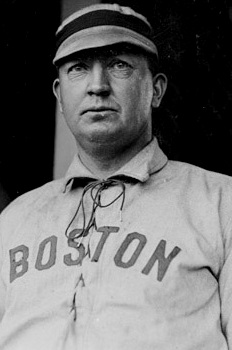
Baseball’s greatest pitcher hated the games most controversial pitch.  In 1905 Denton True “Cy” Young was quoted in The Sporting Life saying it wouldn’t be long before the pitch disappeared entirely:

“I don’t think the ‘spit ball’ is going to cut a much a figure as was thought early in the season.  Many of the pitchers that were using it at the start of the campaign have cut it now, and from now on the twirlers that use it will be dropping it one by one.  I used it against Philadelphia and Washington and had it working nicely, but it hurt my arm and I have cut it altogether.  An old pitcher like myself has no business using it at all.”

Cy Young

Cy Young

Young said the pitch injured his forearm and said he was not alone.  He claimed Jack Chesbro, George Mullin, (Guy) “Doc” White all received similar injuries.   And Washington’s Case Patten, who a year earlier so loved the pitch The St. Louis Republic said he was often “giving the ball a shower bath preparatory to flinging,” was now saying the pitch “lamed his arm.”

Young said even for those who weren’t injured, the spitter would ultimately lead to pitchers losing “control of his curve ball and his fast ones.”

While Chesbro disagreed with Young’s claim that his arm problems were the result of throwing spitballs, his effectiveness diminished greatly after the injury.

Young’s prediction of the demise of the pitch was premature.  At the time of his statement, Chicago White Sox pitcher “Big Ed” Walsh was perfecting the pitch, which he learned from teammate Elmer Stricklett—who had also been instrumental in Chesbro’s use of the spitter.   Walsh started throwing the spitball regularly in 1906.

Ed Walsh circa

Ed Walsh circa

A month before his death, on his 78th birthday and bed-ridden, Walsh remained an advocate for the pitch Cy Young detested.  He told a reporter for The Associated Press:

“I admire the pitchers today who throw the pitch.  Some people call ‘em cheaters.  They’re not.  They’re just guys doing everything they can to win.”

Wahoo Sam’s Scouting Report, 1914

Coming off of the New York Giants off-season world tour with the Chicago White Sox, the consensus opinion seemed to be that Giants Manager John McGraw did not make a mistake in signing Jim Thorpe, the world’s greatest all-around athlete, to a three-year contract worth–depending on the source—from $5,000 to $6,500 per season.  Many doubted Thorpe’s prospects after he hit just .143 in 19 games for the Giants in 1913.

Jim Thorpe

Jim Thorpe

But, not to worry, said McGraw:

“All Thorpe needed was every day action, instead of idleness, although of course sitting on the bench all summer gave him a chance to learn lots of things that will stand him in good stead later on.”

The baseball world generally agreed with McGraw’s assessment.

Hugh Fullerton predicted Thorpe would be “the most sensational baseball player of 1914.”

Damon Runyon declared Thorpe was “now a star.”

Gustave (G.W.) Axelson, Sports Editor of The Chicago Record-Herald, who traveled with the teams, said of Thorpe’s development during the trip:

“The fans in the United States will see an entirely different kind of player when Thorpe Lines up for the season. “

White Sox pitcher Joe Benz, who played against Thorpe on the tour, agreed saying Thorpe “improved greatly” and would be of “great assistance to the Giants,” in 1914.

But, “Wahoo” Sam Crawford, the Detroit Tigers outfielder who traveled with the tour as a member of the White Sox disagreed with all the glowing accounts of Thorpe’s progress.  The Detroit Times said:

“Thorpe’s speed is all that commends him, according to Sam.  He is not a particularly good fielder, and he cannot hit.  He is not a natural hitter at all, but he gives the bat a little upward chop as he swings at the ball in a way that Crawford never saw any man do before.

“Furthermore Thorpe doesn’t seem to have that baseball instinct that is so necessary for a big league player, say Crawford.  He is a very chesty fellow for a man who has yet to prove that he is of big league caliber, is the assertion made by Wahoo Sam.”

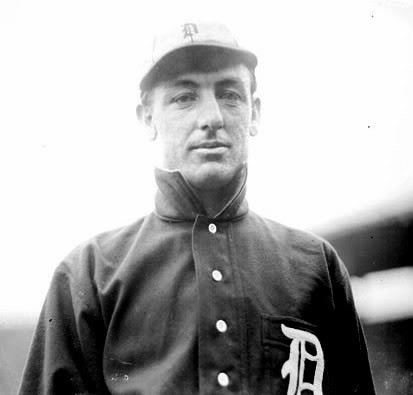
Sam Crawford

Sam Crawford

Crawford’s assessment was the most accurate.  Despite the fanfare that accompanied Thorpe’s return from the tour, Thorpe was never better than a mediocre outfielder (career .951 fielding percentage) and he hit just .252 over parts of nine major league seasons.

Harley Parker

20 Oct

Harley Park Parker was a renaissance man; a physician, an ambidextrous golfer, a billiard player who trained champions, in addition to being a major league pitcher—he was 5-8 with a 5.90 ERA in parts of four seasons with the Chicago Colts and Cincinnati Reds.

He is also responsible for what might be the worst single game pitching performance in professional baseball history.

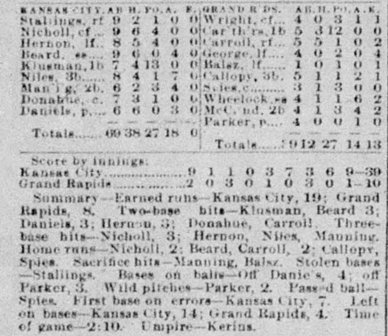
The 22-year-old Parker was pitching for the Grand Rapids Rippers (several newspapers in other in the other Western League cities called the team the Rustlers) against the Kansas City Blues (newspapers were split between referring to the club as the Blues or the Cowboys) on July 25, 1894.

Harley Parker circa 1895

Harley Parker circa 1895

The Kansas City Gazette said:

“The ball bats of the Kansas City Blues in the game against Grand Rapids collided with Pitcher Parker’s curves thirty-nine times yesterday, and yielded as many runs.”

The Blues actually had thirty-eight hits, to go along with 13 Grand Rapids errors.

The Kansas City Star said:

“(The Blues) hit him at will yesterday, for singles, doubles, triples and home runs.  It was a slugging match, the like of which had never before been seen in a professional game at Exposition Park, and while the Rustlers did some very sloppy fielding, there was world of free, sharp and hard hitting.”

Every member of the Kansas City line up had at least two hits, and three players, Sam Nicholl, Ollie Beard, and pitcher Pete Daniels, collected six each.

The final score was 39 to 10.

The Box Score Grand Rapids vs Kansas City

The Box Score Grand Rapids vs Kansas City

The game was indicative of Parker’s season; he finished with a 15-18 record with a 6.23 ERA—in addition to the 193 earned runs he gave up in 278.2 innings, his team gave him horrible support, and he allowed 194 unearned runs.

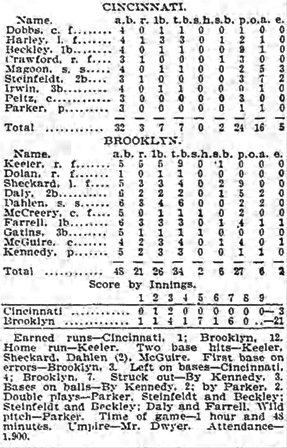
Parker had a similarly disastrous day as a major leaguer seven years later.  While pitching for the Reds against the Brooklyn Superbas on June 21, 1901 Parker allowed 21 runs on 26 hits in a complete game loss—“Wee Willie” Keeler was 5 for 5 with a rare home run (he hit just 33 during his 19-year career).

The Box Score Cincinnati vs Brooklyn

The Box Score Cincinnati vs Brooklyn

During his five minor league seasons Parker was only above.500 once; 5-4 in 1898 with the Minneapolis Millers; he was 5-8 as a major leaguer.

Parker briefly owned a Central League franchise in 1911, the club moved from Grand Rapids, Michigan to South Bend, Indiana, but even with the move he was forced to sell the team at mid-season because of financial difficulties.

That same year he also had a short stint as an umpire that ended with a trip to the United States Capitol.

In August, after one of Umpire Jack Sheridan’s frequent resignations—he returned to his position days later—American League President Ban Johnson hired Parker to the league staff.

Less than a month into his tenure Parker was on the field for one of William Herman “Germany” Schaefer’s stunts.  On August 4, Schaefer’s Washington Senators were playing the Chicago White Sox.  With the score tied in the ninth inning Schaefer stole second, hoping to draw a throw to allow Clyde Milan to score from third base; Sox catcher Fred Payne did not throw to second.  Schaefer then led off second base on the first-base side and returned to first on the next pitch.

The Washington Herald said:

“Umpire Harley Parker, who was officiating on the bases, was near first at the time.  When he saw Schaefer coming back to first Parker accosted the comedian ball player with the query: ‘What are you doing here?’

“’I have stolen second.  Now I am stealing first,’ said the Nationals’ troublemaker.

“’Well, if you stay down here I’ll call you out,’ said Parker.

“(White Sox) Manager (Hugh) Duffy in the meantime had ordered Doc White to throw the ball to John “Shano” Collins at first.  Germany thought discretion the better part of valor, and made a dive back toward second.  In the meantime Milan was tearing down toward home.  Collins wheeled and threw home, Milan being tagged out at the plate.”

Germany Schaefer

Germany Schaefer

Duffy was standing in the middle of the diamond arguing with Parker and home plate umpire Tommy Connolly as Milan was thrown out at home—Washington protested that “the play shouldn’t go because Chicago had ten men on the field.  Manager Duffy having stayed out to the middle of the diamond.”

Connolly and Parker finally ruled that Milan was out.  Washington went on to win the game 1 to 0 in 11 innings.

Harley Parker, 1910

Harley Parker, 1910

The following month Parker was again in Washington working a series between the Senators and the White Sox when, while sitting in the lobby of Washington’s Driscoll Hotel, according to The Washington Star he was approached by an “officer from the United States Senate,” who told Parker “I have a warrant for you.”

Parker was taken to the United States Capitol.

“The officer of Uncle Sam marched the arbitrator up to the desk of Vice President (James Schoolcraft) Sherman in the senate, the most august assemblage in the United States.

“’I guess I’ve got your man at last,’ said the officer as he introduced Parker to the vice president.

“’I sent for you to inquire about that play when Germany Schaefer went back to first after stealing second,’” said Sherman and Parker drew a sigh of relief.

“It was just like eating pie for Parker to explain the play and he did so to the satisfaction of all concerned.  Sherman admitted the play bothered him more than any problem that had come up in the extra session of congress and that was going some.”

Parker did not work as an umpire again after the 1911.  He returned to Chicago to practice medicine and teach billiard; contemporary newspaper accounts said he trained two champions—Calvin Demarest and Welker Cochran.

He died in Chicago in 1941.

“We didn’t have any High-Faluting Baseball Paraphernalia”

15 Oct

The Seattle Star said of Dan Dugdale:

“No man in the Northwest can rival the experiences in baseball that Daniel E. Dugdale has had in the national game.”

In his 1934 obituary, The United Press called Dugdale “the father of organized baseball in Seattle.”

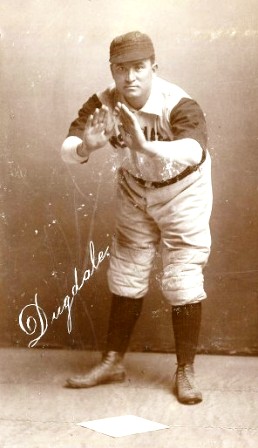
Dan Dugdale

Dan Dugdale

Primarily a catcher, Dugdale played professional ball for more than a decade; including two stints in the National League with the Kansas City Cowboys in 1886 and the Washington Senators in 1894.  He retired after the 1897 season and made what was intended to be a brief stop in Seattle on the way to Alaska for the Klondike Gold Rush.  He never made it to Alaska, and in Seattle, he organized most of the city’s early professional teams and built two ballparks.

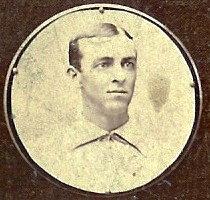
Dan Dugdale 1894

Dan Dugdale 1894

Forty years after he began playing he shared his reminiscences about in the early 1880s in his hometown of Peoria, Illinois with Seattle reporter Leo Lassen:

“We didn’t have any high-faluting baseball paraphernalia for the deciding game of the Peoria, Illinois city championship in the summer of 1883.  I can remember that we used a piece of the curbstone for home plate.  Nobody except the catcher used glove, and he only had a fingerless glove of thin leather over both hands.

“Oh yes!  Of course my team, the Double Browns, won, or it wouldn’t start this story out right.  It was in that game that I got my start as a catcher.

“I had been playing shortstop, but the regular receiver split a finger and there wasn’t anyone else to catch, so I tried it.

“We stood back for the pitches except on the third strike, and except with men on bases, catching the ball on the first bounce when standing back.

Ted Kennedy, who later helped pitch one of Pop Anson’s Chicago teams into the championship, was hurling for our side that day, and baby but he could throw that ball with plenty of swift.

“’Don’t catch if you want to keep your health,’ Ted warned me before taking up my receiving duties…Kennedy was right.  The first time I stood up close to catch, the ball hit that curbstone plate and crashed into my mouth, knocking out teeth by the wholesale and putting me on queer street.

“But in those days no one considered quitting as long as it was possible to stand up and catch the ball.

“I finished the game and we won the championship, and I felt well repaid for it.

“That game started me on my baseball career as a catcher, after which I was to serve for 15 years as a receiver for clubs throughout the country.”

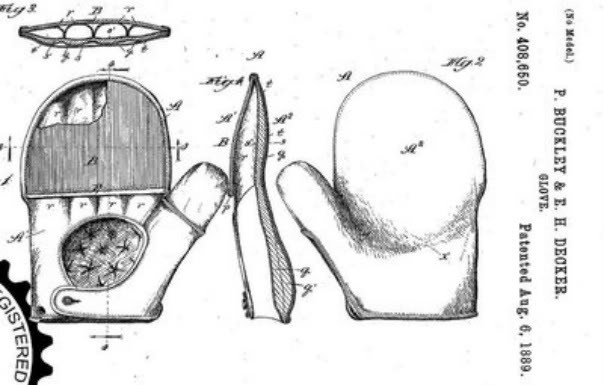
Kennedy wasn’t the only major leaguer Dugdale played with while in Peoria.  In 1885, he played with one of the claimants to the title of invention of the catcher’s mitt—Harry Decker—and Dugdale talked about some of the attempts his teammate made to protect his hands four years before Decker was awarded the patent for the Decker Safety Catcher’s Mitt:

“(Catchers) had no shin guards, masks or big gloves in those days, and a fellow had to be almost a martyr to go behind the plate with fellows like John Clarkson, Amos Rusie and those old stars doing the pitching.

“The big catcher’s pad now in use in baseball, is the same glove that Harry Decker, a teammate of mine on the Peoria team in 1885, invented.

“Harry had been troubled with split fingers and he kept tinkering around with leather trying to figure out how to protect his left hand, which does the big work for all catchers.

“He had a thin, fingerless glove to start with and one day he slipped a piece of raw beefsteak between the glove and his hand and that glove gave him his first idea.  He used this protection for almost a season, using a fresh piece of meat each day.

“Then he tried shot in the pocket of the glove and put a piece of leather on top of the shot, leaving it between the two pieces of leather.

“This gave him the idea of building the mitt up bigger and lacing fingers on the back of the glove.

“One day he hit upon the idea of stuffing the glove with rags in the mitt for protection, and finally got some good felt and used that.  It has been in use ever since.”

Decker Safety Catcher’s Mitt

Decker Safety Catcher’s Mitt

Dugdale remained the most prominent figure in Seattle baseball until he was hit by a truck and killed in 1934.

Accounts vary over how much Decker received from the sale of the mitt patent to A.G. Spalding.   He  is one of the enigmatic 19th Century players for whom there is no information on the date or location of his death.

After his career ended in 1891 he was convicted of numerous crimes—most involving forgery, but also including larceny and bigamy; several of his crimes involved other ballplayers.

Throughout his career Decker had a reputation as a womanizer; The Philadelphia Inquirer called him “The Don Juan of the Diamond,” but by 1890, perhaps exacerbated by his being hit in the head by a pitch, he went from lovable rogue to serial offender.  He racked up arrests and convictions in at least six states and an involuntary commitment to the Elgin State Hospital in Illinois over the next 25 years.

Victims of his crimes included Dugdale, and Al Reach, both of whose names appeared on forged checks in separate cases, and Jack Horner and Pat Pettee, teammates of Decker’s in 1891 during his brief stay with the New Haven Nutmegs in the Eastern Association.  Decker was convicted of stealing property worth $150 from Horner and $55 from Pettee after the two had allowed him to stay in the apartment they shared.

Decker’s trail goes cold after he was released from California’s San Quentin Prison in 1915.

Leo Lassen, the reporter Dugdale spoke to, went on to become the radio voice of the Seattle Rainiers of the Pacific Coast League from 1931 through the 1961 season.  Some surviving audio can be found here.

“It’s Strange how these Stars of Balldom have such Beliefs”

27 Aug

Throughout his career as an American League umpire, Billy Evans, who had covered baseball for The Youngstown Vindicator continued to write syndicated newspaper articles.  He was fascinated by the superstitions that controlled the actions of so many players.

Billy Evans

Billy Evans

He followed a 1907 article about the subject, with more stories the following year:

“Of all professions, that of baseball player is the most superstitious…Of course, there are many superstitions in common, yet most of the players have pet ideas of their own on which they place much reliance.  The data of origin of many of the superstitions is a deep, dark mystery.”

Evans said:

“There is certainly nothing out of the ordinary to be seen in a load of hay, yet most players welcome the sight of one during the playing season.  In the dictionary of baseball a load of hay signifies two hits that afternoon for the discoverer, and history tells us there is nothing dearer to a player’s heart than base hits…While its supposed strange magic often fails, still the players retain faith in it.  On the other hand, the sight of a load of empty barrels is always dreaded, for some it means a shutout, to others merely defeat.”

Of one popular superstition of the time, Evans said there was “no greater believer in shaking up the bats when a rally is on” than Cleveland Naps pitcher Charles “Heinie” Berger:

“Ordinarily a team keeps its bats lined up in front of the bench in a fairly tidy manner.  According to Heinie’s code that is all well and good when everything is moving along smoothly, but when a rally appears to be in the air, the proper way to encourage it, according to Berger, is to scatter the bats in every direction.”

Heinie Berger

Heinie Berger

Evans told the story of the Naps’ August 21, 1908, game, although some of the details regarding the scoring wrong, he got most of the facts correct:

“One day last summer during an important game at Philadelphia, the Athletics got away with a seven-run lead in the first two innings.  When they added another in the third, it certainly looked as if things were all off so far as Cleveland was concerned.  Until the seventh inning the Naps bench was not unlike a funeral.  Two runs in the seventh stirred up a little hope, and caused Heinie to heave a few big sticks in different directions.  His actions caused Umpire Jack Sheridan (Sheridan and Evans both worked the game, Sheridan was behind the plate) was to offer a mild rebuke and incidentally warn Heinie that he wanted nothing but silence during the rest of the afternoon.”

Cleveland scored two runs the following inning, and had the tying run on base:

“Heinie proceeded to scatter the two dozen or more bats in all directions.  That was too much for the veteran Sheridan, and after he had made Berger replace all the bats back in a straight line, he tied a can on the Teuton and chased him from the lot.

“Berger viewed the remainder of the game from the bleachers, failing to carry out completely the edict of the umpire.  When the Naps scored the two men on the sacks and tied up the game he was happy.  Heinie was confident that the bat superstition had aided in the victory that he was sure would result, now that the score was tied.  When the Athletics scored a run in the eighth that proved to be the winner his confidence in the theory was not shaken in the least. He blamed the defeat on Sheridan, claiming that as soon as the umpire ejected him from the game the spell was broken.”

Evans also wrote about his favorite superstitious player, “Wild Bill” Donovan, pitcher for the Detroit Tigers.  Evans had previously mentioned Donovan’s fear of throwing a shutout during his first start of each season, and his actions in one game in particular, but now gave a more detailed account:

“It all seems rather foolish, yet I have worked back of Donovan on two such occasions and have every reason to believe that Bill makes it possible for his opponents to score.  In one of the games Detroit had the affair clinched 8 to 0 in the eighth.  With one down and a man on second Charley Hickman stepped to the plate.  A straight fast one is the most delicious kind of dessert for Charley, although he likes almost any old thing in the shape of curves and slants.

“There is no more strategic pitcher in the league than Donovan, yet he started off the reel to hand them up to Hick’s liking.  After fouling off three, Hick met a fast one on the nose and was blowing hard at third by the time the ball was relayed back to the infield.  He scored a moment later, but Detroit too the game easily, 8 to 2.  Bill had escaped the much despised shutout.  By the way that year was the most successful of Donovan’s career, and, of course, merely served to strengthen his belief.”

Bill Donovan

Bill Donovan

Again, Evans got nearly all the details correct—except the final score was 9 to 2.  The May 24, 1907, game was Donovan’s first start of his best season in baseball (25-4, 2.19 ERA for the American League Pennant winners), and he did lose a shutout to Washington in the eighth inning on a Hickman triple.

Evans said a superstition often attributed to Cy Young, was not a superstition at all:

“The veteran Cy Young, the grand old man of them all, is one of the few players who doesn’t take much stock in omens of good or bad luck.  Cy, however, has one big hobby.  He always prefers to pitch on dark days…The dark day idea is no superstition with Cy.  No one except the batters perhaps realizes how hard it is to hit his fast ball when the light is dim.  It is really a pleasure for him to work out of turn on such days, for he knows what a big handicap he has over his opponents.”

Evans said another Hall of Fame pitcher had a bizarre habit, that while perhaps not a superstition, bears mentioning:

Jack Chesbro, the famous spitter, is always of the opinion that someone is slipping a doctored ball over on him, and quite often asks for a new one when the cover doesn’t taste just right.”

The umpire concluded:

“It’s strange how these stars of balldom have such beliefs and stick to them, but they do.  The ball player lives in a world of his own, more than any other profession with the possible exception of the actors.”

Things I Learned on the Way to Looking up other Things #10

21 Jul

Trash Talk, 1886

The Philadelphia Times reported in July of 1886 about a feud between two American Association pitchers; Brooklyn Grays rookie Steve Toole and St. Louis Browns star Dave Foutz:

“Steve Toole says Foutz is the ugliest player in the Association.  Foutz returns the compliment by saying that Toole is no pitcher, but his face paralyzes the batsmen.”

Dave Foutz

Dave Foutz

Steve Toole

Steve Toole

The National Convention—1867

The Nashville Union and Dispatch’s take on a decision which would reverberate for the next 80 years:

“Still Against The Negro—The National Convention of base-ball players in session at Philadelphia last week resolved that no club composed of persons of color, or having in its membership persons of color, should be admitted into the National Association.

“To show the significance of this action we may state that there were four hundred and eighty-one clubs represented in this convention including clubs from the following states:  Massachusetts, Connecticut, New York, New Jersey, Pennsylvania, Delaware, Maryland, District of Columbia, Ohio, Indiana, Illinois, Wisconsin, Minnesota, Missouri, Oregon and Nebraska.  From which it is evident that the Northern base-ballists are opposed to Negro equality.”

Boss Schmidt—Throwing and Fighting

Charles “Boss” Schmidt is best known for leaving Ty Cobb with two black eyes and a broken nose in 1907 after Cobb slapped a black groundskeeper and choked the man’s wife when she attempted to intervene;  he also was a member of three pennant-winning Detroit Tigers teams (1907-1909).

Charles "Boss" Schmidt

Charles “Boss” Schmidt

During the era when several players received tremendous publicity for catching balls dropped from great heights. Schmidt received only minimal attention for an impressive throwing feat in 1909.

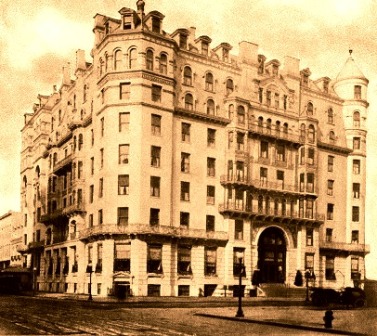
The Tigers were staying at Washington’s Arlington Hotel during an August series with the Washington Senators when Schmidt, according to The Associated Press:

“Charles Schmidt of the Detroit baseball team threw a 10-cent baseball from Vermont Avenue in front of the Arlington over the eight-story Shoreham Hotel (the one torn down in 1929, not the Omni Shoreham which was built in 1930 and is still standing), which faces on fifteenth Street.  He took a run, and the ball went up until it disappeared over the roof line of the hotel.  It was later found in Fifteenth Street.  Whether it cleared the building entirely or bounced from the roof is not known, but it was a splendid throw, for the distance from where Schmidt stood to Fifteenth Street is nearly 400 feet.”

shoreham

The Shoreham Hotel, Washington D.C., the eight story hotel Schmidt cleared with “a 10-cent baseball.”

Schmidt participated in two professional bouts in Fort Smith, Arkansas after the 1911 season—he won a six-round decision and participated in one four-round no decision.  While some thought Schmidt could potentially fight champion Jack Johnson (who some sources say he spared against during this period), it’s clear Schmidt never took seriously the idea of fighting Johnson.

In a letter later printed in The Detroit Times Schmidt told a friend:

“This white man’s hope bunk is the biggest joke ever put over on the public.  I admit I like the boxing game, but I have never even considered gathering a living from the roped arena.  I like to do just four things.  Play ball, fight, hunt and eat.  Boxing is all right for a little amusement when it’s too cold to play ball…As for this dope on my being the white man’s hope, somebody is loon, it sounds like a squirrel talking to a nut.

“I have joined the Tigers again, and mean to show by my playing that I am with the team heart and soul.  Whatever my personal opinions have been, whatever my playing is, whatever critics have said about me, no one can say that I have not given the Detroit team the best I have…I don’t know who this guy is who has been sending fight dope from Fort Smith about my challenging Jack Johnson, but whoever he is, he ought to get a job in New York.  He could sell J. Pierpont Morgan a nicely enameled brick without difficulty.

“Yours is peace, prosperity and pennants, Charlie.”

Despite being released by the Tigers before the beginning of the 1912 season, Schmidt remained true to his word that baseball, not boxing, was his sport of choice.  His big league was over, but he continued as a player and manager in the minor leagues until 1927.  He never fought again.

Lost Pictures–Walter Johnson Steamrolls the American League

20 Jun

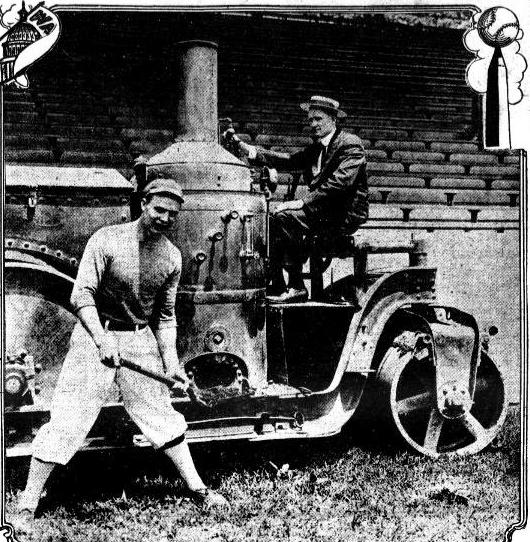
walterjohnsonsteam

A 1912 publicity photo featuring Walter Johnson at the wheel of a steamroller, and Senators catcher Eddie Ainsmith with the shovel at Griffith Stadium in Washington.  The photo was taken on June 17; the Senators had just returned from Cleveland having won 16 straight games–all on the road.  During the streak, the Senators had gone from 17-21 in sixth place, to 33-21, just one and a half games behind the Boston Red Sox.

The Washington Times said “It was considered an omen of continued triumph” that the steamroller was “found on the grounds.”

The Senators won the following day and continued playing well the rest of the way, finishing 91-61, their first winning season in the team’s 12-year history.  But, it was not good enough to catch the Red Sox who finished 14 games in front.

Johnson had his first of two 30-win seasons, finishing 33-12 with a league-leading 1.39 ERA.

Ainsworth played in the major leagues for 15 years, the first nine with the Senators.  The Washington Post said before the season opener in 1915:

“For the seventh consecutive year Walter Johnson will work in the opening clash for the home folks, and in nearly as many seasons will Eddie Ainsworth be his battery mate.  This pair always work together and no pitcher and catcher in either league are better acquainted when it comes to baseball.”

Eddie Ainsmith

Eddie Ainsmith

Several weeks after Ainsmith was traded to Boston (then to Detroit on the same day) in January of 1919, Louis Dougher a writer for The Washington Times said:

“When Eddie Ainsmith was traded to Detroit via Boston, Clark Griffith shattered on of the crack batteries…it was Johnson and (Charles “Gabby”) Street.  Then when Gabby slowed up and gave way to a successor, it rapidly became Johnson and Ainsmith.”

Age, more than the departure of Ainsmith slowed Johnson down, but he still won 140 games and posted three 20-win seasons after his personal catcher was traded.

“I Remember Well the First Day Latham Coached”

11 Jun

Arlie Latham “The Freshest Man on Earth” is generally credited as the first full-time third base coach.  Even before John McGraw hired him to coach third for the New York Giants in 1909, Latham’s antics as a “coacher” were already legendary—in 1907 Ted Sullivan, one of baseball’s pioneers and Latham’s manager with the St. Louis Browns, told The Washington Evening Star about Latham’s first time.

Ted Sullivan

Ted Sullivan

“’I remember well the first day Latham coached,’ said Sullivan.  ‘It was in Cincinnati in 1883.  I must confess I never had much use for a ‘fresh’ player, and soon after Latham reported I was not backward in telling him he was too d— fresh, but  I later discovered that he was a wonderful player, and that his freshness was of a most harmless and hilarious nature.  But after I gave him the reprimand I noticed he was a little timid about saying anything, but was still of good cheer.

“One day in Cincinnati Will White had the Browns on his staff with his little stingy rise ball.  My best men were on the bases and there was no one on the line.  I asked the men on the bench, ‘Is there no one here able to coach a little?’ Latham speaks up and says, ‘I will coach if you want me.’”

Never one for understatement, Sullivan said what happened next:

“Well, if Gabriel had entered a graveyard and blown his trumpet, and the tombstones had loosened their grip on the dead, it would not have created more of a sensation.  Latham walked out to the home plate and to the consternation of umpire, players and myself, delivered this talk to pitcher White:

‘My Dear Mr. White, we have been very courteous to you during the game, but as the Browns need a few runs we will have to be rude to you for awhile,’ and then stalking off to third base went through those gyrations that afterward made him famous all over America.  White was dumbstruck at the flow of words that afterward fell from Latham, and he became so rattled that the Browns batted him out of the box and won the game.”

Will White

Will White

No Browns game in Cincinnati that season matches well with Sullivan’s initial account—he continued to tell the story to reporters for more than a decade and sometimes said instead the game was “against Cincinnati—the game that best fits Sullivan’s description was a 9 to 5 Browns win over the Reds on May 16. But, contemporary accounts attribute White’s faltering, which led to the Browns come from behind victory, to a knee injury rather than any “flow of words” from Latham.

“Latham was the original funny man in the coacher’s box, and he stood in a class entirely by himself.  He has had many imitators, but they have never reached the position that Latham occupied, for he was a genius in the work and never used language that would offend the ears of the most prudish.

“Many years ago it used to be Latham’s great aim to get out on the coaching line here in Washington in the games that local pet—Win Mercer—was to do the pitching.  It will be recalled that Mercer was an extremely handsome fellow, and often it fell to his lot to pitch on Ladies’ Day.  Latham took the greatest delight in endeavoring to disconcert Mercer, the large number of ladies being mad enough to pull his hair, while at the same time they were convulsed with laughter at his sayings and antics.  He and Mercer were great chums, and when Latham was secured by the Wagners (J. Earl and George) to travel with the Washingtons (in 1899) for coaching purposes alone the two were inseparable, thus showing that though a thorough minstrel and actor, his chaff never broke into bitter personalities  or severed friendships.

“We have our Hughey Jennings and others of today, but in the history of baseball there has only been one ideal coacher from the line—Arlie Latham.”

Latham with the New York Giants

Latham with the New York Giants

When McGraw hired Latham two years later, Bozeman Bulger, sports writer for The New York Evening World said the Giants’ new third base coach had just as much fun as a minor league umpire as he did when coaching—Bulger was a writer for The Birmingham Age-Herald while Latham was working in the Southern Association:

“I had the fun one time of traveling with Latham while he was an umpire in the Southern (Association).  On one of those days the Birmingham club was playing at Little Rock, and Pat Wright was playing first for Little Rock, and Pat Millerick, of Birmingham was at the bat.  He hit a little grounder toward short, and for a moment it was fumbled.  Pat went lumbering down to first.  Seeing that he couldn’t quite make it on the run, he slid for the bag.  Pat Wright at the same time got the ball a little wide and slid for the bag himself, so as to beat the runner.  The feet of both hit the bag at about the same time.”

Latham made no call on the play.

“’Judgment!’ yelled Millerick, as he threw up his hand.

“Everybody waited for Latham to make a decision.

“’Wait a minute,’ said Arlie, ‘I want to do this thing right.’  He then rushed into the clubhouse and came out with a tape measure.  While the crowd sat in suspense Latham deliberately measured the feet of the two Pats—Millerick and Wright.  It was shown that Wright’s foot was one inch longer, and Millerick was promptly declared ‘Out!’  Nobody had the nerve to question the decision.”