Tag Archives: Wee Willie Keeler

Grantland Rice’s “All-Time All-Star Round up”

10 Aug

In December of 1917, thirty-eight-year-old sportswriter Grantland Rice of The New York Tribune enlisted in the army–he spent fourteen months in Europe.  Before he left he laid out the case, over two weeks, for an all-time all-star team in the pages of the paper:

“As we expect to be held to a restricted output very shortly, due to the exigencies and demands of the artillery game, this seemed to be a fairly fitting period to unfold the results.”

Grantland Rice
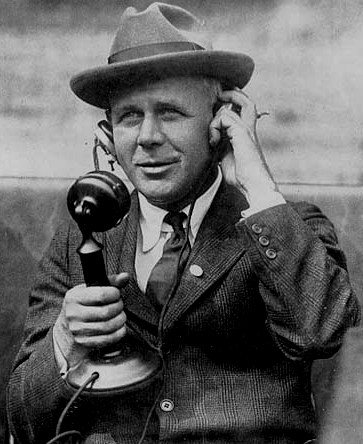
Grantland Rice

Rice said the selections were “not solely from our own limited observation, extending over a period of some eighteen or twenty years,” but included input from players, managers and sportswriters, including  “such veterans” as Frank Bancroft and Clark Griffith, and baseball writers Joe Vila of The New York Sun, Bill Hanna of The New York Herald and Sam Crane, the former major league infielder turned sportswriter of The New York Journal.

Rice said only one of the nine selections “(S)eems to rest in doubt.  The others were almost unanimously backed.”

The selections:

Pitcher:  Christy Mathewson

A. G. Spalding, John (Montgomery) Ward, Larry Corcoran, Charley Radbourn, John Clarkson, (Thomas) Toad Ramsey, Tim Keefe, Bill Hoffer, Amos Rusie, (Mordecai) Miner Brown, Addie Joss, Ed Walsh–the array is almost endless.

“In the matter of physical stamina, Cy Young has outclassed the field.  Cy won more games than almost any others ever pitched.

“(But) For all the pitching mixtures and ingredients, stamina, steadiness, brilliancy, brains, control, speed, curves, coolness, courage, is generally agreed that no man has ever yet surpassed Christy Mathewson…there has never been another who had more brains or as fine control.”


[…]

“It might be argued that Radbourn or (Walter) Johnson or (Grover Cleveland) Alexander was a greater pitcher than Mathewson.

But we’ll string with Matty against the field.”

Radbourn was the second choice.  Bancroft said:

“Radbourn was more like Mathewson than any pitcher I ever saw.  I mean by that, that like Matty, he depended largely upon brains and courage and control, like Matty he had fine speed and the rest of it.  Radbourn was a great pitcher, the best of the old school beyond any doubt.”

Catcher:  William “Buck” Ewing

“Here we come to a long array—Frank (Silver) Flint, Charley Bennett, (Charles “Chief”) Zimmer, (James “Deacon”) McGuire, (Wilbert) Robinson, (Marty) Bergen(Johnny) Kling, (Roger) Bresnahan and various others.

“But the bulk of the votes went to Buck Ewing.”

Buck Ewing
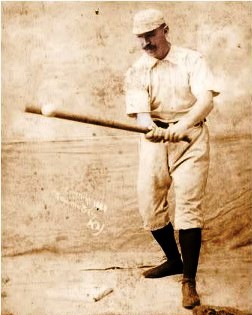
Buck Ewing

[…]

“Wherein did Ewing excel?

“He was a great mechanical catcher.  He had a wonderful arm and no man was surer of the bat…he had a keen brain, uncanny judgment, and those who worked with him say that he had no rival at diagnosing the  weakness of opposing batsman, or at handling his pitchers with rare skill.”

Kling was the second choice:

“Kling was fairly close…a fine thrower, hard hitter, and brilliant strategist…But as brilliant as Kling was over a span of years, we found no one who placed him over the immortal Buck.”

1B Fred Tenney

First Base was the one position with “the greatest difference of opinion,” among Rice and the others:

“From Charlie Comiskey to George Sisler is a long gap—and in that gap it seems that no one man has ever risen to undisputed heights… There are logical arguments to be offered that Hal Chase or Frank Chance should displace Fred Tenney at first.

But in the way of batting and fielding records Tenney wins….Of the present array, George Sisler is the one who has the best chance of replacing Tenney.”

2B Eddie Collins

 “There was no great argument about second base.

“The vote was almost unanimous.

“From the days of Ross Barnes, a great hitter and a good second baseman on through 1917, the game has known many stars.  But for all-around ability the game has known but one Eddie Collins.”

Rice said the competition was between Collins, Napoleon Lajoie and Johnny Evers:

“Of these Lajoie was the greatest hitter and most graceful workman.

“Of these Evers was the greatest fighter and the more eternally mentally alert.

“But for batting and base running, fielding skill, speed and the entire combination, Collins was voted on top.”

 SS Honus Wagner

“Here, with possibly one exception, is the easiest pick of the lot.  The game has been replete with star shortstops with George Wright in 1875 to (Walter “Rabbit”) Maranville, (George “Buck”) Weaver…There were (Jack) Glasscock and (John Montgomery) Ward, (Hardy) Richards0n, (Hugh) Jennings, (Herman)Long, (Joe) Tinker and (Jack) Barry.

“But there has been only one Hans Wagner.”

Honus Wagner

Honus Wagner

Jennings and Long were rated second and third,  “But, with the entire list  considered there is no question but that Wagner stands at the top.”

3B Jimmy Collins

Rice said:

“From the days of (Ned) Williamson(Jerry) Denny, and (Ezra) Sutton, over thirty years ago, great third basemen have only appeared at widely separated intervals.

“There have been fewer great third basemen in baseball than at any other position, for there have been periods when five or six years would pass without an undoubted star.”

The final decision came down to “John McGraw vs. Jimmy Collins.”  McGraw was “a great hitter, a fine bunter and a star base runner,” while “Collins was a marvel and a marvel over a long stretch…he was good enough to carve out a .330 or a .340 clip (and) when it came to infield play at third he certainly had no superior…So taking his combined fielding and batting ability against that of McGraw and Collins wins the place.  McGraw was a trifle his superior on the attack. But as a fielder there was no great comparison, Collins leading by a number of strides.”


OF Ty Cobb

“The supply here is overwhelming…Yet the remarkable part is that when we offered our selection to a jury of old players, managers and veteran scribes there was hardly a dissenting vote.”

[…]

“Number one answers itself.  A man who can lead the league nine years in succession at bat.

“A man who can lead his league at bat in ten out of eleven seasons.

“A man who can run up the record for base hits and runs scored in a year—also runs driven in.

“Well, the name Ty Cobb answers the rest of it.”

OF Tris Speaker

 “The man who gives Cobb the hardest battle is Tris Speaker.  Veteran observers like Clark Griffith all say that Speaker is the greatest defensive outfielder baseball has ever exploited…Speaker can cover more ground before a ball is pitched than any man.  And if he guesses incorrectly, which he seldom does, he can go a mile to retrieve his error in judgment…And to this impressive defensive strength must be added the fact he is a powerful hitter, not only a normal .350 man, but one who can tear the hide off the ball for extra bases.”

Tris Speaker "hardest hit"
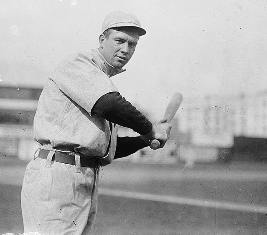
Tris Speaker 

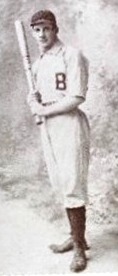
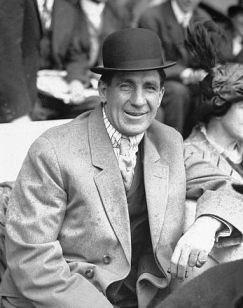
OF “Wee Willie” Keeler

Mike Kelly and Joe KelleyJimmy Sheckard and Fred Clarke—the slugging (Ed) Delehanty—the rare Bill LangeBilly Hamilton.

“The remaining list is a great one, but how can Wee Willie Keeler be put aside?

“Ask Joe Kelley, or John McGraw, or others who played with Keeler and who remember his work.

“Keeler was one of the most scientific batsmen that ever chopped a timely single over third or first…And Keeler was also a great defensive outfielder, a fine ground coverer—a great thrower—a star in every department of play.

“Mike Kelly was a marvel, more of an all-around sensation, but those who watched the work of both figure Keeler on top.”

Rice said of the nine selections:

“The above is the verdict arrived at after discussions with managers, players and writers who have seen a big section of the long parade, and who are therefore able to compare the stars of today with the best men of forgotten years.

“Out of the thousands of fine players who have made up the roll call of the game since 1870 it would seem impossible to pick nine men and award them the olive wreath.  In several instances the margin among three or four is slight.

“But as far a s deductions, observations, records and opinions go, the cast named isn’t very far away from an all-time all-star round up, picked for ability, stamina, brains, aggressiveness and team value.

“If it doesn’t stick, just what name from above could you drop?”

Jennings “Hurled an Unmentionable Epithet at him”

2 Feb

In April of 1896, the reigning National League Champion Baltimore Orioles traveled to Petersburg, Virginia for a pair of exhibition games with the Petersburg Farmers of the Virginia League.

The Baltimore Sun noted that it had been a tough spring for the Orioles.  Third baseman John McGraw “the brainiest and pluckiest little infielder that ever trod a diamond,” was in an Atlanta hospital suffering from typhoid fever; he would miss most of the season.

Additionally, catcher William “Boileryard” Clarke was sent back to Baltimore with a sprained ankle, pitchers John “Sadie” McMahon and Arlie Pond had injured hands and both would be out for at least a week,  and shortstop Hughie Jennings was also slowed by a hand injury.

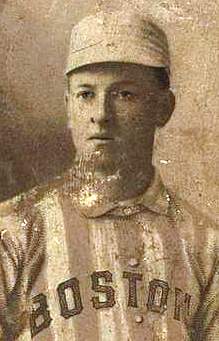
Hughie Jennings

Hughie Jennings

A light rain fell as the hobbled team arrived in Petersburg on the morning of April 6, the day of the first game—which ended in a 7 to 7 tie.  The Baltimore American said:

“Why the team did not trounce the Petersburgs is an open question, but whether it was because of the game on Saturday (in Richmond) or the rain, or the umpire, the Champions walked out of the gates with the humiliation of having made eight errors and feeling the added sting of having just escaped being beaten by a minor league team.”

Third-string catcher Frank Bowerman made two of Baltimore’s errors and had a passed ball.  He would be relegated to umpiring duties in the second game, scheduled for April 8.  On the seventh the Orioles defeated another Virginia League team, the Richmond Bluebirds, 4 to 3.

The American said the morning of April 8 “had been a pleasant one,” with local officials taking the Orioles for a tour of the Petersburg Civil War battlefield.  And, with the rain gone, “The warm sun put life into each club, and a pretty, snappy game was being put up by each side.”  Bowerman and Petersburg player Michael “Doc” Powers alternated as umpires for the game.

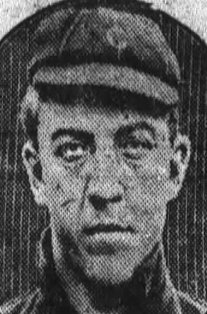
Doc Powers

Doc Powers

Petersburg was leading 1 to 0 in the seventh inning when Powers called Orioles third baseman Jim Donnelly out on strikes.  What happened next, and who was responsible, depended on whether you read the accounts in the Baltimore papers or those in Petersburg and the surrounding Virginia towns.

The Sun said:

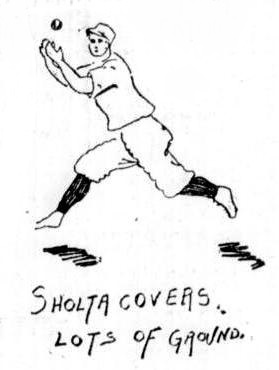
“Several promising runs had been cut off by similar umpiring and the birds were getting very ‘sore’ at such outrages.  Donnelly objected and (Hugh) Jennings went up to Powers, who was standing behind the pitcher, and said something to him.  Just then (Charles) Sholta, who had also run up, struck Jennings a stinging blow on the side of the head without warning.  The blow drew blood.”

The American said:

“While Hughey was expostulating rather forcibly with Powers, Sholta struck him on the cheek.”

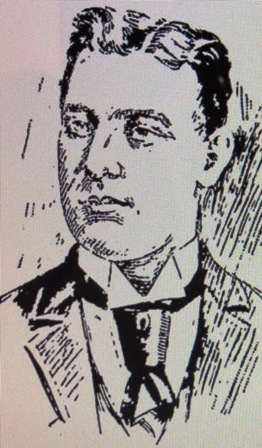
Charles Sholta--drawing from Richmond newspaper

Charles Sholta–drawing from Richmond newspaper

The Baltimore papers agreed that the punch Sholta threw was unprovoked.  Every Virginia newspaper disagreed.

The Petersburg Index-Appeal said, “Jennings resented Sholta’s interference by very foul and abusive language and was promptly struck in the face.”

Papers in Richmond, Roanoke and Norfolk agreed that Jennings provoked Sholta—The Virginia League correspondent for The Sporting Life said Jennings “hurled an unmentionable epithet at him—an epithet which does not go here.”

Everyone generally agreed with what happened next.  Orioles’ first baseman Jack Doyle punched Sholta, knocking him to the ground and Petersburg fans poured on the field and began attacking Doyle and other members of the Baltimore club.

At this point, there was more disagreement.  The Baltimore papers said Doyle was struck in the head from behind, knocked down and kicked by multiple fans.  While “Wee Willie” Keeler was allegedly “choked and beaten,” five other Orioles, Joe Kelley, Wilbert Robinson, Steve Brodie, Bowerman, and Jennings “were more or less beaten.”

The Orioles, according to The American were forced to flee the ballpark.

The Richmond Dispatch called the Baltimore accounts of the incident:

 “(S)o greatly exaggerated and so grotesquely inaccurate as to cause amazement, not to say indignation, here.  Not a man of the Baltimore team was hurt, and the grossly obscene language uttered by one of the Orioles on the park during the game, caused all of the trouble.”

After the Orioles returned to Petersburg’s Appomattox Hotel, another fight broke out between several members of the Orioles—including Brodie and Kelley—and local fans, one of whom was thrown through a glass door.   After the second fight, the Orioles were accompanied by police to the train depot and departed for Norfolk.

Arrest warrants were issued for Doyle, Kelley, and Brodie, but the three “left their team in Norfolk and (went) beyond the jurisdiction of the state courts.”  Only ten Orioles were available for the final exhibition game in Virginia, a 7 to 5 victory over the Norfolk Braves.

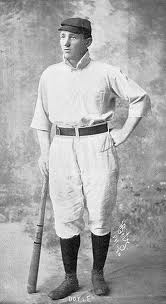
Jack Doyle

Jack Doyle

Sholta appeared in Petersburg’s “Mayor’s Court” along with two fans who said to have assaulted members of the Orioles.  All were released with no charges filed as a result of Doyle, Brodie and Kelley failing to appear—they were sought both as suspects and witnesses against the local defendants.

At the hearing, Petersburg’s Mayor Charles Fenton Collier said Sholta “had only acted as any other gentleman would have,” by hitting Jennings, and the mayor said he would have done the same “under similar circumstances.”

The Washington Times said the only thing unusual about the Orioles’ battle in Virginia was that it happened so early in the season:

“The Orioles are starting their rowdy tactics early.  Perhaps the champs think it just as necessary to train for ruffianly conduct as other points.  And to think that ‘college-bred’ Hughey Jennings started the riot.”

McGraw remained out of the lineup for most of the season—he did not return until August 25.  The fighting Orioles hit .328 as team—Jennings hit .401, Keeler .386 and Kelley .364—and went 90-39 cruising to their third straight National League Pennant.

“The Annual Spring Typhoon has Blown up Again”

10 Nov

In 1906, despite being, on paper, the best team in the American League, the Cleveland Naps finished in third place, five games behind the Chicago White Sox.  The club had three twenty game winners—Addie Joss, Bob Rhoads, and Otto Hess—and four regulars who  hit better than .300—Napoleon Lajoie, William “Bunk” Congalton, Elmer Flick and Claude Rossman,

As the 1907 season approached, Grantland Rice, of The Cleveland News said the team was now a victim of the success of individual players:

“The annual spring typhoon has blown up again—only a bit worse than ever.  In nearly every big league camp well-known athletes are breaking into loud roars over the pay question, and there promises to be quite a batch of trouble before the storm is cleared away.  In this respect Cleveland heads the list, although Napland owners have one of the highest salary lists in the game.  Up to date Joss, Rhoads, (Terry) Turner and Congalton have balked, while neither Flick nor Hess have returned a signed contract.”

Grantland Rice

Grantland Rice

Rice said the club’s negotiations with Joss and Rhoads were at an impasse, and “just how it will end is a matter of uncertainty.”  The news of the team’s trouble signing their stars led Rice to a discussion of “just how much a major leaguer is supposed to receive for his work each season.”

“When a youngster breaks in he is never given less, or at least rarely so, than he received in his minor league berth.  His pay is boosted the greater part of the time, so the average debutante’s pay roll ranges closely around $1,800 providing he is recognized as a first class man.

“If he delivers the goods his first year out he can figure on about $2,000 or $2,200 for his next season, and then if he becomes established as a regular, his income should be somewhere in the immediate vicinity of $2,500.

“From this point upward it all depends on their rankings as stars.  You hear considerable about $5,000 contracts and better, but as a matter of cold, clammy fact, but few athletes draw over $3,000 or $3,500 at best.

“In the epoch of war salaries $3,500 or $4,000 was a fairly common figure—but no more.

“A high grade slabman along the order of Joss, Rhoads (Nick) Altrock, etc…will rake in about $3,000 now.  In his weekly letter in a Toledo paper (The News-Bee), Joss stated that he was offered $3,000 for his season’s work, but that he demanded more—just how much he didn’t say.

“George Stone drew $3,000 or there abouts last season and now that he has fought his way to the premiership in the School of Slugs he demands $5,000, at which figure Mr. (Jimmy) McAleer balks strenuously.  (Johnny) Kling also asks for $5,000, which sum Charley Murphy says he will not receive.

“From this list we jump to the drawing cards of the game such as Lajoie, (Honus) Wagner, (Wee Willie) Keeler, (Christy) Mathewson, etc…

“Lajoie’s figures range somewhere above $8,000 and something shy of the $9,000 mark.

“Wagner is supposed to draw $5,000 for his work.

“If reports sent out from New York are true, Keeler’s yearly ante is close to $6,000, while Mathewson draws in about the same.

Hal Chase won’t miss $3,500 very far.

“But the high-priced teams are not pennant winners by a jug full.

(Charles) Comiskey and (Connie) Mack hew closer to the line than any others in Ban Johnson’s circle, and yet these two have won more pennants than all the rest put together.  In fact, they’ve gotten away with all but the two which Boston nailed.

“Mack had one of the cheapest, if not the cheapest team in the American League through 1905, the last year he copped the pennant.  Comiskey’s world champions of 1906 were far below Cleveland, New York or even Boston, from the salary standpoint.

“It looks funny to figure the cellar champions of a league paid more than the holders of the world’s title, but if all the figures were given out, the White Sox payroll would loom up under Boston’s to a certainty.

“The full salary cost of running a big league club varies from $40,000 to $50,000, or maybe $55,000 a year.

“A set of figures somewhere between $45,000 and $50,000 would probably hit at the higher average.

“There was a time when Boston’s payroll was close to $70,000 and (Clark) Griffith’s was only a notch below—but this golden era for the ballplayer has passed.”

According to The Washington Post, Joss had earned $3,2000 in 1906 ($2,700 and a $500 bonus), the biography, “Addie Joss:  King of Pitchers,” said he was paid $4,000 in 1907—Joss, who was 21-9 with a 1.72 ERA in 1906, followed that up with a league leading 27 wins (against 11 loses, with a 1.83 ERA) in 1907.

Addie Joss

Addie Joss

Fellow twenty game winners Rhoads and Hess both saw their production slip (15-14, 6-6), and only two regulars—Flick .302 and Lajoie .301—hit better than .300, and the team’s batting average slipped 28 points from the previous seasons.

The Naps finished fourth in 1907.

A Goat and a Dog

9 Jul

Edward John “Goat” Anderson played just one season in the major leagues, hitting .205 for the Pittsburgh Pirates in 1907.  He also played 10 seasons in the Central, Eastern and Western Leagues.

Described as eccentric, he made an impression on The Fort Wayne Sentinel in 1903, his first professional season with the South Bend Greens:

“’Goat’ Anderson who made it a rule during the games here to leave his post and come into the infield to argue every point raised by the umpire’s decisions, has stamped himself as the prize rowdy of the association.”

The Pittsburgh Leader said Pirate outfielder Tommy Leach had recommended the team sign Anderson, and told a reporter in the spring of 1907 that Anderson made the team because he was willing to stand up to Manager Fred Clarke while training in Hot Springs, Arkansas:

“(Clarke) had told Anderson to bunt at the signal from a man on first…The ball was pitched five feet outside, and of course, the catcher flagged the man going to second.  Anderson made no move to bunt or even to strike at the ball.  Clarke started to call him.  ‘Shut up,’ you don’t know all there is in the books,’ Anderson replied.  The answer made Clarke gasp…’All right, son,’ grinned Clarke.  ‘I guess you haven’t got stage fright when you can give it to your manager that way.’”

Edward John “Goat” Anderson

Edward John “Goat” Anderson


His excellent fielding, .343 on base percentage and 27 stolen bases with the Pirates impressed the local press, if not the fans.  George Moreland of The Pittsburgh Press said:

“Some fans are of the opinion that “Goat” Anderson, the hustling little right fielder of the Pittsburgh team, is not much of a general use to the Pirates, and that a good move would be made to get another man for the job.  These same fans are the ones who believe that a ballplayer is not worth his salt unless he is a slugger of the Wagnerian stripe…Manager Fred Clarke knows how to win games, and he also knows where to place a player in the batting order to get the most out of him.  That is the reason that the ‘Goat’ has been put at the top of the list to lead off.  It is not that Anderson makes a large number of hits.  Even when he does hit, he has difficulty in getting the ball out of the diamond.  But, somehow or other he manages to get to first base just about as often as any of them and when he does get there he is not slow about getting around the circuit.”

The Leader was even more enthusiastic about the new outfielder:

“The way little Goat Anderson has been hitting the ball and running bases insures him a permanent berth in the outfield.  Anderson has proved one of the finds of the season.  If there ever was another Wee Willie Keeler it is Anderson.  He is a ‘drop hitter’ of the Keeler style, and can run bases and bunt with the star of the New York Highlanders.  As a matter of fact, Anderson is of more value to the team than Keeler, because the latter’s star seems to be sinking.”

Despite the praise, Anderson was sold to the Rochester Bronchos of the Eastern League in January of 1908.

While with Rochester, Anderson attempted to get a patent on a sliding pad he invented; there is no record of a patent being awarded.  He also suggested a novel idea for improving his batting average.

The Lexington Herald said Anderson, who trained in Kentucky with the Bronchos before the 1909 season made this recommendation:

“Cut down the size of the home plate and I’ll hit .500 as long as the season lasts.  Where the front of the home plate is seventeen inches wide make it 10 or 12.  Then the batter will be able to get an even break with the pitcher, who now has everything in his favor.  With a home base half its present size a pitcher would need perfect control to get the ball over.  All this business of cutting across the inside and outside would be a thing of the past.  There wouldn’t be enough of the plate to give the pitcher the advantage of feeding outside low ones that can only be hit into someone’s hands…With a home base ten inches wide the ball would have to look pretty good right from the start, and if it didn’t a batter could easily pass it up.  There would be more bases on balls at the start, and that would mean a base on balls or a hit, or a hard liner that would bring a fine fielding play.  A smaller plate seems to me to be the thing.”

The small plate was the wish of a man who hit .222, .201 and .138 from 1908-1910 in Rochester.

Goat Anderson saved his greatest moment for his final season in professional baseball.  As the manager and leftfielder for the Terre Haute Terriers (or Terre-iers) in the Central League, he filed one of the most unusual game protests in history.

Goat Anderson (2), with the Terre Haute Terriers.

Goat Anderson (2), with the Terre Haute Terriers.

The Terriers were leading the Fort Wayne Champs 6 to 0 in the bottom of the seventh inning during the first game of a doubleheader.  Fort Wayne had a runner on first base with no outs with catcher Harry Martin at the plate.  The Fort Wayne Daily News picks up the story:

“Martin poked a drive into left field.  The ball rolled almost to the club house with ‘Goat’ Anderson in full cry after it.  Then came the cause for the protest in the person of Don.”

“Don” was a Great Dane who belonged to a Fort Wayne man named Ed Longfield.

“Don can’t bite, and wouldn’t if he could, but Anderson didn’t for sure know that, so ‘Goat’ hesitated a second in chasing the ball and Martin got a triple, Ted Anderson scoring. “

Fort Wayne went on to score six runs in the inning to tie the game and scored a run in the 10th to win 7 to 6.

The Fort Wayne Journal Gazette said:

“Toothless Don, Ed Longfield’s dog, is supposed to be harmless.  Goat Anderson, Terre Haute manager and left fielder evidently doesn’t think so and because dog Don jumped at him during the seventh inning romp in the first game yesterday Goat will file a protest with President (Louis) Heilbroner, requesting the game be played over.”

Heilbroner ruled against Anderson’s protest saying the play did not have a sufficient impact on the outcome of the game, but he did order that Don would no longer be allowed on the field during games.

Terre Haute finished fifth in the six-team league with 60-79 record.  Anderson was rumored to be considering offers from Federal League teams for 1914, but never signed with a team and his career was over.

He returned to his home in South Bend, Indiana.  He died of stomach cancer 10-years later at age 43.

Kid Nichols

25 Jun

Add Hall of Famer Charles “Kid” Nichols to the list of those who were convinced that players from an earlier era were of better quality than those “of today,” even if the earlier era was less than a decade before.

Kid Nichols

Kid Nichols

While pitching for the Kansas City Blue Stockings in the Western League in 1903, the 33-year-old pitcher told a group which included a reporter for The Associated Press:

“I am not so sure that the ball players of today are much superior to those of ten years ago in general utility.  It seems to me there was more life and spirit in the games of a decade ago than in those of the present regime.  They weren’t so mercenary in those days and there was much more sportsmanlike spirit.  Nowadays the paramount question with the average player is salary.  He doesn’t care so much about the record of the team he plays with makes as opportunities offered him to make himself individually famous and thus increase the value of his services.  In many clubs teamwork is lacking on account of the intense desire of some of the men to make an impressive showing by individual work.  In the old days one didn’t hear so much of the individual as the playing of the team as a whole an in my opinion baseball would stand on much firmer foundation if the same spirit prevailed nowadays.”

Among the best:

“Take old (Tommy) McCarthy for instance.  As an outfielder none of them had him beaten, and in my opinion there is not an outfielder his equal now.  It was McCarthy who originated the trap ball which he worked so effectively.

“He was absolutely the headiest man in the outfield I ever saw.  You have seen outfielders throw men out at first on line drives, but you haven’t seen it done often.  I’ve seen McCarthy spoil many a legitimate one-base hit by that same play.  Another favorite play of his was this:  A man would be on first and second.  The man at bat would drive to left.  McCarthy would snap it up on a short bound and flip it to second as quick as a flash in time to catch the man who had run off first.  In turn the second baseman would throw the ball to third in time to head off the man who had started from second.  Thus a really legitimate one-base hit was turned into a double play.

“But, speaking of outfielders, Willie Keeler was about as good as any of them for all around ability.  He was like lightning on his feet and was no slouch at hitting.  He certainly did things to me one day in Baltimore.  He faced me four times and this is what he did:  Made four hits to four different parts of the field off of four different kinds of curves.  Keeler was the hardest man to fool I ever pitched to.”

Nichols said Herman “Germany” Long, his teammate for 12 years was:

“(O)ne of the greatest shortstops in the business.  He played with Boston while I was a Beaneater, and of course I had good opportunities to watch him work.  He could cover a world of territory and was a sure and accurate fielder.  You hear many people say that Hughie Jennings in his palmy days was the best infielder ever developed.  In my opinion Long could cover a foot more territory than Jennings.

“When it comes to catchers my preference is, and always has been, Charlie Bennett, whose legs were cut off in a railroad accident at Wellsville, Kansas.  Charlie was always consistent and knew what his brain was given to him for.  He was also an accurate, quick thrower…Martin Bergen was another good catcher.  He was the one who went crazy, you know, and murdered his wife and children.  Bergen always was ‘a little bit off of the top,’ but when he took a notion to do his best, his playing was beyond criticism.  Ed McFarland and (Billy) Sullivan are two right good men, and then there was reliable old Jim McGuire and Charles Zimmer, both of whom were cracker jack.”

bergen

Martin “Marty” Bergen–” always was ‘a little bit off of the top,’

Nichols said as a pitcher “I can hardly be considered a competent judge” of fellow “slabsters,” but continued:

“Personally, I admire the old war-horse, Cy Young, more than any of the others.  He is certainly a remarkable man.  Of the left-handers there a few better than (Frank “Noodles”) Hahn, of Cincinnati; (Christy) Mathewson and (Joe) McGinnity are undoubtedly valuable men.  Clark Griffith is, I think, the headiest pitcher that ever stepped on a rubber.  Among the other great ones are Jack Taylor, Joe Corbett, (Bill) Bernhard, of Cleveland and our own Jake Weimer.

Nichols was largely forgotten as one of baseball’s great pitchers by the time the Baseball Hall of Fame’s inaugural class was selected in 1936.  In the late 1940s, a push for his inclusion was led by sportswriter Grantland Rice.  Rice frequently mentioned the pitcher in his columns and in the summer of 1948 quoted two Hall of Famers regarding Nichols’ prowess:

“A few decades ago I asked Christy Mathewson to name the best pitcher he ever faced.  ‘That’s easy,’ Matty answered.  ‘His name is Charles Kid Nichols of Boston.  Nichols isn’t a good pitcher.  He is a great one.’

“I recalled this talk when the mail brought a letter from Ty Cobb at Menlo Park, California.

“‘I think everyone has overlooked one of the greatest pitchers of all time,’ Cobb Writes.  ‘His name is Kid Nichols.  Here are just a few of his records from 1890 to 1906:

“1.  Won three consecutive games on three consecutive days, all pitched in different cities.

“2.  Won 20 or more games for 10 consecutive years.  He won 360 and lost 202. (Nichols’ record was 361-208)

“3.  Won 28 or more games for eight consecutive seasons.  (Nichols won more than 28 games seven times, and not consecutively).”

Despite the inaccuracies in the letter, Cobb and Rice continued to campaign for Nichols and the push to honor him worked.  He was elected to the Hall of Fame in 1949.

Nichols, right, with Pie Traynor, left, and Branch Rickey at the Hall of Fame in 1949. Traynor was elected in 1948, but his plaque was not presented until 1949

Nichols, right, with Pie Traynor, left, and Branch Rickey at the Hall of Fame in 1949. Traynor was elected in 1948, but his plaque was not presented until 1949

Baseball’s “Fountain of Youth”

16 Apr

John Brinsley “J.B.” Sheridan wrote for several St. Louis newspapers and The Sporting News from 1888-1929.

In 1917 he asked in The St. Louis Globe-Democrat:

“How is it that two young chaps come up together, one lasts a year or two, the other keeps on playing until he meets his sons and the sons of his pals coming up?”

Sheridan noted that Bobby Wallace was 43-year-old and in his twenty-fourth season–albeit as a reserve who appeared in just eight games for the Cardinals–while contemporaries like Jimmy Collins were out of the game for nearly a decade.  (Sheridan failed to mention or notice that Wallace was three years younger and started his professional career at age 20 while Collins began his at 23):

“Wallace has had a great career in baseball.  Only one man, A. C. (Cap) Anson has played longer than Wallace in the major leagues (Sheridan didn’t mention Deacon McGuire who also had Wallace beaten in years of service with 26—but he only played a total of 20 games in his final eight “seasons”) Anson did twenty-seven seasons, but had he not been his own manager he would not have done so many.  The old man could hit to the end, but for the last ten years of his major league career Anson was so slow and stiff that it is doubtful if any manager, other than himself would have employed him.”

Booby Wallace

Booby Wallace

Sheridan neglected to mention that “slow and stiff” Cap Anson managed to play in more than 1100 games in those last ten seasons when no manager “other than himself would have employed him,” and hit better than .330 in five of them–and would contradict himself on the “slow and stiff” part later in the same article.

He said, “Jack O’Connor did twenty-two years in the majors and was useful to the end.” (O’Connor only hit better .250 twice in his last ten seasons, never appearing in more than 84 games during that period)”

Despite the many misstatements, Sheridan’s article included interesting character sketches of several 19th and early 20th Century players (the veracity of those sketches can be judged with the above misstatements in mind).

“O’Connor was a really wonderful man.  He always retrained his diet during the playing season, but gave it full rein during the off season.  O’Connor had some appetite, too.  Usually he put on 20 pounds of extra weight every winter and regularly took it off every spring.  O’Connor must have taken off 500 pounds of flesh in the twenty-two years of his baseball playing.  He ate and drank like Gargantua during the winter, but denied himself like a monk in the spring, summer and fall.

(Napoleon) Lajoie, who did his 20 years [sic 21] in the majors, was like Wallace and (Jake) Beckley, an iron man.  (Lajoie) came from Breton peasant stock…The Bretons lived off the rocks and fishing grounds of Brittany, beaten by Atlantic spray long before the dawn of history.  No wonder then, that Lajoie is a hardy man (who) needed no conditioning in his youth.  He threw a couple, hit a couple and was ready for the fray.”

Sheridan said O’Connor’s former battery-mate Cy Young was “another physical wonder” despite being “rather soft and inclined to obesity later in life.”

“Cy never cared much for beer, the beverage of the old-time ballplayer, but he did not mind a little ‘red eye’ now and then In fact, the old boys say the farmer could pack more whiskey about him than any man they had ever known.”

As an example of Young’s prowess Sheridan said O’Connor told him a story about a night out in Boston:

“I drank beer while Cy drank whiskey. Drink for drink with me, but the last thing I remembered that night was that Cy put me to bed.

“I got up the next morning looking for sedlitz powder and something cooling.  I got the powder and I went into the breakfast room to get a grapefruit.  Then I saw Young behind a big plate of beefsteak with onions.  I turned and ran for the fresh air…Cy ate the entire steak, all the onions, a lot of bread and butter, stuck a strong cigar in his mouth and joined me on the sidewalk.

“What made you quit so early last night, Jack?  I was just getting’ goin’ good, when you said ‘Let’s go home I’m sleepy.’”

Jack O'Connor

Jack O’Connor

Sheridan compared Young’s career to that of Bill Dinneen:

“Dinneen came into the game seven [sic–nine] years after Young, was Cy’s teammate for four years [sic–five and part of a sixth] then dropped out (Dinneen played three more seasons with the St. Louis Browns, but his career was over after 12 seasons at age 33)

“Dinneen ate too well, and what ballplayers call the ‘old uric acid’ got him in the arm.  Yet Dinneen was one of the finest physical specimens that ever played ball.

“Some big fellows look strong but prove to be soft and unenduring.  Jack Chesbro was one of these.  Chesbro had three great years as a pitcher, and then broke down.  Jack was a soft-boned boy, with bad ankles and could not stick the route.

“Some men hold out in arm, legs and bone, but lose the keenness of vision essential to good batting, Willie Keeler, was one of these.  Keeler’s legs were good to the end and his arm worked all right, but his eyes went back on him and he had to quit…(Art) Devlin was one of the three great third basemen of his time.  He was a star, but endured only a few years.  Bad Digestion stopped him when he was at the height of his fame, and when he should have been good for many more years.”

Sheridan claimed to know the secret of a ballplayer’s longevity: the waters of Hot Springs, Arkansas.

“Each January 1 for twenty-two years saw (Young) at Hot Springs…O’Connor and (Jake) Beckley were always at Hot Springs, too.  These three men never missed a season at the Arkansas resort, while they were playing ball…Fred Clarke, too, was a great advocate of Hot Springs as a training resort, and the Pirates always fitted in there when Clarke was manager.  That took (Honus) Wagner, another long liver, there too.

“Anson always took a season at Hot Springs.  It is pretty well established that the Arkansas resort is the location of Ponce de Leon’s famous “Fountain of Youth.”  It may or may not be a coincidence, but the fact remains that Young, O’Connor, Beckley, Anson, Clarke, Wallace and Wagner, men who played from seventeen to twenty-two years of major league baseball, have all been frequenters of or habitues of Hot Springs.”

Cy Young, third from left, with Bill Carrigan, Jake Stahl and Fred Anderson at Hot Springs in 1912

 Cy Young, third from left, with Bill Carrigan, Jake Stahl and Fred Anderson at Hot Springs in 1912

The St. Louis sportswriter was certain the springs were a magic “Fountain of Youth, “and said he was only aware of one exception to his rule:

“Every iron man of baseball, except Lajoie, has been a yearly visitant.”

Lost Team Photos–1903 New York Highlanders

3 Jan

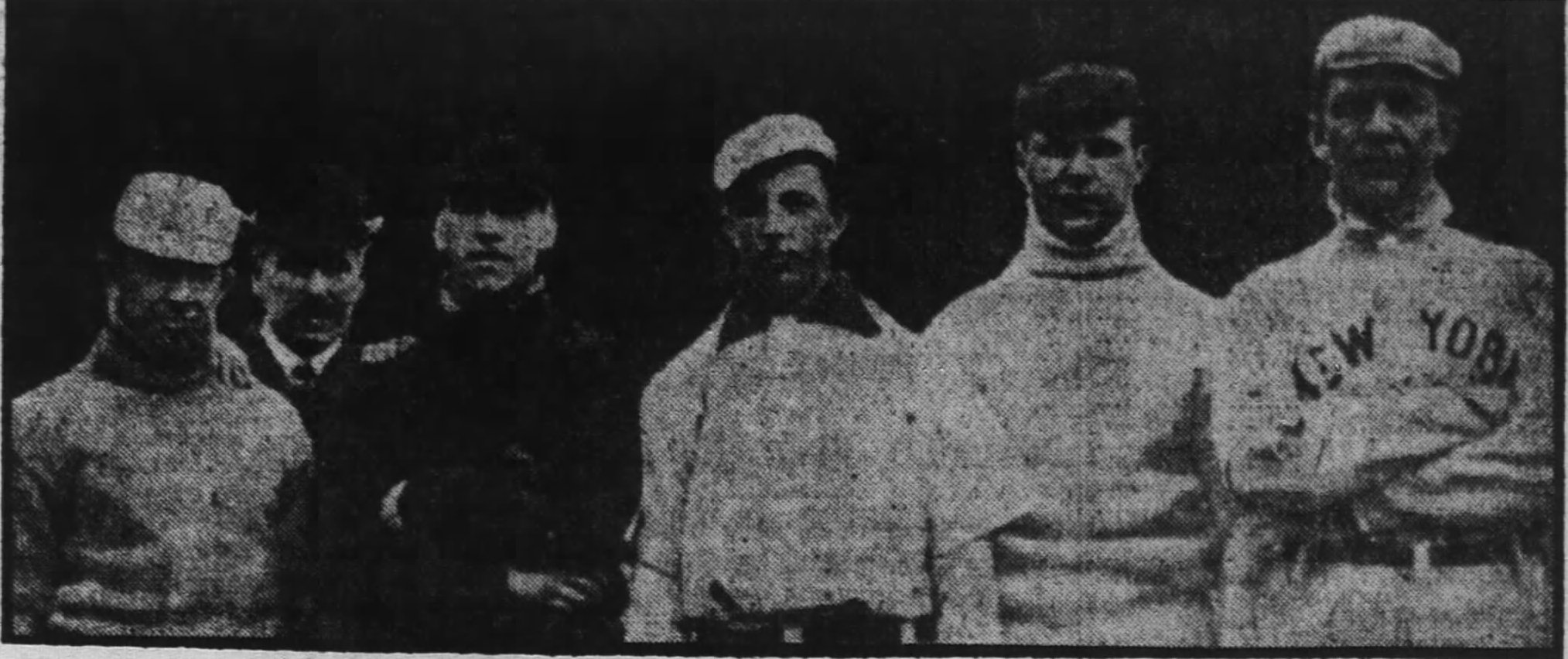
1903NY

Five members of the first New York Highlanders team and a New York sportswriter photographed at Atlanta’s Piedmont Park in March of 1903. The financially failing Baltimore Orioles franchise was transferred to New York for the 1903 season.

From left: William “Wee Willie” Keeler (RF), James “Gym” Bagley of The New York Evening Mail, Harry Howell (P), William “Wid” Conroy (3B), Monte Beville (C), and John Ganzel (1B).

Atlanta Was thrilled to host the team.  The Atlanta Constitution said on the morning the team was due to arrive:

“The hearts of the local fans will be made glad today by the arrival of the New York American baseball team, for this afternoon on there will be something doing at the park.

“Manager Clark Griffith will have charge of the team, and will bring them in with him this afternoon on the Southern’s No. 27 from Washington, which is due in the city at 3:55 o’clock.

“The aggregation is nothing less than a bunch of stars.”

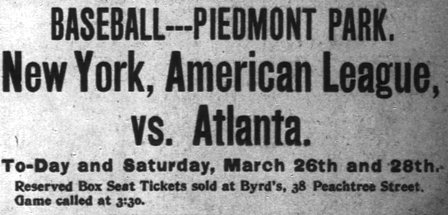
Large crowds came out to Piedmont Park for the team’s morning and afternoon practices and for the Highlanders first spring game on March 26 against the Atlanta Crackers.

advertisement for the 1903 New York Highlanders spring games with the Atlanta Crackers

Advertisement for the 1903 New York Highlanders spring games with the Atlanta Crackers


Griffith’s team finished fourth in the American League with a record of 72-62.

“Hanlon Springs a Surprise on the Baseball Public”

14 Jan

Albert Joseph “Smiling Al” Maul’s best days seemed well behind him by 1898.  The 32-year-old Maul had posted a 16-12 record for the Pittsburgh Burghers in the Players League in 1890, but after returning to the National League the following season he had gone 39-44 through 1897.

Baltimore Orioles manager Ned Hanlon signed Maul after he was released by the Washington Senators in 1897.  The results were not good; in two games Maul gave up 9 hits and walked 8, posting a 7.04 ERA.  Baltimore released him at the end of the season and there were no takers for Maul at the beginning of 1898.

Ned Hanlon

Ned Hanlon

By June of 1898 The Baltimore Morning Herald said:

“For some time (Hanlon) has been hinting to his friends that he had something up his sleeve in the way of twirling talent that would surprise the natives, but when he let fall Al Maul’s name he was met with a chorus of merry ha-has.”

But by June Hanlon’s “surprise” was no longer met with laughter.

On June 5, The Sunday Herald headline said:

“Hanlon springs a surprise on the baseball world.”

Maul had shut out the Saint Louis Browns on three hits in his first start for Baltimore.

Al Maul

Al Maul

The Herald cautioned that “it’s too early to say that Maul is all right,” but all season he successfully filled the gap in Baltimore’s rotation caused by Joe Corbett’s holdout.

The New York World said Maul was:

“The most remarkable case on record of a restored glass arm.”

Maul’s comeback season became a sensation.  John Clarkson, who had not appeared in a game since 1894, told The Bay City (MI) Tribune he was serious about making his own comeback:

“I might be a second Al Maul, who can tell?”

Clarkson’s comeback never materialized, but Maul’s success continued all summer.

The Sporting Life credited Hanlon for his pitcher’s success:

“Al Maul’s experience this season is only another confirmation of the claim that Ned Hanlon can take any old thing and get good results from, it for a year or so.”

Maul finished the season with a 20-7 record and a 2.10 ERA, and Hanlon had high hopes for his pitcher the next season.  Maul, along with “Wee Willie” Keeler, Hughie Jennings and Joe Kelley moved to the Brooklyn Superbas as part of the stock swap between the Baltimore and Brooklyn franchises that led to Hanlon’s move to Brooklyn.

But the pitcher who won 20 games two years after his career was “over” was out of surprises.  After four games with Brooklyn in 1898, Hanlon released Maul.  Brief stints with the Philadelphia Phillies and New York Giants failed to rekindle the magic and Maul’s career came to an end after his release by the Giants in September of 1901.

Maul went on to coach baseball at Lehigh University and scouted for several years for the Philadelphia Athletics.  He died in 1958 at age 92.

Brother Joe Comes Back

30 Nov

Twenty-three-year-old Joe Corbett, brother of heavyweight champ “Gentleman Jim” Corbett announced his retirement before the 1899 season.  Corbett had written a column for The San Francisco Call during his 1898 hold out, and announced he was quitting that job too:

“I have (also) quit writing baseball news now, and take little or no interest in the game. I wouldn’t cross the street to see one.”

Corbett ran the livery stable his father had started in San Francisco, helped operate the family bar on Ellis Street, and within weeks had apparently regained his interest in the game and was back writing for The Call.  His responsibilities in the family businesses increased after his parent’s deaths in August of 1898 (Patrick Corbett shot and killed his wife then committed suicide).

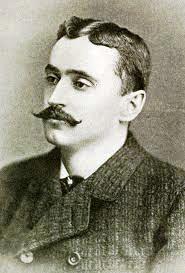
Joe Corbett

There remained significant interest in Corbett’s services; unfortunately for Joe he remained under the control of Ned Hanlon.  Hanlon had moved to the Brooklyn Superbas in 1899 as part of a stock swap between the Brooklyn and Baltimore franchises—he took several players with him, including “Wee Willie” Keeler, Hughie Jennings and Joe Kelley—he also kept Corbett’s rights.

Ned Hanlon

Hanlon offered Corbett $2400 to play for Brooklyn and turned down offers to trade his rights.

According to California newspapers Corbett occasionally pitched in semi-pro games in 1899, but in 1900 The Sporting Life reported that Corbett was “dangerously ill,” and would probably never pitch again as a result of sciatic rheumatism.

Less than a year later The Sporting Life said Corbett was pitching for a team in Oakland, and the next year he appeared in five games for the Minneapolis Millers in the American Association—the retirement appeared to be over.

A successful January 1903 appearance on the mound in an exhibition game featuring barnstorming Major Leaguers renewed interest in Corbett again.  The Los Angeles Angels of The Pacific Coast League offered Joe a contract he couldn’t refuse, one that allowed him to tend to the family business interests in San Francisco during the season.

Newspaper reports said Corbett earned $5000 for the 1903 season, Angels manager Jim Morley said he wouldn’t say how much Joe earned but said that he had:

“Figured it out that Corbett will get 4.99 a curve.”

After going 23-16 for the Angels, the Major leagues again came calling.   Early reports had Corbett signing with the Pittsburgh Pirates, who offered $5000, but Joe eventually signed with the Saint Louis Cardinals.  While the Cardinals assured Joe that Ned Hanlon had relinquished Brooklyn’s claim, the Corbett family was not ready to end the feud with Hanlon.

Gentleman Jim, when asked if Joe would ever consider playing for his former manager again, told reporters:

“Hanlon couldn’t get Joe to twirl for him if he offers him a million dollars a year.”

Things didn’t go well in Saint Louis.  Joe Corbett was 5-8 when the Cardinals released him August 1.

Jim was, as always, Joe’s biggest defender:

“My brother Joe was getting $7000 for the season from the St. Louis club, but his heart was not in his work, simply because he was separated from his wife and little ones who were out in California.  Thinking of his family all the time impaired his effectiveness as a pitcher.”

Gentleman Jim

Joe returned to San Francisco where he added a hat store to growing stable of businesses; his rights returned to Hanlon and Brooklyn.

The final chapter of the Corbett story on Monday.