Archive | 2015

Life on the Road, 1914

6 Feb

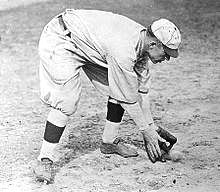
In 1914, before beginning his second season as manager of the San Francisco Seals, George “Del” Howard gave the readers of The San Francisco Call a rare look behind the scenes of a baseball team.

Del Howard

Del Howard

“One of the many difficulties which beset a ballplayer is ‘killing’ time while playing away from home…Del Howard was telling only yesterday how the various members of the Seal squad act while on the road.  All the boys are quartered at the same hotel and they usually pass the time in each other’s company.  Card playing for the most part is the favorite pastime, with theater-going running a close second..  There are a few of the San Francisco players who like to hide behind a book, others frequent billiard parlors for a game with the cue, but the majority sit around a table and do their best to deal out pairs.”

Howard even shared the team’s rules for road trips:

“Don’t stay out later than midnight.

Don’t fail to answer 8 A.M. call.

Don’t fail to be down to breakfast by 8:15.

Don’t run around to dances

Don’t play ‘craps’ at any time.

Don’t go over 25 cent limit at cards.

Don’t drink to excess.

Otherwise the players are free to do as they please.”

He said of his “don’ts”:

“We haven’t many rules but the ones we have must be observed.  We don’t tell a player he mustn’t drink nor smoke but we do take action when the privileges are abused.  A player knows best what is good for him and free rein is given him.  A player is allowed to remain up until midnight, if he is in good company, and he is required to be up at 8 in the morning.   There is nothing to do but it is healthy for him to be out of bed.  We breakfast at 8:15.  Very few players eat any lunch and at 6 we go to dinner.  Then there is a long evening to be faced and t is certainly a problem putting in time.”

Howard then described how some of the Seals’ most popular players were “putting in time:”

Howard Mundorff is the life of the club.  ‘Mundy’ is full of fun and the players gather around him and listen for hours while he tells stories and amuses them.  Howard is also one of the card sharks.

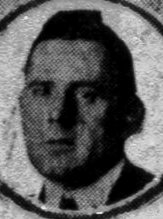
Mundorff

Howard Mundorff

Jimmy Johnston is an enthusiastic pool player and he usually can be found at night trying for the 15-ball in the side pocket.  Pete Standridge is also handy with the cue.

Walter Schmidt is quiet and keeps to himself a deal of the time.  He delights in taking strolls and Walter Cartwright, another quiet chap, occasionally accompanies him.

(Jay) Nig Clarke seems to lose himself on every trip and Manager Howard declares that for the life of him he cannot tell just how Nig passes the time.

(Roy) Corhan plays cards pretty regularly, but he spends a lot of his time writing, for he keeps up a continuous line of communication with his better half, when he is on the road, writing consistently every day.

Roy Corhan

Roy Corhan

Charlie Fanning is a bug with the camera and takes pretty good pictures of all the places of interest.  “Skeeter” also knows when to lay down two pair.

“(Albert “Lefty”) Leifield is a very interesting talker and he was a running-mate with Mundorff in amusing the gang.”

Howard said shortstop Harry McArdle was the “most popular player he ever encountered.  Mac has admirers in every town and was kept pretty busy keeping engagements.”

Harry McArdle (sliding)

Harry McArdle (sliding)

As for his time on the road, Howard said, “I walk around and look over things.  I was fortunate in having a well-behaved club last season and did not have any trouble keeping them in line…A busher has the time of his life in a strange town, but a veteran only figures to do something to keep busy.”

After a 104-104 fourth-place finish in 1913, Howard’s Seals—minus Johnston, who drafted by the Chicago Cubs and McArdle, who was traded to the Venice Tigers–behaved themselves well enough to finish third with a 115-96 record in 1914.  The following season he was replaced by Harry Wolverton who led the seals to a 188-89 season, and the Pacific Coast League championship.

Things I Learned on the Way to Looking up other Things–Sunday Baseball Edition

4 Feb

What type of Sunday Ball? 1863

In 1863, The Brooklyn Eagle—there was no byline on the story, but it was likely written by Henry Chadwick—wanted the police department to make a clarification:

“We see by the police records that a party of forty or fifty persons was arrested for playing ball in Sunday, at the ‘ball alley’ corner of Green Lane and York Street.”

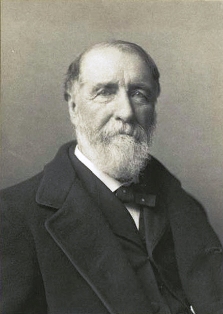
Henry Chadwick

Henry Chadwick

The paper’s complaint was that the notice from the police lacked “any description…of the character of ball playing indulged in,” which left a mistaken impression.

“We beg to state, for the benefit of ignorant outsiders, that any base ball club belonging to the National Association is yet to be disgraced by the stigma of playing base ball on the Sabbath.  Not a club in the community can be charged with such a things and this fact should be understood.

“The game the parties were engaged in who were arrested is that known as ‘house ball,’ where the players knock the ball up against the side of a wall with their hands.  No responsible base ball player engages in a game on Sunday, and we trust the police reporters will in future bear this fact in mind and state the kind of game those arrested were engaged in.”

John L. Sullivan and Sunday Baseball, 1885

Heavyweight Champion John L. Sullivan, arrived in Cleveland, Ohio on Friday, September 11, 1885.  The Cleveland Press said he would be pitching on Sunday for a local semi-pro club, the Forest Cities—the Western League team of the same name had folded in June–in an exhibition game against a team from Sandusky.  The scheduling of a game on Sunday had raised the ire of the local “Law and Order League,” who the paper said “were up in arms,’ and attempted to get the game canceled.

John L. Sullivan

John L. Sullivan

Despite the protests, the game, at Cleveland’s Brooklyn Park, went ahead as scheduled.  Sullivan was paid $900 for his appearance and pitched well—he gave up just five hits in nine innings, a fifth inning error allowed Sandusky to score two runs, and Sullivan and the Forest Cities lost 2 to 0.

The Press said as soon as the game ended Sullivan was placed under arrest by “a meek constable” named Jones, who “feared to arrest (him) during the game.”

The move was roundly criticized as simply a publicity stunt, given that the Law and Order League failed to swear out warrants against the other seventeen players or the game’s organizers.

Bond was posted for Sullivan and the fighter left town that evening.  The following day an attorney pleaded guilty on Sullivan’s behalf that he had “engaged in a game of ball on Sunday.”

The attorney for the “Law and Order League” asked the judge to “uphold the sacred day of rest by assessing a fine of such proportions as would teach the law-breakers and Sabbath-desecrators a wholesome lesson.”

The judge fined Sullivan $1 plus costs “amounting in all to $15.90”

Sunday Baseball in Chicago, 1894

During the spring of 1894 a man named William W. Clark met with Chicago Mayor John Patrick Hopkins.

The Chicago Inter Ocean said Clark was “Secretary of the International Sunday Observance League,” The Chicago Eagle called him as “a blue-nosed individual in clerical garb.”

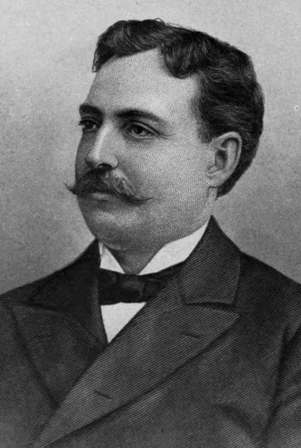
Chicago Mayor John P. Hopkins

Chicago Mayor John P. Hopkins

Clark presented the mayor with a resolution requesting a ban on Sunday games in Chicago.

The Eagle described the meeting:

“He was accorded a courteous hearing, in the course of which the clerical gentleman expatiated upon the enormity of ‘catching men out,’ of making ‘home runs’ on Sunday.  Such practices he said were wrong and highly immoral.  Mayor Hopkins listened in mild surprise.  When the gentleman got through His Honor announced that he used to play ball on Sunday’s himself, and sometimes attended a game even yet, and saw nothing immoral about it.

“The cleric was unable to specify any particular enormities growing out of the game, but proceeded to hold out threats.  Then Mayor Hopkins announced that he had been elected by the liberal-minded people of Chicago, and as they appeared to be in the majority here, he, Mr. Hopkins, intended to be governed by their wishes.”

The Eagle editorialized that the mayor had “made another of his famous home run strikes on the particular occasion.”  And, “As for the clerical visitor, the poor man struck out.”

The International Sunday Observance League abandoned their effort to make Sunday baseball illegal in Chicago.

Jennings “Hurled an Unmentionable Epithet at him”

2 Feb

In April of 1896, the reigning National League Champion Baltimore Orioles traveled to Petersburg, Virginia for a pair of exhibition games with the Petersburg Farmers of the Virginia League.

The Baltimore Sun noted that it had been a tough spring for the Orioles.  Third baseman John McGraw “the brainiest and pluckiest little infielder that ever trod a diamond,” was in an Atlanta hospital suffering from typhoid fever; he would miss most of the season.

Additionally, catcher William “Boileryard” Clarke was sent back to Baltimore with a sprained ankle, pitchers John “Sadie” McMahon and Arlie Pond had injured hands and both would be out for at least a week,  and shortstop Hughie Jennings was also slowed by a hand injury.

Hughie Jennings

Hughie Jennings

A light rain fell as the hobbled team arrived in Petersburg on the morning of April 6, the day of the first game—which ended in a 7 to 7 tie.  The Baltimore American said:

“Why the team did not trounce the Petersburgs is an open question, but whether it was because of the game on Saturday (in Richmond) or the rain, or the umpire, the Champions walked out of the gates with the humiliation of having made eight errors and feeling the added sting of having just escaped being beaten by a minor league team.”

Third-string catcher Frank Bowerman made two of Baltimore’s errors and had a passed ball.  He would be relegated to umpiring duties in the second game, scheduled for April 8.  On the seventh the Orioles defeated another Virginia League team, the Richmond Bluebirds, 4 to 3.

The American said the morning of April 8 “had been a pleasant one,” with local officials taking the Orioles for a tour of the Petersburg Civil War battlefield.  And, with the rain gone, “The warm sun put life into each club, and a pretty, snappy game was being put up by each side.”  Bowerman and Petersburg player Michael “Doc” Powers alternated as umpires for the game.

Doc Powers

Doc Powers

Petersburg was leading 1 to 0 in the seventh inning when Powers called Orioles third baseman Jim Donnelly out on strikes.  What happened next, and who was responsible, depended on whether you read the accounts in the Baltimore papers or those in Petersburg and the surrounding Virginia towns.

The Sun said:

“Several promising runs had been cut off by similar umpiring and the birds were getting very ‘sore’ at such outrages.  Donnelly objected and (Hugh) Jennings went up to Powers, who was standing behind the pitcher, and said something to him.  Just then (Charles) Sholta, who had also run up, struck Jennings a stinging blow on the side of the head without warning.  The blow drew blood.”

The American said:

“While Hughey was expostulating rather forcibly with Powers, Sholta struck him on the cheek.”

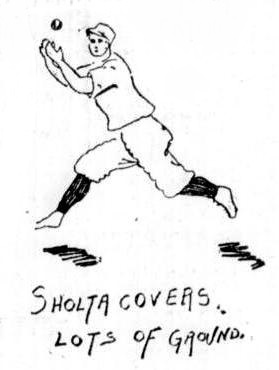
Charles Sholta--drawing from Richmond newspaper

Charles Sholta–drawing from Richmond newspaper

The Baltimore papers agreed that the punch Sholta threw was unprovoked.  Every Virginia newspaper disagreed.

The Petersburg Index-Appeal said, “Jennings resented Sholta’s interference by very foul and abusive language and was promptly struck in the face.”

Papers in Richmond, Roanoke and Norfolk agreed that Jennings provoked Sholta—The Virginia League correspondent for The Sporting Life said Jennings “hurled an unmentionable epithet at him—an epithet which does not go here.”

Everyone generally agreed with what happened next.  Orioles’ first baseman Jack Doyle punched Sholta, knocking him to the ground and Petersburg fans poured on the field and began attacking Doyle and other members of the Baltimore club.

At this point, there was more disagreement.  The Baltimore papers said Doyle was struck in the head from behind, knocked down and kicked by multiple fans.  While “Wee Willie” Keeler was allegedly “choked and beaten,” five other Orioles, Joe Kelley, Wilbert Robinson, Steve Brodie, Bowerman, and Jennings “were more or less beaten.”

The Orioles, according to The American were forced to flee the ballpark.

The Richmond Dispatch called the Baltimore accounts of the incident:

 “(S)o greatly exaggerated and so grotesquely inaccurate as to cause amazement, not to say indignation, here.  Not a man of the Baltimore team was hurt, and the grossly obscene language uttered by one of the Orioles on the park during the game, caused all of the trouble.”

After the Orioles returned to Petersburg’s Appomattox Hotel, another fight broke out between several members of the Orioles—including Brodie and Kelley—and local fans, one of whom was thrown through a glass door.   After the second fight, the Orioles were accompanied by police to the train depot and departed for Norfolk.

Arrest warrants were issued for Doyle, Kelley, and Brodie, but the three “left their team in Norfolk and (went) beyond the jurisdiction of the state courts.”  Only ten Orioles were available for the final exhibition game in Virginia, a 7 to 5 victory over the Norfolk Braves.

Jack Doyle

Jack Doyle

Sholta appeared in Petersburg’s “Mayor’s Court” along with two fans who said to have assaulted members of the Orioles.  All were released with no charges filed as a result of Doyle, Brodie and Kelley failing to appear—they were sought both as suspects and witnesses against the local defendants.

At the hearing, Petersburg’s Mayor Charles Fenton Collier said Sholta “had only acted as any other gentleman would have,” by hitting Jennings, and the mayor said he would have done the same “under similar circumstances.”

The Washington Times said the only thing unusual about the Orioles’ battle in Virginia was that it happened so early in the season:

“The Orioles are starting their rowdy tactics early.  Perhaps the champs think it just as necessary to train for ruffianly conduct as other points.  And to think that ‘college-bred’ Hughey Jennings started the riot.”

McGraw remained out of the lineup for most of the season—he did not return until August 25.  The fighting Orioles hit .328 as team—Jennings hit .401, Keeler .386 and Kelley .364—and went 90-39 cruising to their third straight National League Pennant.

Jackie Robinson’s “Proudest Moment”

31 Jan

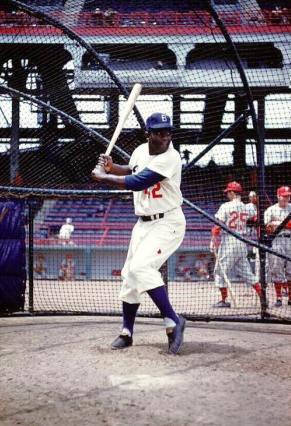
Profiles in Courage: Jackie Robinson faced nearly as much prejudice when he was named vice president of the Chock Full O’ Nuts coffee and restaurant company in 1958 as he had when he broke baseball’s color barrier.  In a 1959 syndicated newspaper column Robinson said:  “My proudest moment of all,” was a statement issued by company president  William Black:

“I cannot speak for all the stockholders of Chock Full O’ Nuts, because I now own only one-third of the company.  Speaking for my third, if anyone wants to boycott ‘Chock’ because I hired Jackie Robinson, I recommend Martinson’s Coffee, it’s just as good. As for our restaurants, there are Nedick’s, Bickford’s, and Horn and Hardart in our price range.  Try them, you may even like them better than ours.”

jackie

Lost Advertisements–The Missouri Store

30 Jan

1914ad

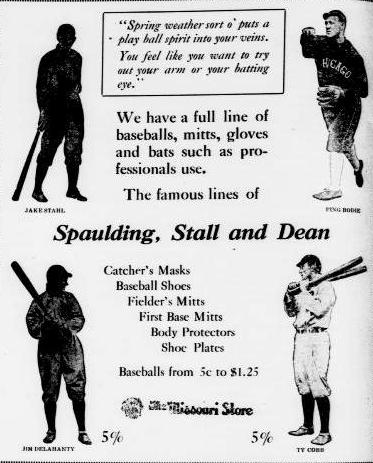
A 1914 advertisement for The Missouri Store at the University of Missouri in Columbia.  The ad features Jake Stahl, Frank “Ping” Bodie, Jim Delahanty and Ty Cobb.

“Spring weather sort o’ puts a play ball spirit into your veins.  You feel like you want to try out your arm or your batting eye.”

The store carried a full line of items “such as professionals use” from Spalding and Stall & Dean–catcher’s masks; baseball shoes, fielder’s mitts; first base mitts; body protectors, and shoe plates–with “Baseballs from 5 cents to $1.25.”


Tragic Exits: James McDonough

28 Jan

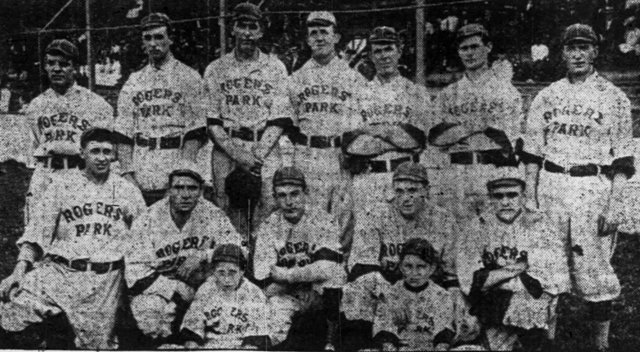
James Vincent McDonough was born in Chicago in 1888, his father and younger brother were both Chicago police officers.  Primarily a catcher, the 5’ 10” 180 pound right-handed hitter first made a name for himself in the Chicago City League with the Auburn Parks and the Rogers Parks.

McDonough, middle row, second from left with the Rogers Parks in 1910.

McDonough, middle row, second from left with the Rogers Parks in 1910.

In 1911 he joined the Grand Rapids Furniture Makers in the Central League; in July The Sporting Life said he was traded to the Terre Haute Miners.  He finished the season with the Traverse City Reporters in the Michigan State League, and then returned to Chicago.

In 1912 and ’13 McDonough was one of the more popular members of Chicago’s entries in the United States and Federal Leagues.  He also started the 1914 season as a member of Joe Tinker’s Whales in the Federal league, although The Chicago Tribune said he was “handicapped this spring with a sore arm,” he played in the club’s final exhibition game in Covington, Kentucky, collecting two hits but never appeared in a game during the regular season, and was released in May.

McDonough

McDonough

That same month McDonough returned to semi-pro ball in Chicago and married the Marion Delores Jordan.

He remained a popular enough figure in Chicago baseball circles that his wedding and the brief marital scandal that followed in 1916 was reported in the local press.  The Tribune said:

“A ‘poisoned phone’ almost brought about the complete separation of Jim McDonough, the former backstop of the Federal baseball team, and his wife a few days ago.  For the last two weeks girls called up Mrs. McDonough every night and told her that her beloved hubby was not the saint she thought him.

“’These naughty girls,’ said the young Mrs. McDonough, ‘said Jim was out drinking champagne with them.  It almost drove me to nervous prostration.  Jim always denied the stories, but by that time I had grown to suspect him.

“’Then I went home to mother’s.  Three days later I saw a lawyer and filed a bill for a divorce.  Then the most wonderful thing in the world happened.  Jim came to me and told me he had done nothing wrong and that he loved me more than ever.”

Marion McDonough

Marion McDonough

The couple reconciled.

On April 22, 1918 McDonough made the papers for the final time.  The Chicago Examiner said:

“James McDonough, well-known as a catcher in the Chicago Federal League baseball team the first year of that organization’s existence, shot and killed his wife last night.  Then he killed himself with a bullet through his temple…Mrs. McDonough left the former ballplayer several months ago, charging that he failed to support her and their two children…McDonough was 29-years-old and subject to the draft. At the time of the separation Mrs. McDonough refused to sign exemption papers for him.  Several times since, it is said, he begged her to return to him or sign the exemption papers.”

The two had an altercation outside a drug store on Chicago’s South side.

“Noticing that they were attracting attention, the couple walked away.  At 4250 Vincennes Ave., McDonough pushed his wife into a hallway.  A moment later he shot her twice, once in the temple and once just below the heart. Then he sent a bullet into his own head.”

Both were taken to a nearby residence.  McDonough died after 10 minutes, his wife died 30 minutes later.

Although it appears he never played organized baseball after 1914, his Cook County, Illinois death certificate listed his profession as “Ballplayer.”

“The Chicago players began to Kick Vigorously”

26 Jan

The Chicago White Stockings arrived in Detroit on the evening of June 18, 1886 with a mission.  The Detroit Wolverines had won their first 18 home games, and threatened the record of 21 set by Chicago eight seasons earlier.

The Chicago Tribune said on the morning of the game a delegation of nearly 200 Chicago fans, led by team President Albert Spalding, arrived by train.  The Chicago Tribune said:

“Out of the car doors piled the delegation from the windy city, each man bearing a new broom with a placard strapped across the straw end announcing the arrival of the ‘Record Breakers.’”

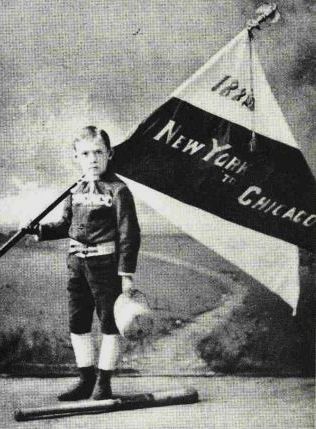
The Chicago players, along with team mascot Willie Hahn, met the group at the train:

“(T)he Chicago players and their mascot marched down the platform and placed themselves at the head of the double column of visiting Chicagoans that had formed at the depot, and then with their brooms elevated, the delegation marched out of the depot…The odd looking procession, extending nearly two squares, attracted a vast amount of attention.”

The delegation marched to the team’s hotel, the Russell House, until it was time to leave for Detroit’s Recreation Park at 3 PM.

With Hahn, and the players again in the lead, the delegation marched to the ballpark.

The Chicago Inter Ocean described the team’s arrival:

“The Chicagos were escorted to the ground by a band, and entered the field behind little Willie Hahn, who carried an immense broom on which were the words ‘Our Mascot.’”

Willie Hahn

Willie Hahn

Not to be outdone, the Wolverines had quickly recruited their own mascot for the game.  The Inter Ocean said:

“The Detroits entered the grounds behind a little fellow almost the same size of Willie Hahn, and were received with cheer after cheer.”

The Wolverines mascot was “young Charlie Gallagher,” a local boy “said to have been born with teeth, and is guaranteed to posses all the magic charms of a genuine mascot.”

Charles “Lady” Baldwin pitched for Detroit, and Jim McCormick for Chicago.  Both pitchers gave up four runs through five innings.  Then, said The Tribune:

“Not a run to either side did the sixth, seventh, or eighth innings yield.  The Whites did not once get further than second in these three innings.  (Sam) Crane and (Charlie) Bennett for the home team alone reached third.

“Now (in the eighth inning) came the misfortune to which many a Detroiter attributes the defeat of their team.  Bennett had caught his usually brilliant game without an error…(Fred) Pfeffer was at bat and struck one of those wicked fouls that have so often proved terrors to catchers.  The ball caught the crack catcher upon the tip of the middle finger of his right hand, and almost tore it from the joint.  Bennett bore the pain like a man, tried to brace up and go on, but he soon saw the folly of such an undertaking and withdrew.”

Shortstop Jack Rowe moved behind the plate to replace Bennett, and the following inning, with a runner on second and no out,  a foul off the bat of George Gore struck Rowe’s finger ”jerking the member out of joint, besides splitting it badly.”

Detroit then tried to stall in order to have the game called on account of darkness

(Charlie) Ganzel, the Detroits’ remaining catcher, was then sent for.  A long delay followed.  The delay was so long that the Chicago players began to kick vigorously.  ‘The man will not put on his uniform,’ said (Cap) Anson to (Umpire John) Gaffney.”

Ganzel finally took the field “after twenty-five minutes’ delay.”  Gore singled, moving McCormick to third, then Ganzel allowed a passed ball, and Chicago won 5 to 4.

“The scene that followed can scarcely be described, and the delight of the Chicago delegation bordered upon wildness, and was in strong contrast to the blue faces of the great crowd of Detroiters that filed out of the grounds.  Brooms were waved with increased enthusiasm by the Chicago contingent on the road back to the hotel.”

Detroit won the two remaining games in the series and increased their lead over the second place White Stockings to three and a half games.  They stayed in first place until August 26—Chicago took over the league lead and never relinquished it, winning the National League pennant by two and half games.

Hahn remained the White Stockings mascot until 1888. Charlie Gallagher was never heard from again.

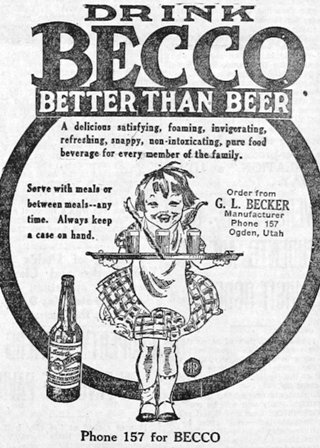
Lost Advertisements–Beer “The Proper Drink for Athletes in Training”

23 Jan

cobbbecker's

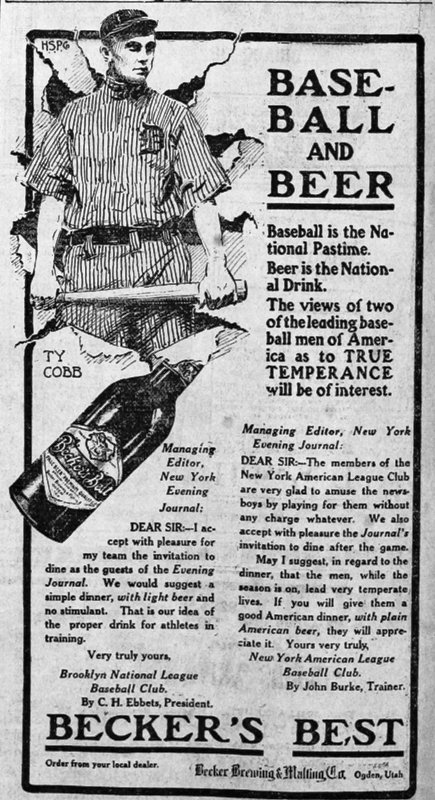
A 1918 advertisement for Becker’s Best Beer from Utah’s Becker Brewing & Malting Company, featuring Ty Cobb,  the ad said:

“Baseball is the National Pastime.  Beer is the National Drink”

It also included testimonials from “two of the leading baseball men of America as to True Temperance.”

As a result of the World War I “Food and Fuel Control Act,” malt beverages were mandated to contain less than 2.75% alcohol; brewers were trying to highlight the non intoxicating aspects of their current products as a wartime ban on the brewing of all beer was on the horizon (eventually that ban was adjusted to allow brewing of “non-alcoholic malt beverages).

The featured letters were from Brooklyn Robins President Charles Ebbets and New York Yankees Trainer John Burke to The New York Evening Journal regarding the paper’s invitation to a dinner honoring the ball clubs. Ebbet’s wrote:

“I accept with pleasure for my team the invitation to dine…We would suggest a simple dinner, with light beer and no stimulant.  That is out idea of the proper drink for athlete in training.”

Burke wrote:

“May I suggest in regard to the dinner , that men, while the season is on, lead very temperate lives.  If you will give them a good American dinner, with plain American Beer, they will appreciate it.”

Becker Brewing & Malting, according to a  1919 issue of “Brewers Journal,” was among the company’s making “laudable efforts…to meet the adverse conditions which have been imposed under the veil of ‘war time’ prohibition” by bottling soft drinks and manufacturing “Becco, a cereal beverage.”

Ty Cobb no longer appeared in the ads.

becco

Cecil and Josh

21 Jan

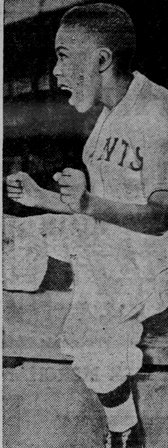
Newspapers across the country saw it as a human interest story about baseball; the Black Press saw it very differently.  With his team in a slump, New York Giants Manager Bill Terry brought in 13-year-old Cecil Terry to “bring the Giants some badly needed luck.”

Cecil Haley

Cecil Haley

The Associated Press said of Haley’s first day on the job:

“Cecil, a Negro mascot, was given a Giant uniform yesterday, allowed to sit in the dugout for the first time and promised a trip West if he’d bring the Giants some badly-needed luck.  The net result of his work?  Pirates 4, Giants 3.”

Very different stories appeared in the Black press.  The Washington Afro-American said:

“(O)rganized big leagues will have colored mascots but steadfastly refuse to accept them as players.  The proud lad sits under the bat rack in the Giants’ dugout, but to date, something must be wrong, because the Giants are hopelessly battling for fifth place.”

The New York Age said:

“Cecil Haley, New York Giants colored mascot, will know better when he grows older and tries to get a job playing for the same team.”

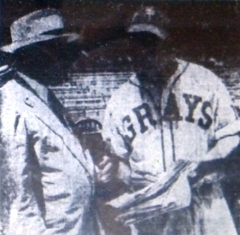
The same day that Haley appeared on the bench with the Giants, New York pitcher Carl Hubbell spoke with The Pittsburgh Courier about Josh Gibson:

“‘(H)e’s one of the greatest backstops in the history of baseball, I think…Boy–how he can throw!’ exclaimed Hubbell.

josh

“There seems to be nothing to it when he throws.  He just whips the ball down to second base like it had a string on it.  He’s great, I’m telling you.  Any team in the big leagues could use him right now.’

“But, with all that,’ said Hubbell, ‘the thing I like best about him is that he’s as fast as greased lightening.  You know, after a few years a catcher usually slows up considerably from bending down so much.  But that guy–why, he’s never slowed down.”

That summer, a new effort was underway to integrate baseball.  A petition drive led by the Young Communist League collected between 25,000 and 100,000 (reports varied) and delivered to National League President Ford Frick,  and Commissioner Kenesaw Mountain Landis at the 1939 winter meeting in Cincinnati.

The Afro-American said Frick “avoided the issue by declaring that a ‘social problem’ was involved for which the big leagues were not responsible.”

There is no public record of the commissioner’s response.

Josh Gibson, with two-time Communist Vice-Presidential Candidate James W. Ford looking on, signs the 1939 petition to end racial discrimination in professional baseball.

I published a shorter version of this post on August 27, 2012.

“Throw Strikes. Home Plate Don’t Move.”

19 Jan

Satchel Paige told Dave Condon of The Chicago Tribune that early in 1965, with the help of his wife Lahoma, and 17-year-old daughter Pamela he “wrote letters to everyone in baseball just looking for a steady job.  Anything.”

After not one professional team responded, the spring and early summer were like most during his 40-year career as a pitcher—Paige traveled wherever there was a chance for a paycheck.

He had made appearances with the Harlem Globetrotters in the winter and spring and then hit the road; pitching for the barnstorming Indianapolis Clowns and whoever else would call.  In May, The Chicago Defender said Abe Saperstein, who was managing Paige’s appearances, took out an ad in The Sporting News:

“(T)he man, who may have been the greatest pitcher of all time, is letting it be known that he has glove and is willing to travel.  All that is necessary to secure his services is to contact Saperstein.”

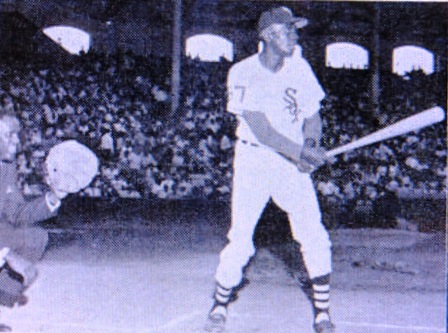
One night Paige would be at Chicago’s Comiskey Park, in a White Sox uniform, pitching for the Clowns in front of a large crowd, or across town in Wrigley Field where 30,000 fans came out; another night would find him in Hastings, Pennsylvania taking “the mound for the Hastings VFW club,” or Wheatfield, Indiana pitching “for the Band Boosters against the Wheatfield Young Farmers,” in front of a few hundred people.
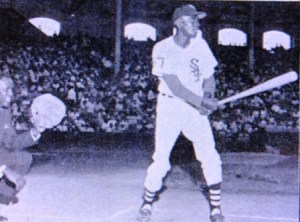
Paige at Comiskey Park in 1965--Chicago Cubs outfielder George Altman is the catcher.

Paige at Comiskey Park in 1965–Chicago Cubs outfielder George Altman is the catcher.

Things began to look up in late July when the Cleveland Indians inducted Paige into the team’s Hall of Fame between games of a Sunday doubleheader with the Yankees; in front of the team’s largest crowd of the season:  56,634.  According to United Press International:

“Satch tossed examples of his blooper, drooper and hesitation pitches to (former Indians teammate) Jim Hegan, now a Yankee coach and explained his philosophy of pitching thus: ‘Just take the ball and throw it where you want to.  Throw strikes.  Home plate don’t move.”

In August, he accepted an offer to pitch for and manage a team in Anchorage, Alaska called the Earthquakers.  In reality, Paige simply went to Alaska for a short series of exhibition games, and had no intention of staying there—he was already booked to appear at the old-timers game scheduled in September to mark the first season of the Houston Astrodome.  But he did his best to sell it as a possible long-term move.  He told a reporter for The Associated Press:

“Lately, I’ve wanted to leave barnstorming baseball to settle down somewhat to help the sport.  Anchorage seems to be the place to do it.”

In addition to his appearance in a handful of games in Alaska, his arrival in the state also resulted in a chance meeting that was reported in the press.

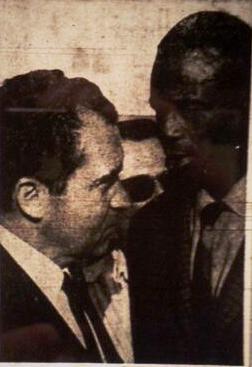
As a crowd of local residents gathered at the Anchorage airport to greet Paige, another plane arrived for refueling.  It carried former Vice President Richard M. Nixon on his way to Tokyo.  Nixon walked into the terminal while the plane was refueled, and when he asked about the crowd he was told they were waiting for Paige’s arrival.  Nixon joined the line to greet the pitcher.  The man who would be the leader of the free world in a little more than three years told a reporter from The Associated Press:

“I always like to meet celebrities.”
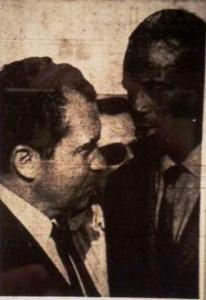
Nixon and Paige meet in Alaska

Nixon and Paige meet in Alaska

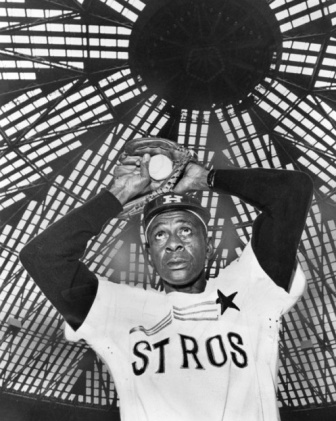
His commitment in Alaska over, Paige made it to the Astrodome on September 6.  The two-inning game, featuring a team of “immortals” versus “Texas All-Stars,” was an incredible collection of legends—more than 50 former players participated; twelve were already members of the Hall of Fame.  The Houston Post said of the player introductions:

Joe DiMaggio, the Yankee Clipper, got a deafening cheer.  So did Satchel Paige, peerless Negro hurler.”

The paper said the only others to receive a reception near that for Paige and DiMaggio were Dizzy Dean and native Texan Monty Stratton.
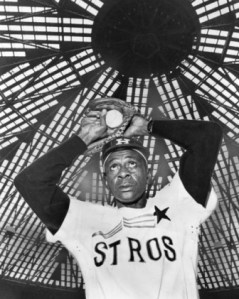
Paige in the Astrodome

Paige in the Astrodome

Perhaps it was the reception in Houston that caused one of the letters Paige, and his wife and daughter had written months earlier to finally be answered.

Charles Oscar Finley, who made his fortune in the insurance business and bought controlling interest of the Kansas City A’s before the 1961 season, was the one who finally responded.

That the signing of Paige appears to have been a spur of the moment decision for Finley after reading about the reception in Houston, is supported by the fact that it was announced by the marketing savvy Finley at what The Kansas City Times described as a “hastily called news conference,” which Finley, who was in Chicago, did not attend.

He appeared with General Manager Hank Peters and told reporters “I thought they were kidding” when Finley called and offered him a contract.

He said he was ready to pitch and brushed aside questions about his age:

“I think I can still pitch and help this club.  So what difference does it make what my age is if I can?”

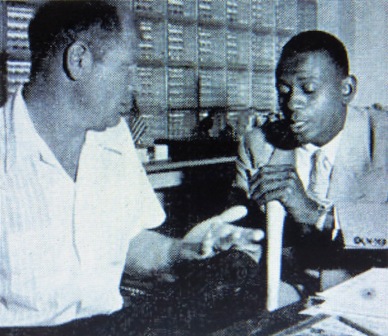
Bill Veeck, who had signed Paige with the Cleveland Indians in 1948 and the St. Louis Browns in 1951, told The Times he hoped it wasn’t just a publicity stunt by Finley:

“I am hopeful he will be used as he should be—as a pitcher. Leroy should surprise a few people as he has for a long time.”
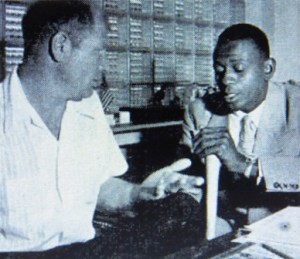
Veeck and Paige

Veeck and Paige

The controversial Veeck, more than a decade away from his return to the game, told The Kansas City Star he blamed himself for the pitcher’s  long absence:

“When I left Cleveland the first thing the new owners did was get rid of Satch.  When I sold the St. Louis Browns (and the team relocated to Baltimore), the same thing happened.  That’s nothing more than guilt by association.”

The signing of the 59-year-old Paige, who joined a team that included five 19 and 20-year-old pitchers who appeared in at least one game that year—Jim “Catfish” Hunter, John “Blue Moon” Odom, Ron Tompkins, Tom Harrison and Don Buschorn—inspired a short poem published in The Star:

“They’re either too

Young or too old,

When Charlie puts ‘em

In A’s Green and Gold.”

Papers across the country carried a photograph of Paige, seated on a chair, with one of Finley’s young pitchers, Catfish Hunter, on his knee.  While the photo was straight from Finley’s marketing plan, the impact of one future Hall of Famer on another, forty years his junior, seems to have been real.
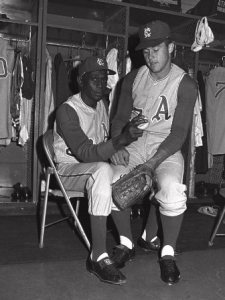
Paige and Hunter

Paige and Hunter

The Star spoke to Paige about his pitching philosophy one afternoon as Hunter stood nearby.  The paper said:

“Hunter listened intently as Satchel expounded his pitching theories.”

Paige was equally impressed with the 19-year-old, telling The Star:

“This young man has shown me a lot of poise.  He has a great future in this game.”

The next two weeks were filled with pictures of, and stories about, Paige in a rocking chair, a nurse seated nearby, watching the A’s play, and while a “Satchel Paige Night” was scheduled, there appeared little chance the pitcher would be used as anything but a prop for publicity.  Then Finley announced that his new pitcher would start on his night, September 25 against the Boston Red Sox.

What took place on the mound on September 25 has been written about many times. With his six children and wife Lahoma—pregnant with number seven—sitting in the owner’s box with Finley, Paige pitched three shutout innings, allowing just one hit—a Carl Yastrzemski double.

The only disappointment was the anemic crowd—just 9,289 Kansas City fans turned out to see a legend, the second largest crowd during that six-game home stand was 2,874.

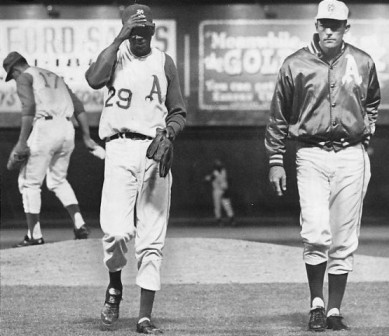
As Paige took the mound in the fourth inning, A’s Manager Haywood Sullivan, who was not consulted before Paige’s signing or before Finley announced he would pitch that night, came to the mound to remove Paige.  The pitcher walked off to a standing ovation.
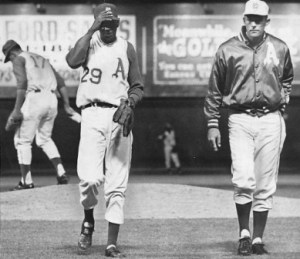
Paige walks off the field with Manager Haywood Sullivan while Diego Segui warms up.

Paige walks off the field with Manager Haywood Sullivan while Diego Segui warms up.

Paige returned to the clubhouse.  The Star said:

“In the clubhouse he was down to his long underwear, and talking about helping the A‘s out of the basement when someone rushed in a and screamed, ‘Satch, they want you back on the field.’

“The lights were out.  More than 9,000 matches flickered in the darkness, and on ‘Salute to Satchel Paige Night,’ they sang ‘Rockin’ Chair,’ ‘Darling I am Growing Old,’ and “The Old Gray Mare.”

After returning to the clubhouse, Paige was greeted by Finley, who called him “a real credit to the game.”  Paige “shook the owner’s hand” and said “I want to thank you for bringing me here.”

Whether he truly believed it or not, Paige told reporters he planned to pitch again in 1965.

“Everybody doubted me on the ballclub.  They’ll have more confidence in me now.”

He did not appear in another game but stayed with the club for the remainder of the season.  Two days after his three-inning performance, he was with the team in Baltimore.

A discouraging word had not been uttered by Paige during his time with the A’s.  Perhaps being in Baltimore—where his big league career effectively ended after Veeck sold the Browns—or maybe just the realization that a man capable of throwing three shutout innings at age 59 was not given an opportunity by a major league club the previous 12 seasons, changed that.

Lou Hatter wrote in The Baltimore Sun:

“Satchel Paige, the slender pitching ancient signed 2 ½ weeks ago by Kansas City, bared a deep-rooted wound here last night for the first time.”

Paige said to Hatter:

“You can put it this way.  You can say I resent being overlooked by organized baseball all these years while I threw away most of my best years pitching for a barnstorming club…All they ask me, though, is how old am I.  But nobody asks me why I stayed out of the major leagues for 15 [sic 12] years.  That’s a long time isn’t it?  That’s a lifetime for most professional players.

“Let me ask another question. When Baltimore bought the St. Louis ballclub, why did they turn me loose?

“When I went to the Miami club (again pitching for Bill Veeck with the International League Marlins) and was a top pitcher for three years (11, 10 and 10 win seasons with ERAs of 1.86, 2.42 and 2.95), how come nobody picked me up?…I know the answer, but I won’t tell that neither—like I won’t tell my age.”

Despite Finley telling reporters throughout September that Paige would return to the A’s in 1966, if not as a player, then as a coach, he was released in September. The next time he appeared on the mound at Kansas City’s Municipal Stadium, it was again as a member of the barnstorming Indianapolis Clowns.
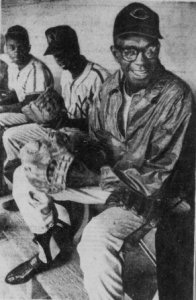
Paige back in Kansas City as a member of the Indianapolis Clowns in 1966.

Paige back in Kansas City as a member of the Indianapolis Clowns in 1966.