Archive | March, 2016

Things I Learned on the Way to Looking Up Other Things #18

7 Mar

Tener on Anson

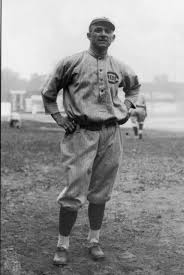
In 1917, John Tener wrote an article in “Baseball Magazine” about Cap Anson, his former manager with the Chicago White Stockings.
John Tener

John Tener

The former pitcher and outfielder, who went on to serve in the United States Congress and as Governor of Pennsylvania, and who in 1917 was president of the National League said:

“Pop Anson was the Greatest Batter who ever lived.  You may look up his record, compare it with others and draw your own conclusions.  When I say this I am well aware of the claims of Ed Delehanty, Hans Wagner and many other great hitters.  I give them all due credit, but in my opinion, Anson was the greatest of them all.

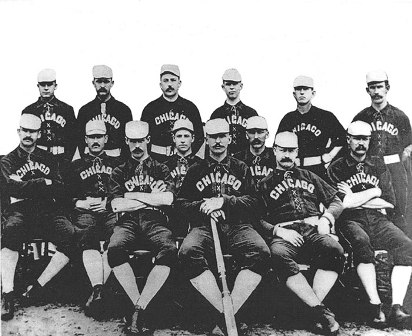
"Cap" Anson

Anson

“He was, first of all, a free hitter. He loved batting…He had that true eye which enabled him to hit the ball squarely on the nose.  His hits were line drives.  They were solid smashes with the full force of his muscular shoulders behind them.”

[…]

“He was an excellent judge of the precise fraction of a second that he needed to swing that heavy bat of his against the best the pitcher could offer.  He didn’t exactly place his hits, but he contrived to drive the ball behind the base runner about where he wanted to drive it…He was big and strong and heavy.  Some hitters of the present day fatten their averages by their nimbleness in reaching first.  Anson drove the ball solidly into the outfield and took his time in going to first.”

Conte on Mendez

Jose Pepe Conte was a well-known sportswriter in Havana, Cuba. Frank Menke of Heart Newspaper’s International News Service (INS) said of him:
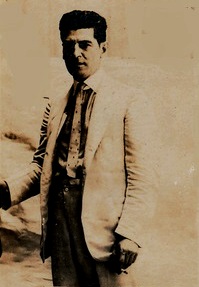
Jose Pepe Conte

Jose Pepe Conte

“Pepe is a fellow who knows heaps and heaps about ancient history, European customs, chemistry, baseball and prize fighting.”

The Pittsburgh Press called him:

“(A) Cuban newspaperman, political personage, and unearther of baseball talent.”

In 1912, the INS distributed an article Conte wrote about the pitcher he thought was the best ever:

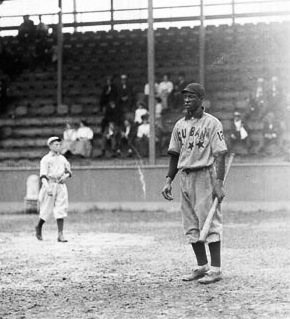
“American baseball fans can talk all they want about their (Chief) Benders, (Christy) Mathewsons, (Ed) Walshes and (Mordecai) Browns, but down in our country we have a pitcher that none of the best batters in the country can touch. This is the famous Black Tornado, (Jose) Mendez.  Talk about speed.  Why, when he cuts loose at his hardest clip the ball bounces out of the catcher’s mitt Talk about speed, Mendez has to pitch most of the time without curves because we haven’t a catcher who can hold him.  To make things better, Mendez can bat like (Ty) Cobb.  He has won his own games on various occasions with smashes over the fences for home runs.  He weighs about 154 pounds and is a little fellow.”

Jose Mendez

Jose Mendez

[…]

“No one has been found who can hold him when he really extends himself.  He has shown his skill in the past when he has faced the best batters of the Cubs and Detroit teams when those teams were champions, and when the Athletics went there last year.  Mendez has more curves than any pitcher in America, and if some inventive genius could produce a whitening process whereby we could get the fellow into the big leagues he could win a pennant for either tail-end team in either league.”
Sullivan on Comiskey

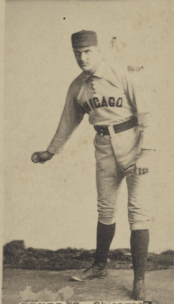
In his book, “The National Game,” Al Spink said Ted Sullivan was “the best judge of a ball player in America, the man of widest vision in the baseball world, who predicted much for the National game years ago, and whose predictions have all come true.”
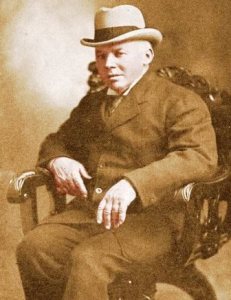
Ted Sullivan

Ted Sullivan

Sullivan was a player, manager, executive, and in 1921, he wrote a series of articles for The Washington Times called “The Best of my Sport Reminiscences.”  He said of Charles Comiskey, who he was crediting with “discovering” at St. Mary’s College in Kansas:
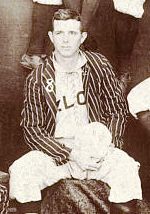
Charles Comiskey

Charles Comiskey

“As a player, Comiskey was easily the best first baseman of his time…His intuition in defining the thoughts of his opponents and making his play accordingly placed him head and shoulders over any man that played that position before or after.

“Comiskey was with John Ward and King Kelly one of the greatest of base runners.  I do not mean dress parade base running, either, merely to show the crowd he could run.  Comiskey’s base running was done at a place in the game when it meant victory for his side.  He was far from being the machine batter that Anson, Roger Connor and some others were; but as a run-getter, which means the combination of hitting, waiting, bunting and running, he outclassed all others.  Jack Doyle, when in his prime with Baltimore and New York, was the nearest approach to Comiskey in brainwork.  There are no others.”
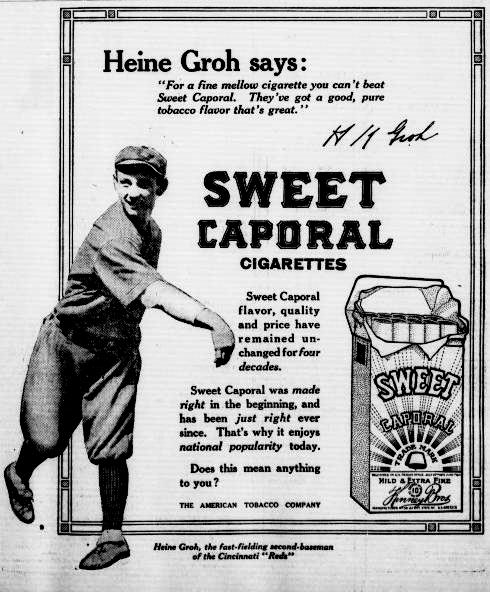
Lost Advertisements–Heinie Groh for Sweet Caporal

4 Mar

grohsweetcaporal

A 1914 Sweet Caporal advertisement featuring Heine [sic] Groh–the company didn’t spend a great deal of time checking the spelling of the names of their endorsers.

“For a fine, mellow cigarette you can’t beat Sweet Caporal.  They’ve got a good, pure tobacco flavor that’s great.”

The salary dispute that culminated with Groh’s trade from the Cincinnati Reds to the New York Giants after the 1921 season had been ongoing since at least 1917 and earned him the title “last of the holdout kings” from The Washington Herald.

His 1920 holdout was, according to Groh, inspired by his wife Marguerite, who also spoke to the press on her husband’s behalf as the dispute ground on into March.

The Cincinnati Times-Star said while speaking at a “local banquet,” Groh told the audience:

“We were sitting in a vaudeville show not long ago and were listening to the thunderous applause being accorded a couple of high salaried dancers.

“My wife touched my arm.  ‘Do you see how they are being praised now?’ she asked. ‘But what will happen to them in a few years when their legs start to go bad?  They’ll get asked to leave won’t they? That’s why they’re so high-priced now.  Let that be a lesson to you.’

“So right then and there Mrs. Groh made me promise that I would not sign a Reds contract until I got my figures…When my wife says sign, I’ll sign and not a minute before.”

Groh

Groh

Marguerite Groh was more direct when she spoke to the paper:

“I don’t care if all the other players sign, and if Heinie can’t do anything better next summer than work in the garden I think he should continue holding out for what he wants.

“We both believe Heinie has been underpaid for several seasons.  This is the year in which we can afford to be independent, and I am urging Heinie to continue his fight to get what he believes he is entitled to.

“It is not a question of how much Heinie can make in some other business. We both know the Reds are willing to pay him more than he will make if he does not sign at the club’s terms.

“But we will be perfectly able to get through the year without any baseball income if the Reds don’t meet Heinie’s terms, and they’ll have to do it if he is to play for them.”

After the Reds left for Miami, Florida without Groh on March 5, The Associated Press said:

“Heinie Groh, or rather Mrs. Heinie Groh, is still among the holdouts in baseball.  There is lurking suspicion that Heinie would like to end the controversy and join his teammates in the South, but Mrs. Groh absolutely refuses to let him go unless (Reds owner August) Garry Herrmann offers her little Heinie more money.”

Four days later Groh agreed to terms, The Cincinnati Enquirer said the Reds “Would not state the amount” of the contract, but said Groh had asked for $12,500 and the team had originally offered $10,000.

During Groh’s long holdout the following year, Mrs. Groh’s opinion was never reported.


“You got away with Something that time, Buck”

2 Mar

It will be reviewable by instant replay this season, but in 1914 the “Neighborhood Play” had no name, and its use by one American Leaguer was a big story.

The Chicago Daily News said:

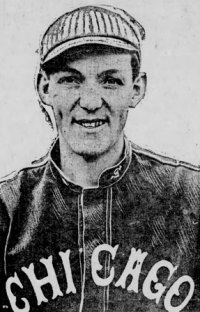
“There is a story going around the circuit which undertakes to show how Buck Weaver, the White Sox shortstop, fooled all the umpires…Buck’s long suit was acting as pivot on a double play, taking the ball from the second baseman.”

buckweaver

Buck Weaver

The paper said when Weaver joined the Sox in 1912, he “noticed that he was often failing,” to turn double plays.

“He lay awaken nights figuring how he could increase his speed in pulling off (double plays), and finally decided that if he could not get the batter no one could, as he was the owner of as strong a whip as any shortstop in the land.

“The solution of the puzzle came to him by accident.  In dashing to second to take a throw from (Morrie) Rath he overstepped the bag and was a stride closer to first than usual when he got the ball.  Instead of stepping back and touching the sack, he made the throw to first base and, much to his surprise, the umpire called both men out.”

When Weaver returned to the dugout, Manager Jimmy “Nixey” Callahan said:

“’You got away with something that time, Buck.’”

Weaver told his manager:

“’I was a whole stride over second when I got the ball.  But say, I could away with it by accident, what’s the matter with trying to pull it off right along when the man at bat is fast and likely to beat me out if I wait for the throw? I can save a quarter of a second or so by going over the bag.’”

The paper said Callahan encouraged him to try it.

“And Buck did.  He worked the trick successfully against the Naps six or seven times, twice in one game with (George) Hildebrand umpiring the bases.

“’He worked it on us several times,’ said Jim McAleer, formerly of the Red Sox, while Clark Griffith admits that Washington suffered the same fate.

“Even Connie Mack was forced to murmur, and when Connie Mack kicks, something must be wrong, and possibly as a result of the protest of the manager of the world’s champions, the umpires will watch Mr. Weaver more carefully this year when he is acting as pivot man in the double play.”

After 1913, when he participated in a career-high 73 double plays, Weaver never played as many games at shortstop, so it’s unknown whether umpires, in fact, watched him “more carefully” when  he attempted the Neighborhood play.