Archive | Uncategorized RSS feed for this section

“Maryland is the Home Run State”

25 Mar

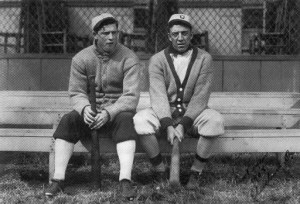
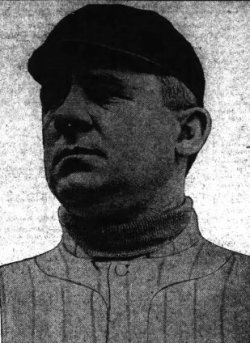
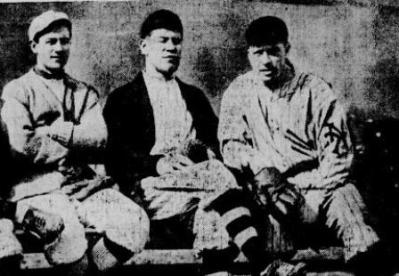
Jack Bentley, pitcher and first baseman for the Baltimore Orioles in the International League hit 20 home runs in 1920.  The feat earned Bentley, who was born in Sandy Spring, Maryland, the nickname “Home run” among local fans.   Dean Snyder of The Denver Express declared:

“Maryland is the home run state.

“Three swat kings hail from the oyster state.  Each has earned the “Home Run” prefix”

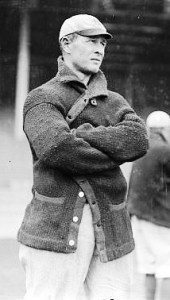
Snyder spoke to all three:  Bentley, Frank Baker, born in Trappe, Maryland, and Babe Ruth, born in Baltimore.

Bentley said:

“Homerunning depends on how you place your feet.  ’That gives a batter poise.  Keep your feet together.  You’re set to step up or back then.

“(During the 1920 season) I tried for a while to keep my feet apart.  I hit a batting slump.  (Orioles) Manager Jack Dunn told me to get my feet together.  I did.  Then I started bouncing ‘em over the walls.”

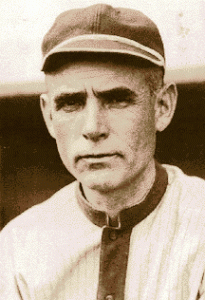
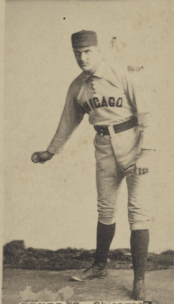
Jack Bentley
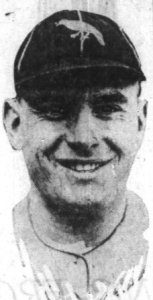
Jack Bentley

Baker said:

“It’s the way I grasp the bat.

“Grab it right down at the knob.  No long distance hitter holds the bat far up.  Use all the wood in the bat.

“That’s my secret.”

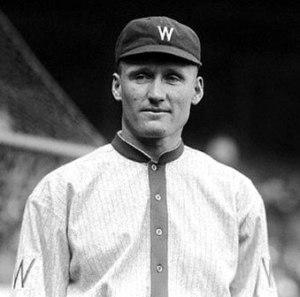
Frank Baker
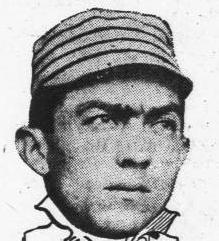
Frank Baker

Ruth said:

“The eye and the swing is the thing.

“Coordinating the two…that makes the ball travel.  Swing a fraction of a second too early or too late and you don’t hit a homer.

“The old eye counts most.  Without a keen eye you flivver.

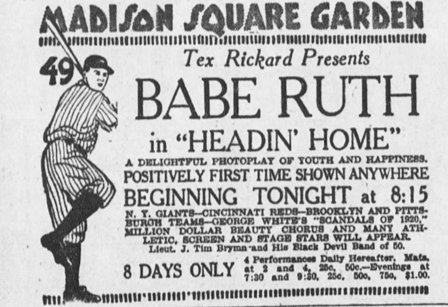
“I hit 54 last year because I timed my swing.  When I was making (the movie “Headin’ Home” during the 1920 season) my eyes went bad.  I didn’t bust one for three weeks.  No pictures for me this summer.

“I’m shootin’ at 75.”

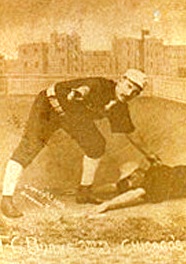
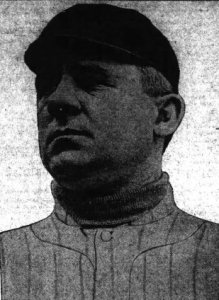
Babe Ruth

Babe Ruth

Bentley hit 24 and 22 home runs the next two seasons with Baltimore (he was also 12-1 with 2.34 ERA in ’21 and 13-2 1.73 on the mound) and was purchased by the New York Giants for $72,000.

“Home run” Bentley appeared in 65 games in the field and hit just seven home runs in 539 National League at-bats from 1923-1927—as a pitcher, he was 40-22 with a 4.35 ERA.

Baker sat out the 1920 season after his wife died of Scarlet Fever in February.  Snyder predicted that when he returned to the Yankees he would “fight Bambino Babe a home run duel.”  He hit 16 home runs in 564 at-bats in 1921 and ’22 before retiring.

Ruth didn’t get “75 in 1921—he settled for 59.  “Headin’ Home,” presented by boxing promoter Tex Rickard, opened at Madison Square Garden on September 19, 1920, to what The Brooklyn Eagle called “a fair sized crowd.”  As for the quality of the film Ruth said caused his eyes to go bad for “three weeks,” the paper said:

“It is an astonishing thing that when people, prominent in other walks in life, enter the moving picture field, they generally appear in most absurd pieces.”
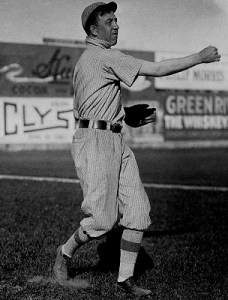
headinhome

Things I Learned on the Way to Looking Up Other Things #19

23 Mar

“Strikes Never got a Pitcher Anything,” 1911

Two days before he collapsed on the field in Chattanooga, Tennessee on April 3, 1911 (and died 11 days later) Addie Joss spoke about pitching with a reporter for the final time.

Joss and the Cleveland Naps were in New Orleans when he told The Associated Press:

“Every time I fool a batter and he misses the ball I feel disappointed.

“Strikes never got a pitcher anything.  Strikeouts don’t win baseball games and increase a man’s salary.  It’s the man who wins games who gets the credit.

Addie Joss

Addie Joss

“What I have said may sound heretical.  But just think it over for a moment, and you will see why a pitcher should want the batter to connect when he is outguessed.

“When the pitcher outguesses the batter the batter is off his balance.  The chances are ten to one he hits at the ball in a half-hearted way.  The chances are twenty to one that if he does connect he will be an easy out.

“Now when that fellow strikes and misses don’t you see that the pitcher must start all over again?  The last strike is just as hard to get as the first one.  When a man misses a ball on which he has been fooled it is just like having an entirely new turn at bat.”

“In the Second Inning, things began to Happen,” 1909

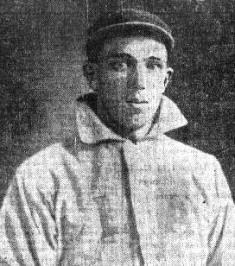
William “Dolly” Gray was a 30-year-old rookie with the Senators in 1909; he came to Washington after pitching seven years for the Los Angeles Angels in the Pacific Coast League compiling a 117-65 record.  That season he set a record which still stands: the most walks in an inning.

Dolly Gray

Dolly Gray

In 1923, in his syndicated column, Umpire Billy Evans called the game in which it happened, “The weirdest game I have ever seen.”

Evans said of the August 28, 1909, game:

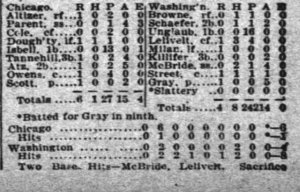
“Gray allowed only one hit—a very questionable one—yet he was beaten 6 to 4. Not an error was made by his supporting cast…I umpired the game, and can recall the happenings of the unusual game as vividly as if they were just being staged.”

[…]

“In the second inning, things began to happen.  Pat Dougherty led off with a high bounder to Bob Unglaub, playing first base for Washington.  Unglaub jumped after it, the ball struck the top of his glove and was deflected into right field.  It was scored as a hit, but I have always thought that Unglaub should have easily handled the ball.

After Dougherty had reached first base, Gray developed a streak of wildness—the most unusual streak I have ever seen.  He walked seven men in succession, forcing in five runs.  The count was three and two on practically every batter.  A couple of outs and another base on balls were responsible for the sixth run of the inning.

Joe Cantillon, managing the Washington club, was short on pitchers at the time and let Gray take his medicine.  In the next inning Gray recovered control and for the rest of the game held the Sox runless and hitless.  Washington staged several rallies and Chicago had a hard time winning 6 to 4…Gray, who really pitched a no-hit game, was beaten…That game stands out in my memory as the most peculiar ball game I ever worked.”

The Box Score

The Box Score

Gray walked 69 batters in the other 217 innings he pitched in 1909.  His hard luck that day in August of 1909 extended for the duration of his short big league career; in three seasons with the Senators he posted a 3.52 ERA and was 15-51.

Meyers’ “Gnarled and Broken” Hand

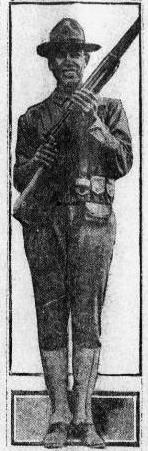
Like all catchers of his era, John “Chief” Meyers’ hands were, as The New York Tribune described them “gnarled and broken.”

But the paper said he had found a cure after being drafted into the marines in November of 1918:

“(At Paris Island, Meyers) hands toyed with a Springfield, and when he swung the bat in the bi-weekly baseball games on the sand diamond at the great Marine Corps Training Station, where there is no fence, the horsehide pellet generally soared well out into the sea.

Chief Meyers

Chief Meyers

“Meyers says that his marine training has done wonders for him and that it has made him good for many more seasons behind the bat.”

After his discharge, the 38-year-old Meyers played just one more season, with the New Haven Weissmen in the Eastern League, hitting .301.


Addie Joss on Spring Training

21 Mar

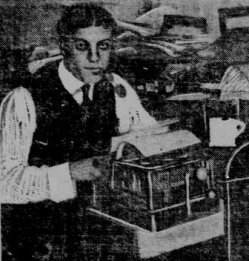
From 1906 until his death in 1911, Cleveland Naps pitcher Addie Joss moonlighted as a sportswriter for The Toledo News-Bee and The Cleveland Press.

addiejoss

Joss at the typewriter

Shortly before departing for the Naps’ camp in Macon, Georgia in 1908, Joss gave readers an insider’s view of spring training:

“About the first thing players do when they receive orders to report at a certain place, is to dig up paraphernalia.  Shoes and gloves are saturated in oil or Vaseline to soften the leather and prepare them for the work in sight.”

After his “two or three days…flying southward” on a train, and one day “getting settled,” he said:

“If the weather permits (a player) witnesses his first practice.

“Usually, the first hour or two is spent in tossing the ball around to get limbered up.  Then the manager calls upon one of the twirlers, usually a youngster, to toss up a few slow ones.

“Half an hour’s batting and the men assume their positions on the field. “

Addie Joss

Joss

After a half hour of fielding practice:

“(T)he men hike back to the hotel.  This routine is observed for the first few days, or until arms and legs become accustomed to the unusual exercise. “

Joss said veteran players usually “take it easy” for the first week unless he needs to shed a few pounds:

“If a man is overweight he will rid himself of superfluous flesh by various means.  Some run around the park each morning and afternoon.  Others chase flies until they seem ready to drop from exhaustion.“

Joss said there was no better “means to get into shape” than fielding ground balls:

“It not only loosens and toughens the muscles but gives the individual fielding practice.

“A stranger to this sort of training will be surprised at the good accomplished.  It brings every muscle into play and puts a man into splendid condition in a couple of weeks.”

Attempts were made, he said, to find new ways to keep players interested:

“Last spring, one trainer introduced an association football into camp, and the players found the diversion beneficial.  It produced generous perspiration and took the stiffness out of sore bodies. “

Next, a few “hotly contested” intersquad games between “regulars and colts,” are played, followed by:

“(T)hree games a week…played by the big league club with the organization from the town in which they are training.  This produces the teamwork so necessary.”

Off the field, Joss said it was critical that the team had a good “rubber:”

“An important factor is the trainer, and the team possessing a good handler finds the work much easier.  After 15 minutes in the hands of an expert rubber, a player whose arms and legs were so lame they could scarcely be lifted leaves the room feeling fine and fit.”

Finally, Joss, who was known as a well-mannered, family man—Ed Walsh, who pitched against him the day Joss threw his perfect game beating the Chicago White Sox 1 to 0 in 1908, told The Chicago Inter Ocean after his death that he was “One of the best men I ever met on or off the ball field–” assured readers that no one was misbehaving during the spring:

Walsh and "One of the best men he ever met..."

Walsh and “One of the best men” he ever met

“The players have little time to themselves off the field, and are usually so tired when night comes that they are willing to sit around the hotel until bedtime.”

Lost Advertisements–John McGraw for Coca-Cola

18 Mar

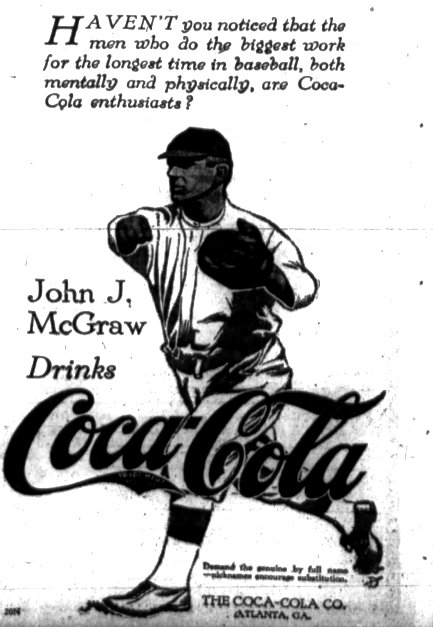
mcgrawcoke

“Haven’t you noticed that the men who do the biggest work for the longest time in baseball, both mentally and physically, are Coca-Cola enthusiasts?

John J. McGraw drinks Coca-Cola.”

After winning three straight pennants with the Giants from 1911-1913, McGraw was confident his team was heading for a fourth straight National League championship after his club took over first place on May 30.  In September, the surging Boston Braves–who were in eighth place when New York took over first– split a doubleheader with the Giants to remain tied for first place (The Braves were tied with the Giants for one day on August 25 and were in sole possession of first for one day earlier in the month).

That day, under the headline “Prophecies and sich!” Ralph Davis of The Pittsburgh Press presented a series of quotes he attributed to McGraw which nicely summed up the season’s pennant race:

“John McGraw said on June 1: ‘The big disappointment of the year has been the Boston Nationals.  I thought (George) Stallings would get his team into the first division at the start and keep it there.’

George Stallings

George Stallings

“John McGraw said on July 1: ‘Those poor old Bostonians are still at the bottom of the pile, where they seem to be anchored.  The team is surely the surprise of the season.’

“John McGraw said on Aug 1: ‘The Boston Braves have made a great showing during the past two weeks, and are now in fourth place.  They will probably slump again, but should not drop back into last place.’

“John McGraw said on Aug. 15: ‘Boston is now in second place, but we are not worried about that.  Their present spurt is merely a flash, and they will soon be headed the other way.’

“John McGraw said on Sept. 1: ‘As I predicted, the Braves did not stay with us.  They have dropped back to second place and have probably shot their bolt.  They will decline from this out.  Mark my words.’

“John McGraw said on Sept. 7: “Those Braves blankety blank, blank, etc…, ad infinitum!’

McGraw

McGraw

“Which being interpreted means Boston once more tied with the Giants for the lead, and shows no sign of breaking badly, as the eminent Mr. McGraw predicted.”

Davis’ prophecy that the Braves showed “no sign of breaking badly” was correct.  Boston beat the Giants 8 to 3 the following day, recapturing sole possession of first place.  They never looked back.  The Braves went 25-6  (with three ties) the rest of the season and cruised to the pennant, beating McGraw’s Giants by 10 1/2 games.

“One of the Biggest Jokes of Baseball”

16 Mar

Hugh Fullerton of The Chicago Examiner had decried spring training as an “Annual display of foolishness” in 1914.  Four years later, he was convinced the First World War had been its death knell:

“One of the biggest jokes of baseball will be eliminated to a great degree when the game is resumed, and one of the most fruitful sources of publicity will be cut down to the essentials.  The spring training trip as an institution practically will cease to be.  No longer will team be taken on long, expensive junkets South and West to ‘train’ for the season.”

Fullerton said “The thing has been overdone,” and claimed that players and owners alike were against the practice continuing.

“The expenses will be heavier than ever before and long junkets would cost too much.  But even greater than these, the next generation of professional ballplayers will be workers.  They will work all winter instead of striving to live on the cheers saved up from the preceding season.  They will not have time to spend five or six weeks loitering in the South, and further, they will report to their teams in better condition than they usually have been.”

He conceded that pitcher and catchers might be “sent somewhere” for a couple of weeks, but declared:

“(The) spring barnstorming era is ended.”

While Fullerton remained adamant that spring training was a useless waste of time and money, he did say:

“But what a lot of fun will be missed…In the spring, the teams always have with them the ‘nuts’ and peculiar characters that the scouts have a habit of discovering.  Sometimes I suspect those fellows dig up ‘bugs’ merely for their advertising value or else the minor league managers have a way of selling all their eccentrics to the big leagues.”

He said of traveling with the Chicago Cubs in Mississippi:

“We had one back in the early part of this century who beat almost all records.  He joined the club with two trunks, one partly filled with clothes and the other containing six one gallon bottles of ‘strength medicine’ which his mother had concocted.  It was made of boneset, hops, mullein, tincture of iron, garlic, asafetida, sulphur and rotgut whiskey.”

Fullerton then told the story of when the unnamed (or apocryphal) player arrived at the ballpark the following day:

“That fellow was suspicious.  He reached the practice grounds at Vicksburg, looked around cautiously, scratched a hole in the sand and buried his diamond ring.  Then he filled his pipe, lighted it and started to practice.  Pretty soon (Manager Frank) Chance yelled at him to get back of the bat and warm up the (batting practice pitchers).  He adjusted his mask, stuck the pipe through the wires and went to work.  That finished his major league career.”

Frank Chance

Frank Chance

Fullerton said Chicago’s 1898 training camp with Manager Tom Burns was “Probably the strangest” a team had ever chosen, and the one that convinced him spring training trips weren’t necessary:

Tom Burns

Tom Burns

“Hudson (New Mexico) consists of one of the finest hot springs in the world, a wide-porched, one-story hotel called Casa del Consuelo  and it is five miles from the railroad and twenty-five from Silver City.”

Fullerton said because of the terrain, and the lack of a suitable location to play:

“The team made one effort to play ball and gave up, and yet, after three weeks of horseback riding, hunting, and mountain climbing, and with only tossing the ball as practice, it was the best conditioned team I ever saw open a season.”

While Chicago might have started the season as the “best-conditioned team” Fullerton had ever seen, and won five of their first six games, they finished the season in fourth place, 17 ½ games behind the Boston Beaneaters.

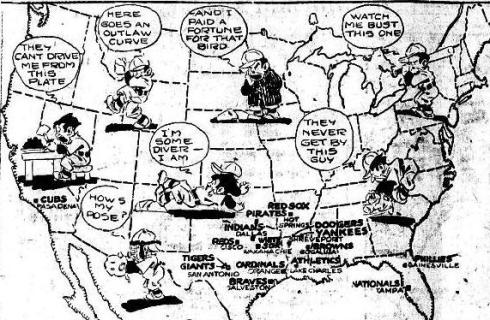
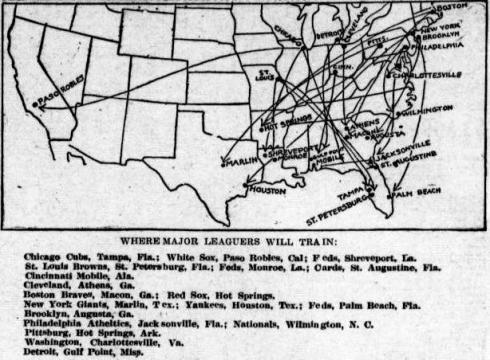
The 1921 map of spring training locations shows how quickly Fullerton was proven wrong:

1921stmap

Clark Griffith, “How I Win”

14 Mar

In 1910, Cincinnati Reds Manager Clark Griffith spoke to journalist Joseph B. Bowles for one of  a series of syndicated articles in which baseball’s biggest stars described “How I Win.”

“If a fellow is going to cut any ice he needs ice picks and the first way for a manager to win is to get men who can deliver, and men intelligent enough to take care of themselves.

“My theories in regard to what constitutes a winner are the only ones, and I use them in instructing my players what to do.  I used them in pitching, and they worked out, and I believe any player will succeed if he follows them.”

Clark Griffith

Clark Griffith

Griffith said baseball was “Ninety-nine and fifteen sixteenths” courage and nerve:

“It is more than that—it is what ballplayers call ‘guts’—which is courage with aggressive confidence behind it…The first thing to do to win baseball games is to go after anyone who does not wear a uniform that looks like yours, and go after him hard.  Hand every opposing player anything that will make him weaken or show the yellow.  Anytime I can convince my men that they are going to win and the other fellows that they are going to lose, I’ll win a pennant.”

He believed his confidence could successfully intimidate opponents:

“The best system of winning games is to tell the other fellow that you are going to beat him.  Tell it to him before the game starts and tell him in a way that will convince him.  You cannot convince him unless you believe it yourself.  I keep telling them all the time, and I believe it myself until the game is over and sometimes even then.”

Griffith said what he wanted most was for his players to:

“Take chances; any chance to gain an inch of ground or a base…Go after the game with intelligence and force every point as hard as possible…The player who takes chances of hurting himself seldom hurts either himself or his opponent and he will make a weak opponent run away.  More players get hurt stopping up on their feet and giving up before they are touched than are damaged in sliding to bases.”

He said that aggressiveness should also be directed at umpires:

“Then claim every point and claim it quick.  Holler.  ‘No, no’ real quick and beat the umpire to it on every close play a la (Johnny) Evers.  The umpire may be perfectly honest and square but on a close play the fellow who yells quickest is much more likely to get the decision.  I do not believe in fighting umpires or nagging at them.  I believe in yelling quickly.  Yelling quickly beats yelling loud all to pieces.  It is not cheating a bit, but simply protecting yourself on close plays not so much to get the decision yourself as to keep the other fellow from getting it.”

Griffith led the Chicago White Sox to the inaugural American League pennant during his first season as a manager in 1901.  And despite not winning one since, was very confident about his “theories” for success:

“These things, taken together with a little good pitching and perhaps one star pitcher, will win any pennant if carried out correctly and persistently, regardless almost of the mechanical ability of the players on the team.”

In the end, Griffith was unable “to win any pennant.”

His Reds teams in 1910 and 1911 were both sub .500 clubs and finished in fifth and sixth place.  He joined the Washington Senators in 1912, and finally with “one star pitcher’ he managed the team to two-second place finishes (1912-13), but did not win a pennant there either.  He stepped down as manager after the 1920 season to devote himself full time to his ownership duties.

One Star Pitcher

One Star Pitcher

He ended his managerial career with a 1491-1367 record over 20 seasons.

“Spring Training is of More Importance in Winning than any one factor”

11 Mar

In 1912, two years before Hugh Fullerton of The Chicago Examiner called spring training Baseball’s “Annual Display of Foolishness,” Giants Manager John McGraw “wrote” an article for The New York Evening World explaining his training philosophy, from the team’s spring home in Marlin, Texas.

In stark contrast to Fullerton, McGraw said:

“In my opinion, the spring training of a ball club is of more importance in winning a pennant than any one factor.  Of course, players of exceptional ability are needed, but unless they are well prepared physically for their work they be laid up…In that event, the club would be just as badly off as if such players didn’t exist.”

McGraw

McGraw

McGraw said:

 “We often hear  of a club being in hard luck on account of having so many players laid up…in most of those cases, the fault can be traced back to the training work done in the spring.”

McGraw said he decided to train the Giants in Marlin because the climate was “mild and even” and “about the same as we find in the North,” during the late spring and early summer, and credited the location with for his club’s performance in 1911:

“I attribute out success in winning the pennant last year to the excellent weather conditions that we found in Marlin.  My club was about able to get up to top speed almost at the beginning of the regular season.”

He said “Everybody said we were lucky,” for the team’s lack of injuries during the pennant race, “But that did not cover it entirely.  The Giants were in excellent condition.”

Again, in stark contrast with Fullerton, who claimed, “A seasoned ballplayer will start with easy work, loosen up his muscles, take off eight or ten pounds and at the end of ten days or two weeks will be in nearly top condition to play baseball.”  McGraw said:

“I always take at least seven weeks for this work; for I don’t believe that a man can be trained in less time than that to last six months.”

In addition to the seven weeks of work, McGraw credited Marlin’s hot spring water with keeping his team healthy:

“I find that the hot water baths following hard workouts do more for sore muscles than all the liniments in the world.  It is not so much the medicinal qualities of the water as the fact that it is hot.”

He said a “mistaken idea of the public” was that spring training entailed:

“(G)iving the players certain kinds of food and putting them through certain athletic stunts.  I do nothing of the kind.  They are allowed to eat what they please.  If they suffer from it, it is their own fault and they quickly realize it.  I do not stop them from smoking or any other little habits that they may have taken up.  In other words, the idea is for them to live naturally and develop physically at the same time.”

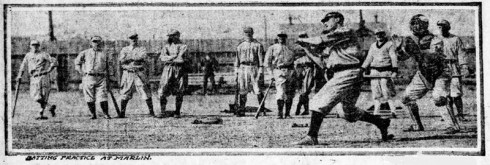
An International Film Service photo of the Giants training in Marlin in 1916

An International Film Service photo of the Giants training in Marlin in 1916

After discovering that many players “tire of their work on the diamond” during the spring, McGraw said “I have introduced such pastimes as tennis, handball, pushball, etc…” to their daily routine.

As for the regular routine:

“I work the men two hours every morning and two hours in the afternoon. I work just as hard as they do.  It is pretty hard on me at first, but I know that I have got to show a willingness to do anything that I would ask the players to do.  I am not as young as some of these recruits and it comes hard at times, but I get results from it because the youngsters are ashamed not to stick as long as I do.”


Finally, McGraw said spring training provided another benefit for young players:

“Social polish is a big help in making a baseball club win, as it develops personal pride in the men and makes them want to be at the top.  For that reason, I always encourage the youngsters to take part in the dances that are given at Marlin every week. It also keeps their mind off the game.  I would like to have my players think of baseball all the time when they are on the field and forget it when they get to their homes or hotel.

“The businessman who worries over his business during his leisure hours soon becomes mentally unfit for his work and the same applies to ballplayers.”

The Giants continued to train at Marlin through 1918 and won four pennants (1911-1913, 1917) during that period.

Baseball’s “Annual Display of Foolishness”

9 Mar

In 1914, Hugh Fullerton of The Chicago Examiner had a problem with something that had become a common practice:

Hugh Fullerton

Hugh Fullerton

“Spring training of baseball teams has commenced.  Nearly half of the major league teams already are in the field.  The others are gathering to hurry southward for the annual display of foolishness.”

It was, he said, simply a ploy for publicity:

“Nothing in baseball shows the era of the press agent, as opposed to playing real baseball, as well as spring training does.  The idea is not to develop players, or train them, but to get a column or more a day in each newspaper on the theory that advertising of that kind plays.”

A map showing the 1914 spring training locations of big league teams

A map showing the 1914 spring training locations of big league teams

Fullerton said spring training was “the annual joke of the game,” and responsible for “the poorer quality of baseball” in recent seasons:

“There is no argument against a manager taking young recruits down south in mid-February…But taking a squad of veteran players South eight weeks before the season starts is reckless foolishness on the part of any owner who has pennant aspirations.

“In twenty years of going South with major league baseball teams, I have never seen a team in better condition at the end of two weeks of training than it was when it started the season. A seasoned ballplayer will start with easy work, loosen up his muscles, take off eight or ten pounds and at the end of ten days or two weeks will be in nearly top condition to play baseball.  Then, satisfied with his own condition, he has a pleasure trip of five or six weeks in the South, working as little as possible.  Then, soft and used to hot weather, he comes North early in April and spends a month getting cold in muscles and playing in miserable weather.”

While he conceded that pitchers might need an extra week to ten days than position players, Fullerton concluded with some advice for major league teams:

“Someday some wise manager will wait until about March 25, take his team down to the middle South for two weeks of real work and then get his advertising by playing real baseball right from the jump.”


Things I Learned on the Way to Looking Up Other Things #18

7 Mar

Tener on Anson

In 1917, John Tener wrote an article in “Baseball Magazine” about Cap Anson, his former manager with the Chicago White Stockings.

John Tener

John Tener

The former pitcher and outfielder, who went on to serve in the United States Congress and as Governor of Pennsylvania, and who in 1917 was president of the National League said:

“Pop Anson was the Greatest Batter who ever lived.  You may look up his record, compare it with others and draw your own conclusions.  When I say this I am well aware of the claims of Ed Delehanty, Hans Wagner and many other great hitters.  I give them all due credit, but in my opinion, Anson was the greatest of them all.

"Cap" Anson

Anson

“He was, first of all, a free hitter. He loved batting…He had that true eye which enabled him to hit the ball squarely on the nose.  His hits were line drives.  They were solid smashes with the full force of his muscular shoulders behind them.”

[…]

“He was an excellent judge of the precise fraction of a second that he needed to swing that heavy bat of his against the best the pitcher could offer.  He didn’t exactly place his hits, but he contrived to drive the ball behind the base runner about where he wanted to drive it…He was big and strong and heavy.  Some hitters of the present day fatten their averages by their nimbleness in reaching first.  Anson drove the ball solidly into the outfield and took his time in going to first.”

Conte on Mendez

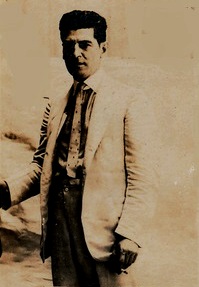
Jose Pepe Conte was a well-known sportswriter in Havana, Cuba. Frank Menke of Heart Newspaper’s International News Service (INS) said of him:

Jose Pepe Conte

Jose Pepe Conte

“Pepe is a fellow who knows heaps and heaps about ancient history, European customs, chemistry, baseball and prize fighting.”

The Pittsburgh Press called him:

“(A) Cuban newspaperman, political personage, and unearther of baseball talent.”

In 1912, the INS distributed an article Conte wrote about the pitcher he thought was the best ever:

“American baseball fans can talk all they want about their (Chief) Benders, (Christy) Mathewsons, (Ed) Walshes and (Mordecai) Browns, but down in our country we have a pitcher that none of the best batters in the country can touch. This is the famous Black Tornado, (Jose) Mendez.  Talk about speed.  Why, when he cuts loose at his hardest clip the ball bounces out of the catcher’s mitt Talk about speed, Mendez has to pitch most of the time without curves because we haven’t a catcher who can hold him.  To make things better, Mendez can bat like (Ty) Cobb.  He has won his own games on various occasions with smashes over the fences for home runs.  He weighs about 154 pounds and is a little fellow.”

Jose Mendez

Jose Mendez

[…]

“No one has been found who can hold him when he really extends himself.  He has shown his skill in the past when he has faced the best batters of the Cubs and Detroit teams when those teams were champions, and when the Athletics went there last year.  Mendez has more curves than any pitcher in America, and if some inventive genius could produce a whitening process whereby we could get the fellow into the big leagues he could win a pennant for either tail-end team in either league.”

Sullivan on Comiskey

In his book, “The National Game,” Al Spink said Ted Sullivan was “the best judge of a ball player in America, the man of widest vision in the baseball world, who predicted much for the National game years ago, and whose predictions have all come true.”

Ted Sullivan

Ted Sullivan

Sullivan was a player, manager, executive, and in 1921, he wrote a series of articles for The Washington Times called “The Best of my Sport Reminiscences.”  He said of Charles Comiskey, who he was crediting with “discovering” at St. Mary’s College in Kansas:

Charles Comiskey

Charles Comiskey

“As a player, Comiskey was easily the best first baseman of his time…His intuition in defining the thoughts of his opponents and making his play accordingly placed him head and shoulders over any man that played that position before or after.

“Comiskey was with John Ward and King Kelly one of the greatest of base runners.  I do not mean dress parade base running, either, merely to show the crowd he could run.  Comiskey’s base running was done at a place in the game when it meant victory for his side.  He was far from being the machine batter that Anson, Roger Connor and some others were; but as a run-getter, which means the combination of hitting, waiting, bunting and running, he outclassed all others.  Jack Doyle, when in his prime with Baltimore and New York, was the nearest approach to Comiskey in brainwork.  There are no others.”

Lost Advertisements–Heinie Groh for Sweet Caporal

4 Mar

grohsweetcaporal

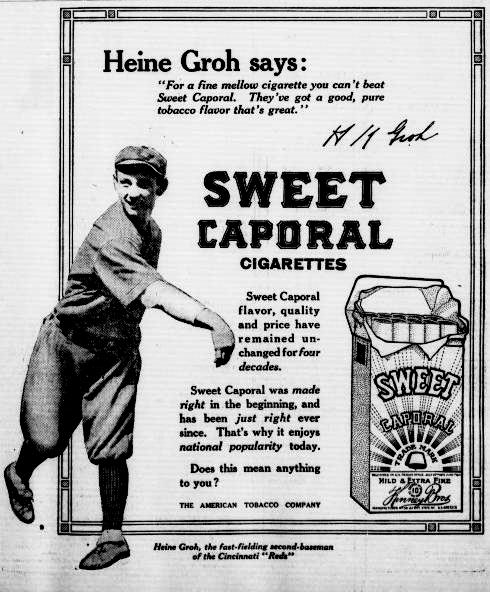
A 1914 Sweet Caporal advertisement featuring Heine [sic] Groh–the company didn’t spend a great deal of time checking the spelling of the names of their endorsers.

“For a fine, mellow cigarette you can’t beat Sweet Caporal.  They’ve got a good, pure tobacco flavor that’s great.”

The salary dispute that culminated with Groh’s trade from the Cincinnati Reds to the New York Giants after the 1921 season had been ongoing since at least 1917 and earned him the title “last of the holdout kings” from The Washington Herald.

His 1920 holdout was, according to Groh, inspired by his wife Marguerite, who also spoke to the press on her husband’s behalf as the dispute ground on into March.

The Cincinnati Times-Star said while speaking at a “local banquet,” Groh told the audience:

“We were sitting in a vaudeville show not long ago and were listening to the thunderous applause being accorded a couple of high salaried dancers.

“My wife touched my arm.  ‘Do you see how they are being praised now?’ she asked. ‘But what will happen to them in a few years when their legs start to go bad?  They’ll get asked to leave won’t they? That’s why they’re so high-priced now.  Let that be a lesson to you.’

“So right then and there Mrs. Groh made me promise that I would not sign a Reds contract until I got my figures…When my wife says sign, I’ll sign and not a minute before.”

Groh

Groh

Marguerite Groh was more direct when she spoke to the paper:

“I don’t care if all the other players sign, and if Heinie can’t do anything better next summer than work in the garden I think he should continue holding out for what he wants.

“We both believe Heinie has been underpaid for several seasons.  This is the year in which we can afford to be independent, and I am urging Heinie to continue his fight to get what he believes he is entitled to.

“It is not a question of how much Heinie can make in some other business. We both know the Reds are willing to pay him more than he will make if he does not sign at the club’s terms.

“But we will be perfectly able to get through the year without any baseball income if the Reds don’t meet Heinie’s terms, and they’ll have to do it if he is to play for them.”

After the Reds left for Miami, Florida without Groh on March 5, The Associated Press said:

“Heinie Groh, or rather Mrs. Heinie Groh, is still among the holdouts in baseball.  There is lurking suspicion that Heinie would like to end the controversy and join his teammates in the South, but Mrs. Groh absolutely refuses to let him go unless (Reds owner August) Garry Herrmann offers her little Heinie more money.”

Four days later Groh agreed to terms, The Cincinnati Enquirer said the Reds “Would not state the amount” of the contract, but said Groh had asked for $12,500 and the team had originally offered $10,000.

During Groh’s long holdout the following year, Mrs. Groh’s opinion was never reported.