Archive | Uncategorized RSS feed for this section

“He Drinks one Glass of Whiskey a day while Training”

8 Apr

The Associated Press (AP) said in 1912 that 45-year-old Denton True “Cy” Young, “(B)aseball’s most interesting veteran has gone to Augusta, Georgia, to join his teammates of the Boston Nationals at their training camp.”

Young had gone to Augusta from Hot Springs, Arkansas, where T he had spent several weeks performing his annual ritual for getting into shape, “He started going there years ago.”

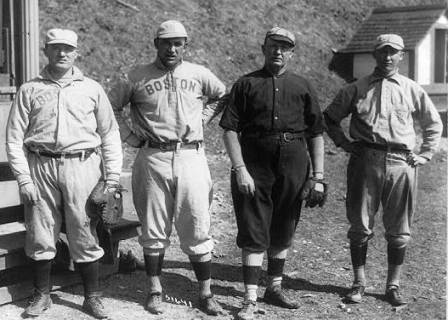
Cy Young, third from left, with Bill Carrigan, Jake Stahl and Fred Anderson at Hot Springs in 1912

Cy Young, third from left, with Bill Carrigan, Jake Stahl, and Fred Anderson at Hot Springs in 1912

Among his secrets: “He drinks one glass of whiskey a day while training.”

Young shared his training regimen with the wire service:

“First week: The regular daily baths at Hot Springs.

“Second week: Baths and road work. He dresses in flannels and sweater and does 10 to 15 miles on the road. He tramps, sprints and climbs hills. He does not touch a baseball.

“Third week: He continues baths and road work. He fields and tosses the ball. He handles bunts to reduce his stomach. At the end of the third week, he pitches his first ball.”

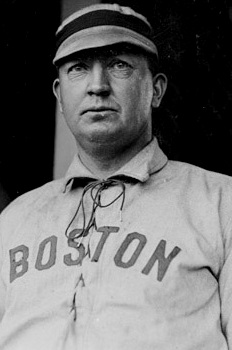
Cy Young

Cy Young

Young said after he began throwing pitches, he had no set rule for when to begin throwing hard:

“Young doesn’t attempt a fastball until he is just right and no one but himself can tell when this will be. He says he doesn’t know how he knows when the moment arrives, but he just naturally begins to speed them across and perhaps to put ‘something on the ball’ at the correct time. The result is you never hear of Cy Young complaining of a sore arm, or wrenched back, as many youngsters do.”

Young, by all accounts, pitched fairly well in games in Georgia and went north with Boston.

But, he never appeared in a game. An April story that said he was retiring to take a baseball writing job at The Boston American proved untrue.

Finally, on May 23, Young was scheduled to pitch against the Pittsburgh Pirates. The AP said:

“The veteran was sent out to warm up to pitch for Boston against the Pirates…but his salary wing refused to behave.”

Young vowed to return to his farm, “and get into shape,” in order to return before the end of the season.

His training regimen finally wasn’t enough. His career was over.

Hearing that Young was returning to his farm, his Boston teammates took up a collection, “to defray Cy’s expenses and $44.39 was raised.” The AP said some of the young players didn’t realize the collection “(W)as a joke…He is worth $75,000 and owns 160 acres of land in Ohio…Cy smiled and spent a good hour hunting up the younger players and returning their money.”

Diet Tips from Tim Murnane

6 Apr

Tim Murnane, who began his career as a first baseman for Middletown Mansfields in the National Association in 1872 and later was a member of the Boston Red Stockings in the National League’s inaugural season in 1876, would go on to become one of the most influential baseball writers in the country.

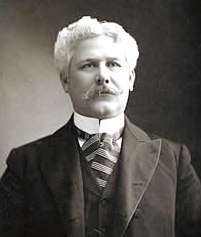
Tim Murnane

Tim Murnane

Writing in The Boston Globe in 1906, he said he had discovered the one thing that caused the greatest harm to a baseball player.

“Over-feeding kills off more ballplayers than accidents or hard work on the ball-field.”

Murnane suggested two solutions.  First, he recommended that, “The Fletcher system should be taken up by the veteran ballplayers without delay.”

The “Fletcher System” or “Fletcherizing” was a then very popular diet technique put forth by a “self-taught nutritionist” named Horace Fletcher.  Fletcher claimed, in several books published during the first decade of the 20th Century that the key to weight loss was to chew food so completely that it was virtually liquefied before swallowing.  Called “The Great Masticator,” Fletcher counted Thomas Edison, Henry James, Franz Kafka, John D. Rockefeller, J.C. Penny—and apparently Tim Murnane—among his adherents.  His theories had fallen out of favor, replaced by diets based on calorie intake, by the time of his death in 1919.

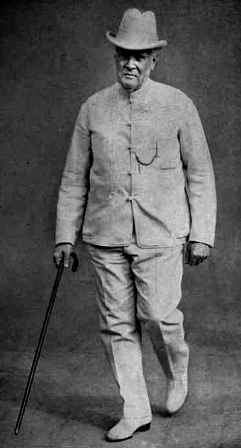
Horace Fletcher "The Great Masticator"

Horace Fletcher, “The Great Masticator.”

Secondly, Murnane said, “(T)he rules of eating should be laid down by the management of every club.”

He said Harry Wright, who had been Murnane’s manager in Boston, “(W)as about the first baseball man to keep a close watch over his players during meal time,” and insisted they eat lightly before games.

“’Just a plate of soup.  That’s plenty,’ would be Mr. Wright’s cry as the players filed into the dining room for lunch.  The greatest athletic performances on the field have been accomplished on practically empty stomachs.”

[…]

“I have known at least half a dozen good ballplayers being passed up in Boston on account of paying no heed to the manager’s advice about overloading their stomachs.  Frank Selee was just as much of a stickler in this line as was Harry Wright, and both were remarkably successful baseball managers.  The manager who does not pay especial attention to this end of the players’ life must lose out, for his team will be unable to keep up a fast clip very long after the boys commence to take on flesh as the result of overfeeding and drinking.”

Murnane had other diet tips for readers:

“A ballplayer cannot drink too much good milk.  The greatest drinker of milk I ever knew was James O’Rourke, and Jim, after thirty-three years on the ball-field, is just as lively a 10-year-old today.  O’Rourke never used tobacco in any form, nor ever indulged in malt liquors, but what a milk drinker he has been all his life and what credit to the national game, from every angle you view the old sport!’

Jim O'Rourke

Jim O’Rourke, “The greatest drinker of milk.’

Murnane blamed the disappointing performance of the Boston Americans in 1905 (Fourth place, 78-74, 16 games out of first) on the dietary habits of the team:

“To be honest, I think the Boston Americans last season practically ignored condition from first to last.  I never witnessed on one ball team so many men out of form by being overweight…This club would have won at least one dozen more games had they taken good care of their stomachs, and no one knows this better than Captain (Manager Jimmy) Collins himself, who has said it will be a much different season with the Boston club next season.”

The next season, 1906, was much different, but not in the way Collins had hoped.  The team was 35-79 when Collins was replaced as manager by Charles “Chick” Stahl, and finished in last place with a 49-105 record.

Murnane concluded:

“Baseball was never intended for a fat man’s game, and Captain Anson was the only heavyweight who ever piloted a pennant winner, although my old friend Charley Comiskey was growing a bit stout when his boys carried off the prize five years ago.”


Lost Advertisements–The Leland Giants’ New Ballpark

3 Apr

lelands


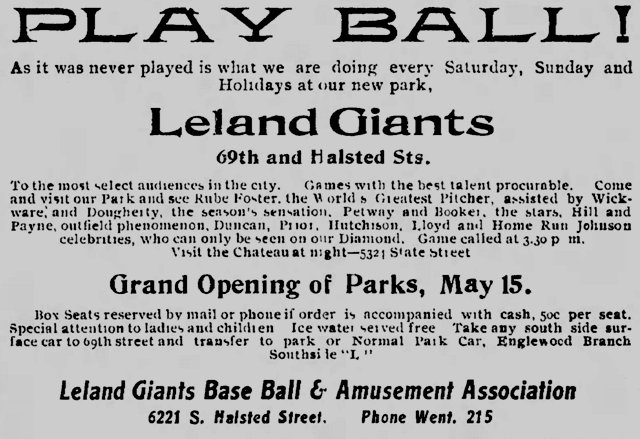
An advertisement for the opening of the Leland Giants’ newly refurbished ballpark, Normal Park, at 69th and Halsted Streets in Chicago, on May 15, 1910.  Just three weeks earlier, Cook County Judge Jesse Baldwin had given the team, managed by Andrew “Rube” Foster, the right to use the name Leland Giants.

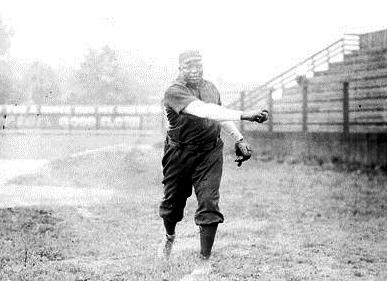
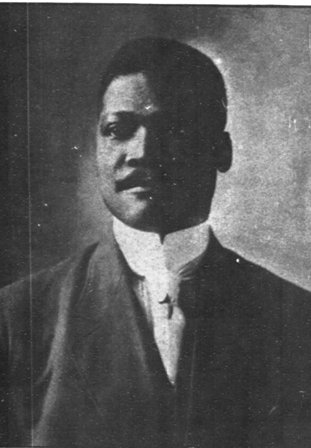
Rube Foster

Rube Foster

May 15 would be the first regular season game for the Leland Giants after the split between Frank Leland and Foster over finances, which resulted in the formation of two separate teams–Leland’s team would be called the Chicago Giants.

Beauregard Fitzhugh Moseley, who had been one of Leland’s primary financial backers but sided with Foster in the split, became the business manager of the new club and represented the team in court.  Under Moseley and Foster’s leadership, the club retained many of the club’s stars and added John Henry Lloyd and Grant “Home Run” Johnson to the roster:

“To the most select audiences in the city.  Games with the best talent procurable.  Come and visit our park and see Rube Foster, the World’s Greatest Pitcher, assisted by (Frank) Wickware and (Charles) Dougherty, the season’s sensation, (Bruce) Petway and (Pete) Booker, the stars (Pete) Hill and (Andrew) Payne, outfield phenomenon, (Frank) Duncan, (Wesley) Pryor, (Fred) Hutchinson, Lloyd and Home Run Johnson, celebrities, who can only be seen on our diamond.”

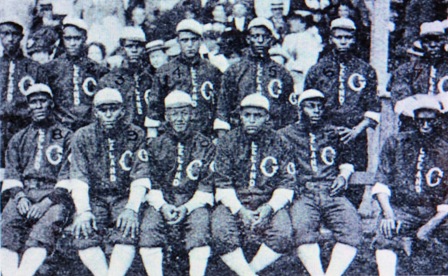
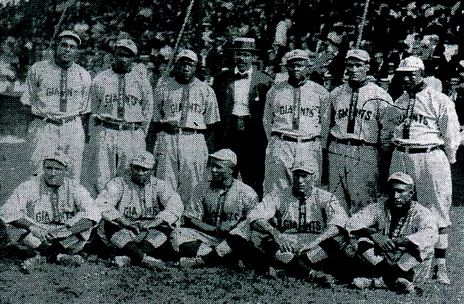
1910 Leland Giants--Seated, left to right, Johnson, Booker, Payne, Strouthers, Duncan, Pryor; standing, left to right, Petway, Lloyd, Hill, Dougherty, Bill Lindsay, Wickware, and Foster.

1910 Leland Giants–Seated, left to right, Johnson, Booker, Payne, Strouthers, Duncan, Pryor; standing, left to right, Petway, Lloyd, Hill, Dougherty, Bill Lindsay, Wickware, and Foster.

While Foster and Moseley’s club consisted of several of the core players from the 1909 Leland Giants, who had won the championship of Chicago’s City League, the league’s members rejected their request for league membership in 1910;  Frank Leland’s Chicago Giants were accepted into the league and The Chicago Tribune said it would be the Chicago Giants who would “hoist the pennant” signifying the 1909 championship at their ballpark, Auburn Park, at 79th and Wentworth,  on May 15.

When the Chicago Giants played their first City League game on May 1, the Leland Giants were on what The Chicago Inter Ocean called “Moseley’s 9,000-mile trip;” a spring training tour that covered 9,073 miles and included games in 10 states.

While they were not members of the City League, the Leland Giants played games against league teams throughout the season; including the May 15 opener.

The Chicago Defender said:

“Those in doubt about the popularity and ability of the 1910 line-up of the Leland Giants, had that doubt dispelled last Sunday if they were at the giants’ new park…B.F. Moseley presented the entire line-up, together with Manager (William C. “Billy”) Niesen‘s team, the Gunthers (a member of the City League) to 4,000 enthusiastic fans, comprising some of the best citizens of Chicago.”

The Defender described Normal Park as “one of the swellest and best-equipped ballparks in the city…it is clean and accessible to the (street) car lines and a credit to the race.”

As part of the festivities, at Normal Park–and at roughly the same time Frank Leland was about to”hoist the pennant” at Auburn Park, Niesen, on behalf of the City League gave the Leland Giants their own championship banner:

“(Niesen) presented the pennant to Rube Foster, as the champions of the city, a march was then formed, headed by the First Regiment K of P (Knights of Pythius) Band to the rear of the grounds, where the pennant, a beautiful flag in maroon, properly lettered ‘Leland Giants, City Champions’ was hoisted and unfurled to the breeze amidst great applause and music.”

The Lelands beat the Gunthers 5 to 1 behind the pitching of Frank Wickware.

Frank Leland’s Chicago Giants, lacked some of the star power of 1909 and  finished in second place in the City League.

Foster and Moseley’s Leland Giants fared better.  The “best talent procurable” won 35 straight games until June 11; The Chicago Tribune said, “Lelands Defeated at Last–Gunthers break winning streak of colored players,” when, with Foster on the mound, they lost 3 to 1 to Niesen’s Gunthers.  It was a rare loss, the Leland giants won 106 games in 1910, with just seven losses.

Beauregard Fitzhugh Moseley

Beauregard Fitzhugh Moseley

The next season, with an infusion of cash from a new business partner, a white Chicago tavern owner, John Schorling–another former partner of Frank Leland, who was sometimes identified as Charles Comiskey‘s son-in-law–the Leland Giants became the Chicago American Giants and moved from Normal Park to “Schorling’s Park” at 39th and Wentworth, the former home of the Chicago White Sox.


“Silly Assertions by a Brace of Newspaper Nincompoops”

1 Apr

Adrian Constantine “Cap” Anson’s Chicago White Stockings cruised to the National League championship in 1880. The team was never out of first place and won the pennant by 15 games over the Providence Grays.

The 1880 National League Champions

The 1880 National League Champions

Two influential newspapers, The Cincinnati Enquirer and The Washington Capital spent the offseason downplaying the White Stockings’ victory and questioning the team’s integrity.

The Enquirer’s OP Caylor had a long-time feud with White Stockings—and National League President William Hulbert–which heated up further at the close of the 1880 season when the Cincinnati Reds were banished from the National League. Cincinnati management routinely leased the team’s Bank Street Grounds out for Sunday games—games where beer was sold as well. Hulbert pushed through a ban on both practices for the 1881 season, then, as was his original intent, forced the Reds out of the league.

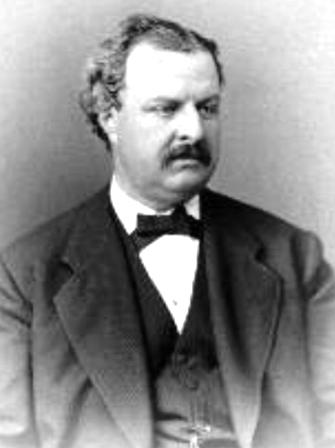
William Hulbert

William Hulbert

Caylor attributed the White Stockings’ success to favorable schedules approved by Hulbert’s “well-trained minions,” and he declared:

“The League, as owned and operated by Hulbert, is rotten and corrupt.”

The Capital, an independent, crusading weekly, took it further. Not content to limit the accusations to off-field corruption, the paper claimed it was common knowledge Chicago had thrown games late in the season.

Over their last fourteen games, the White Stockings were 9-4 with a tie. The Capital said:

“Everybody knows that when the Chicagos had the championship well in hand last season they gave games away to attract gate money…(Hulbert) does not seem to know that the public knows that every time his league goes into secret session it is to concoct some means of swindling the public or the players, or both.”

The Chicago Tribune would not let the insults stand. Their defense was no surprise, in 1875 the paper’s baseball writer, Lewis Meacham had been Hulbert’s conduit for selling the public on the formation of the National League as a successor to the National Association–a league free of drunkenness, gambling and corruption. While Meacham had died in 1878, the paper remained Hulbert’s staunch ally. The Tribune said:

Silly Assertions by a Brace of Newspaper Nincompoops

“Everybody knows that this assertion is a silly falsehood, without a shadow of basis in fact or reasonable probability. So far from losing games to attract gate-money, the Chicago club finds that nothing pays so well as to win all games and lose none. If such a thing were not possible, the club that should go through the greater part of a season without once suffering defeat would attract more patronage and make money than any club ever organized.

“Reason and fairness are, however, wasted upon two such hopeless imbeciles as the fellows who butcher base-ball in the columns of The Washington Capital and The Cincinnati Enquirer.”

The Tribune said jealousy over the lack of a National League club in each city was the only explanation:

The Capital man has been standing on his head ever since the League was impelled by geographical reason to refuse the Washington club’s application for admission; and The Enquirer man has been similarly inverted both as to body and brain ever since the Cincinnati Club was kicked out of the League on account of its refusal to abolish Sunday games and beer jerking on the club grounds in Cincinnati.”

like most 19th-Century allegations of malfeasance on and off the field, the allegations were quickly forgotten.

The White Stockings cruised to another championship in 1881 with a 56-28 record, finishing nine games ahead of second place Providence. It was Hulbert’s final season. He died three weeks before opening day in 1882.

The Tribune, Hulbert’s greatest ally to the end, said upon his death:

“His great force of character, strong will, marked executive ability, unerring judgment of men and measures, and strict integrity and fairness were of incalculable value to the league, and he was rightly considered to be the brains and backbone of that organization. In him, the game of base-ball had the most useful friend and protector it has ever had; and in his death the popular pastime suffers a loss the importance of which cannot easily be exaggerated.”

Fred Downer

30 Mar

In August of 1953, “Jet Magazine” said people were talking about:

 “That affectionate hug baseball immortal Ty Cobb gave Chicago news dealer Fred Downer.”

By then, Frederick Douglas Downer was largely forgotten.

Before playing as a professional, he was, according to The Pittsburgh Courier, the “star” of the Morehouse College baseball team in Atlanta.
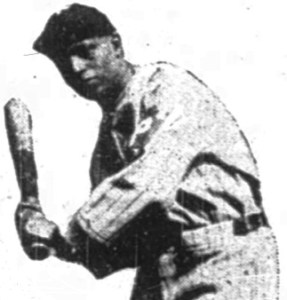
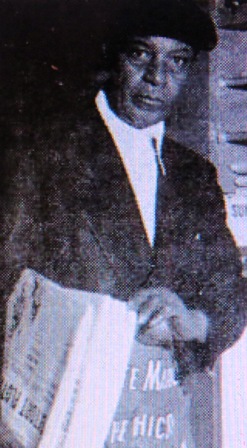
Fred Downer

Fred Downer

His first professional experience was with the Atlanta Cubs in 1919—the team was colloquially called the Atlanta Black Crackers for years, and newspapers referred to them by both names until 1922 when the “Cubs” name was permanently dropped.  Years later, Downer told The Chicago Defender he also played with the Knoxville Giants during this period.

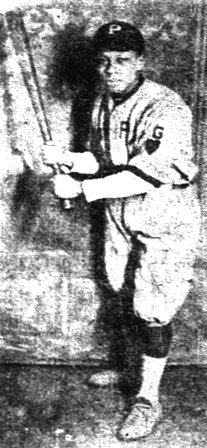
In 1921, Downer and Gerard Williams, his teammate at Morehouse and with the Atlanta Cubs, went north to join the Pittsburgh Keystones.   Downer is listed by several sources as the club’s manager, but in the 1970s he told The Defender said he “played under the management of (William) Dizzy Dismukes.”  Dismukes was also the Keystones’ manager the following year when the team entered the Negro National League.

Downer appears to have played independent and semi-pro ball during 1922.

While not listed on any extant rosters, Downer spent some time with the Cleveland Tate Stars in 1923—in an interview given in 1972 Elander “Vic” Harris, who debuted with the Tate Stars as an 18-year-old that season, said Downer, who he had gotten to know in Pittsburgh was with the club. Harris told The Van Nuys (CA) News he tried out as a first baseman but was installed in the outfield, leading to Downer being let go.

Downer returned to Pittsburgh and assumed management of the Keystones in 1924. After a single season in the Negro National League, the Keystones had dropped out, and the team continued operations as a semi-pro club.

Downer, and another Georgian who also played with the 1923 Cleveland Tate Stars, Mathis Williams, managed and played for the semi-pro version in 1924 and ’25.  The Keystones barely treaded water financially.
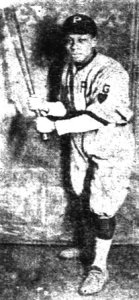
Mathis Williams

Mathis Williams

In June of 1925 The Pittsburgh Courier said:

“Of the colored clubs in action, none but the Homestead Grays are making any money…Fred Downer and his Pittsburgh Keystones are practically a thing of the past.”

Within a month the team disbanded and Downer was through as a player.

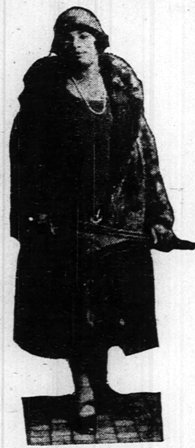
The following year, he and his wife Marian Foster Downer, a reporter for The Pittsburgh Courier—and later The Chicago Defender— relocated to Chicago.  She continued to write for The Courier’s society page while Fred began covering baseball and boxing for the paper and acted as The Courier’s Midwest circulation manager.

In addition to covering most major Midwest-based events–including the annual Negro League East-West All-Star Game and several championship fights—Downer started the Atlas News and Photo Service which distributed content to Black newspapers.


Marian Foster Downer also wrote about sports for The Defender.  Her article on the 1935 East-West All-Star Game—won by the West 11-8 on George “Mule” Suttles’ three-run home run after Webster McDonald walked Josh Gibson to face him—was headlined:
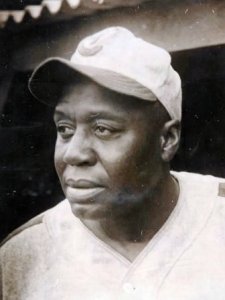
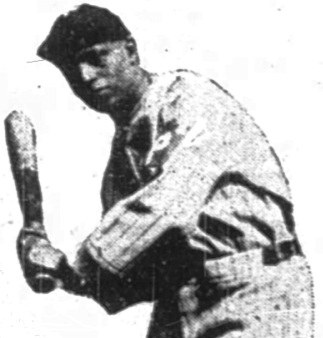
Mule Suttles

Mule Suttles

Our Girl Scribe Sees Mule’s Hit
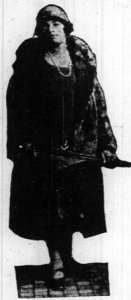
Marian Foster Downer--The Defender's "Girl Scribe"

Marian Foster Downer–The Defender’s “Girl Scribe”

In 1945, Fred Downer proposed a new path for Negro League baseball, writing in a Chicago-based magazine called “New Vistas:”

“If the white majors won’t hire good colored players, then the Negroes should build their own parks and hire the best players regardless of race.  This will build up competition, and competition will break down many barriers.”

Downer was covering the World Series at Wrigley Field in 1932 and was on-hand for Babe Ruth’s “called shot.”  The Courier’s Sports Editor Wendell Smith said Downer was “One of Babe’s most staunch and loyal supporters,” and was determined to find the ball.

 “His decision to find the ball Ruth hit resulted in a search that has been a detailed and intensive as any by a ‘G-man.’  Fred scoured every baseball haunt in the Chicago area.”

According to Smith, Downer expanded his search throughout the Midwest, with no luck.

Downer later told The Chicago Defender he found the ball and bought it from a former Chicagoan who had moved to Michigan.  He called the ball “one of his prized possessions.”

The actual provenance of the ball and its current whereabouts are unknown.

Twenty-one years after he witnessed Ruth’s “called shot,” Downer—by then he had left  The Courier and owned three newsstands on Chicago’s South Side– was again at Wrigley Field where he had an encounter that raised questions in the Black press about a long-held opinion of another baseball legend.

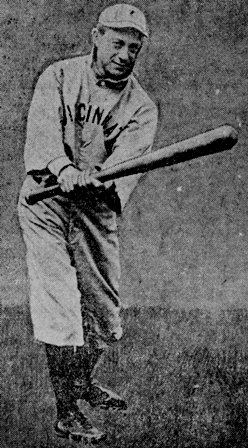
Ty Cobb stopped in Chicago on his way back to his California home from Cooperstown, to attend a game between the Cubs and the Brooklyn Dodgers.

Downer was born in Cobb’s hometown of Royston, Georgia in 1896.  The Defender said of the relationship between the two:

“(Downer) got his start in baseball chasing fly balls for Ty Cobb as a kid.”

The California Eagle said:

“Downer was raised around the Cobb’s household in Royston, Georgia.”

Wendell Smith, then with The Chicago Herald-American, said of Cobb’s day at Wrigley:

“(T)here were two things said about (Cobb) that were, apparently, the gospel truth:

  • He could hit any living pitcher.

  • He would hit any living Negro.”

Smith said the second “truth” was “merely a matter of hearsay.”

And, he said:

“(H)e gives no indication today of intolerance.”

In addition to his embrace of Downer, Cobb was asked which players on the field most impressed him:

“’Why that catcher there, he said, pointing to Roy Campanella.  ‘He’s the best ball player I’ve seen in many a year…That fella’s a great catcher,’ he volunteered.  ‘The very best in the game.  He reminds me a little of Roger Bresnahan.  If he can stick around for five or six more years they’ll have to put him alongside the game’s all-time catchers.’”

Downer continued to operate his newsstands well into his 70s.  At the corner of 53rd Street and Lake Park Avenue, The Defender said, he would:

“(S)ell morning newspapers (and) answer hundreds of questions pertaining to his long career.”
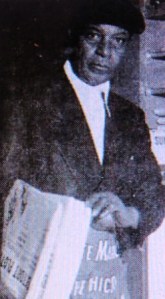
Fred Downer

Fred Downer

Frederick Douglas Downer died in Chicago on March 10, 1986.

Miller Huggins

27 Mar

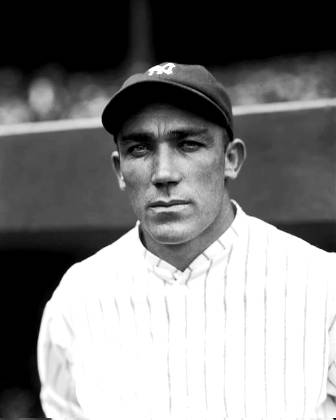
Miller James Huggins was born on this date in 1879.  The Hall of Fame Manager of the New York Yankees played 13 seasons as a second baseman for the Cincinnati Reds and St. Louis Cardinals.

Miller Huggins

Miller Huggins

In 1911, he told Hugh Fullerton of The Chicago Record-Herald about “The greatest play,” he had seen during his career.

Huggins said it was a play made the previous season—July 30, 1910–by his teammate, shortstop Arnold “Stub” Hauser during a game between the Cardinals and the Chicago Cubs, and was described by Charles Dryden of The Chicago Examiner as “the only quadruple play ever made.”

“The play was wonderful, not only because of the situation and the manner in which it was accomplished, but because of the fact that Hauser kept his head all the time and thought as quickly as he acted.

“The situation was this:  we had the game won, but (Frank) Chance and his Crabs were fighting hard and hitting harder.  It took a lot of fielding and desperate work to hold the lead we had gained as they had men on the bases in almost every inning and kept threatening to pile up a bunch of runs almost any minute and beat us out. “

In the fifth inning, with Solly Hofman on first and Jimmy Sheckard on second, Chance hit John “Red” Corriden’s first pitch:

“Chance hit it like a streak of lightning almost over second base, perhaps two or three feet to the third base side of the bag and on a low line.  The ball was hit so hard that I hadn’t a chance to get near it, although I took a running jump in that direction.  It didn’t seem that Hauser, who was playing short, could make it touch his hands.  He came with a run, and as he saw the ball going past he dived for it, and made it hit his left hand while it was extended at full length.  He just stabbed at the ball, and although it hit his hand he, of course, could not hold it.  He was staggering, almost falling, and the ball popped up in the air perhaps a couple of feet, and as it started to fall to the ground Hauser, still falling, grabbed it with his hand and clung to it.  I had covered second, hoping he would be able to get the ball to me when I saw him hit it with his hands.  (Instead of throwing to Huggins) He staggered over second base (to retire Sheckard) and shot the ball to first (to retire Hofman).  As he touched second he spiked me so severely that I had to quit the game.  That is why Dryden called it a quadruple play, as it retired three Crabs and myself at the same time.  I’m proud now that I got spiked, as it gave me a part in the greatest play I ever saw on a ball field.”

___

Speaking of Huggins.  I receive a fairly steady stream of advance copies of books, and while I read most of them, I don’t recommend many. Too many rely heavily on recycled information from secondary and tertiary sources, often repeating faulty information and perpetuating myths.  A soon to be released book about Huggins is a pleasant exception.

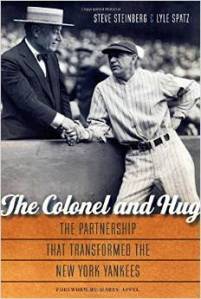
colonelandhugcover

The Colonel and Hug: The Partnership That Transformed the New York Yankees, by Steve Steinberg and Lyle Spatz, will be released on May 1. In addition to being a thoroughly researched, well-written, definitive, biography of both Huggins and Yankee owner Jacob Rupert, the book does an excellent job of weaving the story of the Yankees in the broader context of the 1920s.

Where are they Now?–1896 Edition

25 Mar

In 1896, The Buffalo Times noted the “delightful trait of character in the true blue base ball fan,” to know everything about “the fortunes of a favorite player…and (who) long after the object of his solicitude has retired from the glare of publicity, will make inquiries concerning his favorite’s occupation and residence.”

In an effort to satisfy the curiosity of the “true blue” fan The Times went “to pains to collect,” information regarding the current place of residence and employment of major leaguers from the previous decade:

Nearly 50 players had already died, and about 20 were still connected with the game as managers, umpires or sportswriters.

The profession with the highest concentration of former players besides those who remained connected with baseball, was the saloon business; The Times found 14 players engaged in saloons, including James “Pud” Galvin, Joseph “Reddy” Mack, and Frank Hankinson.

There were five police officers, including, Charlie Jones and Jack Lynch, of the New York police force.

Two were incarcerated—Charlie Sweeney was in California’s San Quentin Prison for manslaughter, and Frank Harris was in jail in Freeport, Illinois awaiting execution for murder; his sentence was commuted in April of 1896.

Frank Harris

Frank Harris, convicted murderer

Five former players were firemen, three of them, John “Monk” Cline, Tom McLaughlin and William “Chicken” Wolf, were all members of the Louisville Fire Department:  Wolf was involved in an accident while responding to a fire in 1901 which left him with a severe head injury and contributed to his death two years later.

Other highlights:

Clarence “Kid” Baldwin—Tramp (Baldwin died the following year in a Cincinnati mental hospital)

Warren “Hick” Carpenter—Pullman car conductor

William Holbert—United States Secret Service

William “Blondie” Purcell—Racetrack bookie

William "Blondie" Purcell

William “Blondie” Purcell

Ed Andrews—Orange grower

George “Jumbo” McGinnis—Glassblower

Daniel “Cyclone” Ryan—Actor

Pitcher turned actor Daniel "Cyclone" Ryan, circa 1903

Pitcher turned actor Daniel “Cyclone” Ryan, circa 1903

John Frank Lane (1880s umpire)—Actor, he was most famous for appearing in plays written by Charles Hale Hoyt, a former sports writer for The Boston Post, and the man responsible for putting Mike “King” Kelly on the stage.

Tragic Exits 3

23 Mar

Eddie Meade

Edward “Eddie” Meade appeared headed to the big leagues.  After beginning the 1926 season with the Kinston Eagles in the Virginia League, the 24-year-old left-hander was acquired at midseason by the St. Paul Saints of the American Association and posted a 12-7 record with a 3.40 ERA in 22 games.

Meade began the 1927 season with a 6-0 shutout of the Louisville Colonels on April 17.  The same week he recorded his first victory, The Associated Press said he was about to become a member of the defending American League champions:

“The Yankees talked of possible reinforcements in the shape of Eddie Meade, of St. Paul, called the best young pitcher in the American Association.”

Eddie Meade

Eddie Meade

During the same week, Meade became ill; although the nature of the illness was never disclosed.  Eight days later he started a game with the Columbus Senators but was pulled after giving up six runs in the fifth inning of 9 to 8 loss.  Five days later he pitched in relief against Louisville, but The Minneapolis Journal said he lasted less than an inning due to his “impaired physical condition.”

When the Saints left Minnesota for a series in Kansas City on May 16, Meade stayed behind.  The following evening Meade checked into St. Paul’s Boardman Hotel and shot himself to death.

The day after his suicide, The Journal said, “it was learned today that Meade was slated to go to the New York Yankees in the fall.”

St. Paul Manager Nick Allen told The Associated Press:

“He was one of the hardest working youngsters we ever had on the club and the outlook for his future was bright, as he had only two years in baseball.  The only motive he could have had for such action would be mental depression.  He was not married.  The nature of his illness was no cause for alarm, but he apparently believed it otherwise.”

Tommy Coates

Thomas A. “Tommy” Coates was born in Omro, Wisconsin on February 18, 1886 (Baseball Reference lists his middle initial as “O” but birth and death records  list it as “A”).

After starring, along with his older brother Hiram, on Omro High School’s undefeated baseball team in 1901—The Omro Herald called the team “possibly the best in the state”—Coates played industrial league and semi-pro ball in Central and Northern Wisconsin.

After playing in Rhinelander, Wisconsin in 1908, The Oshkosh Northwestern said:

“Coates had lots of confidence in himself, and during the winter months the Omro boy came to the city one day and sought out “Pink” Hawley. Hawley agreed to give him a trial.”

Emerson Pink Hawley, a Wisconsin native who pitched in the major leagues for a decade, was the manager of the Oshkosh Indians in the Wisconsin-Illinois League.

Tommy Coates

Tommy Coates

 “Coates came to this city from his home at Omro (for his tryout).  He donned baseball togs and he ‘made good’ from the start.”

Coates, who The Northwestern said  was “tall (and) built something like the great Ty Cobb,” became the Indians starting left fielder one week into the season and went on to lead  the team with a .299 batting average (he hit .002 better than his 19-year-old teammate Heinie Groh).

In September, The Sporting News reported that with just one season of professional experience, Coates “Looks good to Connie Mack,” and was drafted by the Philadelphia Athletics. He was the only member of the Indians drafted by a big league club in 1909.

At season’s end in September, Coates, with an invitation to train with Mack’s club in the spring, spent most of his time hunting.

On October 11 Coates was in a row-boat with a friend, hunting in a marsh near Omro.  The friend told The Omro Herald:

“Tom saw a mud hen rise up on the right hand side.  He turned about quickly and took hold of his gun which was at his left side and pulled it toward him…I turned about as soon as I heard the shot, and to my horror saw Tom lunge forward.”

Coates accidentally discharged his gun, shooting himself in the left eye.

Twelve days after the Oshkosh Indians received a $300 check from Connie Mack—his draft price—Coates was dead.

The Northwestern said:

“He was quiet and unassuming. After making a sensational play in the field or batting out the hit that won the game…the Oshkosh fans could not induce Coates to doff his hat.  He would return to the bench with face covered with blushes.”

[…]

“His more ardent admirers were confident he would make good in the American League, and one of their first thoughts upon hearing of the unfortunate accident, was the promising career he had before him.”

Lost Advertisements–Larry Doyle for Coca-Cola

20 Mar

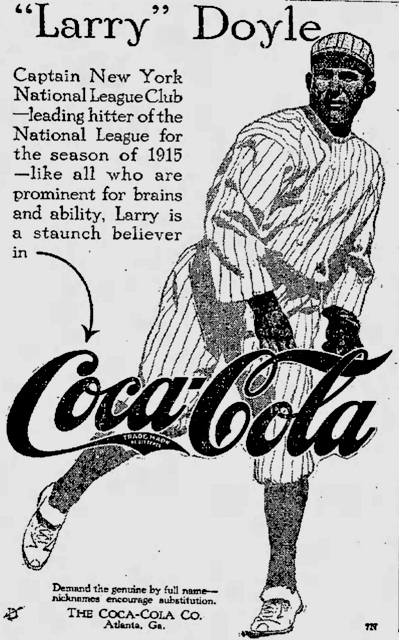
larrydoylecoke

A 1916 advertisement for Coca-Cola featuring New York giants Captain Larry Doyle.

Four years earlier, when Doyle led the Giants to a National League championship–hitting .330 and winning the Chalmers Award as the league’s most valuable player–he told a reporter from The New York Evening Journal that his success was driven by a snub from White Sox Manager Jimmy “Nixey” Callahan:

“When he was playing in a western minor league city (the Three-I League with the Springfield Senators) the (New York) Highlanders heard of him and asked Callahan, then playing independent ball (in Chicago’s City League), to look him over.  Callahan watched Doyle perform in several games and then wired the Highlanders:

“‘He isn’t fast enough.  Can’t field and isn’t a first-class hitter.’

“So Doyle was passed up and Callahan sent in a bill for $200 to cover his expenses and time.  Then (John) McGraw walked up…and paid $4,000 (actually $4,500) for Doyle, who couldn’t be purchased now for three times that amount.  All of which goes to show that some of the best judges of ball players make serious mistakes.”


“The Next Babe Ruth”

18 Mar

After he hit 11 home runs in 1918, and for the next two decades, stories about the discovery of “The Next Babe Ruth” became commonplace in newspapers across the country.

One of the first was Joe Doyle, “The Babe Ruth of Great Lakes,” signed by the St. Louis Cardinals in November of 1918.  Doyle was the star of the team representing Camp Dewey at Great Lakes Navel Training Station where, The St. Louis Globe-Democrat said he made a name for himself, hitting “a dozen home runs and nine triples…(and) flogging a home run over the Camp Dewey Drill Hall, a smash that might be compared to a lift over the left fences of any major league park.”

Doyle began his professional career the following spring with the Houston Buffaloes in the Texas League and played his entire career in Texas.  “The Babe Ruth of Great Lakes” hit just eight home runs over five minor league seasons.

Ben Paschal had the distinction of being declared “The Next Babe Ruth” twice.  When the Boston Red Sox purchased Paschal from the South Atlantic League’s Charlotte Hornets in July of 1920, Manager Ed Barrow told The Boston Herald he had acquired “A second Babe Ruth.”

Paschal joined the Red Sox after Charlotte’s season ended in September.  He had 10 hit in 28 at-bats, but no extra base hits, and was returned to Charlotte after the season.

After four more excellent seasons in the South Atlantic League and Southern Association (he hit .335 with 68 home runs from 1921-1924) he was  purchased by the New York Yankees for $20,000 in August of 1924.

Ben Paschal

Ben Paschal

Paschal was again dubbed the “Second Babe Ruth” by newspapers.  His second stint as the second Ruth was longer and more successful than his first.  From 1924-1929 he hit .309 in with 24 home runs in 750 at-bats as an outfielder playing behind Ruth and Bob Meusel (Meusel was himself dubbed “Another Babe Ruth” by Manager Miller Huggins when he joined the Yankees in 1920).  On Opening Day in 1927 the Second Babe Ruth pinch-hit for Ruth (who was 0-3 and struck out twice) in the sixth inning; Paschal singled, and the Yankees went on to an 8 to 3 victory over the Philadelphia Athletics.

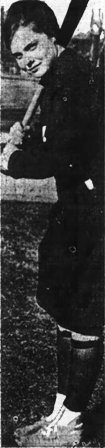
Then there was Dorothy Hodgens.  In 1921, Hodgens was a 20-year-old student at Wilson College in Chambersburg, Pennsylvania.  Hodgens briefly became a celebrity and was called the “feminine Babe Ruth” by many newspapers after The Associated Press (AP) reported that while growing up in Philadelphia Napoleon Lajoie said she was “the only girl he ever knew who could play ball.”

After her picture appeared in papers across the country, Hodgens, who played several sports at the school, was interviewed by The Harrisburg Evening News as she was “ready to enter a basketball game:”

“Yes, I’m terribly fond of baseball, and I’ve been playing it ever since I’ve been a bit of a youngster.”

She said Lajoie was a neighbor in Philadelphia when she was a child:

“Lajoie used to come out and pitch ball with the boys and girls in the neighborhood.  He told me I was the only girl he ever knew who could pitch and gave me a box of league balls that I have treasured ever since.”

Dorothy Hodgens "The Feminine Babe Ruth."

Dorothy Hodgens “The Feminine Babe Ruth.”

While she said her real ambition was to become an actress, Hodgens said, “I never expect to give up baseball entirely though, and I certainly think that every girl should learn to play the game.”

The “Feminine Babe Ruth” disappeared from the public eye shortly afterward.

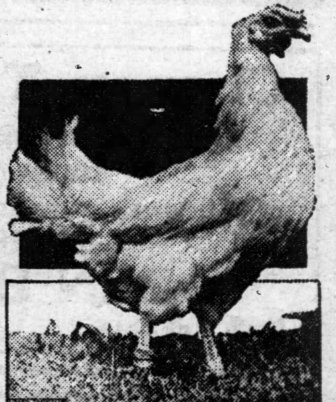
And finally, there was “Another Babe Ruth” who had a brief moment in the limelight in the fall of 1920.  This one was a three-and-a-half pound white Leghorn Chicken who was named “Babe Ruth,” and had just established a new record.

"Babe Ruth"

“Babe Ruth”

The AP said:

“(T)he home run king has a rival…She bats 326 eggs, and this beats the record of 314 (for a single year).  By experienced poultrymen, her record of 326 perfect eggs is considered the most remarkable in the history of the poultry industry.”

There was no report of how she performed the following season.