The Worst, or Best Game Recap Ever—1888

9 Apr

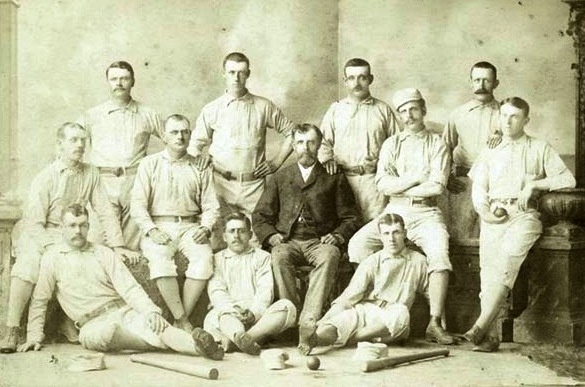
In June of 1888 the Dallas Hams were coasting to the Texas League championship; the team was so good, and so far in front, the league would be reformed in July as the Texas Southern League.  Dallas would win that championship as well.
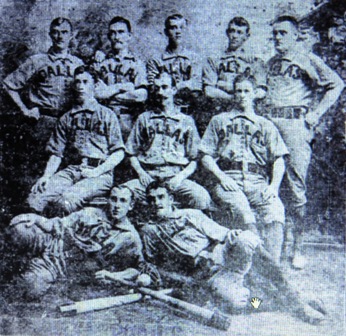
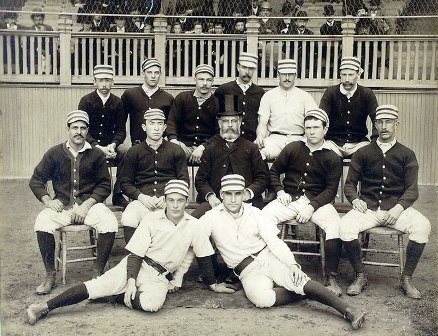
The 1888 Dallas Hams

The 1888 Dallas Hams

Unfortunately most stories did not have bylines in 1888, as a result we’ll probably never know who wrote this recap of the June 12 game between the Hams and the Austin Senators in The Dallas Morning News:

“It was a good game on both sides, still a listless, lifeless, inanimate game.  Neither side showed any life or spirit.  They played like they were asleep, or dead.  There were only about 150 spectators and the boys couldn’t throw any life into the game.

“For seven innings neither side made a run.  Each side played ball and kept the other from scoring. In the eighth inning (Frank) Hoffman for Austin scored.  It was (William) ‘Kid’ Peeples error that lost the game.  A beautiful, way up, pop fly came over to him, falling so prettily right into his hands, and he let it slip—muffed it.  Jack Wentz was on one side of him (Clarence) ‘Daddy’ Cross at the other, each one standing ready and waiting, but it was Peeples’ ball and they stood by.  He muffed it.  He said afterward that he had his hands out for it to come down between his breast and his hands, which it did, but he had his hands too far out and it slipped through.

“The game was lost for Dallas by Peeples’ error of the fly already mentioned.  Look at the score and you will see that while Austin made five base hits, Dallas made nothing except Charlie Levis’ two bagger.

“It is not necessary to go through the minutia of the game.  It was goose egg after goose egg up to the eighth inning, when Austin made one.  There wasn’t a brilliant play in the whole game.  Charlie Levis did make a two bagger, and is entitled to credit for it.  Nobody else did anything.

“Only about 150 people were present to see the game.  The small crowd discouraged the boys and they played without verve, without spirit, without animation.”
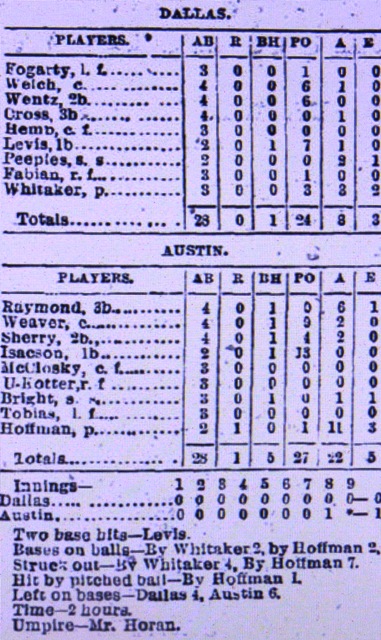
The Box Score
The Box Score

Things I Learned on the Way to Looking Up Other Things #2

8 Apr

A few items from 1888 to 1890:

Largest bat 

Jonah William “Quiet Joe” Knight appeared in the National League as a pitcher for six games with the Philadelphia Quakers in 1884, posting a 2-4 record, and returned in 1890 as a left fielder with the Cincinnati Reds, hitting .312 in 127 games.  He also spent 16 seasons in the minor leagues and was one of the premier hitters in the Eastern League.

When Knight joined the Reds in 1890 The Cincinnati Post said he “uses a larger bat than any other professional.”  Reds shortstop Ollie Beard said:

“I can hardly swing the bat Knight uses let alone hit a ball with it.”

It was said Knight had his bats made to order in his home town St. Catherine’s Ontario, Canada.

joeknight

“Quiet Joe” Knight

Baseball in German

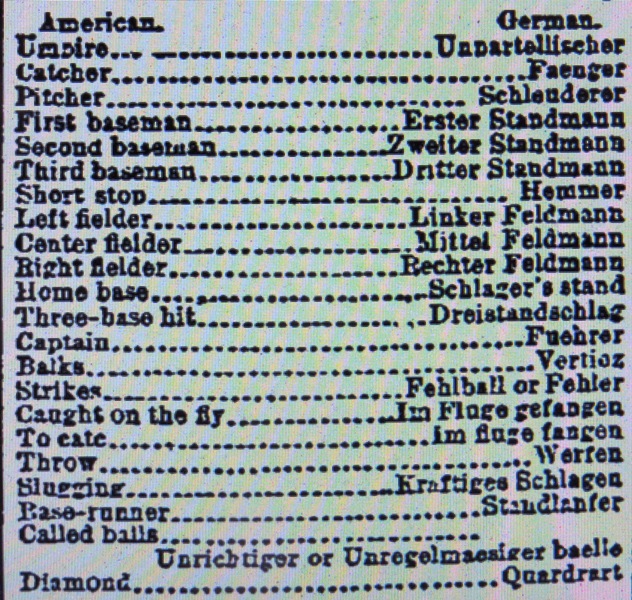
The Boston Herald reported in 1890 that New York’s German language paper Staats-Zeitung hired a baseball editor and would be recapping National League and American Association games:

“Naturally he has been obliged to invent words to describe the technical plays and points and how well he’s succeeded  will be seen from the following:”

???????????????????????????????

Harry Wright’s Team Unimpressive

After the 1887 season Hall of Famer and baseball pioneer Harry Wright took his Philadelphia Quakers on a tour of West Coast along with the Chicago White Stockings, New York Giants and St. Louis Browns; playing exhibition games against each other and with California League teams.

After seeing Philadelphia play The San Francisco Call was unimpressed with the National League’s second place team:

“The ‘Phillies’ will have to improve wonderfully to make their games at all interesting.  They may plead excuses, but they cannot disguise the fact that they played rank ball, and very rank at that.  Their initial effort stamps them as about fourth class, and it will require a brilliant rally to convince people in this section that they are ball-players.  There is not a team in the California League that will not give them a hard game and perchance defeat them.”

Unfortunately there is no record of  how Philadelphia fared on the rest of the tour.

Harry Wright, center, with his 1887 Philadelphia Quakers

Harry Wright, center, with his 1887 Philadelphia Quakers

“Not Quite Such an Idiot”

5 Apr

The 1889 American Association season began and ended as a two-team race between the Brooklyn Bridegrooms and St. Louis Browns, who had won four straight championships—the third place Philadelphia Athletics finished 16 games back.  The battle between Brooklyn and St. Louis was bitter and culminated in September with a charge of umpire bribery.

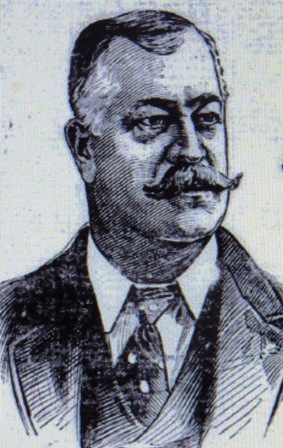
St. Louis owner Chris von der Ahe made a charge of attempted bribery of an umpire.  He said Brooklyn Captain William “Darby” O’Brien had attempted to bribe umpire John Kerins “$100 and the chance for him to umpire in the World’s Series if Brooklyn got there.” (Some accounts claim the amount was $1000, but the overwhelming number of contemporaneous stories put the figure at $100).

Chris von der Ahe

Chris von der Ahe

The Browns owner claimed “I can prove,” the charges and said “Kerins himself told the story in my presence.  Captain (and manager Charles) Comiskey and another party were in the carriage at the time.”

The other “party” never materialized, and Comiskey, no stranger to dubious charges, never fully backed his boss with a statement confirming the accusation.

Kerins, who since 1884 had bounced back and forth between playing in the American Association with the Indianapolis Hoosiers, Louisville Colonels and Baltimore Orioles, and working as a minor league and Association umpire, called the claim “Simply absurd.”

John Kerins

John Kerins


He said he never spoke to von der Ahe, and “I never told Comiskey that any attempt had been made to bribe me,” and that all the charges came from a misinterpreted conversation he had with Comiskey.

Kerins said he simply mentioned to the Browns manager that O’Brien had made “A casual remark,” that “I would give $100 out of my own pocket if Brooklyn could win the championship.”

Kerins said he told O’Brien he’d like to serve as an umpire in the World Series (against eventual National League champions the New York Giants), but it appears Kerins, like every other Association umpire, told many people he’d like to earn the additional money paid to post-season umpires.

Kerins told The Baltimore American that he was:

“Not quite such an idiot as to sell (myself) for the paltry sum of $100.”

O’Brien issued an indignant statement about the charges that appeared in The Chicago Times and other newspapers:

“I was completely nonplussed when I read that story, and, as it was the first intimation I had had of it, you can well imagine my surprise.  To think that that story should reach the eyes of my folks in Peoria and that they might believe me capable of stooping to a dishonest act is what galls me.”

Darby O'Brien

Darby O’Brien

Brooklyn went on to beat the Browns by two games for the American Association Pennant and lost the World Series to the Giants six games to three.

Nothing came of the charges, and it seems doubtful von der Ahe and Comiskey actually believed they were true.

A postscript:  After Comiskey jumped the Browns the following season to join the Chicago Pirates in Players League, von der Ahe signed Kerins (who had all but called him a liar six months earlier), and named him manager in May (one of five Browns managers that season) for 17 games; under Kerins the browns were 9-8.  In June Kerins, hitting .127, was replaced as manager and released by the Browns.

Dave Altizer

4 Apr

David Tilden Altizer did not begin playing professional baseball until 1902 when he was 25; he made his debut with the Washington Senators four years later.  A member of the US Army, he was in China for the Boxer Rebellion and the Philippines during the Spanish-American War; he began playing baseball while in the service.

Most recent mentions of Altizer list his nickname as “Filipino,” but while his service was often mentioned, this nickname is rarely found in contemporaneous stories; rather he regularly referred to by the nickname “daredevil.”

Dave Altizer 1909

Dave Altizer 1909

Altizer was one of the more colorful figures of his era and made good copy, but many of the stories have been lost for years.  Here are a few:

In 1910 Altizer was drafted by the Cincinnati Reds from the Minneapolis Millers of the American Association.  Unaware he had been drafted; Altizer went to Chicago at the close of the millers’ season and disappeared.  The Associated Press said he thus became “the only ballplayer who has been ‘found’ with a newspaper want ad.”

The story said Reds manager Clark Griffith, unable to find Altizer, contacted “Nixey” Callahan, who was playing in Chicago’s City League, and asked him to put an ad in Chicago newspapers to find Altizer.

“This was done and in the early hours of the morning some unknown person called Callahan and gave him Dave’s number.”

Altizer appeared in three games for the Reds after he was located; he had six hits in 10 at bats, walked three times and scored three runs.

Altizer had been the starting  shortstop for the Senators in 1907.  In December The Pittsburgh Press ran a wire service story from Washington under the headline “Dave Altizer is Dead Broke:”

“Dave Altizer, the most popular player on the local team, recently fell victim to a pickpocket, and was relieved of his year’s savings.”

The story said Altizer, alarmed by the “financial stringency (the Panic of 1907)…has carried his savings on his person, not wanting to take any chances of having them tied up in a bank.”

Altizer went to sleep in a Pullman car on a train to California with “$1,475 in large bills” in his vest pocket and discovered when he awoke that the money was gone.  It was never reported if the money was recovered of if the thief was caught.

Altizer with Washington

Altizer with Washington

Gabby Street claimed he saw Altizer do the dumbest thing he had seen in a game, and “topped (Fred) Merkle,” while they were teammates in Washington:

“St. Louis had us beat, 3 to 2, and there were two outs in the ninth.”

Altizer was batting with two strikes and runners on second and third.

“The next strike came over and (umpire John) Sheridan called it a strike.  The ball whizzed right through (Tubby) Spencer’s mitt and bounded up against the grandstand and shot off at an angle, while the chubby Spencer pursued it.  Both of the Washington runners on the bases scored easily.

“But all the time Altizer refused to leave the plate.  He was in a hot argument with Sheridan and insisted the ball wasn’t over the plate and was two feet wide.  In the meantime Spencer got the ball.  There was no chance to get either of the runners at the plate, but he fired to first and retired Altizer.  It made the last out of the game and Altizer’s failure to run cost us the two runs and lost the game for Washington.  And they talked about Merkle.”

Gabby Street

Gabby Street

After Altizer finished his Major League career with the Reds in 1911, he returned to Minneapolis where he played until 1918.  He played and managed two more seasons with the Madison Grays in the South Dakota and Dakota Leagues, before retiring from baseball at age 44.  He died in Pleasant Hill, Illinois in 1964 at age 87.

“Death to Flying Things”

3 Apr

The nickname “Death to Flying Things,” is likely the only thing most baseball fans would know of John Curtis “Jack” Chapman, and even that is a morass of different and often questionable research.  He shares the nickname with one-time Brooklyn Atlantics teammate Bob Ferguson, and competing versions of the story disagree about whether first baseman/outfielder Chapman or infielder Ferguson is the one most commonly referred to by the nickname—and never with contemporaneous citations to back up the assertions.

Regardless, Chapman was an important figure during the advent of the game.

He was a well-known amateur player in the 1860s with the Brooklyn Atlantics (as opposed to the National Association team of the same name he and Ferguson played for in 1874) and the Quaker City’s of Philadelphia. Beginning at age 30 he played a total of 113 in the National Association, with Brooklyn and St. Louis, and during the National League’s inaugural season in 1876 he played and managed the Louisville Grays.

Jack Chapman, far right, with 1868 Brooklyn Atlantics

Jack Chapman, far right, with 1868 Brooklyn Atlantics

After the 1876 season, the career.246 hitter retired as a player.  Over the next 22 years he managed parts of ten seasons in the National League and American Association; including an 88-44 finish and American Association championship with the Louisville Colonels in 1890.  He also managed for 11 seasons in the minor leagues, retiring from baseball after the 1899 season.

When his managerial career ended Chapman was often asked to discuss the current state of baseball; carrying on a tradition as old as the game, and one that will never end, Chapman was adamant that the game as it was currently being played did not measure up the game during his prime.  In a column that appeared in several newspapers in 1900 he said:

“Our great national game is today in bad shape both financially and in other ways.  Whether this situation is caused by the rowdyism of the players I cannot say, but it seems to me that if the rules were strictly lived up to and the chief of umpires and his staff did their duty the game would soon climb back to the high plane it once occupied.

“The players of 10 and 15 years ago were just as fast, tricky and well up in the game as those of today…Years ago the ball used to have two and one-half ounces of rubber in it, whereas now there is only one ounce.  This reduction has made the sphere less lively and consequently easier to field…The men are now harnessed almost like football players, with gloves, pads masks and other paraphernalia.  We hadn’t these accessories in the old days, yet I don’t think the fielding is much improved.”

But mostly Chapman seemed to be concerned with his legacy as a manager:

“Probably no other man has brought out so many players as I have, mainly because I always have made it a point to be on the lookout for new blood by means of which I could improve my team…I think I may claim without anyone gainsaying my assertion, that I have turned out and sold to the National and other leagues more players who have proved to be crackerjacks than any other man living.

Robert Winchester and Mickey Welch, two old timers were ‘finds’ of mine, while Hugh Jennings, Roger Connor, Jimmy Collins, (Bill) Hoffer, (Harry) Howell and many others too numerous to mention in the major and minor leagues were developed by myself.”

Jack Chapman 1900

Jack Chapman 1900

Unfortunately, he said little and provided no details about the most significant incident of his career: as manager of the Louisville Grays in 1877 his team was the first to be involved in a gambling scandal:

“I had four men of my own team—(George) Hall, (Bill) Craver, (Al) Nichols and (Jim) Devlin—put out by the league because they were caught throwing a game.  That was the first time such a thing had ever happened, and it caused a great sensation at the time.”

“Death to Flying Things” died in 1916 in Brooklyn at age 73.

Lost Advertisements–“I Shave with Gillette”

2 Apr

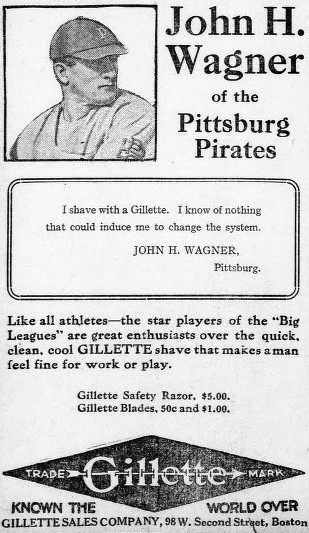
wagnergilletteA 1908 advertisement for Gillette–featuring John H. Wagner (Honus Wagner’s actual full name was John Peter Wagner).

“I Shave with a Gillette.  I know of nothing that could induce me to change the system.” John H. Wagner, Pittsburgh.

“Like all athletes–the star players of the “Big Leagues” are great enthusiasts over the quick, clean, cool, GILLETTE shave that makes a man feel fine for work or play.”

“It is Not as Though they were Men of High Honor”

1 Apr

As the 1879 season drew to a close, The Chicago Inter Ocean lamented that the fourth place White Stockings, despite “the receipts of the year,” would only “have between $2,000 and $3,000 on the right side of the balance-sheet.”

According to the paper, the Cincinnati Reds would lose at least 8,000; the Boston Red Sox and Troy Trojans were both $4,000 in the red, the Cleveland Blues and Buffalo Bisons lost “a little,” while the National League Champion Providence Grays made “a little.”  The Syracuse Stars were “completely wiped out;” the franchise would be replaced by Worcester in 1880.

What was the reason for the lack of profits?  The Inter Ocean said it was those over paid players,:

“The folly of paying men from $1,000 to $1,800 for six months work.  It is not as though they were men of high order, who had spent large sums of money in training for a high profession…On the contrary, the best of them are nominally farmers or mechanics, who at their legitimate business are worth from $30 to $40 a month, and that is all they worth at baseball.”

Hall of Famer Jim O'Rourke hit .348 in 1879, "worth from $30 to $40 a month."

Hall of Famer Jim O’Rourke hit .348 in 1879, “worth from $30 to $40 a month.”

After all, The Inter Ocean said, “a majority of them are simply ‘hoodlums.’”’

“There is no league player who is a good investment, simply as player at over $2 a day and expenses…For a captain, a man of good executive ability, more might reasonably be paid.  The executive capacity should demand an extra remuneration above the manual labor supplied by the ordinary player.

“Players are now so plenty that there is no need of the usual insane rush for engagements.  This season has shown that cheap men can do no more nor no less than high-priced men—that is, fall all to pieces and lose everything.”

1879 National League Champion Providence Grays

1879 National League Champion Providence Grays

“A Heart-Breaking Play, Engineered by Wagner”

29 Mar

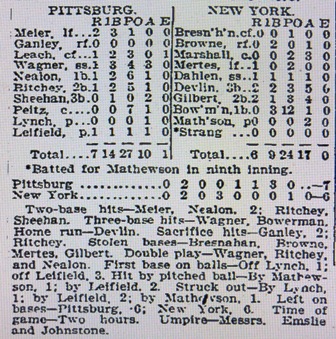
The defending World Series Champion New York Giants had gotten off to a fast start in 1906; on May 15 they were 19-7, the Chicago Cubs were 21-9, when they arrived in Pittsburgh for a four game series.

The Giants were shut out by the Pirates in the first two games.  In the third game of the series Christy Mathewson blew a three-run lead and the Giants trailed 7-5 heading into the top of the eighth inning..

Outfielder Sam Mertes walked, moved to second on Bill Dahlen’s single and scored on a two-out single by second baseman Billy Gilbert.  The Giants were behind 7-6 with runners on first and second; manager John McGraw was about to send Sammy Strang to pinch hit for Mathewson, when, according to The New York Times:

“A heart-breaking play, engineered by (Honus) Wagner in the last second of the eighth inning, beat the Champion New Yorks…It was a hard game to lose, and might not have been lost had Dahlen not fallen a victim to the wiles of Wagner.  The big Dutchman was guilty of the trick of hiding the ball, and when Bill stepped off second base, thinking (pitcher Albert “Lefty”) Leifield had the ball, Wagner, who had concealed it, touched Dahlen, which made the third out.”

Bill Dahlen

Bill Dahlen

The Pirates held on to win 7-6; The Times said of Dahlen:

“The New York shortstop felt so bad that he fairly wept.  McGraw, too, was angry, and it was said tonight he fined Dahlen heavily for his bit of carelessness.”

The Giants were unable to keep pace with the Cubs who finished 20 games ahead of New York for National League Pennant.

The Box Score

The Box Score

Count Campau Explains the “Science of the Sport”—Part 2

28 Mar

Charles “Count” Campau was among the fastest and best base runners of the 19th Century; he stole 63 bases in 147 games major league games, and stole 100 with Savannah and New Orleans in 1887.  In 1900 Campau, then 36 appears, not to have slowed down much.

The Binghamton (NY) Press said at a “field day” competition in Montreal, Campau “circled the bases in 14 ½ seconds and won a handsome gold watch, which he now carries as a souvenir of the feat.”  The Press also said “At one time Campau challenged any baseball player in the world to run a match race of 100 yards for 100.”

"Count" Campau

“Count” Campau

In 1893 Campau wrote an article for the New Orleans Times-Picayune about the “Science of the Sport,” last week‘s post included his comments about the battery, this week, the rest of the article:

“Many people will not believe that a third baseman’s position is one of the hardest and most trying.  As soon as he makes a hot pick-up he must immediately send the ball to first to score the batter out.  He must be a quick, hard and accurate thrower, or a fast base runner will have a good chance to get to first.

“The short stop and second baseman, as a rule, generally work together, but the short stop aids the baseman more than he receives help, in fact, the second baseman is a sort of short stop.  Should a batter be right-handed the grounder will invariably go to the short stop.  If a man has already reached first, the short stop depends upon the second baseman to be at the bag, and send the ball to him…A left-hand batter will send the ball between first and second, where the second baseman generally plays.  Should there be a man on first, the short stop is looked upon to cover the bag, and if the hit is a fast grounder and both men are quick throwers, a double can be easily worked.

“The first baseman is a mean position to play.  It looks easy, but is hard.  He has got to play a short stop game, must be a sure catcher of a thrown ball and is supposed to get a low thrown ball or a high one, and must catch a ball either on the left or right side.  This position is the best place for a captain; for he can see every play that is made better than should he be in the outfield, and can readily argue a decision with an umpire without walking a mile to do so.

“The outfield must be greatly depended upon and must catch all the balls in that territory..  The outfielders have not as much work as the infielders, but they have to look up at Old Sol and must have a good pair of eyes.  They must be hard, quick throwers to be of any value to the team and have got to watch the base runners and use judgment  as to the proper place to throw the ball…A person can be a good fly ball catcher with diligent practice.  He must know where to run and judge a ball.  As soon as he can do this there will be no trouble to succeed.

“A captain must be a cool man and be able to command respect from his men and let them know that his rulings must be obeyed…When his side is in he should instruct his men how to bat, when to bunt or sacrifice. “

Campau said “Baseball is a great exercise, for it is played with brain and every muscle, and daily practice will make any person become strong quick, for every muscle is brought into play and is developed.”

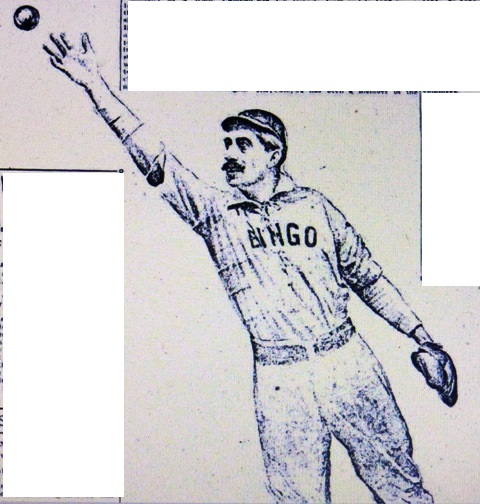
Campau played and managed until the 1905 season, finishing his career with the Binghamton Bingoes in the New York State League; released by Binghamton mid-season, he became an umpire, working in the Southern, Eastern and New York State Leagues June of 1907.

Charles Columbus "Count" Campau 1904

Charles Columbus “Count” Campau 1904

Campau gave up umpiring for thoroughbred racing; he served as a handicapper, clerk of scales and placing judge at a variety of race tracks, including Kenilworth Park in Buffalo, King Edwards Park in Canada, Oriental Park in Cuba, and finally, the Fair Grounds in his adopted home of New Orleans.

Campau died in 1938.

Adventures in Barnstorming—Fake Cuban Stars

27 Mar

One of the pitfalls when trying to book a famous barnstorming team to play your local club was making sure you were actually getting what you thought you were getting.

Fake House of David teams crisscrossed the country for years; there were reports of fake Negro League teams and fake versions of the Nebraska Indians.  Most made an attempt to field a competitive team who could at least pass for the team they were fraudulently representing;  some didn’t even bother.

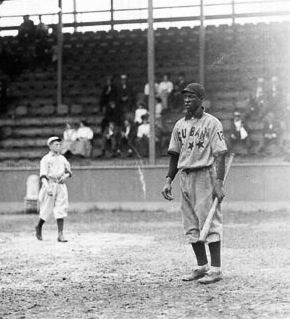
Charles A. Mills thought he was getting the authentic Cuban Stars for a May 1910 game against his St. Louis Giants; the Cubans roster included the great pitcher Jose Mendez, and well-known players like pitcher-outfielder Luis Padron, first baseman Augustin “Tinti” Molina and shortstop Luis Bustamante.

None of them arrived in St. Louis.

Jose Mendez

Jose Mendez

The Freeman said:

“Much talk is going the rounds over the way in which the management of the St. Louis Giants were deceived by a bunch of get-rich-quick schemers, who claimed to be the real Cuban Stars, when in fact there was not a Cuban in the club.”

More than thirty-six-hundred fans came to Kuebler’s Field to see the famous barnstormers play the hometown team, but:

“Mr. C.L. East, advance agent for the supposed Cubans, brought to the city a set of misfits to fool the public and get the money.”

The Freeman insisted that Mills, who bore the brunt of the reaction from angry fans, was an innocent victim of a scam and that the impostors were “in no way the fault of the St. Louis Giants.’”

Mills called it a “high-handed game to defraud the public,” an “unpleasant occurrence that has caused (The Giants) to be unjustly criticised (sic) by some of our best followers.”

There is no record of the outcome of the game or a mention of whether the game was even completed.

The legitimate Cuban Stars, with Mendez, played in St. Louis the following year.

Luis Bustamante

Luis Bustamante