Lost Advertisements—Old Underoof Whiskey, Cubs and White Sox

26 Mar

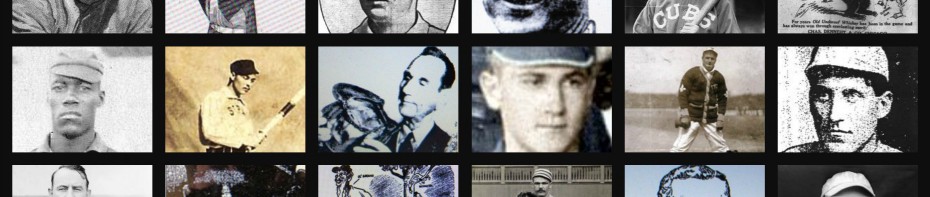
oldunder1910cubssoxmayDuring the first decade of the 20th Century cartoon ads from Chas. Dennehy & Co., distributor of Underoof Bourbon and Rye Whiskey appeared regularly in Chicago newspapers.  Most focused on the Cubs and White Sox, but other teams were featured as well.  The ads above and below are from 1910.

The first ad appeared on May 2;  The White Sox beat the Detroit Tigers 4-3. the Cubs beat the Pittsburgh Pirates 2-1.

The second appeared three days later after the White Sox lost 4-0 to Detroit and the Cubs were beaten 8-3 by the Pirates.

oldunder1910cubssox

Charles Mills and the St. Louis Giants

25 Mar

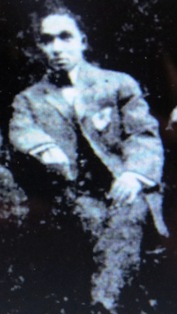
The origin of the Negro League St. Louis Giants, one of the Western Independent Clubs, has become clouded by conflicting histories –some say Charles Alexander Mills started the team in 1909, others say he started it earlier; contemporaneous accounts in the Black press differ, but seem to indicate that Conrad Kuebler, a white businessman (and ballpark owner) operated the team beginning in 1906 or ’07, with Mills becoming involved with the club later (the team was almost universally referred to as Kuebler’s Giants before 1909, when Mill’s became involved, and references as late as 1915 confirm  that Kuebler still had an ownership stake in the team).

Mills’ background is equally as murky, born around 1879; some sources call him “a bank messenger,” others “a tavern owner.”  He did for a time own a bar, the Keystone Cafe and Cabaret at the corner of Compton and Lawton in St. Louis which he opened in 1915—The Freeman said “Hours of good entertainment and high-class wines…can always be found at the Keystone.”

In any case, Mills operated the team on a shoestring in 1909; The Freeman said in 1911:

“Two years ago, when baseball was emerging from the field of darkness into the dim light of athletic fame, the present St. Louis Giants baseball team sprang into existence.  At that time baseball was something new to the Negroes of St. Louis and hardly 100 patrons attended the games.  Players would receive about .50 or .60 each for their share of the gate receipts.

“Their baseball uniform consisted of different colors, cheap material—every man wearing a different suit and stockings of a different type, therefore presenting a grotesque appearance.”

Charles Alexander Mills

Charles Alexander Mills

Within a year, Mills had transformed the Giants.

David Wyatt, a former Chicago Union Giants player turned sportswriter wrote about the opening of the 1910 season at Kuebler’s Field at the corner of Broadway and Pope:

“The St. Louis Giants pulled off a demonstrative honor of Negro baseball, the like of which has never been equaled in the history of the game.

“A monstrous street parade in which automobiles, landaus, coupes and traps played a conspicuous part, started promptly from in front of the Missouri Negro Republican League quarters at 12 o’clock and passed over a route which included all the principal thoroughfares inhabited by the Negro in St. Louis.”

Wyatt praised Mills “the genial and hustling business manager” of the Giants, who “proved conclusively that he is a type of young business- man who is not only endowed with spirit and proclivities of the up-and-doing variety, but he is putting the same into circulation and getting results.”

As for the game, Giants pitcher Bill Gatewood pitched a no-hitter against the Louisville Stars; an 11-0 victory in front of “an assemblage of about five thousand fans.”

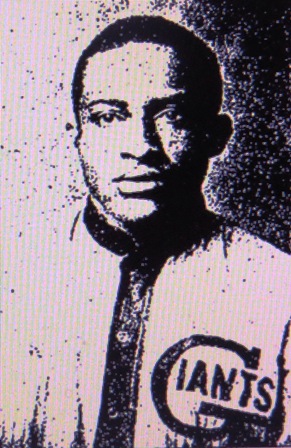
By 1911, Mills had signed some of the best players in the country to join Gatewood, including team captain Dick Wallace and three of the Taylor Brothers; Ben, “Candy” Jim and “Steel Arm” Johnny.  The Giants, according to The Freeman now had “as good athletes as ever trod American soil.”

Giant Captain Wallace

Giant Captain Dick Wallace

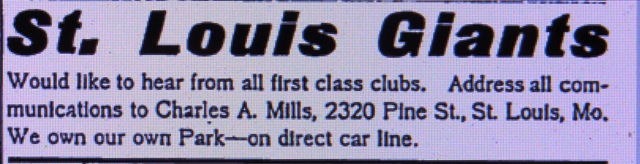
Mills’ Giants won the St. Louis City League in 1912 and ’13 but were generally a .500 team in games against other Western Independent Clubs. Mills aggressively solicited opponents and filled the Giants schedule with games against all comers between league games.

A 1910 ad for Mills' St' Louis Giants soliciting games.

A 1910 ad soliciting games for Mills’ St. Louis Giants

Despite maintaining a fairly strong following in the African-American community, the Giants were something of a nomadic club–according to reports of games in The Freeman, The Chicago Defender and The St. Louis Argus the team played “home” games in no less than seven ballparks during Mills’ tenure.

The Giants continued operating as an independent team (although they seemed to have disbanded for most of 1917 and ’18— tensions stemming from the East St. Louis race riots in May and July of 1917 were probably a contributing factor).

In 1920, Mills was present at the YMCA on 18th and Vine in Kansas City for Rube Foster‘s meeting to form the Negro National League; his Giants finished 6th in 1920 and 3rd in 1921 (Giants’ center fielder Oscar Charleston hit–depending on the source– .433 or .444 that season).

Mills was either ousted or sold his interest in the team (depending on the source) after the 1921 season, and new owners Dr. Sam Sheppard (variously spelled Shepard, Sheperd, and Sheppard) who had played for the New York Gorhams in 1887 and Dick Kent renamed the team the St. Louis Stars.

Mills died in St. Louis in 1944; his role as a pioneer of black baseball so forgotten that as late as 1994, James A Riley in The Biographical Encyclopedia of the Negro Baseball Leagues refers to Mills as “A white businessman.”

Lost Advertisements–Bread at Every Meal

22 Mar

???????????????????????????????

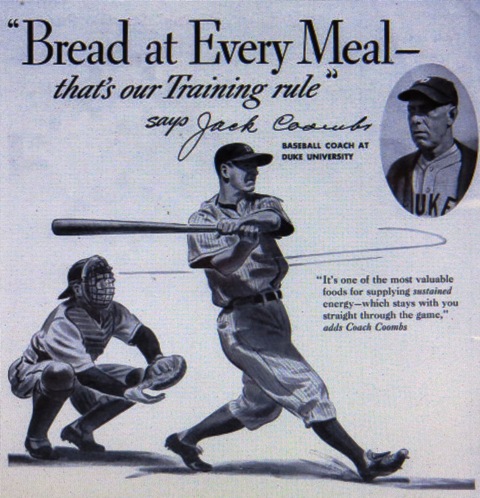
“‘Bread at Every Meal–That’s our Training rule’ says Jack Coombs Baseball Coach at Duke University.  ‘It’s on of the most valuable foods for supplying sustained energy–which stays with you through the game,’ adds Coach Coombs.”

Coombs was best known for pitching a 24-inning complete game for the Philadelphia Athletics against the Boston Americans as a rookie in 1906, and for beating the Chicago Cubs three times in the 1910 World Series.

Coombs, who never played a game in the minor leagues, finished his career with the Detroit Tigers in 1920.

He was coach at Williams and Princeton before arriving at Duke where he coached from 1929-1951, compiling a 382-171 record.  Twenty-one future Major League played for Coombs, including Billy Werber, Dick Groat, and his nephew Bobby Coombs.

Duke’s Jack Coombs Field is named for him.

Charlie Hoover–Infinite Baseball Card Set

21 Mar

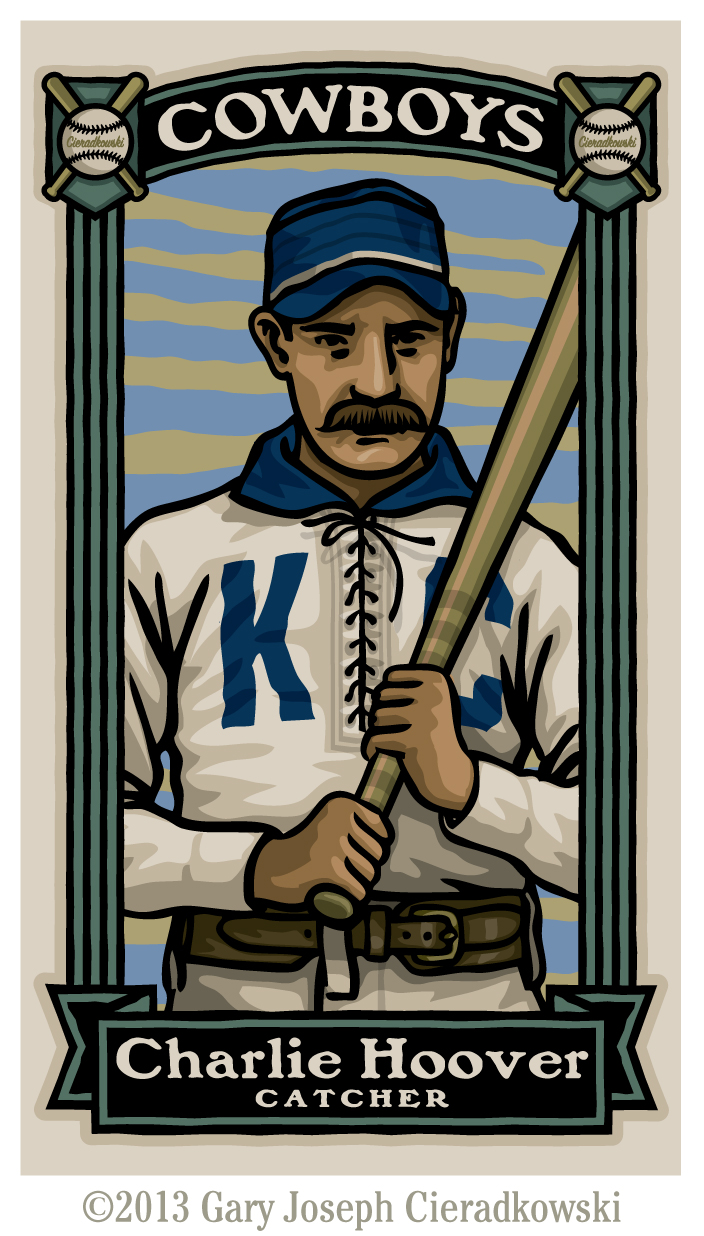
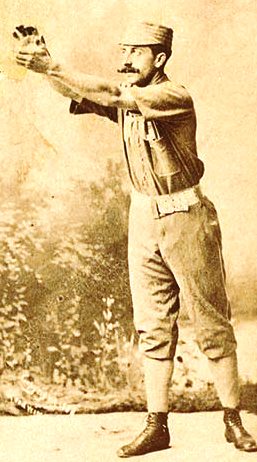
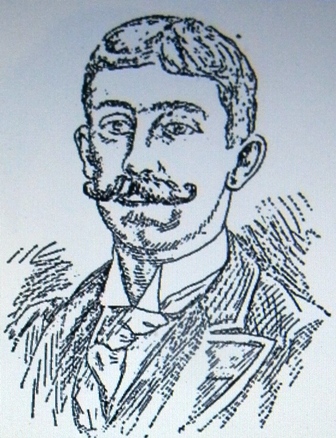
Gary Cieradkowski is an exceptionally talented artist from Covington, Kentucky.  Since 2010 he has produced the great Infinite Baseball Card Set Blog–with excellent stories and his incredible art work.  Gary contacted me recently about collaborating on a piece.  I chose Charlie Hoover.  Hoover was a talented, troubled 19th Century catcher who faded into obscurity and remains one of a handful of Major League players for which there is no information on the place or date of his death.  Read the piece here on Gary’s blog.

This is the card Gary created:

HOOVER_LG

Count Campau Explains the “Science of the Sport”—the Battery

20 Mar

Charles Columbus “Count” Campau earned his nickname because of his regal appearance and his background; he was a member of a prominent Detroit family and educated at Notre Dame, and was regarded as one of the smartest players of the late 19th and early 20th Centuries.

His Major League career was brief, just 147 games with the Detroit Wolverines, St. Louis Browns and Washington Senators, but he was one of the best known, and highest regarded minor league players for 20 years.

Charles Columbus "Count" Campau

Charles Columbus “Count” Campau

Campau was especially popular in New Orleans, where he played for parts of four seasons, managed for one, and adopted as his home.

In 1893 Campau, who The New Orleans Times-Picayune called “one of the best students of baseball,” wrote an article as “Advice for Amateurs” about the “Science of the Sport:”

 “Many a time I have been asked for my views on the successful way to make a good ball player.  From a player’s standpoint a ball player is born and not made.  But with continued practice and coaching from and older and experienced head the amateur will probably reach the top notch in the profession.  There are two things, when combined, (which) will make a good ball player.  A practical and intellectual knowledge of the pastime or sport will aid the amateur.”

The New Orleans Pelicans captain explained what passed for “scientific baseball” in 1893; position by position:

“The most important position is the pitcher. For three reasons he ranks as the most important player on the team. He is the pivot upon which the victory of the team rests.  Should he be slightly disabled or out of condition all hopes of victory would go glimmering and the rest of the team would not put up a good game of ball.  A good pitcher, with fair fielders, is better than a poor pitcher with brilliant fielders.  With a weak pitcher, a fast fielding team would make a sport, and with good hitters would likely win one game out of ten.”

Campau blamed pitching for the Pelicans slow start that season; in spite of being “as hard a batting team” as there was in the league, they “could not win for the reason that the box was decidedly weak.”

“Another important factor in a game is the catcher…A catcher with good judgment and a quick brain will prevent the speedy base runner from advancing, and will lessen the work of the pitcher by watching the bases.  A good battery, with judgment, will work a hard batter, and the chances are that he will pop up a fly or send a grounder to short.  The catcher’s work does not only consist of receiving the delivery of his pitcher, for such a catcher is not worth the chest protector he wears, and will never become a success…(Charlie) Bennett(Jack) Clements, (Buck) Ewing and (Morgan) Murphy are catchers who watch every point of the game.  They back up the first baseman at every safe opportunity.”

"Count" Campau

“Count” Campau

More from the “Count” next week.

Superstitions and Eccentricities

19 Mar

A 1912 wire service article that appeared in The Lexington Herald revealed some of the “superstitions” and “eccentricities” of several ballplayers:

Nap Lajoie always draws a line in the dirt in the batter’s box before taking his position.  He will not face the batter without this preliminary.”

Napoleon Lajoie

Napoleon Lajoie

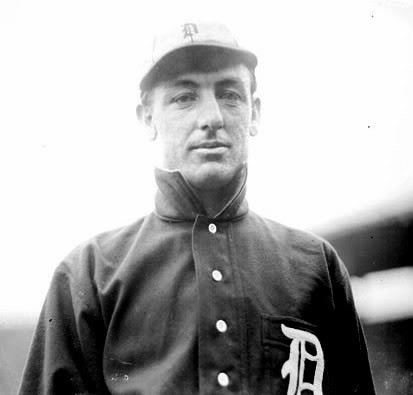
Bill Donovan dislikes to strike out the first batter.  He believes it the forerunner to bad luck.”

Bill Donovan

Bill Donovan

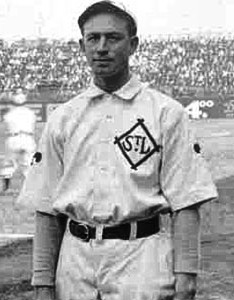
Barney Pelty must throw a curve ball just before starting to pitch.  His last to the catcher when warming up between innings is always a curve.”

Barney Pelty

Barney Pelty

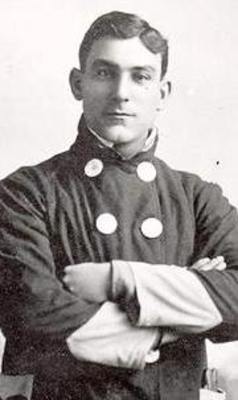
Rube Oldring insists on the little mascot of the Athletics standing in a certain place when he is at bat.”

Rube Oldring

Rube Oldring

Heinie Peitz, when manager of the (Louisville) Colonels, was averse to having any pictures taken of his team.  He believed it hoodooed the game.”

Heinie Peitz

Heinie Peitz

Rabbit Robinson never touches the plate with his bat, but he says he is not superstitious.”

William Clyde "Rabbit" Robinson

William Clyde “Rabbit” Robinson

Ernie Diehl

18 Mar

Ernest Guy “Ernie” Diehl’s entire professional career consisted of less than 60 games.

Every year from 1900 to 1911 he was offered contracts by professional teams and despite his time with two National League teams and two minor league teams he never earned a penny as a ballplayer.

By the time the 25-year-old Diehl made his first professional appearance with the Pittsburgh Pirates in May of 1903, he was already a well-known player. Diehl was the star of the perennial powerhouse Avondale team in Cincinnati’s semi-pro Saturday League, which The Sporting Life called “a fast, clean league.”
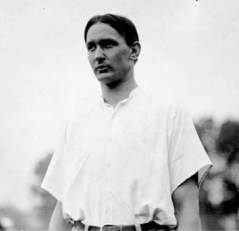
diehl

Ernie Diehl

Diehl was born in Cincinnati in 1877, the scion of a Cincinnati distillery empire; His father Adam G. Diehl had made a fortune in the whiskey business with his brother-in-law; together they founded The Edgewood Distilling Company.

He attended the University of Cincinnati and established a reputation as one of the area’s best athletes.  Perhaps even better at tennis than baseball, Diehl was a prominent amateur tennis player during the first decade of the 20th Century.

In May of 1903 when the Pirates arrived in Cincinnati for a series, the team was decimated with injuries and Diehl joined the team for one game, playing left field on May 31, he went 1 for three in a 3-2 pirate victory.

Despite being offered a contract with Pittsburgh, Diehl chose to return to the distilling business and the Saturday Baseball League.

In 1904, with several Pirate players hurt, Diehl was again asked to join the team; this time for 12 games.  The Pittsburgh Gazette said Diehl also spent time with the Pirates in Hot Springs, Arkansas that spring.

The Baltimore American ran a story before the Pirates arrived in New York in August:

“New Yorkers who attend the games between the Brooklyn and Pittsburgh teams will be treated to an opportunity of seeing the work in the field of a millionaire ballplayer.”

While he hit just .162 for the Pirates in 1904, that did not diminish Pirate owner Barney Dreyfuss’ desire to sign Diehl.

Before the 1905 season Dreyfuss told The Pittsburgh Press:

“The one player I would like to get on the team is beyond my reach… His name is Ernest Diehl…He is one of the best baseball players I ever saw.”

Dreyfuss also called Diehl “One of the best all-around athletes,” he had seen.  The Press said that although Diehl was required to sign a contract for his time with the Pirates in 1903 and ’04:

“Diehl never received a penny of salary from President Dreyfuss.”
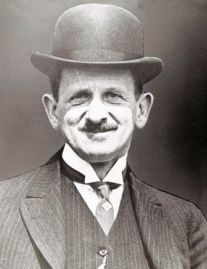
Barney Dreyfuss

Barney Dreyfuss

Dreyfuss, and every other owner who offered Diehl a contract was unsuccessful in securing him for the 1905 season; Diehl spent the season playing in the Saturday League and in several tennis tournaments across the country.

He again played tennis and semi-pro ball in 1906, until August when the Boston Beaneaters came to Cincinnati. Shortstop Al Bridwell was injured, and Diehl was signed (again for no salary) to play for Boston in the three-game series.

The Associated Press reported:

“’Ernie’ Diehl, a wealthy young distiller of this city, an enthusiastic athlete, long known as a brilliant baseball player on local amateur teams, distinguished himself in the series just played…He played three games in the Boston ranks…He made five hits in eleven times at bat…Diehl could not afford to enter professional ball if he desired, at the highest salary paid in the organization, on account of his business, but is delighted and satisfied with his experience…Besides his heavy batting, his fielding was strictly up to the professional standard.”

Just as he had in Pittsburgh, Diehl turned down an offer to stay with Boston for the remainder of the 1906 season.

In 1907, Diehl appeared in 21 games for the Toledo Mud Hens in the American Association, hitting .405.  The Toledo News-Bee said Diehl was spending “His vacation…helping out the Toledo club.”  The Associated Press said that as in the past, “Diehl is wealthy and refused to accept pay for his services.”

In addition to his business interests, amateur tennis and baseball career, and professional baseball “vacations,” Diehl also served on Cincinnati’s city council from, roughly, 1906-1910.

In 1909 Diehl played in one game of a doubleheader for the Boston Doves on August 12 against the Reds, he was 2 for 4 with a double—it would be his last in the National League

Diehl then joined the eventual American Association champion Louisville Colonels, at the request of his friend and fellow Cincinnatian, manager Heinie Peitz.  (Baseball Reference lists a player as “Diehl,” with no first name on the 1909 Louisville roster, with a .226 average in 20 games).

The Sporting Life said Diehl “figured very prominently in Louisville’s winning the championship of the A.A. will again be in Colonel garb,” in 1910; Diehl did not play for Louisville, or any other professional team again.

In 1911 The Associated Press and Cincinnati newspapers said the 33-year-old Diehl had a deal in place with Reds manager Clark Griffith to join the team at some point during the season; as with Louisville, that deal never materialized either.

Diehl was briefly mentioned as a candidate to replace Griffith as Reds manager in 1912, the job eventually went to Hank O’Day.

Diehl’s career was summed up well in a 1914 Baseball Magazine article by William A.  Phelon:

“For ten years it has been a tacitly accepted fact, around the big leagues and whenever players or managers assembled, that Ernie Diehl was not only of major league quality, but what might be called super-quality—the Wagner-Lajoie-Cobb variety.  He could hit, run, and break up a defense with anybody, and was a versatile artist in five or six positions.  Business held him; there never was a chance for him to spend a full season in the game; year after year, in short vacation frolics, he showed the professionals what he could do—and now, getting on in years, with business still gripping him, he sadly gives it up, and lays aside the bat and glove he never had a fair chance to use.”

Diehl’s Edgewood Distilling Company seems to have been dissolved sometime around 1918, and he eventually settled in Miami where he died in 1958.

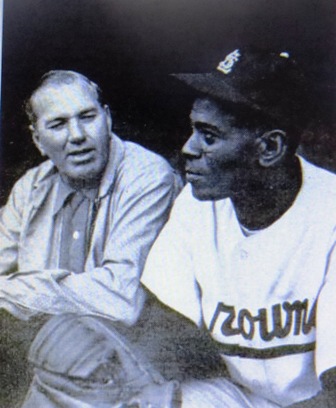
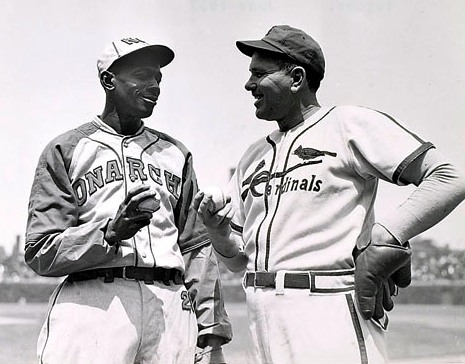
A Thousand Words–Satch and Diz

15 Mar

???????????????????????????????

Ted Williams called for the recognition of Negro League players in his 1966 Hall of Fame induction speech:

“The other day Willie Mays hit his five hundred and twenty second home run. He has gone past me, and he’s pushing, and I say to him, “Go get ’em, Willie.” Baseball gives every American boy a chance to excel. Not just to be as good as someone else, but to be better  This is the nature of man and the name of the game. I hope that one day Satchel Paige and Josh Gibson will be voted into the Hall of Fame as symbols of the great Negro players who are not here only because they weren’t given the chance.”

After Williams’ speech, Jay Hanna “Dizzy” Dean became one of Paige’s most vocal supporters.In 1968 Dean said:

“I think that he was one of the most outstanding pitchers I ever saw throw a ball and too bad he couldn’t have broken in in his prime when he could really fire that ball.”

Dean encouraged fans to write letters to members of the Baseball Writers Association of America to tell then “The venerable Leroy Robert Paige has proved he belongs in Cooperstown.”

Dean said he had “played more baseball against Satchel Paige,” than any other Major League player:

“I certainly think that if anybody belongs in the Hall of Fame, Satchel Paige deserves it as much as anyone else.  I think he was one of the outstanding pitchers of all times, and a guy who has given his life to baseball.”

Paige was the first player inducted to the Hall of Fame by The Special Committee on the Negro Leagues in 1971.

satchndiz

“The Money in Baseball” 1884

14 Mar

In 1884, under the headline “The Money in Baseball,” The Boston Globe expressed their antipathy about the “enormous salaries which the ‘kings of the profession’ demand.”

The Globe observed that “The best pitchers get as much money for working a few hours each day during seven months as many college professors receive for the entire year’s service.”

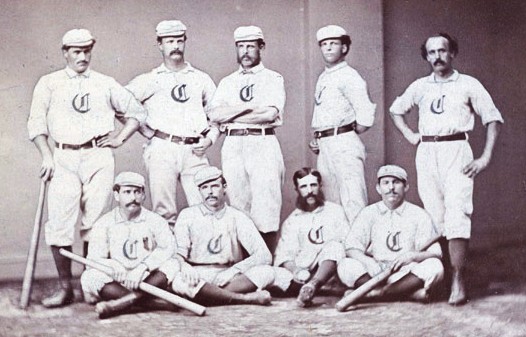
George Wright, Hall of Famer, and brother and teammate of Harry Wright with the 1869 Cincinnati Red Stockings, told the paper

“The money paid the entire team would put a poor team on the field today.  My brother Harry was the most expensive man on the team, and he got $2000 for being captain and playing center field.  I was in my regular position at short and drew $1800.”

Wright said several players on the Red Stockings were paid less than $1000.

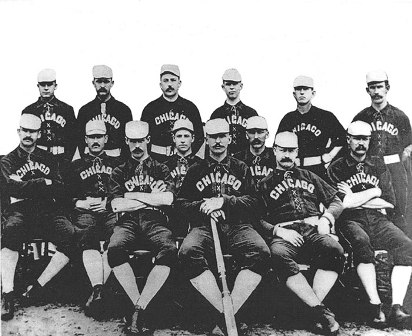
1869 Red Stockings, Harry Wright, standing third from left, George Wright standing to the right of him.

1869 Red Stockings, Harry Wright, standing third from left, George Wright standing to the right of him.

By comparison The Globe said:

“The salary list of the Boston League club amounts to $25,000 in round numbers…It is impossible to estimate how much has been paid in salaries to ballplayers throughout the country.  The eight League clubs will certainly average as much as Boston’s total…In the Union Association are eight more clubs…there is not much doubt that the eight clubs pay at least $125,000 in salaries.  The American Association has twelve clubs…the salary list of these three largest baseball associations in the country aggregate between $500,000 and $600,000.”

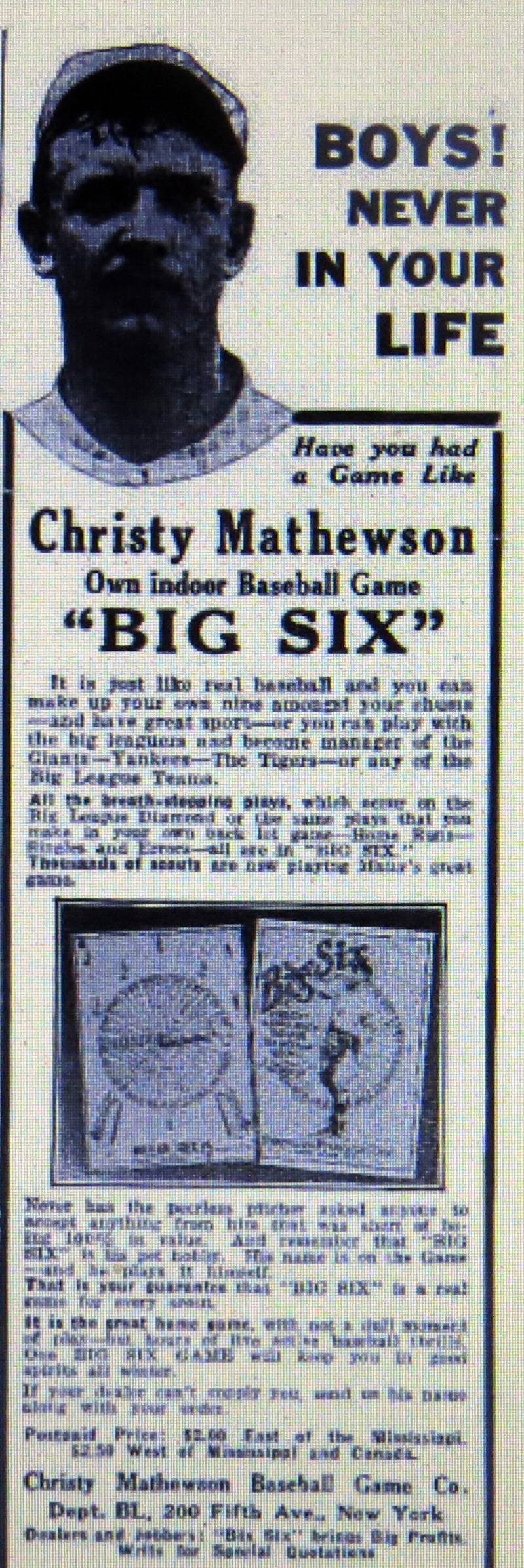
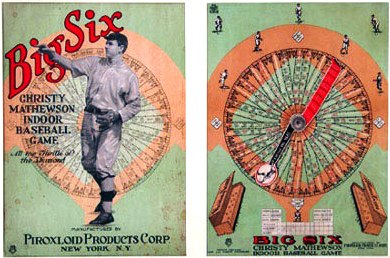
Lost Advertisements-Christy Mathewson “Big Six” Indoor Baseball Game

13 Mar

???????????????????????????????

From 1922–$2.00 East of the Mississippi, $2.50 West of the Mississippi and Canada.

Boys! Never in your life have you had a game like Christy Mathewson Own Indoor Baseball Game “Big Six.”  it is just like real baseball and you can make your own nine amongst your chums–and have great sport–or you can play with the big leaguers and be manager of the Giants–Yankees–The Tigers or any of the Big League Teams.

Box cover and Game Board--Christy Mathewson "Big Six" Game

Box cover and game board–Christy Mathewson “Big Six” Game