Mique Malloy

10 Dec

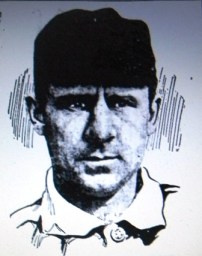
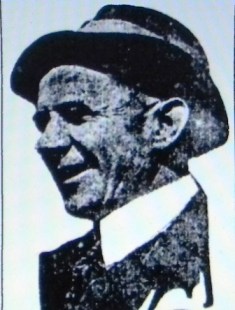
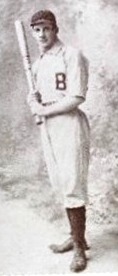
John Michael “Mique” Malloy has at least three different listings under various forms of his name on Baseball Reference.

Malloy was born in Chicago in 1885, and played mostly amateur and semi-pro ball in Illinois, Wisconsin and Minnesota, but had a brief professional career as a player and manager in the Wisconsin-Illinois and Minnesota-Wisconsin Leagues.  The few statistics that survive include a .301 batting average in 133 at bats as a player-manager with the 1913 Wausau Lumberjacks–Malloy fractured his ankle in June and was released in July.

With his playing career over Malloy joined the Chicago Cubs as a scout, but left after the 1913 season to scout for the Chicago franchise in the Federal League.

Malloy became a footnote in the battle between the Federal League and the American and National Leagues, when in April of 1914 according to The Chicago Examiner he filed a $2000 lawsuit against the Cubs claiming he was not paid by the team for helping to sign Zip Zabel and Fritz Mollwitz.

It appears the suit was settled amicably and Malloy returned to the Cubs scouting staff after the Federal League folded.

He stayed with the Cubs with several years, but after World War I entered the business for which he was best known.

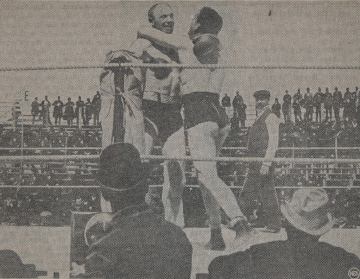
Throughout the 1920s and 30s Malloy was one of the most prominent boxing promoters in Chicago.  Malloy, Paddy Harmon, the man responsible for building Chicago Stadium, and Jim Mullen had a piece of every major fight that took place in Chicago.
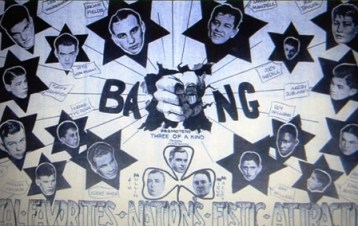
1930s poster featuring promoters Mique Malloy, Jim Mullen and Paddy Harmon, and some of their stable of fighters.

1930s poster featuring promoters Mique Malloy, Jim Mullen and Paddy Harmon, and some of their stable of fighters.

In August of 1930, The Chicago Daily News said Malloy offered Washington Senators First Baseman Art Shires “(A) guarantee of $50,000 (and) two-thirds of the gate over expenses,” if he returned to the ring–Commissioner Kennesaw Mountain Landis had ruled that no Major League player would be permitted to box after Shires’ five fights  in December of 1929 and January of 1930—Shires, at the height of celebrity failed to cash in on the offer and found himself broke and returning to the ring for two much less lucrative fights in 1935.
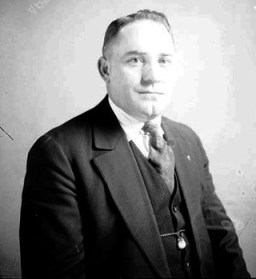
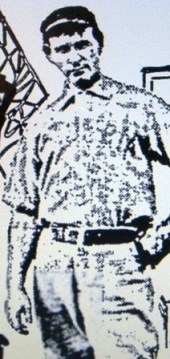
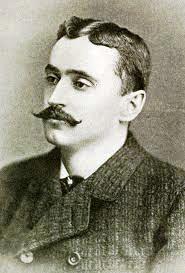
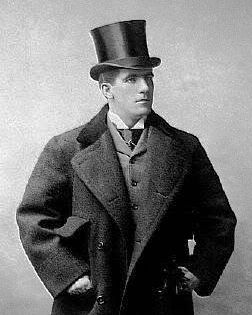
John Michael "Mique" Malloy, 1922

John Michael “Mique” Malloy, 1922

Malloy, at various times, was closely associated with champions Primo Carnera, John Henry Lewis and Henry Armstrong.  It was a rift with Armstrong that led to the worst publicity of Malloy’s career.  After a February 1938 bout Malloy promoted at the International Amphitheater, Armstrong vowed never to fight for Malloy again and claimed that the promoter had seated fans in segregated sections.  There is no record of whether or not Malloy responded to the charges.

Malloy continued to promote boxing and wrestling cards in Chicago until he retired in 1947; he died in Chicago in 1952.

Another Malloy story tomorrow.

A Thousand Words

6 Dec

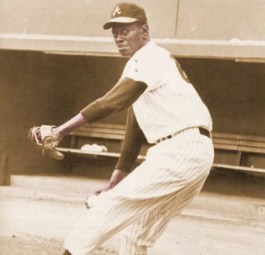
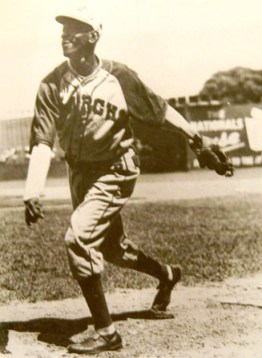
Satchel Paige demonstrates four of his favorite pitches to The Baltimore Afro-American, 1948:

The sidearm curve (outshoot):  “A wrist-twist causes counter-clockwise spin which makes the ball bend away from a right-handed batter.”

Sidearm Curve--outshoot

Sidearm Curve–outshoot

The overhand curve (drop): “Is gripped and thrown with a twist as to let the ball leave the hand with a snap between thumb and forefinger.  Overspin thus makes ball take a sudden dip.”

Overhand curve--drop

Overhand curve–drop

The Screwball (inshoot):  “Ball slides off fingers with a rapid clockwise spin, making it twist away from a left-handed hitter.”

Screwball--inshoot

Screwball–inshoot

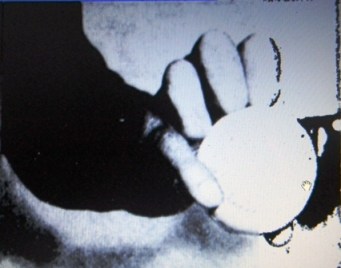
The knuckleball:  “takes odd twists and turns even the pitcher can’t predict.”

Knuckle ball

Knuckle ball

“May every page you turn be a Satchel Paige.” Greg Proops, The Smartest Man in the World Podcast.

satchelbraves

Actually, it Probably Wasn’t the Superstition

5 Dec

As with George Treadway, a story can get repeated throughout the decades while a large, key portion is lost in the process; such is the case with Billy Earle.

His career ended because of the superstitions of other players who thought he was “creepy,” as David Nemec described him in his excellent book “The Beer and Whiskey League.” In “The New Bill James Historical Abstract,” James credulously quotes the assertion from sportscaster Bill Stern‘s 1949 book “Favorite Baseball Stories” that Earle was:

“(F)orced out of baseball, because of nothing more than superstition, the belief that he was a hypnotist with the power of ‘the evil eye.’”

For awhile even Earle tried to use it as an excuse.

But actually, it was probably the morphine.

William Moffat Earle was at times a great player, but more often impetuous and prone to jumping contracts.

He earned his nickname “The Little Globetrotter” after being part of the 1888 world tour organized by Albert Spalding. Earle said of the trip:

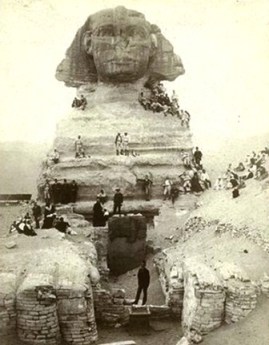
“We played everywhere from the catacombs of Rome to Cheops of Egypt, under the shadow of the pyramids and out through India and the Islands of Ceylon.”

Billy Earle and the other members of the world tour

Billy Earle and the other members of the world tour at the Great Sphinx of Giza

After returning from the tour Earle joined the Cincinnati Red Stockings in the American Association. He bounced back and forth from Major League to minor league teams for the next six years. During that time, there were a number of humorous references to Earle’s interest in hypnotism, but none claimed it was an impediment to his career; however, in 1897, upon being released after one game with the Columbus Senators of the Western League the legend began.

In September of 1897, an article appeared in The Baltimore Sun under the headline, “A Haunted Ballplayer:”

“(Earle) cannot get a position on any ball team in the country, not even the small minor league teams.”

Earle told a sad story of teammates avoiding him and fearing the “hoodoo.” He even blamed his being released by Pittsburgh after the 1893 season on it, ignoring the fact that he was only signed because of injuries to the three other Pirate catchers, Connie Mack, Joe Sugden and Doggie Miller—and emergency catcher Jake Stenzel.

That 1897 story became the story of Billy Earle.

It also said:

“He is, moreover, a pleasant, intelligent, strictly temperate man.”

The first two might very well have been true. The last was not.

The rest of the story about Billy Earle has been lost, forgotten, or just ignored.

In August of 1898, The Cincinnati Enquirer told the real story of why Billy Earle had been out of baseball. The “strictly temperate” Earle was addicted to morphine.

His friend John McGraw helped get him treatment in a Baltimore hospital; his former Cincinnati teammates took up a collection to buy Earle a ticket to Philadelphia to stay with his parents after treatment.

He kicked the habit, and then for three seasons managed and played for an independent team in Richmond, Indiana; he also coached teams in Havana, Cuba during the winters of 1900 and 1902-1904. And he returned to professional baseball; hardly the profile of a blacklisted man.

Earle signed as a player/manager with the 1903 Vicksburg Hill Billies in the Cotton States League. He continued his playing career through 1906, and either managed or worked as an umpire in Midwest-based leagues through 1911.

Billy Earle, player/manager Columbia Gamecocks 1905.

Billy Earle, player/manager Columbia Gamecocks 1905.

Billy Earle died in Omaha, Nebraska in 1946.

Were there some players in the superstitious world of 19th Century baseball who were uncomfortable playing with or against Earle? Probably. If he had hit .320 and not had a drug problem would he have had a 10-year or more major league career regardless of superstitions? Probably.

McGraw’s Maxims

4 Dec

While the New York Giants were training in Marlin Springs, Texas before the 1912 season, John McGraw wrote (his name appeared on the byline) an article published in newspapers across the country about what it took “to become a big league ballplayer.”

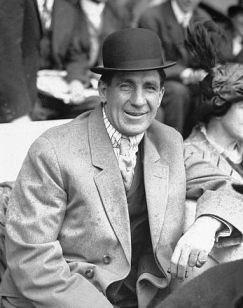
John McGraw, 1912

John McGraw, 1912

McGraw wrote:

“If you have speed in your legs, in your arms, if you are physically strong, know human nature, don’t use tobacco, you’ll make a ballplayer.”

Included in the article were “McGraw’s Maxims:”

Forget what you know and learn over

Don’t drink

Eat two meals a day

Don’t drink water on the field

The less training in winter the better

Indoor training doesn’t help

A steady player is better than a grandstand player

A country boy is better material than a college boy, because he doesn’t think he knows it all.

Reminiscent, if less colorful, than Satchel Paige’s “How to Keep Young,” written forty years later, (this has been reprinted everywhere for years, but any excuse to mention Satchel Paige…)

Satchel Paige, 1942

Satchel Paige, 1942

Avoid fried meats which angry up the blood.

If you stomach disputes you, lie down and pacify it with cool thoughts.

Keep the juices flowing by jangling around gently as you move.

Go very light on the vices, such as carrying on in society. The social ramble ain’t restful.

Avoid running at all times.

Don’t look back. Something might be gaining on you.

Brother Joe Goes Home

3 Dec

After the Saint Louis Cardinals released Joe Corbett in August of 1904, he returned to San Francisco and signed with the Seals of the Pacific Coast League.

There would be one more skirmish between Hanlon and Corbett.

Hanlon filed a grievance with the National Commission claiming that Corbett’s release did not make him a free agent, but instead released his rights back to Brooklyn.  Hanlon seemed to have a solid case.  Ed Grillo, former and future sports writer and then President of the American Association said:

“(Brooklyn) has a prima facie title to Corbett…The National League acquired complete control of Corbett’s services when he signed a St. Louis contract for 1904, and his release to Brooklyn is in conformity with the national agreement.  The law of the game is clearly with the Brooklyn club.”

San Francisco, with the support of the entire Pacific Coast League, ignored the complaint and put Corbett in the Seals’ lineup.  Hanlon ultimately backed down and Corbett was released to San Francisco.

Corbett appeared in 33 games for the Seals in 1904 and 05, posting a 17-13 record.  In September of 1905 he threatened to bring law suits against Hanlon, The Brooklyn club, and the National Commission:

“(O)n the ground that he has suffered in reputation by combined actions of baseball magnates (and) has been deprived from earning thousands of dollars, rightfully his, because of his pitching ability; and that he has been humiliated and disgraced in many ways.”

The threatened legal action made headlines, but doesn’t appear to have gone further.

Corbett also retired, again, that September.  Reporters, skeptical about this retirement (and given brother Jim’s multiple “retirements” from the ring) pressed Joe on the issue.  In reply he “Promised faithfully to never reappear.”

He kept his promise.  For a few months.

In 1906 he played for the Stockton Millers and San Jose Prune Pickers in the California League, and appeared in two games in the outfield for the Seals.

Corbett came back and retired twice more.  In 1909 he pitched 12 games for the Seals.  In 1916 he tried again; the Seals released him in May after four games.

Joe Corbett, 1916

Corbett and his wife had seven children, and when he wasn’t pitching he amassed quite a resume.  In addition to the various family businesses and newspaper work mentioned, Corbett worked at various times as baseball coach at Santa Clara College (1898-99, 1902-03), in the San Francisco Assessor’s office, clerk’s office, for an oil company, and the San Francisco branch of the Bank of Italy.

A few years before his death in 1945, Corbett was asked by The Associated Press if he had any advice for players who were considering defying the reserve clause and holding out. Joe said:

“If you think you’re right, stick to it.  But don’t forget, it’s pretty hard to beat those hours.”

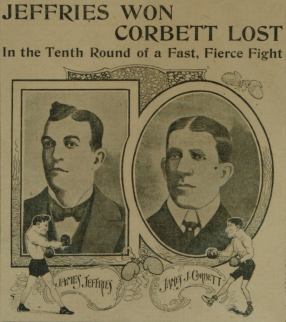
And finally…Corbett was said to have worshiped “Gentleman Jim,” but was also known to sometimes tire of hearing what a great fighter his brother was.  Over time he developed a standard reply:

“I only saw him in the ring twice… (Bob) Fitzsimmons won the first time and Jeff (Jim Jeffries) knocked him out the second time.  But they tell me he was some fighter.”

Corbett/Fitzsimmons

Corbett/Jeffries

Brother Joe Comes Back

30 Nov

Twenty-three-year-old Joe Corbett, brother of heavyweight champ “Gentleman Jim” Corbett announced his retirement before the 1899 season.  Corbett had written a column for The San Francisco Call during his 1898 hold out, and announced he was quitting that job too:

“I have (also) quit writing baseball news now, and take little or no interest in the game. I wouldn’t cross the street to see one.”

Corbett ran the livery stable his father had started in San Francisco, helped operate the family bar on Ellis Street, and within weeks had apparently regained his interest in the game and was back writing for The Call.  His responsibilities in the family businesses increased after his parent’s deaths in August of 1898 (Patrick Corbett shot and killed his wife then committed suicide).

Joe Corbett

There remained significant interest in Corbett’s services; unfortunately for Joe he remained under the control of Ned Hanlon.  Hanlon had moved to the Brooklyn Superbas in 1899 as part of a stock swap between the Brooklyn and Baltimore franchises—he took several players with him, including “Wee Willie” Keeler, Hughie Jennings and Joe Kelley—he also kept Corbett’s rights.

Ned Hanlon

Hanlon offered Corbett $2400 to play for Brooklyn and turned down offers to trade his rights.

According to California newspapers Corbett occasionally pitched in semi-pro games in 1899, but in 1900 The Sporting Life reported that Corbett was “dangerously ill,” and would probably never pitch again as a result of sciatic rheumatism.

Less than a year later The Sporting Life said Corbett was pitching for a team in Oakland, and the next year he appeared in five games for the Minneapolis Millers in the American Association—the retirement appeared to be over.

A successful January 1903 appearance on the mound in an exhibition game featuring barnstorming Major Leaguers renewed interest in Corbett again.  The Los Angeles Angels of The Pacific Coast League offered Joe a contract he couldn’t refuse, one that allowed him to tend to the family business interests in San Francisco during the season.

Newspaper reports said Corbett earned $5000 for the 1903 season, Angels manager Jim Morley said he wouldn’t say how much Joe earned but said that he had:

“Figured it out that Corbett will get 4.99 a curve.”

After going 23-16 for the Angels, the Major leagues again came calling.   Early reports had Corbett signing with the Pittsburgh Pirates, who offered $5000, but Joe eventually signed with the Saint Louis Cardinals.  While the Cardinals assured Joe that Ned Hanlon had relinquished Brooklyn’s claim, the Corbett family was not ready to end the feud with Hanlon.

Gentleman Jim, when asked if Joe would ever consider playing for his former manager again, told reporters:

“Hanlon couldn’t get Joe to twirl for him if he offers him a million dollars a year.”

Things didn’t go well in Saint Louis.  Joe Corbett was 5-8 when the Cardinals released him August 1.

Jim was, as always, Joe’s biggest defender:

“My brother Joe was getting $7000 for the season from the St. Louis club, but his heart was not in his work, simply because he was separated from his wife and little ones who were out in California.  Thinking of his family all the time impaired his effectiveness as a pitcher.”

Gentleman Jim

Joe returned to San Francisco where he added a hat store to growing stable of businesses; his rights returned to Hanlon and Brooklyn.

The final chapter of the Corbett story on Monday.

Brother Joe’s Holdout

29 Nov

Joseph Aloysius “Brother Joe” Corbett got his nickname because lived in the shadow of his older sibling—“Gentleman Jim” Corbett, World Heavyweight Champion.

Baseball was Jim’s first love, and he aspired to pro career, but his time in professional baseball was limited to about three dozen games for a variety of minor league teams from 1897-1900 when his boxing fame made him a drawing card.

Jim was very protective of Joe, and contemporaneous newspaper accounts indicate that he served as something of an agent for his younger brother.

Joe, at 19-years-old and with limited experience in college and two California-based minor leagues, was given a trial with the Washington Senators in 1895—said to be a result of Jim’s friendship with Senators manager Gus Schmelz.  Joe went 0-2 for Washington and was released.

After pitching for the Norfolk Braves in the Virginia League and Scranton Miners in the Eastern League in 1896, Corbett earned another trip to the Big Leagues with Ned Hanlon’s great Baltimore Orioles team, the O’s were 90-39, 9.5 games ahead of the second place Cleveland Spiders.

Joe Corbett

Corbett was 3-0, and won two games against Cleveland in the Temple Cup, the National League post season 7-game series between the first and second place teams.

At the close of the Temple Cup series, while Jim was in New York, Hanlon got Joe to sign a $1400 contract in Baltimore for the 1897 season.

The 1897 Orioles finished in second place, but Corbett established himself as a rising star, posting a 24-8 record.  The Orioles sent Joe a contract for $2100.  Joe returned it unsigned and demanded $3000, and according to some reports, $300 in travel expenses.

The Orioles offered to split the difference.  Joe refused.

Ultimately the parties ended up either $100 apart, or with the Orioles relenting (depending on the source).  Joe still refused, and sat out the entire season.

Some sources, like the book “Baseball Hall of Shame 4,” claim Corbett’s holdout was over Hanlon’s failure to keep a promise to buy Joe a suit for winning 20 games.  The articles from that period and the quotes from the principles would make the suit story appear apocryphal and of later vintage.

Jim Corbett blamed the dispute on Hanlon, who he felt took advantage of his brother with the $1400 contract for 1897. “Gentleman Jim” said:

“Hanlon, as you know, is the cheapest magnate in baseball…he knows very well that I would not allow Joe to sign for such a measly salary and he took advantage of my absence. “

Jim said he told his brother to “Quit Hanlon for all time.”

Joe sat out 1898.  Before the 1899 season Joe told reporters:

“I have gone out of the baseball business for good.”

Like his brother, who retired from the ring on numerous occasions, Joe would be back.

More tomorrow.

Gentleman Jim

Three Balls in Play

28 Nov

Bill Speas played 22 seasons in the minor leagues.  At the height of his career he was numbered among the best fielders in the Pacific Coast League, and The Los Angeles Times said he had the best arm in the league.

Bill Speas

Born in Ohio, Speas began his career with Mansfield Giants in the Ohio-Pennsylvania League in 1906; there he was involved in one of the most unusual plays ever in a game against the Youngstown Ohio Works.

Speas, the Giants left fielder, told the story several times over the years.  Harvey Bailey was pitching for Mansfield; Youngstown had runners on first and second:

“The batter hit a long foul to right field, which the right fielder went after, unobserved by the umpire who was behind the pitcher.  He immediately threw another ball to the catcher which bounded over his head…the umps tossed out another ball to Bailey who made a quick heave to the batter, not noticing that his catcher was not in position.”

The batter singled to left field, where Speas picks up the story:

“I got it and threw it into the plate; only it hit the grandstand instead.  In the meantime the fielder had recovered the foul ball (and the catcher had retrieved the other ball) and the shortstop had one, running a man down between second and third, and the second baseman had the other trying to catch a man between first and second…everybody was running around I was almost sick from laughing out there in left field“

The umpire, who caused most of the confusion, and whose name is lost to history, eventually ruled the foul ball and the ball he threw over the catcher’s head out of play.  Youngstown went on to win the game.

Lost Advertisements: Honus Wagner, 1908 Coke

27 Nov

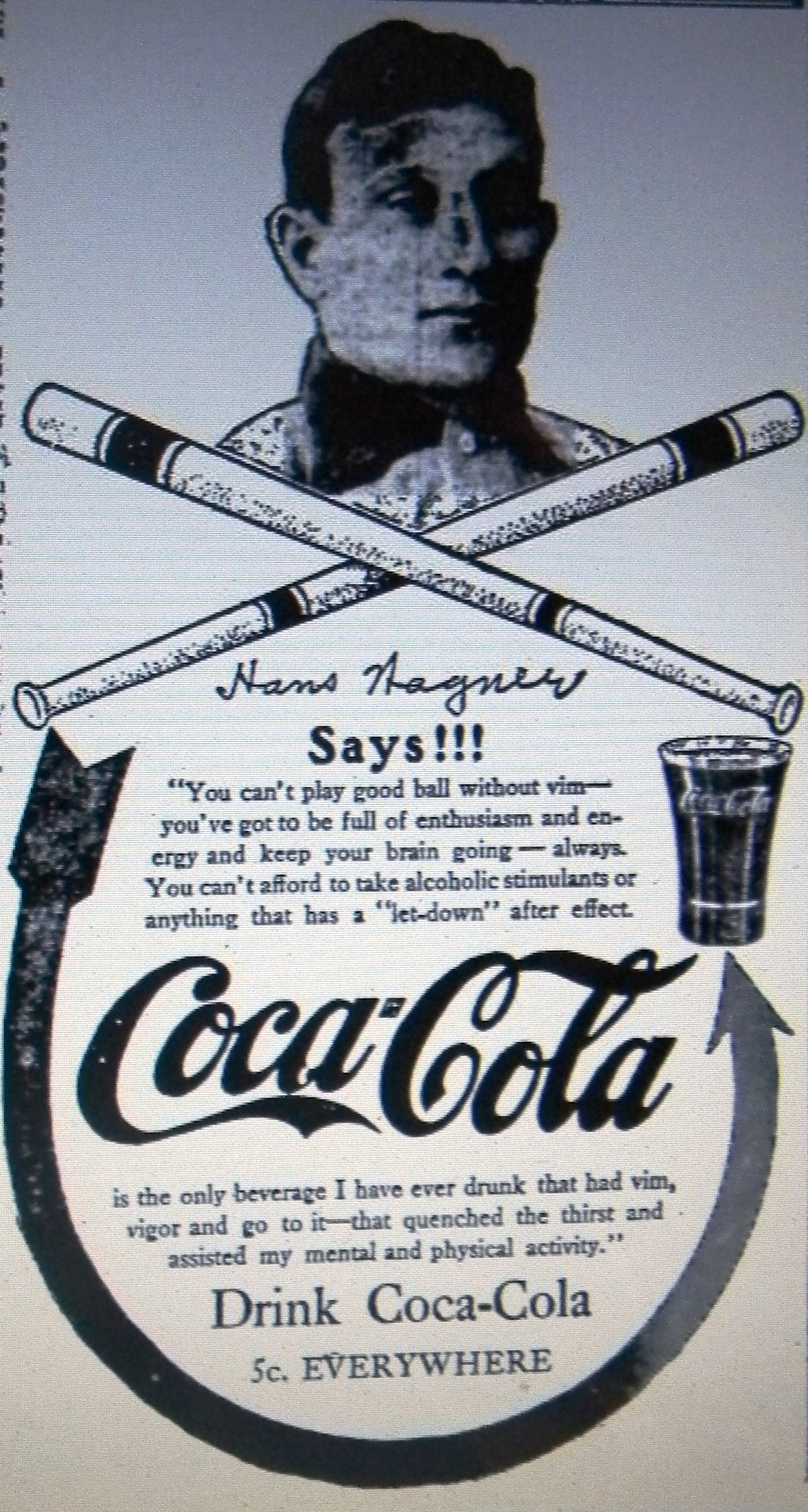
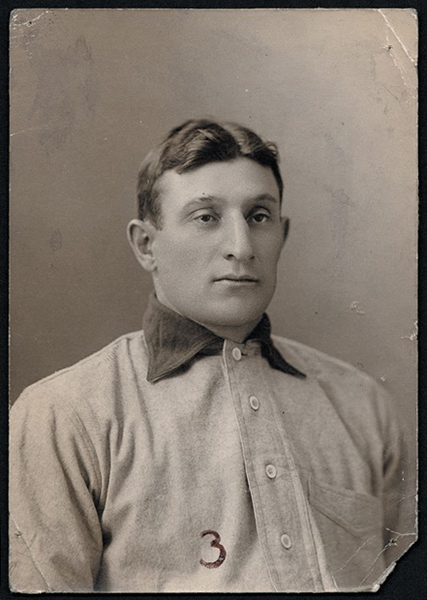
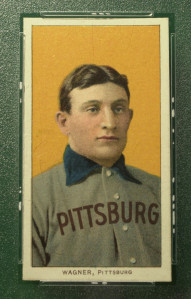
A rare 1908 Coca-Cola Honus Wagner advertisement– featuring Wagner the picture taken in 1905 by Carl Horner, the one on the famous 1909 T206 card.

Original 1905 Carl Horner photo of Honus Wagner

Hans Wagner says:

“You can’t play good ball without vim–you’ve got to be full of enthusiasm and energy and keep your brain going.”

T206 Wagner

Joe Jerger

26 Nov

Through a pronunciation fluke and poor subsequent research, Joseph J. Jerger remains the least known player to have been involved in a fatal beaning in a professional game.

Jerger was born in Germany, February 14, 1877, and began playing professionally with the Fall River Indians in the New England League in 1902.  With the exception of two short stints in the Eastern and Central Leagues, he remained with Fall River through 1907.

On August 9, 1906, with Thomas F. Burke, left fielder for the Lynn Shoemakers at the plate Jerger threw a pitch that broke inside and struck Burke in the temple.  Burke was immediately knocked unconscious, he was caught by the umpire as he fell.

According to newspaper reports Burke was  “a former player for Boston University and a law student in the off season,” this could be true, or Burke might have been confused with Boston athlete and Olympian Thomas E. Burke, who was attending law school during this period.

The real confusion was with Jerger.

Every contemporary newspaper account of the event, using the name as it was pronounced rather than as spelled, called Jerger “Joe Yeager.”   It was probably also due to Joseph Francis “Little Joe” Yeager, who had been a pitcher and in 1906 was playing infield for the New York Highlanders.

The Sporting Life had only added to the confusion in July of 1906 when they said:

“The name of the Fall River pitcher is Jegger not Yeager.”

Early reports were optimistic, The Boston Globe said “Doctors have hope,” for Burke’s recovery. Burke underwent surgery, but never regained consciousness and died on August 11.

Jerger was arrested and charged with manslaughter on August 18.  Contrary to some accounts, like in the otherwise excellent, “Death At The Ballpark: A Comprehensive Study of Game-Related Fatalities of Players, Other Personnel and Spectators in Amateur and Professional Baseball, 1862-2007,” Jerger was never in danger of being convicted–the local authorities had determined that the best way to “place (Jerger) in good standing,” was to make his exoneration official.  (Incidentally, the book also incorrectly identifies Jerger as “Yeager”).

At the time of his “arrest,” the Lynn Chief of Police (named Burke), called the manslaughter charge “a mere formality,” and said it was only to “have a complete record of Burke’s death.”

Judge Berry of the Lynn Police Court, who had been in attendance at the game, presided over the brief hearing on August 20.  Six witnesses testified on Jerger’s behalf and according to The Boston Evening Transcript, Berry ruled that “(Jerger) was in no way to blame for the death of Burke,” and:

“Judge Berry told Yeager (sic) that he was a good pitcher and it gave him pleasure to exonerate him.”

Unlike other pitchers who were involved with hit by pitch deaths, the name confusion meant that the incident did not seem to follow Jerger.  I cannot find a reference to Jerger in any newspaper article after 1906 that mentions Burke’s death.

After being released by Fall River at the close of 1907, Jerger joined the Wheeling Stogies in the Central League.  In 1909 he had his best season, posting a 20-12 record for the East Liverpool Potters in the Ohio-Pennsylvania League.  Jerger finished his career in 1910 with the Quincy Vets in the Central Association.

Jerger died in Martin’s Ferry, Ohio, February 6, 1961.