Tag Archives: Chicago White Sox

“I’ve no Uniform that will fit a Giraffe like you”

3 Aug

Most biographies of Harry “Slim” Sallee, if they mention his brief time with the New York Highlanders in 1906, simply say he never appeared in a game because of “(A)n abundance of pitcher’s” on Clark Griffith’s club which battled the Chicago White Sox for the pennant.

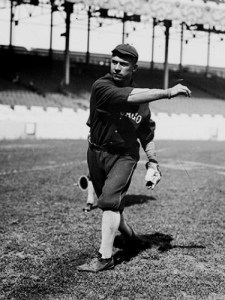
The colorful 6’ 3” 180 pond Sallee, with the Cardinals in West Baden, Indiana before the 1912 season, told a reporter for The St. Louis Republic that there was more to his departure from New York, and while the story might have been a creation of Sallee’s imagination, it seems more appropriate for a pitcher as famous for hard-drinking, suspensions, and fines as he was for his 174 career wins.
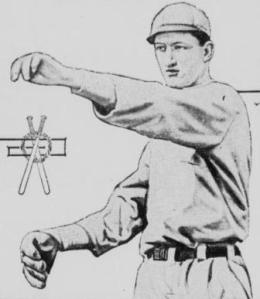
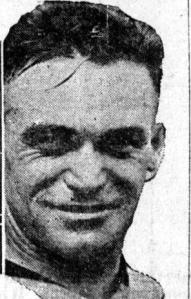
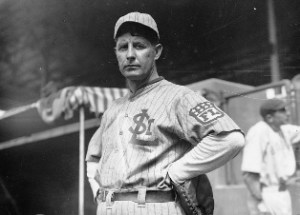
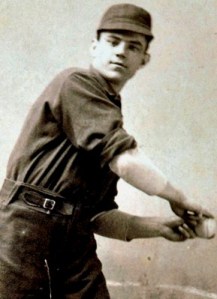
Slim Sallee

Slim Sallee

Sallee reminded the reporter he was:

“An American League discard…Yes, sirree, I was turned down cold by Clark Griffith when the ‘Old Fox’ was managing the New York Americans …I joined the Yanks in the fall in St. Louis, Griff looked me over and said: ‘I’ve no uniform that will fit a giraffe like you.  Maybe I’ll be able to get one in Chicago.  Here’s a ticket—handing me a pocket register to keep tabs on people passing through the turnstile—go out and check up the bleacher gate this afternoon.

“Four thousand geeks passed through the bleacher turnstile at Sportsman’s Park that afternoon and I kept punching that register until I became almost black in the face.”

Sallee said he was given the same assignment in Chicago on September 21 -23 when New York took three out of four games from the White Sox and moved into first place.  New York went to Detroit and lost three straight, then dropped a game in Cleveland on the 27th,dropping three games back of the White Sox.  In Cleveland:

“‘Griff dug up an old uniform and told me to warm up.  The thermometer hung around the freezing point.

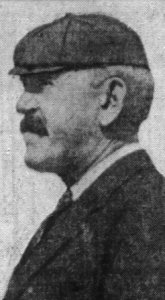
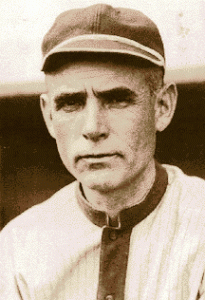
Clark Griffith

Clark Griffith

“Wonder if that crazy man thinks I’m goin’ to cut loose and take chances of ruinin’ my salary wing in this kind of weather said I to myself.

“Griff went to the plate himself. I ‘lobbed’ a  couple over and the ‘Old Fox’ roared like a mad bull. ‘You’ve got a lot of nerve trying to slip that stuff over on me,’ growled Griff.  ‘Put something on that ball.  I can’t detect anything that looks like a wiggle on your curve and you haven’t shown enough speed to break a pane of glass.’”
Sallee said he told Griffith:

“I’m there, Clarkie, old chap, with the real goods, but I couldn’t think of cuttin’ loose with my speed in this kind of weather.  I’m a hothouse plant from down in Old Alabama—I played with Birmingham that year.  Give me a chance when the sun is shinin’ and the thermometer is around 90 in the shade, and I’ll show you some pitchin’ that will curl your grey locks.”

Sallee said Griffith threatened to put him “back on the gate.”

“’No, you don’t,’ said I. ‘Pay me off and also come across with a ticket for Higginsport (Ohio, Sallee’s hometown) I’m through with the New York club and Clark Griffith.  And don’t send for me next spring.”

Whether because of too much depth on the mound or because of the story Sallee told, Griffith sold him to the Williamsport Millionaires in the Tri-State League.  Sallee went 22-5 in Williamsport in 1907 and the Cardinals purchased his contract in August
“I might now be a politician in Chicago”

1 Aug

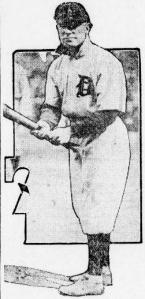
As part of his series of syndicated articles asking major league players to describe “How I Win,” journalist Joseph B. Bowles spoke to Detroit Tigers infielder Charley O’Leary:

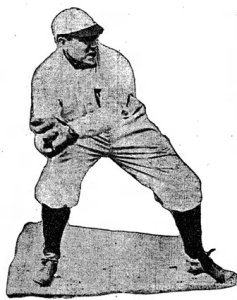
Charley O'Leary

Charley O’Leary

“I learned how to win from (Tigers Manager Hughie) Jennings.  Now before he came to Detroit the team was as flat as Aunt Jemima’s pancakes, but he threw about a quart of Fleishman’s yeast into us, and we rose.

O’Leary played three seasons with the Tigers under managers Ed Barrow, Bobby Lowe and Bill Armour before Jennings arrived in 1907—those teams finished in seventh, third and  sixth place.

“The recipe for winning is to mix ginger, yeast and horseradish with horse sense and keep stirring all the time.  Thinking and hustling, figuring on every point, watching all the time for an opening and taking all sorts of chances is what wins.  One man can’t win—unless he happens to be the fellow who can stir up a dozen others and keep them fighting all the time and never giving up.  Without a leader, the best team will slack up the pace once in a while and maybe get discouraged.”

As for individual achievements , O’Leary said:

“All the success I have had has come from studying batters while I was in the infield and studying base runners when they got on the bases.  A player almost can tell from the way the batter and the base runner act what they are trying to d, or going to try to do if he only keeps his eyes open.”

O’Leary said he never attempted to steal signs, but:

“(I) can tell by the actions and the situation what is coming off.  Then (when playing short) I want a second baseman alongside of me who understands me and whom I understand, so we can work together.  There are some men who prevent each other from doing their best work.

“I make a study of where batters hit, and every day I get the fullest accounts possible of all the games played and study out where the balls were hit to.  Batters change rapidly.  Sometimes a player hits to left field for weeks, and the next time we meet him in a series, he is hitting to right field.  I find it important to know all the time, for sometimes it is five or six weeks until we play against him again, and in that time he may have changed completely.  I keep talking to pitchers who have worked against certain men and reading about them to see how they are batting.  Then too, lots of times, a weak batter will have a batting streak and a pitcher and infielder ought to know this before starting a series against him.  The best part of my success, I think, has been in being where the ball was hit, and a whole lot of this has come from studying batters.”

O'Leary

O’Leary

O’Leary, who had a reputation as a hot head early in career, said something else contributed to his success:

“I used to think fighting umpires helped win, but I want to say that is a mistake.  Playing square with the umpires and treating them decently and playing fair with opponents is the only way to win.  Fair play ought to be the foundation of the game.  I play as hard and fight as hard for a game as anyone, but would rather lose than hurt another player, or try to make an umpire look bad to a crowd.”

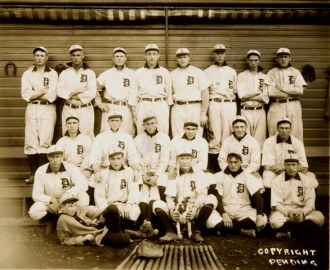
1909 Tigers. O'Leary is far right, bottom row. Jennings is at center of bottom row holding dog.

1907 Tigers. O’Leary is far right, bottom row. Jennings is at center of bottom row holding dog.

O’Leary did not make his big league debut until the age of 28 in 1904, and the Chicago native later told a reporter for The Detroit News that he nearly gave the game up for years earlier during his first professional season—with the 1900 White Sox, in the not yet a major league American League:

“The first team I ever played on, outside of (amateur teams) around Chicago, was the White Sox, and they took me to Detroit with them to play a Sunday game.  I nearly quit right then and there.  If I had I might now be a politician in Chicago.

“It was one of those games played out at Burns Park (Burns, just west of Detroit’s city limits, opened in 1900 to host Sunday games and circumvent Detroit’s blue laws).  We won by one run and as we left the park the crowd came at us with beer bottles.  It was the bottom of the bus for everybody , and as I was the most scared I got there first, I guess.  Anyway, everybody else pulled on top of me, and we rode into town that way.

“I was nearly smothered.  They had a hard time inducing me to believe that that was not an everyday occurrence.”

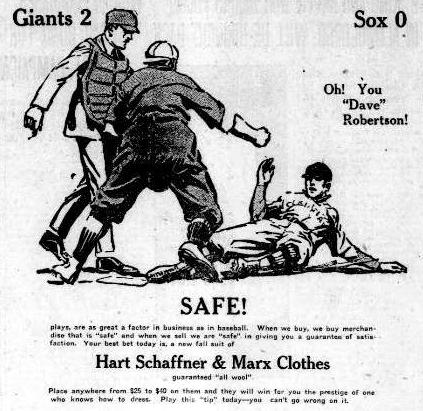
Lost Advertisements–“Oh! You ‘Dave’ Robertson!”

24 Jun

1917ws

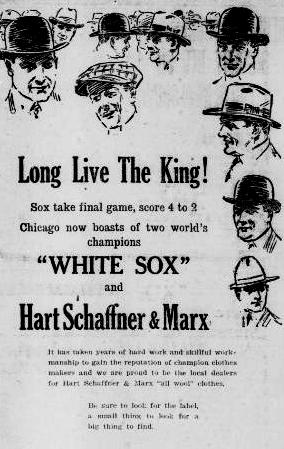
An advertisement for Hart, Schaffner & Marx which appeared after game three of the 1917 World Series.  After losing two games in Chicago, the New York Giants won 2 to 0; the Giants scored both runs in the fourth inning of Eddie Cicotte; Dave Robertson tripled and scored on Walter Holke‘s double, Holke scored on a single by George Burns.

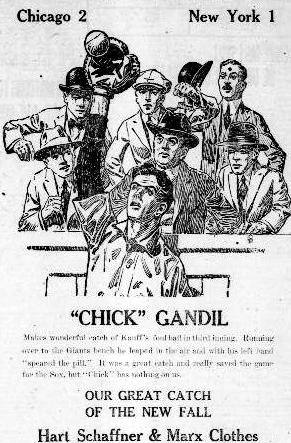
The advertisement after game two, a 7 to 2 White Sox victory, featured Chicago first baseman Chick Gandil, who:

“Makes a wonderful catch on (Bennie) Kauff‘s foul ball in (the) third inning.  Running over to the Giants bench he leaped in the air and with his left hand ‘speared the pill.'”

1917ws2

And, one more after game six, won by Urban “Red” Faber and the White Sox:

Long Live The King!

“Sox take final game, score 4 to 2.  Chicago now boasts two world’s champions ‘White Sox.'”

1917ws3


Lost Advertisements–Home Run Baker, Ide Silver Collars

15 Jun

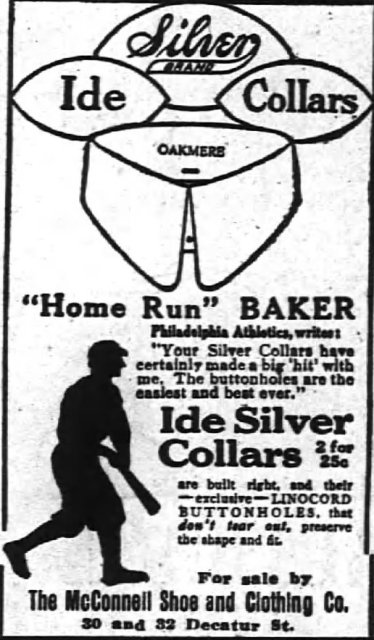
hrbakeradAn advertisement for Ide Silver Collars, featuring John Franklin “Home Run” Baker:”

“Your silver collars have certainly made a big ‘hit’ with me.  The buttonholes are the easiest and best ever.”

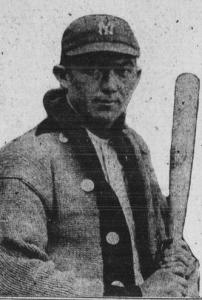
bakerpix

After Baker returned to baseball with the New York Yankees in 1916, he “wrote” a very short syndicated newspaper piece, part of a series which asked some of the game’s best hitters to name “The Six Hardest Pitchers I ever Faced.”

Baker said:

“In naming my six hardest and best pitchers, I must invade my old club for three of them, though I never batted against them in championship games.  From my standpoint, the six best during my career were:

“Walter Johnson–Washington Americans.

“Edward Walsh–Chicago Americans.

“‘Dutch’ Leonard–Boston Americans

“Eddie Plank–Philadelphia Americans

“Albert Bender–Philadelphia Americans

“John Coombs–Philadelphia Americans.

“Johnson is the present-day wonder; Walsh was the king in his prime, and young Leonard is a puzzle among present left-handers, but I must award the plum to my three great old pals.”

Baker 1916

Baker 1916

Letters from the Front–Joe Jenkins

30 May

When Joe Jenkins, backup catcher for the Chicago White Sox, enlisted in the army shortly after the 1917 World Series, it didn’t cause much concern for the team’s prospects.  The Chicago Daily News said:

“With Ray Schalk behind the plate, the Sox could give away a dozen Jenkinses and not miss them.”

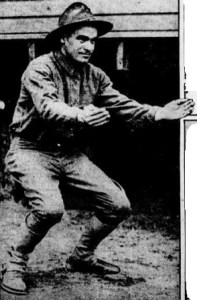
joejenkins

Joe Jenkins

Malcolm MacLean of The Chicago Evening Post said regardless of Jenkins’ value to the White Sox, the catcher was committed to the war effort.  He recounted a conversation with the usually “happy-go-lucky” Jenkins during Chicago’s spring trip to Marlin Springs, Texas before the 1917 season:

“(I) spied Jenkins sitting alone in the smoking compartment of the special car.  There was no smile on his face.  He invited us to have a seat.

“’”I’m thinking about this war,’ he said.  ‘It’s up to us young, unmarried fellows to get busy, and I’m going to be one of them within a few months.’”

Jenkins went to officer’s training school at Camp Gordon, Georgia, and then to France as a second lieutenant with the 132nd Infantry Regiment, composed primarily of soldiers from Chicago’s South Side.

Jenkins at

Jenkins at Camp Gordon

Shortly after the armistice was signed in November of 1918, MacLean was a given a letter Jenkins had written to a friend in Chicago several weeks earlier.  MacLean said Jenkins had been “promoted, while under fire from second to first lieutenant.”

According to MacLean, “At one stage of the game, all the other officers of his company being disabled, Jenkins commanded his company in an advance,” and as a result received the promotion.  MacLean said Johnny Evers mentioned in a letter that he had met Jenkins in France shortly after the latter was promoted.

Jenkins also wrote two letters to White Sox President Charles Comiskey—as with the letter MacLean was given, both letters to Comiskey were written before the armistice, but received weeks after—and were printed in Chicago newspapers.

In the first, Jenkins wrote:

“My Dear Mr. Comiskey…I have been in the front line for four days, having gone up to look over the situation with the major.

“Believe me, I am a brave man, but I did not bargain to eat any of these high explosives.  One of the shells just missed me about ten feet.  It hit on top of the trench and had it hit in the trench I would not be writing to you today.

“To be honest with you, this is some league that I am in and it is a lot faster than the old American, for you know that when you boot one in this league you are through and can’t come back.”

Jenkins wrote to Comiskey again, approximately three weeks later:

“Well I thought you had forgotten me, but today I got your letter, and you may be sure that I was delighted to hear from you.  We have been scrapping for the past ten days on the Meuse, North of Verdun, and believe me, the fighting has been hot and sharp.  We have just been moved to a more quiet sector, the purpose for which is rest, and believe me we can use it nicely.  It is becoming apparent that Germany is through, and in the last offensive I was in their spirit and morale was at a very low ebb.”

Jenkins also assured Comiskey that the Chicago Southsiders in the 132nd “can go some.”

The catcher  told Comiskey he planned on joining the Sox at Mineral Wells in the spring of 1919 and promised:

“I will bring something back in the line of a trophy for your office with me as shipping it would be risky.  This trophy that I refer to was taken where the fighting was thickest.”

There is no record of what the “trophy” was or whether Jenkins brought it to Comiskey.

Jenkins said in closing:

“Give my regards to all the boys and tell them that in this league over here the pitchers all have plenty on everything that they throw.”

Jenkins made it back to the US on April 15, 1919—on the same ship as Sergeant Grover Cleveland AlexanderThe Chicago Tribune said:

“Jenkins fought in Flanders, the Argonne, and St. Mihiel.  He escaped unwounded and looks ready to play baseball at a moment’s notice.”

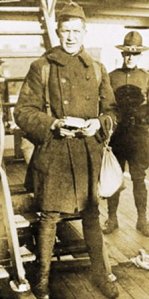
Sergeant Grover Cleveland Alexander

Sergeant Grover Cleveland Alexander

He didn’t make it to Mineral Wells but joined the Sox for their opener in St. Louis.  The Daily News said he told manager Kid Gleason he was available to pinch hit:

“’You know I’m a valuable man in a pinch, Kid.  When I came up to hit in a pinch over there the Kaiser lit out for Holland and he’s been there ever since.”

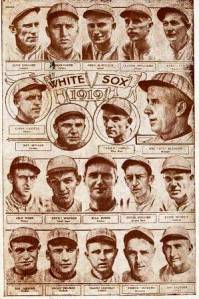
1919 White Sox, Jenkins is bottom left

1919 White Sox, Jenkins is bottom left

Ready to play or not, Jenkins appeared in just 11 games for the pennant-winning White Sox—four behind the plate—and had three hits in 19 at bats.

He remained with the Sox through the 1919 World Series—a member of two World Series teams, he did not appear in a game in either series—and was released that winter.

His big league career over, Jenkins played 11 more seasons in the minors, retiring in 1930.

Things I Learned on the Way to Looking Up Other Things #20

25 May

A Twist on the Hidden Ball Trick, 1909

Jack Fournier had a favorite story that The Chicago Daily News said he told so often that “fellow members of the White Sox give the warning ‘Capron story’” every time he retold it.

Fournier

Fournier

Fournier was playing first base for the Portland Cubs in Northwestern League in 1909 while former college football star George Capron was playing for the Seattle Turks.

“A Seattle runner was on first when Capron came to bat.  He rapped a hot grounder down to (Phil) Cooney, who was at short for Portland.  The latter whipped the ball to second, forcing the runner and then the ball was relayed to Fournier.

“Capron had crossed the bag and was making his turn back by the time the throw reached Fournier.

“Jack tossed the ball up and down in his glove as Capron came up.  ‘Can you beat that Capron?’ said Fournier ‘the ump called you out.’

Capron, known for his temper on the field, became enraged and ran towards the umpire who standing near second base.

“Fournier was right on his heels and didn’t catch him until they covered half the distance.  He tagged the amazed Capron with the ball.”

Asked if Capron was angry, Fournier would deadpan, “Well, rather.”

An Umpire’s revenge

In 1907, long-time American League umpire Jack Sheridan told a story that appeared in several newspapers, including The Chicago Evening Post, about how he quieted a “Chronic Kicker,” Fielder Jones of the Chicago White Sox:

Jack Sheridan

Jack Sheridan

During the previous season, Chicago was playing the Detroit Tigers when Jones got on base:

Charley O’Leary, the Tigers shortstop brushed Jones’ leg with the ball as he was sliding into second on a steal.  Sheridan called him out and Jones kicked; said he didn’t feel the ball touch him.  Sheridan told O’Leary to make him feel it the next time.  A few innings later Jones got on and again attempted to steal.  This time, O’Leary jammed the ball onto Jones’ head.”

Fielder Jones

Fielder Jones

Sheridan said after the shaken-up Jones was called out and recovered from the blow:

“(He) walked to the bench without a single protest.”

A Pitcher’s Plea, 1898

After not playing professional ball in 1896 and 1897, Matt Kilroy returned to the major leagues with the Chicago orphans in 1898.

A decade later, Revere Rodgers of The Washington Evening Star said Kilroy, who won 46 games in 1887, “was in the game long after his arm went back on him.”

Matt Kilroy

Matt Kilroy

He also had another talent:

“As a baseball player Matt was real classy, but as a poker player he was king, and the Chicago bunch in those days was the most rabid pasteboard handlers then traveling over the circuit.

“Kilroy was lucky with the cards, his skill was marvelous, and he must have done well judging from a conversation at the time he was handed the customer ten days’ notice (of his release in August 1898) by Manager (Tom) Burns.
‘”Oh, say, Burns,’ cried Matt, when he received the notice, ‘allow me to stay with the club.  You won’t have to give me a cent of salary, and what is more, I will pay all my traveling expenses, and help the club out at the bat or in the pitcher’s box.’”

Burns told Kilroy he could earn “three hundred a month in the Eastern League.”

“I know,’ said Kilroy, ‘But you see I like the poker game the boys play here.”

“Even when he Wins he Loses”

18 Apr

During his most successful season as a major leaguer, Bobby Byrne had some advice for the children who wished to follow in his footsteps:

“If they asked me I would tell them everything I could to keep them from starting.  Not that I knock the profession, but I think it is a poor one to choose, not because of the life itself, but because of its temptation and hardships, and worse than that, the small chances of being successful.”

Bobby Byrne

Bobby Byrne

That answer was given to syndicated journalist Joseph B. Bowles during the 1910 season when he asked Byrne questions about how he started in baseball “in order to help young and aspiring players.”

Despite being the starting third basemen for the defending World Champion Pittsburgh Pirates, and on his way to leading the National League in hits (tied with Honus Wagner) and doubles (178, 43), while hitting a personal-best .296 in 1910, he told Bowles:

“If I had it to do over again I do not think I ever would become a professional ballplayer, in spite of the fact that I love the game and love to play it.  I think a young fellow would do better to devote himself to some other line than to take the chances of success in the national game, for even when he wins he loses.”

He talked about how he started, and offered a theory about where the best players come from:

“I wanted to be a ballplayer and was educated at the game in a good school, on the lots around St. Louis.  I think that ballplayers develop faster when they are in the neighborhood of some major league team.  One or two of the players on a ‘prairie’ team are at every game the big league (team) plays.  They see how the game is played, and being at that age as imitative as monkeys, they work the same things on their own teams and teach all the other boys.  I have noticed when any city has a pennant winning club the quality of baseball played by the boys and the amateurs in that vicinity are much improved.”

Byrne

Byrne

Byrne said because of his time playing on the sandlots of St. Louis, he “picked up the game rapidly,” but said it wasn’t until he began to play professionally, first in Fort Scott, Arkansas, then in Springfield, MO, that he corrected the biggest flaw in his game:

“The hardest thing I had to learn was when to throw.   I think I must have thrown away half the games we played before I learned not to throw when there was no chance to get the runner. I think that is one of the first things a young player should learn; to look before he throws and only throw when he has a chance to make a play.  The next thing, it seems to me, is to learn to handle one’s feet and to keep in the game all the time, and be in position to move when the ball is hit.”

Even at the pinnacle of his career, the man who discouraged children from following in his path, was also somewhat cynical about his own experience:

“The biggest thing I had learned was that, no matter how far a fellow gets up in the business, there still is a lot he does not know, and by dint of watching and learning I held on, and still am learning and willing to learn.  When I know it all I’ll quit, or be released.”

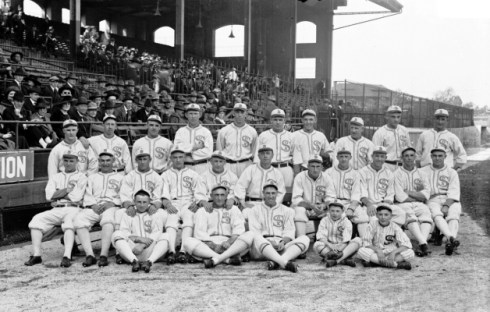
Byrne continued “learning” for seven more seasons, and the end of his career was fitting for someone who warned that a young man should steer clear of baseball because “even when he wins he loses.” After being acquired on waivers by the Chicago White Sox in September of 1917, he appeared in just one game, on September 4.  He was with the team when they clinched the pennant 20 days later; and was released the day after he appeared in the team photo commemorating their American League Championship.

Group portrait of American League's Chicago White Sox baseball team posing in front of a section of the grandstands on the field at Comiskey Park, Chicago, Illinois, 1917.

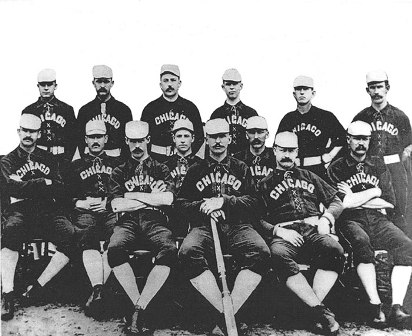
White Sox team photo after clinching 1917 pennant, Byrne is fourth from right in second row–he was released the following day.

While the Sox were beating the Giants in the World Series, Byrne was back in St. Louis operating a bowling alley.   After three years away from baseball, he managed minor league teams—the Miami (OK) Indians and Saginaw (MI) Aces—in 1921 and ’22 before returning again to the bowling business.

His admonition against professional baseball didn’t stop his two sons from having their own brief minor league careers; Bobby played for several clubs between 1939 and 1941, and Bernie (listed as “Byrnes” on Baseball Reference) played for the Paragould (AK) Browns in the Northeast Arkansas League in 1940.  Both had their careers interrupted by WWII, Bernie was an airforce fighter pilot in Asia, while Bobby was awarded the Distinguished Flying Cross, Air Medal and Purple Heart while flying for the airforce in the Mediterranean Theater.

Lost Advertisements–“Play Ball!”

4 Apr

openingday19191

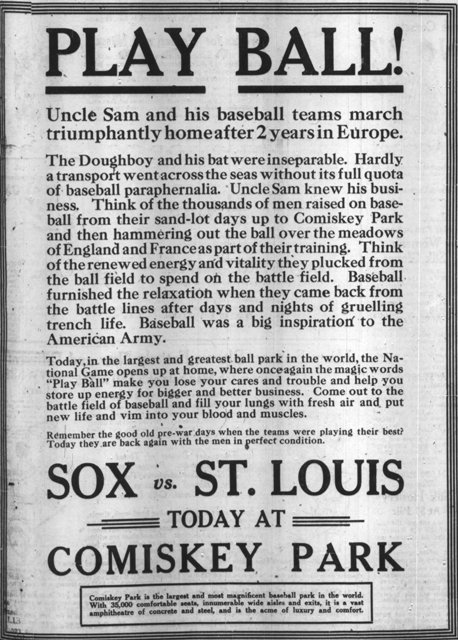
Opening Day at Comiskey Park, 1919, the first opener after the end of World War I:

The ad above appeared in Chicago Newspapers on May 1, 1919, and appealed to the patriotism of fans:

“Uncle Sam and his baseball teams march triumphantly home after 2 years in Europe.

“The Doughboy and his bat were inseparable.  Hardly a transport went across the seas without its full quota of baseball paraphernalia.  Uncle Sam knew his business.  Think of the thousands of men raised on baseball from their sandlot days up to Comiskey Park and then hammering out the ball over the meadows of England and France as part of their training.  Think of the renewed energy and vitality they plucked from the ball field to spend on the battlefield.  Baseball furnished the relaxation when they came back from the battle lines after days and nights of gruelling trench life.  Baseball was a big inspiration to the American Army.

“Today, in the largest and greatest ballpark in the world, the National Game opens up at home, where once again the magic words ‘Play Ball’ make you lose your cares and troubles and help you store up energy for bigger and better business.  Come out to the battlefield of baseball and fill your lungs with fresh air and put new life and vim into your blood and muscles.

“Remember the good old pre-war days when the teams were playing their best.  Today they are back again with the men in perfect condition.”

As for the “greatest ballpark in the world,” the ad said:

“Comiskey Park is the largest and most magnificent baseball park in the world.  With 35,000 comfortable seats, innumerable wide aisles and exits, it is a vast amphitheatre of concrete and steel, and is the acme of luxury and comfort.”

Patriotic fervor and “men in perfect condition” were no match for the weather, or perhaps as a metaphor for what was to come, dark clouds brought rain and postponed the game between the White Sox and the St. Louis Browns.

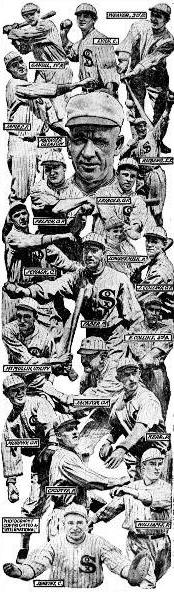
The 1919 White Sox

The 1919 White Sox


“Many say he was so Modest he Hated to have his Picture Taken”

30 Mar

In the winter of 1918 Malcolm MacLean of The Chicago Evening Post wrote about the peculiar reactions of a few players to photographers:

“It may happen that a pitcher does a phenomenal streak of work and his photo should run.  It may be the only one of him in stock that has been used time and again—so often, in fact, that it is all but worn out.

“Hence it is necessary for a photographer to snap said fellow’s photo on the ball field.  Ninety-nine times out of a hundred this is a pipe. Yet there are exceptions.”

MacLean said he recalled a handful if examples of players refusing:

“In practically every case it was that uncanny thing known as ‘baseball superstition’ that made it difficult, almost impossible, to get them to pose.

(Urban) Red Faber, of the White Sox, on two occasions (during the 1917 season) lost ball games after he had been snapped.  So he announced his intention of refusing to pose again until the White Sox won the American League championship.  Another member of the Sox, Charles (Swede) Risberg, joined him in the declaration. And they stuck to it.

Red Faber

Red Faber

“The day after the title was clinched both Faber and Risberg were among the easiest fellows on the squad to photograph.  In their case it was ‘superstition’ and we don’t know they could be blamed.  If a player keeps winning, only to have the streak smashed the day his photo is taken, well we have an idea we’d do the same thing.”

MacLean said during Rube Marquard’s 19-game winning streak the Giants’ pitcher refused to allow a Chicago photographer to take his picture.  MacLean said he and a cameraman approached the pitcher on July 8, 1912:

 “’Nothing doing,’ he said.  ‘Come around any time you want after I’ve lost a game and you’re welcome to all you want.’  It so happened that Rube lost that day, Jimmy Lavender hanging the bee on him, and the following afternoon Rube posed and posed and posed.”

MacLean said Jim Thorpe was a particularly difficult subject to photograph when he began his major league career, but not due to superstition:

“When Thorpe first came to Chicago with the Giants, he was the most widely advertised athlete in the world.  He was fresh from his triumphs in Sweden on the track field and from the gridiron at Carlisle.

“Many say he was so modest he hated to have his picture taken.  At any rate, many a film and plate was wasted on him because he would turn his face away, throw up his arm in front of him, or do something also to ruin the exposure.”

Jim Thorpe--Airedale fan

Jim Thorpe

Another difficult member of the Giants was catcher John “Chief” Meyers, who MacLean said would brush past photographers, saying:

“’Aw, you’ve got all of me you want,’ It was decidedly exasperating, especially when publicity is what helps keep major leaguers in the majors.”

Two other oft-photographed pitchers had their own particular quirks.

MacLean said:

“It will surprise many to learn that Ed Walsh, of the White Sox…refused to pose on the day he was expected to pitch…Few men were snapped so frequently as Ed when he was in his prime, yet we venture to say no man ever got a photo of him—when Ed knew it—on the day he was to work.

Eddie Plank, of the Athletics…was one of the easiest of all men to photograph, but it was exceedingly difficult to get a good one of him.  The reason was he kept tossing stones at the camera or twisting up his face in some farcical fashion.  And when other players were being taken Ed would throw peddles at them, trying to have them distort their faces.”

Eddie Plank

Eddie Plank

“Everyone seemed to be trying to pull off the Greatest Stunts of his Life”

28 Mar

Great plays are in the eye of the beholder.

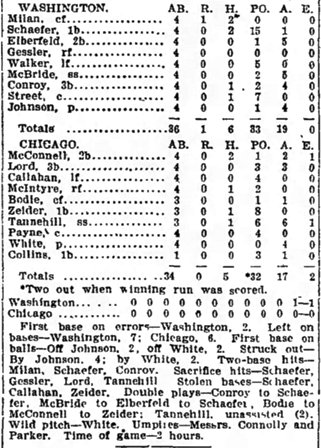
Jack Lelivelt said the greatest play he ever saw came in the greatest game he ever witnessed; the first game of a doubleheader played during the dog days of August by fourth and seventh place clubs hopelessly out of the American League pennant race.

Jack Lelivelt

Jack Lelivelt

Lelivelt watched from the bench on August 4, 1911, as his Washington Senators played the  Chicago White Sox.  Months later, he told Hugh Fullerton of The Chicago Examiner the game included “(S)ix plays in it that might any one be called the greatest according to the way a man looks at it.”

The game was a 1-0, 11-inning victory for the Senators; Walter Johnson getting the complete game victory over Doc White.  And Lelivelt was not alone in his assessment.

One Star Pitcher

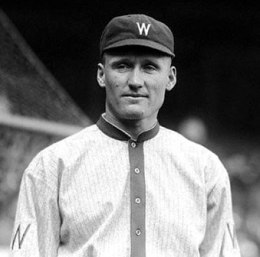
Walter Johnson

William Peet of The Washington Herald said:

“An old-time fan in the grandstand correctly described the curtain raiser when he slapped his neighbor on the back and cried: ‘That was the best game of ball I ever saw in my life.”

Joe S. Jackson of The Washington Post said:

“No more freakish game than the opener has ever been played at the Florida Avenue field (Griffith Stadium).”

Lelivelt told Fullerton:

“First, (Ping) Bodie caught a home run while running straight out nearly to the center field fence; then (Clarence “Tillie”) Walker caught a fly off one ear while turning a back somersault.”

Bodie’s play robbed Walter Johnson of at least extra bases, with a runner on first in the third inning—and Walker robbed Ambrose “Amby” McConnell of the White Sox in the eighth; The Herald said he “spared it with his bare hand.”

Ping Bodie

Ping Bodie

Lelivelt continued:

(Harry) Lord made two stops on the line back of third, and (Lee) Tannehill grabbed two line drives and started double plays.”

While noting Lord’s “two stops,” Lelivelt failed to mention his most notable play during the game; when he fell into the Chicago dugout to catch a George McBride foul pop out, a play The Herald called “one of the best catches ever seen here.”

Lelivelt said:

“Everyone seemed to be trying to pull off the greatest stunts of his life in that game…with White and Johnson pitching magnificent ball.  It is as if you took a dozen great games of ball and crowded the most sensational parts of each into 11 innings.”

As for the best play, Lelivelt said it came in the third inning after Johnson walked McConnell and Lord sacrificed him to second:

(Jimmy “Nixey”) Callahan whipped a fast hit right down between third and short, a hit that seemed certain to go through to left field without being touched.  The ball was hit hard and was bounding rapidly when McBride went back and out as hard as he could, shoved down his glove hand, scooped the ball and snapped it straight into (William Wid) Conroy’s hands on top of third base.  The play was so quickly made that McConnell saw he was out, and by a quick stop tried to delay being touched and jockeyed around between the bases to let Callahan reach second. He played it beautifully, but he never had a chance.  McBride jumped back into the line and before McConnell could even get a good start back Conroy whipped the ball to McBride and McConnell was touched out before he had moved five feet.

Wid Conroy

Wid Conroy

“So rapidly was the play made that as soon as McBride touched McConnell he shot down to second so far ahead of Callahan that Cal was able to turn and get back to first…If Callahan had reached second on the play Chicago would have won, as (Matty) McIntyre followed up with a base hit that would have scored the runner from second easily.”

Curiously, the play Lelivelt said was the greatest in a game of great plays, the greatest play he said he ever saw, received no notice the next day’s coverage of the game in either Washington or Chicago.

The Herald ran a column listing fourteen key plays in the game but failed to mention Lelivelt’s “greatest play” at all. The Post said only that McConnell was out “McBride to Conroy, on Callahan’s grounder.”  It received no mention in the Chicago papers.

The Box Score

The Box Score