Tag Archives: Cincinnati Reds

Griff’s Invention

5 Aug

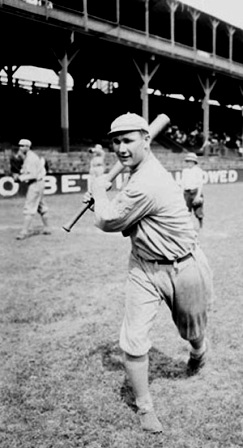
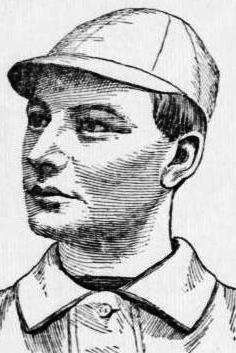
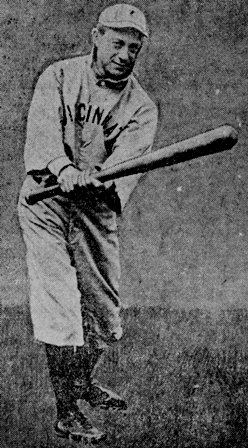
Bob “Buster” Bescher arrived in Cincinnati a right-handed hitter.  In 1909, he led the National League with 54 stolen bases but hit just .240.

Bescher

Bescher

Bescher’s manager, Clark Griffith would compare him to Ty Cobb in an interview with Harry Salsinger of The Detroit News:

“If Bescher could hit he would probably set a pace for base-stealing that would never be equaled…Bescher gets away like Cobb, and his success lies mostly in getting away.  He is running in his first few steps.  He has a great pair of limbs and is in stride at the jump.  He is lightning fast.”

The Cincinnati Enquirer said:

“Bescher is a big, strong fellow, naturally left-handed, who was, unfortunately, coached to bat right-handed when he was a kid.”

Griffith set out to change that before the 1910 season.  In January, The Enquirer said:

“A device for batting practice was shipped to Bob Bescher at his home in London (Ohio) by Manager Griffith yesterday.  The arrangement was constructed according to Griff’s order, and it was designed to give Buster practice in batting left-handed before he goes South with the club six weeks or so hence.”

Clark Griffith

Clark Griffith

The paper described Griffith’s invention:

“The device consists of a ball of regulation size, but fitted with an extra cover, to which stout rubber cords are attached, one on each side.  One of the cords is to be fastened to the floor and the other to the ceiling, allowing the ball to swing loosely at about the height of the batter’s waist.  When the ball is struck with a bat, the flexible cord allows it to swing several yards and it returns with great force, coming back at about the speed of a pitched ball.  Then it is time for Buster to get busy with the club and soak it out again.”

A diagram of Griffith's invention.

A diagram of Griffith’s invention.

The Enquirer said Griffith hoped Bescher would add “30 or 40 points” to his average batting left-handed.

“He is the best base runner in the National League…Griff has sent him instructions to hit only left-handed with the new machine, and he hopes that Bob will be a regular Ty Cobb when he reports in March.”

Bescher batted almost exclusively left-handed during spring training in Hot Springs, Arkansas and became a switch-hitter that season, and seems to have benefitted from Griffith’s invention—but never became a “regular Ty Cobb.”

He improved his average to .250 in 1910 and again led the league with 70 stolen bases.  The next two seasons he hit .275 and a career-high .281, leading the league with 81 and 67 steals.

Bescher

Bescher

In 1913, Bescher slowed, hitting just .258 and stealing 38 bases.  He bounced from the New York Giants to the St. Louis Cardinals and Cleveland Indians over the next five seasons, never hitting better than .270 or stealing more than 39 bases.  He played minor league ball through the 1925 season.

Charlie Roy

27 May

Robert Charles “Charlie” Roy was one of the most sought after prospects in the country in the winter of 1905.  Raised on the White Earth Reservation in Minnesota, Roy was a pitcher for the Carlisle Indian School baseball team.

The Minneapolis Journal said of the 21-year-old:

“He has been pitching altogether four years, and he puts remarkable speed into the ball.”

In December of 1905, it was reported that Roy was about to sign with the Cincinnati Reds, but just days later he chose to return to Carlisle

The manager of the Carlisle baseball team in the spring of 1906 was Philadelphia Phillies pitcher Charles “Togie” Pittinger–who won 23 games for Philadelphia in 1905.

In March, it was announced  that Roy had signed a contract with the Phillies on the recommendation of Pittinger.  The Philadelphia Record said Pittinger compared the pitcher’s abilities to those of one of Roy’s childhood friends, another Carlisle product:

“He thinks Roy has every earmark of developing into one of the best pitchers in either major league, and predicts for him as bright a baseball career as that of (Chief) Bender.”

Cincinnati protested the signing and claimed Roy had “Verbally agreed,” to a contract the previous December and belonged to Reds.  As the National League considered which team he belonged to, Roy worked out with Phillies.

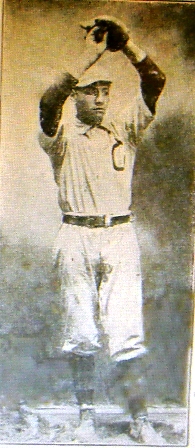
Charlie Roy, Carlisle Indian School, 1906

Any thought that he’d instantly join the team and be the next Bender was dispelled by Phillies Manager Hugh Duffy who was quoted in The Pittsburgh Press that Philadelphia would not appeal if Cincinnati won the claim because:

“Roy lacks the experience necessary to make him a success in the big league.  He is still green, and until the greenness wears off he will be of no value to big league team.”

The National League ruled that Roy was the property of Philadelphia, and regardless of Duffy’s assessment he made his debut for the Phillies in late June.  Roy only appeared in seven games, posted a 0-1 record with a 4.91 ERA and was sent to the Newark Sailors in the Eastern League.

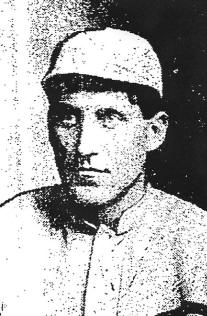
Charlie Roy

Charlie Roy

He was 2-4 with Newark and was 2-4 again early in 1907 when he was released by the Sailors.  He signed with the Wilmington Peaches of the Tri-State League, although there is no record of him appearing in a game.  He finished the 1907 season with the Steubenville Stubs in the Pennsylvania-Ohio-Maryland League, appearing in 15 games.

Despite dropping from the Major Leagues to a class “D” league in 18 months, the 23-year-old pitcher was still considered a good prospect. The Pittsburgh Post-Gazette said after he won his first start for the Stubs, a 7-2 three-hitter against the Braddock Infants:

“He has plenty of speed and fine curves and looks like a winner.”

But near the close of the 1907 season it was clear he’d never be another Bender.  Despite being drafted by Boston Doves, The Associated Press reported that he would refuse to report to the National League club in the spring:

 “Charlie Roy, The Indian Twirler…has quit baseball to go into the evangelist field.”

Some papers reported the pitcher’s decision more impoliticly.

The Harrisburg Telegraph:

“(Roy) says he has had all the National League game he wanted, and rather than report he will go back to the plains and throw mud balls at his fellow Indians.”

The Sporting Life:

 “(Roy) intends to forsake the diamond after the close of this season and equip himself for evangelistic labors among the redskins of the Northwest.”

Roy returned to the White Earth Reservation to preach and eventually settled in Blackfoot, Idaho  where he died in 1950.

A shorter version of this post appeared on October 30, 2012.

Lost Advertisements–Pat Moran for Sloan’s Liniment

22 May

patmoran

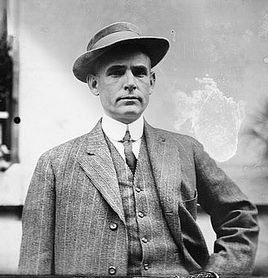
An advertisement that appeared late in the 1919 season featuring Cincinnati Reds Manager Pat Moran:

“‘When my players get sore, I don’t rub them the wrong way;  I use Sloan’s Liniment–it penetrates.’

“Moran knows how to keep his men fit for the pennant scramble–keeps Sloan’s handy for emergency.  ‘Glass arm,’ ‘Charley horse,’ stiffness, soreness, bruises, rheumatic aches, are quickly and comfortably relieved.  Penetrates without rubbing, keeping the boys ready for the winning game.”

The 1919 World Series was the fourth for Moran.  He played in two with the Chicago Cubs (1906 and ’07) and managed two, (the other was with the Philadelphia Phillies in 1915).

Moran replaced Charles “Red” Dooin as Phillies manager after the team finished in sixth place in 1914.  Under Moran, the team won 10 of their first 11 games and won the National League with a 90-62 record.

In September, Frank Menke of The International New Service said:

“Moran deserves ranking among the greatest managers the game has ever known.  It is the wonderful leadership of the red-faced, gray-haired Irishman that has put the misfit Phillies where they are today.”

Moran

Moran

Menke said Moran was saddled with a team consisting primarily of “castoffs,’ and “one wonderful pitcher (Grover Cleveland Alexander).”

Moran followed up the 1915 pennant with two second-place finishes, with teams Grantland Rice of The New York Tribune said the manager had little to work with beyond pitcher Alexander:

“(T)hose astounding Phillies, piloted by a leader who has never received anywhere near his due recognition for extraordinary ability to lead a ball club.  need it be said that we refer to Pat Moran?  It needn’t.”

As was his habit, Rice memorialized Moran’s abilities with a poem:

Pat Moran’s no Miracle Man

Nor anything like that;

Nobody ever stands and cheers

The while he tips his hat.


Pat doesn’t draw the headline space

Nor yet the picture frames;

Pat Moran’s no Miracle Man–

Buthe’shellatwinninggames”

During his nine-year managerial career in Philadelphia and Cincinnati, Moran compiled a 748-586 record, which included a total of four second-place finishes to go with his two pennants.

During spring training of what would have been his sixth season with the Reds, Moran, who had a history of excessive drinking, became ill in Orlando, Florida.

His former Cubs teammate Johnny Evers came to his bedside.  According to The Associated Press, he said:

“‘Hello John, take me out of here.’ He then lost consciousness.”

He died later that day.  The official cause was Bright’s Disease.

“I mentioned Satchel and Josh and Cool Papa, I told Him he was Missing the boat”

18 May

After Heywood Broun’s remarks at the 1933 Baseball Writers Association dinner about integrating the game, The Pittsburgh Courier initiated a campaign to push the issue.  Despite some support inside baseball and from well-known newspapermen, the effort fell flat by opening day.

That summer, after the first East-West Game—won by the West All-Stars 11 to 7—at Comiskey Park, Henry L. Farrell of The Chicago Daily News suggested several “(M)ajor league club owners who are now on their knees might have their prayers answered,” by signing some the Negro League stars.

In the fall, The Chicago Defender briefly picked up the mantle from The Courier.  The paper asked their readers:

“How would you like to see the great baseball players of the Race performing in the major leagues? Wouldn’t you like to see Willie Foster, Satchel Paige and (Sam) Streeter pitch to Babe Ruth?”

If so:

“Sit down and write K.M. Landis commissioner of baseball, 333 N. Michigan Ave., Chicago.”

The following week, the paper reported that Landis’ office had refused to comment.  When baseball’s winter meetings commenced in Chicago in December, The Defender promised readers that the letters they had sent:

“(A)re not being passed on lightly as many suggested would be the case.  On the contrary, the club owners are downright concerned and from the inside word leaked out that some action would be taken.”

The optimism was tempered later that week when their reporter was barred from covering a meeting where he was told “vital points were discussed.”  The Defender reporter was told no newspapermen would be admitted, but:

“That sinister moves were being made against your author’s admission became a certainty when a well-known writer from one of the downtown papers came along, gave the high sign and was admitted.”

When 1933 came to a close, integration was no closer to being a reality than it was 11 months earlier as Broun stood to deliver his remarks to the baseball writers.

Four years later, Sam Lacy from The Baltimore Afro-American met with Washington Senators owner Clark Griffith in an attempt to revive the subject:

“I mentioned Satchel and Josh and Cool Papa, I told him he was missing the boat.”

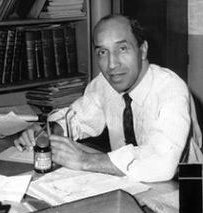
Sam Lacy

Sam Lacy

Griffith, he said, told him the timing was wrong, and that Southern-born players would not accept integration.

The next major effort came in 1939.

Political support had generally been limited to socialist and communist organizations—the Young Communist League spent the summer of ’39 gathering signatures to present to Commissioner Landis.  But, in July of that year, the Illinois House of Representatives adopted a resolution which read in part:

“Resolved, by the House of Representatives of the Sixty-first General Assembly.  That the owners of all professional baseball teams in the United States, both in the major and minor leagues be strongly urged to give baseball players of the colored race the same opportunity of becoming players on their respective teams as is accorded to such players of the white race.”

Another push came from Pittsburgh as well.

Wendell Smith, who was playing baseball at West Virginia State College when Broun made his speech in 1933, was now a reporter for The Courier. In July, he promised readers:

“The most exclusive, startling and revealing expose, of the attitude of the major league players and managers themselves, ever written.”

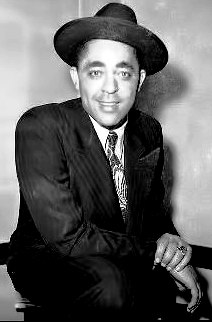
Wendell Smith

Wendell Smith

Over the course of several weeks Smith asked 40 players and eight managers as they passed through Pittsburgh, “Are Negro ballplayers good enough to ‘crash’ the majors?”

The Courier’s Chester Washington said in a column to introduce the series of articles:

“One of the major reasons why Mr. Smith’s discovery is so revolutionary is that the club owners, in trying to pass the buck, have blamed the ban on the players themselves.  They claimed that the injection of colored stars into the clubs would bring about friction and dissention… (Smith) practically disproves this contention.

“Fearlessly buttonholing the managers and outstanding players of all the National League clubs, Mr. Smith received scores of testimonials which should be a revelation to the owners.”

A sampling of the statements collected by Smith:

Ernie Lombardi, Cincinnati Reds:  “(Satchel) Paige is as good as (Dizzy) Dean.”

Johnny Vander Meer, Cincinnati Reds:  “I wouldn’t object.”

James “Doc” Prothro, Philadelphia Phillies: “If given permission I would jump at the opportunity to sign up a good Negro ballplayer.”

Leo Durocher, Brooklyn Dodgers:  “(Satchel) Paige, (Bill “Cy”) Perkins, (Mule) Suttles and (Josh) Gibson are good enough to be in the majors right now…I certainly would use a Negro ballplayer if the bosses said it was all right.”

Gabby Hartnett, Chicago Cubs:  “I am sure that if we were given permission to use them, there would be a mad scramble between managers to sign them.”

Gabby Hartnett

Gabby Hartnett

Dizzy Dean, Chicago Cubs: “If some of the colored players I’ve played against were given a chance to play in the majors they’d be stars as soon as they joined up.”

Pepper Martin, St. Louis Cardinals: “Some of the big league players would object, but on the whole I think they would be accepted.”

Pie Traynor, Pittsburgh Pirates: “believe me when I say I have seen countless numbers of Negro ball players who could have made the grade in the majors.  Only their color kept them out.  If given permission, I would certainly use a Negro player who had the ability.”

Honus Wagner, Pittsburgh Pirates:  “Yes, down through the years I have seen any number of Negro players who should have been in big league baseball.”

Over the next five years, Smith would interview more than 150 additional major leaguers, who would echo the sentiments of his original 40, keeping the pressure on professional baseball to desegregate.

Humpy Badel

27 Apr

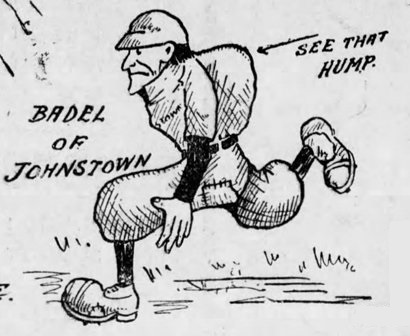
Fred Badel was the first player in professional baseball (and most likely the only one) who suffered from Kyphosis, the over-curvature of the upper back.  In less sensitive times, the first decade of the 20th Century, this led to his nickname: Humpy.

Badel was born in Carnegie, Pennsylvania, March 6, 1881, although contemporary newspaper accounts implied he was much older.  He never learned to read or write, and despite his medical condition developed into a solid ballplayer.

The Altoona Tribune said:

“He is a little left-handed hitter, fast on his feet, and an excellent baserunner.”

The Tribune also said he was “(A) protegé of (Honus) Wagner.”

The Pittsburgh Press said he was:

“[E]xtremely fast on his feet, can hit like a fiend, and fields his position in a most finished manner.”

That description of Badel’s abilities appeared in an article about “The assertion…there are three classes of men who do not succeed in fast company in baseball, namely Hebrews, hunchbacks and Negroes,” the article failed to mention the concerted effort of organized baseball to keep at least two of those “classes” out of the game.)

Fred “Humpy” Badel

His professional career began in 1905 with Johnstown in the independent “outlaw” Tri-State League, although earlier he appears to have played for the Youngstown team in the Ohio-Pennsylvania League, and independent teams in Pennsylvania.

No statistics survive, but Badel appears to have played well.  He was described variously by Pennsylvania papers as a “picturesque character” and “odd,” but there seemed to be general agreement that he was destined for the big leagues.  He also had a reputation for playing dirty, The Williamsport Sun-Gazette said he had “a nasty trick of trying to spike basemen.”

At the close of the 1905 season, Badel was signed by the Buffalo Bisons in the Eastern League, managed by George Stallings.  Stallings, who had managed the Bisons since 1902, took the team south for spring training for the first time.

George Stallings

The trip was so successful that Stallings said he’d never again hold spring training in a northern climate—a regular practice at that time.

When the Bisons stopped in Cincinnati for an exhibition game with the Reds on April 10, Badel made an impression.

The Cincinnati Enquirer said:

“Humpy Badel was the bright particular star of the game…Badel is humpback, but a great athlete, with great speed and a fine arm.  An outfielder who cuts into two double plays in one game is going some.  He also made a fine catch on (Jim) Delahanty‘s drive in the second, which would have gone on for three bags…Badel was the main Bison slugger, securing two of the four hits off (Orville) Overall and one of the three off (Leo) Hafford.  Toward the end of the game, the bleacherites were cheering him on with cries of ‘good work, Humpy,’ and applauding every move he made.”

The Enquirer reported that Stallings turned down a  $4000 offer from Cincinnati–it was later reported to be $5000– to purchase Badel’s contract; the paper said Reds Manager Ned Hanlon badly wanted Badel.

Within months everything changed.  He was with Buffalo until July, 6, when without notice he jumped the team and returned to Johnstown.

badel

A cartoon from The Harrisburg Telegraph featuring Badel.


The Buffalo Courier blasted Badel; under the headline “Humpy Badel is a Foolish Man” the newspaper detailed how well he had been treated in Buffalo.  While acknowledging that Badel “Has the makings of a great player in him,” the paper repeatedly mentioned his illiteracy, claimed he “Lacked common sense,” missed or ignored signs, refused Stallings’ attempts to help him,  and was the subject of ridicule from his teammates who considered him ignorant.

The Buffalo Times summed up their view in verse:

“There was an outfielder named Humpy.

Whose work was decidedly lumpy;

So one bright summer day

He asked George for his pay,

And went back to the farm rather grumpy.”

Badel’s hometown papers in Pittsburgh and Sporting Life were somewhat less harsh, but all said that Badel’s leaving Buffalo probably ended a sure chance at a major league career.  Rumors that he jumped because oil had been found on his Pennsylvania land and he no longer needed to play ball were quickly dismissed.

There is no record of Badel ever having been asked for an explanation for why he left Buffalo and effectively ended any chance he had to play in the major leagues.

Badel hit over .300 in Johnstown during the second half of 1906.  He did not play professional ball in 1907, some reports said he had been blacklisted, others claimed he was ill–The Washington Herald said he was “in the grip of consumption,” although that report was likely false.

He appeared briefly with Johnstown again in 1908, but it appears he was not the same player.  The Harrisburg Star-Independent said:

“‘Humpy’ Badel has degenerated.  The eccentric one is no longer the valuable player which he showed himself to be in 1906.”

Badel is listed on the rosters of several independent, C and D league teams between 1910 and 1914, including the “outlaw” United States League in 1912 and the Federal League in 1913.  As was the case throughout his career, there are few extant statistics for Badel during this period.

The last mention of Badel in the press was the report of  his release from Maysville in the Ohio State League in June of 1914.  According to census records and his World War I registration card, he lived in Cincinnati, then Akron and worked as a carpenter until 1919.

 After 1919, there are no records of Badel, a suitable, enigmatic end to the story of an enigmatic man.

A shorter version of this post was published on August 21, 2012

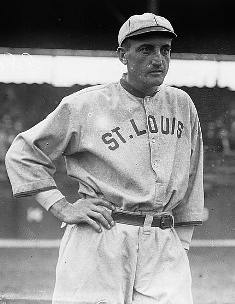
Miller Huggins

27 Mar

Miller James Huggins was born on this date in 1879.  The Hall of Fame Manager of the New York Yankees played 13 seasons as a second baseman for the Cincinnati Reds and St. Louis Cardinals.

Miller Huggins

Miller Huggins

In 1911, he told Hugh Fullerton of The Chicago Record-Herald about “The greatest play,” he had seen during his career.

Huggins said it was a play made the previous season—July 30, 1910–by his teammate, shortstop Arnold “Stub” Hauser during a game between the Cardinals and the Chicago Cubs, and was described by Charles Dryden of The Chicago Examiner as “the only quadruple play ever made.”

“The play was wonderful, not only because of the situation and the manner in which it was accomplished, but because of the fact that Hauser kept his head all the time and thought as quickly as he acted.

“The situation was this:  we had the game won, but (Frank) Chance and his Crabs were fighting hard and hitting harder.  It took a lot of fielding and desperate work to hold the lead we had gained as they had men on the bases in almost every inning and kept threatening to pile up a bunch of runs almost any minute and beat us out. “

In the fifth inning, with Solly Hofman on first and Jimmy Sheckard on second, Chance hit John “Red” Corriden’s first pitch:

“Chance hit it like a streak of lightning almost over second base, perhaps two or three feet to the third base side of the bag and on a low line.  The ball was hit so hard that I hadn’t a chance to get near it, although I took a running jump in that direction.  It didn’t seem that Hauser, who was playing short, could make it touch his hands.  He came with a run, and as he saw the ball going past he dived for it, and made it hit his left hand while it was extended at full length.  He just stabbed at the ball, and although it hit his hand he, of course, could not hold it.  He was staggering, almost falling, and the ball popped up in the air perhaps a couple of feet, and as it started to fall to the ground Hauser, still falling, grabbed it with his hand and clung to it.  I had covered second, hoping he would be able to get the ball to me when I saw him hit it with his hands.  (Instead of throwing to Huggins) He staggered over second base (to retire Sheckard) and shot the ball to first (to retire Hofman).  As he touched second he spiked me so severely that I had to quit the game.  That is why Dryden called it a quadruple play, as it retired three Crabs and myself at the same time.  I’m proud now that I got spiked, as it gave me a part in the greatest play I ever saw on a ball field.”

___

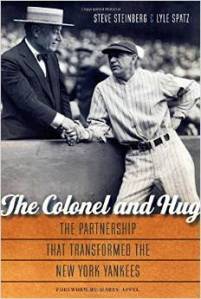
Speaking of Huggins.  I receive a fairly steady stream of advance copies of books, and while I read most of them, I don’t recommend many. Too many rely heavily on recycled information from secondary and tertiary sources, often repeating faulty information and perpetuating myths.  A soon to be released book about Huggins is a pleasant exception.

colonelandhugcover

The Colonel and Hug: The Partnership That Transformed the New York Yankees, by Steve Steinberg and Lyle Spatz, will be released on May 1. In addition to being a thoroughly researched, well-written, definitive, biography of both Huggins and Yankee owner Jacob Rupert, the book does an excellent job of weaving the story of the Yankees in the broader context of the 1920s.

Nick Maddox

9 Feb

Nicholas “Nick” Maddox burst on the National League scene in 1907. Born in Maryland on November 9, 1886, Maddox’ was born Nicholas Duffy, but adopted his stepfather’s name Maddox.

In 1906 the 19-year-old was given a trial in the spring with the providence Grays in the Eastern league.  He was released before the season began and signed with the Cumberland Rooters in the Pennsylvania-Ohio-Maryland League (POM).  Maddox had played in 1905 for the Piedmont team in the semi-pro Cumberland and Georges Creek League.

He was the best pitcher in the POM; The Sporting Life said Maddox was 22-3 for the Rooters who finished the season in fourth place with a 50-45 record, and was “the fastest pitcher in the league.”
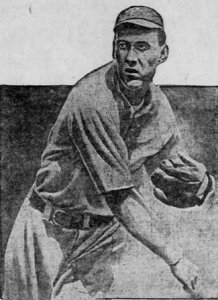
Nick Maddox

Nick Maddox

Maddox spent most of 1907 with the Wheeling Stogies of the Central League.  He posted a 13-10 record and no-hit the Terre Haute Hottentots on August 22.  Maddox was purchased by the Pirates the following month and made his big league debut on against the St. Louis Cardinals.

The Cumberland Times noted that he faced a “double-jointed hoodoo of commencing his National League career on Friday, September the 13th.”

The Pittsburgh Press said:

“Nick was ‘on the job’ yesterday from start to finish, and acted more like a man with many years’ major league experience than like a minor leaguer who has been in the business but a few seasons.”

Maddox shut the Cardinals out on just five hits, struck out 11 and got his first hit, a single in his first at bat.

Eight days later Maddox threw the first no-hitter in Pirates’ history, beating the Brooklyn Superbas 2 to 1—Brooklyn scored on two fourth-inning errors.   Years later, Maddox said of his own throwing error that put Emil Batch on base:

 “They scored me with an error, but hell man, I threw it straight to the first baseman (Harry) Swacina.  Sure it went over his head but he should have jumped for it.”

Batch scored on an error by shortstop Honus Wagner.  Maddox said:

“I don’t hold that against Honus, he saved my no-hitter in the ninth.  A ball was hit right over my head and ‘pfft’ Wagner was over there to get it.  I don’t think he ever held the ball, he just swooped it over to first.”

The rookie started six games Pittsburgh, won his first four, and finished with a 5-1 record with a 0.83 ERA.

The Pittsburgh Leader said Pirates’ President Barney Dreyfuss claimed Maddox would be “the sensation” of 1908.  He wasn’t far off.

The 21-year-old was an impressive 23-8 with a 2.28 ERA with five shutouts.  Despite his success there was concern about control—he walked 90 batters while striking out just 70 in 260 innings, and hit 11 batters.

After three second and one third-place finish the four previous seasons, Pittsburgh, and Maddox, came into 1909 with high expectations.  The Pittsburgh Press said:

“Nick Maddox is facing a very successful summer, and with an even break and barring accidents he ought to push any other twirler in the National League for first honors.  He has everything a pitcher needs, and youth with it.”

The Press also said he would “start out with good control” based on his performance in March games in Hot Springs, Arkansas.

The Pirates lived up to expectations, taking over first place on May 5 and cruising to the pennant; Maddox did not.

The 22-year-old struggled for the first half of the season.  The Leader said he was having “a hard time getting into condition,” and was wild as a March Hare.”  Maddox got on track in July pitching a 2-hit shout against the Cincinnati Reds on the 6th, and four-hit shutouts against the Brooklyn Superbas and Boston Doves on the 14th and 23rd.

He ended the season 13-8 with a 2.21 ERA—overshadowed by teammates Howie Camnitz (25-6), Vic Willis (22-11), Albert “Lefty” Leifield (19-8) and rookie Charles “Babe” Adams (13-3 as a reliever and spot starter).
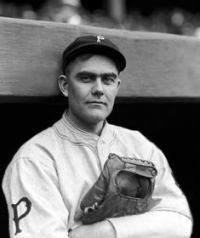
Babe Adams

Babe Adams

Despite going into the World Series against the Detroit Tigers with such a strong pitching staff, Manager Fred Clarke opted for the rookie Adams in game one and he responded with a 4 to 1 victory.

The Tigers beat Camnitz 7 to 2 in game 2.

Three years later, Fred Clarke spoke to James Jerpe of The Pittsburgh Gazette-Times about his decision on a pitcher for game three:

“I was in an awful predicament.  Adams had been used up.  It was had been raining, and it was very cold.  The chilly drizzle was something frightful.  The ball would get wet and water-logged and the problem was to get a pitcher who could handle the wet ball.  I looked the gang over.  Adams was out of the question.  He had been used up.

“I was figuring on the others, and I asked ‘Who can go out there today and handle a wet ball and win?’  Poor Maddox, sitting in a corner of the bench all bundled up with sweaters and other stuff, shed his extra clothes and jumped up.  Grabbing a ball, he said: ‘Gimme a catcher till I warm up.  I’ll handle this wet ball and beat them or break a leg.’  His confidence gave me a hunch, and I acted on it.”

Ring Lardner said of the game:

“Detroit’s record crowd, 18,277, saw the Tigers beaten by the Pirates 8 to 6, today in one of the most exciting and most poorly played world’s series games in baseball history.”

The Pirates scored five runs in the first inning off Detroit’s Ed Summers, and Maddox shut the Tigers down for the first six innings.  Detroit scored four runs in the seventh, aided by two Pirate errors.  Clarke said:

“Maddox wouldn’t have been in so much trouble if we had played ball behind him.”

The Pirates took a 8 to 4 lead into the ninth–Detroit scored two more runs, helped by another error—but Maddox held on and picked up the win.

He did not appear in another game during the series.  The Pirates won in seven; with Adams picking up complete game wins in games five and seven.
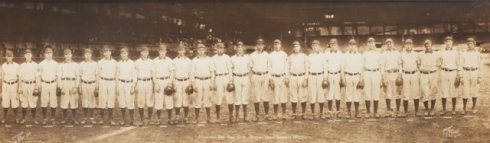
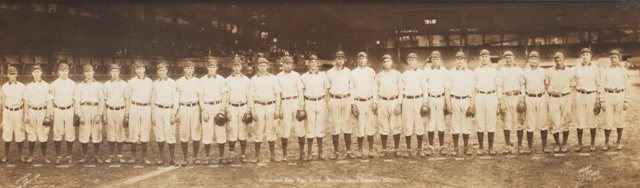
09pirates

1909 World Series Champion Pirates, Maddox is ninth from left.


The defending champions got off to a quick start again, but Maddox again started slow.  By July, The Leader said:

“Nick Maddox should have rounded into form..He is big and strong this year, but does not seem able to pitch good ball for nine rounds.”

He never “rounded into form.”  Maddox struggled all season.  He started just seven games, pitched in relief in 13 others, and was 2-3 with 3.40 ERA.

By August, with the Pirates in second place, six games behind the Chicago Cubs, The Pittsburgh Gazette asked “what was the matter?” with Maddox and why the Pirates had not cut him loose.

He made his last appearance on September 12, giving up a run, a hit and walking two batters in two innings of relief during a 4-0 loss to the Reds.  He was sold to the Kansas City Blues in the American Association 10 days later.

Maddox won 22 games for the Blues the following season, but continued to be plagued by wildness and arm trouble.  His major league career was over, and he was finished professionally in July of 1914 at 27-years-old when he was released as manager and pitcher for the Wichita club in the Western League after posting a 3-13 record.

Fred Clarke was convinced Maddox’ career really came to an end on that rainy day in Detroit.  James Jerpe of The Pittsburgh Gazette-Times said that in 1910 Dreyfuss asked Clarke to release Maddox long before he sold the pitcher to Kansas City:

“’Why don’t you let Maddox go? You aren’t pitching him.’

“’No,’ replied the Pirate Chief sadly.  “I’m not pitching him.  He ruined his arm helping Adams win the world’s series.’

“And Fred narrated (to Dreyfuss) more of Nick’s gameness on that bleak and drizzly October day in Detroit when he gave his arm for a championship.  Nick was carried for a whole year and the club has been interested in his welfare ever since.”
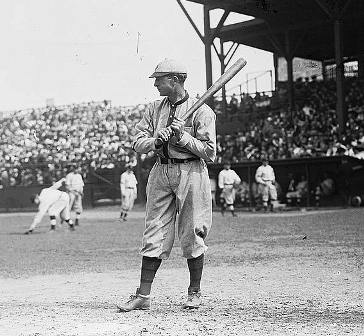
Fred Clarke

Fred Clarke

Maddox, who lived in Pittsburgh, and worked for the Fort Pitt Brewing Company, after his retirement, lived long enough to listen on the radio to the last two innings of the next no-hitter thrown by a Pirate pitcher—Cliff Chambers defeated the Boston Braves 3-0 on May 6, 1951.

Nick Maddox died in 1954 at age 68.

“Wallace’s Head is Abnormally Developed”

29 Dec

When Bobby Wallace was named manager of the St. Louis Browns in 1911, the local press, desperate for any ray of hope for a club that finished in eighth place with a 47-107 record, enlisted a “noted phrenologist” named Squeers from Hot Springs, Arkansas to examine the new manager.

Booby Wallace

Booby Wallace

Phrenology was a popular pseudoscience in the in the 19th and early 20th Century that claimed the structure of the skull determined a person’s mental ability and character.

The result of Wallace’s examination was reported in several newspapers:

“The eminent brain specialist pronounced the manager of the Browns one of the most normal-minded men he had ever examined.  He did not know his man when he made his diagnosis.

“Wallace’s head is abnormally developed on the left side.  This is as it should be, Dr. Squeers declares.  The left lobe of the brain governs the right side of the body…It is natural, asserts Dr, Squeers, that a man should be right handed, right-footed, right-eyed, that the right side (of the body) should be larger and stronger than the left.”

It was not enough to declare Wallace “normal minded,’ the “doctor” also “diagnosed” roughly 10 percent of the general population.  He said because “It is natural” to be right-handed, left-handers therefore, were “in many cases a bit abnormal.”

The litany of “abnormal” left-handers–Rube Waddell, Crazy Schmit, Nick Altrock, Slim Sallee, Lady Baldwin, etc…–were trotted out to demonstrate the “proof” of the assertion.

 “For whatsoever the reason may be, the man whose throwing arm is governed by the right lobe of his brain seems bound to be erratic.  Thus is Dr, Squeers, knows little of baseball, justified in pronouncing Wallace an ‘abnormally normal’ man.  Wallace is the farthest thing from erratic that any man could be.  He could not do a left-handed or wrong thing—could not act abnormally to save his soul.”

[…]

“Wallace has been the quietest, most regular, most normal human being in the world.  He is the perfection of moderation, of balance in all things.  He takes life quietly and is never disturbed or out of temper.  He has never made an enemy.  He is the favorite of everyone…It remains to be seen if normality means success when it is applied to the management of a baseball team.”

In this case it didn’t.

The Browns, awful in 1910, were awful again under Wallace in 1911; another eighth place finish with a 45-107 record.  After a 12-27 start in 1912, George Stovall replaced him as Browns manager.

Wallace managed one more time—he replaced Chuck Dressen as manager of the Cincinnati Reds in September of 1937.  The “most normal human being in the world” was 5-20.


“This kind of Argument is the Veriest kind of Twaddle”

1 Dec

After just one season in the National League—a 24-36 record and a fifth place finish in 1878–the Indianapolis Blues disbanded.  Four members of the Blues joined the Chicago White Stockings—Silver Flint, Joe Quest, Ned Williamson, and Orator Shafer.

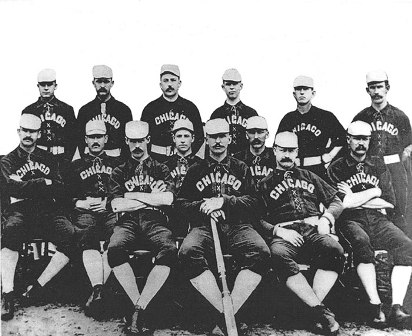
The 1879 White Stockings

The 1879 White Stockings

The White Stockings had been a disappointment in 1878, finishing in fourth place with a 30-30 record under Manager Bob Ferguson.  President A.G. Spalding, who had named Ferguson as his successor when he retired from the field, announced that first baseman “Cap” Anson would replace Ferguson for 1879.

The changes gave the Chicago press high hopes for 1879.

But, The Cincinnati Enquirer did not agree.  The paper said while the Chicago club was “greatly strengthened where it was very weak,” they would still finish no better than fourth place unless they were “properly managed.”  Boston Red Stockings Manager “Harry Wright could take this team and run it up to second place at least.”

In January The Enquirer implied that in addition to questionable management, Chicago’s new players were going to be a detriment:

“A prominent baseball official of Boston, in a private letter written recently, sententiously remarks: ‘Look out for the Indianapolis element in the Chicago Club next year.’  There’s a text for everybody’s thoughts.”

The Chicago Tribune quickly fired back with an article under the headline:

“Harmony” vs. Energy

 “There has been a great deal said at one time and another concerning ‘harmony’ in nines, and those who had the most to say on the subject contended that it was an essential point to be carefully looked after in the formation of any club which hoped for success on the diamond field.  Now The Tribune does not wish to set itself up in opposition to the judgment of men who have made baseball and the management of those who play it a study and a business venture, but it does say that many of them have harped so long upon this matter of ‘harmony’ that it has become a kind of second nature, whereby their judgment has been sadly warped.  Of late a paragraph, started in Cincinnati, has been going the rounds, in which the general public is solemnly warned to ‘look out for the Indianapolis element in the Chicago Club’ during 1879.

“Now the President and Manager of the Chicago Club are probably about as astute and far-seeing as any in the business and in view of this fact and reflection on their judgment or sagacity is in bad taste, and the parties who make ill-advised criticisms on the course of any club in hiring men, are very apt to undergo the unpleasant experience of persons not brought up in New Zealand who indulge in the pastime of throwing boomerangs; their weapons may come back and inflict considerable damage on those who threw them.  Whether or not the White stocking nine of next season will be a ‘harmonious’ one, it is doubtful if anybody knows, and still more doubtful if anybody cares.

“At the risk of being howled at by several papers, the baseball columns which are presided over by young men whose practical ignorance of the game is exceeded only by their ability to construct tables which not even themselves can understand when printed.”

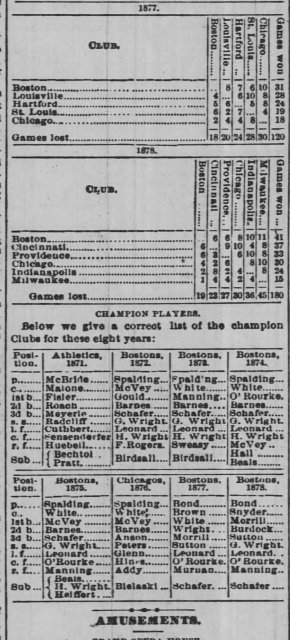
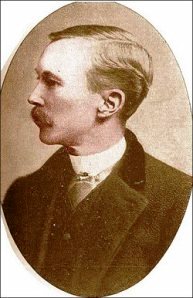
One of the “Young men” referred to was The Enquirer’s sports Editor Oliver Perry “O.P.” Caylor.

One of O.P. Caylor's tables "which not even themselves can understand when printed.”

One of O.P. Caylor’s tables “which not even themselves can understand when printed.”

The Tribune will say that the question of whether or not the Chicago nine of next season ‘harmonizes’ will probably make very little difference with its play.  Some of the men who enjoy the reputation of being first-class kickers and disorganizers are nevertheless very handy individuals to have around when a base hit or good field play in wanted.  Without intending either to arouse the wrath or flatter the vanity of the very amiable and stalwart young man, Anson, it may be said that his reputation as an experienced and prolonged kicker is one that any man might be proud of; but, in spite of those who preach that harmony is everything, he is acknowledged to be one of the best and most useful ball-players in the country.  (Cal) McVey, of the Cincinnatis, can also make quite a conspicuous kick, even when not specially called upon to do so; still he is a good ball-player.

Lip Pike is a disorganizer of the first water, but last season, when he used to hoist a ball out among the freight cars on the lake shore, people who were presumed to know a good player yelled themselves hoarse in his praise.  The list could be extended indefinitely, but such action is not necessary.  Those who organize nines on the basis of ‘harmony’ alone will never grow rich at the baseball business.  It is not possible to get together nine men who could travel around the country eating, sleeping, and playing ball together that would never get out of tune.  Nine angels could not do it, much less nine mortals, subject to the little idiosyncrasies that human nature is afflicted with. “

The Tribune likely assumed the “prominent baseball official of Boston,” was Manager Harry Wright, and next turned its attention to him, his brother, and his championship teams.

“Harry Wright has always been the prophet whom the ‘harmony’ men delighted to honor, and the success of the Cincinnati and Boston Clubs under his management has been laid entirely to the dove-like dispositions of the men engaged by him.  This kind of argument is the veriest kind of twaddle, and the history of the Boston Club proves the truth of this assertion.  George Wright and Tommy Beals went many a day without the interchange of a friendly word, and George and (Charlie) Gould did the same thing.  For one whole season Ross Barnes and Gould never exchanged a word, and glared at each other like opposing game chickens, but the Boston’s won the pennant that year (1872—National Association) all the same harmony or no harmony.

“Other instances of like character could be adduced were there any necessity therefore, but these, from the fountain head of ‘harmony,’ will suffice.  If a club wins the championship it will be because its men play ball, not because they are ‘goody-goody’ boys.  Your man who gets hot at something during a game, and then relieves his feelings by making a two or three base hit, is much more valuable than one who, although possessed of a Sunday-school temperament at all times, manifests a decided aversion to reaching first base., when the occupancy of that particular bag of sawdust would be of some value to the men who pay him high wages for playing ball.”

O.P. Caylor

O.P. Caylor

Caylor would not let the insult to him and to Harry and George Wright, go unchallenged:

The Chicago Tribune published some strange statements against the argument that in harmony there was always strength.  To prove that harmony was not always necessary to create strength in a baseball club, the writer made bold to say among other things that Tommy Beales [sic] when a member of the Boston Club, went many a day without the interchange of a friendly word with George Wright, and that the same feeling existed between George and Gould.  The writer knew from the first these statements were fiction, but in order to crush the fallacious argument our reporter left it to George Wright himself for an answer.  The letter is before us from which we quote, though we half suspect George would demur to its publication out of modesty if he knew it. “

Wright wrote to Caylor:

“(The Tribune) said Tommy Beales [sic] and I went many a day without the interchange of a friendly word, and that Gould and I did the same thing.  While they were with the Boston nine they were about my best friends.  Most of the time Beales [sic] boarded at my house, while Charley and I roomed together on trips.  I think the reporter was wrong in his argument against ‘Harmony’ as it was the great cause of the Boston Club’s success.  The credit for this mostly belonged to Captain Harry Wright.”

George Wright

George Wright

Although it appears Wright spelled the name of his good friend Tommy Beals incorrectly, he got the spelling right 12 months later when he named his son—tennis Hall of Fame member –Beals Wright after his former teammate.

The Tribune allowed Wright, and Caylor, the last word, and dropped the dialogue regarding “harmony.”

Despite Caylor’s prediction, the White Stockings, under Manager Cap Anson, led the National League from opening Day through August 15.  Anson became ill during July, and as his performance slipped, so did the team’s fortunes.

Suffering from what The Tribune called “an acute affection of the liver…that had sadly impaired his strength and capacity for play,” Anson left the club on August 26 with a 41-21 record, in second place, just a game and a half back.

With Silver Flint serving as manager, and without Anson’s bat—he led the team with a .317 average—the White Stockings were 5-12 in the last 17 games, and a fourth place finish.

Harry Wright’s Boston Red Stockings finished second; his team, winners of the previous two National League championships lost some of the “harmony” that made them winners when his brother George Wright and Jim O’Rourke signed with the Providence Grays.  George Wright, in his only season as a manager, led the Grays to the 1879 National League championship.

“I guess I am Rotten”

24 Nov

It was in doubt where Pete “The Gladiator” Browning would play in 1892.

There is no record of exactly how he parted ways with the Cincinnati Reds—Released by the Pittsburgh Pirates, Browning hit .343 for the Reds in 55 games in 1891 after signing with the club on June 29—but, by January of 1892 there were a steady stream of rumors about where he would sign.

Pete Browning

Pete Browning

Speculation included the Baltimore Orioles and St. Louis Browns, but Browning opted to return home to Louisville, and signed with the Colonels—he was released again after an early spring salary dispute, but signed a new contract with the team a week into the season.

Browning returned Louisville with much fanfare.  The Courier-Journal said, after he contributed two singles and two sacrifice hits in a 7 to 2 victory over the Chicago Colts:

“Prodigal Pete…walked out—‘Prods’ do not return in carriages—to his old home in left field at Eclipse Park yesterday afternoon, where he had spent a happy, happy youth before the false adulation of the outer world called the Gladiator away.”

After am 11-3 start, the Colonels were returning to form, and were beginning to look like the ninth place team with a 63-89 record they would be at season’s end.

To make matters worse, “Prodigal Pete” struggled after his first game, hitting just .247—94 points less than his career average—in 21 games.

Browning explained his sump to Harry Weldon of The Cincinnati Enquirer:

“’I guess I am rotten. I guess I ought to be out of the business,’ said Pietro Gladiator Browning, as he walked on the field.  ‘Old Gladdy ain’t to his speed yet, but he’s hitting ‘em, and hitting ‘em good, but not as good as he will hit ‘em though, cause he’s got the catarrh, and is stopped up in the head.  When you’re stopped up your ‘lamps’ ain’t right.  Wait until the sun gets hot and the catarrh leaves the old hoss.  Then the pitchers will have to look out.  Will I lead the league in hitting?  Why not?  Look out for me.  None of ‘em are getting away from me in the outfield.  Did you read about me going up in the seats and pulling down a fly that saved the game?  I can do it right along.  None of them big stars, Jim) McAleer, Curt Welch or any of the rest of them fellows have the best of old Pete on fly balls.  The old boy is still ready money, and worth one hundred cents on the dollar.”

Within days the Colonels gave up on the Gladiator and handed him his release on May 18.

For a time Browning got his “lamps’ right again.  After signing with the Reds again, he hit .303 the rest of 1892.  He returned to Louisville in 1893 and hit .355 in part-time role.