Tag Archives: Cincinnati Reds

“I Consider him a Weak, Foolish Talker”

13 Nov

Bill Phyle was a no-show.  He failed to appear before Southern Association President William Kavanaugh at the league’s hearing regarding his charges that the end of the 1903 season was fixed.  After the league suspended him he failed to appear in St. Louis to defend his charges in front of the National Association of Professional Baseball Leagues (NAPBL).  He claimed he was too ill to attend either meeting.

As a result he was expelled from organized baseball in October of 1903.  His appeal was denied in December.

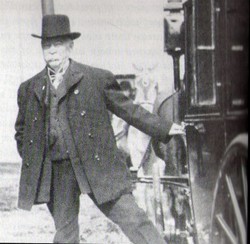
Phyle had very few supporters by the time his fate was settled by the NAPBL, but he still had at least one—kind of:  Milwaukee Brewers Manager “Pongo” Joe Cantillon, the man who sold Phyle’s contract to the Memphis Egyptians.
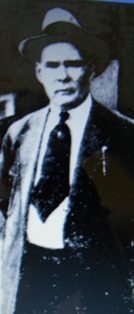
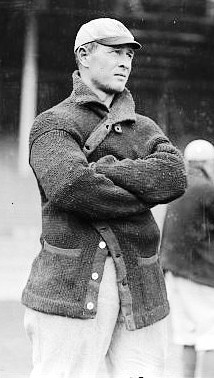
Joe Cantillon

Joe Cantillon

Cantillon told William A. Phelon of The Chicago Daily News that his former player wasn’t too bright, but that he also wasn’t wrong:

“I consider him a weak, foolish talker, who opened his head when it did not do him any good.  Just the same, Billy Phyle had cause for the charges which he made, and I got it good and straight that there was work done in the Southern league last season which was on the scandalous pattern.”

Cantillon stopped short of saying the season was fixed—but not very far short:

“Understand I do not say, neither does Phyle charge, that any games were sold, or that either manager or club owners were in on any such deals.   Even though there are thousands who say—apparently with mighty good reason—that the league is crooked, always has been crooked since it started, and always will be crooked—I do not accuse anyone of selling out.”

Cantillon then came pretty close to accusing Atlanta of selling out:

“This is the way the thing was done—and if anybody wants to howl I’ll show the goods and produce the names.  When Memphis was playing Atlanta it was a case of anything to beat out Little Rock.  The Atlanta players, knowing that their only chances had gone glimmering, were anxious to help their friend’s to beat Mike Finn’s gang (Little Rock).  There was no sell out and there were no intentional errors—nothing so gross and coarse as that.  But a couple of the best regulars on the Atlanta team were laid off; a couple of substitutes were put in their places; a raw, unseasoned amateur was sent in to pitch, and then, to make assurances doubly sure, the Atlanta catcher told each Memphis batsman just what to expect as he came to the plate.”

Cantillon also said the Birmingham Barons were “trying to help (Little Rock) along,” and:

“Every player in the league was dead wise to the whole situation, but Billy Phyle was the only man who was foolish enough to open his face, and he got soaked proper.”

Cantillon claimed to “positively know” that Phyle had been sick, and that was the only reason he failed to appear to substantiate his claims in front the league and the NAPBL.  Regardless, he said Phyle would have had a difficult time:

“Even if he had been able to attend, what show would he have had, with every manager determined to clear his own skirts and swat Bill for the squeal he made?”

Cantillon challenged anyone in the Southern Association to refute his allegations.

In February of 1904 Cantillon cancelled a scheduled spring tour of the South and Phelon said in The Daily News that Southern Association teams had refused to play against Brewers.

The following month Clark Griffith, who was in the South with the New York Highlanders, told The Atlanta Constitution that Cantillon was “ a nice fellow,” who “had been misquoted and had not authorized the interview, and in fact knew nothing of it until it appeared in the press.”

Cantillon himself never directly denied his statement, but The Constitution, content to keep the focus of Southern wrath on Phyle was happy to give the Milwaukee manager a pass:

“(Griffith’s claim) puts a new light on the question and it is very probable that he has been judged too harshly in the south…Phyle as a baseball issue is now dead.  Any effort to revive him and bring him forward on the stage either as a hero suffering persecution or a sick man worrying his life out by the blacklist hanging over him, will meet with the opposition of every paper in the south.”

Phyle went to Toledo and spent the spring and summer wiring Southern Association President Kavanaugh asking for reinstatement so his contract could be assigned to the Mud Hens.  After his application was rejected in May, and again in July, Phyle joined the independent Youngstown Ohio Works team.  The team played exhibition games that summer with the Brooklyn Superbas and Pittsburgh Pirates—both National League clubs were fined $100 for playing against the blacklisted Phyle.

(Some sources list Phyle as a member of the 1904 Johnstown Johnnies in the independent Pennsylvania League, but several Pennsylvania newspapers, including The Williamsport Gazette and The Scranton  Republican said in August “Phyle turned down a $225 per month offer from Johnstown.”)

Phyle became part of another scandal in 1905.
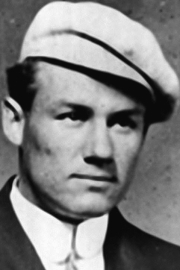
Bill Phyle

Bill Phyle

Youngstown joined the newly formed Ohio-Pennsylvania League, and needed to submit a roster to the NAPBL for approval.  Phyle’s name did not appear on the submitted list, but he played third base for the club all season, including an exhibition with the Cincinnati Reds on August 31. Youngstown was fined $500 in mid September and ordered to release Phyle.  Cincinnati was fined $100.

Phyle was finally reinstated in February of 1906, after he submitted a letter to the directors of the Southern Association retracting all of his 1903 allegations.

His contract was assigned to the Nashville Volunteers who sold him to the Kansas City Blues in the American Association.  After hitting .295 in 72 games, Phyle got one last trip to the National League.  He was traded to the St. Louis; he hit just .178 for the Cardinals.  He retired after playing three years in the Eastern League with the Toronto Maple Leafs from 1907-1909.

More than twenty years later Joe Cantillon was apparently forgiven in the South.  He managed the Little Rock Travelers to back-to-back eighth place finishes in 1926 and 1927.

The rest of Bill Phyle’s story next week.
Sam Barkley and the Mobster

29 Oct

Samuel W. Barkley’s brief career on the diamond was highlighted by two legal disputes over his services; his life off the field was more complicated and interesting.

Barkley rose from amateur and semi-pro teams around Wheeling, West Virginia, to a solid season (.306, league-leading 39 doubles) as a 26-year-old rookie with the Toledo Blue Stockings in the American Association in 1884. Among his teammates in Toledo were Fleetwood and Welday Walker.

Toledo was only a major league franchise in 1884—The Toledo Blade said the team had lost “nearly $10,000–and disbanded,” selling five players, including Barkley, to the St. Louis Browns—the sale included pitcher Tony Mullane, who attempted to sign with Cincinnati after agreeing to sign with St. Louis, leading to his year-long suspension. By the time all the legal wrangling was done, only Barkley and Curt Welch reported to the Browns.

After a .268 season in St. Louis, owner Chris Von der Ahe sold him to the Pittsburgh Alleghenys, but Barkley had already signed a contract with the Baltimore Orioles. The American Association suspended and fined Barkley; Barkley sued. The dispute was settled with Barkley being reinstated and Pittsburgh paying the fine on his behalf.

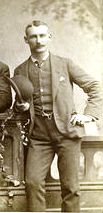
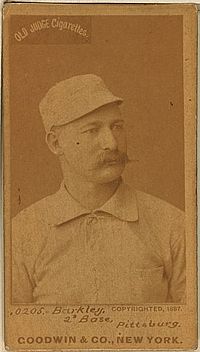
Sam Barkley

Sam Barkley

After two years in Pittsburgh, he was purchased by the Kansas City Cowboys, and that’s when his life got more interesting.

In Chicago, he met an 18-year-old woman named Dora Feldman, who followed him to Kansas City, where as The Toledo News-Bee said, “most of his money was thrown at the feet of the young woman.”

The Chicago Inter Ocean said Barkley claimed, that the day before he married Dora, “she went to her room in a Kansas City hotel and took poison, fearing he would not marry her.”

Despite the suicide attempt, the two married.

He hit just .216 in 1888 but was hitting .284 the following year when he was sold to the Toledo Black Pirates in the International League. After just 50 games there his career was over. At some point during the 1888 season he suffered a knee injury he said ended his career:

“I knocked a safe one to left field, and was dancing around between first and second bags when (Mike) Mattimore, the Philadelphia (Athletics) pitcher attempted to catch me napping. He ran to the base line, and as I attempted to slide back to the first bag he unintentionally gave me the ‘knee’ and it injured severely the knee cap on my left leg.”

With his playing days behind him, Barkley, who was reported to have made as much as $1,800 a season with the Alleghenys, returned to Pittsburgh with a young wife who had aspirations to be an actress and opened a cigar store.

It didn’t end well.

After just more than a year in business, The Pittsburgh Press said Barkley’s store on Smithfield Street closed by order of the sheriff, due to “claims aggregating $3,600.”

The couple moved to Chicago.

Initially, things went better there.

Barkley opened a tavern at 292 West Madison Street, and he and Dora had a son who was born around 1895.

Shortly after they returned to Chicago Dora met Chicago’s first crime boss Michael Cassius “Mike” McDonald.

Richard Henry Little of The Chicago Tribune said McDonald, “never held office but ruled the city with an iron hand.”

McDonald built a gambling and protection syndicate, controlled the Garfield Park racetrack, and solidified his control of the city as leader of the local Democratic Party. He was also heavily involved in legitimate businesses—he owned The Chicago Globe newspaper and financed the building of Chicago’s first elevated rail line.

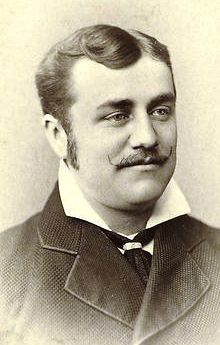
Mike McDonald

Mike McDonald

Years later Barkley told The Inter Ocean about his wife’s first meeting with McDonald:

“She was introduced to him at a box party in McVicker’s Theater shortly after the close of the big fair (World’s Columbia Exposition), in 1893…I remember the night distinctly. Dora came home to our place at 319 Washington Boulevard and told me that she had met a very fascinating old man (McDonald was 44), who was reputed to have a lot of money.

“’Watch me get a piece of that money,’ Dora said to me, jestingly, and fool that I was I laughed at the supposed joke.”

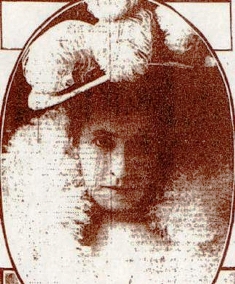
Dora Feldman Barkley McDonald

Dora Feldman Barkley McDonald

There are several versions of what happened next. One involves an elaborate (seemingly too elaborate) story that suggested Barkley was lured by a friend of McDonald into a compromising position involving women and drugs—only to be “caught” by his wife. The more likely version was that he was simply paid off—The Inter Ocean said he received $30,000 to divorce Dora.

Barkley never acknowledged receiving the money and only said:

“(Dora and McDonald) had planned between them to oust me, and no matter what I might have done, it would have been all the same in the long run. With his money and his influence, McDonald could put it over me any time he wanted.”

Dora eventually became McDonald’s second wife in 1898, (his first wife, who once shot a police officer—she was acquitted—had eloped to Europe with a soon to be former priest).

By 1897, Barkley had opened a new tavern at 15 North Clark Street, which was frequently in the news.

Sam Barkley

Sam Barkley

The Chicago Tribune called it a “notorious saloon,” and The Chicago Daily News reported on several occasions that the bar had its license revoked temporarily for various criminal activities and violations; in 1900 The Inter Ocean said a grand jury report was “almost an indictment of the city administration for its toleration of the dives, all-night saloons, and resorts for thieves and the depraved.” Of Barkley’s location the grand jury said:

“Men and women drinking, swearing and carousing, with music; open after midnight in the past. Several murders have been committed in front of this door.”

As with all such “clean-up” drives during that era in Chicago, nothing came of the grand jury report.

Dora again made headlines in 1907—and as a result so did her ex-husband.

The Inter Ocean said:

‘Mike ‘ M’Donald’s Wife Kills Artist in His Studio

“Dora McDonald, wife of Michael C. McDonald, millionaire, politician, traction man, and ex-gambler, shot and killed Webster S. Guerin, an artist, behind the locked doors of his studio in the Omaha Building, LaSalle and Van Buren Streets yesterday.”

Barkley was quickly contacted by reporters and told his sad story of how Dora had left him. The paper said:

“The story that Sam Barkley slowly grieved his life away over the loss of his pretty wife is disproved by the discovery of Sam Barkley alive and prosperous in Chicago today.”

Dora McDonald was eventually acquitted, but Mike McDonald did not live to see it, he died during her trial.

Barkley fell on hard times in Chicago soon after the killing. In August of 1908 a six-inning benefit baseball game was played at Comiskey Park between two Chicago City League teams–“Nixey” Callahan‘s Logan Squares and the Rogers Parks–“to raise enough money to start him in the cigar business.”

The Chicago Examiner said, “A fair-sized crowd turned out.”

Fred Pfeffer played first base for the Rogers Parks and “was the hero of the game with two hits besides fielding in grand style,” another former big leaguer, Emil Gross, served as umpire.

Shortly after that Barkley was operating a cigar store in his hometown, Wheeling, West Virginia.

There was one last chapter in the Barkley story. Soon after he returned to West Virginia he was living in poverty and became ill, and died on April 20, 1912. The Chicago Daily News said several days before his death a former baseball acquaintance was summoned to his side:

Billy Sunday called on him. He talked baseball for a while and then religion. At the end Sam liked both equally well.”

Billy Sunday

Billy Sunday

Dora McDonald was contacted for a comment:

“It is a closed incident—it’s so long ago that I knew him. But I’m sorry.”

She eventually married a doctor, moved to California and died in 1930.

Frank Chance’s first Concussion

23 Oct

By 1912 Hall of Famer Frank Chance had been hit in the head so many times by pitches that he had developed blood clots on his brain and left the Cubs near the end of the season for surgery, and left him deaf in one ear.

Frank Chance

Frank Chance

Chance, who was known to crowd the plate, was hit by pitches 137 times during his big league career; on May 30 1904 he was hit five times in a double-header—one of which rendered him unconscious– with the Cincinnati Reds.

It appears his plate-crowding ways, and his propensity for being beaned, predated his professional career.  In April of 1894 the 17-year-old was catching for a team in his hometown of Fresno, California against a team in nearby Visalia.  The Sacramento Record-Union said:

“Frank Chance, Fresno’s catcher, was hit on the head by Charles Button, Visalia’s pitcher, in baseball game this afternoon.  Chance was knocked senseless, and believed to have suffered concussion of the brain.  He regained consciousness and vomited freely, and is better.  The outcome of the accident is mere conjecture.”

Four years later Chance began his professional career as a catcher for the Fresno franchise in the Pacific Coast league.

“In Baseball there is no such Advantage”

8 Oct

John Henry Mohardt was, with George Gipp, a member of the backfield on Knute Rockne‘s undefeated 1920 Notre Dame football team, and would go on to play for the Chicago Cardinals, Racine Legion and Chicago Bears in the NFL.

He also played baseball in at Notre Dame and was a highly sought after prospect.  Contemporary reports said he received offers from the Pittsburgh Pirates, Cleveland Indiana, Cincinnati Reds, Chicago Cubs, St. Louis Cardinals and Detroit Tigers.  He signed with the Tigers and manager Ty Cobb.

When it was announced that he would open the season as a member of the Tigers Mohardt was asked by reporters which sport was more difficult:

“Baseball, of course.  Football is team play, baseball largely individual effort.

“In football there is time enough to get set after each signal.  The calling of the signal tells you just what you are expected to do to put over the play.  Every player has a chance to firmly concentrate on his task.

“In baseball there is no such advantage.  There is never an opportunity to get set.

“In baseball the great weight is on the individual.  When I go to bat I am up there along.  I cannot depend on anybody but myself for help. “

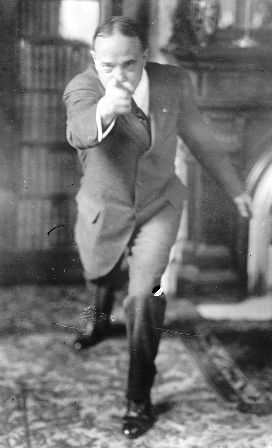
Johnny Mohardt

Johnny Mohardt

Mohardt had never played football before entering Notre Dame and “Inside a week he was a first-string player,” as a result he said:

“It is easy to make football players, but from what I know of baseball it is necessary to have natural ability and also be able to think quickly.  Developing football players is easy.  If a fellow is physically fit the coach will do the rest.

“I have seen Coach Rockne make stars almost overnight at Notre Dame.  Every season brings forth scores of new stars in the football world.  In baseball I understand a new star a year is the exception.”

Mohardt was not the exception; he was 1 for 1 with a walk and 2 runs scored for the Tigers in five games in April, and after he was released hit .185 in 21 games for the Syracuse Stars in the International League—then returned to football.

Mohardt became a physician, served in the military in World War II and died in 1961.

An excellent biography of Mohardt written by Dan Cichalski appears on Gary Joseph Cieradkowski’s Infinite Baseball Card Set blog.

“If Jones Refrains from any more ‘Baby’ Whining”

17 Sep

In June of 1877 the struggling– financially and on the field–Cincinnati Reds disbanded. The defending champion Chicago White Stockings, mired in fifth place in the six-team league, signed Reds second baseman Jimmy Hallinan and outfielder Charley Jones.

Both players had signed with Chicago believing there was no chance that the Cincinnati franchise would be saved. Some stories claim Lewis E. Meacham of The Chicago Tribune, who worked with White Stockings President William Hulbert to organized the National League, got Hallinan drunk and convinced him to sign. There were also non-specific, unsubstantiated rumors of “coercion” being used to secure Jones.

Within days, enough money was raised by the Reds new president J.M. Wayne Neff to continue operation of the club, and Jones made it clear he wasn’t happy to be in Chicago; the Chicago press was not particularly happy with Jones either.

Charley Jones

Charley Jones

When the White Stockings new outfielder failed to join the team before two straight losses in Hartford to the Dark Blues, The Chicago Inter Ocean said:

“(I)f Jones refrains from any more ‘baby’ whining, and shows up like a man and a reputable ball-player there should be no reason why the nine should not win.”

Jones officially became a member of the White Stockings on June 26; an 11-0 win over the St. Louis Brown Stockings; Jones had a single in four at bats. Two days later they beat St. Louis again 6 to 2, Jones was 2 for 4 with two RBIs.

During those three days the Reds were petitioning the National League to return Jones to Cincinnati (they made no effort to reacquire Hallinan), Hulbert refused and the league refused to force the issue. A prominent Cincinnati attorney, Edgar M. Johnson sent a letter to the White Stockings requesting that Jones be released, the letter read in part:

“We, as you probably know, have succeeded in reorganizing the base-ball club here. The task has been a hard one, and even now we find that it will be almost impossible for us to get along without Jones…I ask you, as a favor that our club will always appreciate, that you will honorably release Jones and permit him to rejoin us.”

On June 30 Charley Jones’ two-game career with Chicago came to an end.

The Cincinnati Enquirer announced that an agreement had been reached, Hulbert had agreed to release Jones and, “recognized the fact that (Jones’ contract) had been obtained in an unfair manner.”

The Chicago Tribune saw the situation differently; Hulbert made a, “graceful concession to the evident feeling in Cincinnati,” and by releasing Jones carried out “the idea of doing what he could for the new (Reds) club.”

Chicago papers were quick to point out to their readers that the release of Jones, and the signing of former Philadelphia Athletics outfielder Dave Eggler to take his place, would not hurt the White Stockings:

The Inter Ocean:

“Eggler is generally considered a fine ballplayer, and there are many who think a much better fielder, runner and batter than Jones. Last year his record in all of these important points was far in advance of Jones’.’’

The Tribune:

“There can be no doubt that Eggler will fully fill Jones’ place and the club will certainly lose nothing by the change.”

Dave Eggler

Dave Eggler

Eggler hit .265 in 33 games in Chicago. Jones hit .313 for the Reds.

The White Stockings finished in fifth place with a 26-33 record, the Reds were sixth with a 15-42 record.

Speaking of Charley Jones

Jones (born Benjamin Wesley Rippay) was once, for a short period in the 1880s, baseball’s all-time home run leader. He hit 56 in a 12-year career from 1875 to 1888. He missed 1881-82 after being blacklisted from the National League because of a dispute over money owed to him by Boston Red Stockings owner Arthur Soden, despite his claim being upheld in court.

He returned to major league baseball with the Cincinnati Red Stockings in the American Association in 1883.

Colorful was a word often used in regard to Jones; and probably his most colorful mention in the press came between the 1885 and ’86 seasons. The Cincinnati Star-Times reported on some unrest in the Jones household:

“Charles W. Jones, the well-known base ball player, was accosted by his wife Monday night, while he was making himself agreeable to another woman. Mrs. Jones threw cayenne pepper in her spouse’s eyes causing such intense suffering that he had to be taken to the hospital.”

While there was no report of any lasting effects, Jones’ batting average did drop 52 points; from .322 in 1885 to .270 in 1886.

“A Great deal of foolish Sympathy was wasted on Rusie”

5 Sep

Hank O’Day, pitcher and Hall of Fame umpire, said Amos Rusie was the greatest pitcher ever:

“Amos is the greatest pitcher the country ever saw. Why, Rusie had more speed in his curve ball than any pitcher I ever saw before, or have ever since seen, has in his straight fast ones.  Rusie was a wonder—that’s all there is to it.  I was behind the plate one day when one of Rusie’s  fast incurves hit Hughey Jennings…the ball hit Jennings squarely in the temple, and he fell as though shot by a ball from a Winchester rifle.  I caught him in my arms as he toppled backwards—and he was out of his head for three days.” (Contemporary reports of the incident said Jennings actually finished the game, but later lost consciousness for four days)

O’Day was also on the field when Rusie blew out his arm in 1898; Rusie threw to first to pick-off Chicago Orphans outfielder Bill Lange and “his arm cracked like a pistol’s shot.”  In 1940 Lange told his version of the story to The Portland Oregonian:

“Amos Rusie, I don’t know of any better one and I never played against any other one as good.  He had great control, as well as everything else a pitcher should have.  But my base stealing got him.  He worried over it.  I guess he lost sleep over it.  Anyway, one day he showed up on the field and said he had developed a new way to catch me off of first without turning his body.  I was anxious to see what he had, and he caught me off of first.  But—and it was a mighty large but—in doing so Rusie threw his arm out.  And never could pitch in his old form again.”

Amos Rusie

Amos Rusie

Rusie, with a dead arm, became a benchmark, an oddity, and a cautionary tale.

He posted a 246-173 record before the injury; after sitting out all of 1899 and 1900 he was traded to the Cincinnati Reds for Christy Mathewson, appeared in three games, was 0-1 with an 8.59 ERA, and his career was over.

In the decade between 1898 and 1908 The Sporting Life christened “the next Rusie,” or “another Rusie” no less than 20 times; scores more were given the same title by newspapers across the country.  Most like Cecil Ferguson (career 29-46), Davey Dunkle (17-30), Cowboy Jones (25-34), and Whitey Guese (1-4) were busts.  The three best were Orval Overall (108-71), who was called the “next Rusie” more than anyone else; Ed Reulbach (182-106), and Hall of Famer Ed Walsh (195-126).

During that same decade there were regular, small items in newspapers about Rusie’s post National League life.  Shortly after his release from the Reds in June of 1901 papers reported that Rusie, “who commanded a salary of many thousands of dollars, is now working as day laborer at $1.50 a day.”   The pitcher told a reporter “This shows I am not afraid to work, but it’s an awful comedown in salary.”

The Dallas Morning News pulled no punches in their assessment of his plight:

“The dismal afterclap to the brilliant career of a once-famous ballplayer whose name was a household word in balldom…reckless wastefulness in financial matters and a total disregard for physical care brought Rusie to his present deplorable condition when he should have been in his prime, for the big fellow is barely 30 now.”

In 1903 it was reported that Rusie had joined the Vincennes (IN) Alices in the Kitty League.  While no statistics survive, he appears to have stayed with the team for most of the summer.  The Detroit Free Press said he was “playing for a salary of $75 per month.”

After the 1903 season he went to work in a lumber yard, and the regular reports on his activities as a “low-wage laborer” appeared regularly in newspapers.  The items became such a regular feature that The Associated Press, in a short story about the Philadelphia Athletics’ eccentric and troubled Rube Waddell in 1904 said:

“Rube has run the gamut of foolishness.  He is in his prime but a few more years of such lack of sense as he displayed last season will send him to the wood pile or coal heap and he will, like Amos Rusie, be occupying two inches in the has-been columns every spring.”

There were multiple reports that Rusie was coming back as a pitcher for the 1906 season.  The rumors started in September of 1905 when Rusie attended an exhibition game in Vincennes between the Alices and the Chicago Cubs.  The Philadelphia Inquirer said of the news:

“If you don’t know the tremendous importance of this announcement you are no baseball fan.”

Not everyone agreed that Rusie returning to baseball would be a good thing.  A report from The News Special Service, which appeared in many Midwest papers said:

“His habits were none of the best, and he rapidly deteriorated in efficiency as an athlete.  He refused to pitch one whole season because he had been fined by the New York (Giants) management for being intoxicated and abusing his wife.  A great deal of foolish sympathy was wasted about that time on Rusie, but he was entitled to nothing except what he received, and some who knew the circumstances thought stricter disciplinary methods would not have been amiss.”

Rusie didn’t sign a contract that spring; and two other rumors that John McGraw had sent him a letter inviting him to spring training with the Giants and that he would return to the Kitty League didn’t materialize either.

But Rusie did make the news again in June.  A man named Gabe Watson was collecting mussels in the Wabash River when his boat when his boat overturned.  The Evansville Courier said Rusie pulled the drowning man from the river.

The nearly annual reports of “Rusie’s return” ended after 1906, but Rusie’s many career, and life changes continued as newspaper copy for the next twenty years.

When pearls were discovered in the Wabash River’s mussels, Rusie became a pearl diver.  Two years later he was in Weiser, Idaho, serving a 10-day sentence for public drunkenness.  In 1910 he was in Olney, Illinois working in a glass factory.  The following year he moved to Seattle, Washington.  For the next decade served as an umpire for a couple of Northwestern League games, worked as a ticket taker and groundskeeper at Yesler Way Park and Dugdale Field, home of the Seattle Giants, and also worked as a steam fitter.  Rusie went to jail at least once while in Seattle, and remained a big enough name that when he was injured by a falling pipe in 1913, it made newspapers throughout the country.

In 1921 Rusie became another in the long line of former players hired by the New York Giants at the behest of John McGraw.  According to newspaper reports McGraw offered the former pitcher a “job for life” as a “deputy superintendent” at the Polo Grounds.  Interest in Rusie’s career was renewed, and the pitcher was regularly interviewed for the next couple of years, reminiscing about his career and about how he’d like to have had the opportunity to pitch to Babe Ruth.

Unlike most of the former players who McGraw found work for at the Polo Grounds, Rusie did not stay for the rest of his life; he returned to Auburn, Washington in 1929 and bought a farm, where he remained for the rest of his life.  He was badly injured in a car accident in July of 1934—The Seattle Daily Times said Rusie’s vehicle overturned and he sustained a concussion and broken ribs.

While he received less attention after being incapacitated after the car accident, Rusie was still mentioned frequently in the press until his death in 1942; contrary to oft-repeated fiction that he died in obscurity.  And his obituary appeared in hundreds of papers across the country in December of 1942.  It wasn’t until the post WWII area that Rusie stopped being a household name, which led to his final comeback in the 1970s; Rusie was inducted into the Hall of Fame 34 years after his death.

“Figures of your kind are Pathetic”

13 Aug

John McGraw made news for an “innovation” in 1909.  The Associated Press said:

“McGraw has adopted an innovation in baseball which will appeal to fandom throughout the National league circuit and probably prevent (Fred) Merkle and others from running to the clubhouse before they ‘touch second.’ The innovation is the signing of the once famous player Arlie Latham as coach for the base runners.”

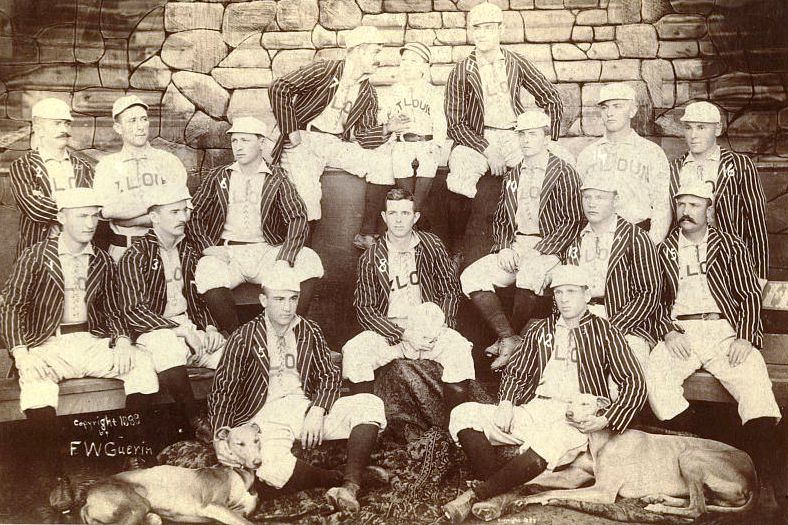
Arlie Latham, top center, facing team mascot, with 1888 American Association champion St. Louis Browns

Arlie Latham, top center, facing team mascot, with 1888 American Association champion St. Louis Browns

Walter Arlington “Arlie” Latham, was “particularly known for his humor” in the 1880s and 90s.  Primarily a third baseman with the St. Louis Browns in the American Association, the Chicago Pirates in the Players League and the Cincinnati Reds in the National League, Latham was nicknamed “The Freshest Man on Earth.”

The Associated Press said Latham:

“(B)rought much enjoyment to spectators of the Cincinnati club’s games and the Reds kept Latham a long while after he deteriorated as a player because of his drawing power as a comedian and humorist.

“Latham will don the uniform of the Giants and take his place in the coacher’s box while the Giants are at bat and between coaching the baserunner and batsmen and ‘getting the goat’ of the opposing pitchers will furnish an interesting sidelight to the New York games.”

Things did not go smoothly when Latham joined the team.  During spring training in Marlin, Texas Latham and McGraw were returning to their rooms at the Arlington Hotel when Giants outfielder James “Cy” Seymour, according to The St. Louis Post Dispatch, “knocked him down, and then bit him on the cheek.”  The article said McGraw and Latham did not know the “reason (Latham) was attacked,” but McGraw announced that Seymour was given his unconditional release.  McGraw said:

“Seymour is done with the New York club, and that goes.  It was the worst thing I ever saw pulled off.  Nothing like that can go on the New York club.”

Despite what he said McGraw did not release Seymour; the outfielder was suspended for the first week of the regular season, and The Dallas Morning News said McGraw made Seymour pay “his own expenses in Texas after the unpleasant episode.”

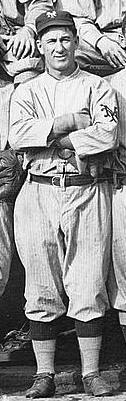
Arlie Latham, New York Giants coach

Arlie Latham, New York Giants coach

Latham was often criticized for his antics and even more often for the quality of his work as a coach, which became such a running joke that The New York Times said after the Giants had beaten the Cardinals in a September 1910 game:

“Arlie Latham’s team won it with their eyes shut, 11 to 3.  Latham’s coaching was invaluable yesterday.  He advised the players to touch every base and this tip won the game for them.”

The Sporting Life said:

“(Latham) undoubtedly lost a lot of games by bad coaching.  He got so unreliable that in a tight pinch McGraw would shift him from third to first and take the third line himself.”

The Sporting Life also said that Latham served as McGraw’s spy;  a position that would later be filled by another colorful McGraw coach, Dick Kinsella.

Giants outfielder Fred Snodgrass told Lawrence Ritter in “The Glory of their Times,” that Latham “was probably the worst third base coach who ever lived.”

It looked like the end of the line for baseball’s first full-time coach after the 1910 season.  The New York Herald said Latham “will not wear a Giant uniform next season,” and:

“He may amuse old timers, who remember him as a great ball player with (Charlie) Comiskey’s St. Louis Browns, but the new generation of fans seems to regard his efforts with disfavor.”

Despite the criticisms and predictions of his impending firing, Latham was back with Giants in 1911.  After the Giants pennant winning season Latham again joined the Giants for spring training in Texas in 1912, but in March, according to The Associated Press:

“(Latham) was carried as one of the twenty-five men permitted on the payroll.  McGraw did not want to let Latham go, but needed the place on the payroll for a real player.”

While McGraw didn’t want to lose his coach, most of baseball thought the end of Latham’s coaching career was a good thing; but even the New York press was not as harsh in their assessment of Latham as was Ed Remley, the baseball writer for The Fort Worth Star-Telegram:

“Arlie Latham has passed.

“May he rest in peace, for he is truly dead…Arlie has been called the fool of baseball and with much justice.  He was not the fool in any modern sense but more like the professional jesters who were kept in the courts of kings in the middle ages.

“Today, reading descriptions of the position of the court jesters, their crude horseplay jokes, we are not filled with laughter but with pity…The crude vassals of a former generation thought the brutal jokes of the court fool were funny; the bleacherites of today laugh at Arlie Latham pretending an engrossing interest in a game which he cannot even play himself…Vale, Latham—You have our sympathy, but we are not really sorry you are gone.  Figures of your kind are pathetic and pathos has nothing to do with baseball.”

Latham was next heard from when he accepted a coaching position with Patrick “Patsy” Flaherty’s Lynn Fighters in the New England League; that job only lasted until June.  Latham managed to run afoul of the entire Lynn team.  The Associated Press said he was forced to resign because “Players thought he was after manager Flaherty’s job and threatened to go on strike unless he was dismissed.”

Latham finished the 1914 season as an umpire in the Massachusetts and Rhode Island based Colonial League.  He did not return the following season, and in May of 1915 The Pittsburgh Press reported under the headline “Arlie Latham Has Quit The Diamond for All Time Now,” that he had found a new line of work; operating a deli in the Washington Heights neighborhood in Manhattan:

“He declares that as a delicatessener he is batting only .106 at present, but that when he gets properly warmed up and learns how to shave 15 ½ ounces of ham for a pound he will hit with the best of them in the delicatessen league.”

By 1917 Latham was in Europe, for the last act of his baseball career.  From 1917 to 1923 he lived in London and organized baseball leagues for military personnel.  The highlight of his stay was the July 4, 1918 game between the Army and Navy teams.  Latham served as umpire and greeted the most important dignitary at the game, King George V.  The Associated Press said:

“It had been planned to have the king throw out the first ball, but this was abandoned because of the netting in front of the royal box, so the king brought the ball out on the field and handed it to the umpire.  One of the balls used was autographed by the king with an American fountain pen and mailed tonight to President Wilson as a souvenir. “

Arlie Latham, front row center, with army team in London, 1918

Arlie Latham, front row center, with army team in London, 1918

After returning to the States, Latham first returned to the deli, then later was hired to work in the press box at the Polo Grounds, he remained a fixture at the New York ballpark until his death at age 92 in 1952.

As a result of outliving his critics and becoming one of the last surviving links to the 19th Century game by the time of his death, memories had faded about the “pathetic” figure of Latham, and only the image as  “baseball’s clown prince” remained.

Things I Learned on the Way to Looking up Other Things #5

8 Aug

Johnny Evers “Ardent Worshipper of Hoodoo Lore”

Edward Lyell Fox was a war correspondent in World War I; after the war he was accused of taking money to write stories favorable to the German government.  Before that he wrote extensively about baseball for several American magazines.

In 1910, writing for “The Columbian Magazine”, Fox interviewed Johnny Evers of the Chicago Cubs about the “almost unbelievable efforts made by ballplayers to offset what they firmly believe to be ‘hoodoos.’”

Evers was one of the most superstitious players in the game, “an ardent worshipper of voodoo lore,” according to Fox, and Evers said the Cubs “are more superstitious than any team in the big leagues,” and that manager Frank Chance “is one of the most ardent respecters of diamond ‘hoodoos.’”

It’s not certain that Evers’ claim that “most players firmly believe in,” the superstitious he listed for Fox, but it’s clear he believed them:

 “If any inning is favorable to a player, he will try to lay his glove down on the same spot where he had placed it the inning before.

“While going to different parks in cars, the sight of a funeral cortege is always regarded as an ill omen.”

Evers also said the sight of a handicapped person was also an “ill omen…unless you toss him a coin.”

On the other hand Evers said a wagon load of empty barrels was a sign of good luck.

Johnny Evers,

Johnny Evers,


“Too much of a Good Thing”

Even in baseball’s infancy that were critics that said the popularity of the game was “too much of a good thing.”

In September of 1865 The Philadelphia Inquirer editorialized:

 “Let us take, for instance, the base ball (sic) pastime, which is now assuming the proportions of a violent and widespread mania.”

The culprit, according to the editorial, was the athletic club teams that were growing in popularity and  no longer “satisfied with a game or two a week.”

 “(S)ome of these associations devote, three, four or five days at a time to their games; that they are not satisfied with playing on their own grounds for their own benefit and amusement, but that they thirst for popular applause, and are rapidly transforming their members into professional athletes…They issue their challenges, and hotly contend for mastery with clubs belonging to other cities.”

 The Inquirer did predict one aspect of baseball’s new popularity:

 “It can be easily seen that this spirit must soon lead on to gambling. So far the only prize of the base ball and cricket matches has been a ball or some implement of the game, but private wagers have undoubtedly been laid upon the playing of certain clubs, and money has changed hands upon results.”

The Enquirer was also concerned that the game defied “common sense” because “during the heats of summer violent bodily exercise should be avoided; but upon this subject common sense and the base ball mania seem to be sadly at variance.”

The editorial concluded that “the young men,” make sure “they do not depreciate themselves to the level of prize fighters or jockeys, who expend their vim on horse races and matches made for money.”

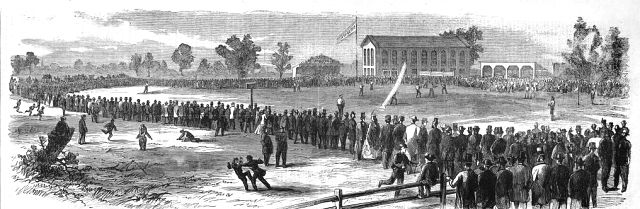
Athletic of Philadelphia versus Atlantic of Brooklyn, in Philadelphia October 30, 1865--"a violent and widespread mania."

Athletic of Philadelphia versus Atlantic of Brooklyn, in Philadelphia October 30, 1865–“a violent and widespread mania.”


Odds, 1896

Early in 1896 The New York Sun reported on “an early development of interest.”  A local bookmaker had issued odds on the 1896 National League race:

“He lays odds of 3 to 1 against Baltimore finishing first; 7 to 2 against Cleveland and Boston;  4 to 1 Philadelphia and New York; 7 to 1 Chicago; 8 to 1 Brooklyn and Pittsburgh; 15 to 1 Cincinnati; 40 to 1 Louisville; 100 to 1 Washington, while (Christian Friedrich “Chris”) von der Ahe’s outfit (St. Louis) is the extreme outsider on the list.  Any lover of the German band can wager any amount and “write his own ticket.”

The final standings:

1. Baltimore Orioles

2. Cleveland Spiders

3. Cincinnati Reds

4. Boston Beaneaters

5. Chicago Colts

6. Pittsburgh Pirates

7. New York Giants

8. Philadelphia Phillies

9. Washington Senators

10. Brooklyn Bridegrooms

11. St. Louis Browns

12.  Louisville Colonels

1896 Orioles, 3 to 1 favorites, won the National League Championship.

1896 Orioles, 3 to 1 favorites, won the National League Championship.

George Chalmers

5 Aug

George “Dut” Chalmers is one of only seven big league players born in Scotland.  He came to New York City as a young child and, according to The Philadelphia Inquirer “his baseball education was begun” with the Bradhurst Field Club which played their games at 145th and Lenox Avenue.  He also played on amateur teams in Hoboken, New Jersey and Red Hook, Brooklyn.

After attending Manhattan College, Chalmers began his professional career in 1909 with the Scranton Miners in the New York State League, managed by Gus ZeimerThe Sporting Life said:

“In George Chalmers, the giant young Manhattan College grad, Zeimer has landed what looks to be the prize-package pitcher of the league.   His work has been sensational.”

There are no complete statistics for 1909, but the following season the 22-year-old Chalmers was 25-6 for Scranton; finishing second in victories to 23-year-old Syracuse Stars pitcher Grover Cleveland “Pete” Alexander who was 29-11.

The Wilkes-Barre Times-Leader said Chalmers:

“Looks like one of the very best in the minor leagues, having a major league head and everything in the pitching line, including fine control and a spitball.”

At the end of the 1910 season the Philadelphia Phillies acquired both of the New York League’s star pitchers; Chalmers was purchased, for either $3000 or $4000, depending on the source, and Alexander was obtained through the Rule 5 Draft.

Both rookies made the club after spring training in Birmingham, Alabama.  Six years later The Philadelphia Evening Public Ledger said of Chalmers’ first days with the 1911 Phillies:

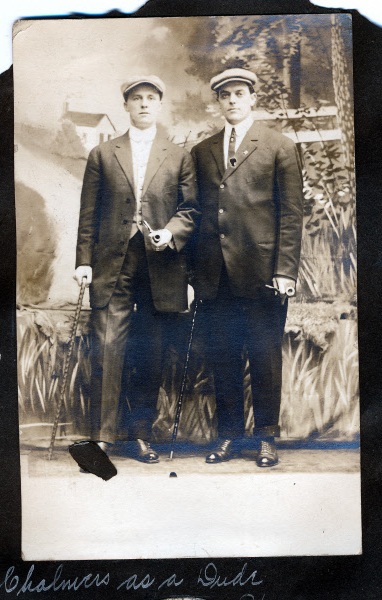
“Chalmers came with an elaborate trousseau, together with lots of pinch neckwear and considerable toggery that aroused the brunette population of Birmingham to deep, empurpled envy. “

chalmersasadude

George Chalmers, left, with teammate Alonzo Earl “Crossfire” Moore Displaying the style “that aroused the brunette population of Birmingham to deep, empurpled envy. “
Caption reads “Chalmers as a Dude.”  Photo from Chalmers’ personal scrapbook.

In addition to his fashion sense, Chalmers also impressed the Phillies with his pitching ability.

While Alexander got off to a great start, Chalmers started slow, but after back-to-back victories in July, Phillies manager and catcher Charles “Red” Dooin told The Philadelphia Times:

“That youngster is a great twirler.  You know they told me up in the New York League that Chalmers was a better pitcher than Alexander.

“Of course this is impossible because I think that ‘Alex’ is the greatest pitcher that ever drew breath, but I am going to say there’s not a club in either league which could beat the ball Chalmers has pitched for the last two weeks.

“I think I have another Alexander in Chalmers and if he don’t make good prediction I will say that he lacks the nerve and nothing else.  Chalmers has more stuff than Matty (Christy Mathewson) had.  He needs the experience and knowledge of batsmen, but aside from that he is the best young twirler I have ever seen excepting Alex.”

A syndicated story from The American Press Association said Chalmers had given up other sports for baseball:

“George Chalmers, one of the pitching sensations of the Philadelphia National League team, is a motorcycle rider as well as a box artist.  Before he joined the Phillies Chalmers occasionally picked up a little spare change acting as a pacemaker for Elmer Collins, the bicycle rider.  Chalmers has paced Collins several times in the latter’s races against Bobby Walthour.  Chalmers, however, doesn’t intend riding any more.  He fears a spill that might injure his arm and affect his pitching.

“Chalmers at one time had an ambition to become an automobile race driver.  He gave up this notion when he got his chance to join Philadelphia.  The big right-hand pitcher is not sorry that he sidetracked that ambition, for his pitching now is yielding him a healthy income.”

While he was overshadowed by Alexander, who was 28-13 with a 2.57 ERA, Chalmers had a respectable rookie season posting a 13-10 record with a 3.11 ERA.

In September it was announced that the Phillies would travel to Cuba for a 12-game series with the Almendares and Havana teams in November.  As the October 31 departure date drew near it became clear that, for a variety of reasons, many of the Phillies would not be making the trip.  Most notably Alexander, locked in a contract dispute, and Dooin would remain at home.

Besides Chalmers, the players who made the trip were:

Wallace “Toots” Shultz P

Eddie Stack P

Bill Killefer C

Fred Luderus 1B

Otto Knabe 2B

Hans Lobert 3B/MGR

Jimmy Walsh SS

Sherry Magee OF

Mike Mitchell OF (Borrowed from Cincinnati Reds)

Dick Cotter OF

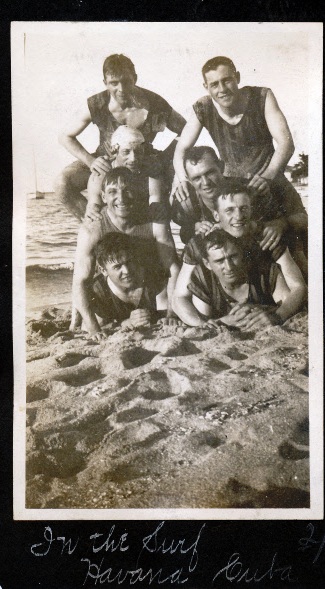
Chalmers and his Phillies teammates on the beach in Havana, Cuba

Chalmers and his Phillies teammates.  Caption reads “In the surf Havana Cuba”
Photo from Chalmers’ personal scrapbook.

The first game of the series, reduced from 12 to nine games because of the Phillies’ limited roster, took place on November 5.  Chalmers faced Almendares and Cuban legend Jose Mendez; the Phillies lost 3-1.  It is likely Chalmers hurt his arm during the series; he did not start another game, and Schultz picked up the slack, pitching six games, he was credited with the victory in the five games the Phillies won.

Upon returning to Key West the last week of November, Chalmers was briefly detained by authorities. The Philadelphia Times said the ship’s manifest listed Chalmers as American, but:

“On arrival in the states when he had to sign a long paper of identification, he told the officials that he was Scotch and never naturalized…Chalmers was reprimanded and the ship company was fined for carelessness”

Heading into the 1912 season The Philadelphia Times, and the second year pitcher, had high hopes:

“Chalmers is young and has every confidence in himself.  He is big and strong and is a perfect running mate for Alexander the Great.”

But the George Chalmers who returned from Cuba would never be the same pitcher.

More tomorrow.

Special thanks to Karen Weiss, George Chalmers’ great niece, for generously providing copies of photos from Mr. Chalmers’ scrapbook.

Thanks to Mark Fimoff co-chair SABR Pictorial History Committee for identifying Earl Moore in the first picture and correcting my incorrect, original caption placing Chalmers on the right–the information has been corrected in the caption.  October 18, 2013

Lost Advertisements–Old Underoof Whiskey, Cubs and White Sox

2 Aug

OO62010


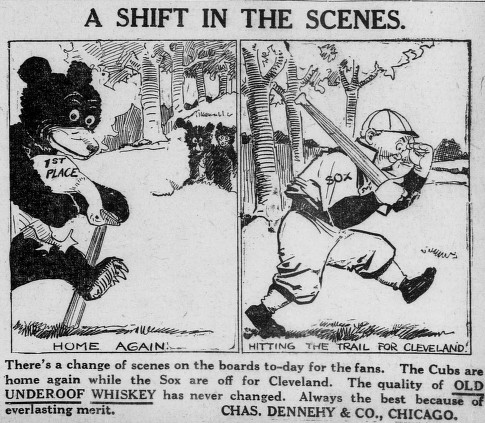
Two more 1910 advertisements for Old Underoof Whiskey featuring the Chicago Cubs and White Sox; these appeared in The Chicago Daily News and The Chicago Examiner.

The one above “A Shift in the Scenes” is from June 20, 1910.  The Cubs were returning home after a 10-4 road trip which put them 4 ½ games ahead of the second place New York Giants, while the struggling, seventh place White Sox were heading to Cleveland for a six game series.

The one below “It’s a Rocky Road to Pennantville” appeared just 10 days later.  The Cubs, who had won four straight games after the first ad appeared, just lost five of seven to the Pittsburgh Pirates, St. Louis Cardinals and Cincinnati Reds, cutting their lead over the Giants to a game and a half.

The White Sox would continue to struggle; they finished the season 68-85.  The Cubs would run away with the pennant, beating the Giants by 13 games.

OO63010