Tag Archives: Federal League

“This Wealth of Mr. Gertenrich has cost the Game an A-1 Player”

7 Jul

Sportswriter William A. Phelon said Louis Wilhelm “Lou” Gertenrich “is not a ball player because he has to be, but because he wants to be.”

The son of a successful candy maker, Gertenrich was rumored to be one of Chicago’s wealthiest young men.  He was also an excellent ballplayer and sprinter, but spent a great deal of time focused on business rather than sports.  Phelon said:

“Gertenrich hasn’t played ball, even when he desired to play the game, because his business interests would not allow him the leisure time.  In other words, Mr. Gertenrich, being a man of income and financial substance, cannot dally with the ball and bat as he would like, and this wealth of Mr. Gertenrich has cost the game an A-1 player.”

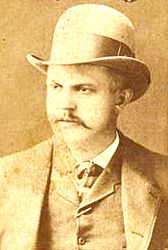
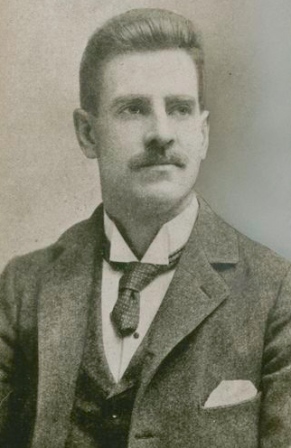
Lou Gertenrich
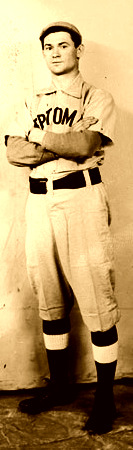
Lou Gertenrich

He began to be noticed as a ballplayer in 1891 as a 16-year-old pitcher with a team called the American Boys (later called the Mystics), the following year he joined the Clybourn Juniors.

At 19, in 1894 he joined Chicago’s City League, first with the Brands and then the Garden Cities, pitching and playing shortstop and outfield.  As local clubs found they could do better as independents than as members of a league the City League went from an eight, to six to finally a four-team league before disbanding at the close of the 1895 season.

Gertenrich remained a popular figure in semi-professional circles in Chicago, playing primarily for the Maroons and the Auburn Parks.

In 1898 The Sporting Life said Hank O’Day thought Gertenrich “is a sure comer.”

On September 15, 1901 the last place Milwaukee Brewers were in Chicago for a doubleheader, the final two home games for the first place White Sox.  Brewers Outfielder/Manager Hugh Duffy, and another outfielder, Irv Waldron, were injured.  As a result, The Chicago Daily News said:

“Manager Duffy gave Louis Gertenrich, a city league star, a trial.”

Starting the first game in right field, Gertenrich singled in his first big league at bat and scored a run on a home run hit by another player making his debut; Leftfielder Davy Jones.  Gertenrich was 1 for 2 before being removed in the fifth inning of a 5 to 4 loss.

In the second game he pinch hit for pitcher Ned Garvin and grounded out in the bottom of the ninth of a 9 to 4 loss to Chicago.

Gertenrich returned to the Auburn Parks with a .333 major league batting average.

He got a big league call again in 1903.  On July 21 the first place Pittsburgh Pirates were in Chicago to playing the Cubs.  Pirates Manager Fred Clarke, who was injured, had allowed outfielder Jimmy Sebring three days off to return to Williamsport, Pennsylvania for his wedding.

Gertenrich was brought in to play right field; he went 0 for 3 with a sacrifice bunt and handled two fly balls.  He returned to the Auburn Parks’ lineup the following day.

He spent most of the next decade playing in the re-formed Chicago City League—spending time with the Logan Squares, Gunthers, the Roger Parks, the West Ends, the Riverviews and Anson’s Colts.  He also coached baseball  at the Morgan Park Academy on Chicago’s South Side.

The Daily News said:

“Gertenrich is recognized as one of the heaviest hitters in local semi-pro ranks, and there is no batter more feared by the pitchers than this speedy fielder.”
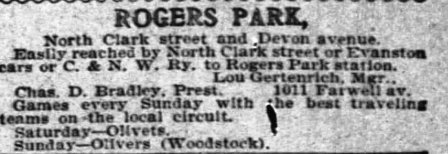
1906 advertisement for the Rogers Parks, when Gertenrich played for and managed the team

1906 advertisement for the Rogers Parks, when Gertenrich played for and managed the team

William A. Phelon wrote for The Chicago Journal when Gertenrich left Chicago briefly in 1905, at age 30,  to join the Springfield Babes in the Central League and the Decatur Commodores in the Three-I League.  Phelon told a story about Gertenrich’s stay in Springfield:

“Mr. Gertenrich was able to arrange his affairs for a lay-off of three months (in order to play for Springfield, and) the rich man negotiated with (Manager Jack) Hendricks for a position…The very next afternoon beheld Mr. Gertenrich, free from business care and happy as a proverbial lark, capering in the Springfield pasture and slamming that old ball like seven Cobbs and a Lajoie thrown in for luck.

“On his first day out he got three singles.  Next day he amassed two triples and a double.  The third day he whacked a home run and a single.  On his fourth day he drew three passes and connected for a triple.  On the morning of the fifth day Mr. Hendricks summoned him to headquarters.

“’Mr. Gertenrich,’ said Mr. Hendricks, pausing to wipe away a tear ‘you are a great batsman and a good fellow.  You are setting this league afire.  You are the wonder of the Twentieth Century.  But you are breaking the hearts of my younger players.  They cannot bat like you.  They are losing their ambition.  A few more games with you among them and they will pine away and die…Moreover Mr. Gertenrich, you have money.  You do not need this job.  The boys whom you are shoving into obscurity have little families and need the coin.  I hate to say it Mr. Gertenrich,’—and the manager again wiped away a tear—‘but you and I must part.  Here is your release.  Goodbye, Mr. Gertenrich, and good luck be with you.  Please go away, for I weep every time I look at you.”

Gertenrich also appeared in several games for Decatur after his release from the Springfield Babes, against Springfield’s other team, the Senators, and the Peoria Distillers.

For the next four seasons, Gertenrich remained one of Chicago’s best local athletes.  At 33-years-old in 1908 he was still a good enough runner to win the City League Field Day title of fastest player; The Daily News said he rounded the bases in 14 and 1/5 seconds.

The Chicago Eagle called him:

“(O)ne of the best known and most popular players in Chicago.”

In 1909 he hit .318 (5th in the league) and The Sporting Life said the Brooklyn Superbas were trying to sign Gertenrich and made an offer “which he has taken under consideration.”  The deal was never completed.

Gertenrich hit .350 in 1910 (3rd in the league), playing for Rogers Park.

In 1912 he returned to professional baseball as a member of the Chicago Green Sox in the United States League.  William C. “Billy” Niesen, a long-time City League operator had initially been one of the organizers of another proposed outlaw organizations, the Colombian League, but when then venture failed, and after one of the proposed New York team dropped out of the United States League in late March Niesen was awarded a Chicago franchise; Niesen was a good fit for the fledgling league because already had a ballpark on the North Side of Chicago at the corner of Clark Street and Leland Avenue–called Gunther Park, also referred to frequently in the Chicago press as Niesen’s Park.

The Sporting Life said “Base ball men are still betting that the new league doesn’t open the season,” but Niesen had high hopes.  He hired Burt Keeley, a long-time City League figure who had pitched in 30 games for the Washington Senators in 1908 and 1909.

He also signed Gertenrich, who had played for Niesen’s Gunthers in the City League the year before, and according to The Chicago Examiner had hit a home run off of Bill Lindsay of the Chicago American Giants that was “the longest hit ever seen at Niesen’s Park.”
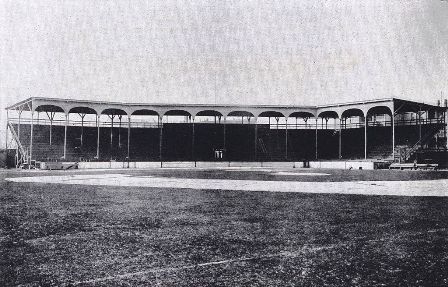
gunther

Gunther Park, where The Examiner said Gertenrich was responsible for “the longest hit ever seen at Niesen’s Park.”

An ambitious 126-game schedule was announced, but the upstart league was under-capitalized and low attendance doomed it to failure.  The league folded after just more than a month of play.  The Green Sox were 10-12.  Gertenrich returned to the candy business and semi-pro ball.

On March 8 of 1913 the Federal League rose out of the ashes of the United States League and was incorporated in Indianapolis.  Keeley was named manager, and many of the same players, including Gertenrich, who played for the Green Sox signed with the new club.

The Chicago Inter Ocean said:

“Gertenrich will be the mainstay of the outfield and is a heavy hitter.  He has made final arrangements for joining the club by procuring a competent manager for his candy business.  He will devote his time to the interests of the club.”

The team won their opener on May 6 against the St. Louis Terriers, and got off to a 7-1 start.  Chicago led the league until the middle of June when they were overtaken by Indianapolis.  They faded quickly after that; at the same time the team’s front office was in chaos, the team’s president was removed  and a new set of directors were elected in July.

On August 16 The Chicago Tribune said the team, hopelessly out of the pennant race, ten games behind Indianapolis, released Gertenrich “on the ground of cutting down expenses.”

Individual records are scare, but the 38-year-old Gertenrich was called “one of the classiest outfielders” in the league by The Associated Press.  In March of 1914 The Daily News said Gertenrich “was batting .413” at the time of his release, but had not received an offer from one the Federal League teams for 1914.

While Gertenrich relinquished some of the responsibilities of his company during 1912 and 1913 he had time to receive two United States patents for inventions for his candy company, including one described as a “corn confection” called the “Ball Tosser.”

Gertenrich was finished with professional baseball after his release in 1913, but continued playing semi-pro ball for several teams in and near Chicago, and formed a team called the Gertenrich Stars which played in Chicago through 1917.

He was a regular sponsor and attendee of alumni events for semi-pro and professional ballplayers in Chicago and played on the German Club of Chicago’s baseball team until his death from a cerebral hemorrhage in 1933.

As a candy maker he had one more connection with professional baseball.  An advertisement for his company appears on the back of a baseball card set.  The 120 card set–the more common version advertises American Caramel on the back (E121)—was issued in 1922.  The Gertenrich variations are extremely rare.
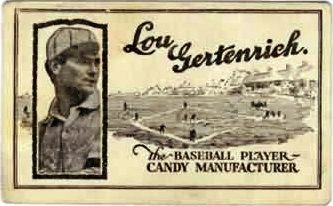
The Gertenrich back variation of an E-121

The Gertenrich back variation of an E-121 card
“There is a Constant fear that Someday the Men will Decline to go on the field.”

31 Mar

The St. Louis Maroons were a big league franchise for just three seasons.  After winning the inaugural (and only) Union Association championship in 1884, the team was absorbed into the National League and was a dismal 36-72 in 1885, and 43-79 in 1886.

The club disbanded after the ’86 season and throughout the winter there was speculation about whether the franchise would end up in Kansas City (where local businessmen were looking to replace the Cowboys, who also went broke after the ’86 season) and Indianapolis.

The deal was finalized on March 8 when the franchise and nine players were sold to Indianapolis.  The Indianapolis News announced on the front page:

The Base Ball Deal

It Is Finally Completed

The story said:

“There is general rejoicing about the city over the certainty of having a league baseball club here.”

The team would be called the Hoosiers, and play at the Seventh Street Grounds, a ballpark owned by local businessman John Tomlinson Brush.

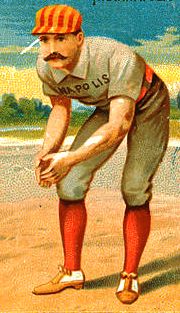
John T. Brush

John T. Brush

Brush was the driving financial force behind the deal and had been involved in local baseball in Indianapolis for several years, first having financed and organized a local amateur league in the city in order to promote his business—the When Store, and later the When Clothing Company—he was also an investor in the short-lived 1884 incarnation of the Hoosiers who struggled through one twelfth-place (29-78) season in the American Association.

The Hoosiers first year was unsuccessful and chaotic.

The first manager was George Walter “Watch” Burnham, who had been a National League umpire for 41 games in 1883 and one in 1886.  His role in the effort to acquire the franchise, his selection as manager, and the manner in which he acquired his nickname, gave some pause about the seriousness of the Indianapolis operation.

"Watch" Burnham

“Watch” Burnham

The Chicago Tribune said:

“The promoter of the Indianapolis movement is George W. Burnham, known as “Watch” Burnham.  At Cleveland, in 1883, while acting as a league umpire, he endeavored to establish himself in the public esteem by buying a watch, having ‘Presented to George W. Burnham by his friend and admirers’ inscribed on it, then having it sent out to him on the field during the progress of the game.  It is not surprising that some of the league people are suspicious of the Hoosier effort.”

Brush was not the team’s original president, that duty fell to a local attorney named Louis Newberger who spent his entire two-month tenure in the position complaining that he had no time to run the team; Brush took over as president in late May.

The Hoosiers limped to a 6-22 start—no doubt aided by 22 straight road games from May 5 through May 30.  Burnham resigned once, just five games into the season, but returned a few days later.  By mid May, as the team struggled through their endless road trip, The Chicago Tribune said a mutiny was expected:

“The dissatisfaction on the part of the players with Burnham, the manager, amounts almost to insubordination and there is a constant fear that someday the men will decline to go on the field.”

The Tribune said Burnham had fined “the entire team,” and Captain Jack Glasscock “said he would be black-listed before he would play again under the management of Burnham, but was finally prevailed upon to do so.”

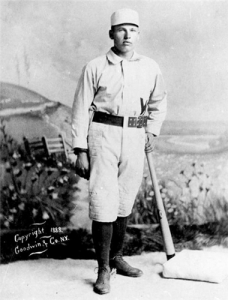
Jack Glasscock

Jack Glasscock

Upon the team’s return to Indianapolis Burnham was replaced with team secretary Fred Thomas.  Thomas, like Burnham, had no professional experience as a player or manager, and his tenure was not much more successful.  The club lost 18 of 29 games with him at the helm.

The team’s third manager also had no previous professional experience.  Horace Fogel was a sportswriter for The Philadelphia Press when he was tapped to be the third manager.  The Indianapolis News said hopefully:

“Mr. Horace Fogel, the new manager, is a good-looking young man, and makes a favorable impression on a stranger.  He is evidently very anxious to make the club a winner.”

The same July day The News opined on Fogel the paper also noted that maintenance of the ballpark had also angered some fans:

“Very unwisely the management had the chairs in the gallery varnished recently and yesterday several ladies had their dresses ruined.”

Things were no better under Fogel.  The Hoosiers went 20-49 under their third manager, and finished their inaugural season in eighth place with a 37-89 record.

The News said:

“Staring out under unfavorable circumstances…with inefficient management throughout the season, and many more defeats than victories, the club nevertheless, was accorded a generous support.”

The 1888 season became a matter of civic pride for the team’s ownership, local businesses and the newspaper.

In January it was announced that the Hoosiers would have a manager with at least some experience.  Harrison “Harry” Spence had played and managed in, among others, the Eastern, Northwestern and New England Leagues.  The News said of the new manager:

“A number of ball players of various clubs, who know Harry Spence…speak very highly of him.  Sam Thompson says he is a thorough gentleman, well liked by the players, and a fine manager.”

The News said the success of the Hoosiers was necessary for the future Indianapolis:

“Business and professional men are all interested in it, for, aside from the pleasure they derive from witnessing the games, they recognize the fact that the club is of great benefit in advertising the enterprise and prosperity of the city.”

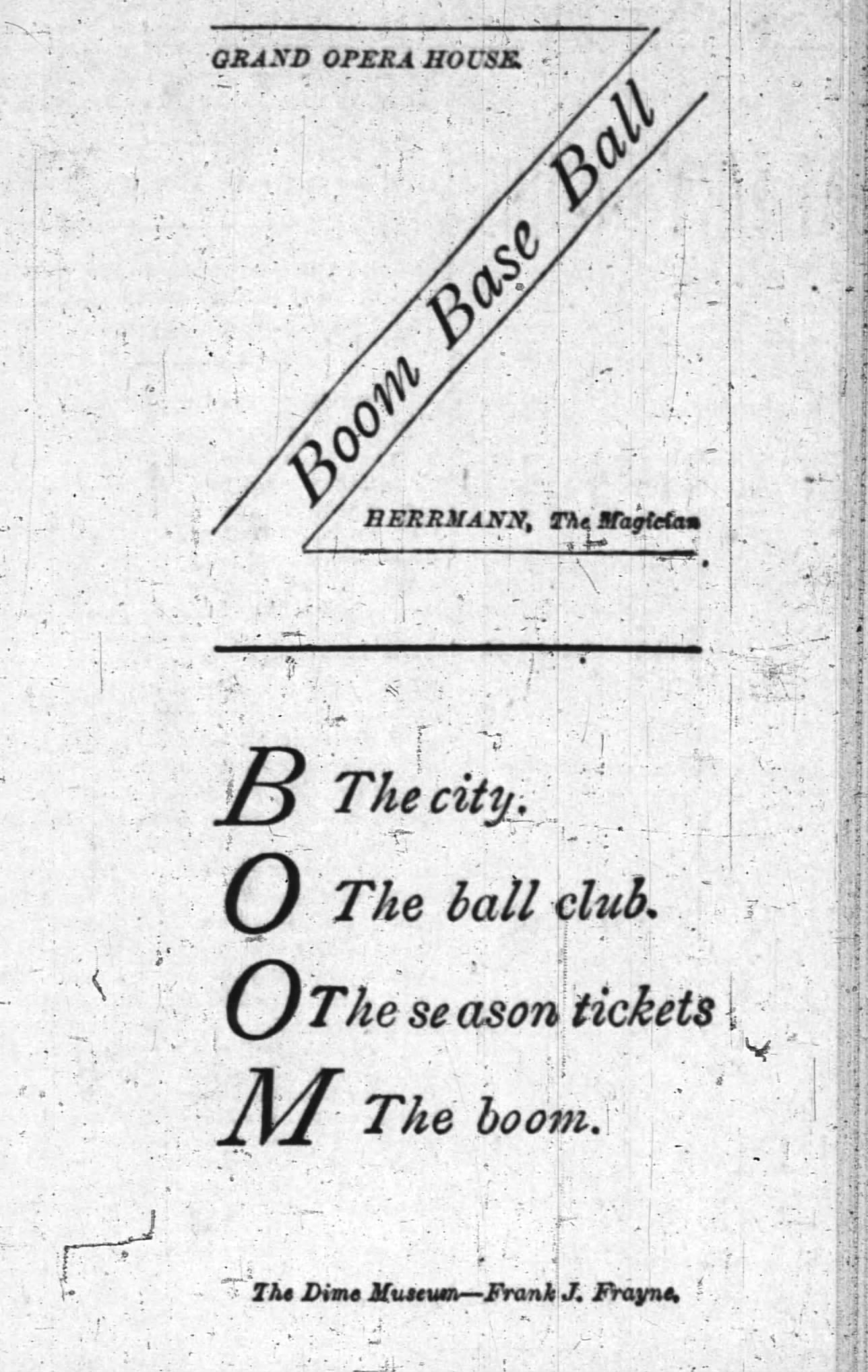
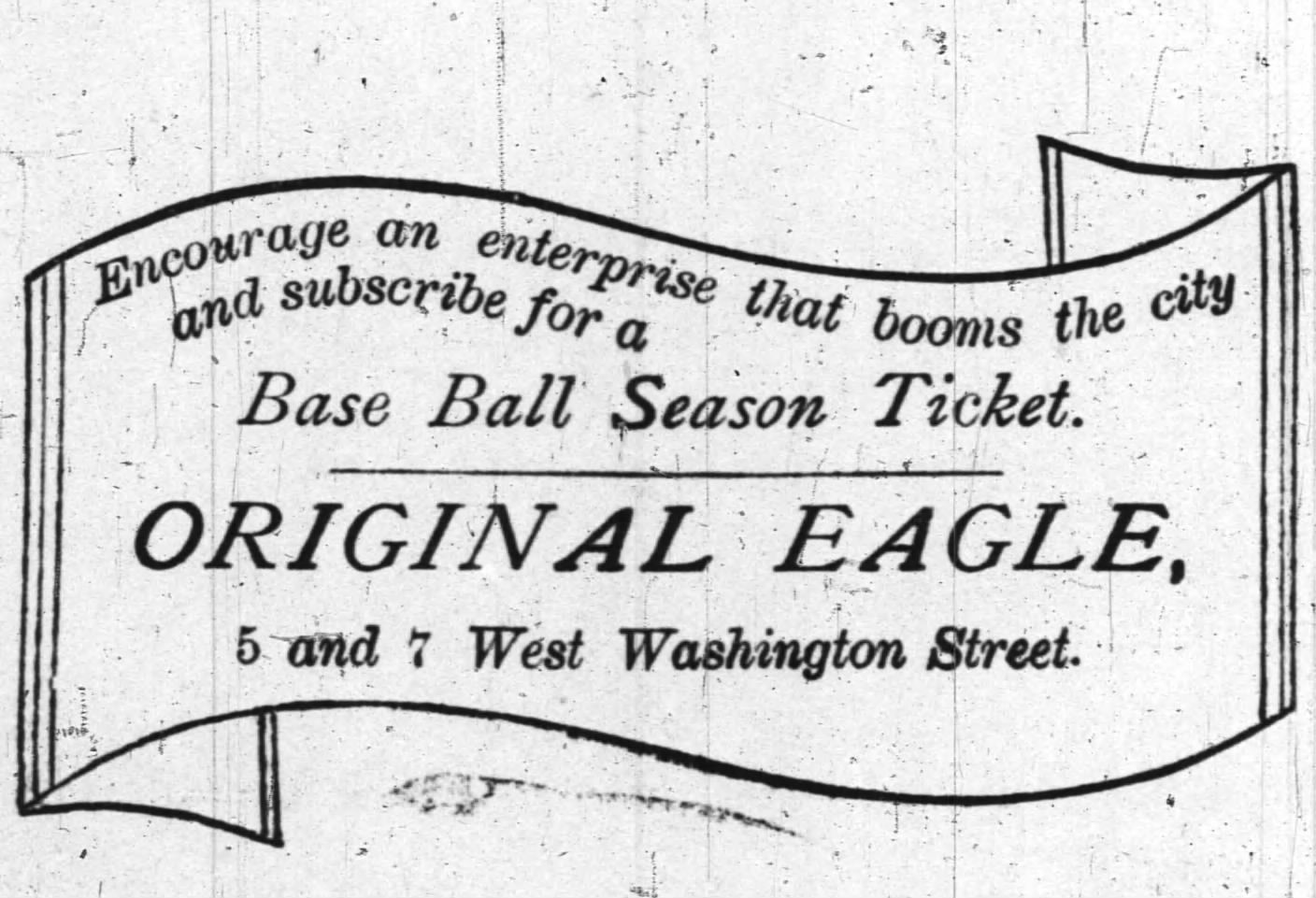
The paper organized a campaign called “Boom for Baseball.”  Sixty-eight local businessmen “representing the leading establishments in the city,” donated their advertising space back to the newspaper “for the purpose of setting forth the advantages that will accrue to the city, from the maintenance of a National League Baseball Club here.”

Brush told the paper:

“We want at least five hundred subscribers for season tickets, and with this as a guarantee, we can get the money we want.  If any such player as (Fred) Pfeffer or (Larry) Twitchell can be bought we can and will buy him, and we can get the club in first-class shape for opening the season.”

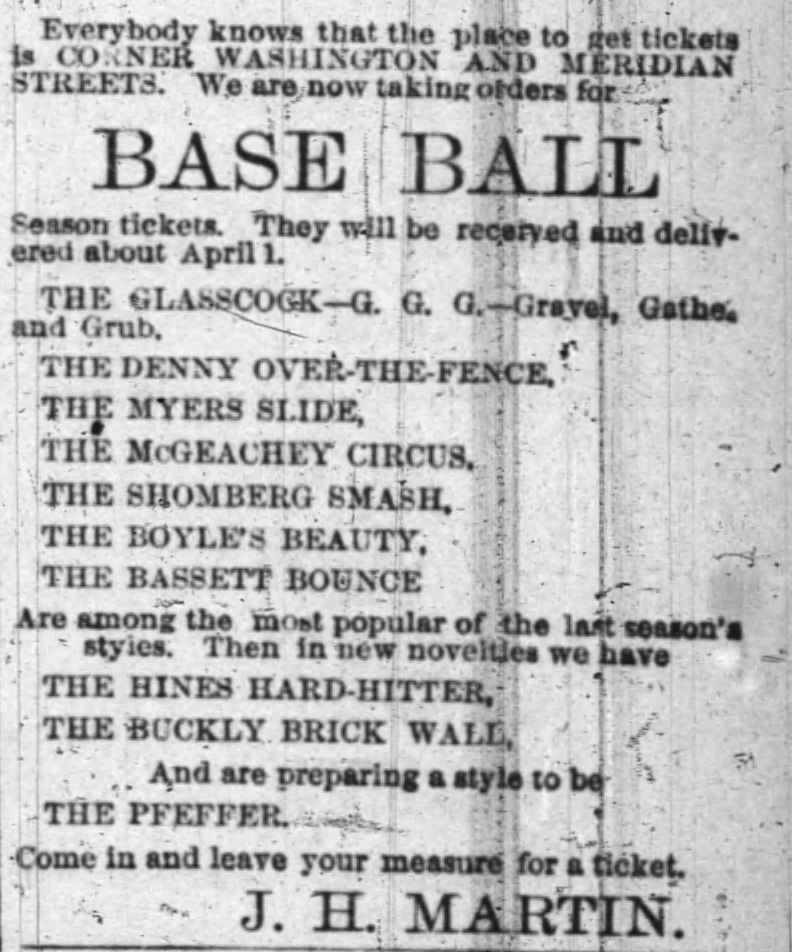
Season tickets were sold for $25 each, and Brush said “We will have a grandstand that will be a beauty, with all the latest improvements, so that there will not be one uncomfortable seat in it.  Then we will have a space set aside for carriages and a special department for ladies and their escorts.”

88indy4 88indy2

Some of the advertisements from Indianapolis' "Baseball Boom"  campaign

Some of the advertisements from The Indianapolis’ News’ “Baseball Boom” campaign

Most importantly, Brush assured the people of Indianapolis that they “would have a ballclub here that nobody would be ashamed of.”

He was wrong.

While not as bad as 1887, the Hoosiers got off to a 2-11 start, and struggled to a 50-85 seventh place finish, 36 games behind the champion New York Giants.

By 1889 Indianapolis had all but given up.  The team nearly went under before the season started.  In January a headline in The News said:

The Ball Club Gone

With debts of more than $5,000, the paper said Brush would “surrender the franchise” to the league.  Brush was able to raise enough capital to keep the club operating for one more sub .500 season (59-75), and another seventh place finish.  The only highlights for Indianapolis in 1889 was the arrival of 18-year-old Indiana native Amos Rusie, who posted a 12-10 record, and Jack Glasscock who hit .352, for the Hoosiers.

The team was dropped after the 1889 season, but not because of money.  The National League bought out Brush’s Hoosiers and the Washington Nationals.  Brush received a reported $67,000 for the team, he also received stock in the New York Giants as payment for former Hoosier players.  One year earlier when The News reported that Brush was on the verge of losing the team, the paper claimed “the franchise is now worth $15,500 cash.”  While that figure might have been low there was no doubt that Brush did well on the deal.  A year later he was president and majority stock holder of the Cincinnati Reds.

Indianapolis would only be a major league city one more time; in 1914 the Hoosiers were champions of the Federal League, but were relocated the following season, becoming the Newark Peppers.

Things I Learned on the Way to Looking up other Things #6

12 Mar

Umpiring “Revolutionized”

The Chicago Inter Ocean reported that an “innovation in baseball” would be introduced during the second game of a September 9 double header at Chicago’s South Side Park between the White Sox and the Boston Americans.

“The astonishing feat, an apparent impossibility, will be accomplished by the use of colors, and the inventor, George W. Hancock, expects the umpiring business to be almost revolutionized.”

hancock

George W. Hancock

Hancock was the inventor of indoor baseball in 1887; the game that evolved into softball.

“(Umpire) Jack Sheridan will wear a red sleeve on his right arm and a white one on his left claw.  For a strike he will wave the right arm, and for a ball the left one and the flash of the colors can be seen by people seated so far away that the voice even of Sheridan, the human bullfrog, would be inaudible.”

The “innovation” would likely have benefited one player, the popular center fielder of the White Sox, William Ellsworth “Dummy” Hoy, who was deaf.  But no mention was made of Hoy in the description of Hancock’s plan.

Hoy

Hoy

The “astonishing feat” turned out to be so insignificant that The Inter Ocean failed to even mention it in the summary of the double-header which the Sox swept.  Hoy did not appear in either game.  George W. Hancock’s plan was never mentioned again.

Luminous Ball

Another innovation that promised to revolutionize the game that never came to be was the luminous ball.  The Reading Times reported on the process in 1885:

“Charles Shelton, the leading druggist of Bridgeport, has discovered a compound which, when applied to a baseball, renders that object luminous.  One of the drawbacks of playing baseball at night under the electric light is the inability to see the ball when thrown or batted into the air with the black night background of sky behind it.  By saturating it with Mr. Shelton’s compound the ball while in motion is luminous.  At rest it does not retain any light.  The illuminating ball retains its meteoric irritation for 45 minutes.”

There is no record of Mr. Shelton’s invention ever being used in a professional game.

What’s a Dog Worth?

As part of the Federal League’s antitrust lawsuit against the American and National League’s affidavits were submitted from players detailing how organized baseball controlled the destiny and salary of player.  Mordecai “Three Finger” Brown, who jumped from the Cincinnati Reds to sign with the Federal League’s St. Louis Terriers, swore in his filing that players, on at least two occasions, had been traded for dogs.

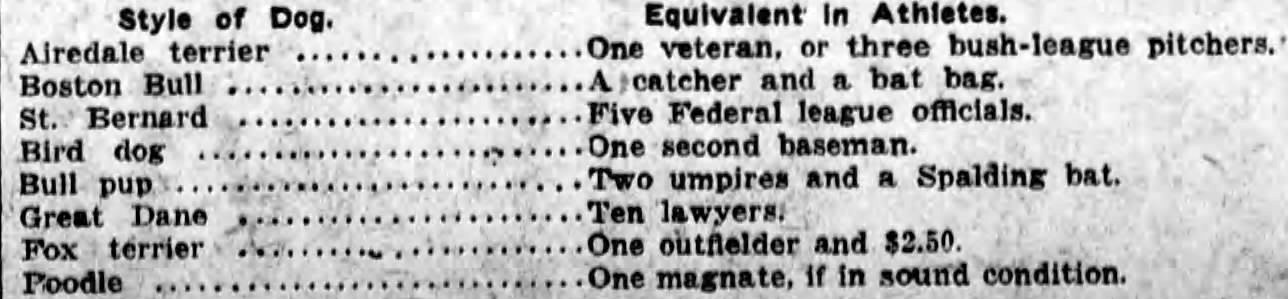
William A. Phelon, of The Cincinnati Times-Star and “Baseball Magazine,” said:

“This thing of trading dogs for ball players—as outlined in the Federal affidavits—should be put upon a sane and sensible basis.”

Phelon provided a “definite standard and a set of unit values” for baseball to follow:

phelondogs

McMullin’s Long Route to the Plate

Before Fred McMullin became the least famous of the eight members of 1919 Chicago White Sox who were banned from organized ball for life, he was a popular player on the West Coast.

Fred McMullin

Fred McMullin

The (Portland) Oregonian told a story that was purported to have taken place when McMullin was a member of the Tacoma Tigers in the Northwestern League in a game with the Seattle Giants:

“He came in from third on a dead run and made a slide for the plate.  McMullin knew he didn’t touch it, but he was afraid to slide back, as the catcher had the ball in his hand.  The umpire also knew he didn’t score, but he said nothing, for that was none of his business.

“Fred dusted off his uniform and stalked nonchalantly to the bench.  A couple of Seattle players yelled for a decision.

“‘He wasn’t safe, was he?’ demanded (Walt) Cadman, who was catching for Seattle.

“The umpire shook his head no.  At that Cadman, holding the ball in his hand, dashed over to the Tacoma bench to tag McMullin.  Fred waited until he almost reached him and then slid to the other end of the bench.

“Cadman followed him, and as he did s slipped in some mud and fell to his knees.  McMullin leaped up from the bench, dashed for the plate and touched it.  The umpire called him safe.”


Irwin Howe

3 Feb

irwinhowebb


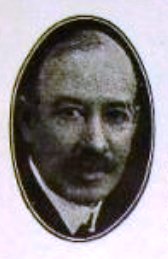
Irwin M. Howe founded Howe News Service in Chicago in 1910, published an annual record book and served as the primary statistician for several minor leagues, including the Western and the Three-I leagues.

After the 1911 season American League Secretary Robert McRoy, who was responsible for compiling statistics, left the league office to become an executive with the Boston Red Sox.  President Ban Johnson named Howe the league’s statistician; he served in that capacity until his death in 1934.

Irwin Howe

Irwin Howe

Howe leveraged his position with the American League.  He became the official statistician of several more leagues, including the American Association and the Federal League, wrote a nationally syndicated column called “Pennant Winning Plays,” became editor of the annual “Wilson Baseball Record and Rule Book,” and published an instructional pamphlet for kids.

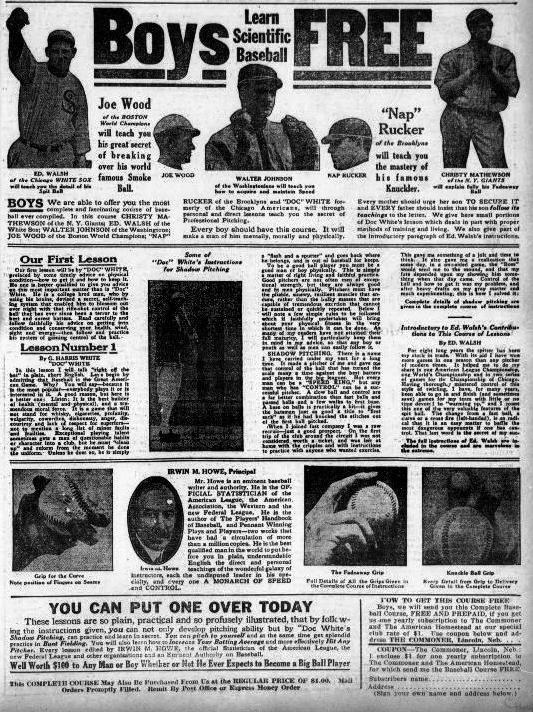
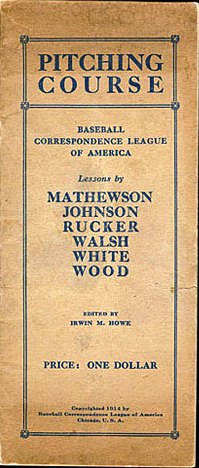
The ad from 1914 pictured above is for Howe’s 48-page “Pitching Course,” which he called “A correspondence school for baseball.” The pamphlets sold for one dollar, but were also offered by many small newspapers across the country for free to children who signed up subscribers (the pictured ad is from The Commoner, the Lincoln, Nebraska newspaper published by William Jennings Bryan).

Boys Learn Scientific Baseball Free

Ed Walsh of the Chicago White Sox will teach you the detail of his Spit Ball

Joe Wood of the Boston World Champions (1912) will teach you his great secret of breaking over his world famous Smoke Ball

Walter Johnson of the Washingtonians will teach you how to acquire and maintain speed

“Nap” Rucker of the Brooklyns will teach you the mastery of his famous knuckler

Christy Mathewson of the N.Y. Giants will explain fully his Fadeawy Ball

These lessons are so plain, practical and so profusely illustrated, that by following the instructions given, you can not only develop pitching ability…You will also learn to Increase Your Batting Average and more effectively Hit Any Pitcher.  Every lesson edited by Irwin M. Howe, the official statistician of the American League, the new Federal League and there organizations and an Eminent Authority on Baseball.

The pamphlet also included a lesson from Guy Harris “Doc” White of the Chicago White Sox “which deals in part with proper methods of training and living.”

Howe claimed his one dollar pamphlet was “Well worth $100 to any man or boy whether or not he ever expects to become a big ball player.”

Howe's pamphlet

Howe’s pamphlet

Perhaps Howe’s most famous contribution to baseball was certifying Ty Cobb as a .400 hitter in 1922.

On a rainy day in New York (years later in his book “Baseball as I Have Known It,” Fred Lieb said the game took place in August—contemporary newspaper accounts say it was May 15), Cobb beat out a ground ball hit to Yankee shortstop Everett Scott.  John Kieran of The New York Tribune (he was later a columnist with The New York Times) was the official scorer.  He charged Scott with an error.

Fred Lieb of The New York Telegram, who was compiling The Associated Press (AP) box score for the game, credited Cobb with a hit.  Lieb said “Considering the soggy field and Cobb’s speed, I gave it a hit.”

Fred Lieb

Fred Lieb

Howe’s habit was to rely upon The AP box score that appeared in the Chicago newspapers while awaiting the arrival of the “official” box score by mail.

When compiling the final averages at the end of the season Howe chose to accept Lieb’s scoring of the game rather than Kieran’s, and released a statement with the season’s final statistics:

 “I noted that the averages reached from my official scoring sheets had Cobb hitting .3995 (actually .3992).  With the unofficial averages giving him .401, I felt how can we deprive this great player of a third .400 average over a fractional point.”

Ban Johnson approved Howe’s decision.  Lieb, as president of the Baseball Writers Association of America’s (BBWAA) New York chapter was put in the uncomfortable position of attempting to repudiate his own scoring judgment.  He argued that the Kieran’s “official” score should be accepted, and said in a statement:

“Obviously, when there was a difference of opinion between the two scorers, the official and not the unofficial decision, should have been accepted.  There would be no further need for members of the Baseball Writers Association serving as official scorers if they were regulated to a secondary position.”

In a letter to Lieb, Ban Johnson said the “official” box score “was plainly in error in one other particular” besides the Cobb “hit” and “I requested a report of the official score of the game of May 15.  Mr. Howe had previously made a careful investigation of all facts surrounding the scoring.”  Johnson also chided Lieb asking “Are we to believe that you reversed your judgment at this late date?”

The 1923 “Wilson Record and Rule Book”–edited by Howe–contained an asterisk next to Cobb’s .401 average and noted that it was “not recognized” by the BBWAA—Howe was secretary of the association’s Chicago chapter.

The asterisk eventually disappeared, and Ty Cobb, thanks to Howe’s decision,  remains a .400 hitter for the 1922 season.

“I’d be Perfectly Willing to Split with Uncle Sam”

14 Nov

In 1915, The Chicago Eagle reported on the difficulty the government was having “getting at the facts,” in order to collect income taxes from ballplayers after the passage of the 16th Amendment two years earlier.   But the paper predicted that  players in the three major leagues “will pay into the internal revenue department something like $5,000 in income tax.”  Five thousand dollars total.

“But for the fact that 50 per cent of the players in the American, National and Federal leagues are married and thereby permitted to claim an exemption of $4,000 in salary, the sum exacted by the government would be considerably greater.”

The Eagle said there were approximately 300 players in the three leagues who earned more than $3000 per season and were subject to pay income tax, but half of those were exempt because they were married and could claim an exemption up to $4,000.

“(T)here are about 200 who earn more than $4,000.  There are close to 100 who draw more than $5,000 and 50 whose contracts call for amounts ranging between $6,000 and $10,000.  There are less than a dozen who make more than that.  The notable ones are Eddie Collins, Ty Cobb, Tris Speaker, Walter Johnson and a few managers.  (John) McGraw is reputed to make $25,000 in salary.”

Tris Speaker was “the hardest hit” bachelor.  At a salary of $15,000 Speaker was taxed on $12,000 and paid income taxes for the year totaling $120.

Tris Speaker "hardest hit"

Tris Speaker “hardest hit”

Frank “Home Run” Baker of the Philadelphia athletics, who earned between $8,000 and $9,000, and was sitting out the 1915 season in a salary dispute said regarding his teammate Eddie Collins, who earned $15,000:

“Still, if they raise mine up to that of Eddie Collins I’ll be perfectly willing to split with Uncle Sam.”

Frank "Home Run" Baker, "willing to split with Uncle Sam"

Frank “Home Run” Baker, “willing to split with Uncle Sam”

Buddy Ryan

15 Oct

During the 1912 season pitcher Bob Groom was having what would be the best season of his career; he was 24-13 with a 2.62 ERA for the Washington Senators.

His former teammate John “Buddy” Ryan was hitting .271 during his first season with the Cleveland Naps.

Groom and Ryan had been teammates with the Portland Beavers in the Pacific Coast League (PCL) in 1908. Ryan claimed that while they played together Groom had nearly quit baseball.  According to The (Portland) Oregonian:

“(Groom) was a most sensitive fellow.  One day we were playing San Francisco and had them 4 to 1 in the sixth inning, when Groom became a trifle wild , Mac (Walter “Judge” McCredie) jerked him after he had filled the bases with none out.  Bobby did not like it and he threw off his glove angrily and walked to the bench made as a wet hen.

According to Ryan, when Groom reached the bench he told McCredie he was through with the “blamed old club” and was going home.  All three San Francisco runners scored, tying the game.  The following inning:

“We got the bases full and (Otis) Ote Johnson up, when Groom ambled dejectedly out of the clubhouse, carrying his little grip with all of his baseball togs and stuff in it.  He got about as far as third base when Ote landed on one for one of those long triples of his, and Bobby forgot about quitting the club and going home, for he threw his cap, grip and everything in the air and yelled ‘Come on you Swede boy, it’s good for three.’ We won the game and Bobby never said a word about going home.”

Bob Groom

Bob Groom

Bob Groom remained in the big leagues through the 1918 season, compiling a 119-150 record with Washington, the St. Louis Brown, Cleveland Indians and St. Louis Terriers in the Federal League.

Buddy Ryan spent just two seasons in the major leagues, hitting .282 as Cleveland’s fourth outfielder in 1912 and 1913.  He returned to the Pacific Coast League and became one of the league’s most popular figures for the next twenty years.

buddyryan1

Buddy Ryan

His unusual wedding made headlines in 1915:

“John F. (Buddy) Ryan, one of the best-known and popular baseball stars on the Coast, was arrested early yesterday morning on a charge of immorality preferred by Deputy District Attorney Richard Ceich. At 2:08 PM he was married by Municipal Judge Stevenson to Miss Ruby Winters and the charge was dismissed.

“Miss Winters, who was at first held as a witness against the ballplayer, has been living with him for nearly 10 years, according to her statement, and has been known as Mrs. Ryan.  She said yesterday that she had asked Buddy to marry her several times.”

Failing that, she had him arrested:

“With Ed Kennedy (Ryan’s former Portland teammate and county jailer), as best man, the two were wedded in the Municipal Courtroom yesterday afternoon.  The bride wept for several minutes following the ceremony.  Mr. and Mrs. Ryan left last night for the training camp of the new Salt Lake Coast League team.”

Ryan had his best season in Salt Lake City in 1915, hitting .340 for the Bees.  That winter he had an emergency appendectomy and developed an infection, the newspaper headlines said his condition was grave: The San Francisco Chronicle said he was “In Very Bad Shape,” The San Bernardino News said “Buddy Ryan Near Death.”

Ryan recovered in time to return to the Bees for the beginning of the 1916 season.  He hit better than .300 the next three seasons, and after the completion of the PCL’s war-shortened 1918 season he played for and managed a team in Seattle’s Puget Sound “Shipyard League.”

He sat out the 1919 season and returned to the PCL in 1920—the rest of his story tomorrow.

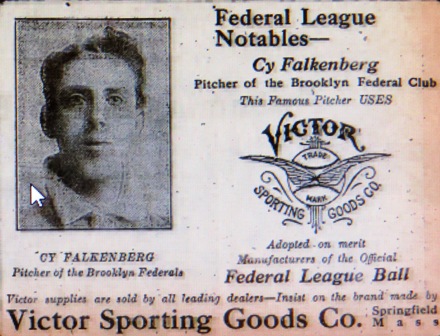
Lost Advertisements–Federal League Notables–Cy Falkenberg

4 Oct

???????????????????????????????

One in a series of several 1915 advertisements from the Victor Sporting Goods Company featuring Federal League players.  Victor produced the league’s official baseball.

Frederick “Cy” Falkenberg made one of baseball’s great comebacks.  After an injury plagued 1911 season (8-5 in just fifteen games) the Cleveland Naps sold Falkenberg’s contract to the Toledo Mud Hens in the American Association.  The 32-year-old pitcher developed a pitch that saved his career; Hal Sheridan of The United Press said Falkenberg had begun “tossing a sand-papered sphere to the batters.”

Once he started throwing the Emery Ball Falkenberg went 25-8 with a 1.95 ERA at Toledo, and after returning to Cleveland the following season he was 23-10 with a 2.22 ERA.  Falkenberg jumped to the Indianapolis Hoosiers in the Federal League in 1914; he was 25-16 with a 2.22 ERA for the pennant-winning Hoosiers.

By the time this ad appeared the Federal League had banned the Emery Ball and Falkenberg had split the 1915 season between the Newark Peppers (the relocated Hoosiers) and the Brooklyn Tip-Tops; he was a combined 12-14 with 2.86 ERA.

Russell Ford, who pitched in the American and Federal Leagues from 1909-1915, is generally credited with developing the Emery Ball, but at least one American League pitcher said Ford didn’t deserve credit for the invention.  Bill Steen told The Pittsburgh Press in 1915 that John “Wee Willie” Sudhoff had shown him how to throw the pitch in 1907:

“He had a strip of emery paper glued on the heel of his glove and rubbed the ball on it.”

Sudhoff had retired after the 1906 season, so it’s unclear where and exactly when he would have shared the pitch with Steen.

Cy Falkenberg

Cy Falkenberg

“Chief” Bender’s Catcher

3 Sep

Umpire Billy Evans, in one of his syndicated newspaper columns in the fall of 1910, said: “Most every ball player is more or less superstitious, but the pitchers, I believe, are more susceptible to beliefs uncanny than any of the other diamond athletes.”

Evans singled out Charles “Chief” Bender, who had just completed a 23-5 season with a 1.58 ERA for the World Champion Philadelphia Athletics, as one of the most “susceptible.”

Chief Bender

Chief Bender

According to Evans, Bender preferred throwing to catcher Ira Thomas over the team’s other two catchers Jack Lapp and Paddy Livingston:

“Bender has won lots of games with other catchers doing the receiving, but he never seems quite so steady as when Thomas is paired up with him.”

Evans said the preference extended to warming up as well:

“While there are scores and scores of pitchers who have their favorite catchers, still they are content to let one of the other receivers warm them up between innings, but not so with the Chief.  When Bender starts a game he absolutely refuses to throw to anyone other than Thomas.

“It is often the case that when the side is retired, the catcher happens to be a base runner.  Naturally much time is consumed by him in hurrying from the base he occupied to the bench to get his mask, glove and protector, and then back to the plate.  It is customary for most managers under such circumstances, to send one of the other catchers up to the plate to keep the pitcher warmed up.  I have seen Bender refuse at least a dozen times during the past summer to warm up with one of the Athletics other than Thomas.  He waits for Ira and takes a chance on getting cold in preference to putting the “jinx” on himself by tossing the ball to someone else.”

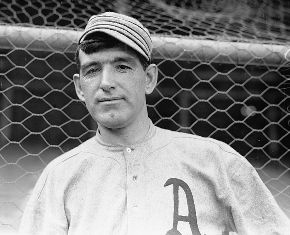
Bender's favorite catcher Ira Thomas

Bender’s favorite catcher Ira Thomas

The feeling was mutual.  In a 1911 article in The Pittsburgh Press, Thomas, who in addition to Bender also caught Jack Coombs (31-9, 1.30 ERA), Cy Morgan (18-12, 1.55 ERA), and Eddie Plank (16-10, 2.01 ERA) in 1910, said of Bender:

“I don’t take my hat off to…any other pitcher when Chief Bender is around.  He is a wonder of wonders.  No one can show me where there is a better pitcher in general.

“Bender has everything a pitcher needs and in a series of seven games he is almost invincible.”

Thomas remained with the Athletics organization for another 40 years as a coach, minor league manager and scout; he finished his scouting career with the Yankees, retiring in 1956.  He died in 1958.

Bender left Philadelphia in 1914 when he jump the Athletics for the Federal League; he returned to the Athletics organization in the 1930s.  He died in 1954.

Bender and Thomas shared a baseball card--the 1912 T202 Hassan Triple Folder

Bender and Thomas shared a baseball card–the 1912 T202 Hassan Triple Folder

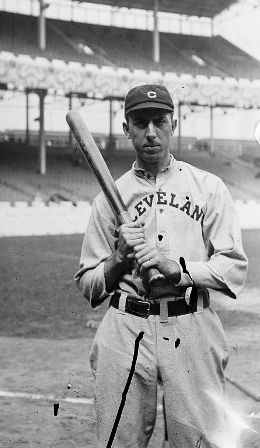
The two remained close for the rest of their lives and often appeared together at baseball banquets.  One story Bender always told; the “greatest thrill” of his career, his May 12, 1910 no-hitter against the Cleveland Naps (this version was related in The Trenton Evening Times in 1936).  With two outs in the ninth Cleveland’s Elmer Flick hit a pop-up in front of home plate, the ball initially popped out of Thomas’ mitt before he secured it for the final out:

“Watching Ira juggle that ball and then hold it was my greatest thrill.”

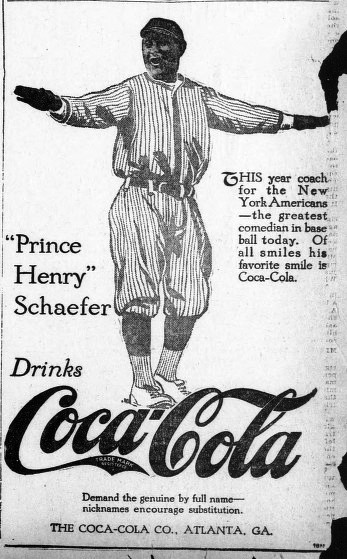
Lost Advertisements–Germany Schaefer for Coca-Cola

30 Aug

schaefercoke


Another 1916 Coca-Cola advertisement featuring another new member of the New York Yankees, coach Herman “Germany,” “The Prince” Schaefer.

This year coach for the New York Americans–the greatest comedian in baseball today.  Of all smiles his favorite smile in Coca-Cola.

The 40-year-old Schaefer was purchased by the Yankees from the Newark Pepper of the Federal League when the Feds folded after the 1915 season.  Used almost entirely as a coach, he appeared in only one game and went 0 for 1 at the plate.  He was released by the Yankees in September.


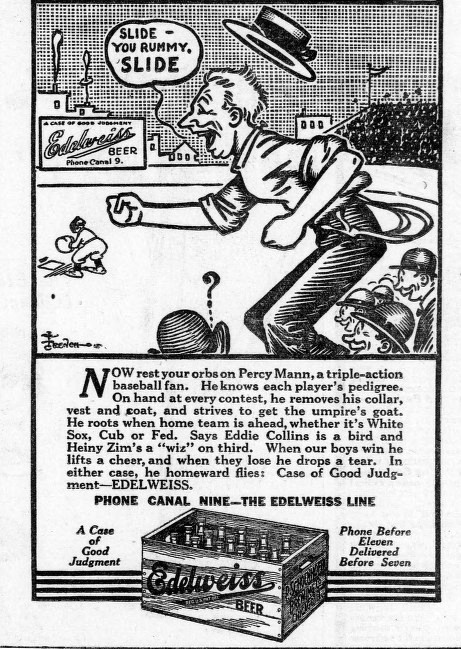
Lost Advertisements–Edelweiss Beer–“Slide, you rummy, Slide”

9 Aug

Edelweiss


A 1915 advertisement for Edelweiss Beer which appeared in Chicago newspapers.

“Now rest your orbs on Percy Mann, a triple-action baseball fan.  He knows each player’s pedigree.  On hand at every contest, he removes his collar, vest and coat, and strives to get the umpire’s goat.  He roots when home team is ahead, whether it’s White Sox, Cubs, or Fed.  Says Eddie Collins is a bird and Heiny Zim‘s a ‘wiz’ on third.  When our boys win he lifts a cheer, and when they lose he drops a tear.  In either case, he homeward flies:  Case of Good Judgment–Edelweiss”