Tag Archives: Philadelphia Athletics

“It is Feared that the Cares of his Office are making an old man out of Tim”

18 Aug

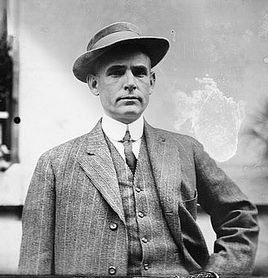
Timothy Carroll “Tim” Hurst had an eventful season in 1906.

He had been an umpire since 1891—with the exception of one awful season managing the St. Louis Browns to a 39-111 last place finish in 1898.  In 1904 Hurst retired from the National League, but months later joined the umpire staff of the Central League, and took a job in the American League in 1905.

Tim Hurst

Tim Hurst

The Kansas City Journal described the 5’ 5” umpire who was also a boxing referee::

“Hurst is a pudgy little fellow, below medium height, with sandy hair, twinkling blue eyes and a ruddy complexion.”

He was often called “pugnacious” for his on field, and off, altercations, and once told a reporter for The New York Herald how he dealt with argumentative catchers:

“Never put a catcher out of the game.  If the man back of the bat is sassy and objects to your calling of balls and strikes, keep close behind him while doing your work and kick him every time he reaches out a catch a ball.  After about the third kick he’ll shut up.”

The incident that earned him the most attention in 1906 happened during a May 7 game in New York between the Highlanders and the Washington Nationals.   The New York Times said during the fifth inning:

(Frank) LaPorte was declared out at first base on a close decision.  Manager (Clark) Griffith rushed over to the base line, and, throwing his cap in the air, protested against the decision.  He wildly gesticulated, and Hurst ordered him away.  Griffith, instead of following Hurst’s instructions, stepped up to the latter, protesting all the time.  In his excitement he stepped upon Hurst’s foot.”

Hurst “drew back” to punch Griffith but was held back by players from both teams.

“Hurst then took hold of the lapel of Griffith’s coat and started to lead the player-manager to the bench.  The latter angrily resented this action and pushed Hurst’s hand away.  Lave Cross and the Washingtons tried to pacify Griffith, and succeeded in getting him to the players’ bench.”

Hurst followed Griffith to the New York bench and again attempted to punch the manager, while Griffith “rushed at the umpire.”
Clark Griffith

Clark Griffith

According to The Associated Press Griffith claimed “’Hurst didn’t hit me.’ Then pointing to his swollen mouth he added, ‘I had this swollen lip before the game.’”

Hurst and Griffith were both suspended for five games.

The following year Henry Pierrepoint Edwards of The Cleveland Plain Dealer said Hurst had given him an explanation to “clear up the mystery” of why he reacted so violently:

“Now, it isn’t customary for Tim to wear baseball shoes on the diamond.  Usually Tim appears for the fray clad in the same suit he would wear at a pink tea.  His real uniform is just a cap.

“On the afternoon in question Tim purchased a new pair of patent leather shoes.  The shoes glistened in the sun like a diamond and gave Tim great pleasure.  Griffith forgot all about the shoes and in his rage over losing a close decision spiked and spoiled the new kicks.  Great was Tim’s rage.  Even greater was the clash.  That’s all.”

Two months after the incident with Griffith, Hurst made what might have been the worst call of his career.

On July 7 in Washington, he was working the game between the Nationals and the Detroit Tigers.  The score was tied 3 to 3 in the seventh inning, the Tigers had the bases loaded with two out and Sam “Wahoo” Crawford at the plate, facing Nationals pitcher Frank KitsonThe Washington Post said:

“’Wahoo’ lifted one a thousand miles directly over the pan.  Kitson came tearing in,  (Catcher Howard) Wakefield hesitated.  Manager (Jake) Stahl stood still at first base.  The pellet whirled in the air and finally dropped just inside the line and bounded back to the stands.  (Charley) O’Leary and (John) Eubank romped home.  Crawford went to second, carrying the funniest two-base hit on record.  Kitson and Wakefield stood admiring each other until Hurst again yelled ‘Fair ball!’ when the boy catcher went after the bulb.”

Sam Crawford

Sam Crawford

While the Nationals argued the call, and Hurst refused to reverse his decision, The Post said “The spectators were forced to listen to the dillydallying for fully fifteen minutes, then many of them got up and left the belligerents wrangling over the decision.”

Kitson threw a wild pitch to the next batter, Matty McIntyre scoring Herman “Germany” Schaefer and Crawford.  The Tigers went on to win 9 to 3.  Jake Stahl filed a protest with American league President Ban Johnson.

The Washington Evening Star said:

“The only excuse that Umpire Hurst can have is that the play was an unusual one.  Lave Cross admitting that he never saw its like in his experience on the diamond.  Hurst was palpably rattled, and the Tigers when taking their places on the field chaffed the locals with the remark that ‘Tim certainly handed us one that time.’”

The Washington Times said it was “one of the most remarkable plays ever seen on a diamond,“ and printed for their readers rule number’s 44 and 45 from the 1906 “Reach Guide” Reach describing “A Fair Hit,” and “A Foul Hit.”
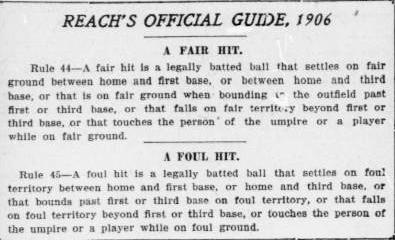
The Washington Times used "The Reach Guide" to illustrate how Hurst blew the call.

The Washington Times used “The Reach Guide” to illustrate how Hurst blew the call.

The Times said:

“(T)here seemed no possible way of calling it fair, but Hurst was obdurate, and the only explanation he would give was that the ball ‘was hit too high.”  What the heighth of the hit had to do with the fact that it eventually bounded foul is still another mystery.”

Hurst’s story evolved over the next several days.  The Post said his original explanation regarding the ball’s height was “to the effect that the ball was it so high it ‘settled’ inside, constituting the hit a fair one. “  This was quickly replaced by Hurst’s claim that the ball had touched Wakefield, the Washington catcher, before bounding into foul territory.

The Times’ baseball reporter Thomas Stevens Rice said of Hurst’s new story:

“This explanation is all right if it presents the facts in the case.  In the press box there was not a single man who thought the ball was touched by Wakefield or anybody else.”

The Post conceded that the protest would be rejected, saying “It is almost certain that Ban Johnson will sustain his scrappy umpire, no matter what interpretation he puts on the rules,” but the paper did not let up on Hurst.

The following week when Sam Crawford brought his average up to .300, The Post said:

“Hurst last week decided that Crawford’s high rap which hit inside the base line and bounded back to the stands was fair…am would have faced the pitcher 271 times and got away with 81 hits which would have made his average .299, as it was Sam got and extra hit which brought the total to .303.  He owes Tim a hat.”

Hurst was still young, just forty-one in 1906, but The Sporting Life said something had changed during that year, and by the end of the season that the umpire lacked the “Aggressiveness and enthusiasm” he had previously exhibited:

“It is feared that the cares of his office are making an old man out of Tim, who once was noted for having the finest brand of keen-cutting, kill-at-a-thousand-yards sarcasm of any umpire in captivity.  Sit Timothy is very tame, and the players, even the bush leaguers who have just broken in, can tell him what they think of him and his calling.”

Hurst’s old “aggressiveness” came out in 1909.  He was suspended in May for a fight with Norman “Kid” Elberfeld of the Highlanders, then on August 3 during a game between the Athletics and White Sox.  The Brooklyn Eagle said:

“At Philadelphia Tim Hurst came in for considerable trouble.  Hurst called Eddie Collins out at second and the Columbia youngster put up a kick.

“Whether it was with malice aforethought or quite an accident, it is a fact that the umpire distributed a mouthful of moistened union-made tobacco in the direction of the youthful Eddie, who immediately called Tim’s attention to the board of health ordinance which prohibited expectorating in public places.”

After the game Hurst had to be escorted from the field by Philadelphia police.  Ban Johnson suspended Hurst, beginning two weeks of rumor and speculation about the umpire’s fate.  Finally, on August 18 it was announced that Hurst had been let go by the American League.

Hurst, in poor health since 1912, died in 1915.  Hugh Fullerton of The Chicago Examiner said of his passing at age 49:

“The saddest part of it is that ‘Timothy’ did not die in the blue uniform, and that during the last few years of his life he was practically blacklisted in baseball for refusing to answer or deny charges made against him for his actions during a clash with Eddie Collins…President Johnson declared that if Hurst even had replied to his telegrams of inquiry he would have kept him—but Tim, knowing he had done wrong, refused, and went out of the game.”
“It was one of those Lucky Days when a Player can hit a pea”

8 Aug

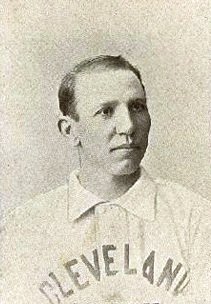
Norman Arthur “The Tabasco Kid” Elberfeld earned his nickname for his aggressive play and violent temper.  In 1904 he described his greatest game in an  article that appeared in several newspapers:

Kid Elberfeld

Kid Elberfeld

“It is not a cinch by any means to dig up the good and bad plays one has made.  If my team can win the game, that is about sufficient for me, and I forget many times just how prominently I may have figured in the victory.

“The best batting I remember having done was right up on Washington Heights last season, when we were playing the Philadelphia Athletics.  Connie Mack had saved Rube Waddell for us, and the famous southpaw never had more speed or better benders.  When Rube is right he is a wonder, and when it is remembered that he fanned thirteen batters that afternoon it can be appreciated that he was pretty near being tight.  It was Rube’s first appearance of the season in New York, and he was more than anxious to pitch a winning game.  It was the closest kind of contest, and we just managed to win out 4 to 3.  I was the lucky boy that day.  I made four clean plunks off Rube, drove in three runs and scored one myself.  That wasn’t so bad, when you say it quick.  There were only four hits made off Rube that day.  So I copped.

“It was one of those lucky days when a player can hit a pea.  Rube didn’t fool me a little bit.  I refused to let him drive me away from the plate, but stood up close and just met the ball.  Every hit was a hard one, too, and on a line.  If I had attempted to swing hard I might not have made a hit.  There is everything in a batter timing the ball well and then just meeting it.  One will be surprised at the swiftness with which the ball shoots off the bat.”

Elberfeld got a couple of key facts incorrect; the score was actually 3 to 2 and while Elberfeld drove in all three runs he did not score a run that day.  For the rest of his life, Elberfeld referred to the game as the greatest of his career.

In 1929, in an article about the athletic prowess of Elberfeld’s five daughters—they had their own basketball team, and each excelled in additional sports as well—the proud father still referred to the 1903 game as “The best batting I remember having done,” although he still incorrectly maintained that the Highlanders scored four runs that day.

Elberfeld's greatest game, August 1, 1903

Elberfeld’s greatest game, August 1, 1903

As for his aggressiveness towards umpires, Elberfeld had no regrets fifteen years after his playing career ended:

“I’ve been asked whether it did any good to threaten umpires, and occasionally take a wallop at one.  I always thought that if I didn’t stand up for my rights, they would give me the worst of it.  If an umpire made a mistake in the really rowdy days the whole team would threaten his life.  Would that scare him?  I should say so, and the next time a close decision came up, he would even up for the bad one previously handed down.”

Frank Bancroft

14 Jul

When Frank Carter Bancroft died in 1921 at age 74, “Spalding’s Official Baseball Guide” said:

“His executive ability and Knowledge of Base Ball, combined with the fact that he was for sport first and the show element of Base Ball secondarily, rendered him one of the most competent of men to handle the affairs of a professional team.”

Frank Bancroft

Frank Bancroft

While working in the front office of the Reds in 1892, Bancroft talked with Harry Weldon, sports editor of The Cincinnati Enquirer about some of the players who got their start with his teams.  He also didn’t seem to mind taking a swipe at a couple former players:

“Probably no man now before the public except Harry Wright or Adrian C. Anson have had a longer or more varied experience with the intricacies of the great National Game than Frank C. Bancroft.  He never wore the spangles, like a great many other managers, but he has been connected with the game in a managerial capacity since the early seventies.  ‘Bannie’ is one of the wittiest men in the profession and he has a fund of anecdotes about players and plays that are well worth hearing.  Many of the great baseball stars now before the public made their debut under Mr. Bancroft’s management.  Many of them who are now drawing $4,000 or $5,000 a season worked under Bannie for about one-tenth that amount and were glad to get it.  Bancroft was one of the leading lights in the original New England League, which graduated a great many of the stars of today.

“At the present time Mr. Bancroft is business manager of the Cincinnati Reds.  He has nothing whatever to do with the players. All of that part of the club’s affairs being under the supervision of Captain (Charlie) Comiskey.  All Bannie has to do is look after the gate, railroad rates and dates.  The other evening the veteran manager was in The Enquirer office and grew reminiscent.  His recital of the details of the debut of some of the stars is worth reproducing.

Harry Stovey, one of the greatest ballplayers today, began his professional career under Manager Bancroft.  He began his career in the pitcher’s box and graduated out of the ranks of a Philadelphia amateur team called the Defiance in 1877 (the Philadelphia Defiance were a professional team, part of the league Alliance).  Manager Bancroft heard of him, and in 1878 engaged him as a change pitcher for the New Bedfords.  G. Washington ‘Grin’ Bradley was the regular pitcher of the team, and as he was an every-day pitcher Stovey was never allowed an opportunity of displaying his pitching abilities on the New Bedford team.  He had to be content with warming the bench until fate was kind and he had a chance.

Stovey

Harry Stovey

“‘Stovey played his first game with our team at Baltimore,’ said Mr. Bancroft.  ‘we were making an exhibition tour when John Piggot, the first baseman, was taken ill, and as we only carried ten men, Stovey was called on to make an attempt to play first base.  His maiden effort was a brilliant one—so brilliant that it lost Piggott his job and made Stovey a fixture on first.  He had at least twenty putouts, no errors and several cracking hits to his credit that day.  He played the season with us, and his fame spread so that he was signed by the Worcester (Ruby Legs) League team and afterward with the Athletics Stovey’s salary the first season in New Bedford for $50 a month.  Now he is paid nearly that much a game.’

George Gore, the crack center-fieder of the New Yorks is another player who came into prominence with the New Bedfords that year.  Gore’s home was in Maine, at a little town called Saccarappa…Gore was about as green a specimen as ever stepped into the business.  He played a few games with the Fall Rivers, and then the New Bedfords got him.  He was a big, awkward country boy then, but he could run like a deer and hit the ball like a trip hammer.  Gore signed with the New Bedfords under Manager Bancroft for $50 a month, but he did not stay with them long.  His terrific batting attracted the attention of the whole baseball world, and soon the more prominent clubs were after him.  While the Chicagos were in Boston the late lamented (William) Hulbert, President of the National League, who was with them, ran up to New Bedford to have a talk with Gore.  Luck was with big George.  He had his eye with him, and made three home runs in the game.  That feat settled his fate.  Before Hulbert left New Bedford he had Gore’s name to a contract to play in Chicago in 1879 at $150 a month.  His career since that time is well known.  Today he is yet a great hitter, and reached first base as frequently as any player in the business, by either hits, errors or bases on balls.  His ability to reach first causes him to be selected to head the battery list of the New Yorks.

Arthur Irwin is another player whom Manager Bancroft put in the business. ‘He made a grand impression in his opening game with me,” said Manager Bancroft.  ‘I was then manager of the Worcester League team, and we were on the hog train for a while, owing to Charlie Bennett’s glass arm and Buck (William “Farmer”) Weaver’s faint heart.  Matters were so bad that a crisis was at hand.  A meeting of the stockholders of the club was called, and it was voted to place the team in my hands for one month, and if no improvement was shown at the end of that time I was to be given the chase.  It was a dying chance for me, and you could gamble that I had my eyes and ears open for a savior of some kind.  Arthur Irwin was then playing with an amateur team called the Aetnas, of South Boston, and I engaged him to play short with the Worcester.  (J. Lee) Richmond, the once famous left-handed pitcher, who played here with the Reds in 1886, was then with the Brown University team and he was telegraphed to come for a trial.  We played the Chicagos that day, and we shut them out, only one man getting first base.  Irwin made a great hit at short, and Richmond was a wizard.  Irwin was a fifty-dollar-a-month man, and that was the start of his professional career.  Richmond is now a physician at Geneva, Ohio.’”

The game Bancroft referred to was an exhibition between Worcester (a member of the National Association) and the National League’s Chicago White Stockings played on June 2 in Worcester. Richmond walked the first batter, Abner Dalrymple, and then retired the next twenty-one before the game was called after seven innings.  The Chicago Tribune said Richmond struck out 8.  Worcester tagged Frank Hankinson for 12 hits and 11 runs (Chicago also committed 11 errors).  Bancroft was correct that Richmond became a physician, but by 1892, he was no longer practicing and was working as a teacher in Toledo, Ohio.

J. Lee Richmond

J. Lee Richmond

“Big Roger Connor of last season’s New Yorks, but now of Philadelphia, received his professional introduction under Manager Bancroft.  ‘It sounds queer to say that such a cracking hitter as Roger Connor was ever released for poor batting, but such was the case’ said Manager Bancroft

“’I had him with the New Bedfords in 1878, but he was hitting so poorly that I released him.  He afterward signed with the New Havens the same season, but the disbanded.  Roger left New Haven and went to Waterbury, his home, where he joined an amateur team in that city called the Monitors.  Up to that time he had batted right-handed, but he decided to turn around and try it left-handed.  The change saved his life.  He blossomed out as a great slugger, and his reputation has been growing ever since.

“Connor, like Stovey, began his professional career at $50 a month, and has since climbed to the top rung of high salaried players.  Many young players of today should look upon these as examples for honest and temperate habits have enabled them to remain at the head of the profession, while the path is strewn with a multitude of others who might have been where they are if they had not thought this world was a continuous round of gaiety and fun and discovered their mistake when it was too late.”


Opening Day—1890

24 Mar

The New York Sun said the Players League had won the battle:

“The local Brotherhood team have scored first blood, first knockdown, and have in general the best of the initial clash between the Players’ and the National League in this city.  While the latter were prepared for defeat, they had not anticipated such an overwhelming victory for the seceders as at least 3 to 1 in attendance.  They did not believe the Brotherhood would get 2 to 1, and so the result was rather staggering.  The admirers of the players are jubilant over the good attendance, and one of the partisans tersely said: ‘The League? Why they’re not in it and might as well give it up.  Let’s have another drink on the boys.’”

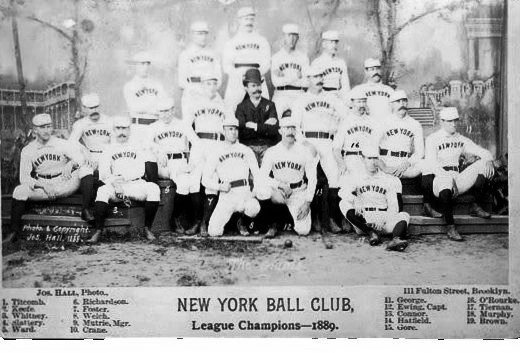
Fans streamed into the “grounds on Eighth Avenue” (the Brotherhood Ballpark was built next door to the Polo Grounds) and by the time the first Players’ League pitch was thrown in New York, 12,013 were on hand, while only 4,644 paid to see the National League.  The Players League team was composed mostly of players who had been with the National League Champion Giants in 1889–both teams were called the New York Giants in 1890.

Many of the members of the 1889 Giants jumped to the Players League in 1890

Many of the members of the 1889 Giants jumped to the Players League in 1890

The Sun said it would be “invidious to draw comparisons between the class that attended the League game and that which patronized the Brotherhood;” then went on to draw comparisons.

“But after a few moments’ study of the crowd surging down the elevated railway stairs an acute observer could quite easily have foretold which grounds each spectator or party was bound for.  Not but what there were plenty of well-dressed men and women in the immense crowd that wended their way toward Brotherhood Park, but rather in the excited holiday air the Players; sympathizers were.”

The Brotherhood crowd consisted of “urchins and young men,” while the National League crowd included “exquisitely dressed representatives of the fair sex.”

The two ballparks

The two ballparks

Although the field had been completed for weeks and was “in beautiful condition,” the Brotherhood Ballpark (what would become the final incarnation of the Polo Grounds) was “in an unfinished state,” and carpenters continued to work on the grand stand and lower tier seats as fans entered the park:

“The clubhouse was also only half built, and a huge banner with the words “World’s Champions” was spread across the front of it, as if to hide the unfinished part.  Flags and gay bunting were lavishly spread over the stand, but as one crushed spectator aptly put it: ‘They’d done a good sight better to build seats.’”

Despite the unfinished ballpark, the Brotherhood game was met with much fanfare:

“A cause of great enthusiasm and cheering in Brotherhood Park was the frequent arrival of tally-ho coaches, some of which were gaily decorated and bore appropriate inscriptions…Precisely at 3 o’clock the Players’ Philadelphia Club marched from the club house , preceded by the sixty-ninth Regiment Band.  They received a royal welcome to which the courteously doffed their caps.”

The New York team and Manager Buck Ewing then took the field:

“Such cheering, such yelling, as they neared the stand!  People threw up their hats and went crazy…as they broke ranks the dog on the club house porch broke into a prolonged howl.”

The crowd for the National League was more subdued, but The Sun quoted “one stalwart young man, whose face has been a familiar sight for years at the ball games,” who said the Brotherhood would “have the best of it for the first two weeks.  But wait.”

Both New York Giants teams lost their first game of the 1890 season, each to the Philadelphia franchise in their respective leagues.

The Players League lost the war.

The League outdrew the National League and American Association (PL-980,877, AA-803,200 and NL-776,042—the numbers are estimates and there is ample evidence that everyone lied about attendance figures during the year), but the Brotherhood lost an estimated $125,000 on top of more than $200,000 of debt incurred in building new ballparks.

The National League lost even more—some estimates as high as $500,000.

Although no contemporaneous details survive, the accepted story is that Albert Spalding was able to convince the Players League investors that their financial situation was worse than the National League’s.  Rather than a compromise, Spalding was able to negotiate an unconditional surrender.

The Players League would not have a second Opening Day.

Rube and Ossee

10 Mar

Connie Mack’s Philadelphia Athletics were expected to repeat as American League champions in 1906.  The 1905 team won 92 games, finishing two games ahead of the Chicago White Sox, and lost to the New York Giants in the World Series.

The 1906 Athletics were in first place as late as August 11, but faded to fourth, losing 33 of their last 52 games and finishing 12 games behind the champion White Sox.

Much of the blame for the poor finish was directed at Rube Waddell.

Rube Waddell

Rube Waddell

Waddell, 27-10 in ’05, dropped to 15-17 after fracturing his thumb in May of ’06.   The Philadelphia Inquirer said he was driving a rented carriage, “At Twenty-second Street and Ridge Avenue he became involved is a collision with a delivery wagon…he turned his horse quick to avoid the wagon, and when he found that the wagon was sure to hit the carriage he jumped and landed on his thumb.”  He sat for two weeks and never found his form from the previous season.

Waddell’s recovery was slowed, it was suspected, because of his off-field habits.  The general opinion of the fans and press was summed up by The Wilkes-Barre Times which said:

“Waddell has refused to appreciate that the modern ballplayer positively must keep in condition and ‘deliver the goods.’  The famous Mike Kelly could spend a $100 bill the night before playing a championship game and not report the next day.  It was regarded in those days as a joke.  That day has gone by.”

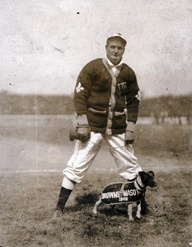
Waddell’s personal catcher, Ossee Schreckengost—Schreck—was also blamed for the collapse.  Schreck was sent home by Mack for the remainder of the season on September 22.  During a series in St. Louis he failed to return to the team hotel after a night out with “some German friends.”  Schreck said:

“Mack told me to pack up and go home.  That’s all there is to it.  We did not have any argument.

“Mack wants to try out a lot of juveniles this trip.  I do not think he is sore at me, and do not think I stand suspended.”

The Philadelphia Inquirer disagreed:

“For the good of the cause, Ossie [sic] Schreckengost was sent home by Manager Mack tonight suspended for the rest of the season.

“Schreck has not taken care of himself this year (as) an athlete should, and to his shortcomings more than anything else Manager Mack attributes the slump of the team in mid-season.  To Schreck St. Louis is the most attractive town on the circuit.  Yesterday he succumbed to its blandishments.”

Ossee Schrecongost

Ossee Schrecongost

Either as a result of their drinking, the fact they were said to have “tanked” the Athletics season, or both, The Washington Post suggested that “Waddell and Schreck should be dubbed the tank battery.”

The battery mates and road roommates were sent their contracts for 1907.  Waddell was threatened with a pay cut if he didn’t stay in shape.  He quickly signed.

Mack is quoted by many sources over the years saying Schreck refused to sign his contract until Waddell agreed to no longer eat crackers in the double beds they shared on the road.

It is generally considered an apocryphal story invented by Mack years later—and often even said to have happened before the 1904 or ’05 seasons rather than 1907.

But, the story was not the invention of Mack.  There was actually a letter purported to be written by Schreck “from his home in Cleveland” (it is not known who actually wrote the letter), and reprinted in several newspapers between the 1906 and ’07 seasons:

“Dear Connie:  This is not a touch for any advance, or an increase in salary, but something much more serious, and as it won’t be long before the Athletics start south for spring practice, I am going to ask you to put Waddell under another charge this year.

“While I did not mind Rube bringing mocking birds and a reptile or two into our sleeping apartments down south, I do object to his habit of eating crackers in bed.  This Rube does nightly.  Not a single night last spring did Waddell retire without his south paw containing a dozen crackers, many of them resembling animals.

“By the time Rube, or Eddie, as he wishes to be called in southland, had got outside of these crackers, I was in anything but a sleepy mood, due in a measure to his crunching of the crackers.  It did not seem to interfere with Eddie.  He would turn over and go to sleep at once when through.

“Had it stopped here, all would have been lovely.  It didn’t however, and the natural result was that the bed was full of crumbs.  This had been going on for years, and frequently have I welcomed a night on the road with an upper berth, so as to escape Waddell and his crumbs.

“This complaint may seem trivial to you, after your varied experiences with Rube, but I can assure you that the crumbs that came from those crackers were anything but ‘crumbs of comfort’ for your humble servant.  In closing, I would like to suggest that if you can put a clause in Waddell’s contract that he is not to eat crackers in bed during the season of 1907.  I am sure Waddell and I will continue to be real good friends as of yore.  Yours truly, Ossee Schreck

“P.S.—I wish all of the boys, and of course this takes in you, a happy new year.  Am doing light training.  O.S.”

Whether or not the “cracker clause” was inserted in Waddell’s contract, the Rube/Ossee battery was together for all but four of Waddell’s 33 starts in 1907, but the relationship between “the real good friend’s of yore” began to deteriorate that season;  likely because Schreck had cut back his drinking considerably, while Waddell continued to be Waddell.

Despite a 19-13 record for the second place Athletics in 1907 Waddell had become a distraction and more trouble than he was worth.   The Inquirer said he was sold to the St. Louis Browns after “Ruben made himself objectionable to his club mates, and for the good of the club’s future Manager Mack concluded that it would be the part of wisdom to let him out.”  Waddell was 33-29 in parts of three seasons in St. Louis.

Schreck remained in Philadelphia until September of 1908 when he was sold to the Chicago White Sox, his big league career was over at the end of that season, after eight games with Chicago.

The two old teammates died just three months apart in 1914, Waddell was 37, and Schreck was 39.  The Inquirer said:

“’Thuh batt’ries for today: for Philadelphia, Waddell and Schreck!’  It has lo these many days been but a memory, and now there is only memory left of the famous diamond combination.  They flashed in dazzling brilliancy across the baseball horizon and disappeared as quickly as they came.  And both died old young.”

The Tribune’s First All-Star Team

21 Feb

In 1933 The Chicago Tribune underwrote the first All-Star game, created by Arch Ward, the  paper’s sports editor,  to coincide with the Century of Progress World’s Fair—more than 30 years earlier The Tribune published one of the earliest  sportswriter selected “all-star teams.”

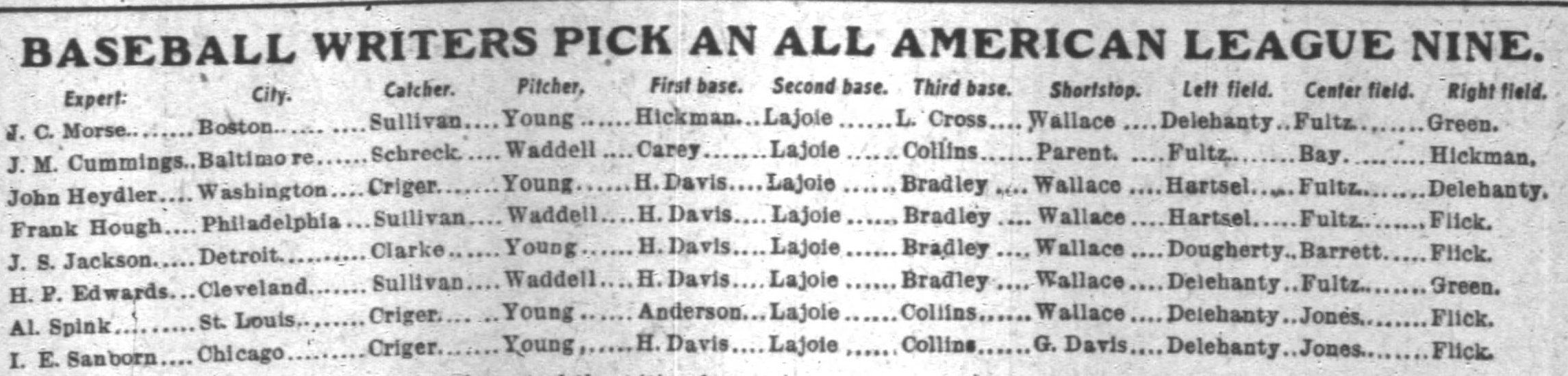
Near the end of the 1902 season, The Tribune polled sportswriters from American League cities to pick “An all American League Nine.” (No similar poll was done for the National League)

The writers polled:

Jacob Charles Morse—The Boston Herald

Joseph M. Cummings—The Baltimore News

John Arnold HeydlerThe Washington Post

Frank Leonardo HoughThe Philadelphia Inquirer

Joseph Samuel Jackson—The Detroit Free Press

Henry P. Edwards—The Cleveland Plain Dealer

Alfred Henry SpinkThe St. Louis World

Irving E. (Sy) Sanborn—The Chicago Tribune

The only unanimous choice was Cleveland Bronchos second baseman Napoleon Lajoie—Lajoie appeared in just 86 games, but hit .379.

Napoleon Lajoie --the only unanimous choice

Napoleon Lajoie –the only unanimous choice

The most disagreement was behind the plate; four different catchers received votes:  Billy Sullivan of the Chicago White Sox and Lou Criger of the Boston Americans received three votes each;  Freeman Ossee Schrecongost who played 18 games with Cleveland and 79 with the Philadelphia Athletics, and William “Boileryard” Clarke of the Washington Senators each received one vote.

Cy Young of Boston led pitchers with five votes, with Philadelphia’s Rube Waddell being the choice of the other three.

Four first basemen were also chosen, but Harry Davis of the Philadelphia Athletics was the consensus choice with five votes.  Cleveland’s Charlie “Piano Legs” Hickman, Washington’s George “Scoops” Carey, and “Honest John” Anderson of the St. Louis Browns all received one vote.

Cleveland’s Bill Bradley edged Boston’s Jimmy Collins four to three, with Philadelphia’s Lafayette “Lave” Cross getting the remaining vote.

Bobby Wallace of St. Louis was the shortstop consensus with six votes, Boston’s Freddy Parent and Chicago’s George Davis received one vote each.

Booby Wallace, the choice at shortstop

Bobby Wallace, the choice at shortstop

Washington’s Ed Delehanty got four votes in left field, Philadelphia’s Tully “Topsy” Hartsell two; one vote each went to Boston rookie Patsy Dougherty and Philadelphia’s Dave Fultz (who played center field)

With or without his vote as a left fielder, Fultz was the consensus in center field.  He received four votes at that position; Chicago’s Fielder Jones got two votes, Jimmy Barrett, the only Detroit Tiger to make the list received a single vote (from Joseph Samuel Jackson of Detroit) and Harry “Deerfoot” Bay of Cleveland received one vote.

Jimmy Barrett, the only Tiger

Jimmy Barrett, the only Tiger

Right field included a couple more out of position players, Charlie Hickman picked up one vote despite being primarily a first baseman and playing just 27 games in the outfield in 1902.  Delehanty, almost exclusively a left fielder in 1902, received one vote in right.  Elmer Flick of Cleveland was the consensus with four votes.  Danny Green of Chicago received two votes.

The Results

The Results

The 1902 effort was not repeated by the paper.

The Adventures of George Borchers

7 Feb

George Bernard “Chief” Borchers was a West Coast phenom.  The Sacramento native was so good as a 16-year-old in 1885 that the town’s two professional teams battled for his services.  After pitching half the season for one club, The Sacramento Record-Union said:

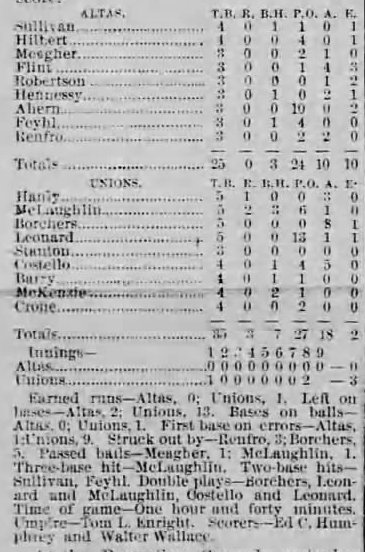
“George Borchers, heretofore pitcher for the Alta Baseball Club, has resigned his position in that club and will hereafter pitch for the Unions.”

Box score for Borchers' first start for the Sacramento Unions (July 26, 1885) after jumping the Sacramento Altas.  Borchers beat his former team 3 to 0.

Box score for Borchers’ first start for the Sacramento Unions (July 26, 1885) after jumping the Sacramento Altas. Borchers beat his former team 3 to 0.

He played for the California League’s Sacramento Altas in 1886 and the Oakland Greenhood & Morans in the same league in 1887. The Sporting Life said of him:

“Borchers is possessed of Herculean strength, great endurance, and is a heavy batsman.”

The Sacramento Bee said Borchers “would soon rank as one of best pitchers on the coast,” if he got “command of the ball and his temper.”

Before the 1888 season the 19-year-old became the subject of a bidding war.  He pitched several games against the New York Giants during John Montgomery Ward’s barnstorming/honeymoon tour of the West Coast in the winter of 1887.

Ward told New York reporters that Borchers was the best pitcher in the California League.  The Sporting Life called him “Ward’s especial favorite,” and “Ward’s find.”  By January The Boston Post said he turned down an offer from the Beaneaters, The San Francisco Chronicle said he rejected the Detroit Wolverines, and The Philadelphia Times said “(Athletics Manager Bill) Sharsig is hopeful to sign Borchers.”  The Times also said Ward’s Giants had made an offer but:

“The young man wanted a mortgage on Central Park and a large chunk of Coney Island.”

The San Francisco Chronicle said Borchers came from a wealthy family (his father owned a brewery) and were “opposed to his playing ball.”

Whatever the reason, Borchers opened the 1888 season with the Greenhood & Morans.  He pitched at least four games for Oakland before it was announced on May 2 that the 19-year-old had signed a major league contract.  The  Chronicle said:

“The baseball world was thrown into a state of excitement yesterday when the press dispatches made the unexpected announcement that George Borchers prize pitcher of the Greenhood & Moran club, had been signed to pitch for the Chicagos.”

The paper said when White Stockings President Al Spalding sent a telegram to Borchers asking his terms, the pitcher, “treated the telegram as more of a joke than anything else, and in the spirit of fun telegraphed back” asking for $3000, with a $500 advance.

“He never dreamed of receiving a favorable answer, and his surprise can well be imagined when a few hours later the answer came accepting his terms.”

Despite being what The Chronicle claimed was the “largest salary ever paid to a California player in the East,” Borchers immediately regretted the agreement:

“He says he does not feel much like leaving here and would like to back out if he could, but, knowing that he is legally bound by his act, he will of course stand by it.”

The pitcher arrived in Chicago on May 13 to great fanfare.  The Chicago Tribune said “if he equals the reports of his ability that precede him, the team will be as nearly invincible as it is possible for a baseball organization to be.”

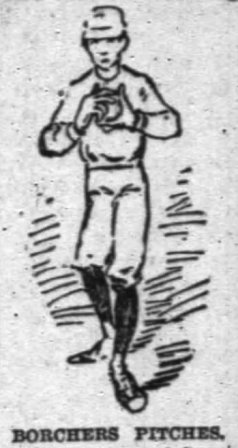
Caricature of Borchers from The Chicago Tribune--1888

Caricature of Borchers from The Chicago Tribune–1888

White Stockings shortstop Ned Williamson, who batted against Borchers on a West Coast trip, compared him to another California pitcher who made his big league debut at age 19:

“He pitched more like Charley Sweeney than any other man I ever saw, and Sweeney was as good as any that ever stepped in the box.”

Borchers made his debut on May 18.  The Chicago Inter Ocean said:

“Another wonder has been discovered and the Chicago Ball Club has it.  The wonder is George Borchers, the California pitcher.  He was put in the box to pitch for the Chicagos yesterday against the Bostons in the closing game of the series.  The result is manifest in the score—13 to 0…Borchers was made the hero of the hour.  He has come to stay, and his work yesterday is a guarantee of his ability to keep his place.”

The Chicago Tribune was more subdued than The Inter Ocean:

“(Borchers) has an easy delivery. Good curves and great speed, but his command of the ball remains to be determined.  Yesterday he was wild.  Three wild pitches were charged to him, and with a less active and reliable man than (Tom) Daly behind the bat more would have been recorded.  Those that got by Daly were extremely wild.  Still he was effective.”

The game, played in the rain at West Side Park, in what The Chicago Daily News called “practically a swamp,” was called after five innings.

The papers couldn’t agree on the attendance either–The Inter Ocean said it was 3000, The Tribune, 1500 and The Daily News 2000.

Borchers allowed just three hits and beat Charles “Old Hoss” Radbourn in his first major league game.

Things went downhill from there; the rest of Borchers’ story on Monday.

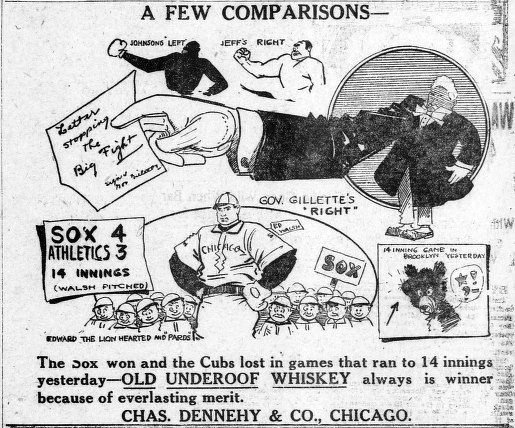
Lost Advertisements–Old Underoof–White Sox, Cubs and “The Battle of the Century”

27 Jan

oldunderroof1910jj


An advertisement for Old Underoof Whiskey from June 16, 1910–“A Few Comparisons.”  Most of the Old Underoof ads were exclusively about baseball, but this one also mentions the biggest sports story of that week.  California Governor James Norris Gillett  (the ad misspelled it “Gillette”) had just issued an order to stop the Jack Johnson vs Jim Jeffries “Battle of the Century,” scheduled for July 4 in San Francisco.  The San Francisco Chronicle said that despite $300,000 worth of tickets having been sold, and the construction of a new stadium for the bout being nearly completed, Gillett bowed to “Pleas to the governor to stop the fight.”  The San Francisco Church Federation was the most vocal opponent to the fight.

On the same day, the Chicago White Sox and Cubs both played 14 innings.

The seventh place White Sox, behind a complete game from “Big Ed” Walsh defeated the Philadelphia Athletics 4 to 3; he also drove in the winning run with one out in the fourteenth.

The first place Cubs lost 3 to 2.  Eros Bolivar “Cy” Barger pitched a complete game for the Brooklyn Superbas, and like Walsh, drove in the winning run with one out in the fourteenth.

The fight was moved to Reno, Nevada and Johnson won by TKO in the 15th round.

The White Sox finished in sixth place with a 68-85 record.  Walsh was 18-20 and led the American League with a 1.27 ERA

The Cubs remained in first place and won the National League pennant by 13 games.  The Athletics beat them four games to one in the World Series.


“Zimmer was not to be frightened.”

20 Jan

On March 28, 1907 the New York Giants took the field against the Philadelphia Athletics in the second game of a five-game exhibition series at New Orleans’ Athletic Park.

The umpire was new.  Charles Louis “Chief’ Zimmer, after a 19-year career a major league catcher had tried his hand at managing in 1906.  His Little Rock Travelers finished last in the Southern Association with a 40-98 record.

Chief Zimmer

Chief Zimmer

The Atlanta Constitution said:

“Zimmer underestimated the strength of the league, and brought men into it who did not have the goods to deliver.”

After Zimmer was dismissed by Little Rock he joined the Southern Association’s umpire staff.

The Giants/Athletics series would be among his first games as a professional umpire.

The Giants won the first game 4 to 3.  The Giants scored two runs with two outs in the bottom of the ninth off Jack Coombs for the victory.  The Philadelphia Inquirer said:

“Zimmer umpired a god game… (but) the rowdy element in the Giants broke loose frequently, and the Chief had many disputed with some of the men.”

The second game did not go as well.  The Inquirer said:

“The Giants were the first at bat, and the first two men were retired. (Art) Devlin and (Cy) Seymour then signaled safely to the outfield, each moving up a base on (Rube) Oldring’s throw…(Frank) Bowerman was then up to the bat.  (Eddie) Plank soon had two strikes and one ball on him.”

With a one and two count the Giants claimed Plank balked when he threw to third and picked Devlin off.  Zimmer said he didn’t.  Roger Bresnahan and Mike Donlin, coaching at first and third, “rushed at Zimmer from the coaching lines and a wordy war ensued.”  Manager John McGraw came out of the dugout and ‘a half hour was consumed in ‘beefing.’”

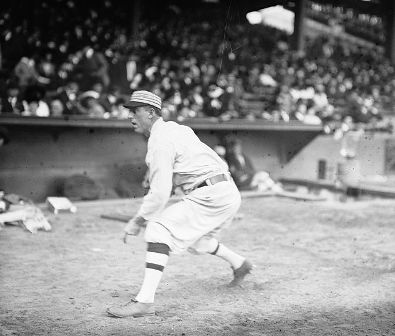
Eddie Plank

Eddie Plank

Zimmer finally ordered McGraw back to the bench and:

“Play was about to start again when a remark made by McGraw caused Zimmer to order McGraw off the grounds.  The New York manager refused to go, and a lively tilt between him and Zimmer took place, the entire New York gang surrounding the “Chief” in an effort to bulldoze him.  But Zimmer was not to be frightened.”

New Orleans police officers came out on the field as Zimmer declared the game a forfeit after a half inning.

McGraw said his team would not play in the game scheduled two days later if Zimmer was the umpire.  The Inquirer said Athletics Captain Harry Davis “informed McGraw that inasmuch as the giants had turned down Zimmer as the umpire the series might as well be called off.”  New Orleans Pelicans owner Charlie Frank also threatened to bar the Giants from Athletic Park.

On March 30 McGraw arrived at Athletic Park with only nine players consisting of “nearly all the youngsters in camp.”

With both teams on the field, Zimmer approached the Giants dugout and asked for the team’s lineup and was told the Giants would not play if he were not replaced as umpire.  Zimmer announced that the Giants had again forfeited and the Giants left the ballpark.  Frank’s New Orleans Pelicans took their place and pitcher Mark “Moxie” Manuel defeated the Athletics and Rube Waddell 4 to 2.

Waddell--lost to the New Orleans Pelicans

Rube Waddell–lost to the New Orleans Pelicans

The series was over.

Before the Giants left New Orleans that evening, McGraw confronted Thomas Shibe, business manager of the Athletics and son of team president Ben Shibe, in the lobby of the St. Charles Hotel.  The Inquirer said:

“Manager McGraw backed up the entire New York team, insulted Thomas Shibe…by calling him vile names.  McGraw alleged that Tom had informed several persons that he had heard McGraw using insulting language to Umpire Zimmer… pursuing the same cowardly tactics which have made him famous over all the base ball circuit (McGraw)did not keep within reach of Shibe.  He kept well within the group of rowdies which make up his team, and thus being forfeited from any attack from Tom, naturally was as brave as a lion.”

The paper said McGraw disappeared from the scene as soon as members of the Athletics arrived in the lobby.

Frank Leonardo Hough, baseball writer for The Inquirer, took McGraw to task for his actions, and charged the New York press with allowing McGraw and Giants’ management to intimidate them out of “writing the truth” about the team:

“The press of no other city in the Union would stand for the tactics employed by the Giants.  Such a condition of affairs would be impossible in Boston or in Philadelphia.  There are any number of thoroughly equipped baseball reporters in New York City—reporters who know the game from A to Z, who, if permitted to write the game as they see it, would be the peers of any bunch of critics the country over.  But, unfortunately they are under an awful handicap.  Let them criticize the Giants to the latter’s disadvantage and their occupation is gone.  They will be made to feel the displeasure of the august heads of the Giants by being debarred from the Polo Grounds.

“Now and then a paper will stand by its representative, but only in rare cases.  Charley Dryden, Sam Crane, Joe Vila, Eddie Hurst and numerous others were barred from the grounds.”

Hough said some reporters “stand on their manhood, and take up other fields of newspaper endeavors. But the majority of them, less favored perhaps, cannot afford to fight with the bread and butter, and consequently they are compelled to go along, glossing over the Giants’ bad breaks or bad playing as lightly as possible, while others crook the pregnant hinges of the knee until they become almost hunchbacked and ignore everything and anything that might reflect upon the Giants.  That is the reason why the New Yorkers are the best uninformed baseball public in the country.”

No disciplinary action was taken against McGraw; Giants owner John T. Brush was said to have reimbursed Charlie Frank for $1,000 in lost revenue. The Giants finished in fourth place in 1907, the Athletics third, as the Chicago Cubs ran away with the National League pennant, beating the second place Pittsburgh Pirates by 17 games.

Hough continued to write about baseball for The Inquirer despite being an investor in the Athletics (Hough and Sam “Butch” Jones of The Associated Press each held a 12 ½ percent stake in the team beginning in 1901—Jones became a full-time Athletics employee in 1906, Hough remained a sportswriter during the twelve years he held his stock).  He sold his stake to Connie Mack in 1912 and died in 1913.

Chief Zimmer’s tenure as an umpire did not improve much after his first experience in New Orleans.  He opened the season as a member of the Southern association staff, but on July 9 announced his resignation.  His final game was on July 13 in Nashville.

Al Reach

12 Dec

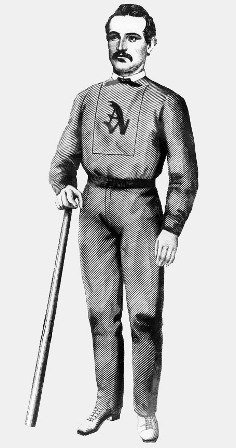
Alfred James “Al” Reach opened his first sporting goods store in Philadelphia in 1874 while playing for the Athletics in the National Association.  Within a decade he had built a hugely successfully business, began publishing “Reach’s Official Baseball Guide,” and established a National league franchise in Philadelphia.

In May of 1886 Reach talked to The Philadelphia Times about “one of the great industries of Philadelphia in the sporting line.”

“Men, women and children are employed in making base balls.  The cheaper ones are made by a press with leather shavings on the inside.  The body is wrapped with cotton and covered with leather.  The covering is done by hand.  The best balls—the ones in use by the American Base Ball Association—are a solid piece of Para rubber on the inside, covered with worsted yarn and then with an outside covering of horse-hide.  Men do this covering.  They are mostly harness-makers, yet they have to broken into the work, for even a good harness-maker may be a poor hand at covering and sewing a ball properly.”

Al Reach

Al Reach

Reach said the company had orders for “five hundred dozen, or six million, balls already for this season,” and the company was “two hundred thousand dozen behind” filling the orders:

“We have had the factory running until ten o’clock at night all winter.  Base balls sell from 5 cents to $1.25 apiece…Three-fifths of all the balls used in the country are made in Philadelphia.”

—–

“Base ball bats are made of willow, spruce and first and second-growth ash.  The latter wood makes the best bet.  They are sold at fifty, sixty and seventy-five cents each.  There are about sixty thousand bats used every season.  Our orders already indicate that we will dispose of at least fifteen thousand of the best quality.”

Reach said the company employed “upwards of five hundred persons.”

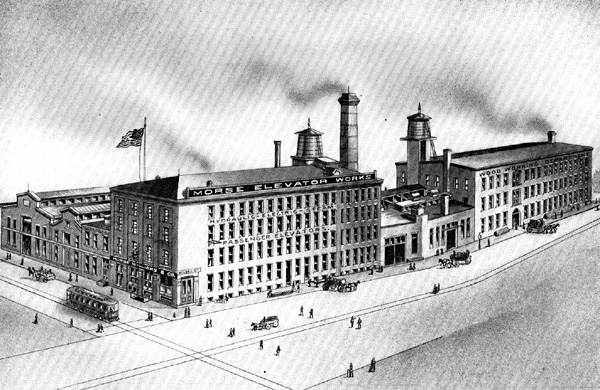
Reach's main factory in 1886 at Frankford Avenue and Wildey Street in Philadelphia---The Martin Landenberger Hosiery Mill Complex/Morse Elevator Works Building

Reach’s main factory in 1886 at Frankford Avenue and Wildey Street in Philadelphia–The Martin Landenberger Hosiery Mill Complex/Morse Elevator Works Building

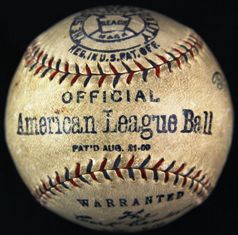
By the end of the decade Reach’s company was purchased by A.G. Spalding, with Reach staying on as an executive and the company continued to produce equipment with the Reach name, including the official American League baseball, which was used through the 1976 season.

Reach maintained controlling interest in the Phillies until 1899 and died in 1928.  He left an estate worth more than $1 million.

Reach Official American League ball 1920s

Reach Official American League ball 1920s