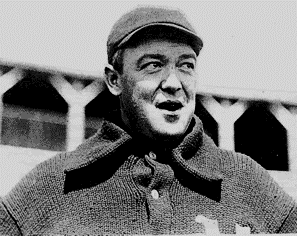
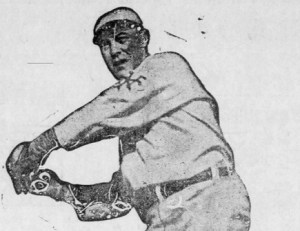
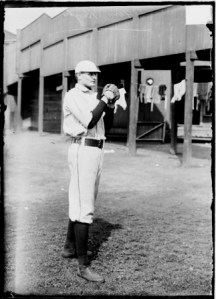
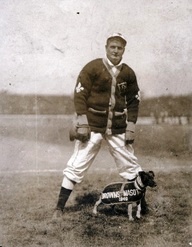
Tag Archives: Rube Waddell

“Rube was a Jester, Baseball’s First and Only”

16 Apr

In 1914, Roy J. Dunlap was a reporter for The St. Paul Pioneer Press.  He had come to the paper the previous year from The Duluth News-Tribune where he covered baseball and served as official scorer for the Duluth White Sox in the Northern League.

Shortly after Rude Waddell’s death on April 1, 1914, Dunlap told readers about the final game Waddell appeared in as a pro July 3, 1913 (In his original version, Dunlap said the game was played on June 28, but The Virginia Enterprise and other papers confirm the game was played on the 28th).  Waddell was pitching the Virginia (MN) Ore Diggers against the White Sox.

“Waddell made millions of dollars—for the club owners.  His big, jolly nature never permitted him to turn his jesting to his own pecuniary benefit.  For Rube was a jester, baseball’s first and only.  Beside him Germany Schaefer and Nick Altrock are only superclowns.”
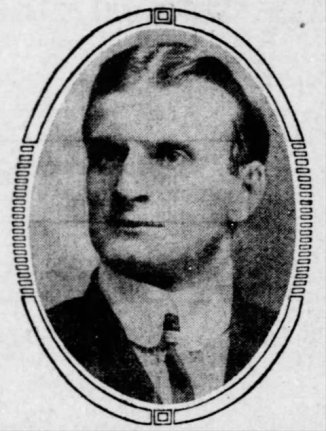
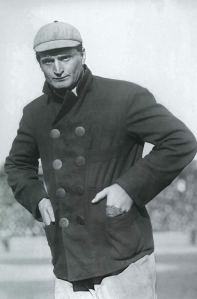
rube

Rube

Dunlap said of Waddell’s final game:

“Those 2,000 or more fans who sat on the bleachers or in the grand stand and doubled up with laughter at the jester’s antics probably never will forget that eventful day.  Perhaps Rube knew it would be his last fling.  The more one thinks of his work in the twelve grueling innings the more he is impressed that Rube felt the intuition of an invisible fate.  Rube ever has been fate’s plaything. Fate molded him into a jester, and has criss-crossed his eventful life since.

“Rube admitted it.  He never could explain why he went fishing the day he was scheduled to pitch while fans called for him and irate managers scoured his old haunts, gnashing their teeth; he never could explain why he went to a fire in the midst of an exciting game or why he rescued drowning men from the bottom of a lake.

“Rube’s last year in baseball was filled with misfortune.  He was stricken with a fever in the training camp at Minneapolis American Association team at Hickman (Kentucky, where Waddle came down with pneumonia after helping to the save the city from a devastating flood) and was not in shape to pitch at the opening of the season.”

Waddell began the 1913 season with the “Little Millers,” the Minneapolis club in the Northern League, and as Dunlap put it:

“The old listless, wandering spirit nature seemed to grip him and he became careless.”
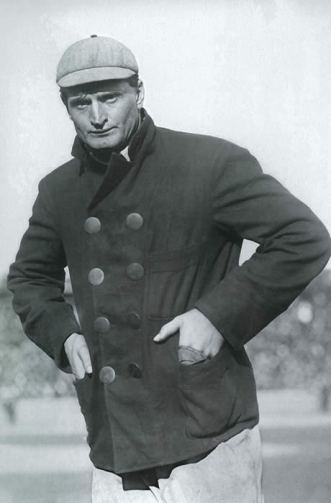
rube

Rube Waddell

Waddell was released by Minneapolis, then:

Spike Shannon…manager for the Virginia team, which was in last place, put in a bid for Rube.  Probably Shannon figured him from a gate standpoint.  His team was a poor attraction because of its cellar position almost from the start.  If that were his motive he made a shrewd move.  Rube Waddell was a drawing card and this power he held until the last.

“Waddell joined the Virginians at Duluth one rainy day early in June.  He was still suffering from a ‘game’ leg, although it was on the mend, and he was able to be in a game once in awhile.”

Then, said Dunlap, Waddell disappeared:

“Shannon knew where he was, but beyond an evasive answer he would shed no light on Rube’s whereabouts.

“The team traveled about the circuit and the fans called for Rube, but Rube was not there.  Then one day, press dispatches carried a thrilling story, and the secret was no more.”

Dunlap here claimed while Waddell was away from the team “camping” he saved two men from drowning—the story likely a conflation of the oft told story of Rube saving a woman from drowning, and his role in recovering the body of a drown man in Tower, Minnesota on July 9, 1913, The Associated Press said Waddell recovered the body, “after several good swimmers had failed.”

At some point in late June, Waddell rejoined the team, pitched and played outfield, and was scheduled to pitch June 28:

“Waddell was advertised to pitch the first game.  The curious fans filled the grand stands and bleachers.  When the big fellow stepped out to warm up he was cheered to an echo.  But underneath it all there was a note of sadness.  None could help recalling his career.  They saw, in their imagination, Rube Waddell standing in the pitcher’s box at Shibe Park, Philadelphia.  They saw him in the height of glory striking out man after man, and heard again the plaudits of the fans.  Then in reality they saw him in a minor league, one of the newest and greenest in organized baseball and Waddell was pitching for the tail enders.

“Waddell had the art of jesting down to a fine point.  He never displayed it to a better advantage than that day.  He knew when to pull the funny stuff and when to tighten.  He did his best to win that game because he knew the crowd expected it.  But he was pitching against a youngster (Harry “Pecky” Rhoades) who was hitting his best stride, and it was youth against ill health and stiffened joints.  Duluth won the game 2 to 1.  Rube fanned 12, but his team did not give him the slugging support.  His opponent struck out 17 Virginians.”
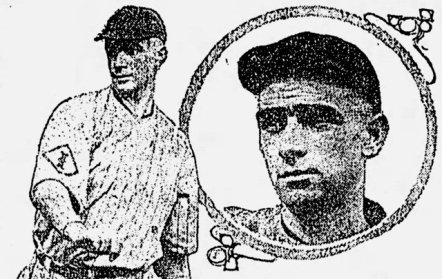
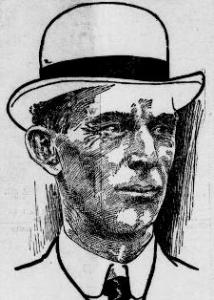
peckyrhoades

Pecky Rhoades

Dunlap continued his story, telling the story of how Rube began the game:

“Rube walked to the plate, keeping step to the hand clapping of the crowd.  He surveyed carefully the pitcher’s box, gave his outfield a careful glance, turned, bowed to the crowd, motioned to the batter to get closer to the plate and put over the first pitched ball-a strike.  The catcher returned the ball, but Rube’s back was turned.  He was looking at something out in centerfield.  The fans shouted but he never looked around.  Suddenly he made a quick step, his face still turned away, put his hand behind his back and caught the ball.

“He retired the batter in short order on strikes.  Rube smiled.”

Both The Duluth News-Tribune and The Virginia Enterprise reported the same score and strike out totals the day after the game, The News-Tribune called the game “One of the great pitching duels seen here.”

Said Dunlap of Waddell’s death:

“Before the end he sent out a little message.  He said in it a few words, but it was a sermon.  Had this commandment been followed by the author the name of Rube Waddell might have been with that of Mathewson today, and fans would be speculating on when he would be too old to pitch.

“This is the sermon-message:

“Tell the boys to cut out the booze and cigarettes.”
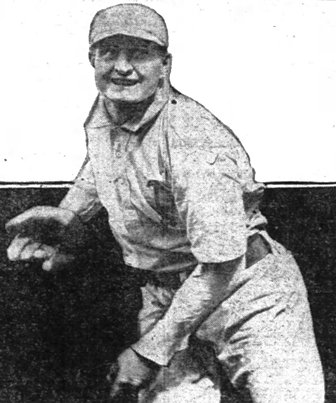
“Inaugural Sample of his Peculiarities”

12 Jun

When Rube Waddell arrived in St. Louis after spring training in French Lick, Indiana in 1908, The Pittsburg Press reported:

“(The) Crazy pitcher gives St. Louis inaugural sample of his peculiarities.”

rube

Rube Waddell

The paper said when Waddell and the rest of the Browns got to town they stayed at St. Louis’ Planter’s House Hotel:

“When it came time to retire, about 10 o’clock, Waddell and (Bill) Dinneen found they had both been assigned to room 608.

“Dineen said he wanted a room to himself because of a boil on his knee.  Then Waddell got on his dignity and stated he wanted a room to himself anyway and must have one.  The clerk demurred and took the position that (Browns) President (Robert) Hedges had ordered the men to double up while at the Planters.

Waddell told Dineen he could have the room by himself, if that was the case, as he intended to move.  He went upstairs, packed his suitcase and went to the Empress Bar on Walnut Street.  Waddell decided he had a grievance and was also certain he was thirsty.

“He satisfied the thirst in an orderly manner, and, then to make himself useful, he ordered the bartender from behind the mahogany and held down the job for 30 minutes.  Meanwhile, word had been sent to Hedges and (Manager Jimmy) McAleer, and scouts located Waddell.”

Another Rube Story

7 Jun

There was no end to the stories told about Rube Waddell—some were even true.

This one, from 1905, was told by umpire Charles King, who worked in the American League in 1904.  King—identified as “Steve” King by The Pittsburgh Press, said:

rube

Rube

“One day Rube came to me and asked me to loan him my umpire’s togs and indicator.  I am about 5 feet 9 inches, and you can imagine about how my clothes would fit the big Waddell.”

King said Waddell claimed he wanted to play a trick on his teammates and would return the items before that afternoon’s game.

“That was the last seen of Waddell in Philadelphia for three days.  He had been slated to pitch the afternoon that he borrowed my clothes; Connie Mack was worried and mad.  As for me, I had to umpire in civilian garb.

“While sitting around the hotel on the third night following Waddell’s disappearance, who should come stalking into the hotel but the missing Rube.  He was all smiles.

“’Where’ve you been, Rube?’  Shouted several of the players in chorus.

“’Oh, up the country a little ways, where I had been invited to umpire a game,’ answered Rube.  ‘I umpired for a couple of innings, pitched two innings, covered first base for one round, and then went up in the grandstand, took away the scorekeeper’s book and acted as official scorer for the remainder of the game.’”

Another Rube Waddell Story

19 May

John Ganzel played seven seasons in the major leagues for five teams, and he claimed he only had one beer his entire life.


While managing the Rochester Red Wings in 1912, Ganzel told a reporter about the circumstances.  The story appeared in numerous newspapers—including The Rochester Democrat and Chronicle.

Ganzel, a teetotaler, went into a bar with a friend in Marlin, Texas in 1907.  Ganzel and the Cincinnati Reds were training there, as were the Philadelphia Athletics—and pitcher Rube Waddell:

rube

Rube Waddell

Ganzel ordered a ginger ale.

“A moment later in walked Waddell and ordered a glass of beer.  The drinks were untouched when Connie Mack, also a teetotaler, stepped into the barroom to use the telephone.

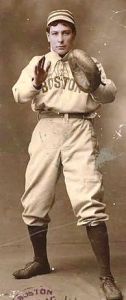
mack

Connie Mack

“Connie spied the Rube.  But the Rube had seen him first in the mirror behind the bar.  Quick as a flash he switched the drinks then held the ginger ale aloft in a conspicuous way and hailed Mack.

“’Hello, Connie, come over and have a ginger ale with me,’ he said.  Mack joined him and they drank ginger ale together.

“In order to spare the Rube embarrassment and a possible fine, I had to drink the Rube’s beer, the first and only alcoholic indulgences of my life.”

Rube in L.A.

1 Jun

Bobby Eager was a popular, if not enormously talented, catcher for eight seasons in the California and Pacific Coast Leagues.  After his career, when he wasn’t at his job with Standard Oil, The San Jose News said he could be seen in town “any afternoon when the weather is right, fanning with a bunch of fans.”

The paper decided he enjoyed telling stories about his career so much, they offered him an occasional column to tell his stories and share his opinions.

One of his favorite subjects was Rube Waddell, who spent part of the 1902 season on the West Coast.  Eager called him “The greatest southpaw pitcher” he had seen.

Eager behind the plate.

Eager behind the plate.

“When Rube Waddell was with Los Angeles he was the life of the club.  There was never a dull minute with Waddell on the bench.  If ever there was a nut he was it.  They called him a rube.  Don’t know where they picked up the name, but he was anything but what his name would indicate.  With all his antics Waddell was a wise coot, and if you think he wasn’t I would like to have the extra money it cost (Angels Manager) Jim Morley to keep him on the team.

“It was a cold day that Rube didn’t ‘touch’ Jim for a five-spot.  Rube was getting a fat salary—as fat as salaries went in those days… Never knew exactly what Waddell got, but I know it was more than any other player on the club pulled down.

Rube

Rube

“While Rube was on the club Morley slept with one eye open.  He was always afraid of losing him.  On this occasion, Waddell had just made a borrow off Jim of a twenty-spot when word drifted into Morley’s billiard parlor that Waddell was seen going toward the railroad station. The rumor was sufficient to stir Morley.”

The manager quickly took action.

“Morley rang up the depot and found a train left in 10 minutes for the East.  He dashed out on the street, jumped into the first carriage he saw and drove pell-mell to the train.  Into the Pullman car he hiked and sure enough, there was Waddell. He had bought his ticket and was going back to report to Connie Mack, who had come through with more money.  At first, Waddell denied he was leaving.  He said he just came down to see a friend off, but he soon had to admit that he had a ticket.

“Jim came through with another piece of change and Waddell surrendered his ticket and returned to the team.  But he wasn’t with it very long before he beat it.”

Waddell “beat it” for good on June 20, leaving the West Coast for Philadelphia.  He was 11-8 with a 2.42 ERA with the Angels, with the Athletics he was 24-7, 2.05–he pitched a total of 444 innings that season.

Eager said despite the money Los Angeles was out, “I doubt if Morley lost much on Waddell for he was always a drawing card when he pitched and one good thing about Rube he was never lazy.  He would pitch every day if you would let him.”

“The Rube was ever a Friendly Spirit”

15 Apr

Four years after Rube Waddell played his final game for the Athletics, The Philadelphia Bulletin told a story that, like much of the Waddell canon, may or may not be apocryphal:

Rube

Rube

“To those who know the steady, staid (Connie) Mack, the following may appeal:

“A ‘cub’ reporter in Chicago strayed into the clutches of the Rube one afternoon and impressed the great pitcher with the fact that he must have something startling in the way of news or be apt to lose his position.

“The Rube was ever a friendly spirit, sympathetic with the weak, even if he had to tap the strong to reimburse the fallen.”

So, said The Bulletin, Waddell was determined to provide the young reporter with a “Startling” scoop:

“I’d take you to see Connie,’ opened the Rube, ‘but he and (Michael) ‘Doc’ Powers are playing poker and ‘doc’ hates to be disturbed when they are gambling.”

Mack

Mack

He then told the reporter that Lave Cross was:

 “Off somewhere and I guess he is tending bar for a friend somewhere on State Street. (and) I don’t know any news to give you except that all this stuff about Ossee Schreck (Schrecongost) is a ‘kid,’ he never fools with the firewater and every time that Monte Cross gets off the wagon why they blame it on me or Schreck.”

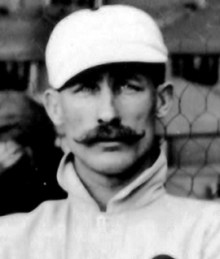
Ossee Schrecongost

Schreck

The reporter hurried back to his paper:

“(T)uring over in his mind the thought that Mack was gambling with his players, Lave Cross was the wild man and that Monte Cross was the real culprit when it came to tapping the paint.  He whirled off a story on the machine and handed it to the sporting editor.  That dignitary looked at the cub, scratched his head and kindly asked the youth where he secured his information.

“’Why, it’s big news and ‘Rube’ Waddell gave it to me,’ answered that unsophisticated party.  ‘Well, young man,’ continued the sporting editor, ‘Connie Mack never wagers, drinks or smokes; Lave Cross is the quietest man in the world and does not tend bar, and Monte Cross is a white ribboner.”

Monte

Monte

The editor of the Chicago paper went to Mack and informed him about Waddell’s conversation with the young reporter:

“Connie, Lave and Monte had a quiet laugh and derived considerable interest watching Waddell load up with a bundle of newspapers each day to catch his red-hot interview.”

Lave

Lave

Lost Advertisements–Anheuser-Busch, Washington Senators

5 Feb


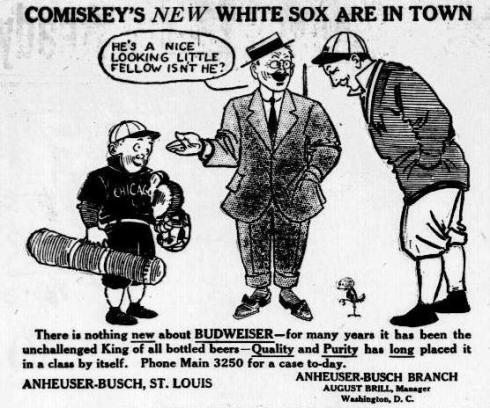
ab1910sox

In 1910, a series of Anheuser-Busch ads  appeared in several Washington D.C. papers. The ad above appeared when the Chicago White Sox faced the Senators in early May:

Comiskey’s New White Sox are in Town

The headline referred to Charles Comiskey‘s shakeup of his team, which included the appointment of Hugh Duffy as manager, and a new starting infield; first baseman Chick Gandil, second baseman Rollie Zeider, and shortstop Lena Blackburne, and Billy Purtell at third.

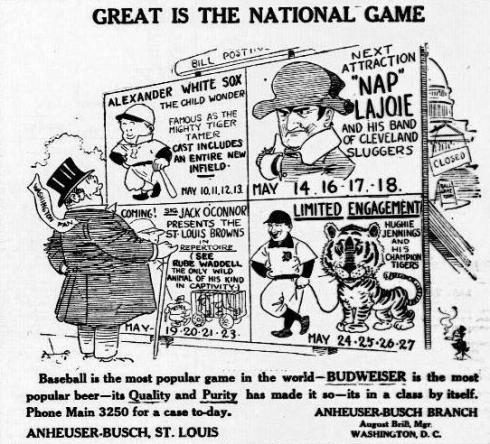
An advertisement later that week featured caricatures of Napoleon Lajoie and Hughie Jennings, and described Rube Waddell as “The only wild animal of his kind in captivity:”

ab1910nap

The ads were similar in style and content to those for Old Underoof Whiskey that appeared in Chicago papers during the same period–all advertised upcoming games, commented on the behavior of fans and players, and chronicled the year’s pennant races–with one exception.

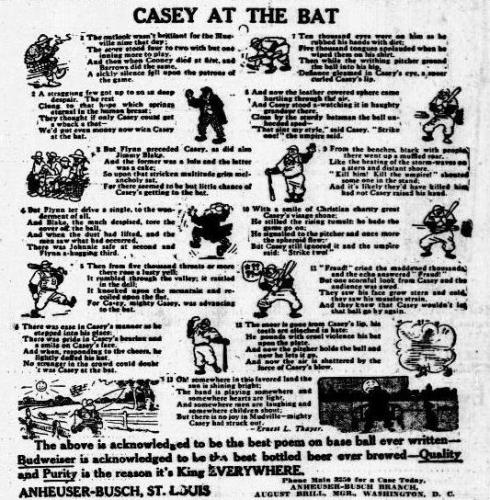
A July ad featured the full text, with illustrations, of Ernest Thayer’s “Casey at the Bat:”

ab1910casey

They only appeared for one season.


“Everyone Knows the Human Insect”

13 Jan

Arthur “Bugs” Raymond, obtained by New York Giants at the end of 1908 in the trade that sent Roger Bresnahan to St. Louis, was a great talent but long considered second only to Rube Waddell as baseball’s most eccentric pitcher.

Manager John McGraw was convinced he could succeed with Raymond where other managers had failed.  James Hopper, college football coach, turned novelist and journalist, wrote about Raymond’s first spring with the Giants in “Everybody’s Magazine:”

“’Bugs’ Raymond belongs to the old type of professional baseball player. He is a big child, thoughtless, improvident, a wonder of efficiency at his craft, but totally irresponsible outside of it.  He has been pitching for several years on ‘tail-ender’ clubs—indifferently, in spite of natural gifts, because always out of condition… (McGraw) thinks he can ‘handle’ him.  And he is doing so, thus wise;

“He does not let him have any money. ‘Bugs’ is married and his wife is an invalid.  The contract between (The Giants) and ‘Bugs’ provides that the latter’s salary each month shall go in toto to Mrs. Raymond…Result, a perpetually penniless ‘Bugs’ living an enforced simple life.”

Bugs Raymond

Bugs Raymond

As a result, Hopper said Raymond had behaved and “gradually regained the lithe lines of an athlete,” during the spring in Marlin Texas.

And, six weeks into the 1909 season, it appeared McGraw’s strategy was working.  Raymond won five of his first seven decisions for a team that was 17-17 at the end of May.

Most of what was written about Raymond that season was superficial; many of the stories apocryphal, nearly all of them portrayed him as a simple-minded clown.  One exception was a profile written in May by Sid Mercer of The New York Globe—it remains one of the only articles about Raymond that doesn’t reduce him to a caricature:

“It isn’t necessary to introduce Mr. Arthur Raymond.  Everybody knows the Human Insect.  He’s the easiest fellow to get acquainted with that you ever met.  Just at present, he is the leading pitcher of the Giants, although that is not much of an honor, considering the position of the team.  However, the Chicago citizen is delivering the goods in large packages…Raymond is one of the great pitchers of the country, yet he does not take baseball seriously.

Bugs

Bugs

“He never has got over being a boy, although he is close to 30-years old.  He gets lots of amusement out of the ordinary things of life and of course, his escapades are usually exaggerated.  But do not take the eccentric twirler for a simple fellow.  Raymond has no use for money except to spend it, but he is nevertheless fairly well educated, and when his mind turns to serious thoughts he is quite a different person than the fans imagine he is.

“’I may be crazy,’ he once remarked.  ‘but I ain’t as crazy as Rube Waddell, and I’m no fool.’

“While it cannot be said on good authority that Raymond is a total abstainer, yet he seldom pitches a bad game.  Whatever his faults or weaknesses he earns the salary that is paid to him. His rollicking disposition long ago developed in him a distaste for the accumulation of wealth, so the most of his salary goes to Mrs. Raymond and three children ([sic] Raymond had just one child) in Chicago, while Bugs gets along on a little and has just as good a time as if he handled it all.

“Raymond was originally a pressman on a Chicago newspaper and he has already visited the press rooms of most of the New York papers.  There is nothing of uppish about him and the pressmen are all strong for him…With the bleacherites Raymond is a big favorite.  He is one player who likes to talk baseball to the fans, and his disposition is one that makes friends.  The big fellow is big hearted and generous and there isn’t a mean streak in him.”

Raymond did not finish the 1909 season with the Giants.  He was 18-12 with a 2.47 ERA in mid-September when he left the club, or was asked to leave, or left by mutual agreement, depending on the source.

He was said to be tending bar in New York in late September—but that story is questionable as most contemporary accounts say he was with the Giants when they arrived in Pittsburgh on September 27 and returned to his home in Chicago on September 29.  He told The Chicago Daily News:

“I was fined again and again and suspended until I couldn’t stand it any longer.  My salary for the year was $4500 but McGraw fined me $1700 on one pretext or another, so I’ve got only $2800 for my work this year.

“I was unjustly suspended a short time ago, and this was the last straw.  McGraw didn’t seem inclined to give me a chance to work, and so I quit the team and came home to Chicago.  I may pitch a few games here for some local teams.”

McGraw tried and failed two more times with Raymond—he was 10-15 in 1910 and ’11 with the Giants.  He was dead 15 months after his final game with New York.

Rube Waddell, “How I Win”

9 Dec

Joseph B. Bowles, a Chicago journalist, produced a series of syndicated interviews with baseball stars in 1910.  Among them, Rube Waddell on “How I Win:”

“Curve them when they think they’re coming straight, straighten them out when they are expecting a curve, lob them when they are set for fast ones; and come on with the speed in a pinch.”

Waddell said his fastball and curve were effective but gave just as much credit to having “outguessed about as many batters who were trying to outguess me,” as any other pitcher.

Waddell

Waddell

The interview suggests Waddell was very aware of his reputation and used it to his benefit:

“There are a lot of fellows who think the ‘Rube,’ as they have called me ever since I was a rube, isn’t doing much thinking, but they keep taking three healthies and sitting down just the same…I know all the batters and where to pitch to them—or where not to pitch, rather—but in a game I watch them closely to see what they are trying to do, and then ‘cross’ them with something else”

Control said Waddell was critical:

“Control has been the great trouble with all left-handed pitchers, and very few of them can put the call where they want it to go.  I always have had pretty fair control and sometimes perfect control for months at a time.  A fellow cannot say honestly he always has it for there are times when the ball won’t go anywhere he wants it to go.”

He also credited his motion for his success:

“A good motion is necessary, not only to keep the batters from getting on to what a fellow is pitching, but also to save the strain on the pitching arm and back, and to add to the speed.  The only thing it hurts is control, and if you notice when a left-hander is wild it is mainly because he is swinging himself off his stride.  Then he has to shorten up the swing to regain control, and if he has not the speed with the shorter swing—bing bing—and to the bench for him.”

Rube

Rube

Like many pitchers, Waddell said he preferred taking the mound on overcast days:

“The easiest games for me are on dark days when I can just cut loose the speed and curve and mow them down,  On days like that a pitcher with speed does not need to strain his head thinking.  He can just pitch.”

Connie Mack vs Herman W. Souse

6 Nov

In his autobiography “My 66 Years in the Big leagues,Connie Mack said, “My first great disappointment came in 1912.”

Connie Mack

                          Connie Mack

After two straight World Series victories, Mack’s Athletics stumbled to a disappointing third-place finish.  With his team 15 ½ games out of first on September 6, Mack suspended pitcher Charles “Chief” Bender and Reuben “Rube” Oldring for, as The Philadelphia Inquirer  put it:

 “(T)heir failure to live up to the training requirements, as demanded by Mack and all common sense baseball managers.”

Chief Bender

                                Chief Bender

The Inquirer said “Mack refused to discuss this matter further,” but just days later in Detroit he gave what The New York World called “a sermon” on the reason for the suspensions:

“Booze and baseball don’t mix; never did, and never will. A pitcher who thinks he can fan Herman W. Souse is simply pitching to the greatest home run hitter he ever faced.

“Once in awhile you hear of some marvel who can stay out all night, drink all the breweries dry, wreck a few taxi cabs and otherwise enjoy himself, and then step in the box and pitch a wonderful game of ball.  Players who haven’t any more sense point to Rube Waddell, Bugs Raymond and that brand and say: ‘Ah, those were the good old days.  None of these high-priced managers and their red tape then.  And what wonderful players we produced in those days.’

“Well, look at Waddell—one of the most remarkable pitchers nature ever produced.  But Waddell, with all his talent, couldn’t stay in the major leagues.  Why?  Because he stood there and pitched himself to Old Man Barleycorn, and finally every one he threw was slammed over the fence.  And that’s the way all go.  Is it so wonderful, after all?

“No, sir, the day of the stewed ballplayer has gone and it won’t come back.  If the members of my team want to drink, all right.  But they can’t drink and play ball at the same time.  That’s settled.  They can do whatever they prefer, but they can’t do both.

“There are no exceptions to my rule, either.  Any manager will tell you the same.  A short life and a merry one—that’s it.  And the merrier it is the shorter it will be in the big leagues.”

In December of 1912, The Philadelphia Record said Bender had written a letter to Mack asking his manager “to please forgive him.”

According to The Inquirer, he was forgiven and set to return to the Athletics in 1913:

“This winter Bender has spent nearly all the daylight hours automobiling and hunting in the South.  He looks stronger than ever.”

The “stronger,” sober Bender appeared in 48 games, 21 as a starter, and posted a 21-10 record with a 2.21 ERA, and helped lead the Athletics to their third championship in four seasons.

In “My 66 Years in the Big leagues” Mack said of him:

“Let me say here that I consider Chief Bender the greatest one-game pitcher, the greatest money pitcher baseball ever has known.”