Tag Archives: Washington Senators

Franz Hosp

19 May

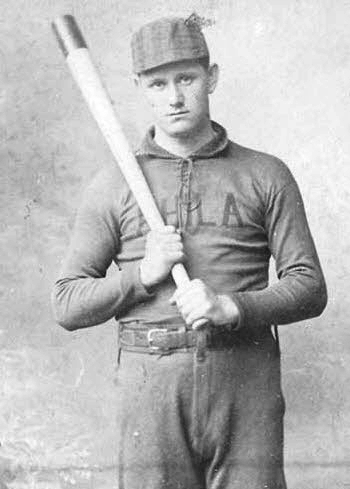
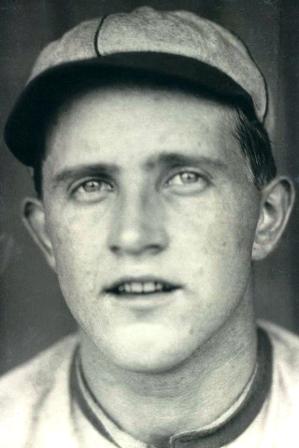
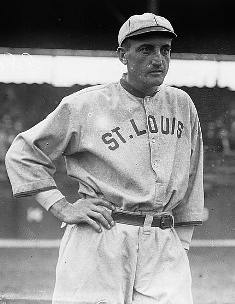
Franz Philip Hosp Jr. was born in Cincinnati in 1884 (some records, including cemetery documents and his grave say 1883).  His father was a well-known landscape architect and horticulturist who moved the family to Riverside, California in 1888.

The elder Hosp was responsible for many projects in the Southwest and Southern California; he is probably most famous for his landscaping of Victoria Avenue in Riverside, which remains a tourist attraction and is listed on the National Register of Historic Places, and for planting the gardens at the El Tovar Hotel in Grand Canyon National Park.

The family also ran a successful nursery in Oceanside, California  and Hosp worked with his father while playing baseball in the San Diego area.

Franz Hosp

Franz Hosp, 1909

In December 1906 he pitched for the San Diego Pickwicks (sponsored by San Diego’s Pickwick Theater) of the California Winter League.  Hosp quickly caught the eye of West Coast professional teams; according to The Los Angeles Times he had a streak of thirty-one scoreless innings that winter and “fanned as many as eighteen men in a single game.”

The Los Angeles Herald said two teams, The Butte Miners and the Seattle Siwashes of the Northwestern League, had already “tried hard to secure his services,” when he pitched against the Los Angeles Angels of the Pacific Coast League (PCL) in a February exhibition game in San Diego.

The Associated Press said the game

 “(W)as the first time in which he allowed as many as seven hits, and after doing, he took a brace and fanned out an equal number of Los Angeles’ best artists, with the result being that the Angels’ manager (Henry ”Hen”  Berry) lost no time in annexing Hosp to his own aggregation.”

Hosp said he chose to play with Los Angeles so he could continue working at the family business in Oceanside.

The pitcher was a popular member of the Angels.  The Los Angeles Herald said:

“Pitcher Franz Hosp is not only one of the best twirlers in the coast league, but he is also one of the most genial boys who ever donned a baseball uniform.  Hosp has forgotten more baseball, young as he is, than many of the swell headed players who roar at decisions have ever learned.”

The Times said of Hosp, who also played second base and shortstop:

“His work in the field and at the bat is equal to his performance in the box making him one of the best all-around men in the business.”

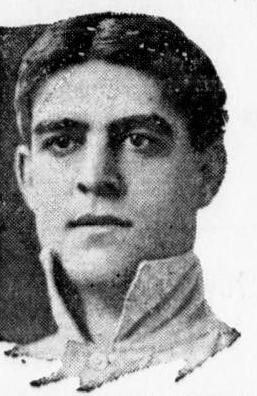
Hosp was 12-7 with a 2.73 ERA for the PCL champion Angels in 1907; he also played 13 games in the infield, hitting just .105.
franzhosppix

Franz Hosp

The following season Hosp (22-14 2.02), William “Dolly” Gray (26-11, 2.12), and Walter “Judge” Nagle (24-10, 1.94) led the Angels to another league championship.  On July 26 he had the most embarrassing moment of his career during a game with the San Francisco Seals.  The San Francisco Chronicle said:

“Hosp of the Angels established a unique and startling record yesterday afternoon, one that bids to stand a long time in baseball circles.  Not only did he literally pitch the game away, but in one inning—the fourth—he walked six men and hit two more, forcing in five runs across the plate without a hit by the Seals.  Not a ball was hit out of the diamond.”

(Just more than a year later, August 28, 1909, Hosp’s former teammate Dolly Gray, now a 30-year-old rookie with the Washington Senators, set the major league record by walking eight Chicago White Sox batters in one inning).

Hosp was 16-14 in August of 1909 when he was signed by the Cincinnati Reds for 1910.  Within a week he hurt his arm and did not pitch again for the remainder of the season.

By the spring of 1910 there were conflicting reports about the condition of Hosp’s arm.

The Times reported that according to Angels pitcher Andy Briswalter:

“Franz Hosp, whose clever pitching resulted in his purchase by the Cincinnati Reds, may never play ball again.”

The Herald said Hosp:

“(D)enied with considerable indignation the story purporting to be an interview with Andy Briswalter.  According to this story, Hosp’s arm was said to be in such condition that he might never play ball again.  While Hosp was overworked last season, when his sensational work with the Seraphs resulted in his being purchased by the Cincinnati Reds, he stated that he never felt better and that the rest of the past winter overcame any inconvenience or ill effects.  Hosp says he hasn’t seen Briswalter in six months.”

Hosp joined the Reds in Hot Springs, Arkansas, and was first tried in the outfield.  The Cincinnati Enquirer said after his debut:

(Ward) Miller and (George “Dode”) Paskert will have a dangerous rival for the right field job in the person of Franz Hosp, the recruit from the coast, who was signed as a pitcher but will try out as a fielder…He is a right-hand hitter, a good-sized, well-built fellow, and meets the ball square on the nose.  He came to bat five times; made a double and two clean singles…He showed a lot of speed on the bases and appears to be a kid who will bear watching.”

When finally given a chance to pitch, against the Boston Red Sox on March 25, after two scoreless innings, he gave up four singles and doubles to Harry Lord and Tris Speaker, in the third, resulting in three runs and was lifted for a pinch hitter the following inning.

Hosp was also tried in the infield where he “has made a fine impression.”  But it wasn’t enough to stick with the Reds.

The Herald reported in early May:

“Franz Hosp, one of the best pitchers who ever worked in the Coast League and who was released to Los Angeles by Cincinnati almost ten days ago because his pitching arm is kafluey for a time is warming up with the Angels every day and Hen Berry thinks he will get back into pitching form again soon.  He is a crack infielder too, and a heavy sticker, so it is dollars to cents that he will not be idle long.”

Hosp made his mound debut for the Angels on May 20; he pitched a complete game, losing 5 to 3.  The Herald said:

“Hosp showed excellent form for a pitcher who has been out of the game as long as he, and with a weak and sore arm, and he should be able get back to his best form with a little patience and careful slab work until his arm is ripe again.”

The paper was wrong, the extent of Hosp’s activity as a pitcher after that game was four innings in three games over the next year and a half.

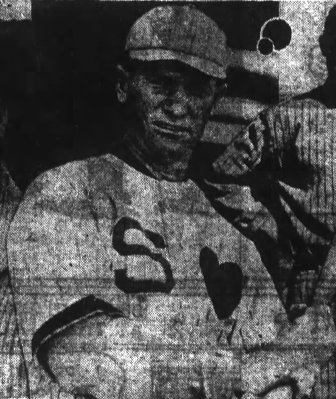
Hosp was released by the Angels on June 15, along with Briswalter, who The Times claimed four months earlier had said  Hosp’s arm was shot; Briswalter had not recovered from a hip injury sustained during the 1909 season, he developed Tuberculosis of the injured bone and died in 1912.

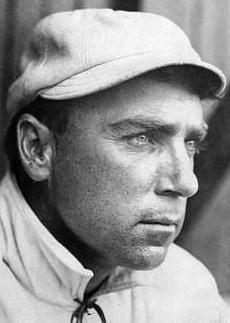
Andy Briswalter

Andy Briswalter


Hosp continued to play for a decade.

Within weeks he was signed to play shortstop for the Vernon Tigers.   He hit just .240 for the Tigers, but The (Portland) Oregonian called him “a nifty fielder.”

Hosp became the team’s regular shortstop, through their move to Venice, California.  He hit .261 in 1911, and 1912, .255 in 1913, and then slipped to .208 in 1914.  He was released before the 1915 season and played for the Wichita Witches in the Western League.  He returned briefly to the PCL at the end of 1915, but was released by the Oakland Oaks prior to the 1916 season.  He returned to the PCL in 1918, playing for four teams over the next three seasons, ending his career after 56 games with the Salt Lake City Gulls in 1920.

Hosp returned to Southern California where he played and managed for semi-pro and industrial league teams and lived in Los Angeles.

On June 30, 1928 he was killed in a car accident on Coast Highway (US 101) 16 miles north of Oceanside.
Lost Team Photos–Delhanty’s Last

11 Apr

1903senators

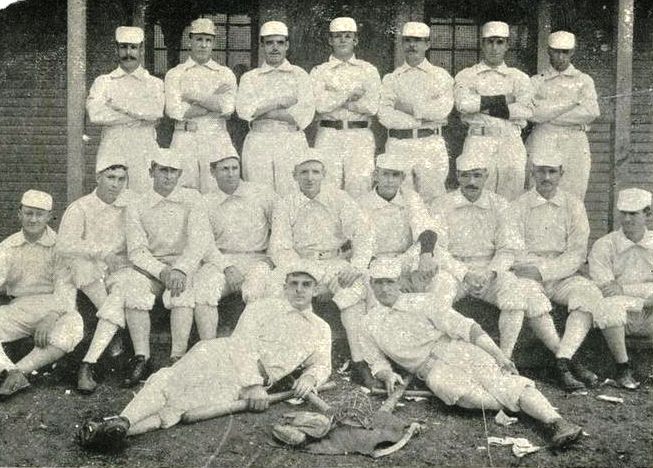
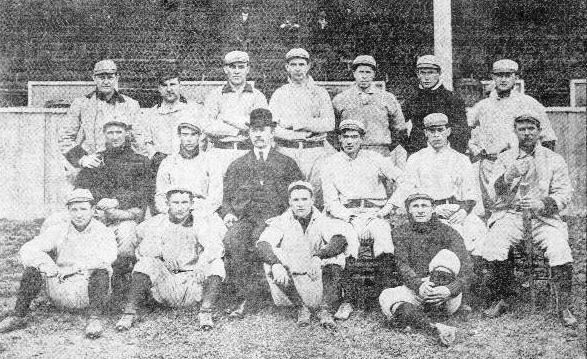
The 1903 Washington Senators.  Photo was taken the day before the Senators 3 to 1 victory in the home opener against the New York Highlanders at National Park.

The Senators–sixth place finishers in 1901 and 1902–were in eighth place by May 8 and never gave up their spot in the American League cellar.  The horrible season was made worse when the club’s best player Ed Delahanty was swept over Niagara Falls and  died on July 2–Delahanty’s death has been chronicled by many excellent sources.

When this photo was taken, Delahanty had been forced to rejoin the Senators after having signed in the off season with the New York Giants–he was badly hurt financially by the peace agreement between the American and National Leagues–Delahanty, who made $4,000 in Washington in 1902 had signed for between $6,000 and $8,000 (contemporaneous sources disagreed on the amount) and a large advance, which he was forced to return.  Despite his financial woes, Delahanty still managed to hit .333 for the last-place team at the time of his death.

The photo above is the last team picture which included the future Hall of Famer:

First row: James “Ducky” Holmes, William “Rabbit” Robinson, Gene DeMontreville, Lew Drill

Second row: William “Boileryard” Clarke, Wyatt “Watty” Lee, Manager Tom Loftus, Bill Coughlin, Joe Martin, Jimmy Ryan

Standing:  Delehanty, Albert “Kip” Selbach, Al Orth, George “Scoops” Carey, Casey Patten, John “Happy” Townsend, Charles Moran

Loftus was let go as manager after the 43-94 season.  The team would not finish better than seventh place in the American League until 1912.

Ed Delahanty

Ed Delahanty

“This whole Trouble, Disgraceful to be sure, may be Blamed directly on Jack Sheridan”

14 Mar

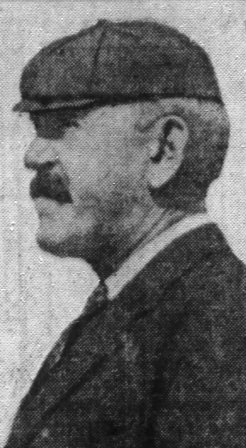
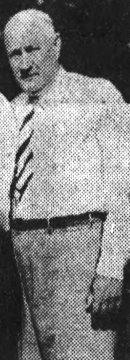
On April 7, 1901, The San Francisco Call reported that John F. “Jack” Sheridan had accepted an offer from President Ban Johnson to continue working as an umpire in the American League—which operated as a minor league the previous season.  The paper said “The National League also made a bid for his services.  He will receive $400 a month and expenses.”  It was said to be “the largest salary ever paid to an umpire.”

Sheridan was a former player, a second baseman and outfielder, who played for several San Francisco teams in the California League, including stints with the Haverlys from 1883-85.  He went East in 1885 and appeared in six games for the Chattanooga Lookouts in the Southern league, and that same season began working as an umpire.

sheridanpix

Jack Sheridan

Years later, Mique Fisher, long-time California and Pacific Coast League manager and executive told The (Spokane) Spokesman-Review that Sheridan was signed by the Lookouts after he “sold himself to Chattanooga through a glowing personal description of his own ability,” but Fisher said:

 “Sheridan couldn’t field a ball with a fish net or hit one with a tennis racket.  When the Chattanooga manager saw Sheridan in action, he swore out a warrant charging him with obtaining money fraudulently.  Sheridan had to work out the expense advance in a cigarette factory.”

He worked as an umpire in the Southern League (1885, ‘93), the California League (1886-89, ’91), the Players League (1890), the National League (1892, ’96-97), and the Western/American League (1894-95, 1898-1900).

The best-paid umpire in the game, who was also a San Jose undertaker during the off-season, traveled from his California home to Chicago in early April of 1901, but a detour in Missouri nearly cost him his job.

The Chicago Tribune said Sheridan left the train “and was taken into custody on account of his strange actions.”  The Fort Wayne Sentinel said among the “strange actions” Sheridan “donned his uniform and started to umpire an imaginary game in the middle of the street.”

Johnson sent fellow American League Umpire “Pongo” Joe Cantillon to Missouri to get Sheridan released and accompany him to Chicago.  Sheridan was admitted to St. Elizabeth Hospital.  The Tribune said he was suffering from “nervous prostration,’ while The Cincinnati Enquirer said the league president said Sheridan was “on a protracted drunk.”

The day after he was admitted to the hospital two friends were given permission to take Sheridan out for a walk, The Chicago Inter Ocean said:

“As they reached Milwaukee Avenue and Division Street, a (street) car whirled by, and Sheridan swung himself on the rear coach.  His friends yelled in vain to the conductor to stop the train, and lost sight of Sheridan.

“They at once notified the police department to look out for Sheridan…Detective Fitzgerald found Sheridan wandering aimlessly on Jackson Boulevard near Wabash…Sheridan did not know where he was, nor could he tell where he had been since escaping from his friends.”

As Sheridan waited to appear in court to determine whether he was insane, newspapers speculated that Johnson would replace the umpire with either former player Warren “Hick” Carpenter or former Western and National League umpire Al Manassau—Manassau was appointed to the American League staff two days before the season began.

Before he could be adjudicated insane Sheridan made a miraculous recovery just one week into the season.  The San Jose Evening News said:

“Mrs. Sheridan, the mother of Jack Sheridan, the noted baseball umpire, has received a telegram from her son, who is in Chicago, stating that he has fully recovered from his derangement and that he could now continue with his contract.”

Sheridan was back on the field before the month of April of over.  He was competent, served as the American League umpires “chief of staff,”  and umpired in four World Series (1905, 07, 08 and 10); he was also selected, along with National League umpire Bill Klem, to join the Chicago White Sox and New York Giants on their world tour after the 1913 season.

But he also demonstrated erratic behavior for the rest of his career.

Just a month after returning to the field The Sporting Life said “Sheridan became frantic and ran up and down the field like a crazy man,” after a disputed call at home plate in the bottom of the ninth of a May 31 game in Detroit between the Tigers and Baltimore Orioles, which led to Sheridan awarding the game to the Tigers by forfeit.

The Sporting Life’s Baltimore correspondent said Sheridan was “held by President Johnson as a competent man,” despite his “habits.”

He resigned on at least three occasions.  After the 1905 and 07 seasons he said he was retiring to return to San Jose and become a full-time undertaker, only to return the following spring and in June of 1910, he abruptly quit minutes before a game in Washington, but returned within several weeks.

When Sheridan again took the field The Washington Post said he would “establish a precedent, as he will be the only major league umpire wearing glasses.”

Sheridan was also arrested in October of 1907 after a barroom brawl that began over a dispute over $120.  The Associated Press said when police searched Sheridan he was carrying $2700.  He was released from jail the following day after being fined $10.

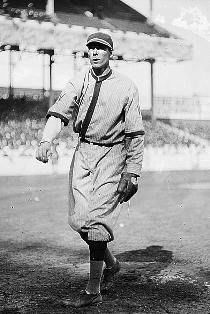
On July 30, 1914, Sheridan called Ray Morgan of the Washington Senators out on a close play at first base in Detroit.  The Washington Post said Morgan, who had slid, “came up with a handful of dirt and threw it on the ground at Sheridan’s feet…Sheridan evidently thought that Morgan intended to hit him, and did not even give the National’s second sacker time to put up his guard, but whaled away at his smaller opponent.”

Ray Morgan

Ray Morgan

Morgan punched Sheridan, and after both dugouts emptied, Sheridan was also punched by Washington’s Eddie Ainsmith.  The disturbance spilled over to the stands with a few Washington players, including Morgan and Ainsmith, taking on Detroit fans before police restored order.

The Post said:

“This whole trouble, disgraceful to be sure, may be blamed directly on Jack Sheridan, the umpire, who has been at fault so many times this year.  In the first place Sheridan has threatened to beat up several of the Washington players.  Sheridan told (David “Mutt”) Williams and (Joe) Engel that he would punch them in the nose, the same as he had Morgan, if they did not do as he told them.”

Ban Johnson never took action against Sheridan for the incident in Detroit, but Morgan and Ainsmith drew suspensions from the league.

On August 1, 1914, The Associated Press reported that “The baseball players fraternity intends to take steps to have Umpire Jack Sheridan retired from service on grounds of incompetence.”

The incident, and dust up on August 12 with Jack Fournier of the White Sox inspired a poem from The Chicago Tribune’s Ring Lardner:

Making Night Hideous

Oft in the stilly night,

Ere slumber’s chain has bound me

Fond memory brings the sight

Of athletes crowding round me;

The scowls, the sneers

Of Jack Fourniers

And Morgans strike my vision;

I hear the barks

And rude remarks

That greet each close decision.

Thus in the stilly night,

Ere slumber’s chain has bound me,

I sometimes get tight up and fight

The chairs and tables round me.

At the end of the 1914 season, Sheridan returned to California.  On October 31 The Associated Press reported that Sheridan would not be returning as an umpire:

“Sheridan will probably be retained as a sort of supervisor of umpires, spending his time roaming around the circuit.”

Just three days later Sheridan died of heart failure in San Jose at age 62—he was said to have suffered sunstroke during an August game and never fully recovered.  Ban Johnson supported him to the end; just weeks before the umpire died the American League president told a reporter:

“I sincerely doubt if the baseball game will ever know another Jack Sheridan.  He had all of the virtues of other arbiters, and none of their mistakes.”

The Tribune’s First All-Star Team

21 Feb

In 1933 The Chicago Tribune underwrote the first All-Star game, created by Arch Ward, the  paper’s sports editor,  to coincide with the Century of Progress World’s Fair—more than 30 years earlier The Tribune published one of the earliest  sportswriter selected “all-star teams.”

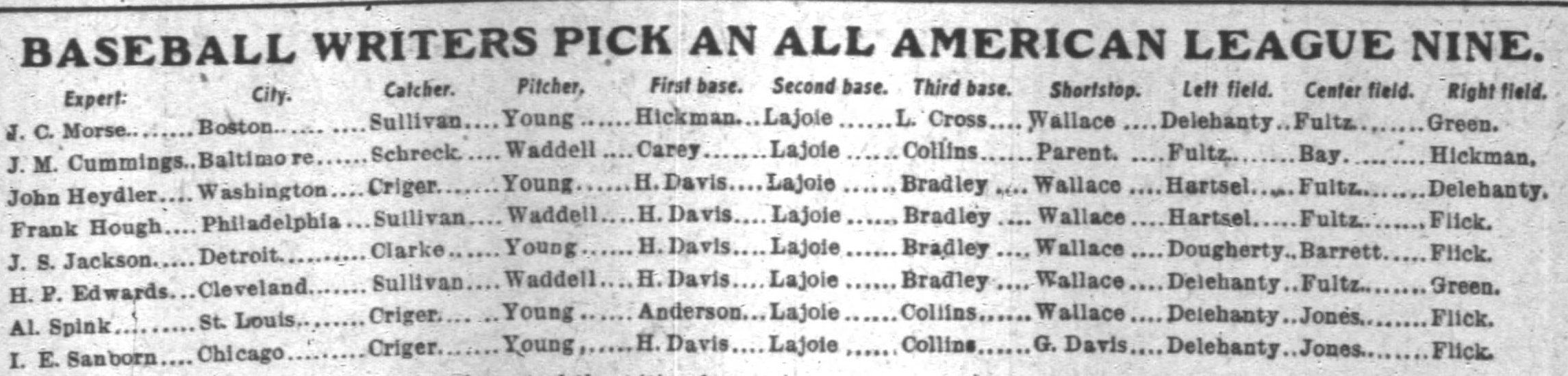
Near the end of the 1902 season, The Tribune polled sportswriters from American League cities to pick “An all American League Nine.” (No similar poll was done for the National League)

The writers polled:

Jacob Charles Morse—The Boston Herald

Joseph M. Cummings—The Baltimore News

John Arnold HeydlerThe Washington Post

Frank Leonardo HoughThe Philadelphia Inquirer

Joseph Samuel Jackson—The Detroit Free Press

Henry P. Edwards—The Cleveland Plain Dealer

Alfred Henry SpinkThe St. Louis World

Irving E. (Sy) Sanborn—The Chicago Tribune

The only unanimous choice was Cleveland Bronchos second baseman Napoleon Lajoie—Lajoie appeared in just 86 games, but hit .379.

Napoleon Lajoie --the only unanimous choice

Napoleon Lajoie –the only unanimous choice

The most disagreement was behind the plate; four different catchers received votes:  Billy Sullivan of the Chicago White Sox and Lou Criger of the Boston Americans received three votes each;  Freeman Ossee Schrecongost who played 18 games with Cleveland and 79 with the Philadelphia Athletics, and William “Boileryard” Clarke of the Washington Senators each received one vote.

Cy Young of Boston led pitchers with five votes, with Philadelphia’s Rube Waddell being the choice of the other three.

Four first basemen were also chosen, but Harry Davis of the Philadelphia Athletics was the consensus choice with five votes.  Cleveland’s Charlie “Piano Legs” Hickman, Washington’s George “Scoops” Carey, and “Honest John” Anderson of the St. Louis Browns all received one vote.

Cleveland’s Bill Bradley edged Boston’s Jimmy Collins four to three, with Philadelphia’s Lafayette “Lave” Cross getting the remaining vote.

Bobby Wallace of St. Louis was the shortstop consensus with six votes, Boston’s Freddy Parent and Chicago’s George Davis received one vote each.

Booby Wallace, the choice at shortstop

Bobby Wallace, the choice at shortstop

Washington’s Ed Delehanty got four votes in left field, Philadelphia’s Tully “Topsy” Hartsell two; one vote each went to Boston rookie Patsy Dougherty and Philadelphia’s Dave Fultz (who played center field)

With or without his vote as a left fielder, Fultz was the consensus in center field.  He received four votes at that position; Chicago’s Fielder Jones got two votes, Jimmy Barrett, the only Detroit Tiger to make the list received a single vote (from Joseph Samuel Jackson of Detroit) and Harry “Deerfoot” Bay of Cleveland received one vote.

Jimmy Barrett, the only Tiger

Jimmy Barrett, the only Tiger

Right field included a couple more out of position players, Charlie Hickman picked up one vote despite being primarily a first baseman and playing just 27 games in the outfield in 1902.  Delehanty, almost exclusively a left fielder in 1902, received one vote in right.  Elmer Flick of Cleveland was the consensus with four votes.  Danny Green of Chicago received two votes.

The Results

The Results

The 1902 effort was not repeated by the paper.

Irwin Howe

3 Feb

irwinhowebb


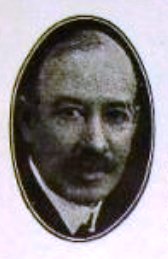
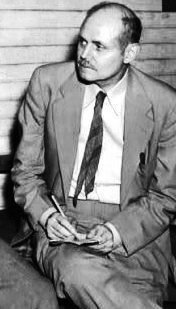
Irwin M. Howe founded Howe News Service in Chicago in 1910, published an annual record book and served as the primary statistician for several minor leagues, including the Western and the Three-I leagues.

After the 1911 season American League Secretary Robert McRoy, who was responsible for compiling statistics, left the league office to become an executive with the Boston Red Sox.  President Ban Johnson named Howe the league’s statistician; he served in that capacity until his death in 1934.

Irwin Howe

Irwin Howe

Howe leveraged his position with the American League.  He became the official statistician of several more leagues, including the American Association and the Federal League, wrote a nationally syndicated column called “Pennant Winning Plays,” became editor of the annual “Wilson Baseball Record and Rule Book,” and published an instructional pamphlet for kids.

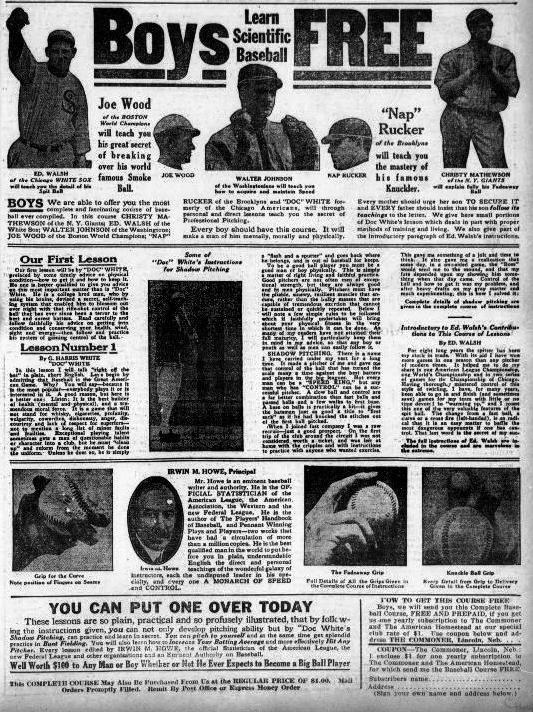
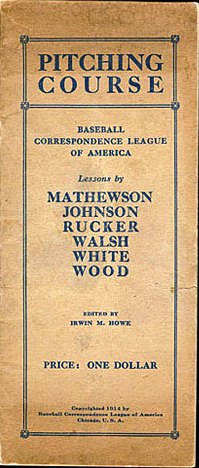
The ad from 1914 pictured above is for Howe’s 48-page “Pitching Course,” which he called “A correspondence school for baseball.” The pamphlets sold for one dollar, but were also offered by many small newspapers across the country for free to children who signed up subscribers (the pictured ad is from The Commoner, the Lincoln, Nebraska newspaper published by William Jennings Bryan).

Boys Learn Scientific Baseball Free

Ed Walsh of the Chicago White Sox will teach you the detail of his Spit Ball

Joe Wood of the Boston World Champions (1912) will teach you his great secret of breaking over his world famous Smoke Ball

Walter Johnson of the Washingtonians will teach you how to acquire and maintain speed

“Nap” Rucker of the Brooklyns will teach you the mastery of his famous knuckler

Christy Mathewson of the N.Y. Giants will explain fully his Fadeawy Ball

These lessons are so plain, practical and so profusely illustrated, that by following the instructions given, you can not only develop pitching ability…You will also learn to Increase Your Batting Average and more effectively Hit Any Pitcher.  Every lesson edited by Irwin M. Howe, the official statistician of the American League, the new Federal League and there organizations and an Eminent Authority on Baseball.

The pamphlet also included a lesson from Guy Harris “Doc” White of the Chicago White Sox “which deals in part with proper methods of training and living.”

Howe claimed his one dollar pamphlet was “Well worth $100 to any man or boy whether or not he ever expects to become a big ball player.”

Howe's pamphlet

Howe’s pamphlet

Perhaps Howe’s most famous contribution to baseball was certifying Ty Cobb as a .400 hitter in 1922.

On a rainy day in New York (years later in his book “Baseball as I Have Known It,” Fred Lieb said the game took place in August—contemporary newspaper accounts say it was May 15), Cobb beat out a ground ball hit to Yankee shortstop Everett Scott.  John Kieran of The New York Tribune (he was later a columnist with The New York Times) was the official scorer.  He charged Scott with an error.

Fred Lieb of The New York Telegram, who was compiling The Associated Press (AP) box score for the game, credited Cobb with a hit.  Lieb said “Considering the soggy field and Cobb’s speed, I gave it a hit.”

Fred Lieb

Fred Lieb

Howe’s habit was to rely upon The AP box score that appeared in the Chicago newspapers while awaiting the arrival of the “official” box score by mail.

When compiling the final averages at the end of the season Howe chose to accept Lieb’s scoring of the game rather than Kieran’s, and released a statement with the season’s final statistics:

 “I noted that the averages reached from my official scoring sheets had Cobb hitting .3995 (actually .3992).  With the unofficial averages giving him .401, I felt how can we deprive this great player of a third .400 average over a fractional point.”

Ban Johnson approved Howe’s decision.  Lieb, as president of the Baseball Writers Association of America’s (BBWAA) New York chapter was put in the uncomfortable position of attempting to repudiate his own scoring judgment.  He argued that the Kieran’s “official” score should be accepted, and said in a statement:

“Obviously, when there was a difference of opinion between the two scorers, the official and not the unofficial decision, should have been accepted.  There would be no further need for members of the Baseball Writers Association serving as official scorers if they were regulated to a secondary position.”

In a letter to Lieb, Ban Johnson said the “official” box score “was plainly in error in one other particular” besides the Cobb “hit” and “I requested a report of the official score of the game of May 15.  Mr. Howe had previously made a careful investigation of all facts surrounding the scoring.”  Johnson also chided Lieb asking “Are we to believe that you reversed your judgment at this late date?”

The 1923 “Wilson Record and Rule Book”–edited by Howe–contained an asterisk next to Cobb’s .401 average and noted that it was “not recognized” by the BBWAA—Howe was secretary of the association’s Chicago chapter.

The asterisk eventually disappeared, and Ty Cobb, thanks to Howe’s decision,  remains a .400 hitter for the 1922 season.

Lost Advertisements–Mike Martin’s Liniment

27 Dec

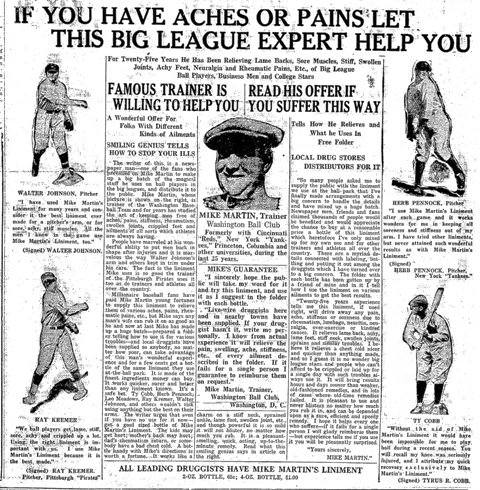
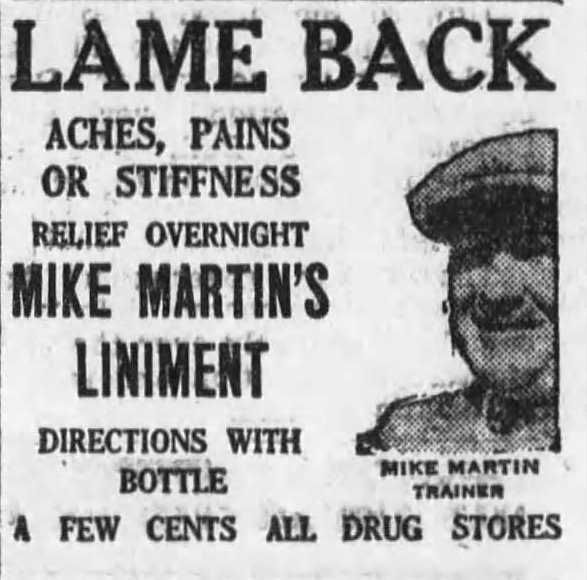
martinlinMike Martin spent 40 years with the Washington Senators as a trainer and scout; he was one of baseball’s first full-time trainers.  Martin was working as the athletic trainer at Columbia University when Clark Griffith hired him to work with the New York Highlanders, he followed Griffith to Cincinnati and then finally to Washington.

Martin began marketing the liniment he used on Walter Johnson and the rest of the Senators staff in the 1920s.  This 1925 ad featured testimonials from his good friend, Senator pitcher Walter Johnson, Herb Pennock of the Yankees, Ray Kremer of the Pirates and Ty Cobb (who rarely met a “cure” he couldn’t endorse):

“I have used mike Martin’s Liniment for many years and consider it the best liniment ever made for a pitcher’s arm, or for sore, achy, stiff muscles.  All the men i know in the game use Mike Martin’s Liniment too.”

(Signed) Walter Johnson

“I use Mike Martin’s Liniment after each game and it works wonders for me in keeping all soreness and stiffness out of my arm.  I have tried other liniments, but never attained such wonderful results as with Mike Martin’s Liniment.”

(Signed) Herb Pennock 

“We ball players get lame, stiff, sore, achy and crippled a lot.  Using the right liniment is important with us.  I use Mike Martin’s Liniment because it is the best made.”

(Signed) Ray Kremer

“Without the aid of Mike Martin’s Liniment it would have been impossible for me to play ball during the recent season.  You will recall my knee was seriously injured, and I attribute my quick recovery exclusively to Mike Martin’s Liniment.”

(Signed) Tyrus R. Cobb

mikemartin1930

1930 advertisement

Martin remained the Washington trainer until 1946 when Griffith made him a scout.  He was still working for the Senators, and his liniment was still a popular product, in June of 1952 when the 67-year-old Martin was killed in a traffic accident near his Maryland home while driving to Griffith Stadium.


Lost Advertisements–President McKinley, Spalding League Ball

29 Nov

mckinleyspalding


An April 1897 advertisement for the Spalding.  The advertisement appeared in several papers across the country–including The Chicago Inter Ocean and The Chicago Daily News.

President McKinley Formally opened the Base Ball Season yesterday at Washington with the Spalding Official League Ball…

It seems very appropriate for the American game of Base Ball to be formally opened by the President of the United States, as was done yesterday at Washington by President William McKinley, in breaking the seal and tossing to the umpire the Spalding Official League Ball.”

While the advertisement ran on April 23 so did a story from The Associated Press which said the president was a no-show:

“It was expected that President McKinley would favor the Senators with his presence, he having promised the Washington players if his duties did not prevent he would toss the first ball to the umpire, but he evidently was too busy entertaining office-seekers, and as a result players and spectators alike were greatly disappointed.”

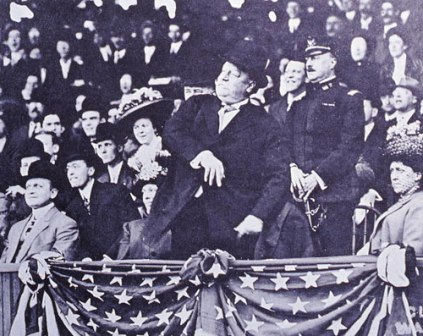
The Brooklyn Bridegrooms defeated the Senators 5 to 4.  It would be 13 years before  William Howard Taft became the first president to throw out the first ball on April 14, 1910, in Washington.

William Howard Taft throws out the first pitch in 1910

William Howard Taft throws out the first pitch in 1910

Burns “Put the Punishment on Phyle”

20 Nov

After holding out over a temperance clause the Chicago Orphans added to his contract, Bill Phyle finally signed in late March of 1899.  He reported to spring training in New Mexico anywhere from 10 to 30 pounds overweight (depending on the source) and struggled all season to regain the form he showed the previous season.

On April 17 he was beaten 8-0 by the Louisville Colonels in first start.

On April 25 he lost 3-2 to the St. Louis Perfectos.  The Chicago Tribune said “Phyle gave away the game by distributing bases on balls in just the spots where timely hits followed and transformed the favors into tallies that gave the victory.”

William Phelon, The Chicago Daily News baseball writer, disagreed.  He said Phyle’s “work was of sterling quality.”

Regardless, Chicago Manager Tom Burns didn’t give Phyle another opportunity to pitch for more than a month.

Phelon said it was a mistake for Burns to not use Phyle.  The Chicago Inter Ocean said after the team lost seven of nine games in May “it is passing strange that young Phyle is not given a chance.  On last year’s form Phyle is as good as, if not better than (Jack) Taylor.  The paper called Phyle’s performance in the St. Louis game “gilt-edged” and blamed the loss on “comrades that gave the victory to the enemy.”

Finally, on May 28 Phyle pitched again.   He lost 4 to 3 to the Washington Senators; he gave up three runs on five straight hits with two outs in the ninth.

He lost again on June 1, 7-1 to the Philadelphia Phillies.  Phelon’s opinion of the pitcher was unchanged, and said the losses were simply bad luck:

“Phyle has now lost four straight games.  It is Phyle’s luck to be stuck in whenever the other pitchers have won about three straight, and the team is just about unavoidably due to lose.”

On June 5 Phyle did his best pitching of the season–a victory he is not credited with in the record books.

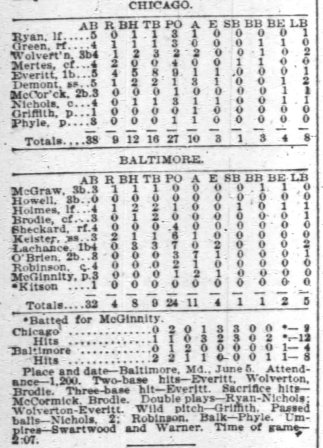
With the Orphans trailing the Baltimore Orioles 3 to 2 in the third inning, pitcher Clark Griffith was ejected for arguing a called ball.  The Chicago Tribune said:

“It was a queer game.  Phyle pitched after Griffith had been benched…holding the Orioles helpless.”

Chicago won 9 to 4.  And while the Chicago newspapers credited the victory to Phyle, the record books do not.

Box score for June 5 game.  Phyle relieved Clark Griffith in the 3rd inning.

Box score for June 5 game. Phyle relieved Clark Griffith in the 3rd inning.

Phyle became ill later the same week, (some sources said it was recurring malaria), a week later he fell off a bicycle and missed two more weeks.  When he returned to the team on June 22, the Boston Beaneaters beat him 5 to 1.

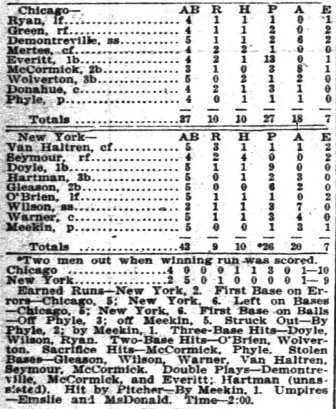
He was credited with his first “official” win on July 1—a game The Inter Ocean called “a comedy of errors,” and a “depressing exhibition.”   He beat the New York Giants 10 to 9, allowing 10 hits and giving up seven runs in the first two innings.  Each team committed seven errors.

Box score of Bill Phyle's only "official" victory of 1899.

Box score of Bill Phyle’s only “official” victory of 1899.

Chicago went into a slump that would last for the rest of the season; after Phyle’s July 1 win the team was 38-24, in third place, and went 37-49 the rest of the way finishing eighth.

Phyle lost again on July 9 and July 24, and rumors began to circulate that he would be released or traded back to Charlie Comiskey’s St. Paul Saints.

On August 6 Phyle lost 10 to 9 to the Cleveland Spiders.  One week later while the team was on the road, The Inter Ocean reported that he “was sent home by manager Burns.”

The Tribune called Phyle “the scapegoat” and said he and three unnamed teammates  “celebrated after beating a horse race at Washington and Manager Burns, to call a halt, put the punishment on Phyle.

Phelon wrote in The Daily News:

“When the club started for Philadelphia he was told to go home ‘You are through young man, go back to Chicago,’ said Burns, and Phyle went back.  He went back in a rage too, and says he will tell (team president) Jim Hart a lot of things. He says that he has been held up to public derision as a drunkard, all season, and that Burns plays favorites, allowing his friends to jag up as much as they wish and turning all the trouble on others.”

Phelon remained supportive of the pitcher in The Daily News, but in The Sporting Life he reported that Phyle, a former boxer, had deserted the team in early August to go to “St. Louis to see a prize fight, and was not on hand when sorely needed.”

While the relationship between Hart and Burns was strained, and Burns would be replaced at season’s end, Phyle’s complaints went nowhere with the team president and he was suspended without pay.

Ten days after Phyle was suspended Phelon reported that the Baltimore Orioles had offered to trade for or buy Phyle,” (John) McGraw has taken quite a fancy to the young pitcher.”  Hart refused to make a deal.

Phyle never pitched for Chicago again, he is credited with a 1-8 record and 4.20 ERA.

The last Bill Phyle chapter—tomorrow.

“He Used to Knock Down Infielders”

4 Nov

William Alexander “Bill” Lange is best known for a play that likely never happened.  The legend was that he had made a spectacular catch that culminated with the Chicago Colts’ outfielder crashing through the left-field fence in Washington in an 1897 game with the Senators.  It is most likely another in a long line of exaggerations and apocryphal stories from Lange’s friend, Chicago sportswriter Hugh Fullerton—a story that first appeared in that paper with no byline in 1903, but was repeated by Fullerton many times in later years.   A nice analysis of that story appears here.

Bill Lang, seated fourth from left, with 1896 Chicago Colts

Bill Lang, seated fourth from left, with 1896 Chicago Colts

Lange played just seven seasons, retiring after the 1899 season at age 28 to join his father-in-law in the insurance and real estate business in San Francisco.

During the spring of 1900, The Chicago Daily News said “The wise ones in the baseball business” were certain he’d be back, including Chicago’s manager Tom Loftus and President James Hart, and Charlie Comiskey, “’When the season opens and the sun warms up he can’t stay away,’ remarks Comiskey, with a knowing wink.”

Despite the certainty that he would, Lange never returned.

Lange, who stole 400 career bases, was called “Little Eva” because of his gracefulness.  In 1909 Billy Sunday called him “the greatest outfielder in baseball history.”  Connie Mack called him the best base-runner he ever saw.  In fact,  Mack and Clark Griffith considered Lange so good that they petitioned the Hall of Fame in 1940 to change the “rules (which) restrict membership to players of the twentieth century” in order to allow for Lange’s induction.

Griffith said Lange was “the best outfielder that ever played behind me:”

“Lange here was rougher base-stealer than (Billy) Hamilton.  He used to knock down infielders.  Once I saw him hit a grounder to third base.  He should have been out, but he knocked down the first baseman.

“Then he knocked down the second and third baseman and scored.  Connie Mack was the catcher.  No he didn’t knock Connie down because he didn’t have to.”

Mack told the same story over the years.

Lange never made the Hall of Fame.  He died in 1950.

Bill Lange 1931

Bill Lange 1931

In his final years the story about the “catch” had become so ingrained in the legend of Bill Lange that other players told essentially the same story Fullerton did (the most widely disseminated versions appeared in “The American Magazine” in 1909 and in Johnny Evers‘ book “Touching Second,” coauthored by Fullerton), but inserted themselves into the story.  In 1946 Griffith told reporters:

“It happened right here in Washington, I was pitching for Chicago.  Bill missed the train from New York, and arrived in the fourth inning.  We were then with the Chicago Colts and Cap Anson fined Lange $100 before he put him in the game.

“I had a one-run lead when Al (“Kip”) Selbach of Washington hit a terrific drive.  Lange ran back hard, and when he crashed into the wooden fence his 210 pounds took him right through the planks.

“He caught the ball at the same time and held it.  All we could see were his feet sticking through the fence and Bill’s arm holding the ball.  When he came back to the bench, he handed the ball to Anson and said:

‘This ought to cancel that $100 fine.’ It did too.”

When Lange died Griffith said:

“I have seen all the other great outfielders—Speaker, Cobb, DiMaggio –in action and I consider Bill Lange the equal of, if not better than, all outfielders of all time.  There wasn’t anything he couldn’t do.”

Buddy Ryan

15 Oct

During the 1912 season pitcher Bob Groom was having what would be the best season of his career; he was 24-13 with a 2.62 ERA for the Washington Senators.

His former teammate John “Buddy” Ryan was hitting .271 during his first season with the Cleveland Naps.

Groom and Ryan had been teammates with the Portland Beavers in the Pacific Coast League (PCL) in 1908. Ryan claimed that while they played together Groom had nearly quit baseball.  According to The (Portland) Oregonian:

“(Groom) was a most sensitive fellow.  One day we were playing San Francisco and had them 4 to 1 in the sixth inning, when Groom became a trifle wild , Mac (Walter “Judge” McCredie) jerked him after he had filled the bases with none out.  Bobby did not like it and he threw off his glove angrily and walked to the bench made as a wet hen.

According to Ryan, when Groom reached the bench he told McCredie he was through with the “blamed old club” and was going home.  All three San Francisco runners scored, tying the game.  The following inning:

“We got the bases full and (Otis) Ote Johnson up, when Groom ambled dejectedly out of the clubhouse, carrying his little grip with all of his baseball togs and stuff in it.  He got about as far as third base when Ote landed on one for one of those long triples of his, and Bobby forgot about quitting the club and going home, for he threw his cap, grip and everything in the air and yelled ‘Come on you Swede boy, it’s good for three.’ We won the game and Bobby never said a word about going home.”

Bob Groom

Bob Groom

Bob Groom remained in the big leagues through the 1918 season, compiling a 119-150 record with Washington, the St. Louis Brown, Cleveland Indians and St. Louis Terriers in the Federal League.

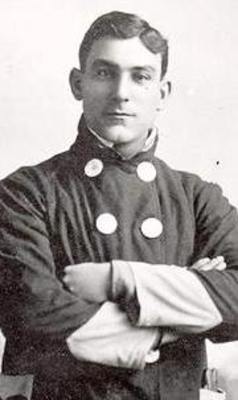
Buddy Ryan spent just two seasons in the major leagues, hitting .282 as Cleveland’s fourth outfielder in 1912 and 1913.  He returned to the Pacific Coast League and became one of the league’s most popular figures for the next twenty years.

buddyryan1

Buddy Ryan

His unusual wedding made headlines in 1915:

“John F. (Buddy) Ryan, one of the best-known and popular baseball stars on the Coast, was arrested early yesterday morning on a charge of immorality preferred by Deputy District Attorney Richard Ceich. At 2:08 PM he was married by Municipal Judge Stevenson to Miss Ruby Winters and the charge was dismissed.

“Miss Winters, who was at first held as a witness against the ballplayer, has been living with him for nearly 10 years, according to her statement, and has been known as Mrs. Ryan.  She said yesterday that she had asked Buddy to marry her several times.”

Failing that, she had him arrested:

“With Ed Kennedy (Ryan’s former Portland teammate and county jailer), as best man, the two were wedded in the Municipal Courtroom yesterday afternoon.  The bride wept for several minutes following the ceremony.  Mr. and Mrs. Ryan left last night for the training camp of the new Salt Lake Coast League team.”

Ryan had his best season in Salt Lake City in 1915, hitting .340 for the Bees.  That winter he had an emergency appendectomy and developed an infection, the newspaper headlines said his condition was grave: The San Francisco Chronicle said he was “In Very Bad Shape,” The San Bernardino News said “Buddy Ryan Near Death.”

Ryan recovered in time to return to the Bees for the beginning of the 1916 season.  He hit better than .300 the next three seasons, and after the completion of the PCL’s war-shortened 1918 season he played for and managed a team in Seattle’s Puget Sound “Shipyard League.”

He sat out the 1919 season and returned to the PCL in 1920—the rest of his story tomorrow.