Tag Archives: Western League

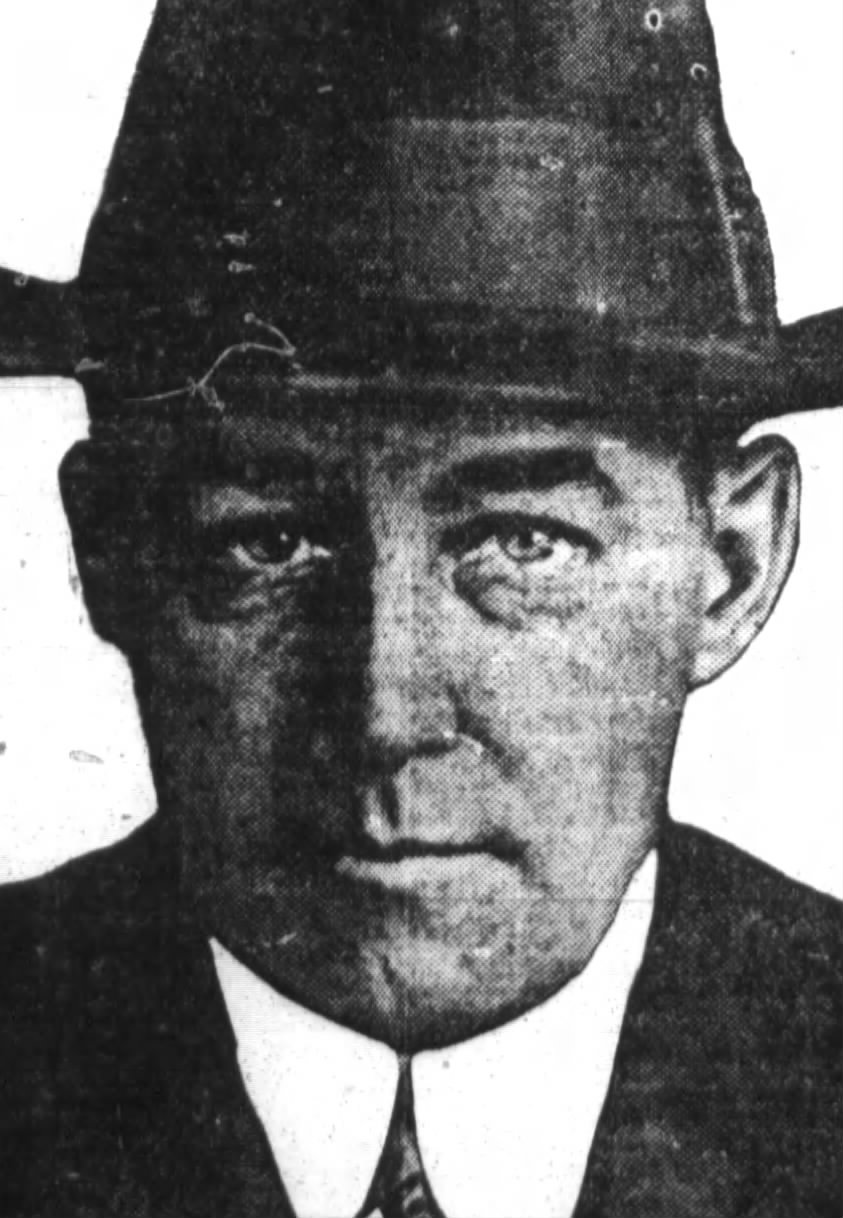
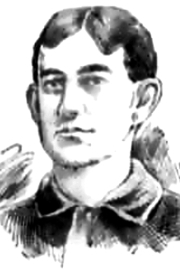
Harley Parker

20 Oct

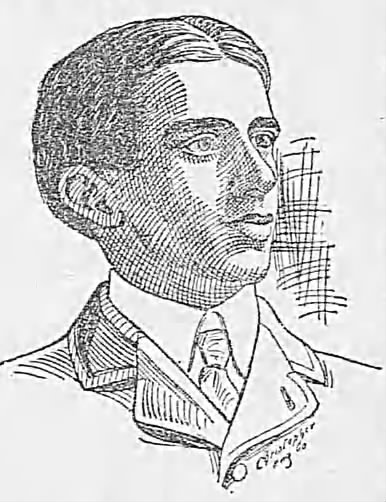
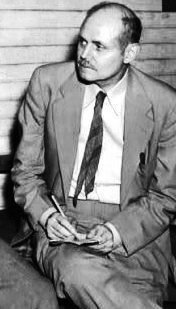
Harley Park Parker was a renaissance man; a physician, an ambidextrous golfer, a billiard player who trained champions, in addition to being a major league pitcher—he was 5-8 with a 5.90 ERA in parts of four seasons with the Chicago Colts and Cincinnati Reds.

He is also responsible for what might be the worst single game pitching performance in professional baseball history.

The 22-year-old Parker was pitching for the Grand Rapids Rippers (several newspapers in other in the other Western League cities called the team the Rustlers) against the Kansas City Blues (newspapers were split between referring to the club as the Blues or the Cowboys) on July 25, 1894.
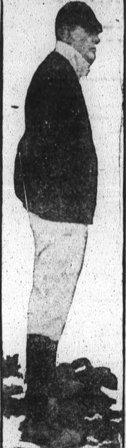
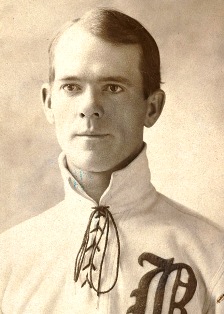
Harley Parker circa 1895

Harley Parker circa 1895

The Kansas City Gazette said:

“The ball bats of the Kansas City Blues in the game against Grand Rapids collided with Pitcher Parker’s curves thirty-nine times yesterday, and yielded as many runs.”

The Blues actually had thirty-eight hits, to go along with 13 Grand Rapids errors.

The Kansas City Star said:

“(The Blues) hit him at will yesterday, for singles, doubles, triples and home runs.  It was a slugging match, the like of which had never before been seen in a professional game at Exposition Park, and while the Rustlers did some very sloppy fielding, there was world of free, sharp and hard hitting.”

Every member of the Kansas City line up had at least two hits, and three players, Sam Nicholl, Ollie Beard, and pitcher Pete Daniels, collected six each.

The final score was 39 to 10.
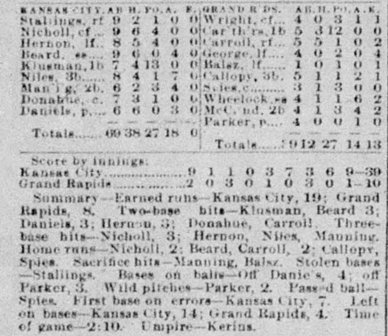
The Box Score Grand Rapids vs Kansas City

The Box Score Grand Rapids vs Kansas City

The game was indicative of Parker’s season; he finished with a 15-18 record with a 6.23 ERA—in addition to the 193 earned runs he gave up in 278.2 innings, his team gave him horrible support, and he allowed 194 unearned runs.

Parker had a similarly disastrous day as a major leaguer seven years later.  While pitching for the Reds against the Brooklyn Superbas on June 21, 1901 Parker allowed 21 runs on 26 hits in a complete game loss—“Wee Willie” Keeler was 5 for 5 with a rare home run (he hit just 33 during his 19-year career).
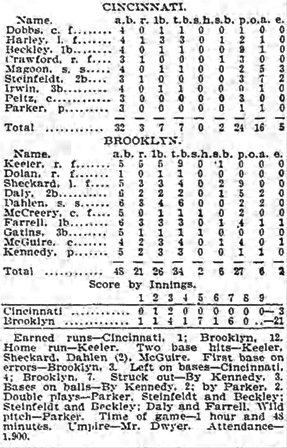
The Box Score Cincinnati vs Brooklyn

The Box Score Cincinnati vs Brooklyn

During his five minor league seasons Parker was only above.500 once; 5-4 in 1898 with the Minneapolis Millers; he was 5-8 as a major leaguer.

Parker briefly owned a Central League franchise in 1911, the club moved from Grand Rapids, Michigan to South Bend, Indiana, but even with the move he was forced to sell the team at mid-season because of financial difficulties.

That same year he also had a short stint as an umpire that ended with a trip to the United States Capitol.

In August, after one of Umpire Jack Sheridan’s frequent resignations—he returned to his position days later—American League President Ban Johnson hired Parker to the league staff.

Less than a month into his tenure Parker was on the field for one of William Herman “Germany” Schaefer’s stunts.  On August 4, Schaefer’s Washington Senators were playing the Chicago White Sox.  With the score tied in the ninth inning Schaefer stole second, hoping to draw a throw to allow Clyde Milan to score from third base; Sox catcher Fred Payne did not throw to second.  Schaefer then led off second base on the first-base side and returned to first on the next pitch.

The Washington Herald said:

“Umpire Harley Parker, who was officiating on the bases, was near first at the time.  When he saw Schaefer coming back to first Parker accosted the comedian ball player with the query: ‘What are you doing here?’

“’I have stolen second.  Now I am stealing first,’ said the Nationals’ troublemaker.

“’Well, if you stay down here I’ll call you out,’ said Parker.

“(White Sox) Manager (Hugh) Duffy in the meantime had ordered Doc White to throw the ball to John “Shano” Collins at first.  Germany thought discretion the better part of valor, and made a dive back toward second.  In the meantime Milan was tearing down toward home.  Collins wheeled and threw home, Milan being tagged out at the plate.”

Germany Schaefer

Germany Schaefer

Duffy was standing in the middle of the diamond arguing with Parker and home plate umpire Tommy Connolly as Milan was thrown out at home—Washington protested that “the play shouldn’t go because Chicago had ten men on the field.  Manager Duffy having stayed out to the middle of the diamond.”

Connolly and Parker finally ruled that Milan was out.  Washington went on to win the game 1 to 0 in 11 innings.

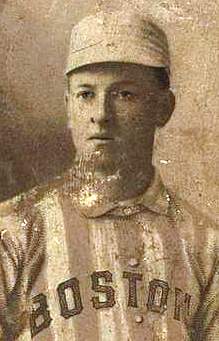
Harley Parker, 1910

Harley Parker, 1910

The following month Parker was again in Washington working a series between the Senators and the White Sox when, while sitting in the lobby of Washington’s Driscoll Hotel, according to The Washington Star he was approached by an “officer from the United States Senate,” who told Parker “I have a warrant for you.”

Parker was taken to the United States Capitol.

“The officer of Uncle Sam marched the arbitrator up to the desk of Vice President (James Schoolcraft) Sherman in the senate, the most august assemblage in the United States.

“’I guess I’ve got your man at last,’ said the officer as he introduced Parker to the vice president.

“’I sent for you to inquire about that play when Germany Schaefer went back to first after stealing second,’” said Sherman and Parker drew a sigh of relief.

“It was just like eating pie for Parker to explain the play and he did so to the satisfaction of all concerned.  Sherman admitted the play bothered him more than any problem that had come up in the extra session of congress and that was going some.”

Parker did not work as an umpire again after the 1911.  He returned to Chicago to practice medicine and teach billiard; contemporary newspaper accounts said he trained two champions—Calvin Demarest and Welker Cochran.

He died in Chicago in 1941.
“Stories of his Badness are told all over the League”

8 Oct

After “Bad Bill” Eagan finished the 1898 season with the Syracuse Stars –he hit just .227, his lowest recorded minor league season average—then returned to his native Camden, NJ–Eagan started his amateur baseball career in Camden as a pitcher, his catcher was another Camden native, William “Kid” Gleason.

Bad Bill Eagan

Bad Bill Eagan

The Harrisburg Telegraph—Eagan had spent two seasons playing in the Pennsylvania city—told the story:

“Bill Eagan the once great second baseman of the Harrisburg Club, in a fair example of what rum will do when it gets the upper hand of a man.  Eagan would have been one of the leading players of the profession if he had left strong drink alone.  He was a sure fielder, hard batter and quick baserunner and ought to be in his prime as a player by this time, but he has drained too many mugs and now winds up in a police court at his home in Camden, NJ, on a charge of attempted murder.

“Eagan was intoxicated yesterday and displaying a 48-caliber revolver, placed it to his temple and remarked: ‘I am going to kill my wife and blow my brains out.’ He paid Barber Riceman fifty cents which he owed him, and also paid a nearby saloon keeper $1 for drinks that he had bought.  Then he returned to the barber shop, said good-bye to his friends, and exclaiming; “Now I am free from debt and am ready to do the job,’ he started for his home and put the threat into execution.

When he arrived home Eagan fired two shots at—and missed–his wife, and then attempted to shoot one of the responding police officers, but because of “a quick blow from (another police officer’s) club the murderous weapon was knocked from the crazed man’s hand.”

The Chicago Tribune said:

“William Eagan, or, as he is known in the baseball profession, ‘Bad Bill’ Eagan, is a player of national reputation.  He is an ignorant man, and stories of his badness are told all over the league.  He was considered one of the best ball players in the profession.”

The Tribune said about Eagan’s brief stay with Pittsburgh earlier in 1898:

“He failed to behave himself, and drunkenness was the charge which let him out as a Pirate.”

Eagan was held in the Camden jail from October of 1898 until March of 1899; it is unclear what he was formally charged with, and he was never tried.

In spite of his reputation, baseball wasn’t done with “Bad Bill” yet.  Shortly after his release from jail, Syracuse sold Eagan’s contract to the Western League’s Detroit Tigers.  His statistics for the season don’t survive, but Eagan seems to have gone back to his old habits.  After he sat out both games of a double-header with the Kansas City Blues in July, The Kansas City Journal said:

“’Bad Bill’ Eagan acquired a jag yesterday and succeeded in making a holy show of himself.  Such creatures and ‘Bad Bill’ should be out of the game.”

Eagan was also seriously injured the same month when, according to The Associated Press, during a game with the Columbus Buckeyes, while trying to stretch a double into a triple:

“Eagan threw himself, feet foremost toward the bag.  His spike caught in the base sack and his right leg was given a terrible wrench.  ‘Bad Bill’ screamed with pain and in an instant was surrounded by members of both teams… (He) had thrown out his kneecap.  (A doctor) pushed the cap back and then the injured player was carried to the bench.”

Whether the injury contributed or not is unknown, but by August The Sporting Life reported that he had again worn out his welcome:

“Bad Bill” Eagan has worn a Detroit uniform for the last time. Eagan has not behaved at all and (George) Stallings has got through for good and all with him.”

George Stallings

George Stallings

One more team was willing to take a chance on Eagan; he was signed for 1900 by the Youngstown Little Giants in the Interstate League.  After appearing in just 26 games The Sporting Life reported that:

“Eagan has been playing ball in Youngstown, OH, but he said he needed a rest.  He came to Detroit for that purpose Saturday morning, and he paid $5 in the police court this morning for the first installment. “Bad Bill” said he was so glad to get back and he met so many friends that he rather lost track of the proceedings. He had fallen Into a Rip Van Winkle sleep when the policeman picked him up. “Bad Bill” paid his fine and went out for the “rest.” Bill doesn’t think much of Youngstown, he says. “

The Youngstown Vindicator said Eagan was released by the Little Giants before he left for Detroit

In either case, he had finally run out of chances, and never played another professional game.

The Indianapolis News said, in late August of 1900, that Eagan was:

 “(P)icked up on the streets of Detroit) insane.  He was removed to the emergency hospital, where he became violent and it took a number of men to overpower him and take him to the station and confine him in a padded cell.  Drink caused Eagan’s downfall. Sober he was a hard working ambitious ball player; if a drink or two were given to him he became a dangerous maniac.”

He was released after several days, and the the many premature rumors of his death began at that point, while Eagan continued to tend bar in Detroit. In April of 1904 w he became ill and was sent to a tuberculosis sanitarium in Denver.  Ten months later “Bad Bill” was dead at age 35.

Despite having played just six games with Chicago in 1893 Eagan made such an William A. Phelon that more than 20 years later he wrote in “Baseball Magazine:”

 “Although the poor fellow had few chances given him in the big league, I always thought there never yet was a second baseman who mixed and mingled in the furtherance of infield plays like Bad Bill Eagan. Possibly I can best symbolize Eagan’s style of second-basing, for the present generation, by stating that he played second just about as (Fred) Tenney played first. (Eddie) Collins doesn’t go so far from second as Eagan did, nor does he carry out nearly so many plays—but it’s quite likely he could if he had to—if he didn’t have, through the past few years, the marvelous (Jack) Barry cutting in and taking his half of the proceedings.

Eagan, though, was almost uncanny at times. I saw him working with (Cap) Anson on first and (Bill) Dahlen at short. It might be taken for granted that Eagan would have to move round considerably on the side toward first, with the ponderous and fast-aging Anson on station one, but Dahlen was then in the flush of his youth and a moving streak at short—when he wanted to be. Yet I saw Eagan bewildering Dahlen as well as Anson by the phantom-like rapidity of his movements, and the way in which he suddenly appeared at the spot where the play should be kept going, arriving on the ground before Dahlen could even draw back his arm to throw.”

“The Poet-Pitcher”

17 Sep

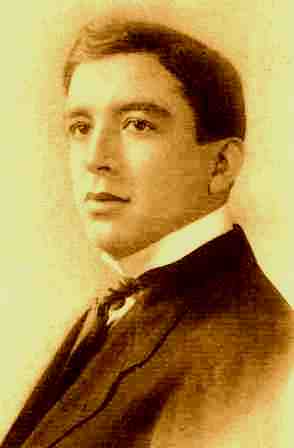
Edward Benninghaus Kenna came from a prominent West Virginia Family; his father, John Edward Kenna was a United States Senator.  Another West Virginia Senator, William Edwin Chilton was often referred to as Kenna’s uncle—he was his father’s former law partner and best friend, but they were not related.

Edward B. Kenna, circa 1900

Edward B. Kenna,1900

He was, according to The Kansas City Star:

“(A)n unusually well-educated young man,.  He spent four years at Mount St. Mary’s College and was graduated there in 1898.  His post graduate course of one year was taken at Georgetown University, and the following three years he spent at West Virginia University, studying law.”

Kenna played football and baseball at all three schools—and coached both sports at Richmond College in 1900, the same season he made his professional debut with the Toledo Mud Hens in the Interstate League.

He was also a poet who had two anthologies of his poems published and was later the editor of The Charleston Gazette.  While most current sources say his nickname was “The Pitching Poet,” during his lifetime he was nearly always referred to by the slightly less lyrical “The Poet-Pitcher.”

Despite his education, and pedigree, The Star said:

“Seeing Kenna on the ball field one would not think that he was the possessor of so many distinctions.  He does not attempt to hold himself aloof from his teammates, but on the contrary is one of the most energetic (players) in the pursuit of victory and when not in the pitcher’s box is on the coacher’s line haranguing the opposing players and urging the members of his own team to their best efforts.  Coaching is one of his hobbies and he is particularly successful at this line of work.  He finds special enjoyment in ‘kidding’ the bleacher element…He says that base ball is not an uplifting pursuit either morally or intellectually, but is an enjoyable one.”

He pitched two games in the major leagues—with the Philadelphia Athletics in 1902–but said the two most interesting games of his career were back-to-back starts in 1904 while he was a member of the Denver Grizzlies in the Western League.

When Kenna joined the Louisville Colonels in the following season, The Louisville Times told the story of the games—both against the Des Moines Prohibitionists:

“(He) was touched up for nineteen safe hits, and yet his opponents failed to get a runner over the pan.  In one inning he was hit for a triple, a double and three singles, and still his opponents failed to get a man home.

“The first batter up hit for a triple, but was nailed trying to stretch it into a homer.  The next man doubled down the left field line, but was afterward caught off second by the poet.  The next three batters hit safely, and then Kenna got down to work and fanned the next batter with the bases full.

“Two days later Kenna was sent in against the same team.  For eight innings he did great work (allowing no hits) and his teammates made but one error.  He had perfect control and during this period gave only one base on balls.  The Denver team managed to get one runner across the pan, which looked as good as a hundred when the ninth inning was about to close.  The bard fanned the first two batter, but the third reached first on a fluke (a second error).  Then (Bob) Ganley, who is now with Pittsburgh, stepped to the plate and drove out a home run, which won the game.  Only one hit was made off his delivery, and yet Kenna lost the contest by one score.”

He was 16-13 for the Colonels in 1905 when, on September 1, he and seven other members of the team were injured in Kansas City when an electric trolley car crashed into the wagon they were riding  to the ballpark.  Kenna was the most seriously injured, and  reportedly suffered broken bones in his right (pitching) hand, a fractured left arm, a concussion, broken nose and an eye injury.  The Kansas City Star said he was listed in serious condition at a local hospital.  Despite the extent of his injuries—which ended his season– Kenna sent a telegram to family members in Washington D.C., saying simply

“Nothing serious; strained arm.  Don’t worry.  Ed.”

He never fully recovered.  He returned to Louisville in 1906, and struggled, finishing the season 12-21, but he hit .325 in 166 at bats.  Given his new found success as a hitter—his best previously recorded average was .225—Kenna decided he was through as a pitcher:

The Louisville Times said:

“Kenna announces that from now on he will be an outfielder, and he hopes (team President George) Tebeau will play him in right field on the Louisville team next season.  Kenna is simply tired of pitching.”

The Colonels accommodated him, but he struggled at the plate and was released in July after hitting just .143.

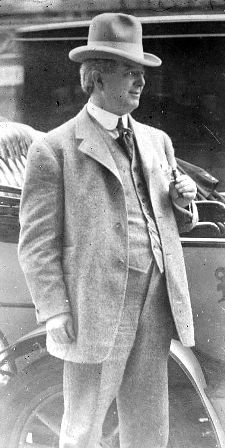
Edward Kenna, circa 1910

Edward Kenna, circa 1910

Kenna returned to West Virginia, newspapers, and poetry.  About the time his book “Songs of the Open Air, and Other Poems” was published in early 1912, he left his job at the paper, and went to Florida to attempt to recover from what was described simply as “a heart condition.”  He died in Florida on March 22.

Sporting Life said of the thirty four-year-old’s funeral in Charleston:

“(It) was one of the largest ever seen here.  All races and creeds showed their deep grief for this beloved man.”

Kenna’s younger brother John Edward Kenna Jr. was also a right-handed pitcher; he was 15-6 for the Chattanooga Lookouts in the South Atlantic League in 1909 and 7-7 with the Worcester Busters in the New England League in 1910—also born in Charleston on January 6, 1883, he died there on May 5, 1956.

Comiskey’s “Sandusky Terror”

15 Sep

In February of 1899 The Chicago Inter Ocean said of Charles Comiskey, then owner of the Western League’s St. Paul Saints:

“It is also proper to state that C. Comiskey is, all things considered, the greatest story teller in this profession.”

Charles Comiskey

Charles Comiskey

The paper then related one of Comiskey’s favorite stories, told during that winter’s Western League meeting:

“’Speaking of ballplayers and their ways,’ he began, ‘did I ever tell you about my efforts to make a pitcher of the ‘Sandusky Terror?’  It happened while I was managing the old St. Louis Browns… It was in the early spring and I was in St. Louis waiting for my men to report for preliminary training.  (Browns owner Chris) von der Ahe had trouble in signing his star pitcher (Dave Foutz) that year, and when I looked over the list I found that I needed twirlers and needed them badly.  I told my troubles to Chris and he did his best to cheer me up.  He told me, among other things, that he had sent a railroad ticket to a young farmer who lived near Sandusky, and from all accounts was a wonder.  I didn’t enthuse, for I had had previous experience with these rustic phenomenons , but Chris said that a friend of his in Sandusky had bet him a case of champagne that the boy would prove a grand find.’

Chris von der Ahe

Chris von der Ahe

“’Next morning the boy from Sandusky showed up at the ballpark.  He was one of the biggest and strongest chaps I ever met in or out of baseball.  What is more, he had a pitching arm of tremendous powers, and after he passed the ball to me five minutes I saw that he had a world of speed and for a raw amateur, very fair control of the ball.’

“’Well, we started on a little training trip down South, and as a matter of course I took the boy with us.  His terrific speed and his willingness to learn made him popular with the members of the team, and they spent hours in catching him.  A week passed and I really began to think I had discovered the pitching star of the year.  Things went well until we struck Mobile..  When we drove up the hotel a fairly good looking woman of 30 or thereabouts walked up the bus and caught my Sandusky wonder by the arm.’

“’William,’ she said, ‘I want to have a serious talk with you.’

“’They strolled down the street arm in arm while the other players lounged around the hotel wondering what it all meant.  Half an hour later the couple returned.  The girl went into the parlor, but the young fellow called me to one side.’

“’Captain,’ he said, ‘I have gone and done it.’

“’Done what?’ I asked.’

“’Married Louisa,’ he answered.  ‘You see, she came all the way from Sandusky to teach school down in this part of the country, an’ she says she’s lonesome like an’ that playin’ ball for wages don’t suit her views.  Me an’ she kinder liked each other when she lived up in Sandusky an’ we’ve been writin’ letters to each other ever since she left home.  That’s how she knew I was with your club.  Captain, I guess that’s all, exceptin’ here’s the 60 cents I borrowed from you yesterday.  Louisa says I musn’t quit you owin’ a cent, and she gave me the money to hand to you.’

“’You don’t mean to say you’re going to quit the team,’ I gasped.  ‘Why, we will make a pitcher of you and pay you good wages while you are developing.’

“’That’s just it,’ he answered.  Louisa says I musn’t play for money.  Says her uncle, who is a preacher in the village, insists that it is wrong to do it.  Come in and ask Louis if I am not tellin’ you the truth.’

“’Well, I spent an even half hour in trying to induce that woman to change her mind, but she wouldn’t.  She said she had decided to make a lawyer out of her husband and that they would live on the money she earned teaching school until he was admitted to the bar.  Then she took her youthful husband away from the hotel and that was the last we ever laid eyes on the pair.  Later in the day I made a little investigation on my own account and found that the woman, who by the way, was at least ten years older than her new husband, had taken the boy straight to the parsonage and married him before he had been in the town twenty minutes.  I don’t know whatever became of the pair, but I believe to this very day that if the ‘Sandusky Terror,’ as the players nicknamed him, had gone back to St. Louis with the team he would have developed into another (Amos) Rusie.  I have never forgiven that pretty school teacher for making him jump our club, and, what’s more, I never will.’”

A Goat and a Dog

9 Jul

Edward John “Goat” Anderson played just one season in the major leagues, hitting .205 for the Pittsburgh Pirates in 1907.  He also played 10 seasons in the Central, Eastern and Western Leagues.

Described as eccentric, he made an impression on The Fort Wayne Sentinel in 1903, his first professional season with the South Bend Greens:

“’Goat’ Anderson who made it a rule during the games here to leave his post and come into the infield to argue every point raised by the umpire’s decisions, has stamped himself as the prize rowdy of the association.”

The Pittsburgh Leader said Pirate outfielder Tommy Leach had recommended the team sign Anderson, and told a reporter in the spring of 1907 that Anderson made the team because he was willing to stand up to Manager Fred Clarke while training in Hot Springs, Arkansas:

“(Clarke) had told Anderson to bunt at the signal from a man on first…The ball was pitched five feet outside, and of course, the catcher flagged the man going to second.  Anderson made no move to bunt or even to strike at the ball.  Clarke started to call him.  ‘Shut up,’ you don’t know all there is in the books,’ Anderson replied.  The answer made Clarke gasp…’All right, son,’ grinned Clarke.  ‘I guess you haven’t got stage fright when you can give it to your manager that way.’”

Edward John “Goat” Anderson

Edward John “Goat” Anderson


His excellent fielding, .343 on base percentage and 27 stolen bases with the Pirates impressed the local press, if not the fans.  George Moreland of The Pittsburgh Press said:

“Some fans are of the opinion that “Goat” Anderson, the hustling little right fielder of the Pittsburgh team, is not much of a general use to the Pirates, and that a good move would be made to get another man for the job.  These same fans are the ones who believe that a ballplayer is not worth his salt unless he is a slugger of the Wagnerian stripe…Manager Fred Clarke knows how to win games, and he also knows where to place a player in the batting order to get the most out of him.  That is the reason that the ‘Goat’ has been put at the top of the list to lead off.  It is not that Anderson makes a large number of hits.  Even when he does hit, he has difficulty in getting the ball out of the diamond.  But, somehow or other he manages to get to first base just about as often as any of them and when he does get there he is not slow about getting around the circuit.”

The Leader was even more enthusiastic about the new outfielder:

“The way little Goat Anderson has been hitting the ball and running bases insures him a permanent berth in the outfield.  Anderson has proved one of the finds of the season.  If there ever was another Wee Willie Keeler it is Anderson.  He is a ‘drop hitter’ of the Keeler style, and can run bases and bunt with the star of the New York Highlanders.  As a matter of fact, Anderson is of more value to the team than Keeler, because the latter’s star seems to be sinking.”

Despite the praise, Anderson was sold to the Rochester Bronchos of the Eastern League in January of 1908.

While with Rochester, Anderson attempted to get a patent on a sliding pad he invented; there is no record of a patent being awarded.  He also suggested a novel idea for improving his batting average.

The Lexington Herald said Anderson, who trained in Kentucky with the Bronchos before the 1909 season made this recommendation:

“Cut down the size of the home plate and I’ll hit .500 as long as the season lasts.  Where the front of the home plate is seventeen inches wide make it 10 or 12.  Then the batter will be able to get an even break with the pitcher, who now has everything in his favor.  With a home base half its present size a pitcher would need perfect control to get the ball over.  All this business of cutting across the inside and outside would be a thing of the past.  There wouldn’t be enough of the plate to give the pitcher the advantage of feeding outside low ones that can only be hit into someone’s hands…With a home base ten inches wide the ball would have to look pretty good right from the start, and if it didn’t a batter could easily pass it up.  There would be more bases on balls at the start, and that would mean a base on balls or a hit, or a hard liner that would bring a fine fielding play.  A smaller plate seems to me to be the thing.”

The small plate was the wish of a man who hit .222, .201 and .138 from 1908-1910 in Rochester.

Goat Anderson saved his greatest moment for his final season in professional baseball.  As the manager and leftfielder for the Terre Haute Terriers (or Terre-iers) in the Central League, he filed one of the most unusual game protests in history.

Goat Anderson (2), with the Terre Haute Terriers.

Goat Anderson (2), with the Terre Haute Terriers.

The Terriers were leading the Fort Wayne Champs 6 to 0 in the bottom of the seventh inning during the first game of a doubleheader.  Fort Wayne had a runner on first base with no outs with catcher Harry Martin at the plate.  The Fort Wayne Daily News picks up the story:

“Martin poked a drive into left field.  The ball rolled almost to the club house with ‘Goat’ Anderson in full cry after it.  Then came the cause for the protest in the person of Don.”

“Don” was a Great Dane who belonged to a Fort Wayne man named Ed Longfield.

“Don can’t bite, and wouldn’t if he could, but Anderson didn’t for sure know that, so ‘Goat’ hesitated a second in chasing the ball and Martin got a triple, Ted Anderson scoring. “

Fort Wayne went on to score six runs in the inning to tie the game and scored a run in the 10th to win 7 to 6.

The Fort Wayne Journal Gazette said:

“Toothless Don, Ed Longfield’s dog, is supposed to be harmless.  Goat Anderson, Terre Haute manager and left fielder evidently doesn’t think so and because dog Don jumped at him during the seventh inning romp in the first game yesterday Goat will file a protest with President (Louis) Heilbroner, requesting the game be played over.”

Heilbroner ruled against Anderson’s protest saying the play did not have a sufficient impact on the outcome of the game, but he did order that Don would no longer be allowed on the field during games.

Terre Haute finished fifth in the six-team league with 60-79 record.  Anderson was rumored to be considering offers from Federal League teams for 1914, but never signed with a team and his career was over.

He returned to his home in South Bend, Indiana.  He died of stomach cancer 10-years later at age 43.

Kid Nichols

25 Jun

Add Hall of Famer Charles “Kid” Nichols to the list of those who were convinced that players from an earlier era were of better quality than those “of today,” even if the earlier era was less than a decade before.

Kid Nichols

Kid Nichols

While pitching for the Kansas City Blue Stockings in the Western League in 1903, the 33-year-old pitcher told a group which included a reporter for The Associated Press:

“I am not so sure that the ball players of today are much superior to those of ten years ago in general utility.  It seems to me there was more life and spirit in the games of a decade ago than in those of the present regime.  They weren’t so mercenary in those days and there was much more sportsmanlike spirit.  Nowadays the paramount question with the average player is salary.  He doesn’t care so much about the record of the team he plays with makes as opportunities offered him to make himself individually famous and thus increase the value of his services.  In many clubs teamwork is lacking on account of the intense desire of some of the men to make an impressive showing by individual work.  In the old days one didn’t hear so much of the individual as the playing of the team as a whole an in my opinion baseball would stand on much firmer foundation if the same spirit prevailed nowadays.”

Among the best:

“Take old (Tommy) McCarthy for instance.  As an outfielder none of them had him beaten, and in my opinion there is not an outfielder his equal now.  It was McCarthy who originated the trap ball which he worked so effectively.

“He was absolutely the headiest man in the outfield I ever saw.  You have seen outfielders throw men out at first on line drives, but you haven’t seen it done often.  I’ve seen McCarthy spoil many a legitimate one-base hit by that same play.  Another favorite play of his was this:  A man would be on first and second.  The man at bat would drive to left.  McCarthy would snap it up on a short bound and flip it to second as quick as a flash in time to catch the man who had run off first.  In turn the second baseman would throw the ball to third in time to head off the man who had started from second.  Thus a really legitimate one-base hit was turned into a double play.

“But, speaking of outfielders, Willie Keeler was about as good as any of them for all around ability.  He was like lightning on his feet and was no slouch at hitting.  He certainly did things to me one day in Baltimore.  He faced me four times and this is what he did:  Made four hits to four different parts of the field off of four different kinds of curves.  Keeler was the hardest man to fool I ever pitched to.”

Nichols said Herman “Germany” Long, his teammate for 12 years was:

“(O)ne of the greatest shortstops in the business.  He played with Boston while I was a Beaneater, and of course I had good opportunities to watch him work.  He could cover a world of territory and was a sure and accurate fielder.  You hear many people say that Hughie Jennings in his palmy days was the best infielder ever developed.  In my opinion Long could cover a foot more territory than Jennings.

“When it comes to catchers my preference is, and always has been, Charlie Bennett, whose legs were cut off in a railroad accident at Wellsville, Kansas.  Charlie was always consistent and knew what his brain was given to him for.  He was also an accurate, quick thrower…Martin Bergen was another good catcher.  He was the one who went crazy, you know, and murdered his wife and children.  Bergen always was ‘a little bit off of the top,’ but when he took a notion to do his best, his playing was beyond criticism.  Ed McFarland and (Billy) Sullivan are two right good men, and then there was reliable old Jim McGuire and Charles Zimmer, both of whom were cracker jack.”

bergen

Martin “Marty” Bergen–” always was ‘a little bit off of the top,’

Nichols said as a pitcher “I can hardly be considered a competent judge” of fellow “slabsters,” but continued:

“Personally, I admire the old war-horse, Cy Young, more than any of the others.  He is certainly a remarkable man.  Of the left-handers there a few better than (Frank “Noodles”) Hahn, of Cincinnati; (Christy) Mathewson and (Joe) McGinnity are undoubtedly valuable men.  Clark Griffith is, I think, the headiest pitcher that ever stepped on a rubber.  Among the other great ones are Jack Taylor, Joe Corbett, (Bill) Bernhard, of Cleveland and our own Jake Weimer.

Nichols was largely forgotten as one of baseball’s great pitchers by the time the Baseball Hall of Fame’s inaugural class was selected in 1936.  In the late 1940s, a push for his inclusion was led by sportswriter Grantland Rice.  Rice frequently mentioned the pitcher in his columns and in the summer of 1948 quoted two Hall of Famers regarding Nichols’ prowess:

“A few decades ago I asked Christy Mathewson to name the best pitcher he ever faced.  ‘That’s easy,’ Matty answered.  ‘His name is Charles Kid Nichols of Boston.  Nichols isn’t a good pitcher.  He is a great one.’

“I recalled this talk when the mail brought a letter from Ty Cobb at Menlo Park, California.

“‘I think everyone has overlooked one of the greatest pitchers of all time,’ Cobb Writes.  ‘His name is Kid Nichols.  Here are just a few of his records from 1890 to 1906:

“1.  Won three consecutive games on three consecutive days, all pitched in different cities.

“2.  Won 20 or more games for 10 consecutive years.  He won 360 and lost 202. (Nichols’ record was 361-208)

“3.  Won 28 or more games for eight consecutive seasons.  (Nichols won more than 28 games seven times, and not consecutively).”

Despite the inaccuracies in the letter, Cobb and Rice continued to campaign for Nichols and the push to honor him worked.  He was elected to the Hall of Fame in 1949.

Nichols, right, with Pie Traynor, left, and Branch Rickey at the Hall of Fame in 1949. Traynor was elected in 1948, but his plaque was not presented until 1949

Nichols, right, with Pie Traynor, left, and Branch Rickey at the Hall of Fame in 1949. Traynor was elected in 1948, but his plaque was not presented until 1949

Franz Hosp

19 May

Franz Philip Hosp Jr. was born in Cincinnati in 1884 (some records, including cemetery documents and his grave say 1883).  His father was a well-known landscape architect and horticulturist who moved the family to Riverside, California in 1888.

The elder Hosp was responsible for many projects in the Southwest and Southern California; he is probably most famous for his landscaping of Victoria Avenue in Riverside, which remains a tourist attraction and is listed on the National Register of Historic Places, and for planting the gardens at the El Tovar Hotel in Grand Canyon National Park.

The family also ran a successful nursery in Oceanside, California  and Hosp worked with his father while playing baseball in the San Diego area.

Franz Hosp

Franz Hosp, 1909

In December 1906 he pitched for the San Diego Pickwicks (sponsored by San Diego’s Pickwick Theater) of the California Winter League.  Hosp quickly caught the eye of West Coast professional teams; according to The Los Angeles Times he had a streak of thirty-one scoreless innings that winter and “fanned as many as eighteen men in a single game.”

The Los Angeles Herald said two teams, The Butte Miners and the Seattle Siwashes of the Northwestern League, had already “tried hard to secure his services,” when he pitched against the Los Angeles Angels of the Pacific Coast League (PCL) in a February exhibition game in San Diego.

The Associated Press said the game

 “(W)as the first time in which he allowed as many as seven hits, and after doing, he took a brace and fanned out an equal number of Los Angeles’ best artists, with the result being that the Angels’ manager (Henry ”Hen”  Berry) lost no time in annexing Hosp to his own aggregation.”

Hosp said he chose to play with Los Angeles so he could continue working at the family business in Oceanside.

The pitcher was a popular member of the Angels.  The Los Angeles Herald said:

“Pitcher Franz Hosp is not only one of the best twirlers in the coast league, but he is also one of the most genial boys who ever donned a baseball uniform.  Hosp has forgotten more baseball, young as he is, than many of the swell headed players who roar at decisions have ever learned.”

The Times said of Hosp, who also played second base and shortstop:

“His work in the field and at the bat is equal to his performance in the box making him one of the best all-around men in the business.”

Hosp was 12-7 with a 2.73 ERA for the PCL champion Angels in 1907; he also played 13 games in the infield, hitting just .105.

franzhosppix

Franz Hosp

The following season Hosp (22-14 2.02), William “Dolly” Gray (26-11, 2.12), and Walter “Judge” Nagle (24-10, 1.94) led the Angels to another league championship.  On July 26 he had the most embarrassing moment of his career during a game with the San Francisco Seals.  The San Francisco Chronicle said:

“Hosp of the Angels established a unique and startling record yesterday afternoon, one that bids to stand a long time in baseball circles.  Not only did he literally pitch the game away, but in one inning—the fourth—he walked six men and hit two more, forcing in five runs across the plate without a hit by the Seals.  Not a ball was hit out of the diamond.”

(Just more than a year later, August 28, 1909, Hosp’s former teammate Dolly Gray, now a 30-year-old rookie with the Washington Senators, set the major league record by walking eight Chicago White Sox batters in one inning).

Hosp was 16-14 in August of 1909 when he was signed by the Cincinnati Reds for 1910.  Within a week he hurt his arm and did not pitch again for the remainder of the season.

By the spring of 1910 there were conflicting reports about the condition of Hosp’s arm.

The Times reported that according to Angels pitcher Andy Briswalter:

“Franz Hosp, whose clever pitching resulted in his purchase by the Cincinnati Reds, may never play ball again.”

The Herald said Hosp:

“(D)enied with considerable indignation the story purporting to be an interview with Andy Briswalter.  According to this story, Hosp’s arm was said to be in such condition that he might never play ball again.  While Hosp was overworked last season, when his sensational work with the Seraphs resulted in his being purchased by the Cincinnati Reds, he stated that he never felt better and that the rest of the past winter overcame any inconvenience or ill effects.  Hosp says he hasn’t seen Briswalter in six months.”

Hosp joined the Reds in Hot Springs, Arkansas, and was first tried in the outfield.  The Cincinnati Enquirer said after his debut:

(Ward) Miller and (George “Dode”) Paskert will have a dangerous rival for the right field job in the person of Franz Hosp, the recruit from the coast, who was signed as a pitcher but will try out as a fielder…He is a right-hand hitter, a good-sized, well-built fellow, and meets the ball square on the nose.  He came to bat five times; made a double and two clean singles…He showed a lot of speed on the bases and appears to be a kid who will bear watching.”

When finally given a chance to pitch, against the Boston Red Sox on March 25, after two scoreless innings, he gave up four singles and doubles to Harry Lord and Tris Speaker, in the third, resulting in three runs and was lifted for a pinch hitter the following inning.

Hosp was also tried in the infield where he “has made a fine impression.”  But it wasn’t enough to stick with the Reds.

The Herald reported in early May:

“Franz Hosp, one of the best pitchers who ever worked in the Coast League and who was released to Los Angeles by Cincinnati almost ten days ago because his pitching arm is kafluey for a time is warming up with the Angels every day and Hen Berry thinks he will get back into pitching form again soon.  He is a crack infielder too, and a heavy sticker, so it is dollars to cents that he will not be idle long.”

Hosp made his mound debut for the Angels on May 20; he pitched a complete game, losing 5 to 3.  The Herald said:

“Hosp showed excellent form for a pitcher who has been out of the game as long as he, and with a weak and sore arm, and he should be able get back to his best form with a little patience and careful slab work until his arm is ripe again.”

The paper was wrong, the extent of Hosp’s activity as a pitcher after that game was four innings in three games over the next year and a half.

Hosp was released by the Angels on June 15, along with Briswalter, who The Times claimed four months earlier had said  Hosp’s arm was shot; Briswalter had not recovered from a hip injury sustained during the 1909 season, he developed Tuberculosis of the injured bone and died in 1912.

Andy Briswalter

Andy Briswalter


Hosp continued to play for a decade.

Within weeks he was signed to play shortstop for the Vernon Tigers.   He hit just .240 for the Tigers, but The (Portland) Oregonian called him “a nifty fielder.”

Hosp became the team’s regular shortstop, through their move to Venice, California.  He hit .261 in 1911, and 1912, .255 in 1913, and then slipped to .208 in 1914.  He was released before the 1915 season and played for the Wichita Witches in the Western League.  He returned briefly to the PCL at the end of 1915, but was released by the Oakland Oaks prior to the 1916 season.  He returned to the PCL in 1918, playing for four teams over the next three seasons, ending his career after 56 games with the Salt Lake City Gulls in 1920.

Hosp returned to Southern California where he played and managed for semi-pro and industrial league teams and lived in Los Angeles.

On June 30, 1928 he was killed in a car accident on Coast Highway (US 101) 16 miles north of Oceanside.

Tragic Exits

28 Apr

George Frazee

George Donald Frazee, listed on Baseball Reference as “G. Frazee” with the Shreveport Sports in the Texas League in 1928, was a three-sport star at Texas Christian University.

Born November 21, 1904 in Fort Worth, Texas, Frazee played outfield for the baseball team, halfback and fullback with the football team, and was a guard on the basketball team from 1923-1925.  After graduation he played basketball with a team representing the Fort Worth, Texas YMCA which played throughout the Southwest and Mexico.

It’s unclear where Frazee played baseball in 1926 and ’27, but in 1928 he started the season with the San Angelo Red Snappers in the West Texas League, there are no surviving statistics for his time there, but after being transferred to Shreveport he hit .301 in 32 games. Frazee signed with Shreveport for the following season.

On January 24, 1929 Frazee was flying from Ft. Worth with World War I flyer Willoughby Alvous “Al” Henley and another Fort Worth man, to attend the opening celebration for San Angelo’s new airport.  The United Press wire story said:

 “Tragedy marred the formal opening of the municipal airport today, claiming the life of Al Henley…one of the nation’s most skilled pilots.  Henley, Donald Frazee, professional baseball player, and W.E. Shytles…were killed when their cabin monoplane crashed in an attempted landing.”

The Brownsville Herald said:

 “He was an outfielder, fast, big and aggressive.  Shreveport lost an outfielder who was certain to make good this year.”


Chief Wano

William “Chief” Wano was born on Oklahoma’s Pottawatomie reservation on May 12, 1896.  He played semi-pro ball in Oklahoma City and in the army while serving with the 79th Infantry, 15th Division at Camp Logan, Texas.  After his discharge in early 1919 the twenty-three-year-old began his professional career with the Tulsa Oilers in the Western League.

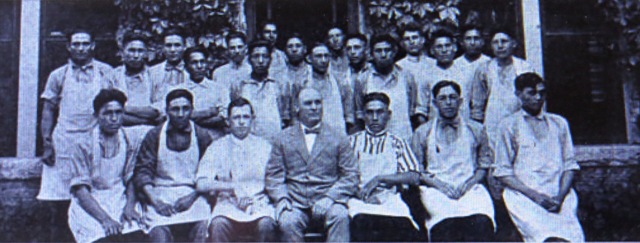
Wano struggled during his first season, hitting just .195, but joined the Little Rock Travelers in the Southern Association the following season—and along with fellow Oklahoman, and former classmate and teammate at the Chilocco Indian School– Moses “Chief” Yellow Horse; he helped lead Little Rock to the pennant.

William Wano,

William Wano, back, fourth from right, at Chilocco Indian School

Wano was a consistent hitter throughout the 1920s (.317 in 11 seasons in class-A leagues), but was an erratic fielder and never made it to the major leagues.

After hitting .331 for the St. Joseph Saints in the Western League in 1930 Wano left organized baseball, first playing semi-pro then he accepted a position managing Ben Harjo’s All-Indian Baseball Club—Harjo was a millionaire and full-blooded Creek.   The team, based in Harjo’s hometown Holdenville, Oklahoma, barnstormed the Midwest and Southwest, and with Wano as player-manager won the Denver Post Tournament in July 1932.

Chief Wano

Chief Wano

Wano quit two months later after a dispute over two players Wano signed.  Harjo hired Jim Thorpe to manage the club the following season.

Wano moved to Dallas after his career.  According to The United Press he spent World War II working at the North American Aircraft plant in Dallas, and living at the home of Kal Hill Segrist Sr., his former Dallas Steers teammate (and father of Kal Segrist, who played with the New York Yankees in 1952 and the Baltimore Orioles in 1955).

On July 30, 1945 Wano was in the Dallas City Jail (reports varied on why he was there), when according to The Dallas Times-Herald another prisoner “slugged Wano on the chin, Wano fell, striking his head on the concrete floor.”  Other reports said Wano was trying to break up a fight when he was hit.

William “Chief” Wano died that night in Dallas’ Parkland Hospital.  A month later a grand jury chose not to indict the man who threw the punch.


Gene Gaffney

Eugene “Gene” Gaffney was one of the better hitters in the Florida State League during his brief career (1920-23), he was also a manager’s nightmare.

Gaffney hit .335 in 60 games for the league champion Orlando Tigers in 1921, but was suspended for several days in July by Manager Joe Tinker.

The following season he joined the Jacksonville Indians, managed by former major leaguer George Stovall.  The team struggled, and Gaffney, had his only sub .300 season, hitting just .277.  And, according to The St. Petersburg Evening Independent, a car caused a major riff between the outfielder and his manager:

“Has a baseball player a right to ride to and from the park in his own automobile?  George Stovall says no.  He suspended Gene Gaffney because Gaffney had bought an automobile and insisted on being his own bus.

“Stovall insisted he should parade to the park in the team bus.  Gaffney told Stovall to go jump; that if the team would win enough games so that he wouldn’t be ashamed to wear the uniform on parade it might be different.  At last accounts Gaffney was off the ballclub, but riding his automobile to his own intents and purposes, while Stovall still was trying to get the rest of the Jacksonville team somewhere on the field.”

Gaffney played just one more season; he hit .357 for the Daytona Beach Islanders in 1923.

After baseball, Gaffney tended bar in Orlando until August 12, 1937—The Associated Press said:

“Gene Gaffney, about 43, local bartender who once led the old Florida State League in batting, was believed today to have been the victim of foul play.

“His automobile, its windshield shattered and other windows broken, was found mired in mud on the shores of an almost inaccessible lake just across the Orange County line in Seminole County, with evidence of a struggle having taken place.

“His eye glasses were found in the mud about 20 feet from the car.”

Gaffney’s body was found the following day.  His death was ruled a homicide.

“King of the Bushes”

23 Apr

Edward Francis “Ned” Egan was called “The Connie Mack of the minors” and the “King of the Bushes” during his managerial career.

It is likely that most of the statistics listed under Egan’s name on Baseball Reference and other sources  are for another player or players with the same surname.  Egan’s grave, burial record, birth and death record confirm that he was born on January 13, 1878, in St. Paul, Minnesota–which would make him 10-years-old for the first playing records for the “Ned Egan” listing.  Contemporary references to Egan’s playing career are vague–most say he played semi-pro ball in Minnesota beginning in 1897, and some sources say he was with St. Paul Saints in the Western League in 1901; although his name does not appear on any roster for the team.

What is certain is that his managerial career began 1902 and that he won eight pennants in 16 seasons.

Ned Egan

Ned Egan

Egan won championships in 1902 and 1903 with the Winnipeg Maroons in the Northern League,  then won six more with the Burlington Pathfinders (1906 Iowa League of Professional Baseball Clubs, 1908 Central Association), the Ottumwa Speedboys-Packers (1911,12 and ’13 Central Association), and the Muscatine Muskies (1916 Central Association).  The Washington Post called him “The Central Association’s chronic pennant winner.”

Egan was credited with helping develop several major leaguers including Burleigh Grimes, Lee Magee, Cy Slapnicka, Hank Severeid, and Cliff Lee.

Egan finally got his chance in the high minors in January of 1918, but it happened as a result of a fluke.  Al Timme, owner of the Milwaukee Brewers of the American Association announced that Egan would be his new manager.  The Milwaukee Journal said:

 “A very peculiar circumstance brings ‘Ned’ Egan to the local club. When President Temme attended the meeting of the International League in New York some months ago the local prexy opened negotiations with Jack Egan, manager of the Providence club in 1917.  Jack Egan’s name was made public as the possible leader of the Brewers, but the press reports from the east said that ‘Ned’ Egan was being considered by Owner Temme [sic].

“The local baseball headquarters were immediately flooded with recommendations from major leaguers who unanimously stamped ‘Ned’ Egan as the logical man to lead the locals.  Subsequently, Temme [sic], who had not met the St. Paul man, realized that these endorsements of Ned Egan were worth taking stock of and finally he opened negotiations with him.”

Egan was signed to a “provisional contract for 1918, 1919 and 1920.”

Al Timme told reporters he had confidence in his new manager despite the mix-up, and despite the fact he had denied he had any interest in hiring him as recently as a week earlier:

“Ned Egan has devoted his entire life to baseball—is one of the best posted and able men in the game today.  No one has a wider or more favorable acquaintance, especially with major league club owners.  His development of players and many pennants prove conclusively Mr. Egan’s superior ability to build and handle a team.”

Egan returned home to Minnesota in late January, and while ice skating another skater ran into him, knocking him down.  Egan sustained what he thought was a minor back injury.

Ned Egan, 1918

Ned Egan, 1918

In February Egan contacted Timme and told the Brewer owner that the injury was more serious than originally thought; he had fractured two vertebrae and said that a doctor had recommended he resign.  The Journal said:

“Mr. Timme prompted Egan to reconsider.”

A month later after “his fighting spirit kept him on the job constantly,” Egan’s injury became so severe that he was no longer able to walk.  The Journal said:

“The St. Paul man is at present confined to the Sacred Heart sanatorium here, at the expense of the Milwaukee ball club.  He is a nervous wreck…Physicians cannot predict how long Egan will be incapacitated.”

The Brewers then hired Jack Egan, the manager Timme originally sought, to replace Ned Egan.

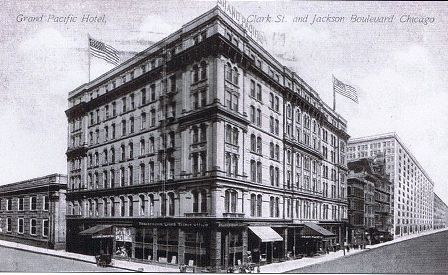
Egan was still in the sanatorium on May 4 when he was released for 3 days in order “to visit Chicago” and checked into the Grand Pacific Hotel.  On May 6 The Chicago Tribune said:

“Edward F. (Ned) Egan…was found dead with a revolver at his side in the Grand Pacific Hotel shortly after midnight this morning.  He had apparently been dead for hours.  Despondency, brought on by ill health, is believed to have led him to commit suicide.”

The Grand Pacific Hotel Chicago

The Grand Pacific Hotel Chicago

Timme told The Journal:

“So far as I have learned, his condition while at the sanatorium was improving.  I will have Mr. (Tom) Hickey (president of the American Association) obtain the facts from the police at Chicago.”

It was reported that Egan, who “owned considerable property in St. Paul,” was to be married in June.  His first wife had died in 1912, just more than a year after their marriage.  The day following his death, the Cook County Coroner confirmed the cause of death was suicide and said Egan was despondent over his injury.

The Milwaukee Sentinel published a eulogy for Egan written by long-time minor league umpire Oliver Otis “Ollie” Anderson:

“Umpires are supposed to have no feelings—to shed no tears, but they do bow their heads occasionally, and mine is bowed in thought, I have just read of the death of Ned Egan.

“As a baseball genius he was worthy of being compared to Comiskey, as a developer of players he was a Connie Mack, as a winner of pennants he was king of the bushers.  As a friend he was loyalty itself.

“What more can we say.”

Irwin Howe

3 Feb

irwinhowebb


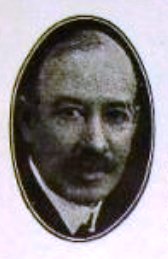
Irwin M. Howe founded Howe News Service in Chicago in 1910, published an annual record book and served as the primary statistician for several minor leagues, including the Western and the Three-I leagues.

After the 1911 season American League Secretary Robert McRoy, who was responsible for compiling statistics, left the league office to become an executive with the Boston Red Sox.  President Ban Johnson named Howe the league’s statistician; he served in that capacity until his death in 1934.

Irwin Howe

Irwin Howe

Howe leveraged his position with the American League.  He became the official statistician of several more leagues, including the American Association and the Federal League, wrote a nationally syndicated column called “Pennant Winning Plays,” became editor of the annual “Wilson Baseball Record and Rule Book,” and published an instructional pamphlet for kids.

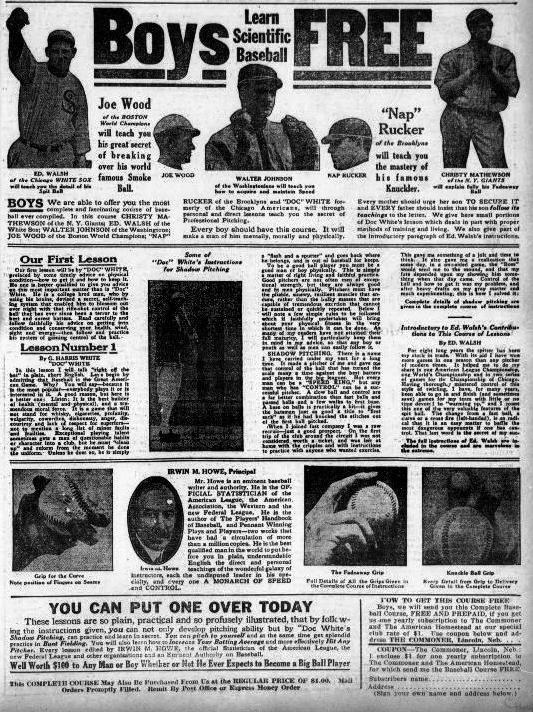
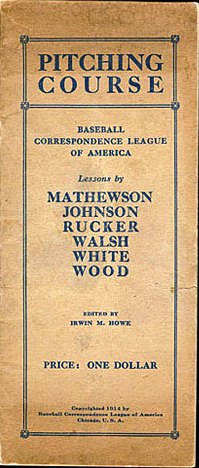
The ad from 1914 pictured above is for Howe’s 48-page “Pitching Course,” which he called “A correspondence school for baseball.” The pamphlets sold for one dollar, but were also offered by many small newspapers across the country for free to children who signed up subscribers (the pictured ad is from The Commoner, the Lincoln, Nebraska newspaper published by William Jennings Bryan).

Boys Learn Scientific Baseball Free

Ed Walsh of the Chicago White Sox will teach you the detail of his Spit Ball

Joe Wood of the Boston World Champions (1912) will teach you his great secret of breaking over his world famous Smoke Ball

Walter Johnson of the Washingtonians will teach you how to acquire and maintain speed

“Nap” Rucker of the Brooklyns will teach you the mastery of his famous knuckler

Christy Mathewson of the N.Y. Giants will explain fully his Fadeawy Ball

These lessons are so plain, practical and so profusely illustrated, that by following the instructions given, you can not only develop pitching ability…You will also learn to Increase Your Batting Average and more effectively Hit Any Pitcher.  Every lesson edited by Irwin M. Howe, the official statistician of the American League, the new Federal League and there organizations and an Eminent Authority on Baseball.

The pamphlet also included a lesson from Guy Harris “Doc” White of the Chicago White Sox “which deals in part with proper methods of training and living.”

Howe claimed his one dollar pamphlet was “Well worth $100 to any man or boy whether or not he ever expects to become a big ball player.”

Howe's pamphlet

Howe’s pamphlet

Perhaps Howe’s most famous contribution to baseball was certifying Ty Cobb as a .400 hitter in 1922.

On a rainy day in New York (years later in his book “Baseball as I Have Known It,” Fred Lieb said the game took place in August—contemporary newspaper accounts say it was May 15), Cobb beat out a ground ball hit to Yankee shortstop Everett Scott.  John Kieran of The New York Tribune (he was later a columnist with The New York Times) was the official scorer.  He charged Scott with an error.

Fred Lieb of The New York Telegram, who was compiling The Associated Press (AP) box score for the game, credited Cobb with a hit.  Lieb said “Considering the soggy field and Cobb’s speed, I gave it a hit.”

Fred Lieb

Fred Lieb

Howe’s habit was to rely upon The AP box score that appeared in the Chicago newspapers while awaiting the arrival of the “official” box score by mail.

When compiling the final averages at the end of the season Howe chose to accept Lieb’s scoring of the game rather than Kieran’s, and released a statement with the season’s final statistics:

 “I noted that the averages reached from my official scoring sheets had Cobb hitting .3995 (actually .3992).  With the unofficial averages giving him .401, I felt how can we deprive this great player of a third .400 average over a fractional point.”

Ban Johnson approved Howe’s decision.  Lieb, as president of the Baseball Writers Association of America’s (BBWAA) New York chapter was put in the uncomfortable position of attempting to repudiate his own scoring judgment.  He argued that the Kieran’s “official” score should be accepted, and said in a statement:

“Obviously, when there was a difference of opinion between the two scorers, the official and not the unofficial decision, should have been accepted.  There would be no further need for members of the Baseball Writers Association serving as official scorers if they were regulated to a secondary position.”

In a letter to Lieb, Ban Johnson said the “official” box score “was plainly in error in one other particular” besides the Cobb “hit” and “I requested a report of the official score of the game of May 15.  Mr. Howe had previously made a careful investigation of all facts surrounding the scoring.”  Johnson also chided Lieb asking “Are we to believe that you reversed your judgment at this late date?”

The 1923 “Wilson Record and Rule Book”–edited by Howe–contained an asterisk next to Cobb’s .401 average and noted that it was “not recognized” by the BBWAA—Howe was secretary of the association’s Chicago chapter.

The asterisk eventually disappeared, and Ty Cobb, thanks to Howe’s decision,  remains a .400 hitter for the 1922 season.