Tag Archives: World Series

“Even when he Wins he Loses”

18 Apr

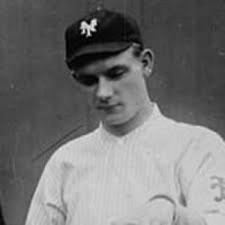
During his most successful season as a major leaguer, Bobby Byrne had some advice for the children who wished to follow in his footsteps:

“If they asked me I would tell them everything I could to keep them from starting.  Not that I knock the profession, but I think it is a poor one to choose, not because of the life itself, but because of its temptation and hardships, and worse than that, the small chances of being successful.”

Bobby Byrne
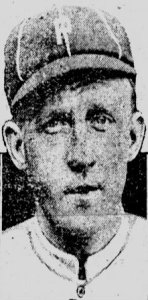
Bobby Byrne

That answer was given to syndicated journalist Joseph B. Bowles during the 1910 season when he asked Byrne questions about how he started in baseball “in order to help young and aspiring players.”

Despite being the starting third basemen for the defending World Champion Pittsburgh Pirates, and on his way to leading the National League in hits (tied with Honus Wagner) and doubles (178, 43), while hitting a personal-best .296 in 1910, he told Bowles:

“If I had it to do over again I do not think I ever would become a professional ballplayer, in spite of the fact that I love the game and love to play it.  I think a young fellow would do better to devote himself to some other line than to take the chances of success in the national game, for even when he wins he loses.”

He talked about how he started, and offered a theory about where the best players come from:

“I wanted to be a ballplayer and was educated at the game in a good school, on the lots around St. Louis.  I think that ballplayers develop faster when they are in the neighborhood of some major league team.  One or two of the players on a ‘prairie’ team are at every game the big league (team) plays.  They see how the game is played, and being at that age as imitative as monkeys, they work the same things on their own teams and teach all the other boys.  I have noticed when any city has a pennant winning club the quality of baseball played by the boys and the amateurs in that vicinity are much improved.”

Byrne

Byrne

Byrne said because of his time playing on the sandlots of St. Louis, he “picked up the game rapidly,” but said it wasn’t until he began to play professionally, first in Fort Scott, Arkansas, then in Springfield, MO, that he corrected the biggest flaw in his game:

“The hardest thing I had to learn was when to throw.   I think I must have thrown away half the games we played before I learned not to throw when there was no chance to get the runner. I think that is one of the first things a young player should learn; to look before he throws and only throw when he has a chance to make a play.  The next thing, it seems to me, is to learn to handle one’s feet and to keep in the game all the time, and be in position to move when the ball is hit.”

Even at the pinnacle of his career, the man who discouraged children from following in his path, was also somewhat cynical about his own experience:

“The biggest thing I had learned was that, no matter how far a fellow gets up in the business, there still is a lot he does not know, and by dint of watching and learning I held on, and still am learning and willing to learn.  When I know it all I’ll quit, or be released.”

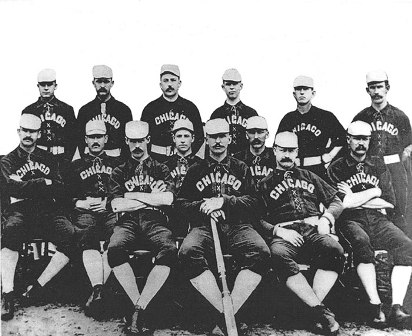
Byrne continued “learning” for seven more seasons, and the end of his career was fitting for someone who warned that a young man should steer clear of baseball because “even when he wins he loses.” After being acquired on waivers by the Chicago White Sox in September of 1917, he appeared in just one game, on September 4.  He was with the team when they clinched the pennant 20 days later; and was released the day after he appeared in the team photo commemorating their American League Championship.
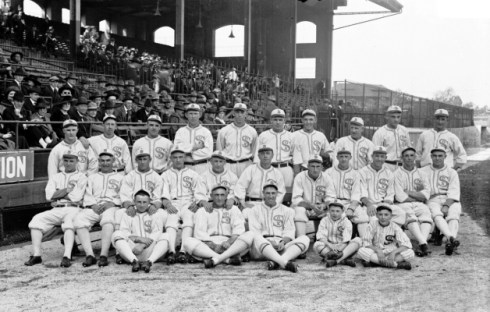
Group portrait of American League's Chicago White Sox baseball team posing in front of a section of the grandstands on the field at Comiskey Park, Chicago, Illinois, 1917.

White Sox team photo after clinching 1917 pennant, Byrne is fourth from right in second row–he was released the following day.

While the Sox were beating the Giants in the World Series, Byrne was back in St. Louis operating a bowling alley.   After three years away from baseball, he managed minor league teams—the Miami (OK) Indians and Saginaw (MI) Aces—in 1921 and ’22 before returning again to the bowling business.

His admonition against professional baseball didn’t stop his two sons from having their own brief minor league careers; Bobby played for several clubs between 1939 and 1941, and Bernie (listed as “Byrnes” on Baseball Reference) played for the Paragould (AK) Browns in the Northeast Arkansas League in 1940.  Both had their careers interrupted by WWII, Bernie was an airforce fighter pilot in Asia, while Bobby was awarded the Distinguished Flying Cross, Air Medal and Purple Heart while flying for the airforce in the Mediterranean Theater.

“A Good Ballplayer must be Temperamental”

15 Feb


Idah McGlone Gibson was the most famous female journalist of the early 20th Century; in addition to publishing several books, she wrote for the syndicated Newspaper Enterprise Association, The Chicago Tribune, The Los Angeles Evening Herald, and The Toledo Blade.

idahmgibson

Idah McGlone Gibson

She also interviewed New York Giants Manager John McGraw twice, five years apart.

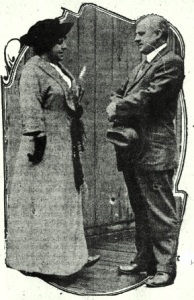
Their first meeting took place in New York shortly before the end of the Giants’ pennant-winning 1912 season.  McGlone told her readers:

“McGraw is surrounded by more ‘buffers’ to keep the public from him that Maude Adams (a notoriously press-shy actress), who is never interviewed, and that’s going some.

mcgrawgibson

Gibson and McGraw in 1912

“Neither his telephone number nor his home address is obtainable unless you reach one of his close friends, and at the Polo Grounds. he is never on view until you have passed all the police force and plain-clothes men.”

McGlone said former Giant turned New York attorney, John Montgomery Ward provided her with an introduction to McGraw.

“It was after the game that I saw the Giants’ manager, well-groomed, well-dressed, well-mannered. McGraw was evidently at peace with himself and the world…He is the most serious ballplayer I ever talked to.  He seldom smiles, and told me that he put one on to order when he had his picture taken with me.”

Gibson asked how McGraw thought the Giants would fare in the World Series against the Boston Red Sox:

“Of course, we are going into the game to win, not because of any glory attached to it, but because it is our business.  However, I feel that I shall be able to live through the winter if we lose the world’s championship.  I am not able to get up that high-water mark enthusiasm which exhilarates the fans to whom the game is a pleasure and not a business.”

She also asked McGraw about the biggest source of gossip surrounding his ballclub; the relationship between Rube Marquard, his 26-game winning pitcher and vaudeville star Shirley Kellogg—during August and September several newspapers published erroneous reports from Marquard’s mother that the couple had married:

“’Indeed, I don’t know whether he is married or not,’ he answered suavely, but his brown eyes narrowed and his lips came together firmly.  ‘You know I have nothing to do with the private lives of my men.’

“Marquard’s name and love affairs, however, did not bring a rosy glow to the manager’s face, and I imagine McGraw has helped make the course of true love run a little crooked, as ‘the Rube’ has lost the jump to his fast ball since his reported marriage.”

Rube Marquard

Rube Marquard


McGraw touted his other pitchers, telling Gibson that the greatest pitching performance “he had ever seen was in training camp last spring” when Jeff Tesreau and Al Demaree faced each other for 12 scoreless innings in an intersquad game in Texas.

Despite her fondness for McGraw, Gibson told her readers they “may trust a women’s intuition” and correctly predicted the Red Sox would win the World Series.

Gibson met McGraw five years later during a September series in Cincinnati, with the Giants on their way to another National League pennant. She said:

“I hope I have changed as little as he has in that time.

“His hair, the Irish hair that turns white early, has grown just a bit more optimistic—that is all.

“’Twenty-nine years is a long time to be in the game,’ he said as his eyes wandered over the field—‘longer than most of those boys can count their entire lives.’”

Gibson asked about temperamental players:

“In my nearly three decades of baseball I have learned one thing thoroughly—a good ballplayer must be temperamental, just as an artist, a musician, or a writer must have temperament.”

Gibson asked how he makes “a man’s temperament,” benefit the team:

“’By ignoring it,’ he answered.  ‘I must make every man think he has no temperament, even while making him use that most desirable quality in a ballplayer to its fullest capacity.’”

McGraw refused to say which player on the team was the most temperamental, but offered to tell who was the least.  Gibson said:

“’(Christy) Mathewson, I interrupted.’

“’Yes, Mathewson is always to be depended upon.  When he knows a thing is to be done he just does it.  Some men play best when a team is winning and some play best when spurred by defeat.  A baseball manager must not only be a good picker, but he must study each man individually and handle all differently.’

“’At the end of a season with a winning team you have to be more than ever on your guard.  Every man is a bundle of nerves, drawn taut.  At this time every little prejudice, every little idiosyncrasy, every little vein of superstition is laid bare and raw.  You get to know your men better then than at any other time during the season.’”

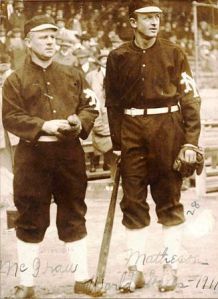
Christy Mathewson with John McGraw

McGraw and Mathewson

Gibson asked if the best ballplayers came from a particular nationality.  McGraw said:

“’I cannot answer that.  I think perhaps the Irish are the quickest thinkers and the readiest to take a fighting chance, but I would not like a team made up entirely of Irish.  You must have temperaments like the German to ballast the Irish.  Truly I think a winning ball team must be a melting pot of all nationalities.  This year there are more Germans among the Giants than any other nationality and they are just as temperamental as any other but they don’t show it in just the same way.’”

Gibson did not make a prediction about the World Series as she had done five years before; McGraw’s temperamental Giants were beaten four games to two by the Chicago White Sox.

Ray Schalk on “Baseball Brains”

1 Feb

After the Chicago White Sox defeated the New York Giants in the 1917 World Series, Sox catcher Ray “Cracker” Schalk took to the pages of “Baseball Magazine” with his opinion of statistics:

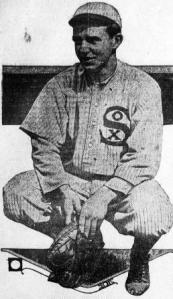
Ray Schalk

Ray Schalk

“Offhand I would say that fielding averages are pretty bad, pitchers’ averages rather punk, batting averages merely fair.  But the worst of all are catchers’ averages.

“How are you going to tell a good catcher?  By his batting average?  By his fielding average?  By the runs he scores?  Of course all these things are important.  But they haven’t any direct connection with good, bad or indifferent catching as such.  A catcher may or may not be a good batter or base runner.  And whatever his hitting or run getting ability he may be a great or mediocre catcher.”

Schalk said it was “easy…from the records” to determine an outfielder or shortstop’s ability:

“But a man might be the best catcher the world ever saw or the worst, and there would be no way under heaven to gain that information from the season’s statistics.

“First of all, a catcher must have baseball brains.  It isn’t enough to say brains; you must add the adjective ‘baseball’ to describe what you mean.”

Schalk noted that many of his contemporaries were educated:

“I admit this is the day of the college player in baseball.  I admit that the better education a man has, other things being equal, the better ball player he will be.  But he might know a lot of philosophy or Greek literature and be a frost on foul flies.  Ty Cobb has the ideal baseball brains.  But Ty isn’t a college man.  On the other hand I used to play in the minors with a graduate of a well-known university who was a brilliant scholar and a good natural athlete.  But he was positively the limit in playing baseball.  He would do the most incomprehensible things.  In fact, he was impossible.

Hans Wagner and Nap Lajoie are not college men, have not enjoyed as liberal an education, perhaps, as most of the rest of us.  But if any medical laboratory wants a sample of a real baseball brain, let him open negotiations with the Dutchman or the Frenchman for the use of his skull when he is thru with it.

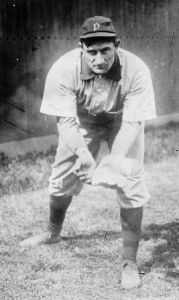
Honus Wagner

Honus Wagner

“I believe there are fellows with a natural born instinct to play baseball.  They invariably do the right thing at the right time.  That is what I mean by baseball brains.  Furthermore, such a brain must above all act quickly.  There are many thousands of people, even in the stands, who understand good baseball and could dope out the proper thing for a fielder or a batter to do under given conditions.  But that isn’t enough.  The man with a baseball brain must not only do the right thing but he must do it instantly.  It is quickness of thought quite as much as correctness which marks the star player.  Hal Chase and Ty Cobb are scintillating examples of quick thought on the diamond.”

And, said Schalk, “quick thought” was most important behind the plate:

“Now the catcher, above all men, must have a good baseball brain.  Most of his work, the most important part of his work, is hidden from the spectators’ eye.  The man in the stands can seldom follow what is going on in the catcher’s brain.  But the catcher, much more than the pitcher, holds the game in the hollow of his hand.  The catcher, much more than the pitcher, is the keystone of the baseball arch.”

The man who thought statistics didn’t have “any direct connection” to a catcher’s value made it into the Hall of Fame in 1955.  He has the lowest career average (.253) among enshrined catchers.

Lost Advertisements-Tris Speaker and Larry Doyle, Lewis 66

20 Jan

1913whiskey

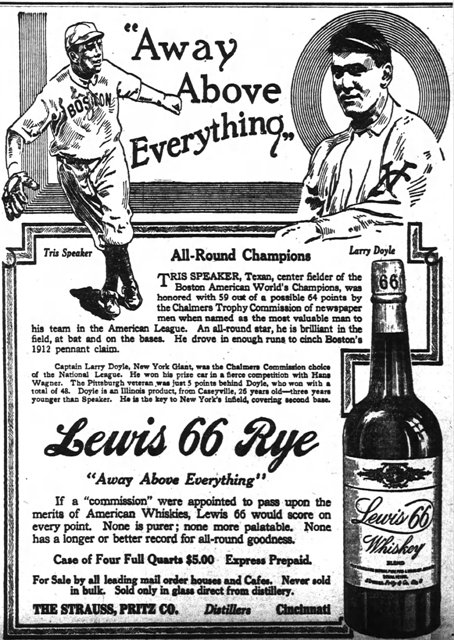
A 1913 advertisement for Lewis 66 Rye Whiskey from The Strauss, Pritz Company, a Cincinnati-based distiller featuring Tris Speaker and Larry Doyle:

“Tris Speaker, Texan, center fielder of the Boston American World’s Champions, was honored with 59 out of a possible 64 points by the Chalmers Trophy Commission of newspaper men when named as the most valuable man to his team in the American League.  An all-round star, he is brilliant in the field, at bat, and on the bases.  He drove in enough runs to cinch Boston’s 1912 pennant claim.

Captain Larry Doyle, New York Giant, was the Chalmers choice of the National League.  He won his prize car in a fierce competition with Hans Wagner.  The Pittsburgh veteran was just 5 points behind Doyle, who won with a total of 48.  Doyle is an Illinois product, from Caseyville, 26 years old–three years younger than Speaker.  He is the key to New York’s infield, covering second base.”

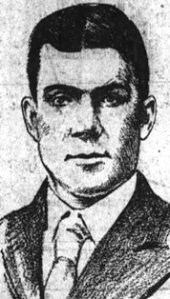
Larry Doyle

Larry Doyle

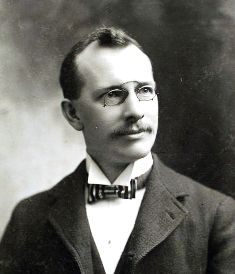
The cars–each a 1913 Chalmers 36– were presented before World Series games at each player’s home ballpark by company president Hugh Chalmers.  Former Cincinnati sportswriter turned advertising executive and chairman of the Chalmers Commission, Ren Mulford introduced the automobile executive at the Polo Grounds for Doyle’s presentation, and said:

Ren Mulford

Ren Mulford

“What (Sir Thomas) Lipton is to Yachting, and what (William Kissam) Vanderbilt is to automobile road racing, Hugh Chalmers is to baseball.  The Chalmers trophy is now a recognized baseball classic.”

The “recognized baseball classic” was discontinued after the 1914 season.


Lost Advertisements–An Excellent Christmas Gift

25 Dec

???????????????????????????????

A 1916 advertisement for the World’s Series Baseball Game from the United Games Company:

“Every play known to baseball can be made on this game.  Pitch a Straight or Curved Ball, Bunt or Hit ‘Em Out, and Steal Bases as you think best.  Don’t matter whether you know real baseball or not–you’ll soon like this game…”

An Excellent Christmas Gift

“Read this letter from a ‘World’s Series’ Fan:  ‘I am sending to you for another of your World’s Series Baseball Games.  I bought one of these games last summer and was delighted with it.  My father, who was never a baseball enthusiast became a rabid fan at this game, as did the whole family to such an extent that I was unable to get the game when I wished it.'”

Lost Advertisements–Ty Cobb, Lewis 66 Rye

11 Dec

cobblewis66

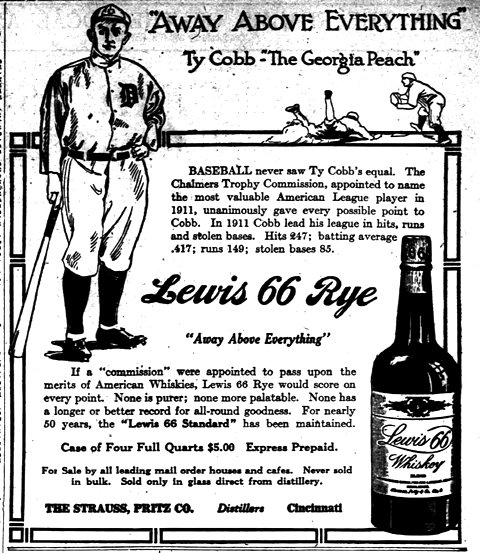
A 1912 advertisement for Lewis 66 Rye Whiskey from The Strauss, Pritz Company, a Cincinnati-based distiller:

“Away Above Everything”

Ty Cobb–‘The Georgia Peach’

“Baseball never saw Ty Cobb‘s equal.  The Chalmers Trophy Commission, appointed to name the most valuable American League player in 1911, unanimously gave every possible point to Cobb (he received all eight first-place votes–the commission consisted on one sportswriter from each league city).  In 1911, Cobb led his league in hits, runs, and stolen bases.  Hits 247; batting average .417; runs 149, stolen bases 85 [sic 248; .420; 147, 83].”

Cobb was presented with a Chalmers “36” at Shibe Park in Philadelphia on October 24, 1911, before game four of the World Series. Jack Ryder, covering the series for The Cincinnati Enquirer said of the presentation:

“President (John T.) Brush of the Giants declined to allow this ceremony at the Polo Grounds, so it was pulled off very quietly here this afternoon…The event took place 10 minutes before the game and was coldly ignored by the Giants though the Athletics took a keen interest in it and several of them had their pictures taken with Cobb. Ty now has three cars, but he says this one is much the best of the lot, and he expects to drive it to his home in Georgia as soon as the series is over.”

Cobb in his Chalmers at Shibe Park

Cobb in his Chalmers at Shibe Park

While Cobb was the unanimous choice of the eight-man commission, the second place finisher in the American League received a more valuable car.

The Chicago Inter Ocean said Chicago White Sox fans, unhappy that pitcher “Big Ed” Walsh finished second to Cobb, “Undertook to raise a fund to purchase an automobile,” for him.

But, said the paper, the fans:

“(F)ound themselves confronted with a dilemma–they had too much money in the fund to buy a duplicate of the Chalmers touring cars presented to Ty Cobb and (National League winner, Chicago Cubs outfielder) Frank Schulte.”

Two days before Cobb received his Chalmers in Philadelphia, Walsh was presented with his car before a charity game at Comiskey Park.

Ed Walsh

Ed Walsh

No Chicago newspaper reported the make and model.  The Daily News called it “A handsome automobile.”  The Inter Ocean said it was “A $4,000 automobile,” and The Tribune said simply that he had received an “(A)utomobile subscribed for by the fandom of the city.”  The Examiner also failed to mention the type of car Walsh received but said the Cubs’ Schulte “gave $25” to the fund.

According to The Tribune, Walsh promised to “‘(L)earn how to run it before spring,’ and the stands cheered loyally.”

Connie Mack vs Herman W. Souse

6 Nov

In his autobiography “My 66 Years in the Big leagues,Connie Mack said, “My first great disappointment came in 1912.”

Connie Mack

                          Connie Mack

After two straight World Series victories, Mack’s Athletics stumbled to a disappointing third-place finish.  With his team 15 ½ games out of first on September 6, Mack suspended pitcher Charles “Chief” Bender and Reuben “Rube” Oldring for, as The Philadelphia Inquirer  put it:

 “(T)heir failure to live up to the training requirements, as demanded by Mack and all common sense baseball managers.”

Chief Bender

                                Chief Bender

The Inquirer said “Mack refused to discuss this matter further,” but just days later in Detroit he gave what The New York World called “a sermon” on the reason for the suspensions:

“Booze and baseball don’t mix; never did, and never will. A pitcher who thinks he can fan Herman W. Souse is simply pitching to the greatest home run hitter he ever faced.

“Once in awhile you hear of some marvel who can stay out all night, drink all the breweries dry, wreck a few taxi cabs and otherwise enjoy himself, and then step in the box and pitch a wonderful game of ball.  Players who haven’t any more sense point to Rube Waddell, Bugs Raymond and that brand and say: ‘Ah, those were the good old days.  None of these high-priced managers and their red tape then.  And what wonderful players we produced in those days.’

“Well, look at Waddell—one of the most remarkable pitchers nature ever produced.  But Waddell, with all his talent, couldn’t stay in the major leagues.  Why?  Because he stood there and pitched himself to Old Man Barleycorn, and finally every one he threw was slammed over the fence.  And that’s the way all go.  Is it so wonderful, after all?

“No, sir, the day of the stewed ballplayer has gone and it won’t come back.  If the members of my team want to drink, all right.  But they can’t drink and play ball at the same time.  That’s settled.  They can do whatever they prefer, but they can’t do both.

“There are no exceptions to my rule, either.  Any manager will tell you the same.  A short life and a merry one—that’s it.  And the merrier it is the shorter it will be in the big leagues.”

In December of 1912, The Philadelphia Record said Bender had written a letter to Mack asking his manager “to please forgive him.”

According to The Inquirer, he was forgiven and set to return to the Athletics in 1913:

“This winter Bender has spent nearly all the daylight hours automobiling and hunting in the South.  He looks stronger than ever.”

The “stronger,” sober Bender appeared in 48 games, 21 as a starter, and posted a 21-10 record with a 2.21 ERA, and helped lead the Athletics to their third championship in four seasons.

In “My 66 Years in the Big leagues” Mack said of him:

“Let me say here that I consider Chief Bender the greatest one-game pitcher, the greatest money pitcher baseball ever has known.”

“Baseball is full of Authenticated instances of Woman’s Influence over it”

27 Jul

In 1905, The Washington Evening Star said:

“The unwritten history of baseball is full of authenticated instances of woman’s influence over it…Not infrequently a sweetheart’s or a wife’s objections to the game cause a star to forsake the diamond for work for which he is not fitted in the least degree, and at which he makes only a living at best.

Bill Lange is a case in point.  Up to (1899) he was one of the best ground coverers in the profession, and as a batsman had a high average.  From the day of his wedding, his wife kept at him to leave the game, urging him to take the step on the grounds of personal safety.  Bill reasoned with her and told her time and again that he knew of no other job for which he could make $4,500 in six months.  But Mrs. Lange was obdurate, and so, when his last season closed Bill ruefully announced to his manager that the diamond would never know him again.  And it has not, though he has annually been tempted by numerous flattering offers. ‘I have given my word to my wife,’ he says simply, ‘and so long as she feels as she does about the game I shall not take up the bat.’”


Bill Lange

Bill Lange

Lange never played another professional game

The Evening Star said that occasionally a wife would change her mind, and allow her husband to play professional ball; George “Del” Howard was one such player.

Howard—under his middle name Elmer—was a member of the Mattoon, Illinois team in the Indiana-Illinois League in 1899.

“Howard took as his wife the daughter of a prominent citizen of a central western town.  They had scarcely settled down after their honeymoon when Mrs. Howard began pleading with her husband to give up the game, naming as a reason that she had a strong dislike for it.  She was so insistent that finally Howard reluctantly severed connections with the game, and secured employment selling agricultural implements.

“But he did not give up all hope of returning to the diamond.  During the months that he was engaged in telling farmers of the merits of his particular make of wheat drills and mowers he spent his spare time endeavoring to get his wife interested in baseball. At first it was hard and slow work, and had to be accomplished diplomatically, but little by little he progressed to the point where Mrs. Howard would accompany him to games.  Then Howard explained every play made, told her about the players, introduced them to her, and made her acquainted with the woman folk of the players who were in the grandstand.

“At the end of four tedious years his work of education bore fruit.  Mrs. Howard came to him one day, confessed that she had changed her mind about baseball, declared that she would rather have him on the diamond than an agent for farm implements, and further caused him great joy by appending that he couldn’t get their quickly enough to suit her.“

After a five-year absence from baseball, Howard signed with the Omaha Rangers in the Western League in 1904.  He hit .316 in 144 games (finishing second to William “Bunk” Congalton of the Colorado Springs Millionaires for the batting title) and was purchased by the Philadelphia Phillies.

Del Howard

Del Howard

Traded to Pittsburgh for three players, the 27-year-old Howard made his major league debut for the Pirates on April 15, 1905, in Cincinnati with his wife Jessie in the stands.

Howard’s rookie season was his best; he hit .292 in 123 games with the Pirates.  He played in the major leagues for five seasons and was a member of the 1907 and ’08 World Series Champion Chicago Cubs.

Howard played and managed in the minor leagues through 1922. His wife Jesse died in California in 1933.  He died on his 79th birthday on December 24, 1956.

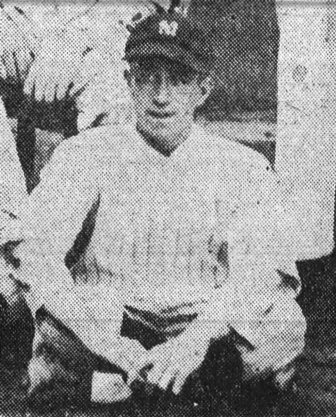
“The Aristocrat of all Mascots”

1 Jul

Shortly after the 1920 World Series, The Associated Press (AP) claimed to have discovered why the Brooklyn Robins, after taking two out of three games from the Indians at home, dropped four straight in Cleveland:

“At last the secret…is out.  The Dodgers declined to take their mascot, Eddie Bennett, with them to the lair of the Indians, and without his lucky presence they were swamped.  And not only that.  Bennett, indignant over having been left at home, has quit the Brooklyns!  That’s revenge!”

The Brooklyn Daily Eagle said, Bennett, a Brooklyn native, came to the attention of baseball fans in 1919 when he served as bat boy and mascot for the American League Champion Chicago White Sox:

“(H)e used to hang around the players’ entrance to the ballparks on both sides of the bridge.  The Yankees were playing at the Polo Grounds then, and one day one of the White Sox noticed a wistful little fellow in the front row of hero worshippers.”

Eddie Bennett

Eddie Bennett

White Sox outfielder Oscar “Happy” Felsch, noticed Bennett suffered from kyphosis (the excessive curvature of the spine—in Bennett’s case it was said to have been caused by an injury when he fell out of his stroller as an infant) and asked “’Are you lucky?’ ‘Sure,’ cried Eddie Bennett eagerly.”  With Bennett serving as bat boy, the Sox defeated the Yankees.  With that:

“Felsch spoke to Eddie Cicotte about taking him back to Chicago. Cicotte spoke to Manager (William) Kid Gleason.  Eddie Bennett became the official White Sox mascot.”

Bennett spent the rest of the season with the Sox and roomed with pitcher Dickie Kerr on the road. After the Black Sox scandal broke—Bennett told reporters, “I was one of the honest ones”—the 16-year-old returned to New York and went to work for the Robins.

Dean Snyder, writing for Scripps’ Newspaper Enterprise Association, said of Bennett during Brooklyn’s pennant run:

“(The Robins) bought the kid a swell uniform and told him to hang around.

“From the day he started as the official mascot…things began to look up.”

But, Snyder noted, Bennett was strictly a mascot and not a bat boy in Brooklyn:

“Little Eddie is a hunchback. The players positively forbid him to touch their bats.  They just want him to stick around. They’re might superstitious about their war clubs.”

After being left home by the Robins for the club’s ill-fated trip to Cleveland, Bennett jumped to the Yankees; he told The AP:

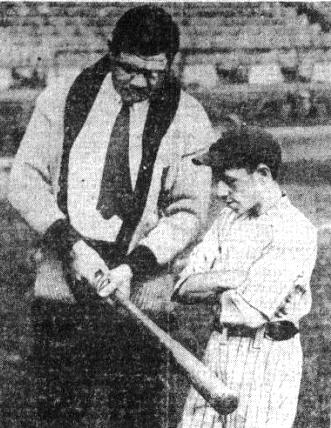
“I’m going to be with a real club this year.  Oh boy, to watch that (Babe) Ruth sock them every day.”

Bennett with Ruth

Bennett with Ruth

For the third straight season, Bennett was part of a pennant winner, and for the third straight year his team lost the World Series.  But this time he stayed put and remained a fixture with the Yankees for another decade.

American League Umpire Billy Evans, in one of his syndicated columns, said Bennett took his position very seriously and related a story about seeing him in a restaurant during a Yankee losing streak:

“Bennett was seated across from me at a table in the diner. We were served at about the same time, and I noticed he ate but little of the food he had ordered.

“’Something wrong with the food Eddie?’ I ventured.

“’The food is all right, I guess there is something wrong with me,’ replied Eddie.

“’Cheer up, Eddie.  The Yankees can’t lose all of them,’ I said with a laugh.

“’Babe hasn’t made a home run in a week.  The team never gets any runs for Bob Shawkey.  Every time Scotty (shortstop Everett Scott) makes an error it means a run.  Waite Hoyt has a bad inning every game,’ was Eddie’s come back.

“’Why worry about these things, Eddie?’ The Yankee mascot looked at me in a puzzled manner, as if I might be joshing him.

“’That’s my business, I’m a mascot,’ said Eddie in all seriousness.  ‘I am supposed to bring luck, to help Ruth make home runs, keep Scotty from making errors, have the team get runs for Shawkey, and no bad innings for Hoyt.’

“Eddie was disgusted at my failure to appreciate the importance of his position.”

In 1928, The Brooklyn Daily Eagle called Bennett “(T)he aristocrat of all mascots…eight flags in 10 years is the mark for other mascots, living and still to be born to try to equal.  It will probably never be beaten.”

Bennett’s career came to an end in May of 1932; according to The United Press (UP) he was riding in a cab which crashed and “was pinned to a pole,” Bennett suffered several broken bones, including a leg broken in several places, and spent months in the hospital. (The AP said he was hit by the cab while walking).

He made a brief, dramatic return to the Yankees a year later.

On May 23, 1933, Bennett entered the Yankees clubhouse on crutches in the midst of what The International News Service called “The great home run famine.”  Neither Babe Ruth nor Lou Gehrig had hit one since April 30:

“It was the longest home run slump for the twins since they started making life miserable for American League pitchers.  For weeks they rubbed their carcasses and bats with sundry kinds of magic oils and rabbit’s feet, consulted Yogi’s and employed every luck charm known to the superstitious in an effort to shake off the jinx.  It took Eddie Bennett, the little cripple who formerly was the club’s bat boy, to shatter the jinx.  Before yesterday’s game he solemnly tapped both sluggers with his magic crutch and that turned the trick.”

Eddie Bennett

Eddie Bennett

Both Ruth and Gehrig hit home runs off Oral Hildebrand (who came into the game with a 6-0 record) in an 8 to 6 victory over the Cleveland Indians.

It was a final happy moment for Bennett.

While he continued to be paid by Yankees owner Jacob Rupert, depression and alcoholism consumed the last years of his life.  The 31-year-old, “aristocrat of all mascots,” was found dead on January 17, 1935, according to The UP “cold and stiff in his drab rooming home…He lived out his days among his baseball trophies, drinking steadily”

Edit:  As noted in the comments, I say above that Bennett left the White Sox “when the scandal broke,”  which implies September of 1920 when the grand jury was impaneled. I should have said “when rumors of the scandal broke,” which began during the 1919 series and continued throughout the 1920 season.

Things I Learned on the Way to Looking up other Things #15

17 Jun

Fullerton’s Prediction

Seven years before he watched the events of the 1919 World Series unfold from the press box, Hugh Fullerton warned readers of The Chicago Record-Herald:

“Baseball as a great national sport is in greater peril today than ever before.  Not until the present week did I realize this fact.  The gamblers, bookmakers and handbook men, who ruined horse racing…and who made fighting a noisome scandal, have attached themselves to baseball this year as never before”

Hugh Fullerton

Hugh Fullerton

“The King of them all for Superstitiousness”

In 1916, Napoleon Lajoie, then a member of the Philadelphia Athletics, told The Cleveland Press:

“I have known many a ballplayer who collected hairpins, held his breath if he saw a circus horse, but Bill Armour was the king of them all for superstitiousness.

Bill Armour

Bill Armour

“If you put a ladder in front of the door to his room Bill would have jumped out of the window sooner than have come under that ladder.  I think he would have stayed in there and starved to death rather than let the ‘jinx’ take him overboard because he went under a step-ladder.   Me?  No, I am not superstitious, it’s all nonsense.

“Going to fetch me a black cat?  Don’t bring it up here; we have enough bad luck as it is without any black cat hanging around the clubhouse.”

Napoleon Lajoie

Napoleon Lajoie

Black cat or not, Lajoie was correct about the Athletics “bad luck.”  The team finished in eighth place with a 36-117 record.  The forty-one-year-old Lajoie hit just .246; 92 points below his career average.  He retired at the end of the season.

“Any old Manager can run a Team of real Baseball Players”

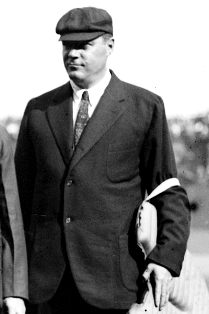
Bill Dinneen pitched in the major leagues for 12 seasons, and a month after his playing career ended he began his 28-year tenure as an American League umpire

Bill Dinneen

Bill Dinneen

In 1910, he told Joseph Samuel “Joe” Jackson, sports editor of The Washington Post, how major league clubs should allocate money:

“’If I were a club owner, I would invest $15,000 in a scout and $5,00 in a manger  And old manager can run a team of real baseball players  But the best leader in the world can’t make bad material good  Every major league team needs a thoroughbred judge of raw material more than a teacher of baseball tricks’’’

Jackson said Dinneen’s observation confirmed what he thought while watching the Philadelphia Athletics beat the Chicago Cubs four games to one in that year’s World Series

“His remarks come merely to emphasize what the world’s series showed—that a club that is hitting the ball over the lot, and giving its pitchers support, will set at naught all schemes to beat it by carefully thought out plans that might be applicable if the other fellows would stop making so many base hits”