Archive | 2015

“Pitcher Geiss No Good”

3 Jun

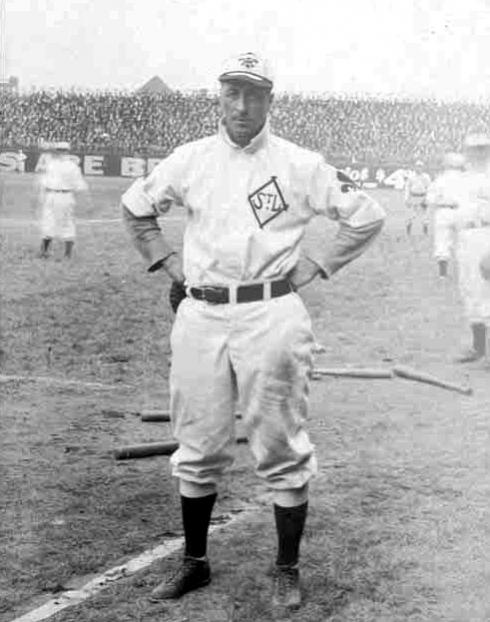
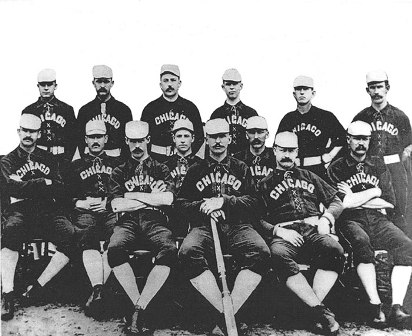
Emil August Geiss pitched one game in 1887 for Cap Anson’s Chicago White Stockings; it was his only Major League game as a pitcher (he later played two games in the infield).

The Chicago Tribune reported that Geiss was signed by the White Stockings “at a salary of $250 month.”  Geiss had been blacklisted the previous season for failing to report to the St. Paul Freezers in the Northwestern League after signing with that club.  The paper said, “It cost $200 to get him reinstated (The Sporting Life said it was $600).”

Geiss’ performance on May 18 was less than memorable.  He gave up 11 runs, eight earned, and 17 hits in an 11-4 loss to the Washington Senators.

The Chicago Tribune headline the following day summed up Geiss’ performance:

Pitcher Geiss No Good

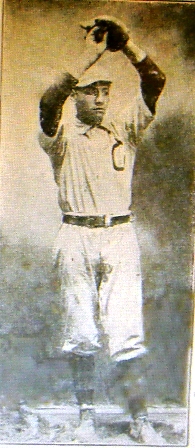
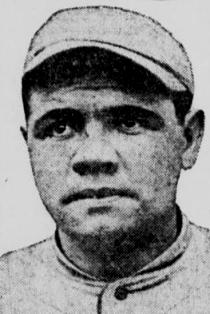
Emil Geiss

The headline in The Chicago Inter Ocean was no kinder:

Geiss Is No Good.  A New Pitcher Tried by the Chicagos at Washington with Disastrous Results

The paper said Anson, who sat out, “watched the game from the players’ bench, a look of disgust deepening on his face every inning widened, and fairly turned his back on the unfortunate Whites.”

Geiss briefly redeemed himself when filling in for Anson on June 15 against the Indianapolis Hoosiers. The Tribune said:

“Geiss played first base in first-class style. He accepted eleven chances with no errors.At the bat he struck out twice and made one hit.”

Their opinion changed one week later when he played in place of Fred Pfeffer at second and  made three errors on seven total chances and was 0 for 5 at the plate.

The Tribune said:

“If Geiss is capable of no better work that he did yesterday he should not be allowed to again don the uniform of the Chicago nine.  A man who plays as he did is a positive menace to the success of the club.”

At the end of June, Geiss was released and finished the season in the Chicago City League.

An additional note about Geiss, and it’s a confusing note:

The remainder of his career is a bit vague and complicated.  His brother was William Geiss, who had two brief major league stints and a long minor league career during which he sometimes played under the name of Emil Geis (one “s”), further complicated because Emil Geiss’ Cook County, Illinois death certificate lists him as “Emil Geis.”

Emil pitched for the London Tecumsehs in the International League in 1888 and ’89.  He was the subject of a dispute between London and New Orleans in the Southern League over his rights—an arbitrator ruled that Emil was the property of London; at the same time William was with New Orleans, so we know it was Emil with London.

After a seven-year absence from professional ball, Baseball Reference has Emil hitting .402 in 41 games split between Bloomington in the Western Interstate League and Ottumwa in the Eastern Iowa League in 1895.

It seems likely, and contemporary reports indicate that it was actually William, playing under the name Emil Geiss (sometimes Geis) who put up those numbers in 1895–this conclusion is also supported by the fact that Emil, who had joined the Chicago Police Department in 1891 was still a member a force in 1895.

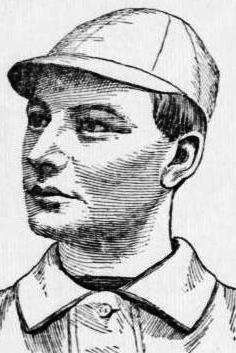
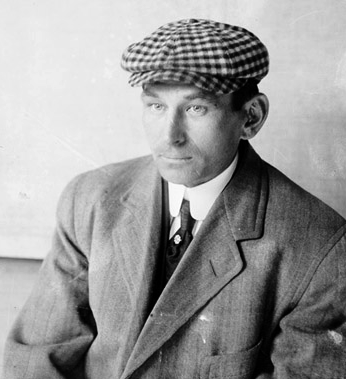
William Geiss

William Geiss

Both brothers died in Chicago, Emil on October 4, 1911, and William on September 18, 1924.  Both are buried at Saint Boniface Cemetery in Chicago.
 

“Baseball is far behind Golf in its Self-analysis”

1 Jun

During the Chicago Cubs disappointing fifth place finish, with a 67-89 record in 1916, the team hit just .239.

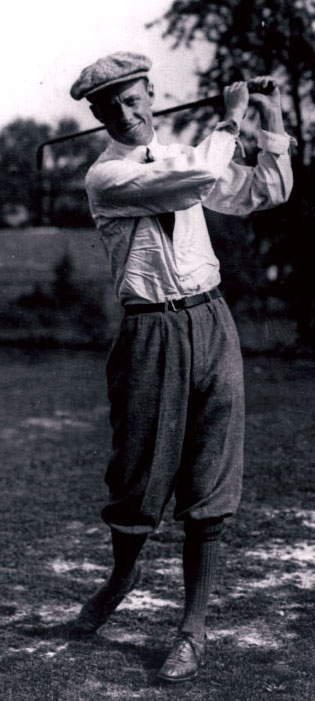
When Manager Joe Tinker was replaced by Fred Mitchell, team owner Charles Weeghman announced that golfer Charles “Chick” Evans, who in 1916 became the first to win the U.S. Amateur and U.S. Open in the same year, would be accompanying the team on their spring training trip to Pasadena, California.

Chick Evans

Chick Evans

Weeghman told The Chicago Day Book’s Mark Shields that Evans would teach the hitters “a golf follow through” intended “to increase the batting of the regulars.  Shields said Weeghman “Points to (Frank) Schulte, (Heine) Zimmerman and (Tris) Speaker as strong hitters who use a golf style.”

Weeghman told The Associated Press (AP):

“There is form in the driving of a golf ball, but there is none in driving a baseball.  Applying the form of golf to baseball was responsible for the wonderful driving power of Frank Schulte and Heine Zimmerman.”

The Cubs’ owner allowed that Schulte knew nothing about golf, but said “(H)e unconsciously used the same swing.”

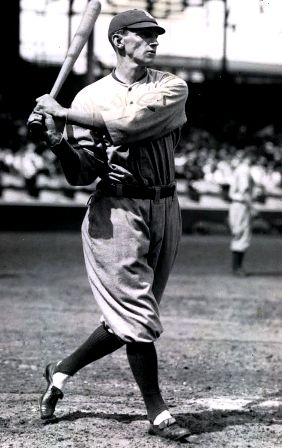
Frank Schulte's swing

Frank Schulte’s swing

Weeghman said the golfer would not be paid for services in order to maintain his amateur standing.

Evans told The Chicago Daily News that “the batsmen don’t have the knowledge of stance, grip and manner of swinging that the more successful golfers possess. “

He told The International News Service that he had considered a career in baseball:

“Chick says that he might have become a baseball player after having pitched a no-hit game for his high school (Evanston Academy).”

Evans claimed “a torn ligament at the shoulder” derailed his plans.

The response to the Cubs’ plan was immediate.

The Daily News said:

“Chick Evans is going to teach the Cubs how to bat, thereby accomplishing something no one else even considered possible.”

Rabbit Maranville told The AP the story was “a funny one,” and that he was sure that the decision to bring in Evans was strictly Weeghman’s, and likely not endorsed by the Cubs’ new manager:

“Doesn’t seem to me as if (Fred) Mitchell is responsible for that stunt.  I guess it’s being wished on him.

“In baseball the batter needs courage.  He does not know when the pitcher is going to slip a notch in his control…Courage is the big asset in batting, and with all the respect in the world to golf, where is there any great courage needed in driving the golf ball?”

While John Brinsley “J.B.”  Sheridan, the sports editor of The St. Louis Globe-Democrat, said ballplayers may derive some benefit from a golfer’s advice:

“Baseball is far behind golf in its self-analysis.  The keen minds of many generations of Scotch students have been devoted to the science of golf.  So far, no keen analytical mind has been given to baseball.  Men who do know the game are usually inarticulate and cannot tell what they know.”

Sheridan outlined how golf in general, and Evans in particular, could help:

“Drawing back the club or the bat slowly is most important.  If the striking implement is drawn back too quickly or with a jerk, the player is thrown off balance and his eye is put out of focus.

“It is notable that the great hitters, Speaker, Joe Jackson, Eddie Collins and others carry their bats well behind them and do not draw back quickly.”

Additionally, Sheridan said other “golf maxims will help” hitters, including:

“Hit off the (front) foot.  Keep your eye on the ball.  Do not hit too hard.  Follow through.”

Weeghman’s plan was finally shelved shortly before the team departed for the West Coast.  The Daily News said the United States Golf Association (USGA) could strip Evans of his amateur standing:

“If Evans uses his ability as a golfer to aid him in attempting to instruct ballplayers how to swing their bats, it appears that he will take a long chance.”

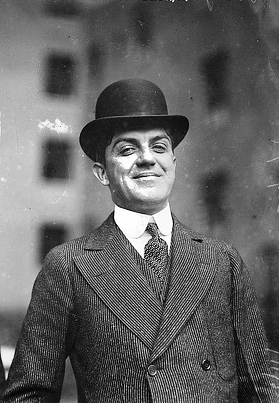
Charles Weeghman

Charles Weeghman

Evans was in California at the same time as the Cubs in March, and although newspapers had announced he would accompany the team “over the Sante Fe” railroad on the trip, it is unclear whether he actually traveled with the team.  The AP said he “stayed far away” from the Cubs’ practices in order to not run afoul of the USGA, but one paragraph in The  Chicago Tribune the day after the club’s first practice in Pasadena was rained out, likely exposed the Cubs’ owner’s real intention for wanting Evans in California:

“(The rain) did not keep Prexy Weeghman from tackling Chick Evans in a golf match.  They had played only twelve of the eighteen holes when the mist became so active it stopped the contest.  At the finish, the score stood $11 to $1 in favor of the national amateur champion.”

The Cubs posted a slightly improved 74-80 record, but once again finished in fifth place.  Whether the lack of instruction from Chick Evans was a factor or not, the team’s batting average was .239; identical to their 1916 average.

Lost Advertisements–Bull Durham’s Fan for a Fan

29 May

1913fan

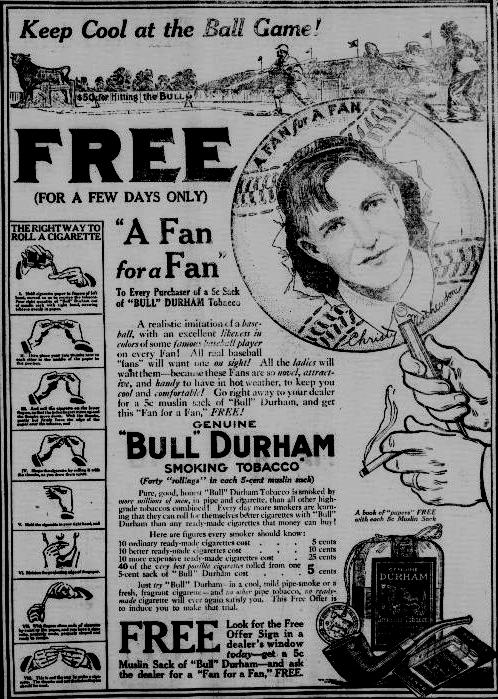
A 1913 advertisement for the “A Fan for A Fan” offer from Bull Durham Tobacco:

Keep Cool at the Ballgame

 Free (for a few days only)

A Fan for a Fan

 To Every Purchaser of a 5 cent sack of “Bull” Durham Tobacco

A realistic imitation of a baseball, with an excellent likeness in colors of some famous baseball player in every fan!  All real baseball “fans” will want this on site!  All the ladies will want them–because these fans are so novel, attractive, and handy to have in hot weather to keep you cool and comfortable!  Go right away to your dealer for a 5 cent muslin sack of “Bull” Durham, and get this “Fam for a Fan,” Free!

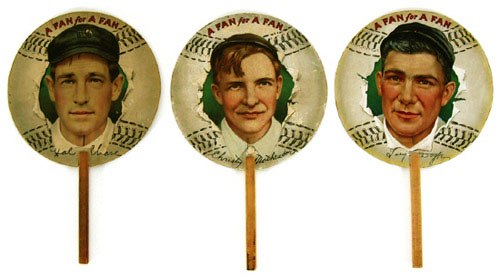
In addition to the Christy Mathewson fan featured in the ad,  Ty Cobb, Hal Chase, Frank Baker, and Larry Doyle were also available; the fans themselves included a facsimile signature of the player and no mention of Bull Durham.  Apparently they are rare enough that auctions date them only to “Circa 1910,” and make no mention of them being distributed by the tobacco company.

fan

Chase, Mathewson and Doyle fans from a 2005 auction; the three sold for $3,480.


Charlie Roy

27 May

Robert Charles “Charlie” Roy was one of the most sought after prospects in the country in the winter of 1905.  Raised on the White Earth Reservation in Minnesota, Roy was a pitcher for the Carlisle Indian School baseball team.

The Minneapolis Journal said of the 21-year-old:

“He has been pitching altogether four years, and he puts remarkable speed into the ball.”

In December of 1905, it was reported that Roy was about to sign with the Cincinnati Reds, but just days later he chose to return to Carlisle

The manager of the Carlisle baseball team in the spring of 1906 was Philadelphia Phillies pitcher Charles “Togie” Pittinger–who won 23 games for Philadelphia in 1905.

In March, it was announced  that Roy had signed a contract with the Phillies on the recommendation of Pittinger.  The Philadelphia Record said Pittinger compared the pitcher’s abilities to those of one of Roy’s childhood friends, another Carlisle product:

“He thinks Roy has every earmark of developing into one of the best pitchers in either major league, and predicts for him as bright a baseball career as that of (Chief) Bender.”

Cincinnati protested the signing and claimed Roy had “Verbally agreed,” to a contract the previous December and belonged to Reds.  As the National League considered which team he belonged to, Roy worked out with Phillies.

Charlie Roy, Carlisle Indian School, 1906

Any thought that he’d instantly join the team and be the next Bender was dispelled by Phillies Manager Hugh Duffy who was quoted in The Pittsburgh Press that Philadelphia would not appeal if Cincinnati won the claim because:

“Roy lacks the experience necessary to make him a success in the big league.  He is still green, and until the greenness wears off he will be of no value to big league team.”

The National League ruled that Roy was the property of Philadelphia, and regardless of Duffy’s assessment he made his debut for the Phillies in late June.  Roy only appeared in seven games, posted a 0-1 record with a 4.91 ERA and was sent to the Newark Sailors in the Eastern League.

Charlie Roy

Charlie Roy

He was 2-4 with Newark and was 2-4 again early in 1907 when he was released by the Sailors.  He signed with the Wilmington Peaches of the Tri-State League, although there is no record of him appearing in a game.  He finished the 1907 season with the Steubenville Stubs in the Pennsylvania-Ohio-Maryland League, appearing in 15 games.

Despite dropping from the Major Leagues to a class “D” league in 18 months, the 23-year-old pitcher was still considered a good prospect. The Pittsburgh Post-Gazette said after he won his first start for the Stubs, a 7-2 three-hitter against the Braddock Infants:

“He has plenty of speed and fine curves and looks like a winner.”

But near the close of the 1907 season it was clear he’d never be another Bender.  Despite being drafted by Boston Doves, The Associated Press reported that he would refuse to report to the National League club in the spring:

 “Charlie Roy, The Indian Twirler…has quit baseball to go into the evangelist field.”

Some papers reported the pitcher’s decision more impoliticly.

The Harrisburg Telegraph:

“(Roy) says he has had all the National League game he wanted, and rather than report he will go back to the plains and throw mud balls at his fellow Indians.”

The Sporting Life:

 “(Roy) intends to forsake the diamond after the close of this season and equip himself for evangelistic labors among the redskins of the Northwest.”

Roy returned to the White Earth Reservation to preach and eventually settled in Blackfoot, Idaho  where he died in 1950.

A shorter version of this post appeared on October 30, 2012.

A Letter from the Front, 1918

25 May

James H. “Jimmy” “Captain” Smith played for three early Chicago-based Negro League teams—the Columbia Giants, the Union Giants, and the Leland Giants—in addition to stints with the Cuban X-Giants and St. Paul Gophers.  Already twenty-eight years old, and a Spanish-American War veteran, when he played for the Columbia Giants in 1902, Smith’s career was over by 1909.

In 1918, David Wyatt, a former Union Giants infielder turned sportswriter for The Chicago Defender, said of him:

 “Smith was a player who ranked with the very best of his time, and it is extremely doubtful if any of the present day stars can excel him in efficiency and all-around play.  Besides being a classy actor at the hot corner of the diamond, Smith was a natural leader of men.  He was captain of the Leland Giants of the season of 1905; under his guiding hand that team made a run of forty-seven consecutive wins; a record not surpassed or even equaled in the annuals of history of Colored baseball.”

Smith went to work for the post office after his retirement and rose to the rank of captain in the Eighth Illinois National Guard, a unit composed of black soldiers from the near South Side neighborhood then known as the Black Belt—now Bronzeville.  When the United States entered World War I, the eighth entered active duty as the 370th Infantry.

In April of 1918, the 370th arrived in France.  In August, Smith provided readers of The Defender with an update on the activities of the unit in a letter to Wyatt:

“Friend Davy:  Your letter reached me today, and to say I was glad to receive it, would be putting it mild indeed; it brought with it memories of the past and I could again see the old bunch—the first ‘Leland Giants,’ season in 1905—cavorting around at 79th and Wentworth, and making all the good teams sit up and wonder how it happened—a great bunch to think about (George) Taylor, (Nate) Harris in a class by themselves; peerless (William) Binga, that mighty outfield(Sherman) Barton, (Joe) Green, and (Dell) Mathews.”

[…]

“Then along comes the American Giants, Say, boy, it is great to read about them.  Well, the old 8th had a team while training in Texas and we cleaned up everything in the division; played two games with the (Houston) Black Buffalos and split even; lost the first 5-3, won the second 3-1.  This by the way, was our only losing game.  We have not played any since arriving overseas, as we have been on the go ever since landing.”

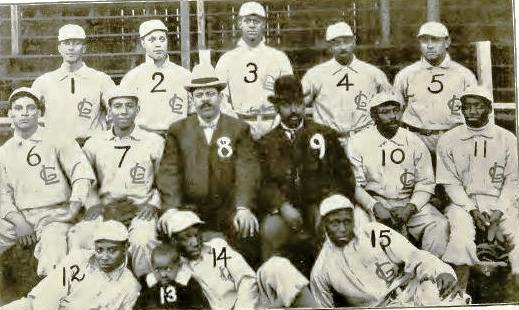
The 1905 Leland Giants--Jimmy Smith is 11.  Others mentioned in the letter: 1-Barton, 2-Mathews, 4-Taylor, 5-Harris, 6-Green, and 10-Binga

The 1905 Leland Giants–Jimmy Smith is 11. Others mentioned in the letter: 1-Barton, 2-Mathews, 4-Taylor, 5-Harris, 6-Green, and 10-Binga

Besides Smith, the unit’s team in Texas included at least two other Negro League players:  Harry Bauchman and Lemuel McDougal.

Smith then turned his attention towards the war:

“The censorship is too strict to permit of sending of much news; will save it up for you until I return.  We have been in the front line trenches and the boys stood it well.  We are lulled to sleep at night by the roar of the big guns; have witnessed several big air-fights and see them shooting at machines every day;  it is exciting, wonderful, and quite a thrilling spectacle to behold.  Now and then we sit in our dug-outs underground and try to imagine we are at 35th and State Streets, or the American Giants’ park….This is a very beautiful country, the people are in a class by themselves, that is as far a politeness goes, and many other respects.  It is a shame the way the towns have been bowled over by the Huns—ruins, ruins everywhere you look and then more ruins; it will take years to repair the damage.”

[…]

“All the boys join me in sending regards to all friends, fans, ballplayers and the people at large. Tell them we are over here to do our bit for democracy.  We intend to get results, and will not stop short of the winning goal.”

According to the book, “History of the American Negro in the Great World War,” by William Allison Sweeney:

“(On November 7) Company C, of the 370th, under the command of Captain James H. Smith, a Chicago letter carrier, signally distinguished itself by storming and taking the town of Baume and capturing three pieces of field artillery (and two machine guns).”

As a result of their actions, Company C earned the French Croix de Guerre.

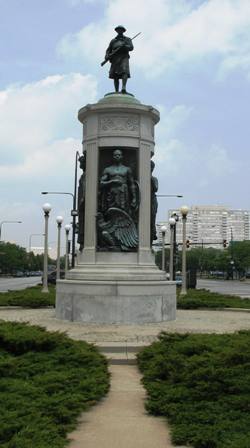
The "Victory Monument" at 35th and King Drive in Chicago honors the service of the Eighth Regiment of the Illinois National Guard in World War I.

The “Victory Monument” at 35th and King Drive in Chicago honors the service of the Eighth Regiment of the Illinois National Guard in World War I.

Smith returned to Chicago where he continued to work for the post office, occasionally wrote baseball articles for The Defender, and rose to the rank of Colonel in the Illinois National Guard.  He died on Christmas Eve in 1960 at a veterans hospital near his second home in Michigan.

Lost Advertisements–Pat Moran for Sloan’s Liniment

22 May

patmoran

An advertisement that appeared late in the 1919 season featuring Cincinnati Reds Manager Pat Moran:

“‘When my players get sore, I don’t rub them the wrong way;  I use Sloan’s Liniment–it penetrates.’

“Moran knows how to keep his men fit for the pennant scramble–keeps Sloan’s handy for emergency.  ‘Glass arm,’ ‘Charley horse,’ stiffness, soreness, bruises, rheumatic aches, are quickly and comfortably relieved.  Penetrates without rubbing, keeping the boys ready for the winning game.”

The 1919 World Series was the fourth for Moran.  He played in two with the Chicago Cubs (1906 and ’07) and managed two, (the other was with the Philadelphia Phillies in 1915).

Moran replaced Charles “Red” Dooin as Phillies manager after the team finished in sixth place in 1914.  Under Moran, the team won 10 of their first 11 games and won the National League with a 90-62 record.

In September, Frank Menke of The International New Service said:

“Moran deserves ranking among the greatest managers the game has ever known.  It is the wonderful leadership of the red-faced, gray-haired Irishman that has put the misfit Phillies where they are today.”

Moran

Moran

Menke said Moran was saddled with a team consisting primarily of “castoffs,’ and “one wonderful pitcher (Grover Cleveland Alexander).”

Moran followed up the 1915 pennant with two second-place finishes, with teams Grantland Rice of The New York Tribune said the manager had little to work with beyond pitcher Alexander:

“(T)hose astounding Phillies, piloted by a leader who has never received anywhere near his due recognition for extraordinary ability to lead a ball club.  need it be said that we refer to Pat Moran?  It needn’t.”

As was his habit, Rice memorialized Moran’s abilities with a poem:

Pat Moran’s no Miracle Man

Nor anything like that;

Nobody ever stands and cheers

The while he tips his hat.


Pat doesn’t draw the headline space

Nor yet the picture frames;

Pat Moran’s no Miracle Man–

Buthe’shellatwinninggames”

During his nine-year managerial career in Philadelphia and Cincinnati, Moran compiled a 748-586 record, which included a total of four second-place finishes to go with his two pennants.

During spring training of what would have been his sixth season with the Reds, Moran, who had a history of excessive drinking, became ill in Orlando, Florida.

His former Cubs teammate Johnny Evers came to his bedside.  According to The Associated Press, he said:

“‘Hello John, take me out of here.’ He then lost consciousness.”

He died later that day.  The official cause was Bright’s Disease.

The Milwaukee First Base Jinx

20 May

In January of 1911, the Milwaukee Brewers of the American Association were in search of a first baseman.

Newspapers across the country began to speculate that getting someone to play the position might be a problem.

They began to talk about the “Milwaukee First Base Jinx.”

Dan McGann, who had been Milwaukee’s first baseman in 1909 and 1910 committed suicide a month earlier at Besler’s Hotel in Louisville, Kentucky (Although McGann’s sisters claimed he was murdered because an expensive ring was missing, there was a history of depression and suicide in the family and other expensive items were found on his body).

Dan McGann

The regular first baseman before McGann, Arthur Brown, as mentioned in an earlier post, was killed in 1911 by an actor whose wife had left him for the first baseman

 The man Brown replaced at first in 1908 was Quait Bateman, who also had a brush with violence.  He had been stabbed by Charlie Dexter.  Initial reports said the stabbing happened as a result of what The Milwaukee News called “A drunken row,” later Bateman said it was an accident and refused to press charges.

Unlike the others, Bateman did not die–although he was said to be close to death twice– and actually returned to Milwaukee for three more seasons.

Quait Bateman

But that fact didn’t get in the way of a good jinx story.

Shortly after the jinx stories appeared, Milwaukee signed 34-year-old former American League first baseman Tom Jones.  As the club’s first baseman for four seasons–and part of a fifth–Jones temporarily put the talk to rest.

Tom Jones

But it was revised again in 1913.

Newspapers brought up the jinx again when another former  Milwaukee first baseman Jiggs Donahue–who played for the club in 1902 and ’03– died in July.  Donahue died in the Ohio State Hospital in Columbus.  It was widely assumed his mental illness the result of advanced syphilis.

Jiggs Donahue

Articles in a number of papers speculated on what fate awaited Jones.  The Day in New London Connecticut said:

“Tom Jones, first baseman at Milwaukee, wonders what’ll become of him.  Murder, suicide, stabbing, shooting and insanity have been the fates former Milwaukee first basemen have met.”

Jones, at least in the short term, dodged the jinx.  His career with the Brewers ended during the 1915 season with no stabbings, shootings or other mayhem.  He died in 1923 at age 46.

The “jinx” was put to rest for good by Milwaukee’s next two first basemen; Clarence Craft and Mal Barry lived to 70 and 68 respectively.  Craft died in 1958, Barry in 1960.

A shorter version of this post appeared on August 20, 1912.

“I mentioned Satchel and Josh and Cool Papa, I told Him he was Missing the boat”

18 May

After Heywood Broun’s remarks at the 1933 Baseball Writers Association dinner about integrating the game, The Pittsburgh Courier initiated a campaign to push the issue.  Despite some support inside baseball and from well-known newspapermen, the effort fell flat by opening day.

That summer, after the first East-West Game—won by the West All-Stars 11 to 7—at Comiskey Park, Henry L. Farrell of The Chicago Daily News suggested several “(M)ajor league club owners who are now on their knees might have their prayers answered,” by signing some the Negro League stars.

In the fall, The Chicago Defender briefly picked up the mantle from The Courier.  The paper asked their readers:

“How would you like to see the great baseball players of the Race performing in the major leagues? Wouldn’t you like to see Willie Foster, Satchel Paige and (Sam) Streeter pitch to Babe Ruth?”

If so:

“Sit down and write K.M. Landis commissioner of baseball, 333 N. Michigan Ave., Chicago.”

The following week, the paper reported that Landis’ office had refused to comment.  When baseball’s winter meetings commenced in Chicago in December, The Defender promised readers that the letters they had sent:

“(A)re not being passed on lightly as many suggested would be the case.  On the contrary, the club owners are downright concerned and from the inside word leaked out that some action would be taken.”

The optimism was tempered later that week when their reporter was barred from covering a meeting where he was told “vital points were discussed.”  The Defender reporter was told no newspapermen would be admitted, but:

“That sinister moves were being made against your author’s admission became a certainty when a well-known writer from one of the downtown papers came along, gave the high sign and was admitted.”

When 1933 came to a close, integration was no closer to being a reality than it was 11 months earlier as Broun stood to deliver his remarks to the baseball writers.

Four years later, Sam Lacy from The Baltimore Afro-American met with Washington Senators owner Clark Griffith in an attempt to revive the subject:

“I mentioned Satchel and Josh and Cool Papa, I told him he was missing the boat.”

Sam Lacy

Sam Lacy

Griffith, he said, told him the timing was wrong, and that Southern-born players would not accept integration.

The next major effort came in 1939.

Political support had generally been limited to socialist and communist organizations—the Young Communist League spent the summer of ’39 gathering signatures to present to Commissioner Landis.  But, in July of that year, the Illinois House of Representatives adopted a resolution which read in part:

“Resolved, by the House of Representatives of the Sixty-first General Assembly.  That the owners of all professional baseball teams in the United States, both in the major and minor leagues be strongly urged to give baseball players of the colored race the same opportunity of becoming players on their respective teams as is accorded to such players of the white race.”

Another push came from Pittsburgh as well.

Wendell Smith, who was playing baseball at West Virginia State College when Broun made his speech in 1933, was now a reporter for The Courier. In July, he promised readers:

“The most exclusive, startling and revealing expose, of the attitude of the major league players and managers themselves, ever written.”

Wendell Smith

Wendell Smith

Over the course of several weeks Smith asked 40 players and eight managers as they passed through Pittsburgh, “Are Negro ballplayers good enough to ‘crash’ the majors?”

The Courier’s Chester Washington said in a column to introduce the series of articles:

“One of the major reasons why Mr. Smith’s discovery is so revolutionary is that the club owners, in trying to pass the buck, have blamed the ban on the players themselves.  They claimed that the injection of colored stars into the clubs would bring about friction and dissention… (Smith) practically disproves this contention.

“Fearlessly buttonholing the managers and outstanding players of all the National League clubs, Mr. Smith received scores of testimonials which should be a revelation to the owners.”

A sampling of the statements collected by Smith:

Ernie Lombardi, Cincinnati Reds:  “(Satchel) Paige is as good as (Dizzy) Dean.”

Johnny Vander Meer, Cincinnati Reds:  “I wouldn’t object.”

James “Doc” Prothro, Philadelphia Phillies: “If given permission I would jump at the opportunity to sign up a good Negro ballplayer.”

Leo Durocher, Brooklyn Dodgers:  “(Satchel) Paige, (Bill “Cy”) Perkins, (Mule) Suttles and (Josh) Gibson are good enough to be in the majors right now…I certainly would use a Negro ballplayer if the bosses said it was all right.”

Gabby Hartnett, Chicago Cubs:  “I am sure that if we were given permission to use them, there would be a mad scramble between managers to sign them.”

Gabby Hartnett

Gabby Hartnett

Dizzy Dean, Chicago Cubs: “If some of the colored players I’ve played against were given a chance to play in the majors they’d be stars as soon as they joined up.”

Pepper Martin, St. Louis Cardinals: “Some of the big league players would object, but on the whole I think they would be accepted.”

Pie Traynor, Pittsburgh Pirates: “believe me when I say I have seen countless numbers of Negro ball players who could have made the grade in the majors.  Only their color kept them out.  If given permission, I would certainly use a Negro player who had the ability.”

Honus Wagner, Pittsburgh Pirates:  “Yes, down through the years I have seen any number of Negro players who should have been in big league baseball.”

Over the next five years, Smith would interview more than 150 additional major leaguers, who would echo the sentiments of his original 40, keeping the pressure on professional baseball to desegregate.

“Shows Big Leaguers how to Catch Flies”

15 May

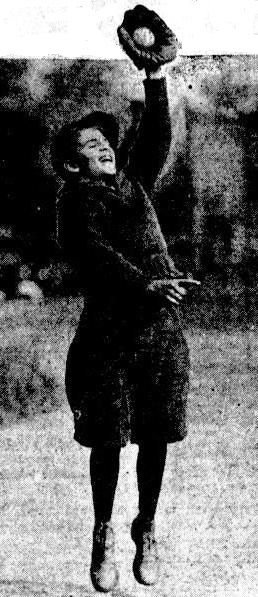
During the summer of 1921, The Washington Times told their readers about a new figure seen working out with the Senators at Griffith Stadium. who “caused no little comment among fans.”

Under the headline: “Shows Big Leaguers how to Catch Flies.” The Times said:

“Big things as a ballplayer are predicted for Walter Morris, twelve years old…Walter is pronounced by members of the Washington team a natural-born ball player.  With the crack of the bat, he starts skinning in the general direction of the sphere’s destination and seems to get there just in time, without apparent effort to remove the old apple from the atmosphere.”

Walter Morris, the Senators 12-year-old phenom

Walter Morris, the Senators 12-year-old phenom

Outfielder Bing Miller told the paper:

“That kid shows a lot of talent.”

[…]

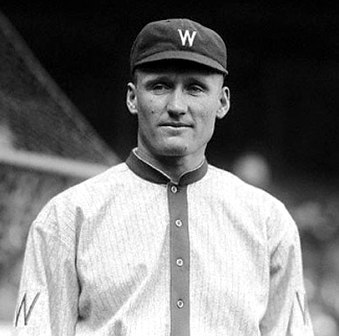
“Bing lives in Walter’s neighborhood and takes an interest in him.  His attention was attracted by the lad’s performances on the neighborhood sand lots.  Groundskeeper (Reddy) O’Day also is a neighbor and Walter Johnson lives not far away, all of which accounts largely for young Morris’ privileges at the ballpark.  Sometimes Johnson drives the kid to the game in his auto.”

Morris' ride, Walter Johnson

Morris’ ride, Walter Johnson

Despite the high expectations for the 12-year-old, Walter Morris would never play for the Senators or anyone else.

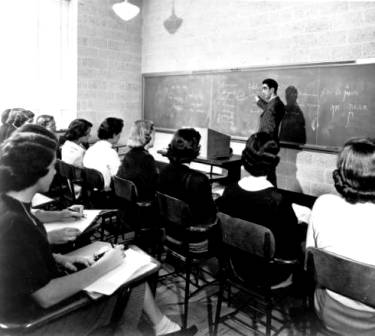
He traded baseball for academics;  Morris was a professor of Religion at Goucher College in Baltimore from 1949 until 1971.  He died in Maryland in 1991.

Walter Morris--post baseball at Goucher College.

Walter Morris–post-baseball, teaching at Goucher College.

“Babe Ruth has a Locker full of Charms”

13 May

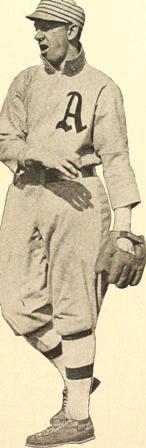
Eddie Collins had spent 25 years in the major leagues as a player, coach and manager by 1930 when he spoke to a writer for “Every Week Magazine” about superstitions.

Eddie Collins

Eddie Collins

The article noted:

“Collins, by the way, has been credited with being one of the most superstitious players in the national game.  His habit of sticking a piece of chewing gum on the button of his cap has almost become a tradition.  If the pitcher had two strikes on him, Eddie would jerk off the cap, yank the gum from the bottom, stick it in his mouth and chew violently.”

But, Collins, a graduate of Columbia University, didn’t consider himself superstitious and told the magazine:

 “The average man playing professional baseball today is too well-educated actually to believe you can make home runs by picking up hairpins or adopting any of the other numerous superstitions which have come to be so much part of the game. “

As for the obvious superstitions he and many other players, educated or not, subscribed to, Collins said they were merely “eccentricities,” and that “Having them gives confidence.”

That said:

“The late George Stallings was one of the most sensible men baseball has produced.  He was the personification of common sense and one of the last persons in the world you would credit with being superstitious.  Nevertheless, a single scrap of paper tossed on the ground in front of the dugout meant all sorts of bad things to George. It upset him completely and his managerial skill seemed to fade.”

George Stallings

George Stallings

Joe Sewell of the Cleveland Indians was another “college man,” someone who “generally loses any belief in omens.”  But, Sewell “after his last crack at the bat during practice” insisted on running towards third and touching the bag before anyone else did.  One day in Cleveland, the too educated to be superstitious Sewell started towards third, only to see Collins, also too educated to believe in superstitions, had:

“(D)ashed out of the Athletics’ dugout and touched the sack ahead of Joe and Joe didn’t get a hit during the afternoon.”

Joe Sewell

Joe Sewell

Next was Urban Shocker, who insisted no one touched his glove during a game.  Despite being “too wise a man to believe” such a thing, Collins told how during a game against the Athletics, “Eddie Rommel spotted the glove and knowing Shocker’s eccentric regard for it, walked over and picked it up, examined it and then tossed it back on the turf.”  The “too wise” Shocker:

“(S)aw red.  He became visibly unsettled.  He blew up the next inning.”

As for the game’s biggest star:

Babe Ruth has a locker full of charms, fetishes and tokens; fastened to the door is a wooden horseshoe with a four-leaf clover carved on it, and on top stands a totem pole and other curious objects guaranteed by enthusiastic donors to bring luck.”

Babe Ruth

Babe Ruth

Collins said the previous season when the Athletics were on their way to Chicago for game 3 of the World Series with the Cubs:

“(T)here was a fan on the train with us  who had a great fondness for canned pineapple.  He insisted the players eat some the morning of the game predicting we’d win if we did.  Well, we did, and we won.”

Collins said he, and the rest of the Athletics, too smart for superstition:

“Had pineapple every morning the rest of the series.”