Archive | Uncategorized RSS feed for this section

Lost Advertisements–The Biggest Baseball Offer Ever Made

25 Apr


billysullivan

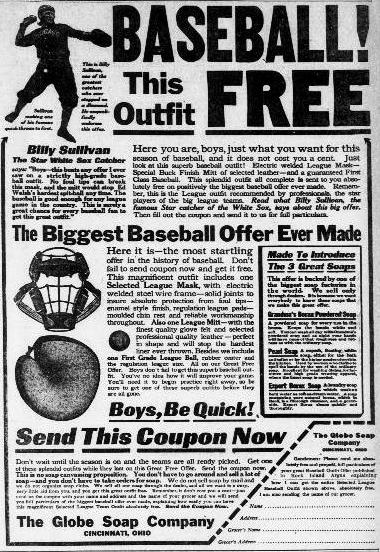
A 1912 advertisement for Globe Soap featuring Billy Sullivan of the Chicago White Sox:

Baseball

This Outfit Free

“This is Billy Sullivan, one of the greatest catchers who ever stepped on a diamond.  He unequally endorses this offer.

“Billy Sullivan The Star White Sox Catcher says: ‘Boys—this beats any offer I ever saw on a strictly high-grade baseball outfit.  No foul tips can break this mask, and the mitt would stop Ed Walsh’s hardest spit-ball any time.  The baseball is good enough for any league game in the country.  This is surely a great chance for every baseball fan to get this great outfit.’

“Here you are, boys, just what you want for this season of baseball, and it does not cost you a cent.  Just look at this superb baseball outfit!  Electric welded league mask—Special Buck Finish Mitt of selected leather—and a guaranteed First Class Baseball.  This splendid outfit all complete is sent to you absolutely free on positively the biggest baseball offer ever made.  Remember, this is the League outfit recommended by professionals, the star players of the big league teams.  Read what Billy Sullivan, the famous Star catcher of the White Sox, say about this big offer.”

The ad was a little vague about just what was required to get the “outfit.”

Send the coupon now.  this is no soap canvassing proposition.  You don’t have to go around and sell a lot of soap–and you don’t have to take orders for soap.  We do not sell soap by mail and we do not organize soap clubs.  We sell our soap through the dealer, and all we want is a very, very little aid from you and you get this great outfit free.

The 1912 season was the last for the oft-injured Sullivan (aside from single game appearances in 1914 and 16).  Before the season he told reporters he expected to catch at least half the team’s games, but ended up appearing in just 41 games after an April collar-bone injury resulted in the bulk of the early-season work going to Walt Kuhn and Bruno Block.  In August Block was sent to Milwaukee as part of a package for 19-year-old Ray “Cracker” Schalk and Sullivan became a White Sox coach, tutoring the future Hall-of Famer Schalk throughout the 1913 and ’14 seasons.

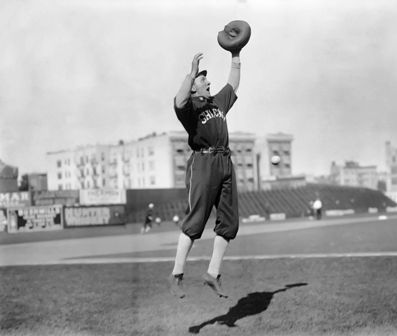
Billy Sullivan

Billy Sullivan

Sullivan is likely most famous for having caught three of 11 balls tossed from the Washington Monument on August 24, 1910–two months later he opted out of a challenge to catch ” a baseball dropped from an aeroplane sailing at 1,000 feet,”  according to The Associated Press Sullivan said he “still desires to play baseball a few years more…(and) might as well try to stop a bullet as to be on the receiving end of one from an aeroplane.”

“King of the Bushes”

23 Apr

Edward Francis “Ned” Egan was called “The Connie Mack of the minors” and the “King of the Bushes” during his managerial career.

It is likely that most of the statistics listed under Egan’s name on Baseball Reference and other sources  are for another player or players with the same surname.  Egan’s grave, burial record, birth and death record confirm that he was born on January 13, 1878, in St. Paul, Minnesota–which would make him 10-years-old for the first playing records for the “Ned Egan” listing.  Contemporary references to Egan’s playing career are vague–most say he played semi-pro ball in Minnesota beginning in 1897, and some sources say he was with St. Paul Saints in the Western League in 1901; although his name does not appear on any roster for the team.

What is certain is that his managerial career began 1902 and that he won eight pennants in 16 seasons.

Ned Egan

Ned Egan

Egan won championships in 1902 and 1903 with the Winnipeg Maroons in the Northern League,  then won six more with the Burlington Pathfinders (1906 Iowa League of Professional Baseball Clubs, 1908 Central Association), the Ottumwa Speedboys-Packers (1911,12 and ’13 Central Association), and the Muscatine Muskies (1916 Central Association).  The Washington Post called him “The Central Association’s chronic pennant winner.”

Egan was credited with helping develop several major leaguers including Burleigh Grimes, Lee Magee, Cy Slapnicka, Hank Severeid, and Cliff Lee.

Egan finally got his chance in the high minors in January of 1918, but it happened as a result of a fluke.  Al Timme, owner of the Milwaukee Brewers of the American Association announced that Egan would be his new manager.  The Milwaukee Journal said:

 “A very peculiar circumstance brings ‘Ned’ Egan to the local club. When President Temme attended the meeting of the International League in New York some months ago the local prexy opened negotiations with Jack Egan, manager of the Providence club in 1917.  Jack Egan’s name was made public as the possible leader of the Brewers, but the press reports from the east said that ‘Ned’ Egan was being considered by Owner Temme [sic].

“The local baseball headquarters were immediately flooded with recommendations from major leaguers who unanimously stamped ‘Ned’ Egan as the logical man to lead the locals.  Subsequently, Temme [sic], who had not met the St. Paul man, realized that these endorsements of Ned Egan were worth taking stock of and finally he opened negotiations with him.”

Egan was signed to a “provisional contract for 1918, 1919 and 1920.”

Al Timme told reporters he had confidence in his new manager despite the mix-up, and despite the fact he had denied he had any interest in hiring him as recently as a week earlier:

“Ned Egan has devoted his entire life to baseball—is one of the best posted and able men in the game today.  No one has a wider or more favorable acquaintance, especially with major league club owners.  His development of players and many pennants prove conclusively Mr. Egan’s superior ability to build and handle a team.”

Egan returned home to Minnesota in late January, and while ice skating another skater ran into him, knocking him down.  Egan sustained what he thought was a minor back injury.

Ned Egan, 1918

Ned Egan, 1918

In February Egan contacted Timme and told the Brewer owner that the injury was more serious than originally thought; he had fractured two vertebrae and said that a doctor had recommended he resign.  The Journal said:

“Mr. Timme prompted Egan to reconsider.”

A month later after “his fighting spirit kept him on the job constantly,” Egan’s injury became so severe that he was no longer able to walk.  The Journal said:

“The St. Paul man is at present confined to the Sacred Heart sanatorium here, at the expense of the Milwaukee ball club.  He is a nervous wreck…Physicians cannot predict how long Egan will be incapacitated.”

The Brewers then hired Jack Egan, the manager Timme originally sought, to replace Ned Egan.

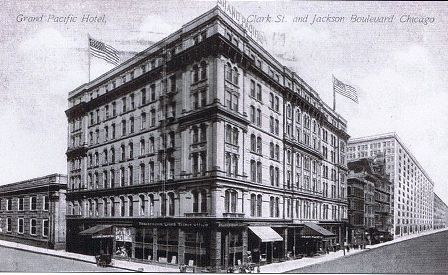
Egan was still in the sanatorium on May 4 when he was released for 3 days in order “to visit Chicago” and checked into the Grand Pacific Hotel.  On May 6 The Chicago Tribune said:

“Edward F. (Ned) Egan…was found dead with a revolver at his side in the Grand Pacific Hotel shortly after midnight this morning.  He had apparently been dead for hours.  Despondency, brought on by ill health, is believed to have led him to commit suicide.”

The Grand Pacific Hotel Chicago

The Grand Pacific Hotel Chicago

Timme told The Journal:

“So far as I have learned, his condition while at the sanatorium was improving.  I will have Mr. (Tom) Hickey (president of the American Association) obtain the facts from the police at Chicago.”

It was reported that Egan, who “owned considerable property in St. Paul,” was to be married in June.  His first wife had died in 1912, just more than a year after their marriage.  The day following his death, the Cook County Coroner confirmed the cause of death was suicide and said Egan was despondent over his injury.

The Milwaukee Sentinel published a eulogy for Egan written by long-time minor league umpire Oliver Otis “Ollie” Anderson:

“Umpires are supposed to have no feelings—to shed no tears, but they do bow their heads occasionally, and mine is bowed in thought, I have just read of the death of Ned Egan.

“As a baseball genius he was worthy of being compared to Comiskey, as a developer of players he was a Connie Mack, as a winner of pennants he was king of the bushers.  As a friend he was loyalty itself.

“What more can we say.”

“I Prophesy he will Hit your Curves”

21 Apr

In February of 1905 it was announced that the baseball team from Waseda University in Tokyo, “champions of Japan,” were coming to America.  The San Francisco Call said:

“The fact that there is a great war going on in their country (The Russo-Japanese War) does not prevent the Japanese from the enjoyment of their sports.  (Athletic) Manager (R.W.) Barrett of Stanford concluded arrangements today with the baseball team of Waseda University for a series of international games.”

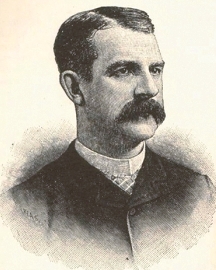
The trip to the states was organized by a Japanese professor named Isso Abe and an American professor named Fred Merrifield.  The two were an unlikely pair brought together by their love for the game, which had been introduced to Japan 35 years earlier. Abe, a Unitarian minister and professor of economics, is regarded as the father of socialism in Japan; he established the nation’s first socialist political party in 1901, the same year he helped form the baseball team at Waseda. “The Unitarian Register” said “Dr. Abe believes in baseball, not only as a healthy and inspiring sport, but also as means of promoting international goodwill.” Merrifield was a recent graduate of the University of Chicago, where he was also captain of the baseball team. He was a religious scholar who was in Japan learning the language and working on behalf of the American Baptist Foreign Mission Society.
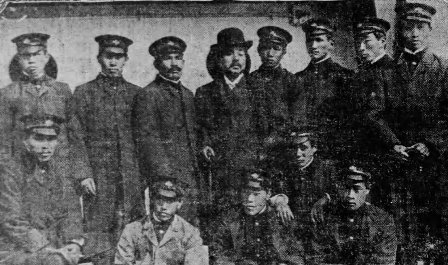
The Waseda University team upon their arrival in San Francisco

The Waseda University team upon their arrival in San Francisco

While the team was traveling to the United States, The Chicago Daily News published a letter from Merrifield describing the growing popularity of the game in Japan, “The universities, colleges, middle schools and even those of lower grade,” all had teams; he also described the differences he saw in the Japanese game:

“The Japanese students ordinarily wear white uniforms in their play, with blue socks or ‘tabi’ for footwear…The native baseballs are a trifle smaller than our own and do not keep their shape and hardness as well.  The American balls, bats etc… are not strangers, however, to these children of progress.  All this apparatus may not be understood at once, but it is here and is used until it is mastered. “It sometimes sounds queer to hear the umpire call, ‘Strike-ball!’ instead of ‘Strike!’ simply, But the wonder is that they use English terms on the diamond.  In fact, all the common words of the game are spoken in English, but woe betide the man who tries to make out the Japanese words of coaching.  While you’re thinking what it all means the man is under you at second.

“The other day I was coaching a new pitcher on ‘drops,’ ‘placing’ etc…, and was acting as batter to help his eye.  At a suitable stage in the process I turned to instruct the catcher on some point or other.  The point was understood, and we were about to resume our positions, when zip came the ball past my ear and caught the unfortunate catcher squarely on the cheekbone.  Two more points are illustrated:  The catcher scarcely moved a muscle, and never a sound came from his lips.  He quietly walked away to bathe his swollen face.  That is a bit of Japanese stoicism, for we all know how a straight ball stings.  Again, the pitcher had been working so hard to master that new finger movement and ‘locate’ his batter that he all but did the opposite to fellow player.  That is Japanese persistence and eagerness.  Just a bit of it.”

Merrifield said Japanese players had another quality he admired:

“They may not be good hitters yet and may not know much about curves, but they listen to the umpire and know how to accept decisions without a question…I have seen ball after ball skim the batter’s eyes, and ‘Strike!’ from the umpire would not affect his temperament in the least. “The pitcher might put several telling drops over the outer corner, and if the slow eyed umpire said ‘Ball!’ ball it remained without a murmur, although one acquainted with the situation knew of the disappointment suppressed because the game was in the balance.”

Merrifield had just watched his friend set sail for the United States with the first team of Japanese players, a team he helped mold, to play on American soil, and was optimistic about the future of the game in Japan:

“Give the Japanese player a little more training in the fine points of the game, and I prophesy he will hit your curves, slide the field with the best and make his share of the fun.  And then, after bowing politely to the umpire, he will go home and teach his younger brother to do still better at the great game of baseball.”

The team arrived in San Francisco on April 20.  The reception by the West Coast press was positive, but stories of the team’s tour were replete with the decidedly insensitive language of the day; for example, the team was repeatedly referred to as “the brown ball tossers.”  The San Francisco Call said:

“(T)he brightest stars from the green diamond of the Mikado tripped merrily down the gangplank of the Manchuria when she docked yesterday…These brawny young athletes traveled those thousands of miles from their realm of far Nippon just for the pleasure of matching their skill against the best teams the American colleges can pit against them.  They are all titles young men and come here for the pleasure of lining out base hits and catching flies only.  They will also study the methods in vogue here and pay special attention to the manner in which the great national pastime is played.”

The day after their arrival, the Waseda team took the field in Palo Alto for their first practice, The San Francisco Chronicle said:

“The practice was attended by a large number of curious undergraduates, who were anxious to size up the work of the team from the Orient…The team appeared in neat suits, cut after the regulation styles, light brown in color, with the word ‘Waseda’ worked across the breast of the shirt.  Pitcher (Atsushi) Kono exercised a few moments…and then the entire squad trotted out upon the diamond and lined up for a bit of fielding practice.  The men worked hard, accepting all chances, and their work was as good as has been seen on the Stanford diamond this season. “During practice Captain (Shin) Hashido of the Waseda aggregation met several members of the varsity team.  As the captain could not speak English and none of the local men were conversant with Japanese, the conversation was limited to a warm handshake and a welcoming smile.”
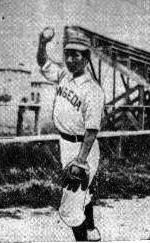
Atsushi Kono

Atsushi Kono

The Waseda and Stanford teams played their first game on April 29 in front of a crowd of about 200—including “Five hundred Japanese rooters, with Waseda banners” who came from San Francisco. Kono pitched for Waseda, as he would in all 26 of the team’s games during the tour, and gave up 11 hits in the 9 to 1 loss.  The Chronicle said:

“(T)hough (Kono) allowed eleven safe swats to be made, he kept them well scattered, and were it not for the wildness of his teammates the score would have been much smaller.  Kono besides pitching good ball, was in the game every minute, and kept his head better than the rest of the nine.  It was a hit from his bat that scored Captain Hashido, and save the team from a shutout.”
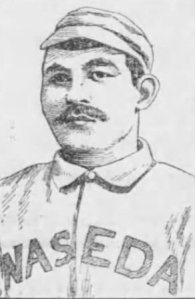
Shin Hashido

Shin Hashido

Four days later the two teams met again at San Francisco’s Recreation Park in front of a crowd of more than 2000, which The Chronicle said was “more than two-thirds Japanese.”  Stanford won again, this time 3 to 1.  The Call said:

“The representatives of the Mikado are weakest at the bat, being unable to connect with the curve ball which has reached such a high state of development in this country.”

The Chronicle said there were still some aspects of the rules which were lost in translation:

“Some funny mistakes, owing to a misapprehension of the rules, were made by the Japanese here; for instance, they construed the fly-ball rule to mean that in no case could a runner leave a base while a fly was in the air, and this error cost them a run in their last game with Stanford…appeal was made to the English-speaking professor, who gave their version of the rule.  They know better now.”

The team continued to play games on the West Coast through June, meeting military and semi-pro teams, college clubs and even one high school opponent (they defeated Los Angeles High 5 to 3).  The assessment of the Waseda club’s abilities throughout the trip, were summed up by a headline in The Call after the Japanese team was shut out 5 to 0 by the University of California, Berkeley:

“Japs field like a Bunch of the Big Leaguers but Are Unable to Hit.”
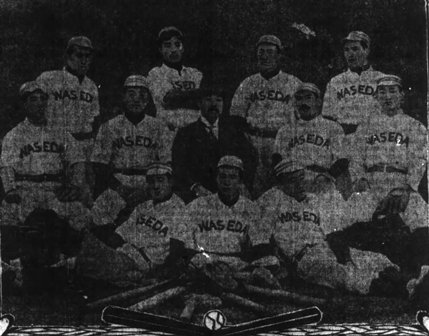
1905 Waseda University team

1905 Waseda University team

Over the course of the 26 games played on American soil, Waseda University won seven.  They arrived back in Japan on July 6. The tour opened the door for regular international competition between Japanese and American teams until World War I, either in their respective countries or in Hawaii.

While Abe became more involved in Japanese politics (he served as a member of the National Diet from 1928-1940), and also served as Waseda’s Dean, he remained an ardent supporter of baseball, and returned to the states with several subsequent teams from the University.

Kono returned to Japan and introduced the country to the pitcher’s wind up and a change-up, which he picked up on the tour.  In 1936 he organized the Nagoya club in Japan’s first professional league—his team won the first professional game played in Japan on April 29 of that year.

Hashido eventually became a baseball writer and author in Japan, he and Kono are both members of the Japanese Baseball Hall of Fame.

Merrifield continued his work with the American Baptist Missionary union in Japan and in Michigan; he later returned the University of Chicago as a professor of New Testament History and eventually became the baseball coach (1921).  In April of 1920 he took the University of Chicago team on a tour of Japan, the U of C Maroons were 8-4 with two ties on the trip–including a 4-2-1 mark against Waseda.
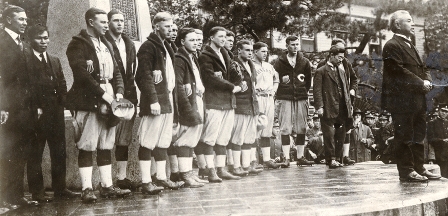
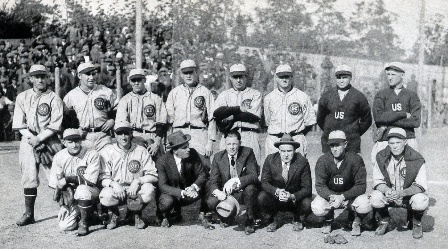
The 1920 University of Chicago Baseball team in Japan, Isso Abe is at the front, introducing the team at the welcome celebration.
The 1920 University of Chicago Baseball team in Japan, Isso Abe is at the front, introducing the team at the welcome celebration.
“Somebody has got to Write a real Baseball History”

18 Apr

Detroit Tigers Manager Hughie Jennings had an idea to improve American education.  He told The Detroit Times in 1911:

“I think it pretty near time that our advanced public school educators began to think of teaching baseball history in their schools.  Seriously I do.

“Baseball is America’s chief recreation, and has been for two generations.  Indications are that it will live many generations more.  The stars of the game are important personages to the boys and the men of today as are the big men in affairs of state and business.  The boy is constantly clamoring for news of his baseball heroes, and because we have decided baseball is a clean, good sport, we encourage his interest.

“It is only lately that I have been interested in the history of the game, although it has been my means of support for years.  I don’t know what it was that impelled me last winter to go digging into newspaper files for data on the antecedents of the game, but I do know this:  I’m mighty sorry I didn’t get the idea before.  For nothing was more interesting.”

Tiger Manager Hughie Jennings

Tiger Manager Hughie Jennings

Jennings’ conclusions would likely have disappointed Albert Spalding and the members of the Mills Commission, which advanced the Doubleday myth:

“Of course I had always known in a superficial way something about the origin of baseball and about the men who figured prominently in it during its infancy; and the men who have brought it up to the standards of today are men of my day and age, but I had never before made a consistent effort  to learn just what was what in baseball history.  I was pained and surprised , when I started at it, to find that there does not exist a history of the game which is so thoroughly prepared that it might be put into schools as a text book.  Before this idea of mine can be put into effect, somebody has got to write a real baseball history.

“In my research last winter, for instance, I I confirmed my old understanding that baseball as we know it today is sort of a sublimated ‘one-old-cat’ or ‘rounders’ as they used to call it.  The first game of baseball, with nine men on a side, was played in Hoboken, NJ in 1845.”

Jennings quoted Alexander Cartwright’s 1845 rules and made no mention of Cooperstown or a Civil War general, putting squarely in the camp of “The Father of Baseball” on the game’s origins.

The Tigers’ manager also said, according to his research “The first ball was made from sections of an old arctic shoe wound with woolen string and covered with coarse cowhide.”

Baseball’s “Fountain of Youth”

16 Apr

John Brinsley “J.B.” Sheridan wrote for several St. Louis newspapers and The Sporting News from 1888-1929.

In 1917 he asked in The St. Louis Globe-Democrat:

“How is it that two young chaps come up together, one lasts a year or two, the other keeps on playing until he meets his sons and the sons of his pals coming up?”

Sheridan noted that Bobby Wallace was 43-year-old and in his twenty-fourth season–albeit as a reserve who appeared in just eight games for the Cardinals–while contemporaries like Jimmy Collins were out of the game for nearly a decade.  (Sheridan failed to mention or notice that Wallace was three years younger and started his professional career at age 20 while Collins began his at 23):

“Wallace has had a great career in baseball.  Only one man, A. C. (Cap) Anson has played longer than Wallace in the major leagues (Sheridan didn’t mention Deacon McGuire who also had Wallace beaten in years of service with 26—but he only played a total of 20 games in his final eight “seasons”) Anson did twenty-seven seasons, but had he not been his own manager he would not have done so many.  The old man could hit to the end, but for the last ten years of his major league career Anson was so slow and stiff that it is doubtful if any manager, other than himself would have employed him.”

Booby Wallace

Booby Wallace

Sheridan neglected to mention that “slow and stiff” Cap Anson managed to play in more than 1100 games in those last ten seasons when no manager “other than himself would have employed him,” and hit better than .330 in five of them–and would contradict himself on the “slow and stiff” part later in the same article.

He said, “Jack O’Connor did twenty-two years in the majors and was useful to the end.” (O’Connor only hit better .250 twice in his last ten seasons, never appearing in more than 84 games during that period)”

Despite the many misstatements, Sheridan’s article included interesting character sketches of several 19th and early 20th Century players (the veracity of those sketches can be judged with the above misstatements in mind).

“O’Connor was a really wonderful man.  He always retrained his diet during the playing season, but gave it full rein during the off season.  O’Connor had some appetite, too.  Usually he put on 20 pounds of extra weight every winter and regularly took it off every spring.  O’Connor must have taken off 500 pounds of flesh in the twenty-two years of his baseball playing.  He ate and drank like Gargantua during the winter, but denied himself like a monk in the spring, summer and fall.

(Napoleon) Lajoie, who did his 20 years [sic 21] in the majors, was like Wallace and (Jake) Beckley, an iron man.  (Lajoie) came from Breton peasant stock…The Bretons lived off the rocks and fishing grounds of Brittany, beaten by Atlantic spray long before the dawn of history.  No wonder then, that Lajoie is a hardy man (who) needed no conditioning in his youth.  He threw a couple, hit a couple and was ready for the fray.”

Sheridan said O’Connor’s former battery-mate Cy Young was “another physical wonder” despite being “rather soft and inclined to obesity later in life.”

“Cy never cared much for beer, the beverage of the old-time ballplayer, but he did not mind a little ‘red eye’ now and then In fact, the old boys say the farmer could pack more whiskey about him than any man they had ever known.”

As an example of Young’s prowess Sheridan said O’Connor told him a story about a night out in Boston:

“I drank beer while Cy drank whiskey. Drink for drink with me, but the last thing I remembered that night was that Cy put me to bed.

“I got up the next morning looking for sedlitz powder and something cooling.  I got the powder and I went into the breakfast room to get a grapefruit.  Then I saw Young behind a big plate of beefsteak with onions.  I turned and ran for the fresh air…Cy ate the entire steak, all the onions, a lot of bread and butter, stuck a strong cigar in his mouth and joined me on the sidewalk.

“What made you quit so early last night, Jack?  I was just getting’ goin’ good, when you said ‘Let’s go home I’m sleepy.’”

Jack O'Connor

Jack O’Connor

Sheridan compared Young’s career to that of Bill Dinneen:

“Dinneen came into the game seven [sic–nine] years after Young, was Cy’s teammate for four years [sic–five and part of a sixth] then dropped out (Dinneen played three more seasons with the St. Louis Browns, but his career was over after 12 seasons at age 33)

“Dinneen ate too well, and what ballplayers call the ‘old uric acid’ got him in the arm.  Yet Dinneen was one of the finest physical specimens that ever played ball.

“Some big fellows look strong but prove to be soft and unenduring.  Jack Chesbro was one of these.  Chesbro had three great years as a pitcher, and then broke down.  Jack was a soft-boned boy, with bad ankles and could not stick the route.

“Some men hold out in arm, legs and bone, but lose the keenness of vision essential to good batting, Willie Keeler, was one of these.  Keeler’s legs were good to the end and his arm worked all right, but his eyes went back on him and he had to quit…(Art) Devlin was one of the three great third basemen of his time.  He was a star, but endured only a few years.  Bad Digestion stopped him when he was at the height of his fame, and when he should have been good for many more years.”

Sheridan claimed to know the secret of a ballplayer’s longevity: the waters of Hot Springs, Arkansas.

“Each January 1 for twenty-two years saw (Young) at Hot Springs…O’Connor and (Jake) Beckley were always at Hot Springs, too.  These three men never missed a season at the Arkansas resort, while they were playing ball…Fred Clarke, too, was a great advocate of Hot Springs as a training resort, and the Pirates always fitted in there when Clarke was manager.  That took (Honus) Wagner, another long liver, there too.

“Anson always took a season at Hot Springs.  It is pretty well established that the Arkansas resort is the location of Ponce de Leon’s famous “Fountain of Youth.”  It may or may not be a coincidence, but the fact remains that Young, O’Connor, Beckley, Anson, Clarke, Wallace and Wagner, men who played from seventeen to twenty-two years of major league baseball, have all been frequenters of or habitues of Hot Springs.”

Cy Young, third from left, with Bill Carrigan, Jake Stahl and Fred Anderson at Hot Springs in 1912

 Cy Young, third from left, with Bill Carrigan, Jake Stahl and Fred Anderson at Hot Springs in 1912

The St. Louis sportswriter was certain the springs were a magic “Fountain of Youth, “and said he was only aware of one exception to his rule:

“Every iron man of baseball, except Lajoie, has been a yearly visitant.”

“The result is interesting. Incidentally, also, repulsive.”

14 Apr

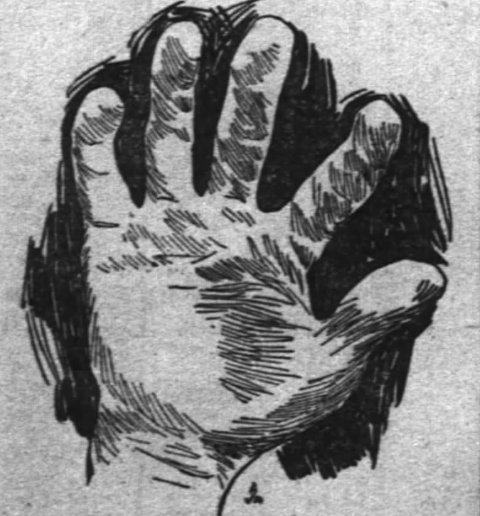
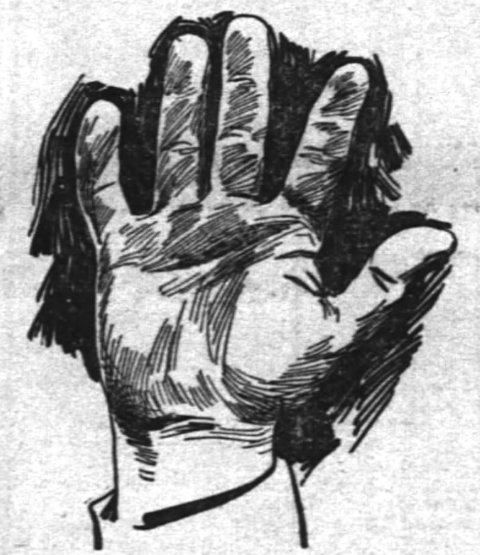
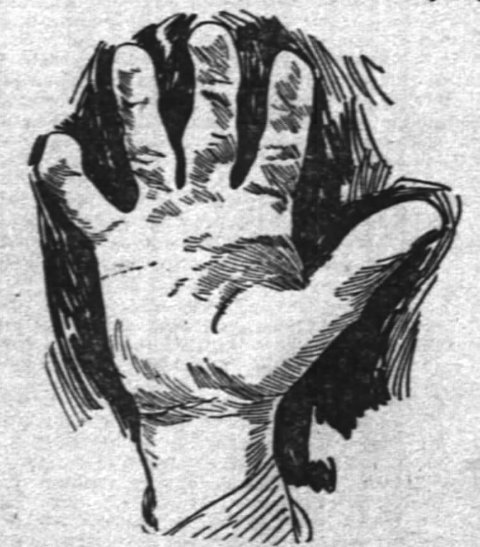
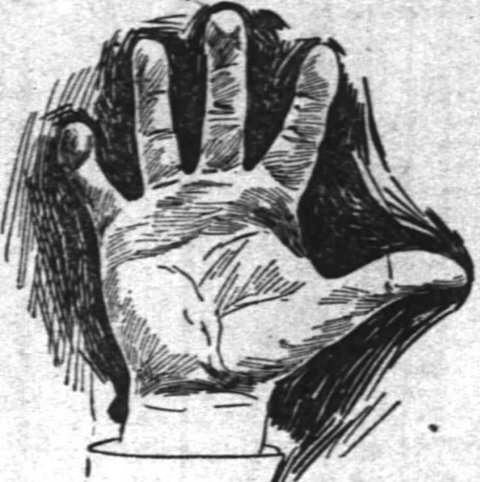
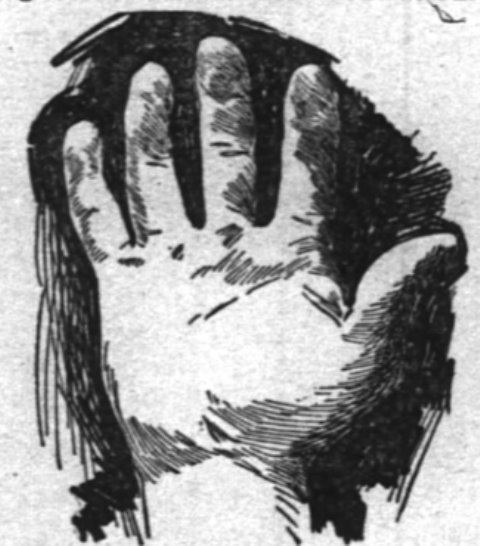
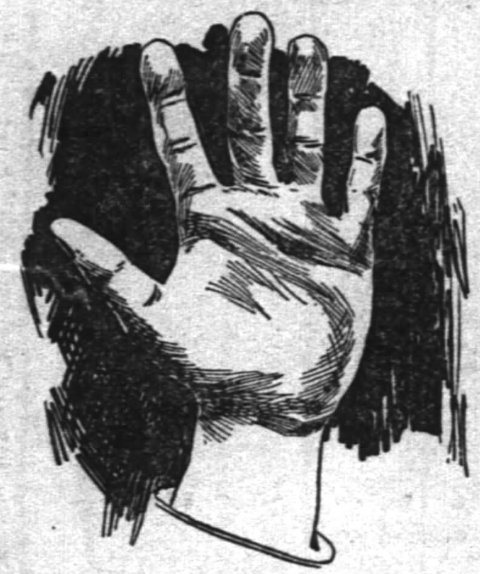
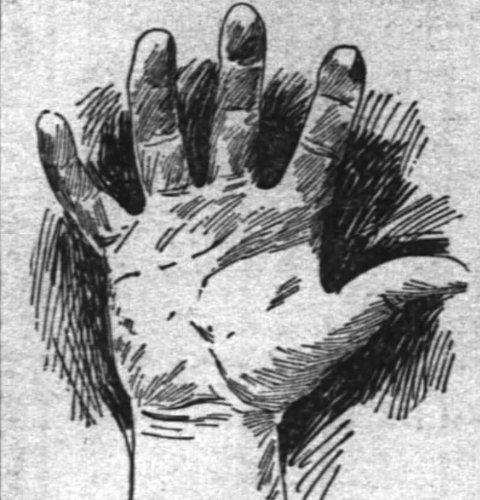
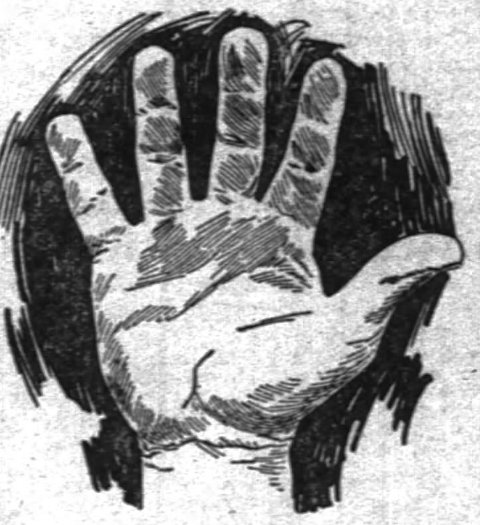
While writing for The New York Herald in 1895 Oliver Perry “OP” Caylor had the hands of several members of the New York Giants photographed.  The Chicago Inter Ocean said, “The result is interesting.  Incidentally, also, repulsive.”

Caylor said:

“It is hard to say who has had the most marvelously disfigured hand among the catchers since the game became professional, but the award lies between the late (Frank) “Silver” Flint and Tony Suck.”

Flint had died three years earlier, and Suck (born Zuck) had died earlier that year.

Of the Giants, Caylor said backup catcher William “Pop” Schriver “takes first prize in a display of distorted joints   His right hand, as it is seen in the photographic view, has lost much of its resemblance to the natural member.”

Schriver

Schriver

Caylor said starting catcher Charles “Duke” Farrell and the team’s other catcher, Parke Wilson, had hands that were in good shape in comparison to Schriver:

“Farrell, for a man who has done so much catching and has faced so many swift and wild pitchers, possesses remarkably well preserved and shapely fingers.”

Farrell

Farrell

Wilson

Wilson

Caylor said third baseman George Davis “has what’s known as a ‘daisy.’ The first joint of the little finger on his right hand is crooked like the elbow of a stove pipe.”  Captain and first baseman Jack Doyle “has several angles and curves on his hands.”

Davis

Davis

Doyle

Doyle

Rightfielder Mike Tiernan ‘has escaped very luckily,” and among pitchers Amos Rusie, William “Dad” Clarke and Jouett Meekin “disfigured fingers are scarce.”

Tiernan

Tiernan

Rusie

Rusie

Clarke

Clarke

Meekin

Meekin

Caylor said:

“Baseball players as a rule, are not proud of their unshapely hands.  Yet a close examination of the hands of the men of New York City under 40 years of age will disclose the fact that more than half of them have one or two ‘baseball joints’ apiece to remind them of the time when a foul tip went wrong or a high fly took a sudden shoot out of its natural course…The non-professional invariably is proud of this reminder of the day or days when he played.

Lost Team Photos–Delhanty’s Last

11 Apr

1903senators

The 1903 Washington Senators.  Photo was taken the day before the Senators 3 to 1 victory in the home opener against the New York Highlanders at National Park.

The Senators–sixth place finishers in 1901 and 1902–were in eighth place by May 8 and never gave up their spot in the American League cellar.  The horrible season was made worse when the club’s best player Ed Delahanty was swept over Niagara Falls and  died on July 2–Delahanty’s death has been chronicled by many excellent sources.

When this photo was taken, Delahanty had been forced to rejoin the Senators after having signed in the off season with the New York Giants–he was badly hurt financially by the peace agreement between the American and National Leagues–Delahanty, who made $4,000 in Washington in 1902 had signed for between $6,000 and $8,000 (contemporaneous sources disagreed on the amount) and a large advance, which he was forced to return.  Despite his financial woes, Delahanty still managed to hit .333 for the last-place team at the time of his death.

The photo above is the last team picture which included the future Hall of Famer:

First row: James “Ducky” Holmes, William “Rabbit” Robinson, Gene DeMontreville, Lew Drill

Second row: William “Boileryard” Clarke, Wyatt “Watty” Lee, Manager Tom Loftus, Bill Coughlin, Joe Martin, Jimmy Ryan

Standing:  Delehanty, Albert “Kip” Selbach, Al Orth, George “Scoops” Carey, Casey Patten, John “Happy” Townsend, Charles Moran

Loftus was let go as manager after the 43-94 season.  The team would not finish better than seventh place in the American League until 1912.

Ed Delahanty

Ed Delahanty

Origin Stories

9 Apr

Timothy Paul “Ted” Sullivan was a player, manager, executive, and the lifelong friend and confidant of Charles Comiskey.

Al Spink, in his 1911 book “The National Game,” said Sullivan was “the best judge of a ball player in America, the man of widest vision in the baseball world, who predicted much for the National game years ago, and whose predictions have all come true.”

Comiskey said of his friend:

“Ted Sullivan’s standing in the profession of baseball cannot be measured by modern standards.   He is in a class all by himself.  He is ever and always ahead of his time, with a knowledge of the game and a versatility that no other baseball man of my acquaintance has ever possessed.”

Ted Sullivan

Ted Sullivan

Sullivan, given his reputation, was a favorite among reporters who sought his opinion about everything related to baseball.

In December of 1904, months before the Mills Commission was organized to determine baseball’s origin, Sullivan was asked by The Cincinnati Enquirer to weigh-in on the subject.  A month earlier Albert Spalding had given a speech at the YMCA training school in Springfield, Massachusetts claiming that baseball “is distinctively an American sport.”  The commission was formed in reaction to Henry Chadwick’s 1903 essay which said baseball was derived from British game rounders—after Spalding’s response, the two agreed to appoint the commission to settle the question.

Henry Chadwick

Henry Chadwick

The Enquirer said;

 “Of all the old-timers in harness Ted Sullivan is as good as the best, or a trifle better, when it comes to reviewing the history of diamond doings of the hoary past.  His memory goes back to year one of baseball and his story of the origin of the game makes a good bit of fan literature for the off season.

“’The origin of baseball may be the evolution of townball, barnball, two-old-cat or yet it may be the suggestion of the three named,’ says Ted.  ‘At any rate, the game is the product of American genius and temperament, and not an offshoot of English rounders, as our English cousins would have us believe.  Of the many times I have been in England and the subject of baseball came up, one Englishman would say to the other: ‘Why, that blooming American game of baseball is nothing but our old game of rounders, you know.’ I have nothing but the highest regard for an Englishman’s love of sport—for it is inherent in a Briton from the present King down, and should an Englishman have only his last sixpence, and should the alternative arise whether he should eat or see a field sport—he would undoubtedly decide in favor of the latter.  I must totally disagree, however, with my British cousins that their primitive and plebian game of rounders is the mother of our national game.  Oh, no dear cousins; chase that idea out of your heads.

“’To say rounders is baseball would be the same as claiming that a palace was a hut because it had a door, or a wheelbarrow a carriage because it had a wheel…From the time that the game was regularly played by the knickerbockers of New York until it became a profession, change after change has been made in the rules, to make the game as perfect as possible in its machinery.  The game is about fifty-five years of age, that is to say, before it became national, as it was played in New York and New England up to 1861, but did not reach the limits of our country until 1865 and 1866.  The most important changes in the rules after the structure of the game was put up was first eliminating a put out on the first bound by an outfielder.”

Like Spalding, Sullivan didn’t provide any specific evidence, and instead made a case that baseball must be an American invention because of “the originality of the American in the line of invention,” and by his logic, baseball was just one in a great line of American innovations:

“America to-day is the inventive torch of the world, and has been for the last fifty years.  The first seed of America’s inventive genius took root in Robert Fulton’s brain when he advocated steam as a motive power.  The next in line was Prof. Morse’s advocacy of the use of telegraph wire as a transmitter of sound.  This invention was followed by the sewing machine that relieved the weary housemaid of her burden.  On its heels came Cyrus McCormick with his farming implements that taught the world how to reap their harvest in one-tenth the time and with a fraction of the labor of former days.  The last of the greatest of America’s inventive thinkers is Tom Edison, the Wizard of Electricity, who has electrified ad illuminated the world by his inventions.”

Sullivan said this demonstrated “the originality of the American in the line of invention—whether it be a pastime or a beneficiary to the commercial world.”

There was no doubt Sullivan was influenced by Spalding’s speech.  Both claimed the game was “natural evolution” of earlier American games, and Sullivan refers to baseball as “the product of American genius and temperament; Spalding said baseball was “peculiarly adapted to the temperament and character of the American people.”

A.G. Spalding

Albert Spalding

Spalding’s speech was reprinted in many newspapers as well as the 1905 edition of “Spalding’s Official Baseball Guide.”

When the formation of the Mills Commission was announced in the spring of 1905 The Washington Post said:

“Inquiries are to be made throughout the United States, Great Britain, Canada, Australia and other English-speaking communities, with a view of ascertaining whether baseball is an evolution of the old English game of rounders, or of the classic American game of one-old-cat.”

The Post ridiculed the effort:

“Those ‘youngsters,’ Father Chadwick and A.G. Spalding, are playing extra innings to decide the origin of baseball.  The general public doesn’t seem to care when or how the game originated.”

The seven-member commission was composed of members sympathetic to the American origin version of Spalding and Sullivan.  Commission members Abraham Mills, Morgan Bulkeley, Arthur Gorman, Nick Young, Al Reach, George Wright and John Edward Sullivan accepted the story of a mining engineer from Denver named Abner Graves, and thus was born the Doubleday myth.  Spalding and Sullivan started with a conclusion and Spalding put together a commission that made it so.

The full text of the Graves’ first  letter to the commission as reprinted in The Sporting Life in august of 1905:

“The American game of base ball was invented by Abner Doubleday, of Cooperstown, N. Y., either the spring prior or following the ‘Log Cabin and Hard Cider’ campaign of General William H. Harrison for the presidency.  Doubleday was then a boy pupil of Green’s Select School in Cooperstown, and the same, who as General Doubleday, won honor at the battle of Gettysburg in the Civil War: The pupils of Otsego Academy and of Green’s Select School were then playing the old game of Town Ball in the following manner:

“A tosser stood close to the home goal and tossed the ball straight upward about six feet for the batsman to strike at on its fall, the latter using a four-inch flat-board bat. All others wanting to play were scattered about the Held, far and near, to catch the ball when hit. The lucky catcher took his innings at the bat. When a batsman struck the ball he ran for a goal fifty feet distant and returned.   If the ball was not caught or if he was not plunked by a thrown ball, while running, he retained his innings, as in Old Cat.

“Doubleday then improved Town Ball, to limit the number of players, as many were hurt in collisions. From twenty to fifty boys took part in the game I have described. He also designed the game to be played by definite teams or sides. Doubleday called the game Base Ball, for there were four bases in it.  Three were places where the runner could rest free from being put out, provided he kept his feet on the 1 flat stone base. The pitcher stood in a six-foot ring. There were eleven players on a side. The ball had a rubber center overwound with yarn to a size somewhat larger than the present day sphere and was covered with leather or buckskin. Anyone getting the ball was entitled to throw it at a runner between the bases and put him out by hitting him with it.

“I well remember some of the best players of sixty years ago. They were Abner Doubleday, Elilin Phinney, Nels C. Brewer. John. C. Graves. Joseph Chaffee. John Starkweather, John Doubleday, Tom Bingham and others who played on the Otsego Academy campus; although a favorite place was o the Phinney farm, on the west shore of Otsego Lake.”

Graves’ recollection would place the first game in 1839 when he was five, and “boy pupil” Doubleday was 20.


Brief Bios

7 Apr

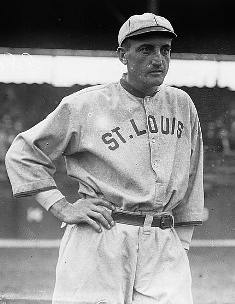
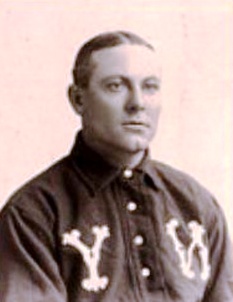
Finley Yardley

Identified as “Findley” on Baseball Reference, Finley A. Yardley was born in Ben Arnold, Texas on March 21, 1895.

“Fin” Yardley was a good hitter, but his intelligence was questioned more than once during his career.

After a spring trial with the St. Louis Browns in 1917, he was released to the Little Rock Travelers in the Southern Association for 57 games, but according to The Arkansas Gazette, “Forgetting is what chased him out” and he was sent to the Spokane Indians in the Northwestern League.

Yardley hit well in Spokane (.339 in 115 at bats), but despite his success The Gazette noted that:

“His think tank still slips now and then.  Recently he hit a drive good for three bases but forgot to touch first.”

Fin Yardley was no rocket scientist—his son John Finley Yardley was.

John Yardley was an aeronautical engineer whose team from McDonnell Aircraft Corporation designed the Friendship 7 capsule in which John Glenn orbited the Earth in 1962—Glenn called him “one of the real pioneers of the space program.”  Yardley was also involved with the Gemini, Skylab and Space Shuttle Programs.

After his playing career, Finley Yardley settled in St. Louis where he worked as a sales manager at a car dealership.  He died in Tucson, Arizona on March 1, 1963.

Charles Gurtz

Charles Joseph Gurtz was born in DePauw, Indiana in 1890.  He served in the United States Army, where he was a member of the 22nd Infantry and played for the unit’s baseball team in the El Paso, Texas city league.  He then played in a number of leagues throughout the Southwest not recognized by the National Agreement, including stops with teams in the “copper circuit;” loosely connected teams and leagues in mining towns in New Mexico and Arizona

Gurtz was let out of his contract in Silver City, New Mexico in order to join the Bloomington Bloomers in the Three-I League in 1914.  He hit .333, finishing second to Howard Wakefield for the league batting title.

Shortly after the 1914 season ended, Gurtz broke his leg during a semi-pro game in Odell, Illinois and returned home to Indiana.

In February of 1915, The Associated Press reported that he was “suffering from mental trouble, due to excessive religious zeal (and) has been declared insane. “  He was committed to Indiana’s state hospital at Madison, where “Physician’s say that he should respond to treatment and become normal again if his mind can be kept off religion.”

A month later Gurtz was released from the state hospital, The Associated Press said the hospital’s “superintendent expressed the opinion that Gurtz would be able to play ball.”

Gurtz played, but not well.

He hit just .193 for Bloomington in 1915.  The following year he was released by Bloomington just before the season began, but was signed by the Oklahoma City Senators in the Western Association in May.  He split the 1916 season between the Senators and the Muskogee Mets in the same league, hitting just .210.  (Baseball Reference identifies the player with Oklahoma City and Muskogee in 1916 as “William Gurtz,” but contemporary references in The Oklahoma City Times confirm that it was Charles Gurtz)

Gurtz returned to his native Indiana after the 1916 season and died on November 9, 1989, three weeks short of his 100th birthday.

Jimmy Duchalsky

James Louis “Jimmy” “the Duke” Duchalsky was discovered in Hawaii between the 1922 and ’23 seasons when Herb Hunter’s touring big leaguers visited the island during their barnstorming trip which also included stops in Japan, Korea, China and the Philippines.

The International News Service, which called the 5’ 9” 150 lb. Duchalsky the “hardest hitting pitcher in Hawaiian baseball circles,” said he caught the eye of New York Yankee pitcher “Bullet” Joe Bush.  Bush “was so impressed with the youngster’s work in a game he pitched against the big leaguers that he recommended him highly to Duffy Lewis manager of the Salt Lake City Bees in the Pacific Coast League).”

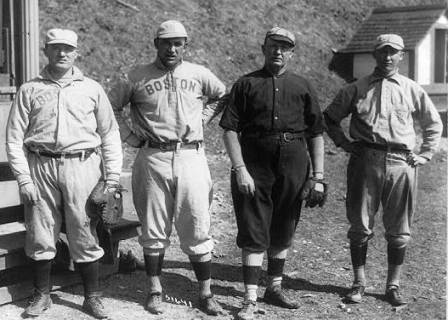
Joe Bush, front, second from right

Joe Bush, front, second from right  photographed during the tour.

Bush said the only thing he lacked was “a change of pace and that can be developed under the instruction of a good coach and manager.”

Duchalsky was 24-years-old (the Bees claimed he was just 21), but not as polished as Bush thought and struggled through 15 appearances, most in relief, for Salt Lake.  He posted a 1-3 record and 7.59 ERA in 51 innings—he did have 8 hits in 20 at bats, with one home run.   In May, he and teammate Tony Lazzeri were sent to the Peoria Tractors in the Three-I League; Duchalsky was 13-8 in 28 appearances.

The following season Duchalsky rejoined the Bees but pitched just one-third of an inning, allowing two runs and two hits in an 18-17 loss to the Oakland Oaks on April 10.  He was released later that week and returned to the Three-I League, this time as a member of the Decatur Commodores; he was 11-9 with a 4.13 ERA for the last-place (58-78) Commodores.

Jimmy Duchalsky 1923

Jimmy Duchalsky 1923

At the end of October he returned to Honolulu to play winter ball.

On December 7, 1924 Duchalsky was involved in an altercation with a cab driver. The Decatur Review said:

“Jim Duchalsky, known to all Three Eye League baseball fans as “The Duke,” has pitched his last game of ball… (he was) shot to death in his native city last evening after a street argument…It will be hard to convince Decatur baseball fans who have come in contact with Jim that he was the aggressor in any brawl that might have taken place for he was the most quiet player both on and off the field to ever appear here… Despite his quiet manners and the fact that he was not a mixer, many fans in both Decatur and Peoria will mourn his loss.  Duchalsky was admired by fans in every city where he played for his sportsmanlike conduct on the ball field and in all his games pitched at Staley Field was never seen disputing an umpire’s decision, even on balls and strikes.  He pitched his game and left the arguments out of his assortment.”

The Associated Press said, “The encounter was believed to have started in jealousy over a woman.”  The cab driver, John Emmeluth, claimed self-defense, but several witnesses said he approached and shot the pitcher with no warning.  He was sentenced to 20 to 25 years in prison.  Duchalsky was buried in Honolulu.

“Father isn’t Disappointed because I took up Dancing”

4 Apr

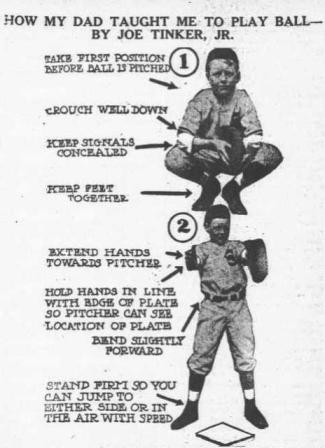
In the spring of 1916 Joe Tinker Jr., ten-year-old son of Chicago Cubs Manager Joe Tinker “wrote” a series of articles that appeared in newspapers across the country.  Tinker’s articles provided tips for playing each position:

“To be a winning pitcher you must have control…The best way to gain control is to get another boy to get in position as a batter then pitch to him.  Don’t throw at a stationary target.”

“(Catchers) Stand up close to the batter and don’t lose your head if the pitcher becomes wild.  Try to steady him with a cheerful line of talk.  Practice every spare moment.”

“Stand close to the plate when batting.  Don’t lose your nerve if the pitcher tries to bean you. Some fellows like to choke their bats or grip the handles about four inches from the end.  My father don’t approve of the style…Don’t argue with the umpire.  If you are hot-headed you hurt your chances to connect with cool-headed pitching.”

“Learn to start in a jiffy.  That is the first point emphasized by my dad in teaching me to run bases.”

“Playing short offers many chances for individual star plays and the work of a good man will have a great effect on the score card.”

Photos of Joe Tinker Jr. demonstrating what his dad taught him

Photos of Joe Tinker Jr. demonstrating what his dad taught him

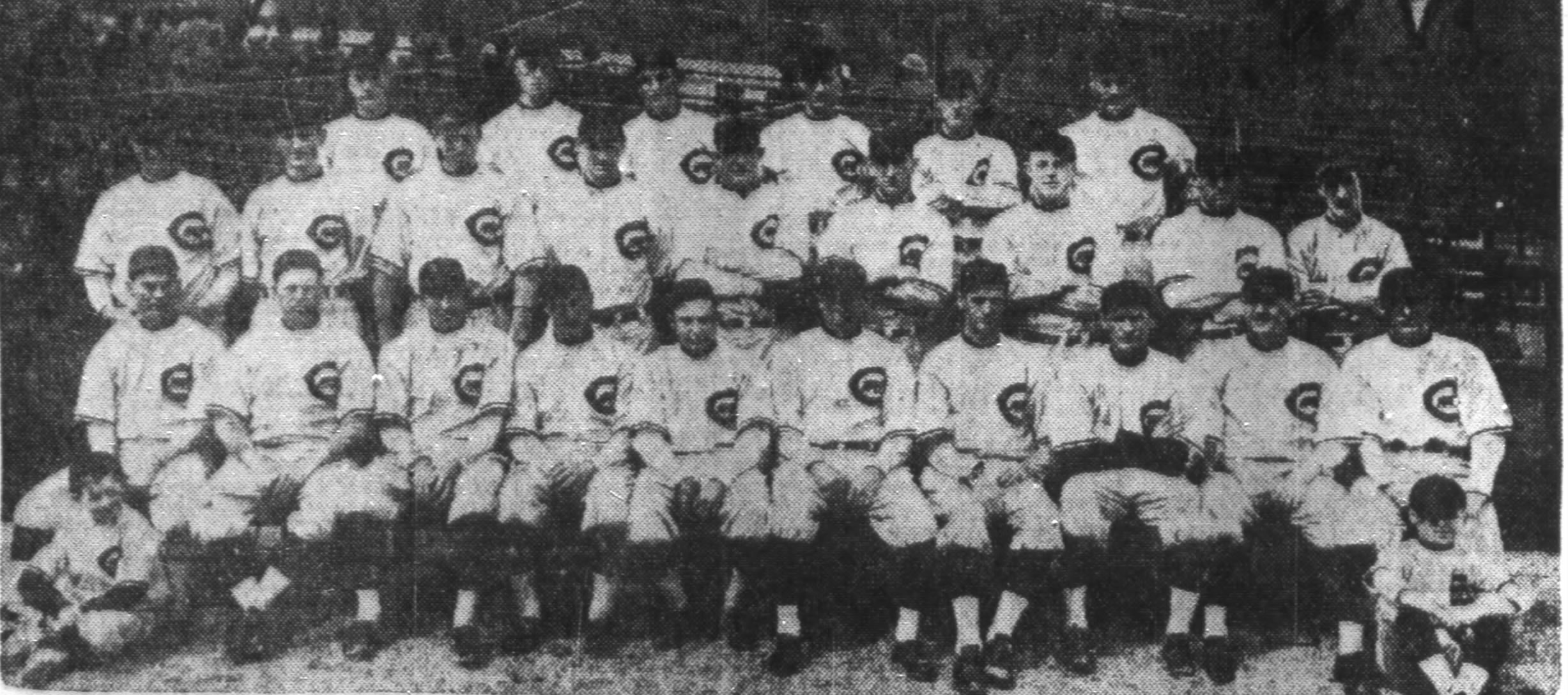
Joe Tinker Jr. and his younger brother Roland were the Cubs mascots during their father’s season as manager in 1916.  In 1924 Chicago newspapers reported that Tinker Jr. was headed to the University of Illinois to play baseball for Coach Carl Lundgren, the former Cub pitcher.  There is no record of Tinker ever playing at the school.
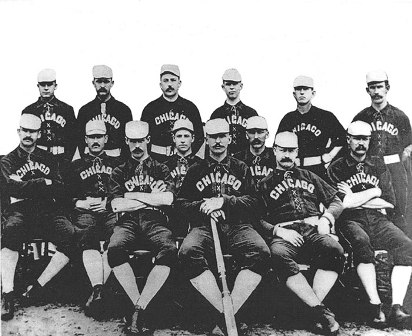
1916 Chicago Cubs.  Joe Tinker Jr. seated right, Roland Tinker seated left.

1916 Chicago Cubs. Joe Tinker Jr. seated right, Roland Tinker seated left.

Younger brother Roland played for two seasons in the Florida State League.

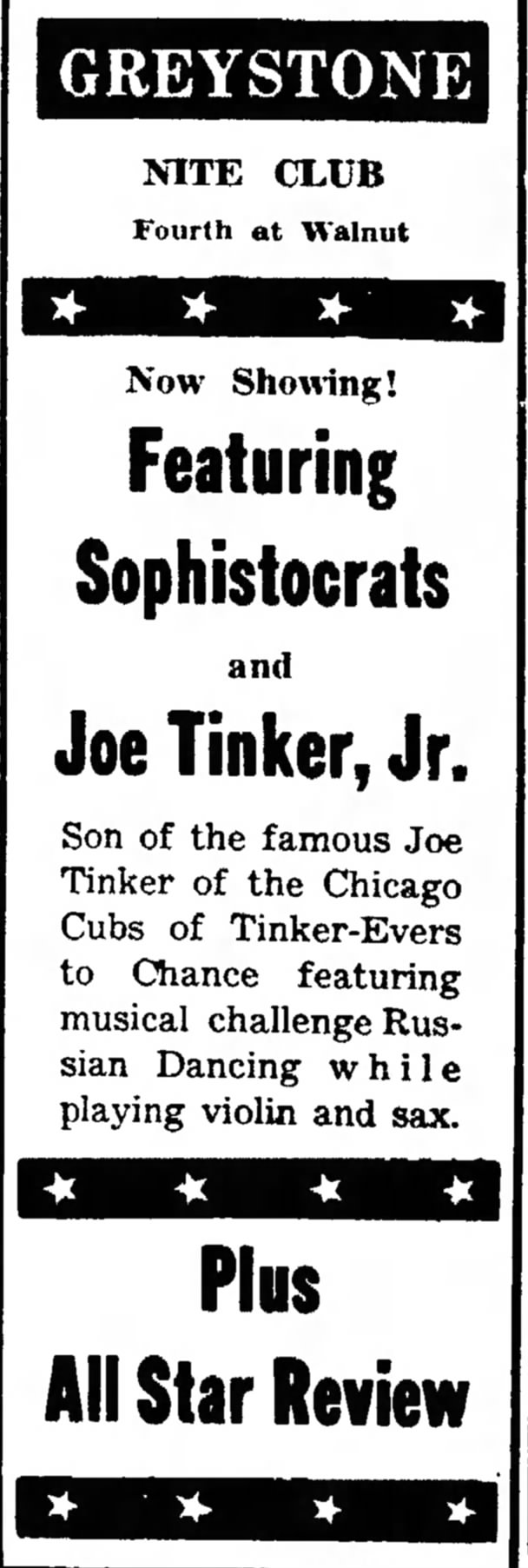
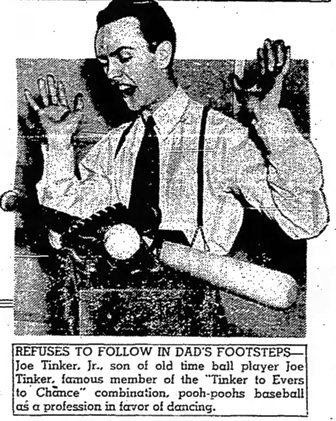
In 1938 newspapers reported that Joe Tinker Jr. had become a dancer with a vaudeville group called the Sophistocrats.  Tinker Jr. told reporters:

“Father isn’t disappointed because I took up dancing.  In fact he approves.”

It’s unclear whether “Joe Tinker Jr.” was actually Joe Tinker Jr.  The newspaper articles all said he was 22-years-old.  Joe Tinker Jr. would have been in his thirties; however his brother William Jay Tinker would have been 22 in 1938.


joetinkerjrdance


joetinkerjr1938

When Joe Tinker was elected to the Hall of Fame he compiled his all-time team for Ernest Lanigan, then curator of the Hall:

Pitchers: Mordecai Brown, Grover Cleveland Alexander, Christy Mathewson and Ed Walsh

Catchers: Johnny Kling and Roger Bresnahan

First Base: Frank Chance

Second Base: Eddie Collins

Third Base: Harry Steinfeldt

Shortstop: Honus Wagner

Outfield: Artie “Solly’ Hofman, Ty Cobb, Fred Clarke, and Sam Crawford.

Though he named several Cubs, Tinker did not include his former teammate Johnny Evers.  In 1914 Evers had famously slighted Tinker, with whom he was engaged with in a long-term feud, after Evers and his Boston Braves teammates won the World Series. William Peet wrote in The Boston Post :

“(Walter “Rabbit” Maranville’s) the best shortstop the game has ever known.

“Better than Joe Tinker; your old side partner?

“Yes, he’s better than Tinker.”

While the two finally broke their silence at Frank Chance’s deathbed in 1924, they never reconciled.

Evers died in 1947, Tinker in 1948.

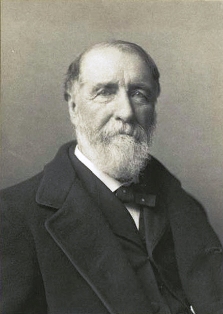
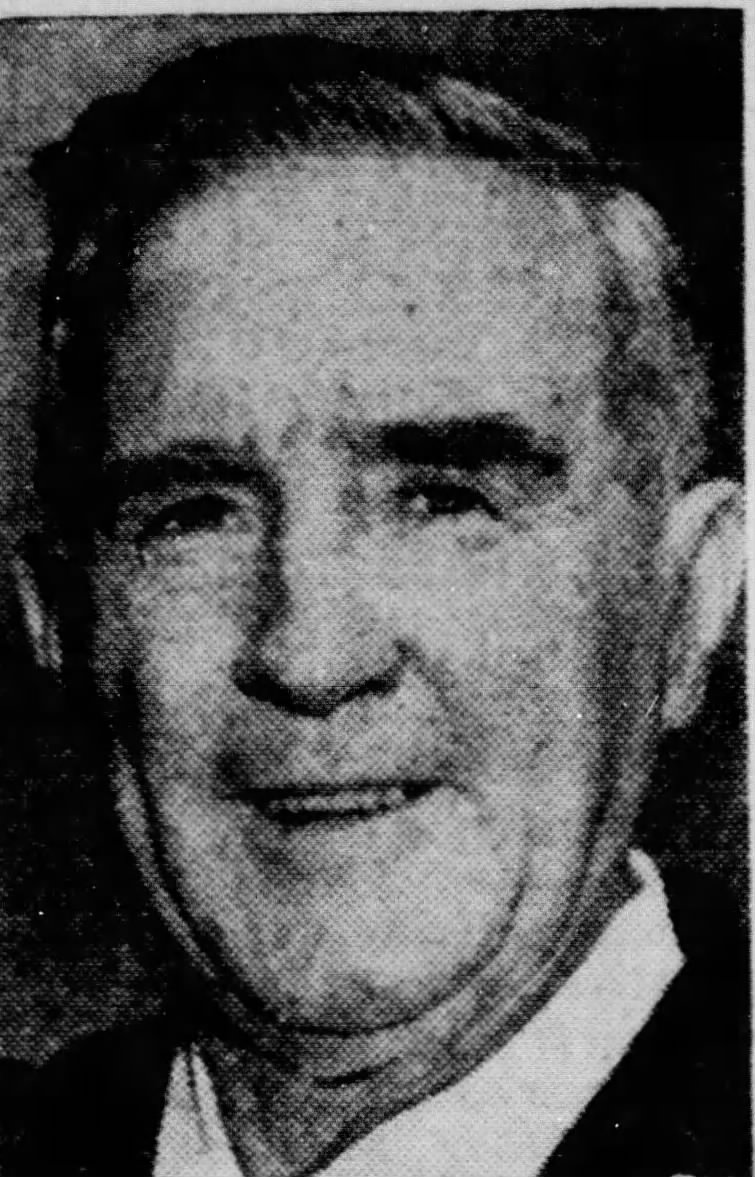
Joe Tinker circa 1946

Joe Tinker circa 1946

Joe Tinker Jr. died in 1981, Roland “Rollie” Tinker died in 1980, and William Tinker died in 1996.