“In the ‘90s Nobody ever Thought Anything of telling the Manager to go Chase Himself”

6 Nov

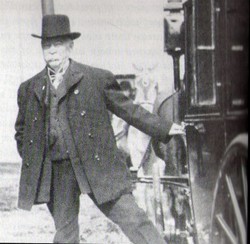
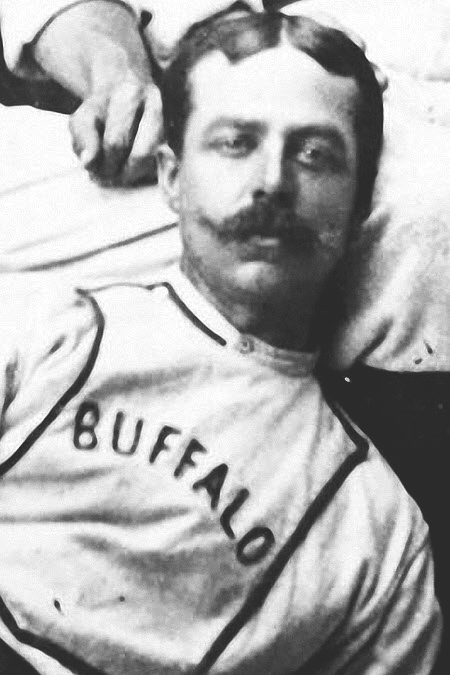
Bill Lange played only seven seasons in the National League—all with Chicago–but his reputation lived on long after he walked away from the game in 1899 at 28 years-old.  Two of his biggest supporters, Connie Mack and Clark Griffith, remained influential until their deaths in the mid 1950s, and both helped to keep Lange’s legend alive until his death in 1950.

Long after his retirement to enter the insurance and real estate business in his native San Francisco, Lange remained extremely popular in Chicago;  he was frequently quoted by Chicago sportswriters (most often his friend Hugh Fullerton), and was even retained The Chicago Examiner’s  “World Series expert” in the early and mid teens.

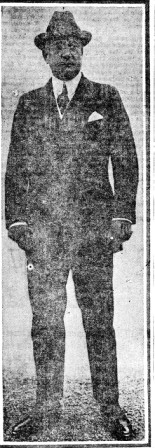
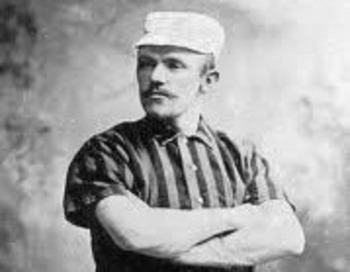
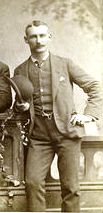
Bill Lange

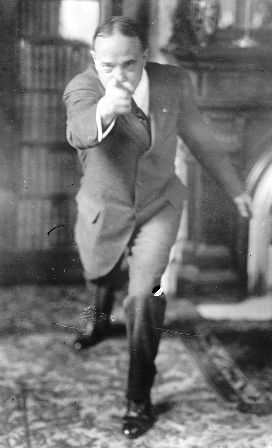
Bill Lange

In 1909, when the White Sox were training in San Francisco, Lange told a reporter for The Chicago Inter Ocean that “the batsmen of the present time had not advanced in any way” over the hitters of his day—and Lange felt they took too many pitches:

“I have noticed that the habit nowadays is to be altogether too scientific.  And that science is ruining the batters.  There used to be such things as .400 hitters in the big leagues and now the managers are spending fortunes in the hopes of finding a .250 hitter.  The reason they are so hard to find is because the batsmen don’t follow their natural inclinations to wallop the ball, but stall around at the plate in the artificial hope of drawing a pass instead of breaking a board in the back fence.

“No batter, who has any eye at all, ought ever to wait when he has three balls and one strike on him, unless the pitcher is uncommonly wild.  Think of the advantage of hitting when three balls have been called.  You are dead sure that the next one will be over the plate if the pitcher can get it there.  If he doesn’t, let it go and take your base.  But if you let a good one go then you are up against another proposition.

“Then the batsman is in a worse hole than the pitcher and his chances of making a safe hit are at least 4 to 1 against him, for a nervy pitcher will take a chance on a curve or a high one in the hope of making the batsman bite.  He wouldn’t dare do that very often when the count was only three and one.  The batsman who waits too long is just giving himself the worst of the deal.”

Unlike many players of his generation, Lange did note that some aspects of the game had improved since he played:

“We didn’t hustle like the players of the today do.  We would shirk morning practice all the time, so we could sleep late.  And take it from me, a lot of us needed the sleep, for most all of the boys belonged to the Ancient Order of Owls.

“The teams of today report at the grounds at 9:30 in the morning and work to beat the band for two hours. In the old days, after we had stalled the manager off as long as possible, we would finally show up for morning practice.  I don’t know all the systems the players on other teams had for dodging morning work, but with the old Chicago bunch we left it up to (Bill) Dahlen to break up the practice after about ten minutes of hustling.

“Dahlen could turn the trick might easily.  All he had to do was whiz four or five low throws at Anson’s shins.  ‘Pop’ used to bawl Dahlen out for a few minutes, but Bill would keep up the bum throwing until Anse would say ‘Enough.’  Nothing like that goes in the big or small leagues now.  It is a question of work and buckle down to business.  In the ‘90s nobody ever thought anything of telling the manager to go chase himself.  I haven’t heard of anybody doing anything like that in late years, and getting away with it.”

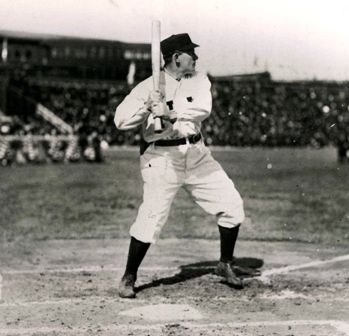
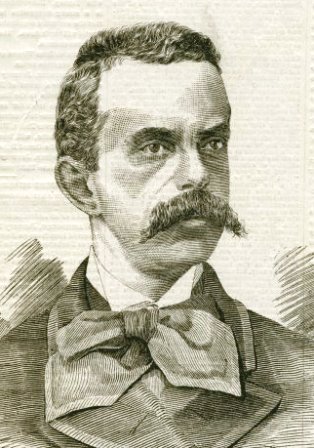
Bill Dahlen

Bill Dahlen

Lange on pitching, tomorrow.

Bowerman by TKO

5 Nov

“The Popular Magazine,” a literary magazine that billed itself as a “magazine for men and women who like to read about men,” was published by Street & Smith from 1903 until 1931.

In 1904, the magazine told the story of a fight the previous season involving New York Giants catcher Frank Bowerman.

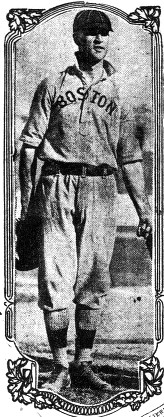
Frank Bowerman

Frank Bowerman

Bowerman was not kept by Fred Clarke when the Pirates and Louisville Colonels merged after the 1899 season; his contract was assigned to the  Giants.  Apparently some bad blood remained into 1903, and according to the magazine, Giants manager John McGraw used Bowerman’s grudge and some comments made by Clarke to try to light a fire under his team:

“When the Giants were in Pittsburgh (on June 1) last season McGraw noticed that there was bad feeling in the team.  The men stood in little knots in the hotel corridor glowering at other players; they rode to the field in a bus without exchanging a word; the preliminary practice, usually so brilliant, was dull and lifeless.  This worried McGraw.”

John McGraw

John McGraw

The article said McGraw had figured out the cause a few days later in Chicago; Bowerman had sat in the grandstand for that June 1 game, being unable to play due to an injured thumb.  Jack Warner caught Christy Mathewson that day.  What McGraw discovered was that Clarke said Bowerman was overheard criticizing Warner’s work behind the plate, blaming his teammate for one of the two runs scored off of Mathewson:

“This, of course, was tantamount to Bowerman’s asserting his superiority over Warner, a boast that ballplayers are rarely guilty of.”

McGraw cornered Bowerman who insisted Clarke had told “the meanest lie that ever was told, and I told Jack Warner so, but he don’t believe it.”  McGraw told him to keep quiet about it until the Pirates visited New York on June 26.

“(McGraw) proceeded to reinject that esprit de corps by a measure so drastic that it horrified ball patrons all over the country, who, however, thought it merely an incident of the brutality of ballplayers.  Instead of that, it was a well-planned scheme of a crafty general.”

When the Pirates arrived at the Polo Grounds on the morning of the 26th, McGraw took Bowerman aside:

“’Frank, have you got a good right swing?’  The Michigan Lumberman smiled grimly and clenched a fist knotted and as hard as Hercules’ war club.  ‘Well, it’s up to you, then,’ advised McGraw, “to put life in the team. Don’t lose any time.’ Bowerman understood.

“”’I’d like to speak to you a minute,’ he said to Clarke, as the Pittsburgh captain was passing through the gate on his way to the clubhouse.  They went into the stuffy box office; where there was hardly room to swing a cat.  Three times Bowerman demanded an explanation, offering to bring McGraw and Warner in as witnesses…Clarke went down three times and finally admitted he had enough…The Giants played that day, to use the expression of a rooter, as though they were ‘fighting their weight in wildcats.’  Bowerman and Warner coached each other with pet names, and walked lovingly from the victorious field arm in arm, while Fred Clarke was buying a pound of raw beef.”

Fred Clarke

Fred Clarke

“The Popular Magazine” story added an element that differed from the coverage in New York and Pittsburgh newspapers—while each town pointed fingers at the other (in Pittsburgh Bowerman was an out of control thug, while in New York, Clarke got what he deserved for stirring up trouble) no one else suggested that McGraw engineered the fight to motivate his club against the first place Pirates.

The Giants weren’t able to catch Pittsburgh, finishing in second place six and a half games behind the Pirates.

National League President Harry Pulliam initially announced that there would be no punishment for either player because the fight did not take place on the field, three weeks later, under pressure from Pirates owner Barney Dreyfuss, Pulliam fined Bowerman $100.

“He Used to Knock Down Infielders”

4 Nov

William Alexander “Bill” Lange is best known for a play that likely never happened.  The legend was that he had made a spectacular catch that culminated with the Chicago Colts’ outfielder crashing through the left-field fence in Washington in an 1897 game with the Senators.  It is most likely another in a long line of exaggerations and apocryphal stories from Lange’s friend, Chicago sportswriter Hugh Fullerton—a story that first appeared in that paper with no byline in 1903, but was repeated by Fullerton many times in later years.   A nice analysis of that story appears here.

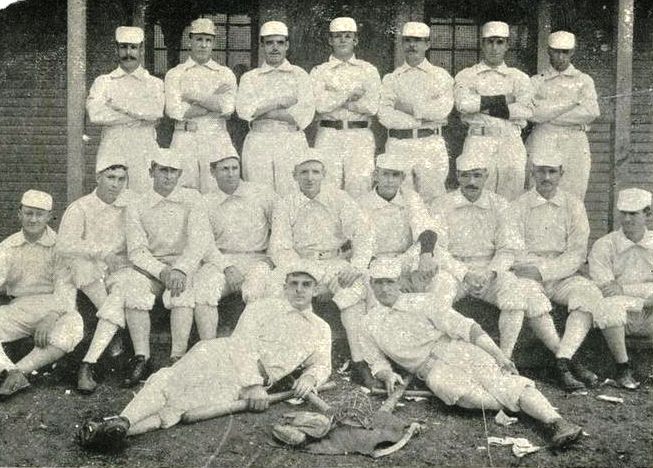
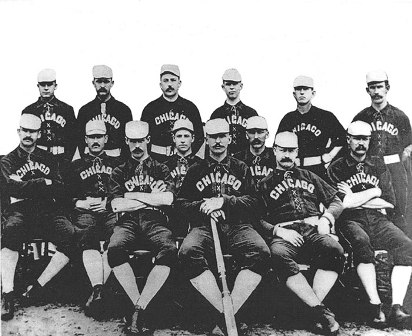
Bill Lang, seated fourth from left, with 1896 Chicago Colts

Bill Lang, seated fourth from left, with 1896 Chicago Colts

Lange played just seven seasons, retiring after the 1899 season at age 28 to join his father-in-law in the insurance and real estate business in San Francisco.

During the spring of 1900, The Chicago Daily News said “The wise ones in the baseball business” were certain he’d be back, including Chicago’s manager Tom Loftus and President James Hart, and Charlie Comiskey, “’When the season opens and the sun warms up he can’t stay away,’ remarks Comiskey, with a knowing wink.”

Despite the certainty that he would, Lange never returned.

Lange, who stole 400 career bases, was called “Little Eva” because of his gracefulness.  In 1909 Billy Sunday called him “the greatest outfielder in baseball history.”  Connie Mack called him the best base-runner he ever saw.  In fact,  Mack and Clark Griffith considered Lange so good that they petitioned the Hall of Fame in 1940 to change the “rules (which) restrict membership to players of the twentieth century” in order to allow for Lange’s induction.

Griffith said Lange was “the best outfielder that ever played behind me:”

“Lange here was rougher base-stealer than (Billy) Hamilton.  He used to knock down infielders.  Once I saw him hit a grounder to third base.  He should have been out, but he knocked down the first baseman.

“Then he knocked down the second and third baseman and scored.  Connie Mack was the catcher.  No he didn’t knock Connie down because he didn’t have to.”

Mack told the same story over the years.

Lange never made the Hall of Fame.  He died in 1950.

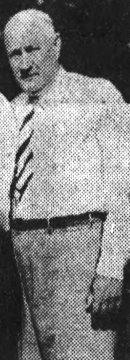
Bill Lange 1931

Bill Lange 1931

In his final years the story about the “catch” had become so ingrained in the legend of Bill Lange that other players told essentially the same story Fullerton did (the most widely disseminated versions appeared in “The American Magazine” in 1909 and in Johnny Evers‘ book “Touching Second,” coauthored by Fullerton), but inserted themselves into the story.  In 1946 Griffith told reporters:

“It happened right here in Washington, I was pitching for Chicago.  Bill missed the train from New York, and arrived in the fourth inning.  We were then with the Chicago Colts and Cap Anson fined Lange $100 before he put him in the game.

“I had a one-run lead when Al (“Kip”) Selbach of Washington hit a terrific drive.  Lange ran back hard, and when he crashed into the wooden fence his 210 pounds took him right through the planks.

“He caught the ball at the same time and held it.  All we could see were his feet sticking through the fence and Bill’s arm holding the ball.  When he came back to the bench, he handed the ball to Anson and said:

‘This ought to cancel that $100 fine.’ It did too.”

When Lange died Griffith said:

“I have seen all the other great outfielders—Speaker, Cobb, DiMaggio –in action and I consider Bill Lange the equal of, if not better than, all outfielders of all time.  There wasn’t anything he couldn’t do.”

Lost Advertisements — “The Spalding”

1 Nov

thespalding

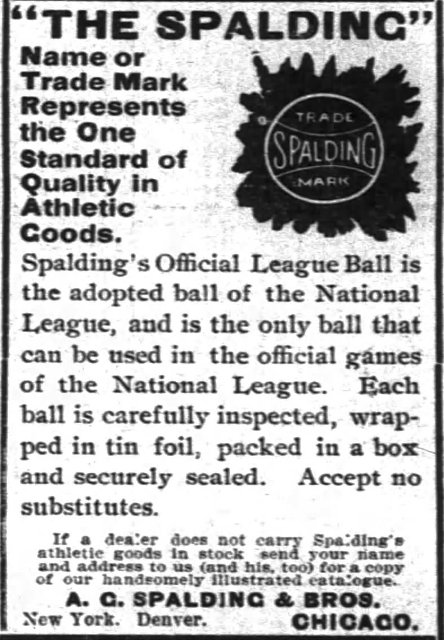
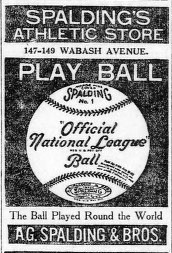
An advertisement from 1899 for the official ball of the National League:

“The Spalding” Name or Trademark Represents the one Standard of Quality in Athletic Goods

“Spalding’s Official League Ball is the adopted ball of the National League, and is the only ball that can be used in the official games of the National league.  Each ball is carefully inspected, wrapped in tin foil, packed in a box and securely sealed.  Accept no substitutions.”

“The President of the League is the Supply Department”

31 Oct

Sixty to 75 balls are used on average in every Major League game (90 must be on hand)—and estimates are that between 115,000 and 160,000 balls are used each season.  How does this compare to the number of baseballs used during the 1890s?

In 1897 The Louisville Courier-Journal reported near the end of August that National League President Nick Young said league teams had used “400 dozen (4800) balls for the season,” up to that point.

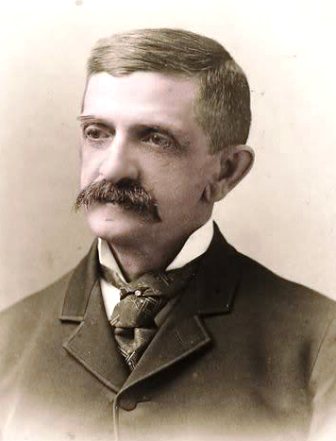
Nick Young

Nick Young

Balls were stored at Young’s home in Washington D.C.’s Mount Pleasant neighborhood.  He said:

“The public, perhaps, are unaware of the method employed by the League in circulating the balls among the twelve clubs.  The average patron of the game is under the impression that the balls are sent direct from the factory, but, as a matter of fact, the clubs are obliged to order their stock of spheres through me.  By the terms of the article of agreement and the contract with the manufacturer, the President of the League is the supply department.”

“I was debating today over my stock of balls in store at my home at Mount Pleasant, and decided that I had enough balls in stock to last the remainder of the season.  If am right in my guess, the twelve teams in the big league will use about 480 dozen (5760) balls this season, which makes an average of 40 dozen (480) per club.

“I have noticed that since the present pitching distance became a rule, more balls have been used than under the old rule, and I should infer that the five-foot impost placed on the pitcher four years ago has boomed the trade for Al Spalding, who supplies the league with balls…Of course I can’t account for the increase in foul flies that are sent over the stand, and that result in losing the balls, but the fact remains that more balls are used under the new rule.”

Young said he couldn’t explain why exactly more balls were being used because of the increased pitching distance:

“Perhaps the batsmen hit at the ball too soon or too late to connect for a safe hit, and their effort to make a safety resulted in a foul fly.”

Spalding advertisement from 1890s

Spalding advertisement from 1890s

Ball clubs would wire Young when they needed additional balls:

“Every ball is weighed before shipment to the club.  Each club stand the expense of the balls ordered by its manager or owner, and this season the League will have paid out about $6,000 for the sphere of horsehide, or an average of $500 per club, which is quite an item of expenditure for this necessary tool of the trade.”

Adventures in Barnstorming—“Their Conduct was Disgraceful”

30 Oct

After the 1887 season John Montgomery Ward was celebrating his marriage to one of the most popular actresses of the era, Helen Dauvray, by touring the South playing exhibition games with the New York Giants–primarily made up of New York players but also included Mike “King” Kelly (who also brought his wife Agnes) of the Boston Beaneaters and Jerry Denny of Indianapolis Hoosiers.

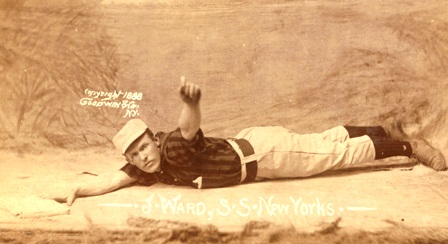
John Montgomery Ward

John Montgomery Ward

The team arrived in New Orleans on October 29 and was greeted with a reception at the St. Charles Hotel.

The first game against the Southern League’s New Orleans Pelicans was played the next day at Sportsmen’s Park in front of 6000 fans.  New York’s Tim Keefe held the Pelicans to just two ninth-inning runs, in a 7-2 victory.   Ward had three hits.

The New Orleans Times-Picayune said:

“It was far from an ideal day for ball playing, for the weather was almost freezing and the wind blew in cutting blasts.  But those who admire baseball in this city were undeterred.”

The following day the Pelicans managed an 8-inning 4-4 tie:

“(The Pelicans) put up a game that would have done credit to any aggregation, and the only excuse for their not having bounced the Giants, was the fact that (Bill) Geiss and (Ed) Cartwright made inexcusable errors at the commencement that let in two runs.”

The Times-Picayune left out a large part of what happened that day.

Two days later the whole story appeared in papers across the country, The New York Times said:

“(S)everal members of the New York Baseball club were intoxicated when they entered the grounds to play with the New Orleans nine on Monday last.  Their conduct was disgraceful, and (Pelicans) Secretary (Maurice) Kaufman called on a police officer to eject them from the grounds.”

A wire report from New Orleans, that appeared in The Chicago Daily News said:

“There are several men in the New Yorks who have been drinking freely ever since they arrived in the city, and were not of course, in condition to play ball.”

Giants’ catcher William “Buck” Ewing, and Jerry Denny were identified as drunken players, but it was King Kelly who was most often singled out.  The wire report said when police attempted to arrest a drunken fan who had accompanied the players to the ballpark:

“Kelly jumped into the stand and tried to prevent the arrest, claiming the man was a friend of his…During the entire game the unseemly exhibition was kept up.  At one time Kelly climbed into the stand and drank beer with his friends, while the other men of the nine had already taken positions in the field to begin an inning.”

King Kelly

King Kelly

During the game Ward “took his wife from the grounds, and placing her in a carriage, sent her to the St. Charles Hotel, because of the disgraceful exhibition of some of the players.”

The game scheduled for November 2 was cancelled and The New York Times said the tour would be disbanded.

By the end of the week all parties were trying to downplay the incident.  Ward said members of the club “misbehaved in no way,” and instead said the cancellation was because it was discovered that Pelicans players had received $5 each for the games, and the Giants players only received $3.  The Pelicans and The Times-Picayune had a revised version of the events:

“The whole story is that a couple of the members met too many friends with tempting ways and reached the field in no condition to play ball.  The majority of the visitors were all right and were heartily ashamed of the conduct of their comrades.”

The paper said that the “New Yorks are in good trim again, however and at their own request a game was arranged for (November 4).”

The Giants won that game 5 to 3—New York catcher Buck Ewing pitched a complete game for the Giants (he pitched 47 innings during his major league career, with a 2-3 record and 3.45 ERA), beating the Pelicans best pitcher John Ewing.  Only 500 fans attended the game.

The series ended on November 6 with the Giants winning two games; a 3-1 morning game with “a very small crowd,” and an evening game in front of more than 6000 won by the Giants 5-4.

While the rest of the Giants continued on to Texas, Ward returned to New York for meetings to negotiate the recognition of the Brotherhood of Professional Baseball Players by the National League.  He rejoined the team on the West Coast later that month for a six-week barnstorming tour.

The Ward/ Dauvray marriage went about as well as the honeymoon in New Orleans—their divorce just six-years later was a very public, scandalous affair.  Ward, who was accused of being a serial philanderer, was actually barred from ever remarrying during Dauvray’s lifetime as part of the divorce decree.  He was able to get the ruling reversed in 1903 and remarried.

Sam Barkley and the Mobster

29 Oct

Samuel W. Barkley’s brief career on the diamond was highlighted by two legal disputes over his services; his life off the field was more complicated and interesting.

Barkley rose from amateur and semi-pro teams around Wheeling, West Virginia, to a solid season (.306, league-leading 39 doubles) as a 26-year-old rookie with the Toledo Blue Stockings in the American Association in 1884. Among his teammates in Toledo were Fleetwood and Welday Walker.

Toledo was only a major league franchise in 1884—The Toledo Blade said the team had lost “nearly $10,000–and disbanded,” selling five players, including Barkley, to the St. Louis Browns—the sale included pitcher Tony Mullane, who attempted to sign with Cincinnati after agreeing to sign with St. Louis, leading to his year-long suspension. By the time all the legal wrangling was done, only Barkley and Curt Welch reported to the Browns.

After a .268 season in St. Louis, owner Chris Von der Ahe sold him to the Pittsburgh Alleghenys, but Barkley had already signed a contract with the Baltimore Orioles. The American Association suspended and fined Barkley; Barkley sued. The dispute was settled with Barkley being reinstated and Pittsburgh paying the fine on his behalf.
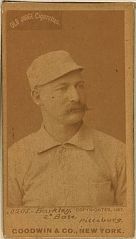
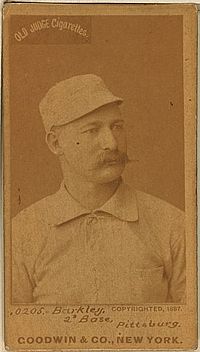
Sam Barkley

Sam Barkley

After two years in Pittsburgh, he was purchased by the Kansas City Cowboys, and that’s when his life got more interesting.

In Chicago, he met an 18-year-old woman named Dora Feldman, who followed him to Kansas City, where as The Toledo News-Bee said, “most of his money was thrown at the feet of the young woman.”

The Chicago Inter Ocean said Barkley claimed, that the day before he married Dora, “she went to her room in a Kansas City hotel and took poison, fearing he would not marry her.”

Despite the suicide attempt, the two married.

He hit just .216 in 1888 but was hitting .284 the following year when he was sold to the Toledo Black Pirates in the International League. After just 50 games there his career was over. At some point during the 1888 season he suffered a knee injury he said ended his career:

“I knocked a safe one to left field, and was dancing around between first and second bags when (Mike) Mattimore, the Philadelphia (Athletics) pitcher attempted to catch me napping. He ran to the base line, and as I attempted to slide back to the first bag he unintentionally gave me the ‘knee’ and it injured severely the knee cap on my left leg.”

With his playing days behind him, Barkley, who was reported to have made as much as $1,800 a season with the Alleghenys, returned to Pittsburgh with a young wife who had aspirations to be an actress and opened a cigar store.

It didn’t end well.

After just more than a year in business, The Pittsburgh Press said Barkley’s store on Smithfield Street closed by order of the sheriff, due to “claims aggregating $3,600.”

The couple moved to Chicago.

Initially, things went better there.

Barkley opened a tavern at 292 West Madison Street, and he and Dora had a son who was born around 1895.

Shortly after they returned to Chicago Dora met Chicago’s first crime boss Michael Cassius “Mike” McDonald.

Richard Henry Little of The Chicago Tribune said McDonald, “never held office but ruled the city with an iron hand.”

McDonald built a gambling and protection syndicate, controlled the Garfield Park racetrack, and solidified his control of the city as leader of the local Democratic Party. He was also heavily involved in legitimate businesses—he owned The Chicago Globe newspaper and financed the building of Chicago’s first elevated rail line.
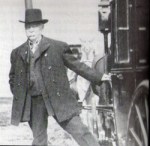
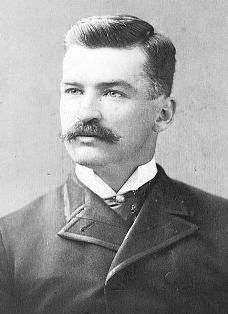
Mike McDonald

Mike McDonald

Years later Barkley told The Inter Ocean about his wife’s first meeting with McDonald:

“She was introduced to him at a box party in McVicker’s Theater shortly after the close of the big fair (World’s Columbia Exposition), in 1893…I remember the night distinctly. Dora came home to our place at 319 Washington Boulevard and told me that she had met a very fascinating old man (McDonald was 44), who was reputed to have a lot of money.

“’Watch me get a piece of that money,’ Dora said to me, jestingly, and fool that I was I laughed at the supposed joke.”

Dora Feldman Barkley McDonald

Dora Feldman Barkley McDonald

There are several versions of what happened next. One involves an elaborate (seemingly too elaborate) story that suggested Barkley was lured by a friend of McDonald into a compromising position involving women and drugs—only to be “caught” by his wife. The more likely version was that he was simply paid off—The Inter Ocean said he received $30,000 to divorce Dora.

Barkley never acknowledged receiving the money and only said:

“(Dora and McDonald) had planned between them to oust me, and no matter what I might have done, it would have been all the same in the long run. With his money and his influence, McDonald could put it over me any time he wanted.”

Dora eventually became McDonald’s second wife in 1898, (his first wife, who once shot a police officer—she was acquitted—had eloped to Europe with a soon to be former priest).

By 1897, Barkley had opened a new tavern at 15 North Clark Street, which was frequently in the news.

Sam Barkley

Sam Barkley

The Chicago Tribune called it a “notorious saloon,” and The Chicago Daily News reported on several occasions that the bar had its license revoked temporarily for various criminal activities and violations; in 1900 The Inter Ocean said a grand jury report was “almost an indictment of the city administration for its toleration of the dives, all-night saloons, and resorts for thieves and the depraved.” Of Barkley’s location the grand jury said:

“Men and women drinking, swearing and carousing, with music; open after midnight in the past. Several murders have been committed in front of this door.”

As with all such “clean-up” drives during that era in Chicago, nothing came of the grand jury report.

Dora again made headlines in 1907—and as a result so did her ex-husband.

The Inter Ocean said:

‘Mike ‘ M’Donald’s Wife Kills Artist in His Studio

“Dora McDonald, wife of Michael C. McDonald, millionaire, politician, traction man, and ex-gambler, shot and killed Webster S. Guerin, an artist, behind the locked doors of his studio in the Omaha Building, LaSalle and Van Buren Streets yesterday.”

Barkley was quickly contacted by reporters and told his sad story of how Dora had left him. The paper said:

“The story that Sam Barkley slowly grieved his life away over the loss of his pretty wife is disproved by the discovery of Sam Barkley alive and prosperous in Chicago today.”

Dora McDonald was eventually acquitted, but Mike McDonald did not live to see it, he died during her trial.

Barkley fell on hard times in Chicago soon after the killing. In August of 1908 a six-inning benefit baseball game was played at Comiskey Park between two Chicago City League teams–“Nixey” Callahan‘s Logan Squares and the Rogers Parks–“to raise enough money to start him in the cigar business.”

The Chicago Examiner said, “A fair-sized crowd turned out.”

Fred Pfeffer played first base for the Rogers Parks and “was the hero of the game with two hits besides fielding in grand style,” another former big leaguer, Emil Gross, served as umpire.

Shortly after that Barkley was operating a cigar store in his hometown, Wheeling, West Virginia.

There was one last chapter in the Barkley story. Soon after he returned to West Virginia he was living in poverty and became ill, and died on April 20, 1912. The Chicago Daily News said several days before his death a former baseball acquaintance was summoned to his side:

Billy Sunday called on him. He talked baseball for a while and then religion. At the end Sam liked both equally well.”
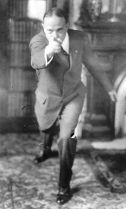
Billy Sunday

Billy Sunday

Dora McDonald was contacted for a comment:

“It is a closed incident—it’s so long ago that I knew him. But I’m sorry.”

She eventually married a doctor, moved to California and died in 1930.

Davy Force

28 Oct

David W. “Davy” Force was a popular figure in 19th Century baseball.  Francis Richter, founder and editor of The Sporting Life said the five-foot four-inch Force was, along with George Wright ”the two greatest shortstops of the early days of baseball.”  Nick Young, National League president, told Ren Mulford Jr. of The Cincinnati Enquirer that Force was second only to Wright as the greatest.

Davy Force

Davy Force

Force played in the National Association and National League from 1871 to 1886, and finished his professional career in the Western Association with the Sioux City Corn Huskers.

He remained popular, and well-known enough that multiple newspapers reported in 1890 that the former player “sided with the Brotherhood,” and supported the Players League; he even made news that year for growing a beard:  “Force has raised a crop of whiskers as long as himself. “

So when it was reported on Christmas Eve of 1896 that Force had shot and killed a man—a former ballplayer no less–in a San Francisco bar and then fled, the news was reported in papers across the country.

The Louisville Courier Journal:

Ball Player Kills Another

The Cincinnati Enquirer:

Old Cincinnati Ball Player Kills a Man in Frisco

The Salt Lake City Tribune:

Baseball Player Shoots Another Without Warning

The Chicago Tribune:

Police now on Lookout for Force

The Baltimore Sun:

‘Davy’ Force Wanted for Killing a Man

Towns where Force had been a popular player were quick to distance themselves.  The Sioux City Journal said that while fans “took a sort of paternal and patronizing interest” in Force when he played in Sioux City “the Golden Gate murder is quite another story…If he has been leading a wild, reckless life, possibly discouragements and vicissitudes have made a different man of him.”

The victim, Joseph Manning, was described as “an ex-ballplayer,” and in various articles was conflated with former big leaguers Jim Manning and Tim Manning.

Once it was determined Manning was not Jim or Tim, no one seemed to know anything about him.

Seven days after the murder, Abraham Mills, former National League president, issued a statement:

“I have known Davy Force almost continuously since I engaged him in 1867 to play in the Olympic Base Ball Club of Washington.  For the last seven years he has been in the employ of the company for which I am an officer, (The Otis Elevator Company) and is a steady, hard-working man, and I fully believe his statement that he never knew a Joseph Manning, and that he has never had any serious difficulty with or made any assault of any kind upon any ballplayer, either during or since his professional career.”

Mills’ statement was printed in only a fraction of the newspapers that reported the shooting.

The accusations faded, and by the time Force died in 1918 there was no mention of the case of mistaken identity in the ballplayer’s obituary.

Who exactly Joseph Manning was, and whether he was actually a professional baseball player, remains a mystery; as does the identity of the “Davy Force” who killed him in San Francisco.

Lost Advertisements–Ready! Lajoie Baseball Guide

25 Oct

lajoieguide

Above is a 1906 advertisement for an Atlanta hardware store offering the inaugural edition of “Napoleon Lajoie‘s Baseball Guide.”  The Lajoie Guide was intended to compete with the well established Spalding and Reach Guides, and sold for 10 cents, but despite Lajoie’s popularity the guide failed to catch on and was only published for three years.

In addition to the standard recap of professional baseball leagues across the country, and many photos, the Lajoie guide included a significant amount of information specific to its name sake.  An advertisement for the Cincinnati-based Queen City Tobacco Company said:

Lajoie Chews Red Devil Tobacco

Ask him if he don’t

reddevil

Grantland Rice wrote for the guide, and the first edition included a Rice-penned poem called “For Lajoie’s in Town:”

We’ve gazed on Mr. Roosevelt,

Who rules this whole wide land.

We’ve looked at Carrie Nation, 

And shook Jim Corbett’s hand

We’ve eaten bread with Robert Fitz

And chummed with George Tebeau.

We’ve drank out beer with Mr. Schlitz.

Great notable we know.

We’ve interviewed Friend Morgan,

Thrown talk at old John D.

We’ve opened wine with Sullivan

And seen Prince Hennery.

King Edward is a bosom pal,

Langtry our school-day girl.

Dick Croker smiles in our face,

We’ll give Boss Fame a whirl

*     *     *     *     *     *     *     *

Around the shrine of heroes

There’s little we’ve not seen.

We’ve talked to all, both great and small,

Of high and lowly mien.

But this group pales beneath the looks

Of one of far renown.

Hats off!The greatest comes today,

For Lajoie’s in town.

T. Roosevelt’s backed off the boards,

A plater is king Ed.

Langtry a chorus lady now,

The others are all dead.

For Lajoie, pride of several leagues!

Lajoie, the mighty man!

Lajoie, his bat and fielding glove

Knocks out the wholes blamed clan.

The 1906 Lajoie Guide

The 1906 Lajoie Guide

“A Game before the Kings and Many Nobles”

24 Oct

While traveling around the world as a member of A. G. Spalding’s 1888-1889 world tour, John Montgomery Ward wrote a series of dispatches for The New York World.  On February 23, 1889 the team played in Rome:

“In the picturesque Piazzi di Siena of the grounds of the Villa Borghese today the American baseball teams played a highly exciting game.  This is one of the favorite resorts of Roman citizens.  Never before in all my experience on the diamond have I seen so many distinguished persons among the crowd of baseball spectators as were in attendance here this afternoon.  The nobility was out in all its glory, and in there center stood his Majesty King Humbert.  He was dressed in a civilian’s suit and apparently enjoyed the sport. “

King Humbert "enjoyed the sport"

King Humbert “apparently enjoyed the sport”

Ward listed every member of the royal party and other “Roman princely families” who were present at the game.

“Nearly all the local literary and artistic celebrities were in the unprecedented royal and papal assemblage, and the applause at times would have stirred the heart of the most enthusiastic admirer of the American national game.  The last time the Piazzi di Siena was used was on the occasion of the marriage of the King’s brother, when the celebration was held on these magnificent grounds.

“The day was beautiful and the players were in fine condition.  During the preliminary practice the crowd of 5000 people was simply amazed at the skill displayed by the boys in batting, throwing and catching the ball.  The game itself was extremely well played, and resulted 3 to 2 in favor of Chicago.   The batting was lively, but nothing could pass the fielders, who played with remarkable energy.”

John Montgomery Ward

John Montgomery Ward

On the day of the game in Rome Ward said the players received word that National league owners were instituting the Brush Salary Classification Plan; a system developed by Indianapolis Hoosiers owner John Tomlinson Brush,  which rated players and placed them into five categories, each with a capped salary.  The Brush Plan, along with the Reserve Clause, would be the major impetus for the formation of the Players League:

“I interviewed every one of the men on the subject.  The scheme, as it is now understood by us, is regarded as a great mistake.  President Spalding, Captain Anson and Ned Hanlon concur in this opinion and say the plan is impossible and will not last long.”

Another issue that rankled players in Rome was the news that National League owners were demanding that the players return to the states by April 1 to prepare for the 1889 season; Ward said of the demands:

“From letter received by various members of the All-American team it is evident that certain managers are endeavoring to force the players to report for duty by April 1st.  For the information of these magnanimous gentlemen I will say that every player in the party will play the trip out.”

The All-Americans returned on April 6.