Tag Archives: Boston Red Sox

Boston’s Horseshoe

9 Jan

Boston Beaneaters Manager John Morrill told The Washington Star in 1886:

“Yes, sir, it’s a fact, that professional ball-tossers are as a rule very superstitious.  It is nothing more than natural though, and is not as much due to the ignorance of the men as is sometimes supposed.  You see, so much chance enters into every game of ball that the boys who play game after game gradually become impressed with the belief that they can read in advance certain signs or omens which will have more or less effect upon their individual play, if not upon the result of the game.”

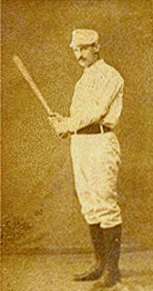
John Morrill

John Morrill

Morrill said that “on the whole” he thought his player’s superstitions were “a very good thing,” as long as “bad signs do not outnumber the good one.”  Morrill felt players were more inclined to look for good signs, which would encourage them to play “with more confidence.”

Morrill was also a supporter of mascots:

“Mascots are good things to encourage the boys.”

Morrill even attributed his greatest success as a manager to the power of superstition.  He took over the reins of the fourth place Beaneaters in July of 1883, and the team won 33 of their last 44 games and won the National league pennant.

“When we were way behind in the race for the championship, one of the members of our nine saw a horseshoe in front of the hotel in Detroit.  He stepped into the street and picked it up.  On it was the mark ‘O Winn.’  It was only the name of the Detroit blacksmith who had made the shoe, but as we won the game that day, the members of the nine began to regard the shoe as a good-luck sign, and the first thing we knew we were winning games right and left, and ended the season in the lead.  Our players attributed out success to the horseshoe, and so did Mr. O. Winn, who never fails to call upon us when we are in Detroit.”

More than 40 years later, William Braucher, columnist for the Newspaper Enterprise Association, resurrected the story of the horseshoe—although he embellished some of the details of Boston’s winning season.

He said the player who had found the horseshoe was outfielder Paul Radford. According to Braucher, “Radford’s father had it gilded and framed and it was presented to the Boston National League club.”

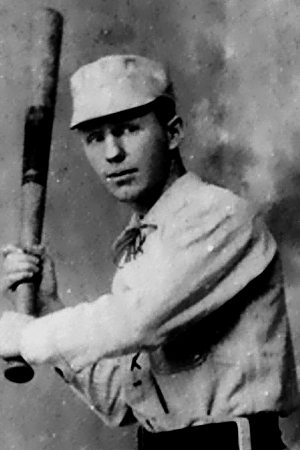
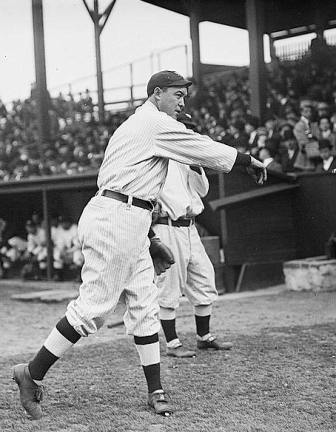
Paul Radford--found the horseshoe

Paul Radford–found the horseshoe

The horseshoe hung at the South End Grounds until the ballpark was destroyed by fire on May 15, 1894

Baucher said Red Sox owner James Aloysius Robert “Bob” Quinn, whose club had been a perennial doormat since he took ownership in 1923, was so desperate for a winner that he was trying to locate the missing horseshoe.

“Bob Quinn would like to know what happened to that horseshoe.  The president of the Red Sox even went so far as to put an ad in the Boston papers the other day offering a reward for the shoe stamped with the name of ‘O. Winn.’  Bob is trying every possible means to give Boston a winning ballclub.  And if a horseshoe will help he wants it.”

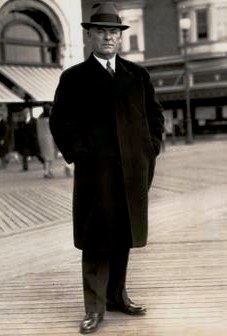
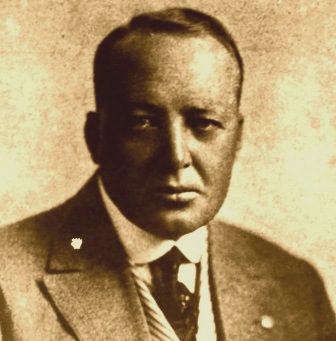
Bob Quinn

Bob Quinn

Quinn never found the horseshoe, and never had a  winning Red Sox team.

“The Annual Spring Typhoon has Blown up Again”

10 Nov

In 1906, despite being, on paper, the best team in the American League, the Cleveland Naps finished in third place, five games behind the Chicago White Sox.  The club had three twenty game winners—Addie Joss, Bob Rhoads, and Otto Hess—and four regulars who  hit better than .300—Napoleon Lajoie, William “Bunk” Congalton, Elmer Flick and Claude Rossman,

As the 1907 season approached, Grantland Rice, of The Cleveland News said the team was now a victim of the success of individual players:

“The annual spring typhoon has blown up again—only a bit worse than ever.  In nearly every big league camp well-known athletes are breaking into loud roars over the pay question, and there promises to be quite a batch of trouble before the storm is cleared away.  In this respect Cleveland heads the list, although Napland owners have one of the highest salary lists in the game.  Up to date Joss, Rhoads, (Terry) Turner and Congalton have balked, while neither Flick nor Hess have returned a signed contract.”

Grantland Rice

Grantland Rice

Rice said the club’s negotiations with Joss and Rhoads were at an impasse, and “just how it will end is a matter of uncertainty.”  The news of the team’s trouble signing their stars led Rice to a discussion of “just how much a major leaguer is supposed to receive for his work each season.”

“When a youngster breaks in he is never given less, or at least rarely so, than he received in his minor league berth.  His pay is boosted the greater part of the time, so the average debutante’s pay roll ranges closely around $1,800 providing he is recognized as a first class man.

“If he delivers the goods his first year out he can figure on about $2,000 or $2,200 for his next season, and then if he becomes established as a regular, his income should be somewhere in the immediate vicinity of $2,500.

“From this point upward it all depends on their rankings as stars.  You hear considerable about $5,000 contracts and better, but as a matter of cold, clammy fact, but few athletes draw over $3,000 or $3,500 at best.

“In the epoch of war salaries $3,500 or $4,000 was a fairly common figure—but no more.

“A high grade slabman along the order of Joss, Rhoads (Nick) Altrock, etc…will rake in about $3,000 now.  In his weekly letter in a Toledo paper (The News-Bee), Joss stated that he was offered $3,000 for his season’s work, but that he demanded more—just how much he didn’t say.

“George Stone drew $3,000 or there abouts last season and now that he has fought his way to the premiership in the School of Slugs he demands $5,000, at which figure Mr. (Jimmy) McAleer balks strenuously.  (Johnny) Kling also asks for $5,000, which sum Charley Murphy says he will not receive.

“From this list we jump to the drawing cards of the game such as Lajoie, (Honus) Wagner, (Wee Willie) Keeler, (Christy) Mathewson, etc…

“Lajoie’s figures range somewhere above $8,000 and something shy of the $9,000 mark.

“Wagner is supposed to draw $5,000 for his work.

“If reports sent out from New York are true, Keeler’s yearly ante is close to $6,000, while Mathewson draws in about the same.

Hal Chase won’t miss $3,500 very far.

“But the high-priced teams are not pennant winners by a jug full.

(Charles) Comiskey and (Connie) Mack hew closer to the line than any others in Ban Johnson’s circle, and yet these two have won more pennants than all the rest put together.  In fact, they’ve gotten away with all but the two which Boston nailed.

“Mack had one of the cheapest, if not the cheapest team in the American League through 1905, the last year he copped the pennant.  Comiskey’s world champions of 1906 were far below Cleveland, New York or even Boston, from the salary standpoint.

“It looks funny to figure the cellar champions of a league paid more than the holders of the world’s title, but if all the figures were given out, the White Sox payroll would loom up under Boston’s to a certainty.

“The full salary cost of running a big league club varies from $40,000 to $50,000, or maybe $55,000 a year.

“A set of figures somewhere between $45,000 and $50,000 would probably hit at the higher average.

“There was a time when Boston’s payroll was close to $70,000 and (Clark) Griffith’s was only a notch below—but this golden era for the ballplayer has passed.”

According to The Washington Post, Joss had earned $3,2000 in 1906 ($2,700 and a $500 bonus), the biography, “Addie Joss:  King of Pitchers,” said he was paid $4,000 in 1907—Joss, who was 21-9 with a 1.72 ERA in 1906, followed that up with a league leading 27 wins (against 11 loses, with a 1.83 ERA) in 1907.

Addie Joss

Addie Joss

Fellow twenty game winners Rhoads and Hess both saw their production slip (15-14, 6-6), and only two regulars—Flick .302 and Lajoie .301—hit better than .300, and the team’s batting average slipped 28 points from the previous seasons.

The Naps finished fourth in 1907.

Independence Day 1918

4 Jul

In June of 1918 it was announced that King George V would be attending, and throwing out the first pitch, at the July 4 baseball game between the United States army and navy teams.

The Associated Press (AP) said the King was looking for help to prepare for the Independence Day game:

“At the request of the king, Arlie Latham, a former big league player, who will umpire the Fourth of July game, sent the King a regulation baseball a few days ago.  The next day Latham called at the Palace and gave the King a brief lesson as to how the baseball should be handled.

“The proper form in pitching was rather hard for the King to get, as he is used to a different type of throw, as in cricket, but the royal student finally began to get something approaching the right swing.  Since then the King has been practicing in his spare moments on a blank wall in the garden.

“The King has expressed hope that he will be able to throw out the ball in a manner to win the approval of the American Rooters.”

Whether he actually practiced is unknown, but the plan to have the King throw out the first ball was scrapped, and he instead walked the ball out to Umpire Latham and handed it to him.

Regardless of how the ball was delivered, the press in London understood the gravity of the gesture.

The London Daily Telegraph said:

“Nothing will give greater pleasure across the Atlantic than the appearance of the King and Queen at the baseball match at Chelsea.  That mark of understanding and attention will appeal to the heart of America far more than any military pageant or review, and the handing out of the ball by the king to the players—an act which will seem trivial and incomprehensible to the German mind—is likely to do more toward the removal of century-old prejudice in America against the name ‘King George’ than the ablest diplomacy or the most persuasive rhetoric.”

The London Daily Sketch memorialized the event in verse:

“King George III with cannon balls

Did try our brothers to dispatch.

King George V the country calls

To watch with him their baseball match.”

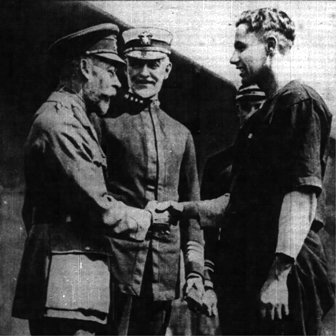
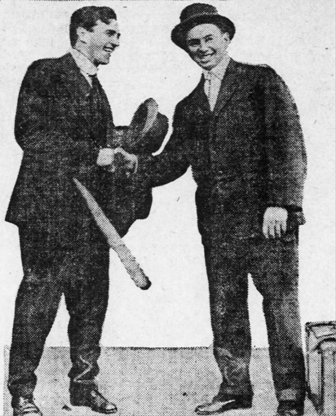
King George shakes hand with Lt. Mims, captain of the army team.  Admiral Sims looks on.

King George shakes hand with Lt. Mims, captain of the army team. Admiral William  Sims looks on.

On July 4 The AP reported:

“King George saw the American Army defeated in a hard-fought baseball game today.  The opponent of the army team was one picked from the American navy, which won by a score of 2 to 1.  Every one of the nine innings had its thrills for the more than 18,000 spectators.

“King George followed the game closely and enjoyed it thoroughly.  At the close he turned to Admiral (William) Sims and General (John) Biddle and expressed the hope that he might be able to see many more games before the summer was over.

“Few sporting events since the war began have aroused so much interest and discussion in London as yesterday’s game.  Independence Day was on everybody’s lips…For several days the newspapers have been explaining baseball and the people of London have been pouring over the mysteries of the American national game, instinctively trying to find in it some parallel to their own cricket.  Many persons went to the game armed with clippings and drawings of a diamond showing the position of the players.

“American soldiers and sailors on their way to the game were heartily cheered.  Outside the entrance to the Chelsea football grounds, where the game was played, the people lined the streets for several blocks and crowded the windows in their homes to watch the crowds.”

Hall of Famer Herb Pennock pitched for the navy team which was captained by his Red Sox teammate Mike McNally.

Most sources reported the the attendance as 18,000.  McNally, in a letter to Red Sox Secretary Larry Graver said in a letter reprinted by The AP:

“There were some 50,000 people present.  King George, Admiral Sims, and a lot of other ‘big guys.'”

The wire service summed up the importance of the day:

“No Country ever celebrated the national anniversary of another country as the people of Great Britain today celebrated the Fourth of July.”

Lost Team Photos–Harry Hooper’s 1907 St. Mary’s College Team

13 Jun

1907stmarypix

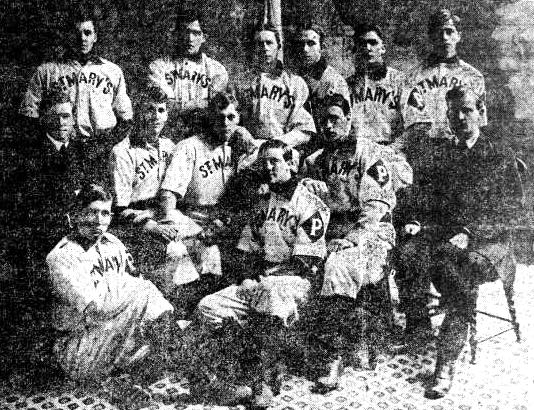
Harry Hooper, Hall of Fame outfielder for the Boston Red Sox and Chicago White Sox (standing, far right), with the 1907 St. Mary’s College team.  The team, often called the best  pre-World War I college ballclub, also included pitcher Harry Krause (center, second from left), and catchers Charlie Enwright (center, second from right), and Ed Burns center, middle)–The San Francisco Chronicle referred to the 5′ 10′ Krause and the 5′ 6″ burns as “the midget battery.”

Coach Hal Chase is in the middle row, far left.

After the team’s final game The San Francisco Call said:

“The Phoenix baseball team of St. Mary’s, satisfied that it has conquered the world, has closed its schedule for the season.”

How good were they?

“Perhaps no California team has ever had a more brilliant career than has the 1907 phoenix.  Pitted 27 times against only first class teams, professional and amateurs, it has escaped from the fray without once having to bow to a foe.  Moreover, but 39 runs have been scored against the Phoenix all season, while the Phoenix players have scored 137.  No team made more than four runs on them, and this occurred but three times.  They have had eight shutouts, eight one run games, seven two run victories (and) one three run contest.”


Hooper, left, with Red Sox teammate George "Duffy" Lewis after the 1915 World Series

Hooper, left, with Red Sox teammate George “Duffy” Lewis after the 1915 World Series–the two were also teammates at St. Mary’s in 1906.

Bugs Versus Rube

9 Jun

Charles Emmett Van Loan is largely forgotten today, but from 1904 until his death in 1919 at age 42, he was considered one of the best, and most prolific, baseball writers in the country.

Grantland Rice said:

“Van Loan was not only a great story-teller.  He was the first writer of his time to see the romance and the glamour of the game, mingled with its amazing fund of humor.”

In addition to his newspaper work, which included stints in New York, Los Angeles, San Francisco and Denver, Van Loan wrote some of the most popular fictional baseball stories of his era—he published four collections of baseball stories, as well as anthologies of  boxing, horse racing and golf stories.

Hugh Fullerton said of his death:

“Van is dead and sports in America have lost their greatest interpreter, and fighters, ball players and athletes of all grades have lost their best friend.”

Charles Emmett Van Loan

Charles Emmett Van Loan

As sports editor for The New York American in 1910 Van Loan weighed in on the two most interesting pitchers of the day:

“In the race for distinction as the most erratic, eccentric and daffy pitcher of the big leagues “Bugs” Raymond is leading by an elbow over our old friend, G. Edward Waddell, known to fame and a portion of Missouri as the ‘Rube.’

“The battle between G. Edward and the ‘Bug’ has been a close one.  For many moons Waddell held the belt for eccentricity.  If he had not been a wonderful baseball player, he would have been chucked to the minors years ago, but pitchers like Waddell are so rare that they must be preserved to the game.

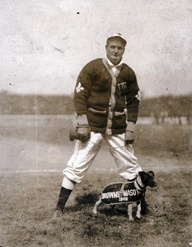
Bugs Raymond

Bugs

“We all remember the sorrows of Oscar Hammerstein and the many tribulations forced upon him by his singers, particularly the women.  A woman with a wonderful voice can get away with anything short of murder in the first degree by blaming it upon her artistic temperament—which is an ornamental means for plain unadorned meanness, selfishness or petty spite.  If a soprano got jealous of another woman and tore up her contract, refused to sing her roles and played smash generally, she could blame it upon her artistic temperament, and all was forgiven.  What a shame the ‘Rube’ never heard about that artistic temperament thing!  It would have been such a handy alibi for him.

“Waddell stuck in the limelight by virtue of his ability to throw a ball like a streak of lightning and throw it twice or three times in the same place…In between his marvelous performances the ‘rube’ established himself as a bartender, a side-show barker, an actor, a sidewalk comedian, a rough and tumble battler and a very competent vessel for mixed liquors.  He enjoyed the proud eminence of supreme bug of the major leagues and everything was lovely until ‘Bugs’ Raymond happened along.  ‘Bugs’ went the ‘Rube’ one better.  Waddell in his balmiest days never had a special keeper engaged, by the management to take him gently but firmly by the elbow and steer him away from temptation.

Rube

Rube

“You never heard of a chorus girl with an overdose of the artistic temperament.  A chorus girl who develops tantrums is fired immediately.  You never heard of an eccentric ballplayer who was not a good one, a bad player would be sent  back to herd the cows and coax the potatoes out of the ground with a hoe.

“’Rube’ and ‘Bugs’ are good players.  Raymond almost drove (John) McGraw to despair last season, for the chubby manager realized what an excellent pitcher ‘Bugs’ really was and tried to save him for the hard finish of the season.  McGraw even went so far as to try physical persuasion upon his big, but erratic southpaw, upon the ground that a swift wallop on the nose is sometimes better than a ream of argument.

“McGraw tried to keep money out of Raymond’s hands, figuring that if he never had a cent he would be forced to keep his nose dry.  No use.  ‘Bugs’ had too many friends.  His admirers were always ready to purchase even if ‘Bugs’ had to look up in the air when it came his turn to deliver orders to the gent in the apron.

“’Turn him loose on a desert isle’ said one of the players, referring to Raymond, ‘and inside of an hour he will turn up with a flask on his hip.  How he does that I don’t know.  I guess he just charms that liquor.

“Unfortunately George Edward must retire from the competition.  Boston is his hoodoo town,  By reason of matrimonial troubles ‘Rube’ was forced to cut Boston off the pitching list, and just as the clouds cleared away, bing! On the elbow with a red hot liner, and out goes the ‘Rube’ with a broken bone.

“At the end of last season nobody believed that McGraw would make another effort to reform the thirsty Raymond.  It was thought that in spite of the fact that ‘Bugs’ won 600 percent of his games, he would get the gate, but McGraw decided to try it again on the ground that a pitcher of Raymond’s class is worth saving at any cost.  McGraw is willing to gamble.  Should he fail to straighten out the big spitballist everybody will say:  ‘I told you there wasn’t any use.’  On the other hand, should the private keeper keep ‘Bugs’ away from the disturbance water and his pitching be up to his usual standard, everyone will say that McGraw showed excellent judgment in hanging on to his souse paw through thick and thin.

“An erratic pitcher is a hard strain on a team.  The men behind him never know when he is going to blow up and they are kept on a strain whenever the eccentric one works.

“When ‘Bugs’ goes into the box in good condition, his head clear and his muscles hardened by work, he pitches good enough baseball for any man’s club.  His keeper has been steering him away from the gin mills for some time—touch wood everybody—and at last accounts McGraw was hopeful that the problem had been solved.

“They say the ever loving ‘Rube’ is consumed with jealousy because ‘Bugs’ has a keeper.  A man with a broken wing doesn’t really need a keeper.”

McGraw was unable “to straighten out the big spitballist,” Raymond’s big league career was over by June of 1911, and he was dead just more than a year after that.  Waddell’s major league days were over within weeks of Van Loan’s observations, and he was dead less than four years later.

Franz Hosp

19 May

Franz Philip Hosp Jr. was born in Cincinnati in 1884 (some records, including cemetery documents and his grave say 1883).  His father was a well-known landscape architect and horticulturist who moved the family to Riverside, California in 1888.

The elder Hosp was responsible for many projects in the Southwest and Southern California; he is probably most famous for his landscaping of Victoria Avenue in Riverside, which remains a tourist attraction and is listed on the National Register of Historic Places, and for planting the gardens at the El Tovar Hotel in Grand Canyon National Park.

The family also ran a successful nursery in Oceanside, California  and Hosp worked with his father while playing baseball in the San Diego area.
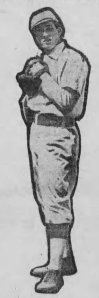
Franz Hosp

Franz Hosp, 1909

In December 1906 he pitched for the San Diego Pickwicks (sponsored by San Diego’s Pickwick Theater) of the California Winter League.  Hosp quickly caught the eye of West Coast professional teams; according to The Los Angeles Times he had a streak of thirty-one scoreless innings that winter and “fanned as many as eighteen men in a single game.”

The Los Angeles Herald said two teams, The Butte Miners and the Seattle Siwashes of the Northwestern League, had already “tried hard to secure his services,” when he pitched against the Los Angeles Angels of the Pacific Coast League (PCL) in a February exhibition game in San Diego.

The Associated Press said the game

 “(W)as the first time in which he allowed as many as seven hits, and after doing, he took a brace and fanned out an equal number of Los Angeles’ best artists, with the result being that the Angels’ manager (Henry ”Hen”  Berry) lost no time in annexing Hosp to his own aggregation.”

Hosp said he chose to play with Los Angeles so he could continue working at the family business in Oceanside.

The pitcher was a popular member of the Angels.  The Los Angeles Herald said:

“Pitcher Franz Hosp is not only one of the best twirlers in the coast league, but he is also one of the most genial boys who ever donned a baseball uniform.  Hosp has forgotten more baseball, young as he is, than many of the swell headed players who roar at decisions have ever learned.”

The Times said of Hosp, who also played second base and shortstop:

“His work in the field and at the bat is equal to his performance in the box making him one of the best all-around men in the business.”

Hosp was 12-7 with a 2.73 ERA for the PCL champion Angels in 1907; he also played 13 games in the infield, hitting just .105.
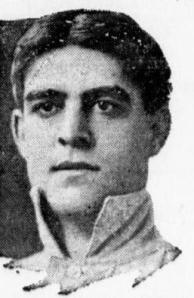
franzhosppix

Franz Hosp

The following season Hosp (22-14 2.02), William “Dolly” Gray (26-11, 2.12), and Walter “Judge” Nagle (24-10, 1.94) led the Angels to another league championship.  On July 26 he had the most embarrassing moment of his career during a game with the San Francisco Seals.  The San Francisco Chronicle said:

“Hosp of the Angels established a unique and startling record yesterday afternoon, one that bids to stand a long time in baseball circles.  Not only did he literally pitch the game away, but in one inning—the fourth—he walked six men and hit two more, forcing in five runs across the plate without a hit by the Seals.  Not a ball was hit out of the diamond.”

(Just more than a year later, August 28, 1909, Hosp’s former teammate Dolly Gray, now a 30-year-old rookie with the Washington Senators, set the major league record by walking eight Chicago White Sox batters in one inning).

Hosp was 16-14 in August of 1909 when he was signed by the Cincinnati Reds for 1910.  Within a week he hurt his arm and did not pitch again for the remainder of the season.

By the spring of 1910 there were conflicting reports about the condition of Hosp’s arm.

The Times reported that according to Angels pitcher Andy Briswalter:

“Franz Hosp, whose clever pitching resulted in his purchase by the Cincinnati Reds, may never play ball again.”

The Herald said Hosp:

“(D)enied with considerable indignation the story purporting to be an interview with Andy Briswalter.  According to this story, Hosp’s arm was said to be in such condition that he might never play ball again.  While Hosp was overworked last season, when his sensational work with the Seraphs resulted in his being purchased by the Cincinnati Reds, he stated that he never felt better and that the rest of the past winter overcame any inconvenience or ill effects.  Hosp says he hasn’t seen Briswalter in six months.”

Hosp joined the Reds in Hot Springs, Arkansas, and was first tried in the outfield.  The Cincinnati Enquirer said after his debut:

(Ward) Miller and (George “Dode”) Paskert will have a dangerous rival for the right field job in the person of Franz Hosp, the recruit from the coast, who was signed as a pitcher but will try out as a fielder…He is a right-hand hitter, a good-sized, well-built fellow, and meets the ball square on the nose.  He came to bat five times; made a double and two clean singles…He showed a lot of speed on the bases and appears to be a kid who will bear watching.”

When finally given a chance to pitch, against the Boston Red Sox on March 25, after two scoreless innings, he gave up four singles and doubles to Harry Lord and Tris Speaker, in the third, resulting in three runs and was lifted for a pinch hitter the following inning.

Hosp was also tried in the infield where he “has made a fine impression.”  But it wasn’t enough to stick with the Reds.

The Herald reported in early May:

“Franz Hosp, one of the best pitchers who ever worked in the Coast League and who was released to Los Angeles by Cincinnati almost ten days ago because his pitching arm is kafluey for a time is warming up with the Angels every day and Hen Berry thinks he will get back into pitching form again soon.  He is a crack infielder too, and a heavy sticker, so it is dollars to cents that he will not be idle long.”

Hosp made his mound debut for the Angels on May 20; he pitched a complete game, losing 5 to 3.  The Herald said:

“Hosp showed excellent form for a pitcher who has been out of the game as long as he, and with a weak and sore arm, and he should be able get back to his best form with a little patience and careful slab work until his arm is ripe again.”

The paper was wrong, the extent of Hosp’s activity as a pitcher after that game was four innings in three games over the next year and a half.

Hosp was released by the Angels on June 15, along with Briswalter, who The Times claimed four months earlier had said  Hosp’s arm was shot; Briswalter had not recovered from a hip injury sustained during the 1909 season, he developed Tuberculosis of the injured bone and died in 1912.
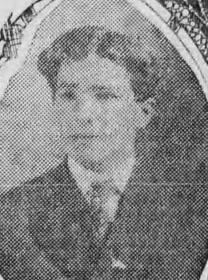
Andy Briswalter

Andy Briswalter


Hosp continued to play for a decade.

Within weeks he was signed to play shortstop for the Vernon Tigers.   He hit just .240 for the Tigers, but The (Portland) Oregonian called him “a nifty fielder.”

Hosp became the team’s regular shortstop, through their move to Venice, California.  He hit .261 in 1911, and 1912, .255 in 1913, and then slipped to .208 in 1914.  He was released before the 1915 season and played for the Wichita Witches in the Western League.  He returned briefly to the PCL at the end of 1915, but was released by the Oakland Oaks prior to the 1916 season.  He returned to the PCL in 1918, playing for four teams over the next three seasons, ending his career after 56 games with the Salt Lake City Gulls in 1920.
Hosp returned to Southern California where he played and managed for semi-pro and industrial league teams and lived in Los Angeles.

On June 30, 1928 he was killed in a car accident on Coast Highway (US 101) 16 miles north of Oceanside.

Birmingham Sam— The Last Great Star of the Indianapolis Clowns

9 May

Richard “King Tut” King’s illness, which led to his retirement in the spring of 1959, left a void with the Indianapolis Clowns— James “Nature Boy” Williams, was popular, but the barnstormers needed someone with Tut’s charisma. They finally found him in 1962; his name was Sam Brison

The St. Petersburg Times described one of his early appearances:

“A limber fellow raced across the diamond in an Indianapolis Clowns uniform and bowed in the direction of teammate first baseman extraordinary Nature boy Williams. Minutes later fans were acclaiming a new star…he shows signs of becoming one of the all-time greats”

Given his resemblance to King Tut; Clowns owner Syd Pollock originally billed Brison “King Tut Jr.” The excellent book “Barnstorming to Heaven: Syd Pollock and his Great Black Teams,” by Pollock’s son Allan and James Riley told the story of how he was renamed. Brison approached Pollock and said he had a problem with the name:

“Problem is, I didn’t even know the man. Seen his picture on the bus. He musta been popular as God. Fans keep asking me, ‘How your Daddy?’ and I got no answer. Ain’t gonna lie, ain’t gonna say, ‘My Daddy fine, I’ll tell him you be asking.’ These people feel strong about King Tut.”

When Pollock asked if he just wanted to be called by his name, Brison said:

“No, I figure Birmingham Sam be good. People ask me about how Birmingham is. I can answer that.”

“Birmingham Sam” would be the team’s biggest draw during his 16 years with the team. Following the example of many members of the clowns throughout the team’s history, Brison also spent his winters playing basketball, first with Goose Tatum’s Harlem Road Kings, then with the Harlem Globetrotters—on the basketball court he said he “had a lot of showmanship about me…I did a lot of hollering.”

Never one for understatement, some of Pollock’s press releases described Brison as “one of the best fielders in baseball and hailed as the greatest comedian in sports history. “ The six-foot-two-inch Brison would often begin performances by “unpacking” two-foot-seven-inch Dero Austin from a suitcase at home plate.

In 1969 The Associated Press reported that Brison had secured a spring training tryout with the Boston Red Sox’ Carolina League Winston-Salem franchise, Brison told the wire service:

“I just want to get to Florida and show my stuff.”

Brison said an injury earlier in the spring had led to the cancelation of a tryout with the Cincinnati Reds—there’s no record of the whether the Red Sox try out ever took place. The Associated Press story incorrectly said the 29-year-old Brison was only 23—his real age would have made it especially difficult for him to break into organized ball in 1969.

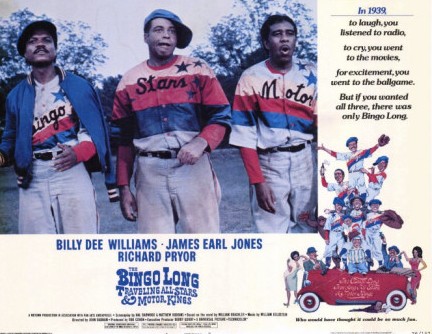
In the mid-1970s, during the beginning of the end for the Clowns as a viable business, Negro League Baseball was becoming the subject of renewed interest. In 1976, the barnstorming tradition of teams like the Clowns made the big screen with the release of “The Bingo Long Traveling All-Stars and Motor Kings.”

In order to add authenticity to the baseball scenes stars Billy Dee Williams, James Earl Jones and Richard Pryor were joined in the cast by Leon “Daddy Wags” Wagner (two-time American League all-star), Jophrey Brown (pitched in one game for the 1968 Chicago Cubs, then became a well-respected Hollywood stuntman), and “Birmingham” Sam Brison.

“Bingo Long” movie poster

Brison played shortstop Louis Keystone in the movie.

“Birmingham” Sam Brison is seventy-two-years-old and lives, appropriately enough, in Birmingham, Alabama.

Update: “Birmingham” Sam Brison passed away in April of 2014.

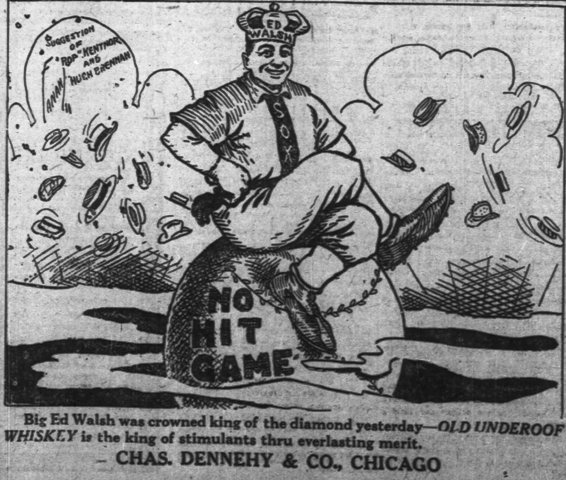
Lost Advertisements–“Big Ed” Walsh No-Hitter, Old Underoof Whiskey

7 Mar

walshnohitter

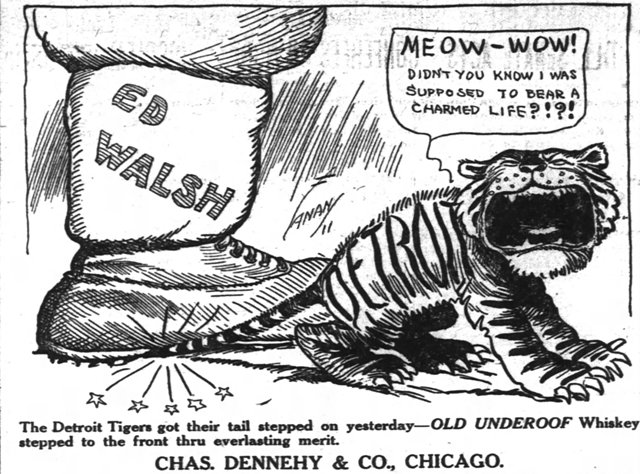
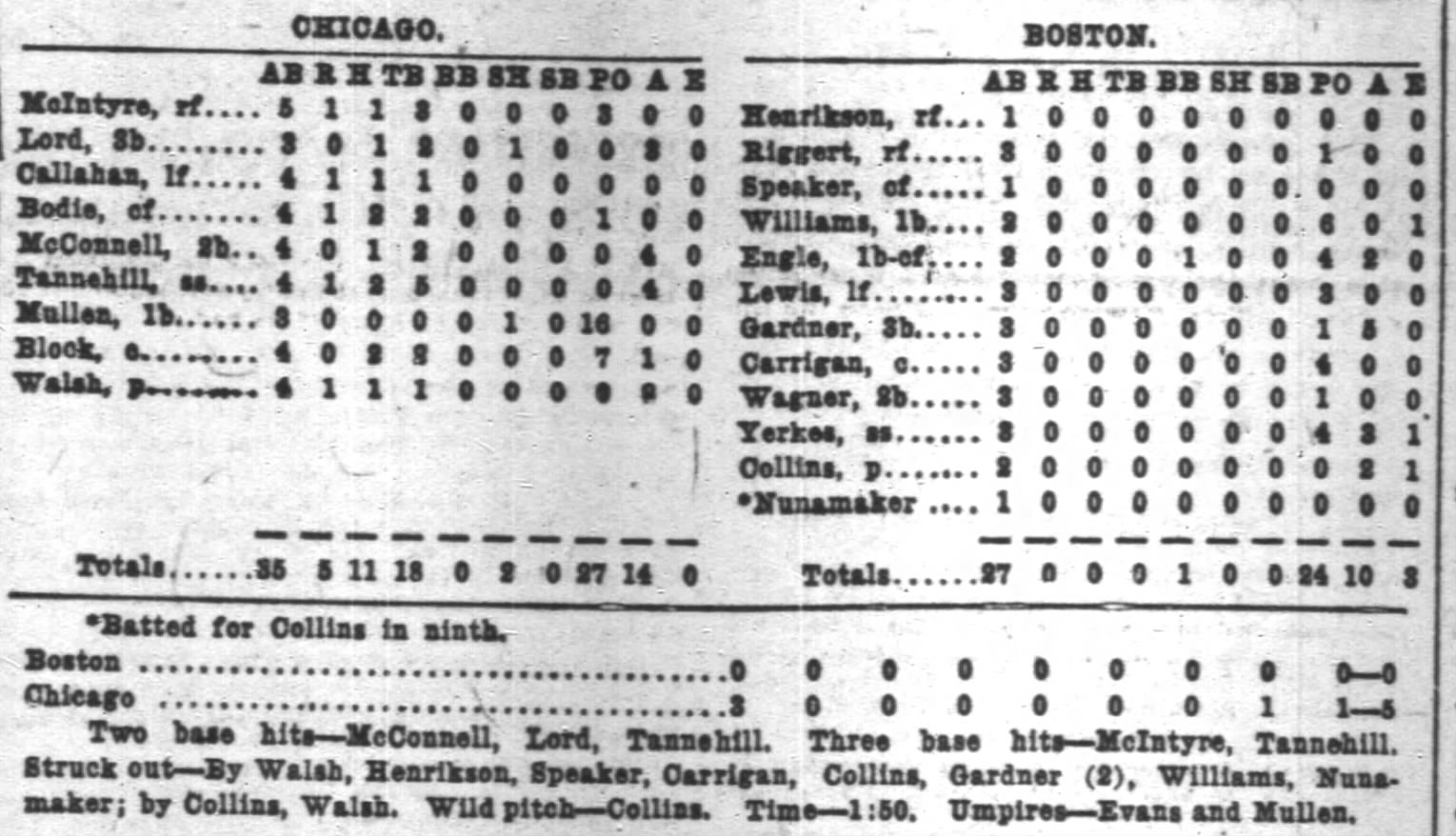
A 1911 advertisement for Old Underoof Whiskey which appeared in Chicago News papers the day after Edward Augustine “Big Ed” Walsh threw his first nine-inning no-hitter (Walsh gave up no hits in a 5-inning 8 to 1 victory over the New York Highlanders on May 26, 1907).  Walsh had also thrown five one-hitters, including one two weeks earlier against the Detroit Tigers.

Old Underoof commemorated that effort as well:

walshonehitter

The Chicago Inter Ocean said of the no-hitter:

“Never in His long and brilliant career in the box has Big Ed shone as he did on the hill in yesterday’s game.”

Walsh faced only 27 Boston Red Sox batters, but gave up a fourth inning walk to Clyde Engle.  The Inter Ocean said umpire Billy Evans’ call that led to the walk was “questionable.”  And that two plays helped preserve the  spitballer’s no-hitter:

“(T)here were two times when the monarch of all he expectorated nearly lost his charm.  Once the ball was driven out right over the second sack.  Lee Tannehill rushed back, scooped it up and threw out the runner easily.  Lee must have had a margin of at least three-eighths of an inch in his favor.  Another time Ping Bodie saved Ed’s dinner dishes by rushing in with the greatest burst of speed at his command and licking up the ball a little above his ankles.”

The other incident of note in the game took place in the third inning when Tannehill hit a line drive to right center field in the third inning, The Chicago Tribune said Red Sox center fielder Tris Speaker and right fielder Olaf  Henriksen came together “in a terrific collision” which knocked both unconscious and out of the game.  Henriksen got the worst of it, and was briefly hospitalized with a broken rib and injured ankle.  Speaker “was first to recover and emerged from the accident with a severe shaking up and a lame shoulder.”

The box score

The box score

Walsh came one batter away from joining Cy Young and Addie Joss as the only two modern era pitchers to that point to throw a perfect game–Joss’ perfect game was against the White Sox in 1908, Walsh was pitching for Chicago and only gave up one hit and struck out 15 in the loss.

Ed Walsh circa 1904

Ed Walsh,  circa 1904

Walsh was 27-18 with a 2.22 ERA in 1911, leading the league with 255 strikeouts, in a league-leading  368 and two-thirds innings.  The Hall of Famer pitched until 1917 compiling a 195-126 record and 1.82 ERA.

He supported making the spitball legal again after the pitch was banned after the 1920 season.  The Associated Press quoted him in his 1959 obituary:

“Everything else favors the hitters.  Ball Parks are smaller and baseballs are livelier.  They’ve practically got the pitchers working in straitjackets.  Bah!  They still allow the knuckle ball and that is three times as hard to control.”

Irwin Howe

3 Feb

irwinhowebb


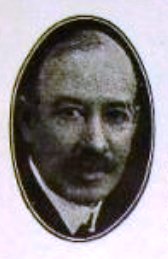
Irwin M. Howe founded Howe News Service in Chicago in 1910, published an annual record book and served as the primary statistician for several minor leagues, including the Western and the Three-I leagues.

After the 1911 season American League Secretary Robert McRoy, who was responsible for compiling statistics, left the league office to become an executive with the Boston Red Sox.  President Ban Johnson named Howe the league’s statistician; he served in that capacity until his death in 1934.

Irwin Howe

Irwin Howe

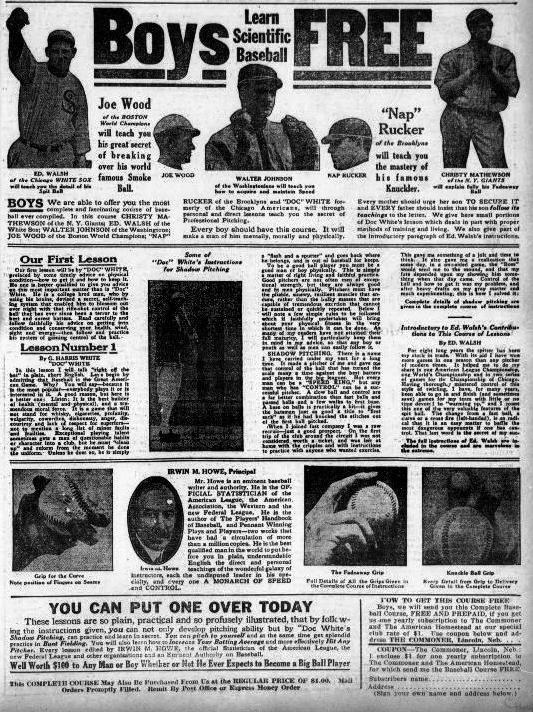
Howe leveraged his position with the American League.  He became the official statistician of several more leagues, including the American Association and the Federal League, wrote a nationally syndicated column called “Pennant Winning Plays,” became editor of the annual “Wilson Baseball Record and Rule Book,” and published an instructional pamphlet for kids.

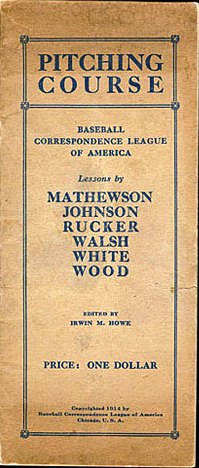
The ad from 1914 pictured above is for Howe’s 48-page “Pitching Course,” which he called “A correspondence school for baseball.” The pamphlets sold for one dollar, but were also offered by many small newspapers across the country for free to children who signed up subscribers (the pictured ad is from The Commoner, the Lincoln, Nebraska newspaper published by William Jennings Bryan).

Boys Learn Scientific Baseball Free

Ed Walsh of the Chicago White Sox will teach you the detail of his Spit Ball

Joe Wood of the Boston World Champions (1912) will teach you his great secret of breaking over his world famous Smoke Ball

Walter Johnson of the Washingtonians will teach you how to acquire and maintain speed

“Nap” Rucker of the Brooklyns will teach you the mastery of his famous knuckler

Christy Mathewson of the N.Y. Giants will explain fully his Fadeawy Ball

These lessons are so plain, practical and so profusely illustrated, that by following the instructions given, you can not only develop pitching ability…You will also learn to Increase Your Batting Average and more effectively Hit Any Pitcher.  Every lesson edited by Irwin M. Howe, the official statistician of the American League, the new Federal League and there organizations and an Eminent Authority on Baseball.

The pamphlet also included a lesson from Guy Harris “Doc” White of the Chicago White Sox “which deals in part with proper methods of training and living.”

Howe claimed his one dollar pamphlet was “Well worth $100 to any man or boy whether or not he ever expects to become a big ball player.”

Howe's pamphlet

Howe’s pamphlet

Perhaps Howe’s most famous contribution to baseball was certifying Ty Cobb as a .400 hitter in 1922.

On a rainy day in New York (years later in his book “Baseball as I Have Known It,” Fred Lieb said the game took place in August—contemporary newspaper accounts say it was May 15), Cobb beat out a ground ball hit to Yankee shortstop Everett Scott.  John Kieran of The New York Tribune (he was later a columnist with The New York Times) was the official scorer.  He charged Scott with an error.

Fred Lieb of The New York Telegram, who was compiling The Associated Press (AP) box score for the game, credited Cobb with a hit.  Lieb said “Considering the soggy field and Cobb’s speed, I gave it a hit.”

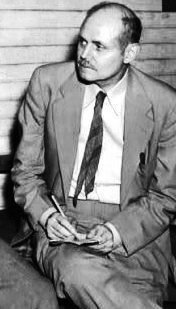
Fred Lieb

Fred Lieb

Howe’s habit was to rely upon The AP box score that appeared in the Chicago newspapers while awaiting the arrival of the “official” box score by mail.

When compiling the final averages at the end of the season Howe chose to accept Lieb’s scoring of the game rather than Kieran’s, and released a statement with the season’s final statistics:

 “I noted that the averages reached from my official scoring sheets had Cobb hitting .3995 (actually .3992).  With the unofficial averages giving him .401, I felt how can we deprive this great player of a third .400 average over a fractional point.”

Ban Johnson approved Howe’s decision.  Lieb, as president of the Baseball Writers Association of America’s (BBWAA) New York chapter was put in the uncomfortable position of attempting to repudiate his own scoring judgment.  He argued that the Kieran’s “official” score should be accepted, and said in a statement:

“Obviously, when there was a difference of opinion between the two scorers, the official and not the unofficial decision, should have been accepted.  There would be no further need for members of the Baseball Writers Association serving as official scorers if they were regulated to a secondary position.”

In a letter to Lieb, Ban Johnson said the “official” box score “was plainly in error in one other particular” besides the Cobb “hit” and “I requested a report of the official score of the game of May 15.  Mr. Howe had previously made a careful investigation of all facts surrounding the scoring.”  Johnson also chided Lieb asking “Are we to believe that you reversed your judgment at this late date?”

The 1923 “Wilson Record and Rule Book”–edited by Howe–contained an asterisk next to Cobb’s .401 average and noted that it was “not recognized” by the BBWAA—Howe was secretary of the association’s Chicago chapter.

The asterisk eventually disappeared, and Ty Cobb, thanks to Howe’s decision,  remains a .400 hitter for the 1922 season.

“Evans, who, at the Least, is Incompetent”

2 Dec

William George “Billy” Evans was nicknamed “The Boy Umpire” when he was hired by the American League at the age of 22.  After 21 seasons  he became a front office executive, working for the Cleveland Indians, Boston Red Sox and Detroit Tigers; he was also president of the Southern Association, authored two baseball books and in 1973, 17 years after his death, was elected to the Baseball Hall of Fame.

Billy Evans

Billy Evans

But during his first season as an umpire, 1906, he was not held in high esteem in Chicago.

On September 10 the White Sox were in second place, a game behind the New York Highlanders.  The Sox trailed the Tigers 2 to 1 in the 9th inning.  Chicago shortstop George Davis laid down a bunt and was called out at first by Evans.  Every Chicago paper said Evans beat the throw by “at least a step.”

The call precipitated a near riot.  The Chicago Tribune said:

“Instantly a shower of bottles from the first base bleachers drove the umpire, coacher, and players away from the vicinity of the base.”

After the next two batters were retired:

“Evans walked off the field amid another volley of bottle from the third base stand.”

The Tribune and The Chicago Inter Ocean said Evans and fellow umpire Tommy Connolly were mobbed by fans as they attempted to leave the ballpark with a police escort.  Both papers said “one or two blows” from fans connected with the umpire during his retreat.

The Inter Ocean said, “Evans has been the most heartily reviled arbiter that ever worked in any league.”

The Tribune said two weeks earlier Evans cost the Sox a game in Philadelphia.  After Chicago scored two runs in the top of the sixth inning to take a 5 to 4 lead, Evans “let the Athletics take advantage of his inexperience,” and stopped the game on account of rain with two men out in the bottom of the inning.  The Inter Ocean said, “(Sox Manager Fielder) Jones and (second baseman Frank) Isbell nearly came to blows with the umpire and members of the Athletic team.”

After a half hour, the game was called and the score reverted back to the end of the 5th inning, giving Philadelphia a 4 to 3 victory.

The next day, September 11, the Sox played the St. Louis Browns at South Side Park.  Evans worked the game along with Jack Sheridan.  The newspapers said Sox owner Charles Comiskey had discontinued the sale of “bottled goods” at the park that day.

The Browns won 7 to 3, and the Chicago press put much of the blame for the loss on the rookie umpire.

The Tribune said:

President (Ban) Johnson’s persistence in sending Evans, who, at the least, is incompetent, is giving baseball a black eye in Chicago.  Half the crowd believes the charges that Evans is working under instructions from Johnson to beat Chicago.  These charges undoubtedly are founded on mere prejudice, yet, had Evans been under instructions and trying to beat Chicago, he could not have done better than he did yesterday.”

The Inter Ocean said the Browns “were aided and abetted by Umpire Evans, the boy wonder…Why Ban Johnson insists upon sending the joke to officiate at important games is more than any sane man can see.”

But the Evans’ most ardent critic was William A. Phelon, sports editor of The Chicago Journal:

“Umpire Evans is the worst that ever yet came down this or any other pike in the history of the modern universe…And Ban says he is the best in the game.  We are not selfish and we are willing to let some other city endure him.  We can get over the shock of his removal.  If he doesn’t move he may have a statue down on the lake front, a statue 200 feet high made of bottles.  Give us liberty, give us death, give us any old thing, but, by the snakes of old Ireland, give us an umpire!”

Phelon also said Evans “seems to be a gentlemanly individual, whose place in life is evidently a long ways from the profession of umpiring.”

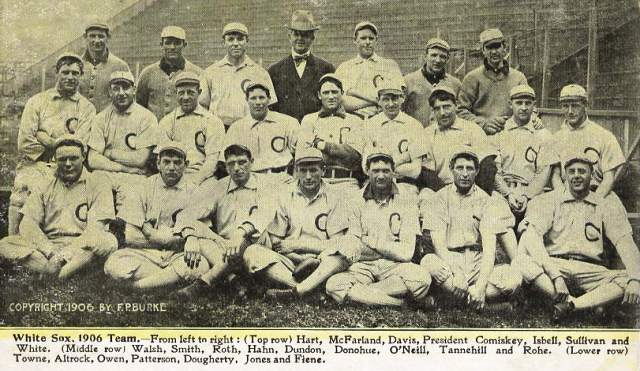
1906 White Sox

Despite the blame heaped on the young umpire in the press, the White Sox went 17-7 the rest of the season and won the pennant by three games.  They went on to beat the Chicago Cubs 4 games to 2 in the World Series.

Things got better for Evans as well.  He worked his first World Series in 1909—the youngest umpire to do so– and participated in five more from 1912 to 1923.  He was the third umpire to be elected to the Hall of Fame; Connolly and Bill Klem were the first two.