Tag Archives: Chicago Cubs

“Let us try and meet his Qualifications as a Gentleman”

20 Apr

In April of 1947, with Jackie Robinson on the verge of making his debut with the Brooklyn Dodgers, the “Dean of Negro sportswriters,” Frank Albert “Fay” Young said in The Chicago Defender, Robinson would not be the only one under a microscope:

“It is hoped that the Negro fans, who want to see Robinson remain in big-time baseball will learn to treat him as another top-notch ball player.  He should not be made to carry the added burden of ‘the race problem’ on his shoulders.  He will have a hard enough job playing the brand of baseball expected of any other big leaguer.

“Two things are important.  The first is the conduct of the Negro fans.  Drinking is out in all National League parks.  Profane language, if you have to use it, reserve it for your home where your wife will ‘brain’ you.

Robinson will not be on trial as much as the Negro fan.  The Negro fan has been the ‘hot potato’ dodged by managers who would have taken a chance by signing a Negro player.”

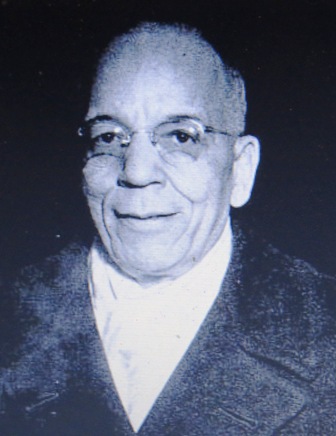
Frank "Fay" Young, The Chicago Defender

Frank “Fay” Young, The Chicago Defender

Robinson was scheduled to make his first appearance in Chicago on May 18.  Young said:

“We hope that Sgt. Harness and ‘Two-gun Pete’ and some other brave Negro policemen will be assigned to the Cubs Park.  Harness and ‘Two-gun’ know the hoodlums.”

Harness and ‘Two-gun Pete’ were Robert Harness and Sylvester Washington, two well-known African-American police offers.  Harness rose to the rank of commander before he retired.  Washington, who The Defender called “Chicago’s toughest black cop,” and carried two pearl-handled revolvers, suffered a different fate.  The paper said in 1951, he was “(A)sked publicly to explain how he had been able to purchase a $40,000 building specifically, and maintain an expensive auto and flashy clothes on a $3,600 per year salary.  ‘A lot of people give me things…I am a great policeman,’ he is reported to have replied.”  Washington resigned from the force that year.

In addition to their behavior at the ballpark, Young also implored fans:

“Robinson is against being singled out before a game to be called to home plate and be presented with numerous gifts.  There will be eight other Dodger players in the game.  Jackie insists on being treated as a ballplayer trying to make good and not a Negro ballplayer seeking special privileges.

“The Negro fan can help Robinson.  The Negro fan can ruin him.  Robinson is an American citizen, an ex-army officer, a ballplayer and a gentleman.  Let us try and meet his qualifications as a gentleman.  If you Chicagoans have got to raise a lot of hell, do a lot of cussing, go somewhere else.”

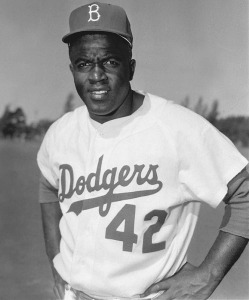
Jackie Robinson

Jackie Robinson

Robinson’s Chicago debut—a 4 to 2 Dodger victory–drew 46,572 fans, the then largest crowd to attend a game at Wrigley Field since field seating was discontinued in 1936.  The Defender reported that the fans were “Orderly,” focusing their only derision towards “one Dixie Walker who was the recipient of plenty of boos.”  The fans maintained order even when Robinson was called out on strikes with the bases loaded in the fifth inning “much to his disgust and to those who sat behind home plate and though the umpire should have called the pitch a ball.”

Fred Downer

30 Mar

In August of 1953, “Jet Magazine” said people were talking about:

 “That affectionate hug baseball immortal Ty Cobb gave Chicago news dealer Fred Downer.”

By then, Frederick Douglas Downer was largely forgotten.

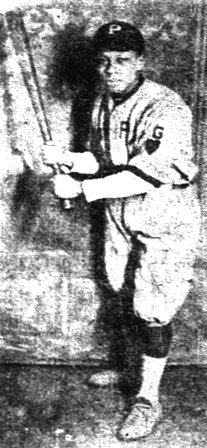
Before playing as a professional, he was, according to The Pittsburgh Courier, the “star” of the Morehouse College baseball team in Atlanta.
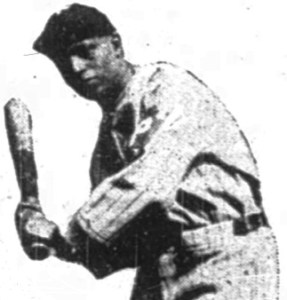
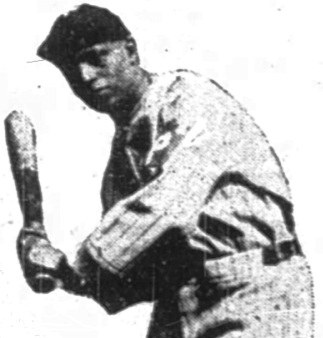
Fred Downer

Fred Downer

His first professional experience was with the Atlanta Cubs in 1919—the team was colloquially called the Atlanta Black Crackers for years, and newspapers referred to them by both names until 1922 when the “Cubs” name was permanently dropped.  Years later, Downer told The Chicago Defender he also played with the Knoxville Giants during this period.

In 1921, Downer and Gerard Williams, his teammate at Morehouse and with the Atlanta Cubs, went north to join the Pittsburgh Keystones.   Downer is listed by several sources as the club’s manager, but in the 1970s he told The Defender said he “played under the management of (William) Dizzy Dismukes.”  Dismukes was also the Keystones’ manager the following year when the team entered the Negro National League.

Downer appears to have played independent and semi-pro ball during 1922.

While not listed on any extant rosters, Downer spent some time with the Cleveland Tate Stars in 1923—in an interview given in 1972 Elander “Vic” Harris, who debuted with the Tate Stars as an 18-year-old that season, said Downer, who he had gotten to know in Pittsburgh was with the club. Harris told The Van Nuys (CA) News he tried out as a first baseman but was installed in the outfield, leading to Downer being let go.

Downer returned to Pittsburgh and assumed management of the Keystones in 1924. After a single season in the Negro National League, the Keystones had dropped out, and the team continued operations as a semi-pro club.

Downer, and another Georgian who also played with the 1923 Cleveland Tate Stars, Mathis Williams, managed and played for the semi-pro version in 1924 and ’25.  The Keystones barely treaded water financially.
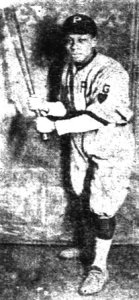
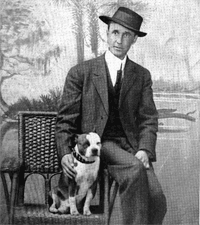
Mathis Williams

Mathis Williams

In June of 1925 The Pittsburgh Courier said:

“Of the colored clubs in action, none but the Homestead Grays are making any money…Fred Downer and his Pittsburgh Keystones are practically a thing of the past.”

Within a month the team disbanded and Downer was through as a player.

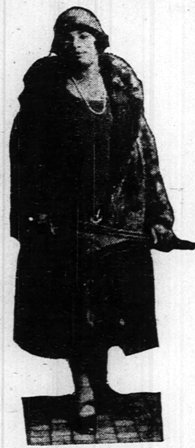
The following year, he and his wife Marian Foster Downer, a reporter for The Pittsburgh Courier—and later The Chicago Defender— relocated to Chicago.  She continued to write for The Courier’s society page while Fred began covering baseball and boxing for the paper and acted as The Courier’s Midwest circulation manager.

In addition to covering most major Midwest-based events–including the annual Negro League East-West All-Star Game and several championship fights—Downer started the Atlas News and Photo Service which distributed content to Black newspapers.


Marian Foster Downer also wrote about sports for The Defender.  Her article on the 1935 East-West All-Star Game—won by the West 11-8 on George “Mule” Suttles’ three-run home run after Webster McDonald walked Josh Gibson to face him—was headlined:
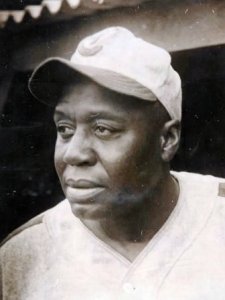
Mule Suttles

Mule Suttles

Our Girl Scribe Sees Mule’s Hit
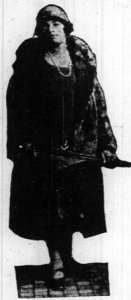
Marian Foster Downer--The Defender's "Girl Scribe"

Marian Foster Downer–The Defender’s “Girl Scribe”

In 1945, Fred Downer proposed a new path for Negro League baseball, writing in a Chicago-based magazine called “New Vistas:”

“If the white majors won’t hire good colored players, then the Negroes should build their own parks and hire the best players regardless of race.  This will build up competition, and competition will break down many barriers.”

Downer was covering the World Series at Wrigley Field in 1932 and was on-hand for Babe Ruth’s “called shot.”  The Courier’s Sports Editor Wendell Smith said Downer was “One of Babe’s most staunch and loyal supporters,” and was determined to find the ball.

 “His decision to find the ball Ruth hit resulted in a search that has been a detailed and intensive as any by a ‘G-man.’  Fred scoured every baseball haunt in the Chicago area.”

According to Smith, Downer expanded his search throughout the Midwest, with no luck.

Downer later told The Chicago Defender he found the ball and bought it from a former Chicagoan who had moved to Michigan.  He called the ball “one of his prized possessions.”

The actual provenance of the ball and its current whereabouts are unknown.

Twenty-one years after he witnessed Ruth’s “called shot,” Downer—by then he had left  The Courier and owned three newsstands on Chicago’s South Side– was again at Wrigley Field where he had an encounter that raised questions in the Black press about a long-held opinion of another baseball legend.

Ty Cobb stopped in Chicago on his way back to his California home from Cooperstown, to attend a game between the Cubs and the Brooklyn Dodgers.

Downer was born in Cobb’s hometown of Royston, Georgia in 1896.  The Defender said of the relationship between the two:

“(Downer) got his start in baseball chasing fly balls for Ty Cobb as a kid.”

The California Eagle said:

“Downer was raised around the Cobb’s household in Royston, Georgia.”

Wendell Smith, then with The Chicago Herald-American, said of Cobb’s day at Wrigley:

“(T)here were two things said about (Cobb) that were, apparently, the gospel truth:

  • He could hit any living pitcher.

  • He would hit any living Negro.”

Smith said the second “truth” was “merely a matter of hearsay.”

And, he said:

“(H)e gives no indication today of intolerance.”

In addition to his embrace of Downer, Cobb was asked which players on the field most impressed him:

“’Why that catcher there, he said, pointing to Roy Campanella.  ‘He’s the best ball player I’ve seen in many a year…That fella’s a great catcher,’ he volunteered.  ‘The very best in the game.  He reminds me a little of Roger Bresnahan.  If he can stick around for five or six more years they’ll have to put him alongside the game’s all-time catchers.’”

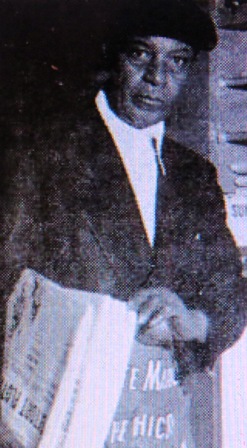
Downer continued to operate his newsstands well into his 70s.  At the corner of 53rd Street and Lake Park Avenue, The Defender said, he would:

“(S)ell morning newspapers (and) answer hundreds of questions pertaining to his long career.”
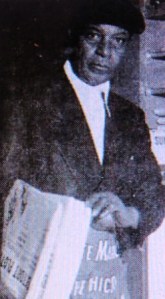
Fred Downer

Fred Downer

Frederick Douglas Downer died in Chicago on March 10, 1986.

“Walsh? Ed Walsh? Who’s he?”

16 Mar

On May 1, 1912, as a result of a contract dispute, press operators walked off or were locked-out, of their jobs at 10 Chicago newspapers.  The following day, drivers and newsboys walked out in sympathy, and ultimately three more unions joined.

The dispute, which at times became violent, lasted until November.

The New York Times said at one point during the strike’s first week, less than 50,000 copies of the city’s four morning newspapers—limited to just four pages each– were distributed to a metropolitan area with a population of nearly four million.

Every Chicago paper, with the exception of The Day Book, Edward Willis Scripps’ advertisement free, pro-labor publication, suffered decreases in circulation and were forced to publish smaller editions for the first weeks of the strike.

The strike also had a negative impact on two other Chicago institutions.

The New York Tribune noted that during the first two weeks of May, while most of Chicago’s papers provided a minimum amount of baseball coverage, attendance at White Sox Park (renamed Comiskey Park the following season) and West Side Grounds “dropped off 30 percent.”

Writing in The Chicago Herald-Record after that paper had again begun publishing full-sizes editions in mid-May, sportswriter Hugh Fullerton was not surprised that less baseball news resulted in smaller crowds at the ballparks:

“Various major league club owners have, during their recent years of great prosperity, declared that baseball was independent of the newspapers.  Indeed such intellectual giants as C. Webb Murphy and Charles Ebbets have practically stated that the newspapers depended upon baseball for their circulation.  Of course, printing baseball news makes circulation for newspapers; else the newspapers would not print it.

“But during the last ten days Chicago has given the club owners and object lesson in the relative values.  There has been a strike of several trades allied with the newspaper printing business which resulted in crippling ten big dailies, restricting their circulation, besides cutting down the amount of baseball news and gossip printed.  The instantaneous result must have been a shock to the baseball magnates, who thought that the game was independent of the advertising.”

Hugh Fullerton

Hugh Fullerton

Fullerton, like the New York paper, said the attendance decline was “at least” 30 percent.

“I scouted around the city and discovered, rather to my amazement, that the lack of baseball news was received rather as a welcome relief from a necessary evil than as a bereavement.  A score of men told me they were glad they couldn’t get the news, that their employees could attend to business and that there was less waste of time…The town, which has been wild over the sensational race of the White Sox, cooled off in an instant.  I met fans who had been rooting wildly, who inquired whether or not the team was in town.”

Fullerton’s observations led him to the “startling proof that interest in baseball largely is manufactured by the papers.”

And, if the strike were to result in a further decrease in baseball news:

“I really believe that if the newspapers were to be suppressed for a couple of months, and one was to mention Walsh, people would say, ‘Walsh?  Ed Walsh?  Who’s he?’”

Ed Walsh

Ed Walsh

While the strike continued through the entire season, circulation and baseball coverage increased in June, giving no one the opportunity to forget Chicago’s best pitcher.

Attendance at Chicago’s ballparks rebounded as well.  By season’s end, Walsh’s White Sox drew more than 600,000 fans, despite a 20-34 swoon in June and July and a fourth place finish; while 514,000 fans  came out for the third place Cubs.

“A Pork Jinx on the Club”

4 Mar

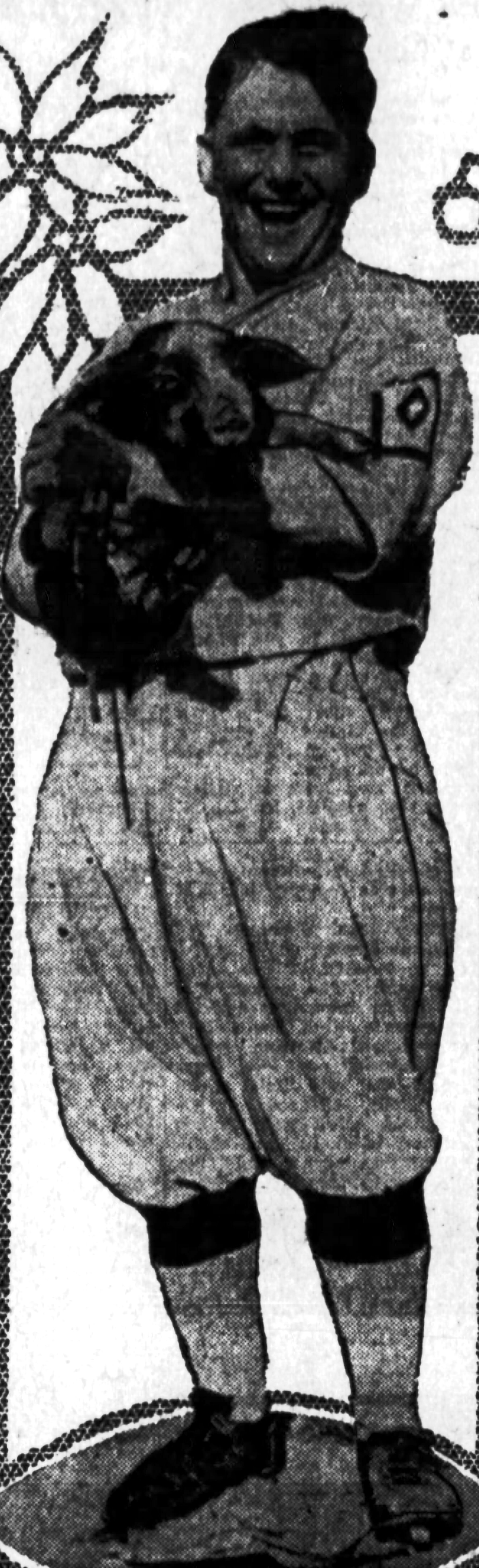
To mark the Oakland Oaks 1916 home opener, J. Cal Ewing, generally known as “The Godfather of the Pacific Coast League” presented Oakland Manager Harold “Rowdy” Elliott with a gift:  The Oakland Tribune said:

“Ewing gave to the Oaks a mascot in the shape of a real ‘rooter,’ a yearling pig, which was kept on the players’ bench throughout the game.”

The Oaks cruised to a 10-2 victory over the Portland Beavers in front 15,000 enthusiastic Oakland fans, and the superstitious among the ball club and their fans attributed the win to “Margaret,” the new mascot.

The Oaks played well in April, and were in first place until the end of the month, but by mid May they were 16-21, fifth place in the six-team league—and it was noticed that no one had seen “Margaret” for some time.

Rowdy Elliott with Margaret

Rowdy Elliott with Margaret

The Tribune was convinced the disappearance of the pig was responsible for the team’s decline:

“Suffering Pigs!  A Pork Jinx on the club!…The wrathful shade of a female porker is responsible for the Oaks’ slump.  Maggie the Pig was compelled to shuffle all her porcine coil to the accompaniment of roast apples and cranberry sauce, which is no nice way to treat an emblem of Good Fortune.”

The paper also noted that the club’s secretary also worked as a cook, and Ewing should have “had sense enough” to take that into account before presenting the team with a pig.

And, the paper composed a poem:

O Maggie, dear, and did ye hear

   The news that’s goin’ round?

The Oaks are losing day by day

   And soon they won’t be found.

They’ve ingestion badly.

   And they’re looking for the hook

They can’t play ball at all, at all

   Since you went to the cook.

It became a bit of a scandal.

The Oaks quickly denied that the pig had been eaten:

“They say the trouble is that they haven’t eaten her pigship.  Margaret was given to the ground keeper to preserve, and that personage refuses to produce the pig.”

Rowdy Elliott was quick to tell The Tribune the reason for the club’s slump had nothing to do with the team mascot.  He said the blame was clearly the result of another team’s mascot:

“Elliott says the Oaks’ slump can be attributed to no less a personage than Erasmus Pinckney Johnson.”

Johnson was the mascot for Frank Chance’s Los Angeles Angels—The Los Angeles Times said the young African American boy had been found, on Chance’s orders, in late April in order to break a week-long losing streak. The Times routinely described “the good luck charm” in the most racist terms.

Part of the “luck” Johnson brought was derived from rubbing the young mascot’s head.  Elliott claimed during the Oaks’ last series in Los Angeles he had rubbed the Johnson’s head “the wrong way.”

“Since that moment Rowdy has had little luck, winning only two games out of the last fourteen played.  Erasmus hasn’t been doing much for the Angles of late, for Chance’s crew has been in a slump, but he has at least succeeded in wrecking the Oakland club.”

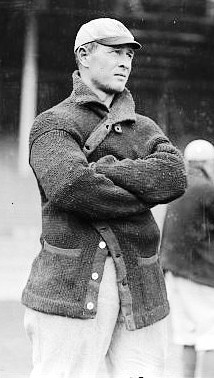
Frank Chance

Frank Chance

So desperate were the Oakland fans for answers that The Tribune enlisted two prominent fans, an Alameda County Circuit Court judge and a local doctor to do a “psychological study of the team.”

“Judge Wells…has come to the conclusion that the team has worked itself into a jinx, and needs the aid of the pig mascot they had in the opening game to pull them through.  Dr. Halsey agrees that hits, pitching fielding and psychology and all may have something to do with it, but the real reason, according to the doctor, is that the boys are suffering from a nervous breakdown that followed shortly after seeing such an enormous crowd at the opening game.”

Things quickly got worse for the Oaks. Elliott was suspended for several days for throwing a ball at umpire Jack Doyle, and the team continued to lose in June, and then for the rest of the season.

At the end of July Elliott was sold to the Chicago Cubs, George “Del” Howard, who had purchased the club during the season, replaced him as the Oaks’ manager.

Oakland finished 1916 in last place with a 73-136 record.  Chance’s Angels overcame their May slump and easily won the championship with a 119-79 record.

Margaret the pig was never heard from again.

Lost Pictures: Dode Paskert Plays Ice Baseball

20 Feb

dode

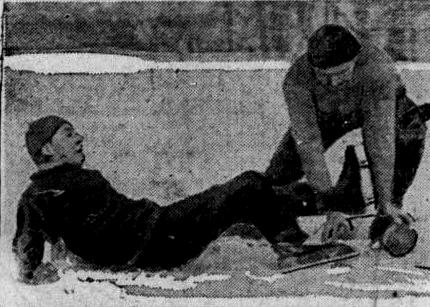
Ice Baseball made its first appearance in the winter of 1866 when the Athletic Baseball Club of Philadelphia played a game on ice against a “picked nine’ comprised of other local baseball teams.  Games were played occasionally over the next 50 years, but the game never caught on.

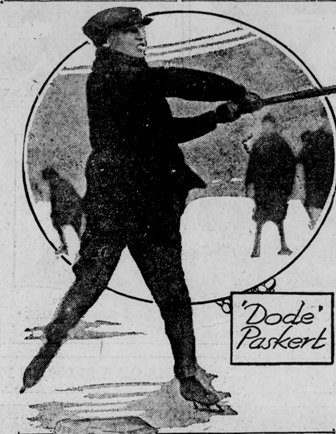
That changed briefly the winter following the 1919 season when the game, along with Ice Boxing, became a sensation in Cleveland.  The Cleveland Press said the biggest star among the “many ice baseball clubs” was Chicago Cubs centerfielder, and Cleveland native,  George “Dode” Paskert “an expert skater (who) says the exercise he is getting is going to put him about a month ahead” of his teammates.

Unidentified Ice Baseball players in 1920 photo.

Unidentified Ice Baseball players in 1920 photo.

The paper said Cleveland Indians players Bill Wambsganss and Jack Graney played, and that Ray Chapman, the Indians second baseman,  and William “Pickles” Dillhoefer, catcher for St. Louis Cardinals would be joining teams.

Indians Manager Tris Speaker umpired at least one game.

Like every other short-term Ice Baseball craze, the game quickly faded in Cleveland.

Dode Paskert

Dode Paskert

As for Paskert, after a horrible 1919 season–.196 in 88 games–the 38-year-old seems to have benefitted from his “extra exercise.”  He hit .279 in 139 games in his final full season in the major leagues.


“Why not bring one of the Big League Teams to Phoenix for Spring Training?”

18 Feb

Grover Cleveland Land was a visionary.

In 1921 The Arizona Republican asked the question the former catcher had put to several major league clubs:

“Why not bring one of the big league teams to Phoenix for spring training?”

Land, a Kentucky native who spent the last 40 years of his life as a Phoenix resident,  was encouraged by a report that Connie Mack had announced that his Philadelphia Athletics would no longer train in Lake Charles, Louisiana;  according to The Associated Press Mack said “certain things happened at the Louisiana resort last March that handicapped” the team.

Grover Land

Grover Land

Land, the former catcher for the Cleveland Naps and the Brooklyn Tip-Tops, said:

“I have played ball in every section of the country, and I have yet to find a climate more suited for baseball training than I find right here in Phoenix…Major league managers have been sending their players to Texas and other southern states for many years and I can safely state that there is not one manager entirely satisfied with the present training camp sites.  Fully one-third of the training period is hampered by rain and storms and by the time the training season is ended the players are just beginning to round into shape.”

He said he understood that “local boosters” had made some effort to bring teams to Arizona in the past—the Chicago White Sox, Cubs, and Pittsburgh Pirates had played spring exhibition games in the state several times since 1909—but Land said he would “make an effort to induce one of my manager friends to come down here…I am certain that if one of the managers could be induced to come here for a few weeks Phoenix would have no difficulty getting on the sport pages.”

He said the local chamber of commerce was getting behind the push, and that he had “already written to one of the major league managers and I have been corresponding with several sports writers in the east,’ to make the case for Phoenix.

“If the local fans get behind the move and convince Connie Mack that they want his team here next spring I have every confidence that the Philadelphia Athletics will do their 1922 training in Phoenix.”

Land was a bit overconfident in regard to Philadelphia; Mack chose to take the Athletics to Eagle Pass, Texas in the spring of 1922.

No team would train in Arizona until 1929—the Detroit Tigers came to the state for one season—but chose California the following year.

The Detroit Tigers in Arizona, 1929

The Detroit Tigers in Arizona, 1929

But Land, who died in 1958, lived long enough to see his adopted home become the spring training location for four clubs.

Life on the Road, 1914

6 Feb

In 1914, before beginning his second season as manager of the San Francisco Seals, George “Del” Howard gave the readers of The San Francisco Call a rare look behind the scenes of a baseball team.

Del Howard

Del Howard

“One of the many difficulties which beset a ballplayer is ‘killing’ time while playing away from home…Del Howard was telling only yesterday how the various members of the Seal squad act while on the road.  All the boys are quartered at the same hotel and they usually pass the time in each other’s company.  Card playing for the most part is the favorite pastime, with theater-going running a close second..  There are a few of the San Francisco players who like to hide behind a book, others frequent billiard parlors for a game with the cue, but the majority sit around a table and do their best to deal out pairs.”

Howard even shared the team’s rules for road trips:

“Don’t stay out later than midnight.

Don’t fail to answer 8 A.M. call.

Don’t fail to be down to breakfast by 8:15.

Don’t run around to dances

Don’t play ‘craps’ at any time.

Don’t go over 25 cent limit at cards.

Don’t drink to excess.

Otherwise the players are free to do as they please.”

He said of his “don’ts”:

“We haven’t many rules but the ones we have must be observed.  We don’t tell a player he mustn’t drink nor smoke but we do take action when the privileges are abused.  A player knows best what is good for him and free rein is given him.  A player is allowed to remain up until midnight, if he is in good company, and he is required to be up at 8 in the morning.   There is nothing to do but it is healthy for him to be out of bed.  We breakfast at 8:15.  Very few players eat any lunch and at 6 we go to dinner.  Then there is a long evening to be faced and t is certainly a problem putting in time.”

Howard then described how some of the Seals’ most popular players were “putting in time:”

Howard Mundorff is the life of the club.  ‘Mundy’ is full of fun and the players gather around him and listen for hours while he tells stories and amuses them.  Howard is also one of the card sharks.

Mundorff

Howard Mundorff

Jimmy Johnston is an enthusiastic pool player and he usually can be found at night trying for the 15-ball in the side pocket.  Pete Standridge is also handy with the cue.

Walter Schmidt is quiet and keeps to himself a deal of the time.  He delights in taking strolls and Walter Cartwright, another quiet chap, occasionally accompanies him.

(Jay) Nig Clarke seems to lose himself on every trip and Manager Howard declares that for the life of him he cannot tell just how Nig passes the time.

(Roy) Corhan plays cards pretty regularly, but he spends a lot of his time writing, for he keeps up a continuous line of communication with his better half, when he is on the road, writing consistently every day.

Roy Corhan

Roy Corhan

Charlie Fanning is a bug with the camera and takes pretty good pictures of all the places of interest.  “Skeeter” also knows when to lay down two pair.

“(Albert “Lefty”) Leifield is a very interesting talker and he was a running-mate with Mundorff in amusing the gang.”

Howard said shortstop Harry McArdle was the “most popular player he ever encountered.  Mac has admirers in every town and was kept pretty busy keeping engagements.”

Harry McArdle (sliding)

Harry McArdle (sliding)

As for his time on the road, Howard said, “I walk around and look over things.  I was fortunate in having a well-behaved club last season and did not have any trouble keeping them in line…A busher has the time of his life in a strange town, but a veteran only figures to do something to keep busy.”

After a 104-104 fourth-place finish in 1913, Howard’s Seals—minus Johnston, who drafted by the Chicago Cubs and McArdle, who was traded to the Venice Tigers–behaved themselves well enough to finish third with a 115-96 record in 1914.  The following season he was replaced by Harry Wolverton who led the seals to a 188-89 season, and the Pacific Coast League championship.

Sam Crane on International Baseball

30 Jul

Samuel Newhall “Sam” Crane, like Tim Murnane, turned to sports writing after his career on the field ended.  His involvement in a scandal might have contributed to his departure from the diamond—but contrary to oft-repeated stories it was not the direct result.

Sam Crane

Sam Crane

Crane was named as a respondent in a Scranton, Pennsylvania divorce in 1889—a prominent Scranton businessman named Edwin Fraunfelter (some contemporary newspapers incorrectly said “Travenfelter”) charged that Crane had stolen his wife, and $1500.  Crane had played for the Scranton Miners in 1887 and ’88 and departed the city with Fraunfelter’s wife Hattie in 1889, relocating to New York.  Crane and Hattie Fraunfelter were returned to Scranton to face trial for the theft.

In October of 1889, they were acquitted.  The Philadelphia Times said the two were released and Mr. Fraunfelter was ordered to pay the court costs, and “The congratulations which were showered on the second baseman and the woman made a scene in the courtroom.”

Despite the scandal the New York Giants (twice) and the Pittsburgh Alleghenys were happy to sign Crane in 1890.  The end of his career was more of a result of the 36-year-old’s .179 batting average and diminishing fielding skills—twelve errors in 103 total chances at second base–and, of course, he probably wouldn’t have found himself in Scranton in 1887 and ’88 had his career not already been on a downward trajectory.

Crane immediately went to work for The New York Press upon his retirement and remained one of the most respected sports writers in the country.  He edited the “Reach Guide” from 1902 until his death in 1926.

In 1905 Crane, then with The New York Journal, wrote about the boom in International baseball on the eve of the visit of the Waseda University baseball team:

“The Japanese are nothing if not progressive, and even with their country in the throes of a disastrous war (The Russo-Japanese War) they have found time to devote attention to our national game.”

Crane said the Waseda visit would:

“(M)ark a red letter day in the history of the game,  It will be a sensational era in the life of the sport, and in fact, that of all athletic sports.”

Japan was not alone in embracing the game:

“Baseball is also flourishing in South Africa.  The Transvaal Leader, a progressive newspaper, has taken up the sport and publishes full scores of the games and the records of the players.

“There is a South African baseball association and the players of the different teams can hit the ball, even if they have not yet attained the accuracy and agility in fielding their American cousins have reached.  According to The Leader, out of thirty-seven batsmen who figure in the official  record from July 1 to October 8, twenty-three of them batted over .300…A batter named Suter of the Wanderers was the Lajoie of the league, and he made our own ‘Larruping Larry’s’ record of .381 look like a bush league mark.  Suter’s batting percentage was .535.

“The second batter to Suter was Hotchkiss, also of the Wanderers, who walloped out a base hit every other time at bat, making his average .500…Wonder what the Africans would do with ‘Rube’ Waddell and the Chesbro ‘spit ball?’”

As evidence that the South Africans had “grasped the American style of reporting games” Crane gave an example from a recent edition of The Leader:

“’The diamond was very hard, and, as a consequence, the ball frequently wore whiskers, as some infielders can testify.’”

Crane expressed surprise that baseball had taken such a “stronghold” in an “English possession”  like South Africa:

“Britons, wherever found, look upon the great American game as a direct infringement on the sporting rights as established by cricket.

“’It is only an offshoot of our rounders,’ they are wont to say, and that ancient game is about on the level of ‘one old cat’ and ‘barnball.’

“Englishmen are extremely conservative about their sports, especially of cricket, which is considered their national game, and in their own stanch little island they have always pooh-poohed baseball.  But when the Briton gets away from home influences he becomes an ardent admirer of the American game and is loud in his praise of the sharp fielding it develops.

“In Canada, South Africa and Australia, where there is more hustling, and time is more valuable than in the staid old mother country, the quick action, liveliness and all around hustling of baseball that give a result in a couple of hours, is fast becoming more popular with the colonials than cricket, that requires as many days to arrive at a decision.

“Great strides have been made in baseball in the Sandwich (Hawaiian) Islands.  Honolulu is the headquarters just now, but the game is fast spreading to other localities.  The game has been played in the Sandwich Islands for many years, but it was not until the United States was given possession that it flourished.”

Crane mentioned that his late brother Charles–who died in 1900, and incidentally, married his brother Sam’s ex-wife who Sam divorced before leaving Scranton with Mrs. Fraunfelter) had been the catcher on the team representing the naval vessel the USS Vandalia and frequently played games against teams in Hawaii and Samoa during the 1880s:

“The natives took to the game very quickly and soon learned to enjoy it.  They welcomed every arrival of the Vandalia with loud demonstrations of joy, and there was a general holiday whenever a game was to be played.”

Crane predicted that baseball would continue to flourish in the islands, and throughout Asia, noting that a Chinese player “plays third base on the leading club, and has the reputation of being the best player in the whole league.”

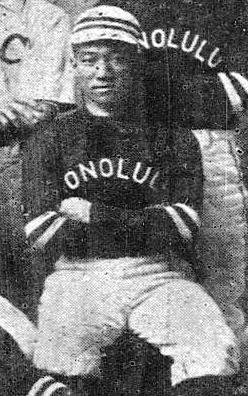
He was likely referring to 20-year-old Charles En Sue Pung, a teammate of Barney Joy’s on the Honolulu Athletic Club team who was also one of Hawaii’s best track athletes.  Pung was rumored to be joining Joy when the pitcher signed with the San Francisco Seals in the Pacific Coast League in 1907, and in 1908 there were brief rumors in the press that Chicago Cubs Manager Frank Chance wanted to sign the Chinese third baseman—neither materialized, and he remained in Hawaii.

Charles En Sue Pung

Charles En Sue Pung

Crane said the growth of the game internationally would be endless; he said the introduction of the game in the Philippines was a prime example:

“(T)here are several enclosed grounds in Manila to which are attracted big crowds…I know they can learn to play the game, for when the (New York) Giants were in Savannah (Georgia) for practice last spring a team of soldiers from a nearby fort played an exhibition game with the Giants.”

Crane said the team was accompanied by “a young Filipino, who, while he did not play on the soldier team, practiced with them and showed surprising proficiency… (The) youth knew all the points of the game as well as Henry Chadwick.”

For Crane, that was enough to declare that “in short order” the Philippines would adopt the game as had, and would, “all people that are blessed with real red blood and progressive.”

Birmingham Sam— The Last Great Star of the Indianapolis Clowns

9 May

Richard “King Tut” King’s illness, which led to his retirement in the spring of 1959, left a void with the Indianapolis Clowns— James “Nature Boy” Williams, was popular, but the barnstormers needed someone with Tut’s charisma. They finally found him in 1962; his name was Sam Brison

The St. Petersburg Times described one of his early appearances:

“A limber fellow raced across the diamond in an Indianapolis Clowns uniform and bowed in the direction of teammate first baseman extraordinary Nature boy Williams. Minutes later fans were acclaiming a new star…he shows signs of becoming one of the all-time greats”

Given his resemblance to King Tut; Clowns owner Syd Pollock originally billed Brison “King Tut Jr.” The excellent book “Barnstorming to Heaven: Syd Pollock and his Great Black Teams,” by Pollock’s son Allan and James Riley told the story of how he was renamed. Brison approached Pollock and said he had a problem with the name:

“Problem is, I didn’t even know the man. Seen his picture on the bus. He musta been popular as God. Fans keep asking me, ‘How your Daddy?’ and I got no answer. Ain’t gonna lie, ain’t gonna say, ‘My Daddy fine, I’ll tell him you be asking.’ These people feel strong about King Tut.”

When Pollock asked if he just wanted to be called by his name, Brison said:

“No, I figure Birmingham Sam be good. People ask me about how Birmingham is. I can answer that.”

“Birmingham Sam” would be the team’s biggest draw during his 16 years with the team. Following the example of many members of the clowns throughout the team’s history, Brison also spent his winters playing basketball, first with Goose Tatum’s Harlem Road Kings, then with the Harlem Globetrotters—on the basketball court he said he “had a lot of showmanship about me…I did a lot of hollering.”

Never one for understatement, some of Pollock’s press releases described Brison as “one of the best fielders in baseball and hailed as the greatest comedian in sports history. “ The six-foot-two-inch Brison would often begin performances by “unpacking” two-foot-seven-inch Dero Austin from a suitcase at home plate.

In 1969 The Associated Press reported that Brison had secured a spring training tryout with the Boston Red Sox’ Carolina League Winston-Salem franchise, Brison told the wire service:

“I just want to get to Florida and show my stuff.”

Brison said an injury earlier in the spring had led to the cancelation of a tryout with the Cincinnati Reds—there’s no record of the whether the Red Sox try out ever took place. The Associated Press story incorrectly said the 29-year-old Brison was only 23—his real age would have made it especially difficult for him to break into organized ball in 1969.

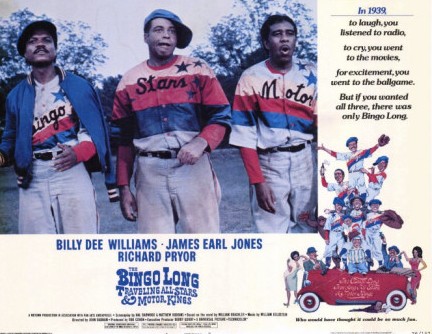
In the mid-1970s, during the beginning of the end for the Clowns as a viable business, Negro League Baseball was becoming the subject of renewed interest. In 1976, the barnstorming tradition of teams like the Clowns made the big screen with the release of “The Bingo Long Traveling All-Stars and Motor Kings.”

In order to add authenticity to the baseball scenes stars Billy Dee Williams, James Earl Jones and Richard Pryor were joined in the cast by Leon “Daddy Wags” Wagner (two-time American League all-star), Jophrey Brown (pitched in one game for the 1968 Chicago Cubs, then became a well-respected Hollywood stuntman), and “Birmingham” Sam Brison.

“Bingo Long” movie poster

Brison played shortstop Louis Keystone in the movie.

“Birmingham” Sam Brison is seventy-two-years-old and lives, appropriately enough, in Birmingham, Alabama.

Update: “Birmingham” Sam Brison passed away in April of 2014.

“Father isn’t Disappointed because I took up Dancing”

4 Apr

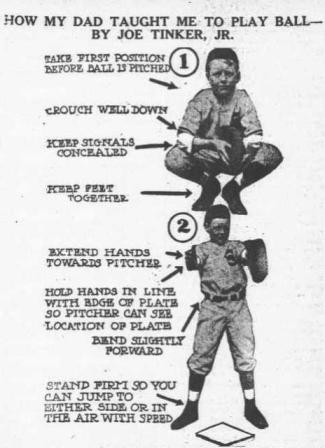
In the spring of 1916 Joe Tinker Jr., ten-year-old son of Chicago Cubs Manager Joe Tinker “wrote” a series of articles that appeared in newspapers across the country.  Tinker’s articles provided tips for playing each position:

“To be a winning pitcher you must have control…The best way to gain control is to get another boy to get in position as a batter then pitch to him.  Don’t throw at a stationary target.”

“(Catchers) Stand up close to the batter and don’t lose your head if the pitcher becomes wild.  Try to steady him with a cheerful line of talk.  Practice every spare moment.”

“Stand close to the plate when batting.  Don’t lose your nerve if the pitcher tries to bean you. Some fellows like to choke their bats or grip the handles about four inches from the end.  My father don’t approve of the style…Don’t argue with the umpire.  If you are hot-headed you hurt your chances to connect with cool-headed pitching.”

“Learn to start in a jiffy.  That is the first point emphasized by my dad in teaching me to run bases.”

“Playing short offers many chances for individual star plays and the work of a good man will have a great effect on the score card.”

Photos of Joe Tinker Jr. demonstrating what his dad taught him

Photos of Joe Tinker Jr. demonstrating what his dad taught him

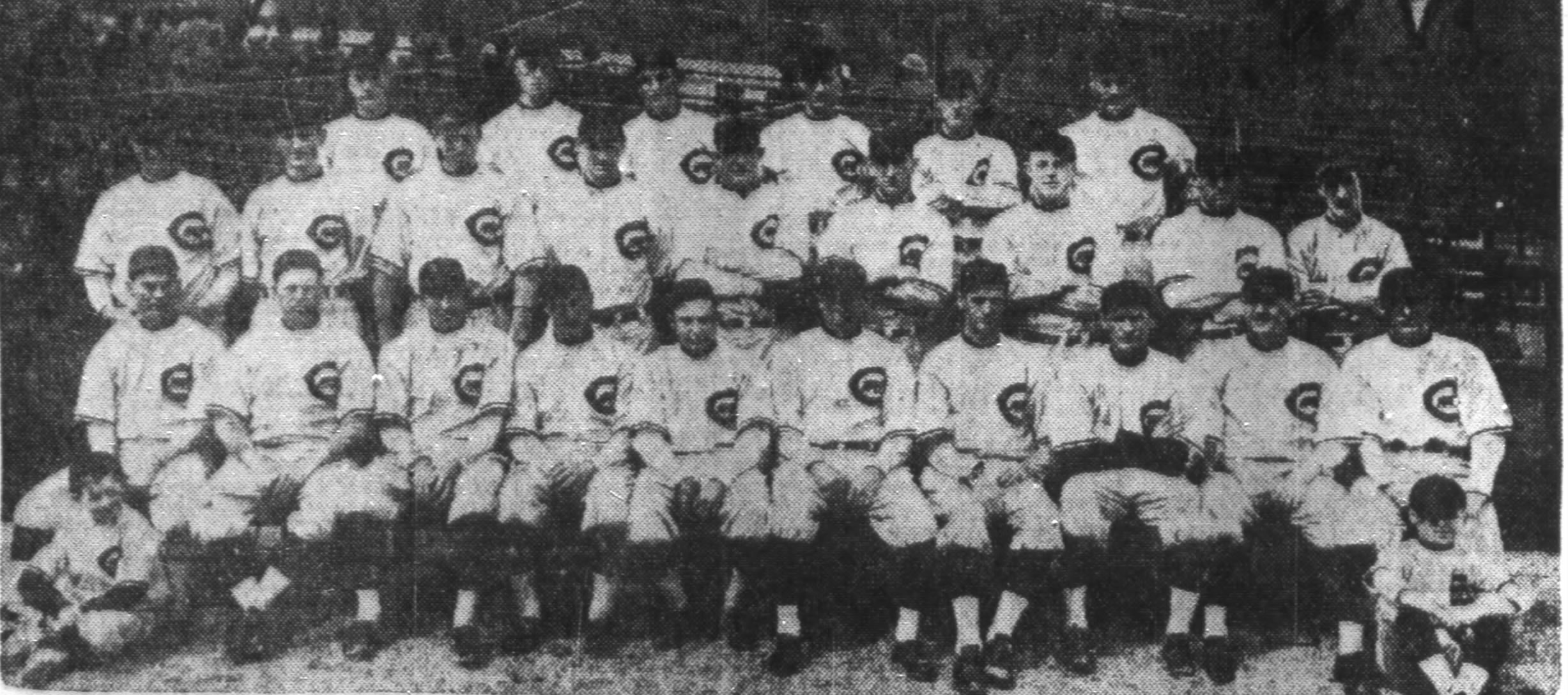
Joe Tinker Jr. and his younger brother Roland were the Cubs mascots during their father’s season as manager in 1916.  In 1924 Chicago newspapers reported that Tinker Jr. was headed to the University of Illinois to play baseball for Coach Carl Lundgren, the former Cub pitcher.  There is no record of Tinker ever playing at the school.

1916 Chicago Cubs.  Joe Tinker Jr. seated right, Roland Tinker seated left.

1916 Chicago Cubs. Joe Tinker Jr. seated right, Roland Tinker seated left.

Younger brother Roland played for two seasons in the Florida State League.

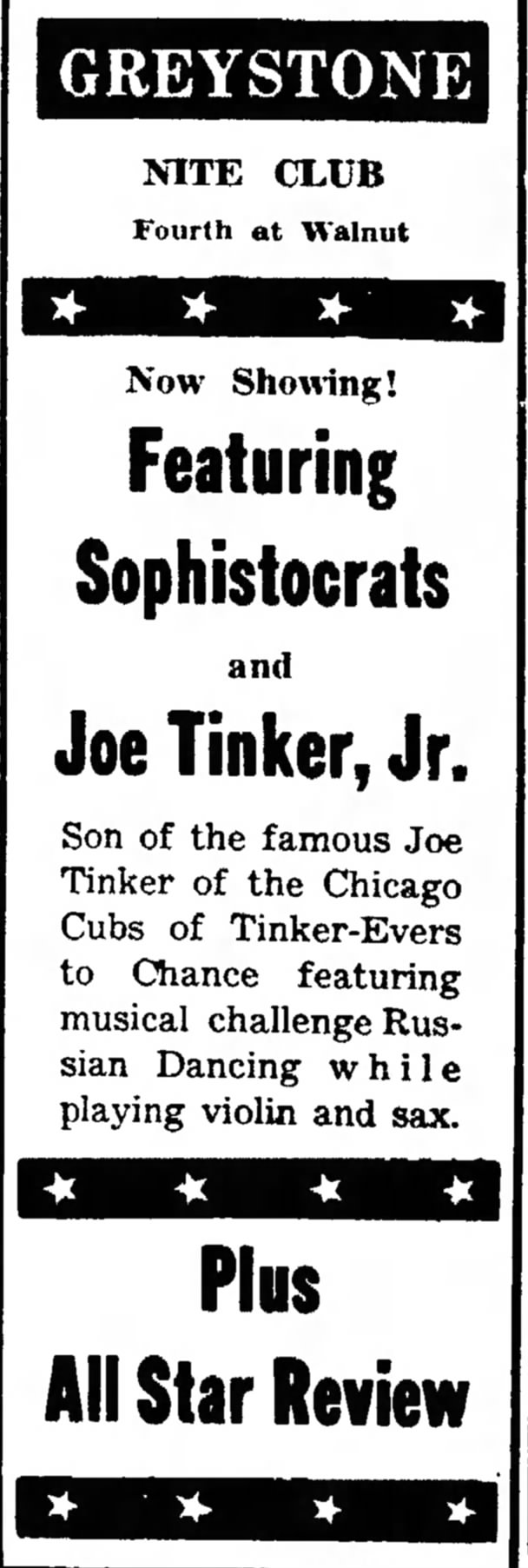
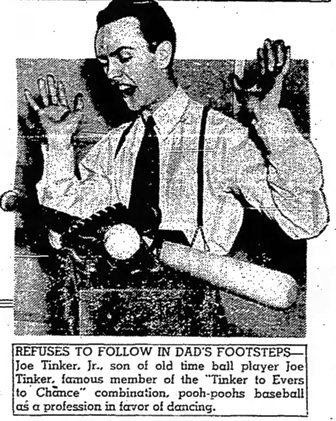
In 1938 newspapers reported that Joe Tinker Jr. had become a dancer with a vaudeville group called the Sophistocrats.  Tinker Jr. told reporters:

“Father isn’t disappointed because I took up dancing.  In fact he approves.”

It’s unclear whether “Joe Tinker Jr.” was actually Joe Tinker Jr.  The newspaper articles all said he was 22-years-old.  Joe Tinker Jr. would have been in his thirties; however his brother William Jay Tinker would have been 22 in 1938.


joetinkerjrdance


joetinkerjr1938

When Joe Tinker was elected to the Hall of Fame he compiled his all-time team for Ernest Lanigan, then curator of the Hall:

Pitchers: Mordecai Brown, Grover Cleveland Alexander, Christy Mathewson and Ed Walsh

Catchers: Johnny Kling and Roger Bresnahan

First Base: Frank Chance

Second Base: Eddie Collins

Third Base: Harry Steinfeldt

Shortstop: Honus Wagner

Outfield: Artie “Solly’ Hofman, Ty Cobb, Fred Clarke, and Sam Crawford.

Though he named several Cubs, Tinker did not include his former teammate Johnny Evers.  In 1914 Evers had famously slighted Tinker, with whom he was engaged with in a long-term feud, after Evers and his Boston Braves teammates won the World Series. William Peet wrote in The Boston Post :

“(Walter “Rabbit” Maranville’s) the best shortstop the game has ever known.

“Better than Joe Tinker; your old side partner?

“Yes, he’s better than Tinker.”

While the two finally broke their silence at Frank Chance’s deathbed in 1924, they never reconciled.

Evers died in 1947, Tinker in 1948.

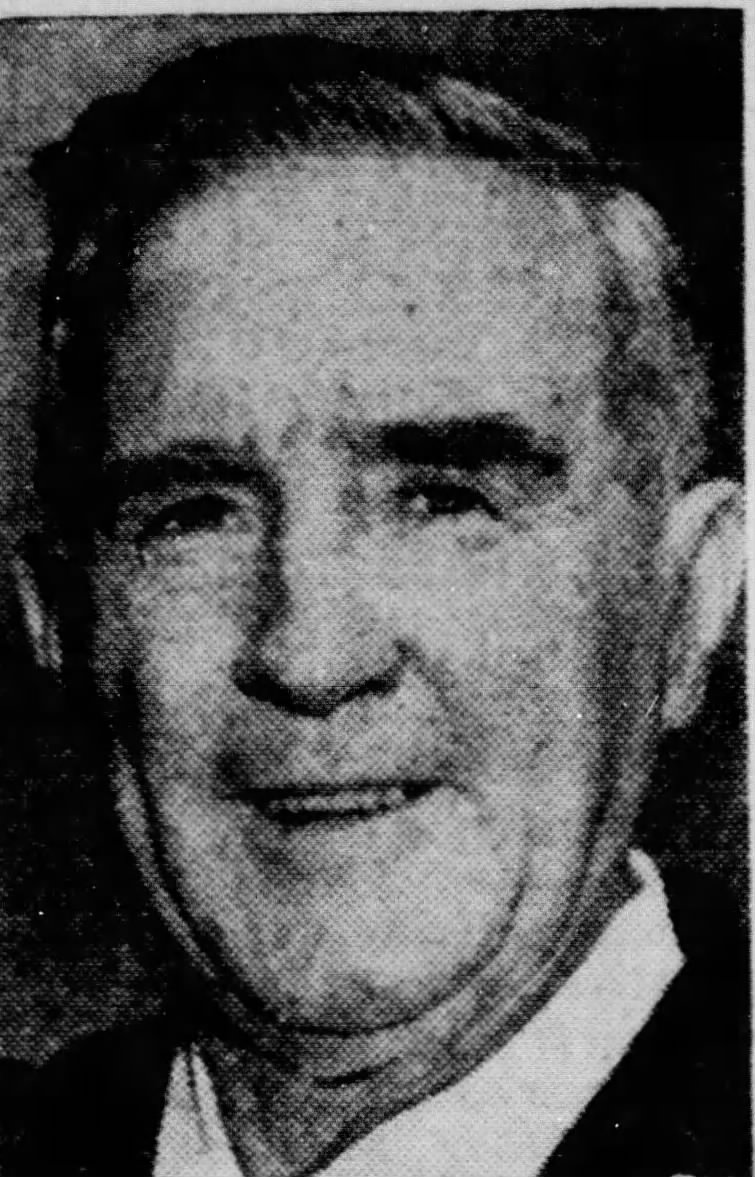
Joe Tinker circa 1946

Joe Tinker circa 1946

Joe Tinker Jr. died in 1981, Roland “Rollie” Tinker died in 1980, and William Tinker died in 1996.