Tag Archives: Chicago White Sox

Lost Advertisements–Leading Baseball Players Indorse

27 Sep

caldwell's


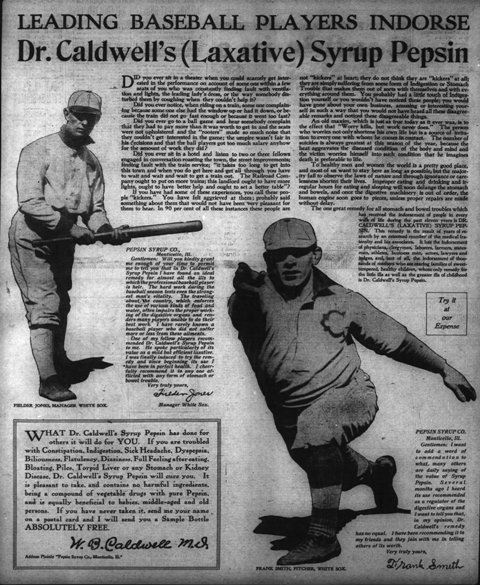
A 1904 advertisement for Dr. Caldwell’s Laxative Syrup Pepsin Company in Monticello, Illinois featuring Fielder Jones and Frank Smith.

Fielder Jones:

“I have found an ideal remedy for almost all of the ills to which the professional baseball player is heir.  The hard work during the baseball season tests even the strongest man’s vitality.”

Frank Smith:

“Dr. Caldwell’s remedy has no equal.”

In 1904 Jones replaced James “Nixey” Callahan as manager of the Chicago White Sox after 42 games.  He led the team to a third place finish.  The White Sox finished second in 1905 and his “Hitless Wonders” won the 1906 American League pennant and defeated the heavily favored Chicago Cubs 4 games to 2 in the World Series.

Frank “Piano Mover” Smith won 104 games for the White Sox between 1904 and 1910, including two 20-win seasons.

Dr. Caldwell’s Pepsin Syrup Company remained in business until 1985.


“Anson, the Baseballist, would like to see some Changes”

26 Sep

Some of baseball’s pioneer’s had ideas for rule changes that would have if adopted, dramatically changed the game.  In 1896 Adrian Constantine “Cap” Anson proposed two such changes.

Anson’s Colts had not finished better than fourth place in the National League in the previous five seasons, and the manager apparently thought two radical changes would improve his team’s chances and simplify the game.

"Cap" Anson

“Cap” Anson

The Chicago Record said:

“Anson, the baseballist, would like to see some changes in the present system of playing ball.”

Anson said he wanted to make a change to the 1893 rule that established the distance from the pitcher’s mound to home plate and replaced the pitcher’s box with the rubber:

“He is in favor of putting the pitcher’s slab in front of the pitcher, instead of having it behind him.  He wants this done in order to stop the interminable bickering that is going on in almost every game as to whether the pitcher was in position.  It is much easier to see whether the rule is conformed to when the slab is in front of the pitcher, and he dare not stop over it.”

Anson’s other rule change would have led to complete chaos, and would have made it an adventure to fill out a scorecard:

“Another radical change that Anson is in favor of allowing the captain to put players back into the game after they have been taken out…(Anson)  wants all restrictions removed, the manager being allowed to play his men just as he sees fit, taking them out and putting them back just when he wants to.”

The issue of introducing free substitution into baseball has occasionally been raised in the years since Anson advocated for it.

Montreal Canadians coach Dick Irvin suggested it to Kennesaw Mountain Landis as a solution to player shortages when the baseball commissioner attended an NHL game during World War II.   Lew Fonseca made a pitch for the rule in the 1950s, and Walter “Red” Barber, long-time Dodger and Yankee broadcaster suggested in the 1960’s that the rule would help keep baseball from being “as exciting as watching paint dry.”

In 1967, Eddie Stanky of the Chicago White Sox was given permission from the American League to experiment with a crude form of what would become the designated hitter rule six years later.  The convoluted rule, according to The Milwaukee Sentinel, said:

“(T)he Sox and their spring opponents will be allowed to call on a pinch hitter twice provided that he is designated before the game is not used twice in the same inning.”

Eddie Stanky

Eddie Stanky


“And they Started Hitting like Demons”

4 Sep

Arthur “Artie” “Circus Solly” Hofman was one of the best utility men in baseball, and a member of four Chicago Cubs teams that went to the World Series.  When he was traded to the Pittsburgh Pirates in May of 1912, Bill Bailey of The Chicago American told a story about Hofman, baseball bats and why baseball players are superstitious about them:

“Some fans might think that Artie can hit with most any old stick that comes along, but he himself is very exacting about the one he picks out before he goes up to the plate.  There is always a great line of bats laying out in front of the players bench during a game.  Most of them are special makes of the big sporting goods companies and most of them are expensive products.”

Bailey said during the 1911 season the Cubs were mired in a mid-season hitting slump:

“And Hofman conceived an idea.  He was wandering through a department store in town when he saw a couple of bats on display.  They weren’t anything like the kind the Cubs had been using. “

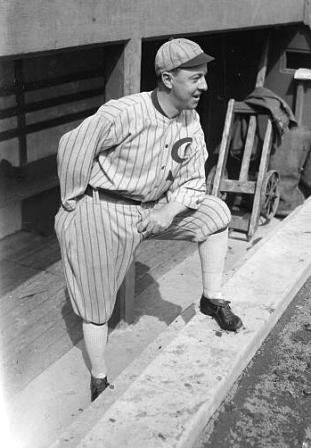
Circus Solly Hofman

Circus Solly Hofman

Told the bats cost twenty-five cents each Hofman bought dozens of the bats and had them delivered to the West Side Grounds:

“Hofman took one himself and distributed the rest among his teammates…Every man in the lineup used one of Hofman’s bats that afternoon.  And they started hitting like demons.  Naturally they continued using the cheap bats. And they went on a batting rampage that lasted for a long time.  Everybody was slugging the ball.  When things like that happen, is it any wonder that the players have their superstitions about bats?”

“Bill Bailey” was the pen name of Bill Veeck Sr., who would become vice-president of the Cubs in 1917, and president of the club in 1919.  He, of course, was also the father of Cleveland Indians, St. Louis Browns and Chicago White Sox owner Bill Veeck.

Bill Veeck Sr./"Bill Bailey"

Bill Veeck Sr./”Bill Bailey”

Hofman’s greatest claim to fame was being the Cubs centerfielder on September 23, 1908.  He fielded Al Bridwell’s single that scored Harry “Moose” McCormick, seemingly giving the New York Giants a 2 to 1 victory.  It was  Hofman, according to umpire Hank O’Day, who realized that Fred Merkle of the Giants, who had been on first base,  failed to touch second before leaving the field.  “Merkle’s Boner” remains baseball’s most famous base running blunder.

“We are beginning to have a Very Active Doubt as to the Value of Professional Baseball in American Life”

29 Aug

Coming on the heels of the fallout from the Black Sox scandal, The Chicago Tribune announced a change in editorial policy three weeks after “Shoeless” Joe Jackson, Eddie Cicotte, Oscar “Happy” Felsch., Claude “Lefty” Williams, Arnold “Chick” Gandil, George “Buck” Weaver, Fred McMullin, and Charles “Swede” Risberg were acquitted of conspiring to fix the 1919 World Series.

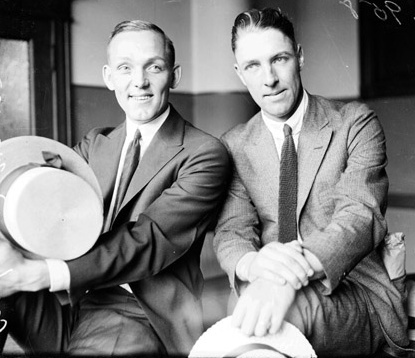
Buck Weaver and Swede Risberg during the trial

Buck Weaver and Swede Risberg during the trial

The paper said:

The Tribune has begun to use the compressor on professional baseball stories. The baseball reporters write them well, but we are getting a little tired of the subject. We are beginning to have a very active doubt as to the value of professional baseball in American life.”

The paper said baseball received a “black eye which jury verdicts did not whiten.”

The Tribune said they would place a greater emphasis on coverage of amateur sports which “produce sound citizenry.”  Professional baseball was also making Americans soft:

“The majority of spectators get only eye and mouth exercise.  We have conceded that the professional game stimulated the youngsters and that they played with more earnestness on the lots because they admired Babe Ruth.  We still admit that professional baseball is a stimulus to boys, but journalism has overfed it with space.  The Tribune is down to about a half column now for games in which the home teams play, which is justified parochialism, and to a bare statement of vital statistics regarding the other clubs.  That is enough.”

Other newspapers applauded the policy; surprisingly most didn’t cite corruption in baseball as the reason, but the rather, as The Baltimore Sun said because professional sports only provide “vicarious exercise.”  The Louisville Courier-Journal said watching baseball was even a threat to manhood:

“Two hours of inactivity in the grand stand or bleachers is not productive of muscle or sinew.  The same amount of time spent in tennis, golf, swimming or any number of games would be infinitely better for American manhood.”

Others found the new policy foolish.  The Portland Oregonian said:

The Chicago Tribune, which is regarded by its management, and doubtless by many of its readers, as the world’s greatest newspaper, has decided to blue-pencil professional baseball…The theory on which the sport page is built is that the public is entitled to what it wants…Telling the readers of sports that they should want something else, and will be given that something, is a decided innovation.”

The Duluth News-Tribune said facetiously:

“The fact that both teams (the Cubs and White Sox) are near tail-enders may not have anything to do with it.”

Then there was The Idaho Statesman which said The Tribune’s policy was a “meritorious undertaking,” but didn’t go far enough:

“There are a world of other professional sports not half as white as the Black Sox, that might come under the publicity axe with resulting good to the public…Horseracing is professional and it has produced a fine crop of crooks—more than baseball in its blackest days could possibly yield.  Our own so-called wild west sports have been placed in the professional class and everybody knows they are largely fake.  Wrestling hasn’t the whitest record in the world and prize fighting is anything but a Sunday school game.  Nobody ever got very much exercise out of any of these sports, except the participants and we are not sure that our citizenship is any sounder for having witnessed them.  The Tribune isn’t through with its job as we view the situation.”

The most prescient response was from The Montgomery (AL) Advertiser:

“We expect to see The Tribune gradually slipping back to its old ways.”

Ten days after the original policy was announced The Tribune declared victory, and revealed their real motive:

“An encouraging sign is the changing attitude of the press toward highly commercialized sport. The papers are coming to the conclusion they have been giving away millions of dollars’ worth of advertising to boost box office receipts for promoters who have no special regard for the public.”

But within weeks the “The World’s Greatest Newspaper” had, as The Advertiser predicted, begun “slipping back” to the way baseball had previously been covered.  By the beginning of the 1922 season, notwithstanding the lingering effects of the game’s greatest scandal, or no indication that Americans were getting any more exercise, baseball stories in The Tribune looked no different than stories that appeared before August of 1921.

Lost Advertisements–Edelweiss Beer–“Slide, you rummy, Slide”

9 Aug

Edelweiss


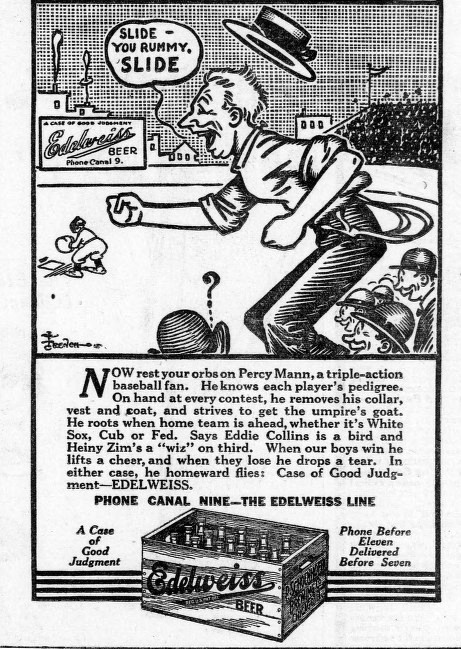
A 1915 advertisement for Edelweiss Beer which appeared in Chicago newspapers.

“Now rest your orbs on Percy Mann, a triple-action baseball fan.  He knows each player’s pedigree.  On hand at every contest, he removes his collar, vest and coat, and strives to get the umpire’s goat.  He roots when home team is ahead, whether it’s White Sox, Cubs, or Fed.  Says Eddie Collins is a bird and Heiny Zim‘s a ‘wiz’ on third.  When our boys win he lifts a cheer, and when they lose he drops a tear.  In either case, he homeward flies:  Case of Good Judgment–Edelweiss”

Lost Advertisements–Old Underoof Whiskey, Cubs and White Sox

2 Aug

OO62010


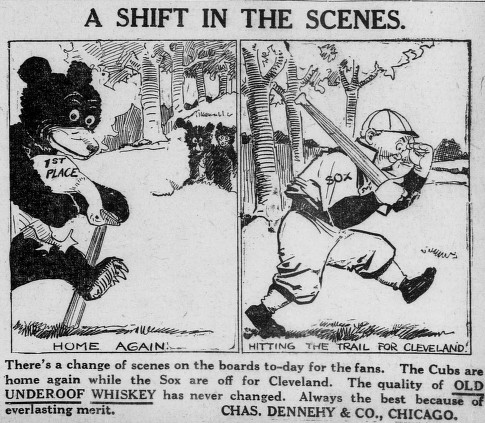
Two more 1910 advertisements for Old Underoof Whiskey featuring the Chicago Cubs and White Sox; these appeared in The Chicago Daily News and The Chicago Examiner.

The one above “A Shift in the Scenes” is from June 20, 1910.  The Cubs were returning home after a 10-4 road trip which put them 4 ½ games ahead of the second place New York Giants, while the struggling, seventh place White Sox were heading to Cleveland for a six game series.

The one below “It’s a Rocky Road to Pennantville” appeared just 10 days later.  The Cubs, who had won four straight games after the first ad appeared, just lost five of seven to the Pittsburgh Pirates, St. Louis Cardinals and Cincinnati Reds, cutting their lead over the Giants to a game and a half.

The White Sox would continue to struggle; they finished the season 68-85.  The Cubs would run away with the pennant, beating the Giants by 13 games.

OO63010

“He was Not Crazy as Reported”

18 Jul

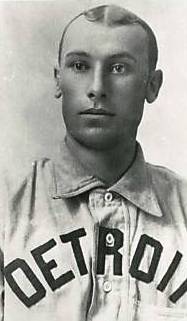
Ervin Thomas “Erve” “Dutch” Beck hit the first home run in the American League; on April 25, 1901, the second day of the season, as a member of the Cleveland Blues; Beck homered off White Sox pitcher John Skopec at Chicago’s South Side Park.

It was a highlight in a short, promising career, like many at the turn of the 20th Century, destroyed by alcoholism.

Beck was considered the best young player in Toledo, Ohio when he joined the Adrian Reformers in the Michigan State League as a 16-year-old in 1895, then for the next five seasons, he was the star of his hometown Toledo Mud Hens in the Interstate League.  For the two seasons in Toledo for which complete records survive, Beck hit .298 in 1898 with 11 home runs and, a league-leading .360 with 15 home runs in 1900.
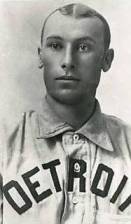
Erve Beck

Erve Beck

Earning the Nickname “Home run Dutch” in the Toledo papers, Beck was credited with 67  during his five seasons with the Mud Hens;  he would remain the team’s all-time career home run leader until 2007 when Mike Hessman (currently with the Louisville Bats in the International League) hit his 68th as a Mud Hen.

Beck also had a brief trial with the Brooklyn Superbas in the National League in 1899, hitting .167 in eight September games.

It’s unclear exactly when Beck’s problems with alcohol began, but according to fellow Ohioan Ed Ashenbach (alternately spelled Ashenback by several contemporary sources), a minor league contemporary who wrote a book in 1911 called “Humor among the Minors”,  it was well-known during Beck’s career that he was “addicted to strong drink,” and as a result suffered from “hallucinations.”

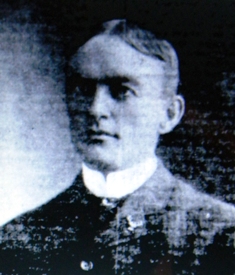
Ed Ashenbach

Ed Ashenbach (Ashenback)

Before the 1901 season, Beck, whose rights were held by the Cincinnati Reds, jumped to the Cleveland Blues in the newly formed American League; the twenty-two-year-old hit .289 and accounted for six of Cleveland’s twelve home runs.

Beck jumped back to the Reds before the 1902 season and received rave reviews early in the season.  The Cincinnati Tribune seemed to like him more at second base than veteran Heine Peitz:

“Erve Beck looks more like a second baseman than anyone who has filled the position since (Bid) McPhee went into retirement (in 1899).  He covers the ground, seems to know where to play and is capable of swinging the bat with some effect.”

His teammate, pitcher Frank “Noodles” Hahn claimed Beck hit the ball “harder than (Napoleon) Lajoie.”

Beck hit better than .300 playing second base in May but went to the bench when Peitz, who was filling in behind the plate for an injured Bill Bergen returned to second.

In June first baseman Jake Beckley missed a week with an injury and Beck filled in there; The Cincinnati Enquirer’s Ren Mulford said:

“(Beck) played the bag in splendid style…In handling ground balls Beck is as good as Beckley, and he is a better thrower… Beck gave another display of his versatility by plugging up a hole in right field.  He made one catch that was a lollapalooza…Most players would have lost heart when benched as Beck was, but he remained as chipper as a skunk during his term of inactivity, and gladly accepted the opportunity to get back into the swim. Beck is a phlegmatic soul, who takes life, as he finds it without a growl.”

In spite of a .305 batting average in 48 games and the great press he received, Beck was released by the Reds in July.  Whether the release was simply because he was the odd man out with Peitz, Beckley and right fielder Sam Crawford healthy or as a result of drinking is unknown.

Beck was signed almost immediately by the Detroit Tigers where he took over at first base after Frank “Pop” Dillon was sent to the Baltimore Orioles.  He hit .296 in 41 games but was again released at the end of the season.

Beck would never return to the big leagues.

In 1903 he .331 for the Shreveport Giants in the Southern Association, he jumped Shreveport the following season and played for the Portland Browns in the Pacific Coast League.   He returned to the Southern Association with the New Orleans Pelicans in 1905.  After starting the 1906 season in New Orleans, he was released in July and signed by the Nashville Volunteers; his combined average with both Southern Association teams was .211.

Beck’s drinking was, according to Ashenback and contemporary newspaper accounts, common knowledge by the time he wore out his welcome in Nashville in August and was sold to the Augusta Tourists in the South Atlantic League.

That stop would last for only one game.

The 27-year-old, four years removed from the American League, played first base for the Tourists on August 6.  Augusta second baseman Ed McKernan said, “It was evident when he reported there was something amiss with him,” and claimed Beck chased “an imaginary flock of geese away from first base” during the game.

The following day, according to The Augusta Chronicle, Beck “created a sensation in the clubhouse…causing all but two of the players to leave the house.”  As a result, Augusta released him.

The following day The Chronicle said:

“(Beck) ran amuck this morning and created great excitement on the street.

“While in a room on the third floor of the Chelsea hotel the big infielder suddenly began to see things and sprang from the third story window to the ground below.  Only two intervening telephone wires and a rose bush saved his life.

“He then darted down an alley and hid himself in a store.  He was finally captured and came quietly back to his room with a policeman and (Tourists outfielder Frank) Norcum.”

The Sporting Life assured their readers that Beck “was not crazy, as reported, but only suffering from the effects of a (drunken) spree.”

McKernan said “During his convalescence…Beck would smilingly avow his determination to abstain from strong drink.”

There were varying reports regarding the extent of his injuries, and it’s unknown whether he was physically able to play after the fall, but Beck would never play professionally again.

He returned to Toledo where he operated a tavern and appears to have been unable “to abstain from strong drink;” he died in 1916 of Articular Rheumatism complicated by Hepatic Cirrhosis.

“I Object to Being Made a Freak.”

17 Jul

In 1913 American League President Ban Johnson set out to put an end to the practice the Baseball Writers Association called “A growing Evil,” ghost-written articles appearing under the by-lines of famous ballplayers.

William Peet of The Washington Herald revealed the identities of the ghost writers in March of 1913; Gerhard “Roger” Tidden of The New York World had been the man responsible for articles bearing the name of Ty Cobb, but Tidden died just three months after the revelation.   While the practice waned after 1913, Cobb remained defiant, and continued “authoring” a syndicated column for the next several years.

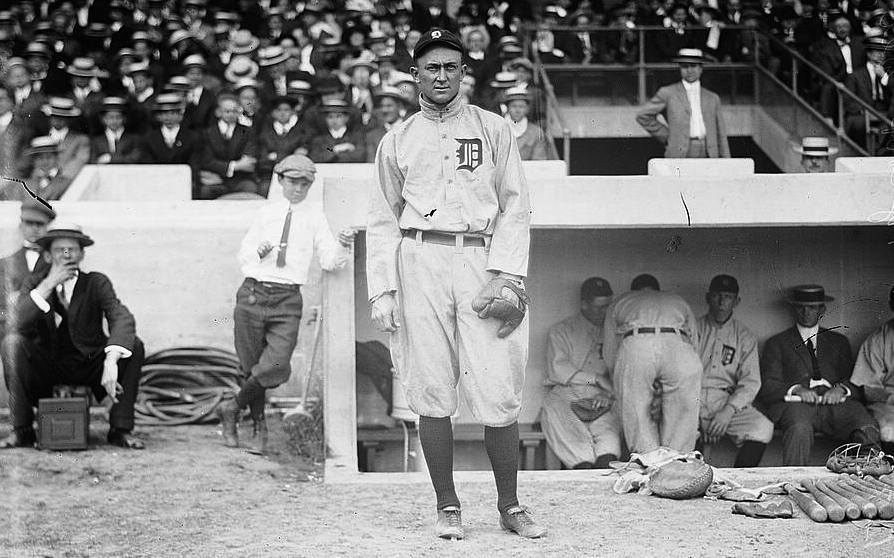
Ty Cobb

Ty Cobb

Cobb’s articles, for the most part, steered clear of trouble with the league president, but the assertions he made about the Chicago White Sox and manager Clarence “Pants” Rowland in June of 1915 caused a major stir.

Cobb said:

“Battery signal stealing, which has been the cause of several scandals in big league baseball threatens to make more trouble this season if anyone is able to prove what is generally suspected about one of the American League clubs.

“I will not mention the name of the organization which has been accused by the opposing players…because I couldn’t present any proof.”

Cobb then went on for seven paragraphs trying to present proof, and provided enough hints to make it clear he was talking about the White Sox.

Cobb’s said

 “The team I have in mind has won almost all its home games…It looks mighty funny, though, the way this club could hit at home and the feeble manner in which it has been swatting on the road and almost all of the Tigers will take an oath that something out-of-the-way is coming off.”

Chicago, through 49 games, was in first place; 22-8 at home and 9-10 on the road.  Detroit was in second place a game back.  If he left any doubt Cobb said later in the column when discussing the American League pennant race in general:

“The White Sox, who burned up things at home, have not been doing so well on the road.”

Everyone, including American League President Ban Johnson, assumed Cobb was talking about the Sox.  Johnson said:

 “(Cobb) must prove the charges, or I will keep him from playing baseball.  If any man in the American League makes a charge of dishonesty and refuses to back up his charge with the absolute evidence, that man will have to get out of the game.”

The White Sox were less concerned; The Chicago Tribune said the charges made Sox players “grin,” and Rowland told reporters:

“I suppose we had out tipping instruments planted in the Polo Grounds when we made nineteen hits in New York the other day.”

Clarence "Pants" Rowland

Clarence “Pants” Rowland

In his next column Cobb issued a non-denial denial and at the same time openly, and loudly, defied Johnson:

“I made no specific charge against the White Sox…What I did say was that a strong rumor of sharp practice was abroad, and I reiterate that statement right here.”

___

“Mr. Johnson even went to the extreme of saying that he would drive me out of baseball.  He hasn’t done this yet and I expect to stay around for a few more days.  If the league president is willing to pay the salary that my three-year contract calls for, I will be perfectly willing to take a vacation at that, for I have long wanted to do a number of things that baseball interferes with.”

Cobb reiterated the charges and offered no evidence, but said he was justified in making the claims because his manager might have believed them:

“(Tigers) Manager (Hughie) Jennings thought the report sufficiently serious to detail one of our players for plain clothes duty in the bleachers, and he also wrote Manager (Bill) Donovan of New York, telling him of a warning we had received and cautioning him to be on the lookout.  So you see the signal tipping report was not a creature of my own imagination, but a matter of sufficient seriousness to warrant an investigation by our manager in his official capacity.”

Cobb’s only bit of backtracking was to say that if “it should be proved the White Sox tried signal stealing it would be without the knowledge of Mr. (Charles) Comiskey.”  Cobb said Comiskey “wouldn’t countenance anything of this sort for a moment.”

Cobb took one last swing at Ban Johnson, charging the league president with giving “sensational interviews” about him to get “the people excited artificially. If this is Mr. Johnson’s idea, I wish he would abandon it.  I object to being made a freak.”

If there was any doubt whether the American League’s star player or the league president wielded more power, it became obvious within a week.

Johnson, who The Associated Press said “long has been opposed to players permitting their name to be used over baseball stories,” decided not only had Cobb not written the columns, but claimed “a Detroit newspaperman” made up the allegations “out of whole cloth,” and incredibly said that Cobb had “no knowledge,” of the columns despite Cobb being quoted by numerous sources discussing the charges.

Ban Johnson

Ban Johnson

Hugh Fullerton of The Chicago Examiner summed it up best:

“We are rather surprised each morning upon picking up our newspaper to discover that Ty Cobb is still making two-base hits, two steals and catching a few flies instead of being driven out of baseball by (Ban) Johnson.  By the way how did Johnson get into baseball?”

As quickly as Johnson backed down, the charges went away.  Despite the strong start the White Sox faded, and continued to fade even after the acquisition of “Shoeless Joe” Jackson on August 21, finishing third, nine and a half games behind the pennant-winning Boston Red Sox and seven games behind the Tigers.

Cobb led the league for the ninth straight season, hitting .369.

The one legacy from the brief 1915 controversy seems to be Cobb’s dislike of Rowland, who later became a scout for the Tigers.  In his 1984 book “Ty Cobb,” Charles C. Alexander said Cobb only agreed to manage the Tigers before the 1921 season because he was told:

 “Pants Rowland, whom Cobb considered an incompetent fraud, might very well get it and Cobb would have to play for him.”

Rowland, who remained in baseball until 1959 as a manager, scout and executive with the Los Angeles Angels in the Pacific Coast League and Chicago Cubs in the National League, appears to have also held a grudge.   Up until his death at age 90 in 1969, Rowland often said two of his former players, Jackson and Eddie Collins were better than Cobb.

 In 1953 at the Old Timers Baseball Association of Chicago Banquet Rowland said “I wouldn’t have traded (Collins) for Cobb.  What made him greater than Cobb was that he inspired the entire ball club.  Ty was an individualist.  He was interested only in Cobb.”

Rowland called Jackson the “greatest natural hitter,’ he ever saw, and said Ted Williams, not Cobb, was the only player “of the same make-up.”

Charles Murphy’s Last Stand

16 Jul

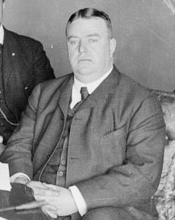
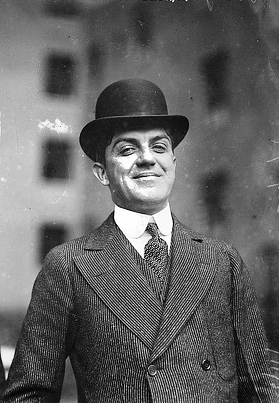
The National League had almost completely rid themselves of Charles Webb Murphy in 1914; the owner who had ongoing feuds with nearly every other league magnate, league officials, umpires, and many of his own players, had sold his interest in the Chicago Cubs to his financial benefactor Charles Phelps Taft.

Murphy returned to his home in Wilmington, Ohio; his only connection to the National League was his part ownership of the Baker Bowl, the home of the Philadelphia Phillies.  Murphy’s other ballpark ownership stake was in Chicago’s West Side Grounds, but that investment had lost most of its value after Taft sold the Cubs to Charles Weeghman, who moved the team to his ballpark on the North Side.  The Cubs former home field was used for amateur and semi-pro games, even  Buffalo Bill’s Wild West Show, but the park was not making Murphy money.

William Wrigley Jr., and his brothers were minority investors in the team in 1916, but Weeghman began struggling financially almost as soon as he bought the team, and the Wrigley brothers began buying Weeghman’s stock.

Charles Weeghman

Charles Weeghman

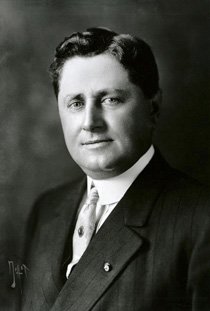
Between the 1918 and ’19 seasons the Wrigley’s acquired controlling interest in the Cubs.  (Some recent sources say Wrigley did not have controlling interest until 1921, but numerous contemporaneous sources said the Wrigley family had control of the team before the 1919 season began).

William Wrigley Jr.

William Wrigley Jr.

In February of 1919 Joe Vila, sports editor of The New York Sun wrote a story that said the Cubs were moving out of Weeghman Park and back to the West Side Grounds:

“National League men are gratified to learn that there will be a change of ball parks in Chicago, probably before the championship season opens on April 23.  The Cubs who have occupied the grounds of the defunct Chicago fed on the North Side since 1916, are preparing to return to their old home, West Side Park, which still is the property of Charles Webb Murphy and, presumably Charles P Taft.  The North Side plant never could accommodate more than 18,000 spectators, sitting and standing, whereas as many as 30,000 attended games at West Side Park in the days when Frank Chance had a world’s championship ball club.  Last fall the Cubs played their world’s title games with the Red Sox in Chicago at the home of the White Sox for the reason that the former Chifed arena was too small.”

Vila said Murphy saw an opportunity in the new ownership arrangement:

“Naturally, with an eye to business, Murphy promptly suggested to the Wrigley’s, who control the Cubs stock, the transfer of the Cubs…The Wrigley’s, who know little or nothing about practical baseball methods, regard Murphy as an oracle and there isn’t  a doubt that they will accept his suggestion.”

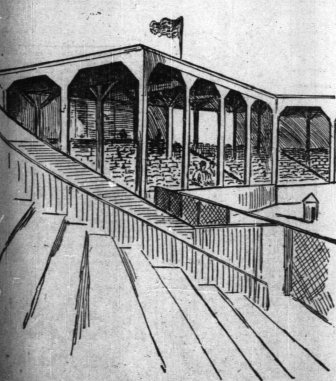
westsidegrounds

The Grandstand at West Side Grounds

It’s unclear whether the move, for which Vila said “there isn’t a doubt,” was ever even a possibility; it seems just as likely it was a story planted by Murphy.  Vila’s description of the ousted Cubs owner would suggest, at the very least, that Murphy had a sympathetic ear with The Sun sports editor:

“Murphy is one of the smartest men in baseball…When Murphy was president and of the Cubs the club didn’t have a losing year financially…In other words the Cubs under Murphy were tremendously successful.”

Vila also blames the Horace Fogel incident for all of “Murphy’s unpopularity that led to his retirement,” Not mentioning Murphy’s numerous feuds.

The Wrigley’s did not end up accepting Murphy’s suggestion, and the team remained at Weeghman Field, renamed Cubs Park before the 1920 season, and finally Wrigley Field before the 1926 season.

Murphy’s last stand having failed, he had his ballpark torn down in 1920.

It wasn’t until 1927 that the seating capacity at Wrigley Field finally surpassed that of the west Side Grounds.

A Thousand Words–Jim Jeffries and Baseball

12 Jul

jeffries


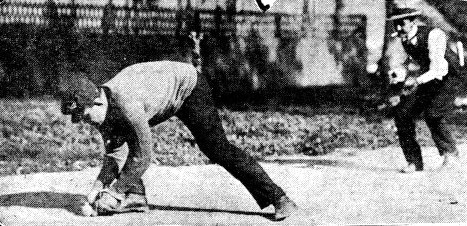
Former Heavyweight Champion Jim Jeffries fields a ground ball at his ranch in Burbank, California as he prepares for “The Fight of the Century,” against reigning  champion Jack Johnson; Johnson pummeled the former champ on July 4 in Reno, Nevada, retaining his title on a TKO in the 15th round.

Behind him is Harley M. “Beanie” Walker, sports editor of The Los Angeles Examiner.

A decade earlier, while champion, Jeffries along with fellow fighters John L.  Sullivan and “Gentleman Jim” Corbett began making appearances as umpires (Corbett also played at times) in many minor league games.  The use of fighters as umpires appears to have been the idea of Atlantic League president, and future Hall of Famer Ed Barrow, although all three fighters appeared at professional games in many leagues across the country.   When Barrow died in 1953, Al Abrams of The Pittsburgh Post-Gazette said he once paid Jeffries “60 percent of the gate receipts,” for appearing at a game.

After Jeffries defeated Corbett in 1900 he did a series of  appearances at ballparks across the country. The Kansas City Star said:

“Jeffries had an easy time as the players were so scared they forgot all the baiting tactics.”

Jeffries often included a sparring exhibition as part of his appearance, when he didn’t, fans usually left disappointed.    The St. Joseph (MO) Herald said during his 1900 ballpark tour:

“He merely walked up and down between first and second bases, but was not heard either by the crowd or the players, to make any decisions…The crowd had expected that Jeffries, besides umpiring the game throughout, would be placed on exhibition and put through his paces…such remarks as ‘Where’s the punching bag?’ and ‘Who’s going to box with him?’ were heard among the crowd, and when no bag or sparring mate was produced the disappointment of the spectators was so apparent that it had a depressing effect on the teams.”

Jim Jeffries

Jim Jeffries

“Beanie” Walker would leave the newspaper business in 1917 and become a screenwriter for movie producer Hal Roach, writing title cards during the silent film era and dialogue for talkies.  Walker wrote for Roach’s films featuring Laurel & Hardy, Harold Lloyd, and Our Gang.

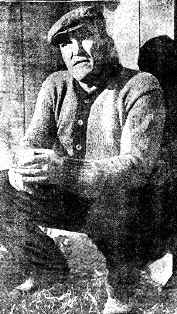
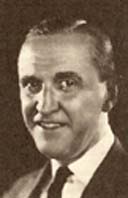
Beanie Walker

Beanie Walker

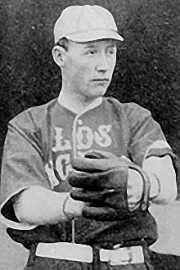
Walker is also credited with coining the nickname for a  redheaded teenage pitcher for the Los Angeles Angels in the Pacific Coast League with an excellent fastball, who would became the first big league player from Arizona.  Lee William “Flame” Delhi only pitched one game for the Chicago White Sox;  the 19-year-old, who had already pitched nearly 700 inning of professional ball (not including two seasons of winter ball), had a dead arm by the time he joined the Sox.

Flame Delhi

Flame Delhi