Tag Archives: Connie Mack

“The Annual Spring Typhoon has Blown up Again”

10 Nov

In 1906, despite being, on paper, the best team in the American League, the Cleveland Naps finished in third place, five games behind the Chicago White Sox.  The club had three twenty game winners—Addie Joss, Bob Rhoads, and Otto Hess—and four regulars who  hit better than .300—Napoleon Lajoie, William “Bunk” Congalton, Elmer Flick and Claude Rossman,

As the 1907 season approached, Grantland Rice, of The Cleveland News said the team was now a victim of the success of individual players:

“The annual spring typhoon has blown up again—only a bit worse than ever.  In nearly every big league camp well-known athletes are breaking into loud roars over the pay question, and there promises to be quite a batch of trouble before the storm is cleared away.  In this respect Cleveland heads the list, although Napland owners have one of the highest salary lists in the game.  Up to date Joss, Rhoads, (Terry) Turner and Congalton have balked, while neither Flick nor Hess have returned a signed contract.”

Grantland Rice
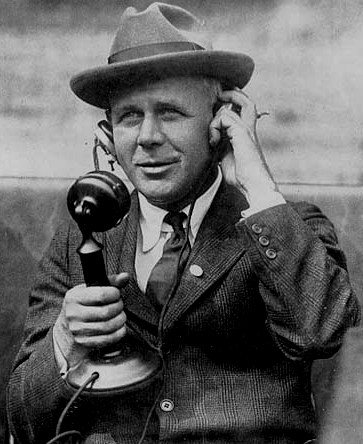
Grantland Rice

Rice said the club’s negotiations with Joss and Rhoads were at an impasse, and “just how it will end is a matter of uncertainty.”  The news of the team’s trouble signing their stars led Rice to a discussion of “just how much a major leaguer is supposed to receive for his work each season.”

“When a youngster breaks in he is never given less, or at least rarely so, than he received in his minor league berth.  His pay is boosted the greater part of the time, so the average debutante’s pay roll ranges closely around $1,800 providing he is recognized as a first class man.

“If he delivers the goods his first year out he can figure on about $2,000 or $2,200 for his next season, and then if he becomes established as a regular, his income should be somewhere in the immediate vicinity of $2,500.

“From this point upward it all depends on their rankings as stars.  You hear considerable about $5,000 contracts and better, but as a matter of cold, clammy fact, but few athletes draw over $3,000 or $3,500 at best.

“In the epoch of war salaries $3,500 or $4,000 was a fairly common figure—but no more.

“A high grade slabman along the order of Joss, Rhoads (Nick) Altrock, etc…will rake in about $3,000 now.  In his weekly letter in a Toledo paper (The News-Bee), Joss stated that he was offered $3,000 for his season’s work, but that he demanded more—just how much he didn’t say.

“George Stone drew $3,000 or there abouts last season and now that he has fought his way to the premiership in the School of Slugs he demands $5,000, at which figure Mr. (Jimmy) McAleer balks strenuously.  (Johnny) Kling also asks for $5,000, which sum Charley Murphy says he will not receive.

“From this list we jump to the drawing cards of the game such as Lajoie, (Honus) Wagner, (Wee Willie) Keeler, (Christy) Mathewson, etc…

“Lajoie’s figures range somewhere above $8,000 and something shy of the $9,000 mark.

“Wagner is supposed to draw $5,000 for his work.

“If reports sent out from New York are true, Keeler’s yearly ante is close to $6,000, while Mathewson draws in about the same.

Hal Chase won’t miss $3,500 very far.

“But the high-priced teams are not pennant winners by a jug full.

(Charles) Comiskey and (Connie) Mack hew closer to the line than any others in Ban Johnson’s circle, and yet these two have won more pennants than all the rest put together.  In fact, they’ve gotten away with all but the two which Boston nailed.

“Mack had one of the cheapest, if not the cheapest team in the American League through 1905, the last year he copped the pennant.  Comiskey’s world champions of 1906 were far below Cleveland, New York or even Boston, from the salary standpoint.

“It looks funny to figure the cellar champions of a league paid more than the holders of the world’s title, but if all the figures were given out, the White Sox payroll would loom up under Boston’s to a certainty.

“The full salary cost of running a big league club varies from $40,000 to $50,000, or maybe $55,000 a year.

“A set of figures somewhere between $45,000 and $50,000 would probably hit at the higher average.

“There was a time when Boston’s payroll was close to $70,000 and (Clark) Griffith’s was only a notch below—but this golden era for the ballplayer has passed.”

According to The Washington Post, Joss had earned $3,2000 in 1906 ($2,700 and a $500 bonus), the biography, “Addie Joss:  King of Pitchers,” said he was paid $4,000 in 1907—Joss, who was 21-9 with a 1.72 ERA in 1906, followed that up with a league leading 27 wins (against 11 loses, with a 1.83 ERA) in 1907.
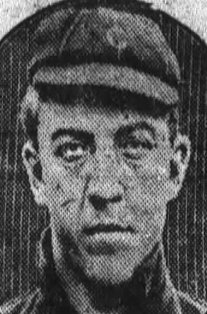
Addie Joss

Addie Joss

Fellow twenty game winners Rhoads and Hess both saw their production slip (15-14, 6-6), and only two regulars—Flick .302 and Lajoie .301—hit better than .300, and the team’s batting average slipped 28 points from the previous seasons.

The Naps finished fourth in 1907.
Things I Learned on the Way to Looking up other Things #12

3 Nov

The Cost of Superstitions, 1913

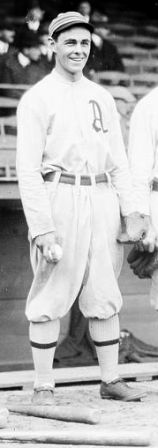
John Phalen “Stuffy” McInnis his .324 and drove in 90 runs for the 1913 Philadelphia Athletics, but the first baseman hit just .118—2 for 17—during the World Series.

Stuffy McInnis

Stuffy McInnis

The Washington Post told how one superstition among the athletics players might have contributed to McInnis’ slump:

“Those boys believe that they can change the luck at a crucial moment by hurling their bats in the air and letting them fall where they will.  Probably you fans have often seen them do it.  They also believe that they can keep up their good luck by continuing this practice.

“During the first game, in which (Frank “Home Run”) Baker hit a home run, the Athletics started tossing their bats the minute the ball was hit.  As the bats came down Stuffy McGinnis couldn’t get out of the way in time and one of them struck him in the ankle, causing a painful bruise.  He limped to first base and for a while (Connie) Mack was afraid he couldn’t go on with the game.”

Despite McInnis’ slump, the Athletics beat the Giants four games to one.

The Case against the Spitball, 1905

Baseball’s greatest pitcher hated the games most controversial pitch.  In 1905 Denton True “Cy” Young was quoted in The Sporting Life saying it wouldn’t be long before the pitch disappeared entirely:

“I don’t think the ‘spit ball’ is going to cut a much a figure as was thought early in the season.  Many of the pitchers that were using it at the start of the campaign have cut it now, and from now on the twirlers that use it will be dropping it one by one.  I used it against Philadelphia and Washington and had it working nicely, but it hurt my arm and I have cut it altogether.  An old pitcher like myself has no business using it at all.”

Cy Young

Cy Young

Young said the pitch injured his forearm and said he was not alone.  He claimed Jack Chesbro, George Mullin, (Guy) “Doc” White all received similar injuries.   And Washington’s Case Patten, who a year earlier so loved the pitch The St. Louis Republic said he was often “giving the ball a shower bath preparatory to flinging,” was now saying the pitch “lamed his arm.”

Young said even for those who weren’t injured, the spitter would ultimately lead to pitchers losing “control of his curve ball and his fast ones.”

While Chesbro disagreed with Young’s claim that his arm problems were the result of throwing spitballs, his effectiveness diminished greatly after the injury.

Young’s prediction of the demise of the pitch was premature.  At the time of his statement, Chicago White Sox pitcher “Big Ed” Walsh was perfecting the pitch, which he learned from teammate Elmer Stricklett—who had also been instrumental in Chesbro’s use of the spitter.   Walsh started throwing the spitball regularly in 1906.

Ed Walsh circa

Ed Walsh circa

A month before his death, on his 78th birthday and bed-ridden, Walsh remained an advocate for the pitch Cy Young detested.  He told a reporter for The Associated Press:

“I admire the pitchers today who throw the pitch.  Some people call ‘em cheaters.  They’re not.  They’re just guys doing everything they can to win.”

Wahoo Sam’s Scouting Report, 1914

Coming off of the New York Giants off-season world tour with the Chicago White Sox, the consensus opinion seemed to be that Giants Manager John McGraw did not make a mistake in signing Jim Thorpe, the world’s greatest all-around athlete, to a three-year contract worth–depending on the source—from $5,000 to $6,500 per season.  Many doubted Thorpe’s prospects after he hit just .143 in 19 games for the Giants in 1913.

Jim Thorpe

Jim Thorpe

But, not to worry, said McGraw:

“All Thorpe needed was every day action, instead of idleness, although of course sitting on the bench all summer gave him a chance to learn lots of things that will stand him in good stead later on.”

The baseball world generally agreed with McGraw’s assessment.

Hugh Fullerton predicted Thorpe would be “the most sensational baseball player of 1914.”

Damon Runyon declared Thorpe was “now a star.”

Gustave (G.W.) Axelson, Sports Editor of The Chicago Record-Herald, who traveled with the teams, said of Thorpe’s development during the trip:

“The fans in the United States will see an entirely different kind of player when Thorpe Lines up for the season. “

White Sox pitcher Joe Benz, who played against Thorpe on the tour, agreed saying Thorpe “improved greatly” and would be of “great assistance to the Giants,” in 1914.

But, “Wahoo” Sam Crawford, the Detroit Tigers outfielder who traveled with the tour as a member of the White Sox disagreed with all the glowing accounts of Thorpe’s progress.  The Detroit Times said:

“Thorpe’s speed is all that commends him, according to Sam.  He is not a particularly good fielder, and he cannot hit.  He is not a natural hitter at all, but he gives the bat a little upward chop as he swings at the ball in a way that Crawford never saw any man do before.

“Furthermore Thorpe doesn’t seem to have that baseball instinct that is so necessary for a big league player, say Crawford.  He is a very chesty fellow for a man who has yet to prove that he is of big league caliber, is the assertion made by Wahoo Sam.”

Sam Crawford

Sam Crawford

Crawford’s assessment was the most accurate.  Despite the fanfare that accompanied Thorpe’s return from the tour, Thorpe was never better than a mediocre outfielder (career .951 fielding percentage) and he hit just .252 over parts of nine major league seasons.

“The Fans there Like me. I Think so Anyway.”

31 Oct

In 1909 the Cleveland Naps traded pitchers Charlie Chech, Jack Ryan and $12,500 to the Boston Red Sox for Cy Young;  Young would turn 42-years-old before the beginning of the season.

Young was happy with the trade and told The Cleveland News:

“I’m glad to get back to the city where I started my career in 1890.  The fans there like me.  I think so anyway.  I believed they pulled for me there when I pitched against their own team.  I will give (Napoleon) Lajoie all I have and I think I’m good for several years.”

Cy Young

Cy Young

Addie Joss, the Naps ace, was also happy about the trade:

“Not only has Cleveland secured one of the best pitchers in the game today, but at the same time has added to the club a man who has done much for the good of baseball, and who is honored and respected everywhere he has ever played.  I have always contended, and always will, that Cy is the greatest pitcher the game has ever produced.”

Elmer Ellsworth Bates, the sports editor of The Cleveland Press, told some stories about the Indians new pitcher.

Ellsworth said a visitor to Young’s farm in Paoli, Pennsylvania asked the pitcher which of his then 478 victories did he “recall with the most satisfaction.”

“’The first game I ever pitched for Cleveland, back in 1890 (an 8 to 1 victory August 6),’ replied Old Cy, unhesitatingly.  ‘I doubt if a base ball crowd ever looked on a more typical rube than I appeared to be that day in a makeshift uniform six or seven sizes too small.  I didn’t have much money then, but I would not have lost that game to Chicago for the prettiest $1,000 bill ever printed.”

Bates said Young was “probably the most modest ‘big man’” in the game:

“At the Colonial (Hotel in Cleveland) one day last summer a young man took a chair next to the great pitcher and began paying him fulsome praise.

“’You are the swiftest pitcher I ever saw,’ he said.

“’Then,’ said Old Cy.  ‘I guess you never saw Amos Rusie.  My fastball looks like a slow freight trying to keep up with the Twentieth Century Limited Express compared to Rusie’s.’

“’But your slow ball is a peach.’

“’Young man,’ remarked Old Cy, gravely.  ‘If I could pitch the slow ball Eddie Beatin, the old Cleveland twirler, used to hand up to the batters I’d let them knock $1,000 a year off my salary.”

Bates also said it was “a matter of record” that Young was unaware he had pitched a perfect game against Connie Mack’s  Philadelphia Athletics on May 5, 1904:

“’I knew Connie’s boys hadn’t made a hit,’ said Old Cy the next day, but I couldn’t understand why the crowd was making such a demonstration.’

“’Well you’ve done it,’ said (manager and third baseman) Jimmy Collins, as we started for the dressing room after the crowd had let me go.’

“’Done what, Jimmy?’ I asked.  ‘Pitched a no-hit game?’

“’Better than that; not a man reached first.’

“’Then I knew what the racket was about.’”

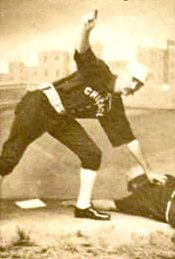
Bad Bill Eagan

6 Oct

William “Bad Bill” Eagan was just 35-years-old when he died from tuberculosis in 1905, but many people didn’t believe it when the news was first reported. The hard-living Eagan’s demise had been predicted and reported several times. In 1901, the year after his professional career ended, The Fort Wayne Sentinel said:

“’Bad Bill’ Eagan who died two or three times last year, is running a poker room in Detroit. Eagan dies on the average of three times a year and is about due for the first of this year’s series. Eagan captained and played first base for Youngstown before his second demise last season.”

Bad Bill

Bad Bill

In 1899 Connie Mack told The Philadelphia North American:

“Eagan would be one of the best second basemen in the business if he would keep in condition.”

He quickly wore out his welcome during all three of his brief stints in the big leagues. The first, with the St. Louis Browns in the American Association in 1891, ended, according to The Syracuse Standard after an incident with team owner Chris von der Ahe:

“(Eagan) was a jolly fellow and not afraid of discipline. The Browns got on a train at St. Louis to come East…von der Ahe’s nasal organ was rather large and red for its age and ‘Bad Bill’ determined to have some sport.

“Walking up to his employer, he caught the nose between his fingers, and said: ‘Say, Chris, how much did it cost to color that?’

“The owner of the cerise nose was furious with rage. He released Eagan at once. The train was ninety miles east of St. Louis, and at von der Ahe’s order the conductor put the nose twirler off the train.”

Two years later Eagan joined ‘Cap’ Anson’s Chicago Colts. Hugh Fullerton told the story of how he wore out his welcome there after just six games:

“Anson was a quick thinker on the ball field, but once he released the best second baseman that ever wore a suit for thinking a little quicker than anybody else on the nine.

“The second baseman in question was “Bad Bill’ Eagan. Everybody who remembers ‘Bad Bill’ will admit his supremacy on the second bag. When the play we celebrate came up there was a base runner on second. Chicago was one run to the good, and it was in the last half of the ninth inning.

(Bill) Dahlen was playing third base for Chicago. The man hit a sharp liner down to second. ‘Bad Bill’ started for it and at the same instant the man started for third base.

Bill Dahlen

Bill Dahlen

“The liner was a clipper and the ball struck ‘Bad Bill’s’ hands and bounded out. It struck the ground ten feet away, with ‘Bill’ right after it. Once he got his hands on it and without stopping to look where he was throwing. ‘Bill’ let the ball fly to third base.

“Most ball players after fumbling the ball would have tossed it to the pitcher or thrown it home if, after looking around, they saw that the base runner had started to try to score.

“In this case the base runner, after touching third, went on for twenty feet and then stopped for an instant to see what had become of the ball. He saw it coming straight as a die for third base, and went back there like a flash. But the ball beat him by ten feet. Unfortunately for the game, and also for “Bad Bill,’ Dahlen had taken it for granted that Eagan would throw the ball to the home plate, and was not looking for it to be thrown to him. Consequently the ball went by him, going within four inches of his nose, and striking the grand stand far behind.

“The result was that both base runners got safely home before Dahlen recovered himself and the ball, and the game was lost to Chicago.

“Anson was furious and immediately after the game gave ‘Bad Bill’ his release for making that throw. As a matter of fact, it was the best possible play under the circumstances, and Dahlen, rather than “Bad Bill’ was to blame for it not coming out as planned. If ‘Dal’ had thought as quickly as ‘Bill’ the game might have been settled right then and there.”

Eagan received one more trial with a major league team in 1898. He started the season on the bench for the Pittsburgh Pirates, but was given the opportunity to start when regular second baseman Dick Padden left the team over a dispute with Manager Bill Watkins in May.

Eagan hit .328, but committed 10 errors in 19 games. He was sold to Louisville Colonels on June 5. The Louisville Courier-Journal said:

“He is a clever fielder, a fair batsman, extremely aggressive and absolutely fearless (and will) certainly strengthen the team in one of its weakest spots.”

But he never appeared in a game for Colonels. The following day The Courier-Journal said the deal was off, and Manager Fred Clarke would only say, via telegram:

“Called deal for Eagan off for good reasons.”

The Colonels passed on Eagan despite being a team badly in need of a regular second baseman—Clarke tried nine different men there during the season, and his primary second baseman, Heine Smith hit .190 and committed 16 errors in 26 games.

Eagan finished the 1898 season with the Eastern League’s Syracuse Stars, where he had played from 1894 to 1897. He finished the year of 1898 in jail in his native Camden New Jersey.

That story Wednesday

Things I Learned on the Way to Looking up other Things #11

22 Sep

Floto on Baseball’s Most Powerful Men

Otto Clement Floto was one of the more colorful sportswriters of the late nineteenth and early twentieth century’s.  The Denver Post’s Woody Paige said of the man who was once worked for that paper:

“In the early 1900s Floto was The Denver Post’s sports editor and a drunk, barely literate, loud-mouthed columnist–sounds like a description of that guy in my mirror–who didn’t believe in punctuation marks, wrote about fights he secretly promoted on the side, got into shouting matches with legendary Wild West gunman–turned Denver sportswriter–Bat Masterson.”

Otto Floto

Otto Floto

Floto, in 1910, provided readers of The Post with his unvarnished opinion of baseball’s most powerful figures:

John T. Brush—The smartest man in baseball, but vindictive.

Garry Herrmann—Smart, but no backbone; the last man to him has him.

Ban Johnson—Bluffs a great deal and makes it stick.  Likes to talk.

Charles Comiskey—Shrewd as can be.

Connie Mack—Shrewd and clever; knows the game better than anyone.

Charles Murphy—A hard fighter, but backs up at times.

George Tebeau—More nerve than any other man in baseball, very shrewd.

Barney Dreyfus—Smart, but always following, never leading.

As for John McGraw, Floto allowed that the Giants’ manager was “Pretty wise,” but attributed his success to the fact that he “has lots of money to work worth.”

Too Much Money for Players, 1884

The Cleveland Herald was not happy when pitcher Jim McCormick jumped his contract with the Cleveland Blues in the National League to the Union Association’s Cincinnati franchise.  Although teammates Jack Glasscock and Charles “Fatty” Briody also jumped to Cincinnati, the paper saved most their anger for the first big leaguer to have been born in Scotland.

Jim McCormick

Jim McCormick

The paper noted that McCormick, who was paid $2500 by the Blues, had received a $1,000 bonus to jump:

“(A) total of $3,500 for joining the Cincinnati Unions to play the remainder of the season.  This is equal to $1750 a month, which again divided makes $437.50 a week.  Now McCormick will not play oftener than three times a week which makes his wages $145.83 per day for working days.  The game will average about two hours each, so that he receives for his actual work no less than $72.91 an hour, or over $1.21 a minute for work done.  If he was not playing ball he would probably be tending bar in some saloon at $12 a week.”

McCormick was 21-3 with a 1.54 ERA in 24 games and helped pitch the “Outlaw Reds” to a second place finish in the struggling Union Association.  After the Association collapsed was assigned to the Providence Grays, then was sold to the Chicago White Stockings.  From July of 1885 through the 1886 season McCormick was teamed with his boyhood friend Mike “King” Kelly—the two grew up together in Paterson, New Jersey and were dubbed “the Jersey Battery” by the Chicago press—and posted a 51-15 record during the season and a half in Chicago, including a run of 16 straight wins in ‘86.

He ended his career with a 265-214 record and returned home to run his bar.  In 1912 John McGraw was quoted in The Sporting Life calling McCormick “the greatest pitcher of his day.”

The pitcher who The Herald said would otherwise be a $12 a week bartender also used some of the money he made jumping from Cleveland in 1884 the following year to purchase a tavern in Paterson.

Not Enough Money for Owners, 1885

In 1885 J. Edward “Ned” Allen was president of the defending National League Champions –and winners of baseball’s first World Series—the Providence Grays.  He told The New York Sun that baseball was no longer a profitable proposition:

“The time was when a man who put his money into a club was quite sure of coming out more or less ahead, but that is past.  When the National League had control of all the best players in the country a few years ago, and had no opposition, salaries were low, and a player who received $1,500 for his season’s work did well.  In 1881, when the American Association was organized in opposition to the league, the players’ salaries at once began to go up, as each side tried to outbid the other.  When the two organizations formed what is known as the National Agreement the clubs retained their players at the same salaries.

“Several other associations were then organized in different parts of the country and were admitted under the protection of the National Agreement.   This served to make good ball-players, especially pitchers, scarce, and forced salaries up still higher, until at the present time a first-class pitcher will not look at a manager for less than $3,500 for a season.  (“Old Hoss”) Radbourn of last year’s Providence Club received the largest amount of money that has ever been paid to a ball-player.  His wonderful pitching, which won the championship for the club, cost about $5,000 (Baseball Reference says Radbourn earned between $2,800 and $3,000 in 1884), as did the work of two pitchers and received the pay of two.

The Providence Grays--Champions and unprofitable

The Providence Grays–Champions and unprofitable

“Some of the salaries which base-ball players will get next season are; (Jim) O’Rourke, (Joe) Gerhardt, (Buck) Ewing and (John Montgomery) Ward of the New York Club, $3,000 each.  (Tony) Mullane was to have played for the Cincinnati Club for $4,000 (Mullane was suspended for signing with Cincinnati after first agreeing to a contract with the St. Louis Browns).  (Fred) Dunlap has a contract with the new League club in St. Louis for $3,400.  These are only a few of the higher prices paid, while the number of men who get from $2,000 to $3,000 is large.  At these prices a club with a team costing only from $15,000 to $20,000 is lucky, but it has not much chance of winning a championship.  To this expense must be added the ground rent, the salaries of gate-keepers, and the traveling expenses, which will be as much more.

“As a high-priced club the New York Gothams leads, while the (New York) Metropolitans are nearly as expensive.  The income of these two clubs last year was nearly $130,000, yet the Metropolitans lost money and the New York Club (Gothams) was only a little ahead.  The first year the Metropolitans were in the field(1883) their salary list was light, as were their traveling expenses, and at the end of the season they were $50,000 ahead.”

The Grays disbanded after the 1885 season.

“It was one of those Lucky Days when a Player can hit a pea”

8 Aug

Norman Arthur “The Tabasco Kid” Elberfeld earned his nickname for his aggressive play and violent temper.  In 1904 he described his greatest game in an  article that appeared in several newspapers:

Kid Elberfeld

Kid Elberfeld

“It is not a cinch by any means to dig up the good and bad plays one has made.  If my team can win the game, that is about sufficient for me, and I forget many times just how prominently I may have figured in the victory.

“The best batting I remember having done was right up on Washington Heights last season, when we were playing the Philadelphia Athletics.  Connie Mack had saved Rube Waddell for us, and the famous southpaw never had more speed or better benders.  When Rube is right he is a wonder, and when it is remembered that he fanned thirteen batters that afternoon it can be appreciated that he was pretty near being tight.  It was Rube’s first appearance of the season in New York, and he was more than anxious to pitch a winning game.  It was the closest kind of contest, and we just managed to win out 4 to 3.  I was the lucky boy that day.  I made four clean plunks off Rube, drove in three runs and scored one myself.  That wasn’t so bad, when you say it quick.  There were only four hits made off Rube that day.  So I copped.

“It was one of those lucky days when a player can hit a pea.  Rube didn’t fool me a little bit.  I refused to let him drive me away from the plate, but stood up close and just met the ball.  Every hit was a hard one, too, and on a line.  If I had attempted to swing hard I might not have made a hit.  There is everything in a batter timing the ball well and then just meeting it.  One will be surprised at the swiftness with which the ball shoots off the bat.”

Elberfeld got a couple of key facts incorrect; the score was actually 3 to 2 and while Elberfeld drove in all three runs he did not score a run that day.  For the rest of his life, Elberfeld referred to the game as the greatest of his career.

In 1929, in an article about the athletic prowess of Elberfeld’s five daughters—they had their own basketball team, and each excelled in additional sports as well—the proud father still referred to the 1903 game as “The best batting I remember having done,” although he still incorrectly maintained that the Highlanders scored four runs that day.

Elberfeld's greatest game, August 1, 1903

Elberfeld’s greatest game, August 1, 1903

As for his aggressiveness towards umpires, Elberfeld had no regrets fifteen years after his playing career ended:

“I’ve been asked whether it did any good to threaten umpires, and occasionally take a wallop at one.  I always thought that if I didn’t stand up for my rights, they would give me the worst of it.  If an umpire made a mistake in the really rowdy days the whole team would threaten his life.  Would that scare him?  I should say so, and the next time a close decision came up, he would even up for the bad one previously handed down.”

“There will be Cliques”

30 Jun

William Ingraham “W.I.” Harris was one of the most important baseball writers of the 19th Century, but like Charles Emmett Van Loan three decades later, he died young and is mostly forgotten today.

He was sports editor for The New York Press, which was billed as “The aggressive Republican newspaper of New York,” and The New York Star.  The Sporting Life said of Harris:

“He feels strongly in any given direction and talks earnestly. One cannot be long in his presence without being convinced of his unswerving honesty and sincerity.”

He was, along with Ren Mulford Jr. of The Cincinnati Times-Star, an outspoken critic of the Players League, and said he agreed with Mulford’s assessment that the appearance of the Brotherhood, and the resulting “baseball war” was “a campaign for the preservation of baseball law on one side and its destruction on the other.”

William Ingraham Harris

William Ingraham Harris

Harris was also considered the best prognosticators among contemporary baseball writers, and before the 1890 season began he said:

 “For the past two years I have had the satisfaction of naming the champions of both major associations before a championship game had been played…and last season (in the National league), with the exception of Pittsburgh and Cleveland, I located the exact position at the finish.”

He said he would not attempt to handicap the results of the three leagues in 1890:

“The writer who ventures to make predictions as to the results of the championship fight in any one of the many leagues at this stage of affairs takes an enormous risk on masticating a pretty tough crow later on.”

But, said Harris, he was “willing to take my chances on giving one tip,” before the beginning of the season.  The “tip” went against the conventional wisdom, in fact, it went against what the entire baseball world considered a certainty; the fate of the club The Chicago Tribune called “The greatest team ever organized.

“(I) shall not undertake to pick any winners this year until the season has been well started.  I propose, however, to nominate one team that will not win a pennant, and that is the Chicago Brotherhood team.  In making this assertion I am bucking against general sentiment, or rather general belief.  The consensus of opinion is the other way.  There is no doubt that on paper the Chicago Brotherhood team is in many respects one of the greatest aggregations of baseball stars ever got together, but there are some potent reasons against its success.“

Harris was critical of the team’s catchers and pitchers:

(Conrad “Dell”) Darling never was a first class catcher and never will be.  (Charles “Duke”) Farrell is a strong hitter, and at times a most brilliant catcher, but he is not a steady or remarkably heady catcher.  Boyle is a good one, but he isn’t in it with such good men as (William “Buck”) Ewing, (Jack) Clements, (Charlie) Bennett, (Charlie) Ganzel, (George “Doggie’) Miller, (Connie) Mack, (Michael “King”) Kelly, (John “Jocko”) Milligan, (Paul) Cook and (Cornelius “Con”) Daily.  On catchers the team is all right on quantity, but short in quality.

“As to pitchers, (Mark) Baldwin, in 1887 and 1889, was a star In 1888 he was not to be depended on.  Baldwin doesn’t take care of himself as he should in the winter time.  As a pitcher he ranks among those who may be great at any time, but who keep you guessing on the dates.

(Charles “Silver”) King, in condition, is a ‘tip topper.’  He was a failure in the League once before, and in the world’s Series against New York didn’t astonish people to any extent.”

He dismissed the other two pitchers, Frank Dwyer and Charlie Bartson as a “medium man” and “unknown quantity,” and said “Unless strengthened in the battery department, and probably not then, this team will not land first.”

He conceded that “The outfield and infield are well-nigh perfect.”  But, there was a bigger problem than the weak pitching and catching; Harris predicted tension between second baseman Fred Pfeffer, who had raised $20,000 for the creation of the Players League, recruited most of his Chicago White Stockings teammates to jump to the Brotherhood, and was one of the club’s directors, and team captain and first baseman Charles Comiskey:

“(T)he Comiskey-Pfeffer or the Pfeffer-Comiskey combination.  By the way, which is it?  The answer to this will have quite a bearing on the general result…There will be cliques.  Germany and Ireland will be at war in less than a month.  The public may not know, but the lack of harmony will be there and will have its effect.  Comiskey is a great baseball captain.  At least he was in the American Association.  His methods are well-known.  He was supreme at St. Louis.  Everything went.  The men had no respect for (owner Chris) von der Ahe.  They feared Comiskey.  At Chicago Comiskey will find some men who have just escaped from the rule of a greater captain than himself, perhaps a harder task master.  They have reveled all winter over the prospect of freedom from that restraint, proper and effective though it was.  They are stockholders—yes magnates—now.  Will they swallow Comiskey’s manners on the field and in the dressing room?  As Charlie Reed sings, ‘Well, I guess not.’ (Reed was a famous minstrel performer in the 1880s and 18890s)

“Comiskey must change his methods.  He will have to gag himself; he will have to, figuratively, kiss the baseball blarney stone; he will have to be cheerful, under protest; and, above all, if harmony be his objective point he will have to please Director Pfeffer.  He may not try to do these things; he probably won’t.  Comiskey will have his way.  He always has had it.  He can only rule by practically despotic methods.”

Fred Pfeffer

Fred Pfeffer

Harris correctly concluded that Brooklyn, New York, and probably Boston (the eventual champions) would finish ahead of Chicago.  At season’s end, The Chicago Times summed up how prescient Harris had been about the fourth place team in the Players League:

“The outside world cannot fully realize the bitter disappointment felt here over the poor showing made by Comiskey’s team during the season just closed.  Surely it was strongest aggregation of players ever collected in one club, but its lack of success was mainly from two causes—lack of discipline and the miserable condition of certain members of the club.

“There has been absolutely no discipline in the team, and some of the men paid as much attention to Comiskey’s orders as they would to a call from some church congregation.  An order to sacrifice was met with a smile of scorn, and the ball was hammered down to an infielder, who made an easy double play.”

Harris died the following summer on July 7, at age 33, of tuberculosis.  The Boston Globe, the first paper he worked for, said:

“Being of a most observing nature, a ready thinker and as it were, a lightening calculator, he managed to foretell many of the leading baseball events of the year weeks ahead…Mr. Harris was without exaggeration, one of the brightest of his class, a ready and graceful writer and a hard worker.”

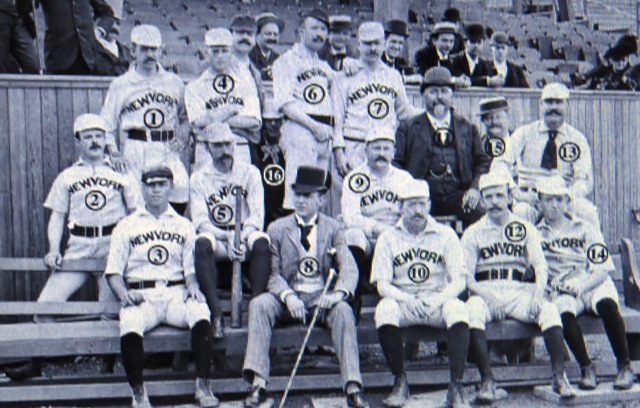
W.I. Harris (#5), as a member of the New York Reporters Baseball Club at the Polo Ground in 1889.

W.I. Harris (#5), as a member of the New York Reporters Baseball Club at the Polo Ground in 1889.

“King of the Bushes”

23 Apr

Edward Francis “Ned” Egan was called “The Connie Mack of the minors” and the “King of the Bushes” during his managerial career.

It is likely that most of the statistics listed under Egan’s name on Baseball Reference and other sources  are for another player or players with the same surname.  Egan’s grave, burial record, birth and death record confirm that he was born on January 13, 1878, in St. Paul, Minnesota–which would make him 10-years-old for the first playing records for the “Ned Egan” listing.  Contemporary references to Egan’s playing career are vague–most say he played semi-pro ball in Minnesota beginning in 1897, and some sources say he was with St. Paul Saints in the Western League in 1901; although his name does not appear on any roster for the team.

What is certain is that his managerial career began 1902 and that he won eight pennants in 16 seasons.

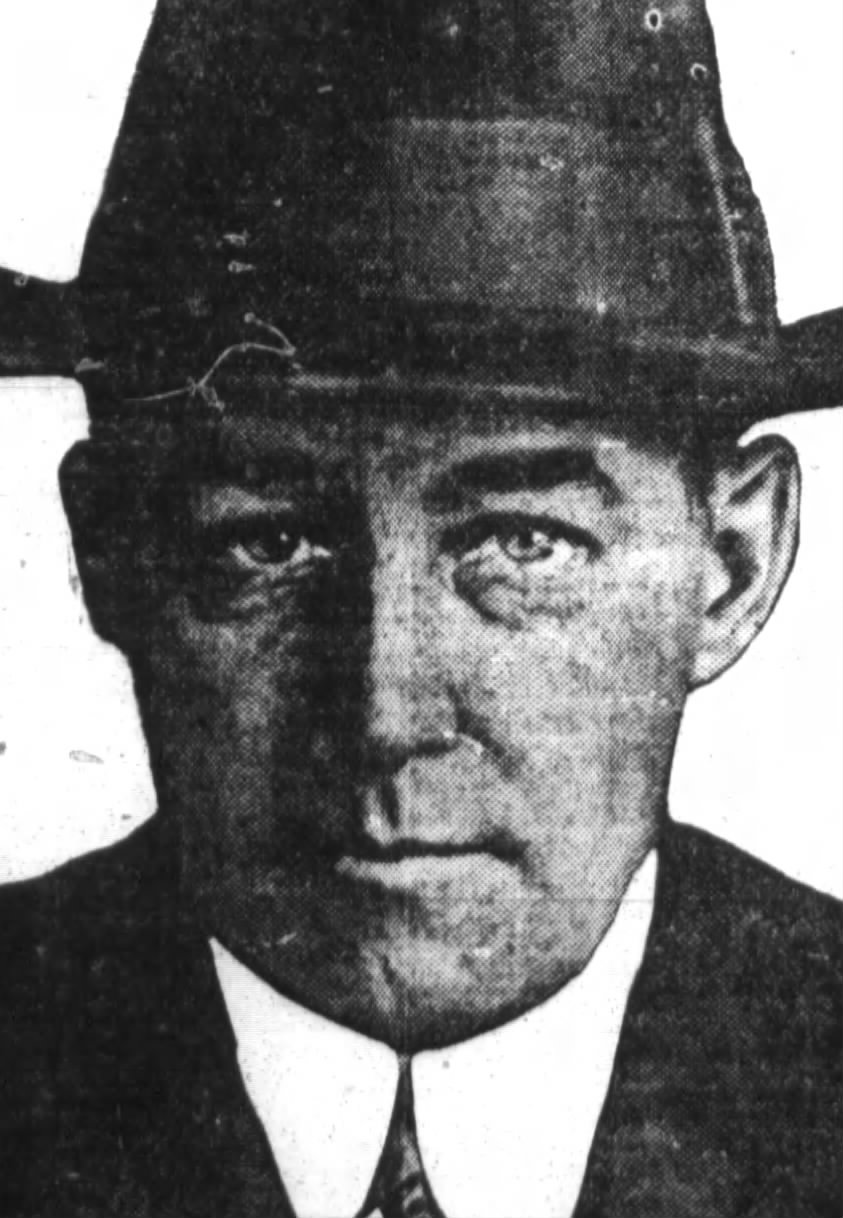
Ned Egan

Ned Egan

Egan won championships in 1902 and 1903 with the Winnipeg Maroons in the Northern League,  then won six more with the Burlington Pathfinders (1906 Iowa League of Professional Baseball Clubs, 1908 Central Association), the Ottumwa Speedboys-Packers (1911,12 and ’13 Central Association), and the Muscatine Muskies (1916 Central Association).  The Washington Post called him “The Central Association’s chronic pennant winner.”

Egan was credited with helping develop several major leaguers including Burleigh Grimes, Lee Magee, Cy Slapnicka, Hank Severeid, and Cliff Lee.

Egan finally got his chance in the high minors in January of 1918, but it happened as a result of a fluke.  Al Timme, owner of the Milwaukee Brewers of the American Association announced that Egan would be his new manager.  The Milwaukee Journal said:

 “A very peculiar circumstance brings ‘Ned’ Egan to the local club. When President Temme attended the meeting of the International League in New York some months ago the local prexy opened negotiations with Jack Egan, manager of the Providence club in 1917.  Jack Egan’s name was made public as the possible leader of the Brewers, but the press reports from the east said that ‘Ned’ Egan was being considered by Owner Temme [sic].

“The local baseball headquarters were immediately flooded with recommendations from major leaguers who unanimously stamped ‘Ned’ Egan as the logical man to lead the locals.  Subsequently, Temme [sic], who had not met the St. Paul man, realized that these endorsements of Ned Egan were worth taking stock of and finally he opened negotiations with him.”

Egan was signed to a “provisional contract for 1918, 1919 and 1920.”

Al Timme told reporters he had confidence in his new manager despite the mix-up, and despite the fact he had denied he had any interest in hiring him as recently as a week earlier:

“Ned Egan has devoted his entire life to baseball—is one of the best posted and able men in the game today.  No one has a wider or more favorable acquaintance, especially with major league club owners.  His development of players and many pennants prove conclusively Mr. Egan’s superior ability to build and handle a team.”

Egan returned home to Minnesota in late January, and while ice skating another skater ran into him, knocking him down.  Egan sustained what he thought was a minor back injury.

Ned Egan, 1918

Ned Egan, 1918

In February Egan contacted Timme and told the Brewer owner that the injury was more serious than originally thought; he had fractured two vertebrae and said that a doctor had recommended he resign.  The Journal said:

“Mr. Timme prompted Egan to reconsider.”

A month later after “his fighting spirit kept him on the job constantly,” Egan’s injury became so severe that he was no longer able to walk.  The Journal said:

“The St. Paul man is at present confined to the Sacred Heart sanatorium here, at the expense of the Milwaukee ball club.  He is a nervous wreck…Physicians cannot predict how long Egan will be incapacitated.”

The Brewers then hired Jack Egan, the manager Timme originally sought, to replace Ned Egan.

Egan was still in the sanatorium on May 4 when he was released for 3 days in order “to visit Chicago” and checked into the Grand Pacific Hotel.  On May 6 The Chicago Tribune said:

“Edward F. (Ned) Egan…was found dead with a revolver at his side in the Grand Pacific Hotel shortly after midnight this morning.  He had apparently been dead for hours.  Despondency, brought on by ill health, is believed to have led him to commit suicide.”

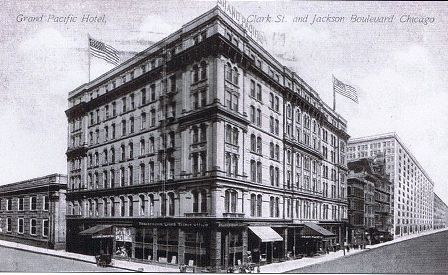
The Grand Pacific Hotel Chicago

The Grand Pacific Hotel Chicago

Timme told The Journal:

“So far as I have learned, his condition while at the sanatorium was improving.  I will have Mr. (Tom) Hickey (president of the American Association) obtain the facts from the police at Chicago.”

It was reported that Egan, who “owned considerable property in St. Paul,” was to be married in June.  His first wife had died in 1912, just more than a year after their marriage.  The day following his death, the Cook County Coroner confirmed the cause of death was suicide and said Egan was despondent over his injury.

The Milwaukee Sentinel published a eulogy for Egan written by long-time minor league umpire Oliver Otis “Ollie” Anderson:

“Umpires are supposed to have no feelings—to shed no tears, but they do bow their heads occasionally, and mine is bowed in thought, I have just read of the death of Ned Egan.

“As a baseball genius he was worthy of being compared to Comiskey, as a developer of players he was a Connie Mack, as a winner of pennants he was king of the bushers.  As a friend he was loyalty itself.

“What more can we say.”

Rube and Ossee

10 Mar

Connie Mack’s Philadelphia Athletics were expected to repeat as American League champions in 1906.  The 1905 team won 92 games, finishing two games ahead of the Chicago White Sox, and lost to the New York Giants in the World Series.

The 1906 Athletics were in first place as late as August 11, but faded to fourth, losing 33 of their last 52 games and finishing 12 games behind the champion White Sox.

Much of the blame for the poor finish was directed at Rube Waddell.

Rube Waddell

Rube Waddell

Waddell, 27-10 in ’05, dropped to 15-17 after fracturing his thumb in May of ’06.   The Philadelphia Inquirer said he was driving a rented carriage, “At Twenty-second Street and Ridge Avenue he became involved is a collision with a delivery wagon…he turned his horse quick to avoid the wagon, and when he found that the wagon was sure to hit the carriage he jumped and landed on his thumb.”  He sat for two weeks and never found his form from the previous season.

Waddell’s recovery was slowed, it was suspected, because of his off-field habits.  The general opinion of the fans and press was summed up by The Wilkes-Barre Times which said:

“Waddell has refused to appreciate that the modern ballplayer positively must keep in condition and ‘deliver the goods.’  The famous Mike Kelly could spend a $100 bill the night before playing a championship game and not report the next day.  It was regarded in those days as a joke.  That day has gone by.”

Waddell’s personal catcher, Ossee Schreckengost—Schreck—was also blamed for the collapse.  Schreck was sent home by Mack for the remainder of the season on September 22.  During a series in St. Louis he failed to return to the team hotel after a night out with “some German friends.”  Schreck said:

“Mack told me to pack up and go home.  That’s all there is to it.  We did not have any argument.

“Mack wants to try out a lot of juveniles this trip.  I do not think he is sore at me, and do not think I stand suspended.”

The Philadelphia Inquirer disagreed:

“For the good of the cause, Ossie [sic] Schreckengost was sent home by Manager Mack tonight suspended for the rest of the season.

“Schreck has not taken care of himself this year (as) an athlete should, and to his shortcomings more than anything else Manager Mack attributes the slump of the team in mid-season.  To Schreck St. Louis is the most attractive town on the circuit.  Yesterday he succumbed to its blandishments.”

Ossee Schrecongost

Ossee Schrecongost

Either as a result of their drinking, the fact they were said to have “tanked” the Athletics season, or both, The Washington Post suggested that “Waddell and Schreck should be dubbed the tank battery.”

The battery mates and road roommates were sent their contracts for 1907.  Waddell was threatened with a pay cut if he didn’t stay in shape.  He quickly signed.

Mack is quoted by many sources over the years saying Schreck refused to sign his contract until Waddell agreed to no longer eat crackers in the double beds they shared on the road.

It is generally considered an apocryphal story invented by Mack years later—and often even said to have happened before the 1904 or ’05 seasons rather than 1907.

But, the story was not the invention of Mack.  There was actually a letter purported to be written by Schreck “from his home in Cleveland” (it is not known who actually wrote the letter), and reprinted in several newspapers between the 1906 and ’07 seasons:

“Dear Connie:  This is not a touch for any advance, or an increase in salary, but something much more serious, and as it won’t be long before the Athletics start south for spring practice, I am going to ask you to put Waddell under another charge this year.

“While I did not mind Rube bringing mocking birds and a reptile or two into our sleeping apartments down south, I do object to his habit of eating crackers in bed.  This Rube does nightly.  Not a single night last spring did Waddell retire without his south paw containing a dozen crackers, many of them resembling animals.

“By the time Rube, or Eddie, as he wishes to be called in southland, had got outside of these crackers, I was in anything but a sleepy mood, due in a measure to his crunching of the crackers.  It did not seem to interfere with Eddie.  He would turn over and go to sleep at once when through.

“Had it stopped here, all would have been lovely.  It didn’t however, and the natural result was that the bed was full of crumbs.  This had been going on for years, and frequently have I welcomed a night on the road with an upper berth, so as to escape Waddell and his crumbs.

“This complaint may seem trivial to you, after your varied experiences with Rube, but I can assure you that the crumbs that came from those crackers were anything but ‘crumbs of comfort’ for your humble servant.  In closing, I would like to suggest that if you can put a clause in Waddell’s contract that he is not to eat crackers in bed during the season of 1907.  I am sure Waddell and I will continue to be real good friends as of yore.  Yours truly, Ossee Schreck

“P.S.—I wish all of the boys, and of course this takes in you, a happy new year.  Am doing light training.  O.S.”

Whether or not the “cracker clause” was inserted in Waddell’s contract, the Rube/Ossee battery was together for all but four of Waddell’s 33 starts in 1907, but the relationship between “the real good friend’s of yore” began to deteriorate that season;  likely because Schreck had cut back his drinking considerably, while Waddell continued to be Waddell.

Despite a 19-13 record for the second place Athletics in 1907 Waddell had become a distraction and more trouble than he was worth.   The Inquirer said he was sold to the St. Louis Browns after “Ruben made himself objectionable to his club mates, and for the good of the club’s future Manager Mack concluded that it would be the part of wisdom to let him out.”  Waddell was 33-29 in parts of three seasons in St. Louis.

Schreck remained in Philadelphia until September of 1908 when he was sold to the Chicago White Sox, his big league career was over at the end of that season, after eight games with Chicago.

The two old teammates died just three months apart in 1914, Waddell was 37, and Schreck was 39.  The Inquirer said:

“’Thuh batt’ries for today: for Philadelphia, Waddell and Schreck!’  It has lo these many days been but a memory, and now there is only memory left of the famous diamond combination.  They flashed in dazzling brilliancy across the baseball horizon and disappeared as quickly as they came.  And both died old young.”

“Zimmer was not to be frightened.”

20 Jan

On March 28, 1907 the New York Giants took the field against the Philadelphia Athletics in the second game of a five-game exhibition series at New Orleans’ Athletic Park.

The umpire was new.  Charles Louis “Chief’ Zimmer, after a 19-year career a major league catcher had tried his hand at managing in 1906.  His Little Rock Travelers finished last in the Southern Association with a 40-98 record.

Chief Zimmer

Chief Zimmer

The Atlanta Constitution said:

“Zimmer underestimated the strength of the league, and brought men into it who did not have the goods to deliver.”

After Zimmer was dismissed by Little Rock he joined the Southern Association’s umpire staff.

The Giants/Athletics series would be among his first games as a professional umpire.

The Giants won the first game 4 to 3.  The Giants scored two runs with two outs in the bottom of the ninth off Jack Coombs for the victory.  The Philadelphia Inquirer said:

“Zimmer umpired a god game… (but) the rowdy element in the Giants broke loose frequently, and the Chief had many disputed with some of the men.”

The second game did not go as well.  The Inquirer said:

“The Giants were the first at bat, and the first two men were retired. (Art) Devlin and (Cy) Seymour then signaled safely to the outfield, each moving up a base on (Rube) Oldring’s throw…(Frank) Bowerman was then up to the bat.  (Eddie) Plank soon had two strikes and one ball on him.”

With a one and two count the Giants claimed Plank balked when he threw to third and picked Devlin off.  Zimmer said he didn’t.  Roger Bresnahan and Mike Donlin, coaching at first and third, “rushed at Zimmer from the coaching lines and a wordy war ensued.”  Manager John McGraw came out of the dugout and ‘a half hour was consumed in ‘beefing.’”

Eddie Plank

Eddie Plank

Zimmer finally ordered McGraw back to the bench and:

“Play was about to start again when a remark made by McGraw caused Zimmer to order McGraw off the grounds.  The New York manager refused to go, and a lively tilt between him and Zimmer took place, the entire New York gang surrounding the “Chief” in an effort to bulldoze him.  But Zimmer was not to be frightened.”

New Orleans police officers came out on the field as Zimmer declared the game a forfeit after a half inning.

McGraw said his team would not play in the game scheduled two days later if Zimmer was the umpire.  The Inquirer said Athletics Captain Harry Davis “informed McGraw that inasmuch as the giants had turned down Zimmer as the umpire the series might as well be called off.”  New Orleans Pelicans owner Charlie Frank also threatened to bar the Giants from Athletic Park.

On March 30 McGraw arrived at Athletic Park with only nine players consisting of “nearly all the youngsters in camp.”

With both teams on the field, Zimmer approached the Giants dugout and asked for the team’s lineup and was told the Giants would not play if he were not replaced as umpire.  Zimmer announced that the Giants had again forfeited and the Giants left the ballpark.  Frank’s New Orleans Pelicans took their place and pitcher Mark “Moxie” Manuel defeated the Athletics and Rube Waddell 4 to 2.

Waddell--lost to the New Orleans Pelicans

Rube Waddell–lost to the New Orleans Pelicans

The series was over.

Before the Giants left New Orleans that evening, McGraw confronted Thomas Shibe, business manager of the Athletics and son of team president Ben Shibe, in the lobby of the St. Charles Hotel.  The Inquirer said:

“Manager McGraw backed up the entire New York team, insulted Thomas Shibe…by calling him vile names.  McGraw alleged that Tom had informed several persons that he had heard McGraw using insulting language to Umpire Zimmer… pursuing the same cowardly tactics which have made him famous over all the base ball circuit (McGraw)did not keep within reach of Shibe.  He kept well within the group of rowdies which make up his team, and thus being forfeited from any attack from Tom, naturally was as brave as a lion.”

The paper said McGraw disappeared from the scene as soon as members of the Athletics arrived in the lobby.

Frank Leonardo Hough, baseball writer for The Inquirer, took McGraw to task for his actions, and charged the New York press with allowing McGraw and Giants’ management to intimidate them out of “writing the truth” about the team:

“The press of no other city in the Union would stand for the tactics employed by the Giants.  Such a condition of affairs would be impossible in Boston or in Philadelphia.  There are any number of thoroughly equipped baseball reporters in New York City—reporters who know the game from A to Z, who, if permitted to write the game as they see it, would be the peers of any bunch of critics the country over.  But, unfortunately they are under an awful handicap.  Let them criticize the Giants to the latter’s disadvantage and their occupation is gone.  They will be made to feel the displeasure of the august heads of the Giants by being debarred from the Polo Grounds.

“Now and then a paper will stand by its representative, but only in rare cases.  Charley Dryden, Sam Crane, Joe Vila, Eddie Hurst and numerous others were barred from the grounds.”

Hough said some reporters “stand on their manhood, and take up other fields of newspaper endeavors. But the majority of them, less favored perhaps, cannot afford to fight with the bread and butter, and consequently they are compelled to go along, glossing over the Giants’ bad breaks or bad playing as lightly as possible, while others crook the pregnant hinges of the knee until they become almost hunchbacked and ignore everything and anything that might reflect upon the Giants.  That is the reason why the New Yorkers are the best uninformed baseball public in the country.”

No disciplinary action was taken against McGraw; Giants owner John T. Brush was said to have reimbursed Charlie Frank for $1,000 in lost revenue. The Giants finished in fourth place in 1907, the Athletics third, as the Chicago Cubs ran away with the National League pennant, beating the second place Pittsburgh Pirates by 17 games.

Hough continued to write about baseball for The Inquirer despite being an investor in the Athletics (Hough and Sam “Butch” Jones of The Associated Press each held a 12 ½ percent stake in the team beginning in 1901—Jones became a full-time Athletics employee in 1906, Hough remained a sportswriter during the twelve years he held his stock).  He sold his stake to Connie Mack in 1912 and died in 1913.

Chief Zimmer’s tenure as an umpire did not improve much after his first experience in New Orleans.  He opened the season as a member of the Southern association staff, but on July 9 announced his resignation.  His final game was on July 13 in Nashville.