Tag Archives: Hall of Fame

” I had Lamed my Shoulder with Cricket Playing”

5 Dec

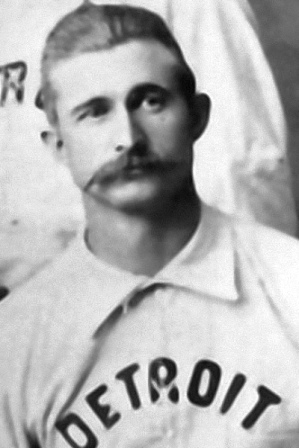
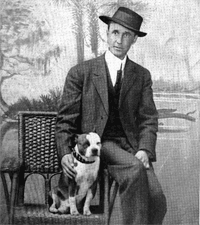
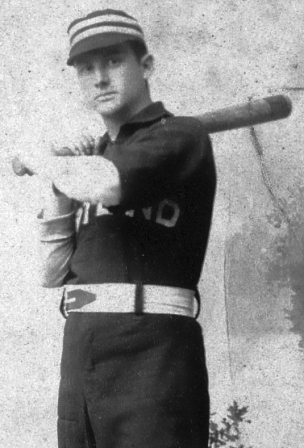
Hall of Fame outfielder Sam Thompson was known for his excellent arm.  After four seasons with the Detroit Wolverines, he was sold to the Philadelphia Quakers in October of 1888. Several months after the sale it was revealed that he had a bad shoulder.

Sam Thompson

Sam Thompson

The speculation about how the injury might affect Thompson led The Cincinnati Enquirer to talk to “the old man of base-ball” Harry Wright about the art of throwing:

“Thompson’s trouble was entirely in the shoulder.  His arm muscles or elbow joint never bothered him.  He can, if he chooses, learn to throw without using his shoulder quite so severely as is natural for him.  The correct way to throw is to start the ball at the height of the ear, but after a man has had trouble with any of his throwing muscles he can often change his style of throwing with benefit.  Take Jack Rowe for an example.  He cannot throw naturally, and yet he plays a very good shortstop by snapping the ball with a peculiar wrist motion.  (John) Meister throws in a similar fashion.

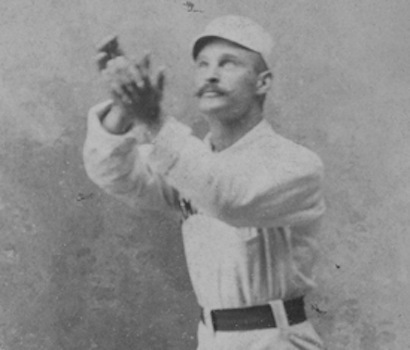
Harry Wright

Harry Wright


“When I first tried to play baseball I could not throw twenty yards, and yet I could bowl very effectively.  I had lamed my shoulder with cricket playing.  I knew that I must learn to throw if I wanted to play baseball, so I put in a whole winter of practicing.  I was then living in Hoboken, and every day I would go down to the river and throw stones for an hour or so.  I had to snap my arm and wrist something as Rowe does, and at first, I could not tell where the stone was going to land.  I would throw an old bottle or piece of wood out into the stream and practice at that.  Before spring, I could hit the mark nearly every time, and could throw a ball seventy yards without difficulty.”

“Evans, who, at the Least, is Incompetent”

2 Dec

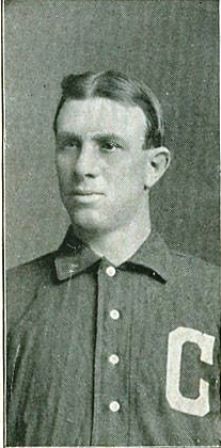
William George “Billy” Evans was nicknamed “The Boy Umpire” when he was hired by the American League at the age of 22.  After 21 seasons  he became a front office executive, working for the Cleveland Indians, Boston Red Sox and Detroit Tigers; he was also president of the Southern Association, authored two baseball books and in 1973, 17 years after his death, was elected to the Baseball Hall of Fame.

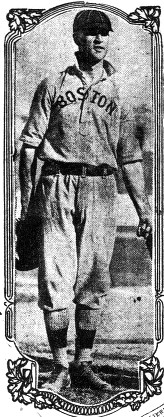
Billy Evans

Billy Evans

But during his first season as an umpire, 1906, he was not held in high esteem in Chicago.

On September 10 the White Sox were in second place, a game behind the New York Highlanders.  The Sox trailed the Tigers 2 to 1 in the 9th inning.  Chicago shortstop George Davis laid down a bunt and was called out at first by Evans.  Every Chicago paper said Evans beat the throw by “at least a step.”

The call precipitated a near riot.  The Chicago Tribune said:

“Instantly a shower of bottles from the first base bleachers drove the umpire, coacher, and players away from the vicinity of the base.”

After the next two batters were retired:

“Evans walked off the field amid another volley of bottle from the third base stand.”

The Tribune and The Chicago Inter Ocean said Evans and fellow umpire Tommy Connolly were mobbed by fans as they attempted to leave the ballpark with a police escort.  Both papers said “one or two blows” from fans connected with the umpire during his retreat.

The Inter Ocean said, “Evans has been the most heartily reviled arbiter that ever worked in any league.”

The Tribune said two weeks earlier Evans cost the Sox a game in Philadelphia.  After Chicago scored two runs in the top of the sixth inning to take a 5 to 4 lead, Evans “let the Athletics take advantage of his inexperience,” and stopped the game on account of rain with two men out in the bottom of the inning.  The Inter Ocean said, “(Sox Manager Fielder) Jones and (second baseman Frank) Isbell nearly came to blows with the umpire and members of the Athletic team.”

After a half hour, the game was called and the score reverted back to the end of the 5th inning, giving Philadelphia a 4 to 3 victory.

The next day, September 11, the Sox played the St. Louis Browns at South Side Park.  Evans worked the game along with Jack Sheridan.  The newspapers said Sox owner Charles Comiskey had discontinued the sale of “bottled goods” at the park that day.

The Browns won 7 to 3, and the Chicago press put much of the blame for the loss on the rookie umpire.

The Tribune said:

President (Ban) Johnson’s persistence in sending Evans, who, at the least, is incompetent, is giving baseball a black eye in Chicago.  Half the crowd believes the charges that Evans is working under instructions from Johnson to beat Chicago.  These charges undoubtedly are founded on mere prejudice, yet, had Evans been under instructions and trying to beat Chicago, he could not have done better than he did yesterday.”

The Inter Ocean said the Browns “were aided and abetted by Umpire Evans, the boy wonder…Why Ban Johnson insists upon sending the joke to officiate at important games is more than any sane man can see.”

But the Evans’ most ardent critic was William A. Phelon, sports editor of The Chicago Journal:

“Umpire Evans is the worst that ever yet came down this or any other pike in the history of the modern universe…And Ban says he is the best in the game.  We are not selfish and we are willing to let some other city endure him.  We can get over the shock of his removal.  If he doesn’t move he may have a statue down on the lake front, a statue 200 feet high made of bottles.  Give us liberty, give us death, give us any old thing, but, by the snakes of old Ireland, give us an umpire!”

Phelon also said Evans “seems to be a gentlemanly individual, whose place in life is evidently a long ways from the profession of umpiring.”

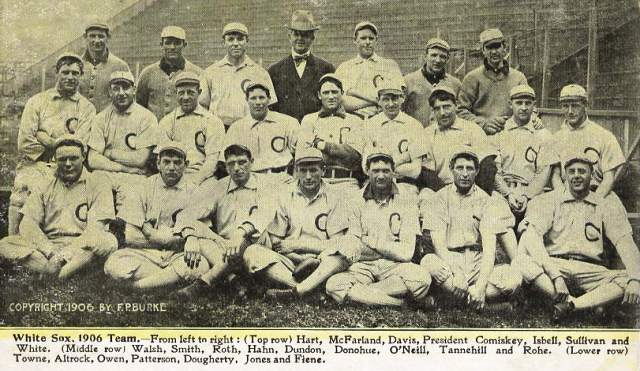
1906 White Sox

Despite the blame heaped on the young umpire in the press, the White Sox went 17-7 the rest of the season and won the pennant by three games.  They went on to beat the Chicago Cubs 4 games to 2 in the World Series.

Things got better for Evans as well.  He worked his first World Series in 1909—the youngest umpire to do so– and participated in five more from 1912 to 1923.  He was the third umpire to be elected to the Hall of Fame; Connolly and Bill Klem were the first two.

“The Cleverest bit of Quick Thinking I ever Witnessed”

26 Nov

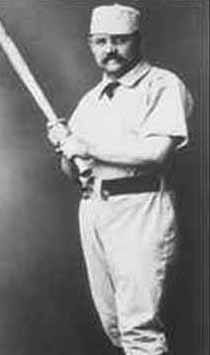
Hugh Fullerton was one of baseball’s most influential writers; his career began in 1889 and he was active into the 1930s.  Widely credited as the first writer to directly quote players and managers, he is the source of hundreds of stories. Some, like the story the story of Bill Lange’s fence-crashing catch, are likely untrue.  Others may be apocryphal, or exaggerated.

Hugh Fullerton

Hugh Fullerton

This one is about Hall of Famer John Alexander “Bid” McPhee:

“The cleverest bit of quick thinking I ever witnessed was years ago in Cincinnati, and Bid McPhee, the ‘King,’ pulled it off.  How fast he thought only can be guessed.  It must have been instantaneous.  Bid was on first base with nobody out, when somebody drove a ball straight at ‘Wild’ Bill Everitt who was playing first for Chicago.  Bill dug up the ball, touched first, and made one of his copyrighted throws to second to catch Bid, having plenty of time for the double play.

Bid McPhee

Bid McPhee

“The ball disappeared.  (Bill) Dahlen, who was on second, never saw it.  He thought the ball had hit Bid.  The umpire, crouching to see the play at the base, lost the ball.  Bid hesitated at second, glanced around, saw the entire Chicago infield running around wildly and tore for third.  At third, after turning the base, he hesitated again, looked back, and then tore for home.  From his actions both at second and third any spectator would have sworn Bid was as ignorant of the whereabouts of the ball as were the Chicago players.

“The Chicago team was wild with excitement and the crowd was mystified.  No one knew where the ball was.  The only clue was a yell of amusement from the Cincinnati bench.

“The ball had disappeared utterly and the umpire threw out a new one.  After the game we learned what had become of the ball.  Everitt hit Bid with it.  The ball had struck him under the arm, and holding it tight against his body Bid carried it entirely around the bases and to the bench while acting as if he didn’t know where it was.”

Bowerman by TKO

5 Nov

“The Popular Magazine,” a literary magazine that billed itself as a “magazine for men and women who like to read about men,” was published by Street & Smith from 1903 until 1931.

In 1904, the magazine told the story of a fight the previous season involving New York Giants catcher Frank Bowerman.

Frank Bowerman

Frank Bowerman

Bowerman was not kept by Fred Clarke when the Pirates and Louisville Colonels merged after the 1899 season; his contract was assigned to the  Giants.  Apparently some bad blood remained into 1903, and according to the magazine, Giants manager John McGraw used Bowerman’s grudge and some comments made by Clarke to try to light a fire under his team:

“When the Giants were in Pittsburgh (on June 1) last season McGraw noticed that there was bad feeling in the team.  The men stood in little knots in the hotel corridor glowering at other players; they rode to the field in a bus without exchanging a word; the preliminary practice, usually so brilliant, was dull and lifeless.  This worried McGraw.”

John McGraw

John McGraw

The article said McGraw had figured out the cause a few days later in Chicago; Bowerman had sat in the grandstand for that June 1 game, being unable to play due to an injured thumb.  Jack Warner caught Christy Mathewson that day.  What McGraw discovered was that Clarke said Bowerman was overheard criticizing Warner’s work behind the plate, blaming his teammate for one of the two runs scored off of Mathewson:

“This, of course, was tantamount to Bowerman’s asserting his superiority over Warner, a boast that ballplayers are rarely guilty of.”

McGraw cornered Bowerman who insisted Clarke had told “the meanest lie that ever was told, and I told Jack Warner so, but he don’t believe it.”  McGraw told him to keep quiet about it until the Pirates visited New York on June 26.

“(McGraw) proceeded to reinject that esprit de corps by a measure so drastic that it horrified ball patrons all over the country, who, however, thought it merely an incident of the brutality of ballplayers.  Instead of that, it was a well-planned scheme of a crafty general.”

When the Pirates arrived at the Polo Grounds on the morning of the 26th, McGraw took Bowerman aside:

“’Frank, have you got a good right swing?’  The Michigan Lumberman smiled grimly and clenched a fist knotted and as hard as Hercules’ war club.  ‘Well, it’s up to you, then,’ advised McGraw, “to put life in the team. Don’t lose any time.’ Bowerman understood.

“”’I’d like to speak to you a minute,’ he said to Clarke, as the Pittsburgh captain was passing through the gate on his way to the clubhouse.  They went into the stuffy box office; where there was hardly room to swing a cat.  Three times Bowerman demanded an explanation, offering to bring McGraw and Warner in as witnesses…Clarke went down three times and finally admitted he had enough…The Giants played that day, to use the expression of a rooter, as though they were ‘fighting their weight in wildcats.’  Bowerman and Warner coached each other with pet names, and walked lovingly from the victorious field arm in arm, while Fred Clarke was buying a pound of raw beef.”

Fred Clarke

Fred Clarke

“The Popular Magazine” story added an element that differed from the coverage in New York and Pittsburgh newspapers—while each town pointed fingers at the other (in Pittsburgh Bowerman was an out of control thug, while in New York, Clarke got what he deserved for stirring up trouble) no one else suggested that McGraw engineered the fight to motivate his club against the first place Pirates.

The Giants weren’t able to catch Pittsburgh, finishing in second place six and a half games behind the Pirates.

National League President Harry Pulliam initially announced that there would be no punishment for either player because the fight did not take place on the field, three weeks later, under pressure from Pirates owner Barney Dreyfuss, Pulliam fined Bowerman $100.

Lost Advertisements–Ready! Lajoie Baseball Guide

25 Oct

lajoieguide

Above is a 1906 advertisement for an Atlanta hardware store offering the inaugural edition of “Napoleon Lajoie‘s Baseball Guide.”  The Lajoie Guide was intended to compete with the well established Spalding and Reach Guides, and sold for 10 cents, but despite Lajoie’s popularity the guide failed to catch on and was only published for three years.

In addition to the standard recap of professional baseball leagues across the country, and many photos, the Lajoie guide included a significant amount of information specific to its name sake.  An advertisement for the Cincinnati-based Queen City Tobacco Company said:

Lajoie Chews Red Devil Tobacco

Ask him if he don’t

reddevil

Grantland Rice wrote for the guide, and the first edition included a Rice-penned poem called “For Lajoie’s in Town:”

We’ve gazed on Mr. Roosevelt,

Who rules this whole wide land.

We’ve looked at Carrie Nation, 

And shook Jim Corbett’s hand

We’ve eaten bread with Robert Fitz

And chummed with George Tebeau.

We’ve drank out beer with Mr. Schlitz.

Great notable we know.

We’ve interviewed Friend Morgan,

Thrown talk at old John D.

We’ve opened wine with Sullivan

And seen Prince Hennery.

King Edward is a bosom pal,

Langtry our school-day girl.

Dick Croker smiles in our face,

We’ll give Boss Fame a whirl

*     *     *     *     *     *     *     *

Around the shrine of heroes

There’s little we’ve not seen.

We’ve talked to all, both great and small,

Of high and lowly mien.

But this group pales beneath the looks

Of one of far renown.

Hats off!The greatest comes today,

For Lajoie’s in town.

T. Roosevelt’s backed off the boards,

A plater is king Ed.

Langtry a chorus lady now,

The others are all dead.

For Lajoie, pride of several leagues!

Lajoie, the mighty man!

Lajoie, his bat and fielding glove

Knocks out the wholes blamed clan.

The 1906 Lajoie Guide

The 1906 Lajoie Guide

“You can try to Refine and Civilize Baseball all you want”

21 Oct

In 1912, Joe Kelley, former player and manager (and future Hall of Famer) told William A. Phelon, sports editor of The Cincinnati Times-Star, a story about the lack of civility in baseball and a game Kelley claimed took place when he was with the Baltimore Orioles in the 1890s:

“You can try to refine and civilize baseball all you want and you can make a parlor game out of it by giving the umpires power of life and death, but you can’t kill off the players’ tongues unless you stun ‘em with an ax.

“Years and years ago, I well remember, two ball clubs tried to pull a polite and courteous ballgame, just to see how things would work.  The old Baltimores and the old Bostons (Beaneaters)—which were real ball clubs both of them—held a conference one afternoon.  There had been a lot of talk and newspaper criticism about rough house work and bad language—and we wanted to show the press and public that we could be good, decent people after all.  We agreed to try out the polished conversation and Golden Rule stuff for this one occasion, and Tim Hurst, who was slated to umpire, agreed to help the good work along.”

——

Joe Kelley

Joe Kelley

“The first half inning went by something lovely.  Even when Tim called a strike on Tom McCarthy that was a foot over his head, there was no outbreak.  Say Tom, very gently, ‘Wasn’t that ball a trifle high, Mr. Umpire?’  And says Tim, all courtesy, ‘I fear I may have erred in judgment, Mr. McCarthy.  Kindly overlook it, if you will.’ And in our half, when Jack Doyle went down to second in a cloud of dust, and Tim said ‘Out,’ Jack jumped up, and red in the face, yelled ‘What the —-‘ and caught himself in time.  ‘Pardon me,’ says Jack, ‘but I honestly thought that Mr. Long failed to touch me.’  And says Herman Long, equally polite, ‘I am under the impression that I did touch Mr. Doyle.

“And in the very next inning the blow-off came.  Three on and two gone with Hughey Jennings batting.  (Heinie) Reitz made a dash for home on what he thought was a passed ball.  The Boston catcher (Charlie Ganzel) recovered it, but as he dove for the putout, Jennings wandered against him and knocked him 10 feet away.  ‘Out fer interference,’ yelped Hurst—and then everybody arrived at the plate all in a bunch.

Tim Hurst

Tim Hurst

Kelley said there was a chaotic scene at home plate.  Reitz was screaming at Hurst while Jennings and Ganzel nearly came to blows:

“’Fer Moses sakes remember,’ I interposed, ‘that this is supposed to be a polite courteous game, just to show how well we can behave—‘ and somebody hit me across the map with a catching glove.

“’I can lick every wan av yez,’ howled Tim Hurst, and I’ll do it, too, if you’re not back in your places inside a half-minute.’

“’You’re a cheap crook,’ said John McGraw.

“’You’re all a bunch of yellow dogs,’ said Herman Long, addressing the whole Baltimore team, sort of impersonally.

“and when the police arrived the rules of etiquette had been fractured so badly I never heard of their being reinstated.  That was, I think, the first, last and only time that a courteous ball game was staged in big league company.”


Jimmy Rogers

16 Sep

In January of 1897 owner Barney Dreyfuss and the directors of the Louisville, Colonels met to determine the future of the club.  The Louisville Courier-Journal said:

“The most important meeting in the history of the Louisville Base-ball club was held last night at the Louisville Hotel.  It was marked by more liberality than had been shown by the club during all the years since it became a member of the big league.”

No one was surprised that Dreyfuss’ protégé, team secretary Harry Clay Pulliam was named team president, nor was it surprising that Charles Dehler was retained as vice president.

But no one had predicted the Colonel’s choice to replace Bill McGunnigle as manager.

McGunnigle had succeeded John McCloskey, and the two combined for a 38-93 record and a twelfth place finish.

James F. “Jimmy” Rogers would be a first-time manager; three months short of his 25th birthday and only 110 games into his major league career.  The Courier-Journal knew so little about the new manager that the paper got his age and place of birth wrong, and also reported incorrectly that he had minor league managerial experience.

While he had only played 72 games with Louisville in 1896 and only 60 at first base, The Courier-Journal called Rogers “the best first baseman the Colonels ever had.”  Even so, the paper acknowledged that “as a manager he is yet to be tried.”

Just why was he the right man to manage the team?

“One of the chief reasons Rogers was selected was that he is sober.”

Jimmy Rogers

Jimmy Rogers

Despite being “the best first baseman the Colonels ever had,” Rogers opened the season as the team’s starting second baseman; thirty-five-year-old minor league home run king Perry Werden, acquired from the Minneapolis Millers of the Western League played first base for Louisville.

The team won five of their first seven games, and then went 12-22 through June 16 when Rogers was fired as manager and released; he was hitting .144 and made 16 errors in forty games at second base.

Rogers was replaced as manager by Fred Clarke; the future Hall of Famer was two weeks shy of his 24th birthday.

The Cincinnati Post said the outgoing manager was not only to blame for the team’s poor performance but also for center fielder Ollie Pickering’s slump; Pickering hit .303 after joining Louisville in August of 1896 but was hitting .243 on the day Rogers was let go:

“The claim is made that Jimmy Rogers is responsible for the decline of Pickering.  The Virginian created a sensation last fall, but “Manager Jimmy” tacked the title “Rube” to Pick, and it broke his heart.”

Ollie "Rube" Pickering

Ollie “Rube” Pickering

Pickering was released in July, signed with the Cleveland Spiders, and apparently recovered from his broken heart, hitting .352 in 46 games for Cleveland.

Rogers would never play another major league game.  He was signed by the Pittsburgh Pirates the day after Louisville released him, but became ill with the flu and never played for them.  A month later he joined the Springfield Ponies in the Eastern League and finished the season with them.  Rogers played for East Coast minor league teams until in August of 1899 when he became ill while playing with the Norwich Witches in the Connecticut League.

In January of 1900, Rogers died at age 27.  Two different explanations for his death appear in various newspapers; both may be wrong.  The Courier-Journal and several other newspapers said his death was the result of the lingering effects of “being struck on the head by a pitched ball several years ago while playing in the National League.”

The New Haven (CT) Register repeated the story about Rogers being hit by a pitch, and said that while that injury contributed to his death, he had died of Bright’s disease—a kidney ailment now referred to as nephritis.

Rogers’ Connecticut death certificate listed the cause of death as a bacterial inflammation of the brain.

The First Triple Play in the West

12 Sep

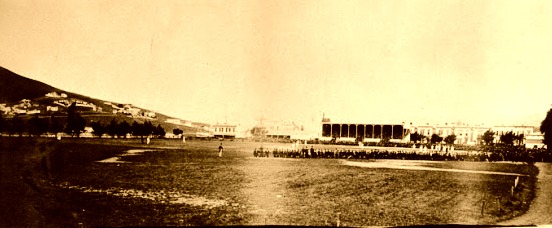
On April 4 of 1880, the California League San Franciscos and Athletics met at the Recreation Grounds (the park was located at 25th and Folsom).

San Francisco's Recreation Grounds

San Francisco’s Recreation Grounds

Two newspapers in town treated the key play of the game very differently.

The San Francisco Bulletin’s coverage of the game was headlined:

Extraordinary Base-Ball Play

The San Francisco Chronicle headline:

An Uninteresting Game with a Score of 4 to 1—Very Poor Playing on the Part of the San Franciscos

In the eighth inning, the San Franciscos’ Al Mast was on second and Andy Piercy was on first.  George “Live Oak” Taylor was at the plate.

Hall of Famer James “Pud” Galvin was pitching for the Athletics; Galvin, in a contract dispute with the  Buffalo Bisons, played several months in California before jumping the Athletics to return to Buffalo in May.

Pud Galvin

Pud Galvin

The second baseman was Jim McDonald, a 19-year-old San Francisco native.

The Bulletin’s first paragraph referred to “The feature of the game” and said:

“(Taylor) struck a powerful ‘liner’ to second base, which was neatly captured by McDonald, and placing his foot on second forced Mast out, and then threw the ball to first in time to cut Piercy off.  The play was vociferously applauded.  There is but one other instance in the history of the national game where this play has been made.”

(The article was referring to Providence Grays center fielder Paul Hines’ disputed unassisted triple play, turned two years earlier versus the Boston Red Caps)

The Chronicle, while mentioning McDonald’s play was less impressed, mentioning the play deep into its much longer recap of the game.  The paper noted that McDonald made three errors earlier, and “in a measure he redeemed himself by an effective pay in the eighth inning,” the paper described the play and noted that McDonald “was deservedly applauded for it.”

Despite the triple play The Chronicle questioned the wisdom of McDonald being in the lineup:

“(McDonald) is a player of some promise, but the policy of putting him in the important position he fills is a questionable one.  In his practice games his playing in brilliant, but in a match contest he appears to lack the necessary confidence, and in baseball vernacular he falls all to pieces.”

Jim McDonald

Jim McDonald

McDonald played primarily on the West Coast, but had a brief career in the East, spending time in all three major leagues in 1884 and 1885.  He played two games for the Washington Nationals in the Union Association, 38 with the Pittsburgh Alleghenys in the American Association and five with the Buffalo Bisons in the National League.

After his playing career ended in 1894, McDonald was an umpire in the National League and California League, and a West Coast boxing referee; he officiated many fights including Jim Jeffries 1898 victory over Peter Jackson and Abe Attell’s 1903 20 round draw with Eddie Hanlon.

His active career came to an end in 1904 when he was diagnosed with Tuberculosis; he died in 1914 in San Francisco.

“A Great deal of foolish Sympathy was wasted on Rusie”

5 Sep

Hank O’Day, pitcher and Hall of Fame umpire, said Amos Rusie was the greatest pitcher ever:

“Amos is the greatest pitcher the country ever saw. Why, Rusie had more speed in his curve ball than any pitcher I ever saw before, or have ever since seen, has in his straight fast ones.  Rusie was a wonder—that’s all there is to it.  I was behind the plate one day when one of Rusie’s  fast incurves hit Hughey Jennings…the ball hit Jennings squarely in the temple, and he fell as though shot by a ball from a Winchester rifle.  I caught him in my arms as he toppled backwards—and he was out of his head for three days.” (Contemporary reports of the incident said Jennings actually finished the game, but later lost consciousness for four days)

O’Day was also on the field when Rusie blew out his arm in 1898; Rusie threw to first to pick-off Chicago Orphans outfielder Bill Lange and “his arm cracked like a pistol’s shot.”  In 1940 Lange told his version of the story to The Portland Oregonian:

“Amos Rusie, I don’t know of any better one and I never played against any other one as good.  He had great control, as well as everything else a pitcher should have.  But my base stealing got him.  He worried over it.  I guess he lost sleep over it.  Anyway, one day he showed up on the field and said he had developed a new way to catch me off of first without turning his body.  I was anxious to see what he had, and he caught me off of first.  But—and it was a mighty large but—in doing so Rusie threw his arm out.  And never could pitch in his old form again.”
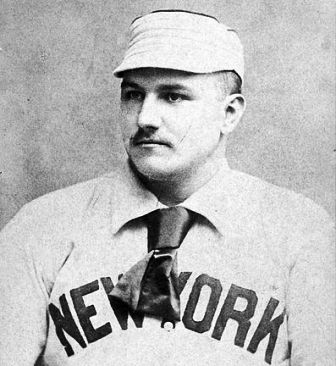
Amos Rusie

Amos Rusie

Rusie, with a dead arm, became a benchmark, an oddity, and a cautionary tale.

He posted a 246-173 record before the injury; after sitting out all of 1899 and 1900 he was traded to the Cincinnati Reds for Christy Mathewson, appeared in three games, was 0-1 with an 8.59 ERA, and his career was over.

In the decade between 1898 and 1908 The Sporting Life christened “the next Rusie,” or “another Rusie” no less than 20 times; scores more were given the same title by newspapers across the country.  Most like Cecil Ferguson (career 29-46), Davey Dunkle (17-30), Cowboy Jones (25-34), and Whitey Guese (1-4) were busts.  The three best were Orval Overall (108-71), who was called the “next Rusie” more than anyone else; Ed Reulbach (182-106), and Hall of Famer Ed Walsh (195-126).

During that same decade there were regular, small items in newspapers about Rusie’s post National League life.  Shortly after his release from the Reds in June of 1901 papers reported that Rusie, “who commanded a salary of many thousands of dollars, is now working as day laborer at $1.50 a day.”   The pitcher told a reporter “This shows I am not afraid to work, but it’s an awful comedown in salary.”

The Dallas Morning News pulled no punches in their assessment of his plight:

“The dismal afterclap to the brilliant career of a once-famous ballplayer whose name was a household word in balldom…reckless wastefulness in financial matters and a total disregard for physical care brought Rusie to his present deplorable condition when he should have been in his prime, for the big fellow is barely 30 now.”

In 1903 it was reported that Rusie had joined the Vincennes (IN) Alices in the Kitty League.  While no statistics survive, he appears to have stayed with the team for most of the summer.  The Detroit Free Press said he was “playing for a salary of $75 per month.”

After the 1903 season he went to work in a lumber yard, and the regular reports on his activities as a “low-wage laborer” appeared regularly in newspapers.  The items became such a regular feature that The Associated Press, in a short story about the Philadelphia Athletics’ eccentric and troubled Rube Waddell in 1904 said:

“Rube has run the gamut of foolishness.  He is in his prime but a few more years of such lack of sense as he displayed last season will send him to the wood pile or coal heap and he will, like Amos Rusie, be occupying two inches in the has-been columns every spring.”

There were multiple reports that Rusie was coming back as a pitcher for the 1906 season.  The rumors started in September of 1905 when Rusie attended an exhibition game in Vincennes between the Alices and the Chicago Cubs.  The Philadelphia Inquirer said of the news:

“If you don’t know the tremendous importance of this announcement you are no baseball fan.”

Not everyone agreed that Rusie returning to baseball would be a good thing.  A report from The News Special Service, which appeared in many Midwest papers said:

“His habits were none of the best, and he rapidly deteriorated in efficiency as an athlete.  He refused to pitch one whole season because he had been fined by the New York (Giants) management for being intoxicated and abusing his wife.  A great deal of foolish sympathy was wasted about that time on Rusie, but he was entitled to nothing except what he received, and some who knew the circumstances thought stricter disciplinary methods would not have been amiss.”

Rusie didn’t sign a contract that spring; and two other rumors that John McGraw had sent him a letter inviting him to spring training with the Giants and that he would return to the Kitty League didn’t materialize either.

But Rusie did make the news again in June.  A man named Gabe Watson was collecting mussels in the Wabash River when his boat when his boat overturned.  The Evansville Courier said Rusie pulled the drowning man from the river.

The nearly annual reports of “Rusie’s return” ended after 1906, but Rusie’s many career, and life changes continued as newspaper copy for the next twenty years.

When pearls were discovered in the Wabash River’s mussels, Rusie became a pearl diver.  Two years later he was in Weiser, Idaho, serving a 10-day sentence for public drunkenness.  In 1910 he was in Olney, Illinois working in a glass factory.  The following year he moved to Seattle, Washington.  For the next decade served as an umpire for a couple of Northwestern League games, worked as a ticket taker and groundskeeper at Yesler Way Park and Dugdale Field, home of the Seattle Giants, and also worked as a steam fitter.  Rusie went to jail at least once while in Seattle, and remained a big enough name that when he was injured by a falling pipe in 1913, it made newspapers throughout the country.

In 1921 Rusie became another in the long line of former players hired by the New York Giants at the behest of John McGraw.  According to newspaper reports McGraw offered the former pitcher a “job for life” as a “deputy superintendent” at the Polo Grounds.  Interest in Rusie’s career was renewed, and the pitcher was regularly interviewed for the next couple of years, reminiscing about his career and about how he’d like to have had the opportunity to pitch to Babe Ruth.

Unlike most of the former players who McGraw found work for at the Polo Grounds, Rusie did not stay for the rest of his life; he returned to Auburn, Washington in 1929 and bought a farm, where he remained for the rest of his life.  He was badly injured in a car accident in July of 1934—The Seattle Daily Times said Rusie’s vehicle overturned and he sustained a concussion and broken ribs.

While he received less attention after being incapacitated after the car accident, Rusie was still mentioned frequently in the press until his death in 1942; contrary to oft-repeated fiction that he died in obscurity.  And his obituary appeared in hundreds of papers across the country in December of 1942.  It wasn’t until the post WWII area that Rusie stopped being a household name, which led to his final comeback in the 1970s; Rusie was inducted into the Hall of Fame 34 years after his death.

Happy Labor Day

2 Sep
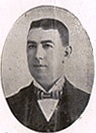
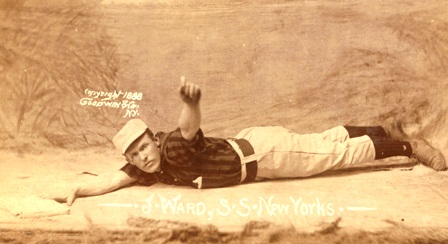
John Montgomery Ward

John Montgomery Ward

John Montgomery Ward spearheaded the movement to create baseball’s first union.  He invoked the recent memory of slavery in his article entitled “Is the Base Ball Player a Chattel?” in “Lippincott’s Monthly Magazine,” in August of 1887:

“Like a fugitive slave law, the reserve rule denies him a harbor or a livelihood, and carries him back, bound and shackled, to the club from which he attempted to escape.”

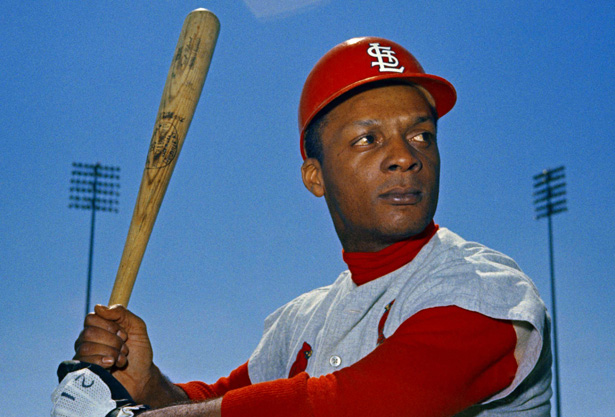
Curt Flood

Curt Flood sat out the 1970 season, refusing to report to the Philadelphia Phillies after being traded by the St. Louis Cardinals.  He challenged baseball’s reserve clause all the way to the United States Supreme Court.  Despite losing his challenge in 1972, Flood’s case was a major factor in the elimination of the reserve clause.

“I’m a human being I’m not a piece of property. I am not a consignment of goods.”

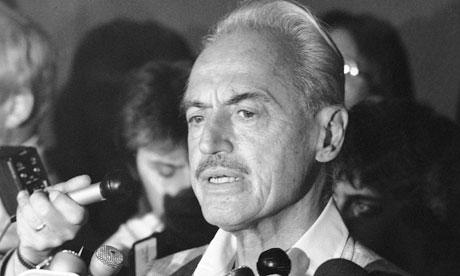
Marvin Miller

Marvin Miller

As Executive Director of the Major League Baseball Players Association from 1966 to 1982, Marvin Miller transformed the players union from a toothless entity to one of the nation’s strongest unions.  Jim Bouton, quoted by National Public Radio in 2009:

“If not for politics, so obvious to everyone, Marvin would have been voted in (to the Hall of Fame) years ago. Instead of pointing to the sky, today’s players should be pointing to Marvin Miller.”