Tag Archives: Honus Wagner

“When Wagner Comes to Bat”

24 Dec

A poem composed by Grantland Rice in The Nashville Tennessean in 1909:

Grantland Rice

Grantland Rice


I know just how a fellow feels the cold gray ‘morning after;’ when all about the ceiling reels there’s little show for laughter;

I know just how it hits a guy when bills begin to grow, and bill collectors on the sly line up in motley row;

I know exactly how he feels when up and down they face him, and with a line of endless spiels they follow him and chase him;

But in the line of ticklish deals that send one to the mat, I wonder how the pitcher feels when Wagner comes to bat?

I know about how Roosevelt feels out in the jungled space, with boa constrictors at his heels and hippos at his face.

I know how it would strike me out in some wild western lair, if I should swiftly turn about, and face a grizzly bear, or walking down a street high-fenced, with no long stretch to run, should find my features pressed against an automatic gun;

But in the line of ticklish deals that leave one feeling flat, I wonder how a pitcher feels when Wagner comes to bat?

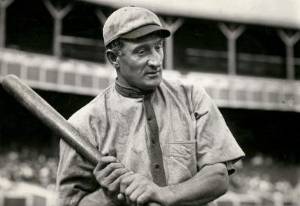
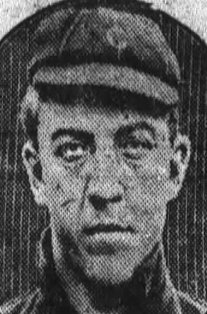
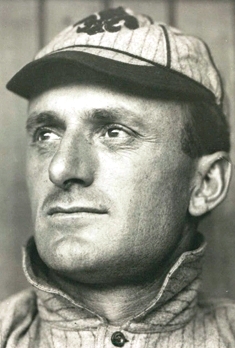
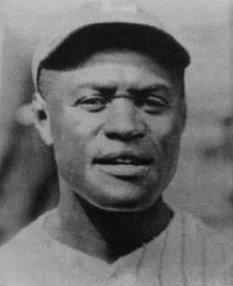
Honus Wagner

Honus Wagner

“Is Napoleon Lajoie a Hoodoo?”

14 Nov

Napoleon Lajoie had his share of superstitions and sought to avoid “Hoodoo,” like most players of his era.  But, as Lajoie was winding down his long career, hitting un-Lajoie like .246 for a horrible Philadelphia Athletics team (36-117) in 1916, The Philadelphia Bulletin presented a case that Lajoie himself was the problem:

“Is Napoleon Lajoie a hoodoo?

Napoleon Lajoie

Napoleon Lajoie

“Several baseball managers and ‘Larry’ himself would like to know the answer.  And here is why:

“Lajoie, for many years recognized as the king of second basemen and dubbed ‘King Larry,’ now has visions of the waning of his baseball star of fame, and he has never played on a pennant-winning team…For years he hit well over the .300 mark—once over .400—was one of the most dangerous men to pitch to in a pinch, and fielded his position around second base in a finished, manner—so finished in fact, that he won the distinction of being the classiest second-sacker in baseball.  Every move of the big Frenchman was grace personified.

“Notwithstanding the fact that he was a star of the first magnitude, ranking with Hans Wagner of Pittsburgh—and they are the two real stars of baseball of former years—he never was able to help his team to the pennant.  So, when Lajoie was sold to Connie Mack dopesters and Larry himself thought he eventually would get into a World Series.  But alas!

“Larry joined the Athletics in the spring of 1915, and while his admirers were expecting him to get back his batting eye, which had apparently been dimmed while he was in Cleveland, Connie Mack decided to tear down his wonderful machine.  (Eddie) Collins, (Ed) Plank, (Charles “Chief”) Bender, (Jack) Coombs, and (Jack) Barry were sold (or released), while (Frank) Baker played bush league ball because Connie would not meet his salary demands, and the famous $100,000 infield of the Athletics was wrecked and the run making machine of the world champions was put out of commission.  And the hopes of Larry and his enthusiastic followers went glimmering.  He is on a tail-end team, just like he was at Cleveland.

“And worst of all from Lajoie’s point of view, the Cleveland team has been holding down first place in the American League for many weeks and is a contender for the pennant.

“The question, ‘Is Napoleon Lajoie a hoodoo?’ Again presents itself.”

While Cleveland was in first place as late as July 12, the Lajoie-hoodoo-free Indians still faltered and finished seventh in 1916.

After Philadelphia’s disastrous season—they finished 54 and a half games back—Lajoie accepted the position of player-manager with the Toronto Maple Leafs in the International League.  The 42-year-old second baseman hit a league-leading .380 and led the Maple Leafs to the championship in 1917—the first, and only of his career.

“The Annual Spring Typhoon has Blown up Again”

10 Nov

In 1906, despite being, on paper, the best team in the American League, the Cleveland Naps finished in third place, five games behind the Chicago White Sox.  The club had three twenty game winners—Addie Joss, Bob Rhoads, and Otto Hess—and four regulars who  hit better than .300—Napoleon Lajoie, William “Bunk” Congalton, Elmer Flick and Claude Rossman,

As the 1907 season approached, Grantland Rice, of The Cleveland News said the team was now a victim of the success of individual players:

“The annual spring typhoon has blown up again—only a bit worse than ever.  In nearly every big league camp well-known athletes are breaking into loud roars over the pay question, and there promises to be quite a batch of trouble before the storm is cleared away.  In this respect Cleveland heads the list, although Napland owners have one of the highest salary lists in the game.  Up to date Joss, Rhoads, (Terry) Turner and Congalton have balked, while neither Flick nor Hess have returned a signed contract.”
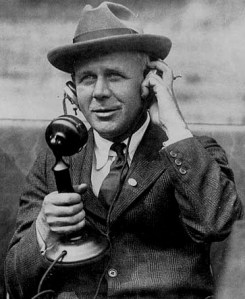
Grantland Rice

Grantland Rice

Rice said the club’s negotiations with Joss and Rhoads were at an impasse, and “just how it will end is a matter of uncertainty.”  The news of the team’s trouble signing their stars led Rice to a discussion of “just how much a major leaguer is supposed to receive for his work each season.”

“When a youngster breaks in he is never given less, or at least rarely so, than he received in his minor league berth.  His pay is boosted the greater part of the time, so the average debutante’s pay roll ranges closely around $1,800 providing he is recognized as a first class man.

“If he delivers the goods his first year out he can figure on about $2,000 or $2,200 for his next season, and then if he becomes established as a regular, his income should be somewhere in the immediate vicinity of $2,500.

“From this point upward it all depends on their rankings as stars.  You hear considerable about $5,000 contracts and better, but as a matter of cold, clammy fact, but few athletes draw over $3,000 or $3,500 at best.

“In the epoch of war salaries $3,500 or $4,000 was a fairly common figure—but no more.

“A high grade slabman along the order of Joss, Rhoads (Nick) Altrock, etc…will rake in about $3,000 now.  In his weekly letter in a Toledo paper (The News-Bee), Joss stated that he was offered $3,000 for his season’s work, but that he demanded more—just how much he didn’t say.

“George Stone drew $3,000 or there abouts last season and now that he has fought his way to the premiership in the School of Slugs he demands $5,000, at which figure Mr. (Jimmy) McAleer balks strenuously.  (Johnny) Kling also asks for $5,000, which sum Charley Murphy says he will not receive.

“From this list we jump to the drawing cards of the game such as Lajoie, (Honus) Wagner, (Wee Willie) Keeler, (Christy) Mathewson, etc…

“Lajoie’s figures range somewhere above $8,000 and something shy of the $9,000 mark.

“Wagner is supposed to draw $5,000 for his work.

“If reports sent out from New York are true, Keeler’s yearly ante is close to $6,000, while Mathewson draws in about the same.

Hal Chase won’t miss $3,500 very far.

“But the high-priced teams are not pennant winners by a jug full.

(Charles) Comiskey and (Connie) Mack hew closer to the line than any others in Ban Johnson’s circle, and yet these two have won more pennants than all the rest put together.  In fact, they’ve gotten away with all but the two which Boston nailed.

“Mack had one of the cheapest, if not the cheapest team in the American League through 1905, the last year he copped the pennant.  Comiskey’s world champions of 1906 were far below Cleveland, New York or even Boston, from the salary standpoint.

“It looks funny to figure the cellar champions of a league paid more than the holders of the world’s title, but if all the figures were given out, the White Sox payroll would loom up under Boston’s to a certainty.

“The full salary cost of running a big league club varies from $40,000 to $50,000, or maybe $55,000 a year.

“A set of figures somewhere between $45,000 and $50,000 would probably hit at the higher average.

“There was a time when Boston’s payroll was close to $70,000 and (Clark) Griffith’s was only a notch below—but this golden era for the ballplayer has passed.”

According to The Washington Post, Joss had earned $3,2000 in 1906 ($2,700 and a $500 bonus), the biography, “Addie Joss:  King of Pitchers,” said he was paid $4,000 in 1907—Joss, who was 21-9 with a 1.72 ERA in 1906, followed that up with a league leading 27 wins (against 11 loses, with a 1.83 ERA) in 1907.
Addie Joss

Addie Joss

Fellow twenty game winners Rhoads and Hess both saw their production slip (15-14, 6-6), and only two regulars—Flick .302 and Lajoie .301—hit better than .300, and the team’s batting average slipped 28 points from the previous seasons.

The Naps finished fourth in 1907.

Wagner’s Mysterious Bat

20 Aug

In 1911 Honus Wagner hit .334, it was his thirteenth straight season hitting better than .320, but he still wondered how much better he could have hit if he had the opportunity to regularly use a bat he once found in Ohio.  He told the story to William A. Phelon in The Cincinnati Times-Star:

Honus Wagner

Honus Wagner

“There was never yet a perfect bat, and I don’t suppose there ever can be.  Not while the shape has to remain perfectly round and fouls can slip off the curving surface, and not while the material breaks just as you are administering a sure home run with the bases full.  I have had bats break when I met the ball fair and square—break deliberately, after months of faithful service—and a feeble grounder would go trickling off the treacherous stick when the force I put into the wallop had spelled at least three bases.”

Wagner said, “bats are strange and moody things,” and that he understood why Pete Browning “used to talk to his bats and credit them with human understanding.”

Pete Browning

Pete Browning

He said he had “handled one that was almost perfection” during 1898, his first full season with the Louisville Colonels.  The team was playing an exhibition game “against some small club in an Ohio river city,” and the Colonels’ bats had already been shipped to their next stop:

“We figured, of course that we would borrow bats from the locals, but we didn’t need to.

“On arriving at the local ball park we found some urchins knocking flies.  One of the kids was using a curious looking bat, long, finely shaped and of a peculiar red-brown color.  I took it from the youngster, examined it, and found that, while it was very heavy, that it balanced nicely in the hand.  I slipped the boy half a dollar for the loan of his bat, and we started the game with the red stick and three or four others of the ordinary pattern which had been scared up by admiring natives.

“We never used the ordinary bats.  That red stick proved to be the proper medicine.  Of course there wasn’t any big league team against us, but the pitcher was one who was destined to be a mighty star in the after years, and he had something that day, believe me.”

Wagner did not say who the pitcher was, but said it didn’t matter how good he was:

“The least tap with that red bat and the ball whirred out in the field like a bullet.  There was spring and a texture to the wood that gave incomparable hitting power.  Tap a fast ball with that bat and it would go for two bases.  Meet a curve and you could send it to the bleachers.  With that bat a man who ordinarily hit .200 would be a .300 hitter, easy, and I blush to estimate the record I could have made therewith.”

Wagner said he and his teammates had “about twenty-eight long hits” during the game, and he asked the boy about the bat’s origin:

“(H)e explained that he had laboriously turned the wood to proper shape himself, and that it was originally the leg of an old-fashioned, broken-down table that his grandfather possessed.  It was some strange oriental wood, something like mahogany, but much heavier and of firmer grain…When the game ended I turned to find the boy, intending to hand him good money for that bat, but the kid was gone.  Apparently afraid we intended to steal his bat…I never saw the boy again, and although I twice played games in that town years after, he never came near the park.  The mysterious bat, brimful of hits, vanished the same afternoon it first appeared and its equal has never been discovered.”

A Goat and a Dog

9 Jul

Edward John “Goat” Anderson played just one season in the major leagues, hitting .205 for the Pittsburgh Pirates in 1907.  He also played 10 seasons in the Central, Eastern and Western Leagues.

Described as eccentric, he made an impression on The Fort Wayne Sentinel in 1903, his first professional season with the South Bend Greens:

“’Goat’ Anderson who made it a rule during the games here to leave his post and come into the infield to argue every point raised by the umpire’s decisions, has stamped himself as the prize rowdy of the association.”

The Pittsburgh Leader said Pirate outfielder Tommy Leach had recommended the team sign Anderson, and told a reporter in the spring of 1907 that Anderson made the team because he was willing to stand up to Manager Fred Clarke while training in Hot Springs, Arkansas:

“(Clarke) had told Anderson to bunt at the signal from a man on first…The ball was pitched five feet outside, and of course, the catcher flagged the man going to second.  Anderson made no move to bunt or even to strike at the ball.  Clarke started to call him.  ‘Shut up,’ you don’t know all there is in the books,’ Anderson replied.  The answer made Clarke gasp…’All right, son,’ grinned Clarke.  ‘I guess you haven’t got stage fright when you can give it to your manager that way.’”

Edward John “Goat” Anderson

Edward John “Goat” Anderson


His excellent fielding, .343 on base percentage and 27 stolen bases with the Pirates impressed the local press, if not the fans.  George Moreland of The Pittsburgh Press said:

“Some fans are of the opinion that “Goat” Anderson, the hustling little right fielder of the Pittsburgh team, is not much of a general use to the Pirates, and that a good move would be made to get another man for the job.  These same fans are the ones who believe that a ballplayer is not worth his salt unless he is a slugger of the Wagnerian stripe…Manager Fred Clarke knows how to win games, and he also knows where to place a player in the batting order to get the most out of him.  That is the reason that the ‘Goat’ has been put at the top of the list to lead off.  It is not that Anderson makes a large number of hits.  Even when he does hit, he has difficulty in getting the ball out of the diamond.  But, somehow or other he manages to get to first base just about as often as any of them and when he does get there he is not slow about getting around the circuit.”

The Leader was even more enthusiastic about the new outfielder:

“The way little Goat Anderson has been hitting the ball and running bases insures him a permanent berth in the outfield.  Anderson has proved one of the finds of the season.  If there ever was another Wee Willie Keeler it is Anderson.  He is a ‘drop hitter’ of the Keeler style, and can run bases and bunt with the star of the New York Highlanders.  As a matter of fact, Anderson is of more value to the team than Keeler, because the latter’s star seems to be sinking.”
Despite the praise, Anderson was sold to the Rochester Bronchos of the Eastern League in January of 1908.

While with Rochester, Anderson attempted to get a patent on a sliding pad he invented; there is no record of a patent being awarded.  He also suggested a novel idea for improving his batting average.

The Lexington Herald said Anderson, who trained in Kentucky with the Bronchos before the 1909 season made this recommendation:

“Cut down the size of the home plate and I’ll hit .500 as long as the season lasts.  Where the front of the home plate is seventeen inches wide make it 10 or 12.  Then the batter will be able to get an even break with the pitcher, who now has everything in his favor.  With a home base half its present size a pitcher would need perfect control to get the ball over.  All this business of cutting across the inside and outside would be a thing of the past.  There wouldn’t be enough of the plate to give the pitcher the advantage of feeding outside low ones that can only be hit into someone’s hands…With a home base ten inches wide the ball would have to look pretty good right from the start, and if it didn’t a batter could easily pass it up.  There would be more bases on balls at the start, and that would mean a base on balls or a hit, or a hard liner that would bring a fine fielding play.  A smaller plate seems to me to be the thing.”

The small plate was the wish of a man who hit .222, .201 and .138 from 1908-1910 in Rochester.

Goat Anderson saved his greatest moment for his final season in professional baseball.  As the manager and leftfielder for the Terre Haute Terriers (or Terre-iers) in the Central League, he filed one of the most unusual game protests in history.

Goat Anderson (2), with the Terre Haute Terriers.

Goat Anderson (2), with the Terre Haute Terriers.

The Terriers were leading the Fort Wayne Champs 6 to 0 in the bottom of the seventh inning during the first game of a doubleheader.  Fort Wayne had a runner on first base with no outs with catcher Harry Martin at the plate.  The Fort Wayne Daily News picks up the story:

“Martin poked a drive into left field.  The ball rolled almost to the club house with ‘Goat’ Anderson in full cry after it.  Then came the cause for the protest in the person of Don.”

“Don” was a Great Dane who belonged to a Fort Wayne man named Ed Longfield.

“Don can’t bite, and wouldn’t if he could, but Anderson didn’t for sure know that, so ‘Goat’ hesitated a second in chasing the ball and Martin got a triple, Ted Anderson scoring. “

Fort Wayne went on to score six runs in the inning to tie the game and scored a run in the 10th to win 7 to 6.

The Fort Wayne Journal Gazette said:

“Toothless Don, Ed Longfield’s dog, is supposed to be harmless.  Goat Anderson, Terre Haute manager and left fielder evidently doesn’t think so and because dog Don jumped at him during the seventh inning romp in the first game yesterday Goat will file a protest with President (Louis) Heilbroner, requesting the game be played over.”

Heilbroner ruled against Anderson’s protest saying the play did not have a sufficient impact on the outcome of the game, but he did order that Don would no longer be allowed on the field during games.

Terre Haute finished fifth in the six-team league with 60-79 record.  Anderson was rumored to be considering offers from Federal League teams for 1914, but never signed with a team and his career was over.

He returned to his home in South Bend, Indiana.  He died of stomach cancer 10-years later at age 43.

“What Right has Hanlon to Show me How to Hit?”

23 Jun

How are hitters created?  Bozeman Bulger of The New York Evening World attempted to answer the question, and described the hitting styles of some of the game’s biggest stars in 1906:

“Batting is a natural gift and to be a success the player must be allowed to swing the willow in his own sweet way.”

Bulger said John McGraw who “For nine years…had a batting average of .330” (actually .346 from 1893 to 1901) was asked his secret:

“Don’t know, I simply used my eye and my arms and figured it out.”

When McGraw played for the Baltimore Orioles, Manager Ned Hanlon tried to show him “how to hit (and) on one occasion he corrected him sharply.”  McGraw said:

“That set me to thinking, and I went to my room and dug up a lot of old records.  In these I saw that Hanlon had never hit as good as .300, that is for a period of two or three seasons (Hanlon hit .302 in 1885) while I had been hitting over .300 right along.  Therefore, I asked myself ‘what right has Hanlon to show me how to hit?’”

Ned Hanlon

Ned Hanlon

Bulger said

“In the past few years Yale and Harvard and Princeton and other colleges have employed coaches to teach them how to hit.  The experiment was futile, and no hitters were developed that did not already possess the gift.

“Take the great batters of to-day and you will find that no two of them stand at the plate alike.  Long since astute managers have found that it is a useless waste of time to attempt a correction of habits easily acquired.  To be successful a ball player must do everything in a perfectly natural manner.  This is paramount in batting.”

Bulger then wrote about the “peculiarities” of some contemporary hitters:

Sam Mertes of the Giants invariably pulls his left foot back as he swings at the ball.  Mertes also crouches with somewhat of a forward lean and keeps his feet wide apart.

Roger Bresnahan and Mike Donlin, two of the greatest hitters in the world, are what are called vicious swingers.  Bresnahan has absolutely no fear.  He never thinks of being hit, but runs squarely into the ball, and when he plants his bat squarely against it a scorching line drive follows.  Nobody hits a ball with more force than Bresnahan.

“Donlin stands with his feet about one foot apart and usually holds the bat perfectly rigid at his waist, slanting at an angle of about 45 degrees.  He can either ‘chop’ or swing hard with the same degree of accuracy.  Donlin is said to be the greatest natural hitter in the business.  He says he has no idea how he does it.

George Stone, one of the most remarkable batters of the age, has a (boxer Jim) Jeffries  crouch at bat which has caused experienced baseball managers to say George wouldn’t last as soon as the pitchers got next to him.  Stone puts a terrific amount of weight into one of his blows, swinging with his shoulders and smashing a line with fearful force.

George Stone

George Stone

“His position has been termed awkward, inelegant, and not conducive to good hitting, but Stone to-day leads the American League with a better average than the great (Napoleon) Lajoie.

“Larry is the personification of grace and elegance at bat.  He has that careless indifferent method which attracts, is devoid of nervousness but active and alert.  Infielders will tell you that there is a force in the balls smashed by Lajoie which makes them unpleasant to handle.  Lajoie is the finished artist.

“His great rival in the National League Honus Wagner is just the opposite.  Hans grabs his stick at the end, holds it high about his shoulders, and when he swings his legs are spread from one end of the batter’s box to the other.  Wagner is awkward standing almost straight and goes after outcurves and drops with equal avidity.  Hans often reaches to the far outside of the plate for a low outcurve and plants it into right center field.

Charlie Hickman stands at the outer edge of the box and swings with his body and shoulders His fondness for the balls on the outside of the pan are known to opposing pitchers.  Lave Cross puts his two feet into the angle of the batter’s box nearest the catcher, while (Dave) Altizer usually spreads out, varying this position with a crouching posture, from which he runs up on a ball.”

Baseball’s “Fountain of Youth”

16 Apr

John Brinsley “J.B.” Sheridan wrote for several St. Louis newspapers and The Sporting News from 1888-1929.

In 1917 he asked in The St. Louis Globe-Democrat:

“How is it that two young chaps come up together, one lasts a year or two, the other keeps on playing until he meets his sons and the sons of his pals coming up?”

Sheridan noted that Bobby Wallace was 43-year-old and in his twenty-fourth season–albeit as a reserve who appeared in just eight games for the Cardinals–while contemporaries like Jimmy Collins were out of the game for nearly a decade.  (Sheridan failed to mention or notice that Wallace was three years younger and started his professional career at age 20 while Collins began his at 23):

“Wallace has had a great career in baseball.  Only one man, A. C. (Cap) Anson has played longer than Wallace in the major leagues (Sheridan didn’t mention Deacon McGuire who also had Wallace beaten in years of service with 26—but he only played a total of 20 games in his final eight “seasons”) Anson did twenty-seven seasons, but had he not been his own manager he would not have done so many.  The old man could hit to the end, but for the last ten years of his major league career Anson was so slow and stiff that it is doubtful if any manager, other than himself would have employed him.”

Booby Wallace

Booby Wallace

Sheridan neglected to mention that “slow and stiff” Cap Anson managed to play in more than 1100 games in those last ten seasons when no manager “other than himself would have employed him,” and hit better than .330 in five of them–and would contradict himself on the “slow and stiff” part later in the same article.

He said, “Jack O’Connor did twenty-two years in the majors and was useful to the end.” (O’Connor only hit better .250 twice in his last ten seasons, never appearing in more than 84 games during that period)”

Despite the many misstatements, Sheridan’s article included interesting character sketches of several 19th and early 20th Century players (the veracity of those sketches can be judged with the above misstatements in mind).

“O’Connor was a really wonderful man.  He always retrained his diet during the playing season, but gave it full rein during the off season.  O’Connor had some appetite, too.  Usually he put on 20 pounds of extra weight every winter and regularly took it off every spring.  O’Connor must have taken off 500 pounds of flesh in the twenty-two years of his baseball playing.  He ate and drank like Gargantua during the winter, but denied himself like a monk in the spring, summer and fall.

(Napoleon) Lajoie, who did his 20 years [sic 21] in the majors, was like Wallace and (Jake) Beckley, an iron man.  (Lajoie) came from Breton peasant stock…The Bretons lived off the rocks and fishing grounds of Brittany, beaten by Atlantic spray long before the dawn of history.  No wonder then, that Lajoie is a hardy man (who) needed no conditioning in his youth.  He threw a couple, hit a couple and was ready for the fray.”

Sheridan said O’Connor’s former battery-mate Cy Young was “another physical wonder” despite being “rather soft and inclined to obesity later in life.”

“Cy never cared much for beer, the beverage of the old-time ballplayer, but he did not mind a little ‘red eye’ now and then In fact, the old boys say the farmer could pack more whiskey about him than any man they had ever known.”

As an example of Young’s prowess Sheridan said O’Connor told him a story about a night out in Boston:

“I drank beer while Cy drank whiskey. Drink for drink with me, but the last thing I remembered that night was that Cy put me to bed.

“I got up the next morning looking for sedlitz powder and something cooling.  I got the powder and I went into the breakfast room to get a grapefruit.  Then I saw Young behind a big plate of beefsteak with onions.  I turned and ran for the fresh air…Cy ate the entire steak, all the onions, a lot of bread and butter, stuck a strong cigar in his mouth and joined me on the sidewalk.

“What made you quit so early last night, Jack?  I was just getting’ goin’ good, when you said ‘Let’s go home I’m sleepy.’”

Jack O'Connor

Jack O’Connor

Sheridan compared Young’s career to that of Bill Dinneen:

“Dinneen came into the game seven [sic–nine] years after Young, was Cy’s teammate for four years [sic–five and part of a sixth] then dropped out (Dinneen played three more seasons with the St. Louis Browns, but his career was over after 12 seasons at age 33)

“Dinneen ate too well, and what ballplayers call the ‘old uric acid’ got him in the arm.  Yet Dinneen was one of the finest physical specimens that ever played ball.

“Some big fellows look strong but prove to be soft and unenduring.  Jack Chesbro was one of these.  Chesbro had three great years as a pitcher, and then broke down.  Jack was a soft-boned boy, with bad ankles and could not stick the route.

“Some men hold out in arm, legs and bone, but lose the keenness of vision essential to good batting, Willie Keeler, was one of these.  Keeler’s legs were good to the end and his arm worked all right, but his eyes went back on him and he had to quit…(Art) Devlin was one of the three great third basemen of his time.  He was a star, but endured only a few years.  Bad Digestion stopped him when he was at the height of his fame, and when he should have been good for many more years.”

Sheridan claimed to know the secret of a ballplayer’s longevity: the waters of Hot Springs, Arkansas.

“Each January 1 for twenty-two years saw (Young) at Hot Springs…O’Connor and (Jake) Beckley were always at Hot Springs, too.  These three men never missed a season at the Arkansas resort, while they were playing ball…Fred Clarke, too, was a great advocate of Hot Springs as a training resort, and the Pirates always fitted in there when Clarke was manager.  That took (Honus) Wagner, another long liver, there too.

“Anson always took a season at Hot Springs.  It is pretty well established that the Arkansas resort is the location of Ponce de Leon’s famous “Fountain of Youth.”  It may or may not be a coincidence, but the fact remains that Young, O’Connor, Beckley, Anson, Clarke, Wallace and Wagner, men who played from seventeen to twenty-two years of major league baseball, have all been frequenters of or habitues of Hot Springs.”

Cy Young, third from left, with Bill Carrigan, Jake Stahl and Fred Anderson at Hot Springs in 1912

 Cy Young, third from left, with Bill Carrigan, Jake Stahl and Fred Anderson at Hot Springs in 1912

The St. Louis sportswriter was certain the springs were a magic “Fountain of Youth, “and said he was only aware of one exception to his rule:

“Every iron man of baseball, except Lajoie, has been a yearly visitant.”

“Father isn’t Disappointed because I took up Dancing”

4 Apr

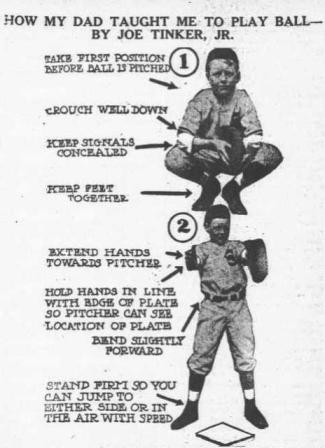
In the spring of 1916 Joe Tinker Jr., ten-year-old son of Chicago Cubs Manager Joe Tinker “wrote” a series of articles that appeared in newspapers across the country.  Tinker’s articles provided tips for playing each position:

“To be a winning pitcher you must have control…The best way to gain control is to get another boy to get in position as a batter then pitch to him.  Don’t throw at a stationary target.”

“(Catchers) Stand up close to the batter and don’t lose your head if the pitcher becomes wild.  Try to steady him with a cheerful line of talk.  Practice every spare moment.”

“Stand close to the plate when batting.  Don’t lose your nerve if the pitcher tries to bean you. Some fellows like to choke their bats or grip the handles about four inches from the end.  My father don’t approve of the style…Don’t argue with the umpire.  If you are hot-headed you hurt your chances to connect with cool-headed pitching.”

“Learn to start in a jiffy.  That is the first point emphasized by my dad in teaching me to run bases.”

“Playing short offers many chances for individual star plays and the work of a good man will have a great effect on the score card.”

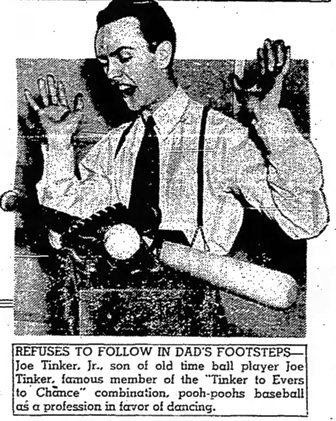
Photos of Joe Tinker Jr. demonstrating what his dad taught him

Photos of Joe Tinker Jr. demonstrating what his dad taught him

Joe Tinker Jr. and his younger brother Roland were the Cubs mascots during their father’s season as manager in 1916.  In 1924 Chicago newspapers reported that Tinker Jr. was headed to the University of Illinois to play baseball for Coach Carl Lundgren, the former Cub pitcher.  There is no record of Tinker ever playing at the school.

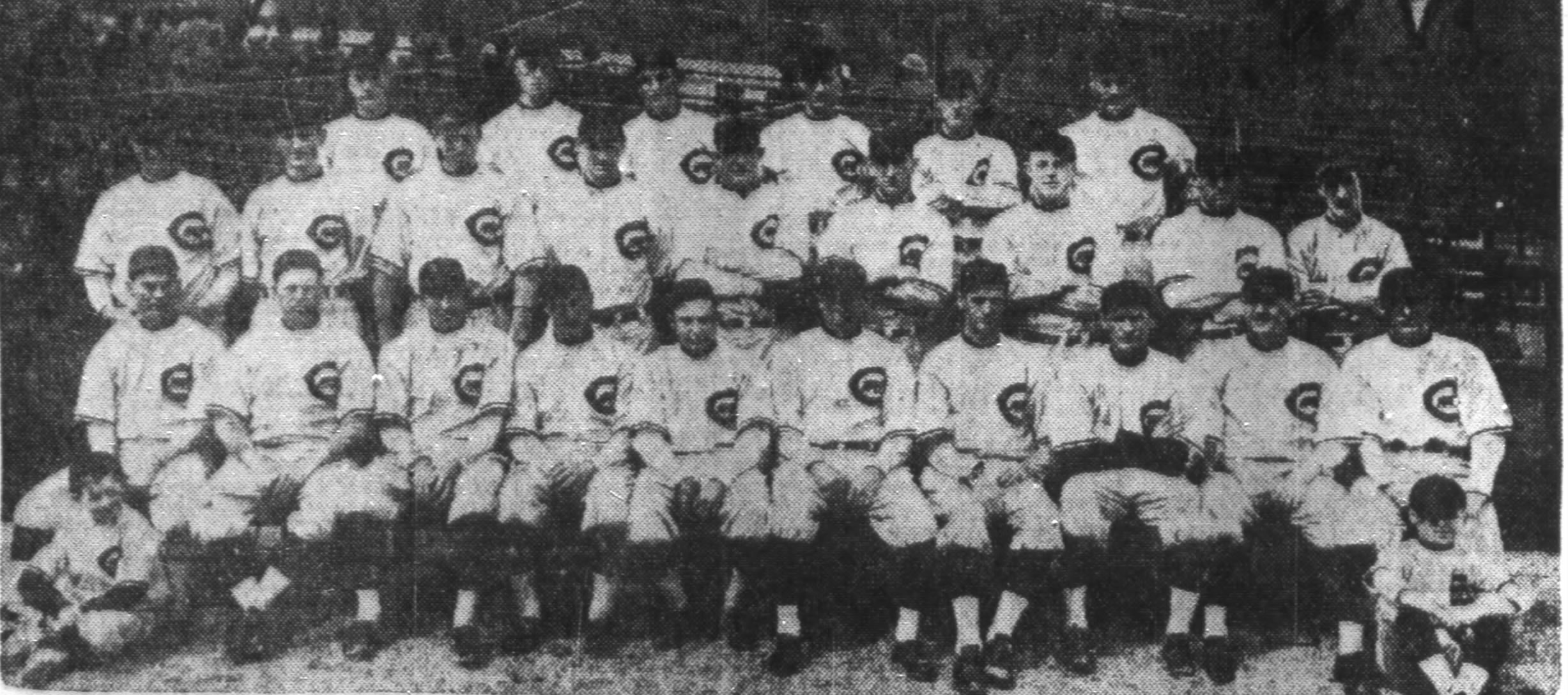
1916 Chicago Cubs.  Joe Tinker Jr. seated right, Roland Tinker seated left.

1916 Chicago Cubs. Joe Tinker Jr. seated right, Roland Tinker seated left.

Younger brother Roland played for two seasons in the Florida State League.

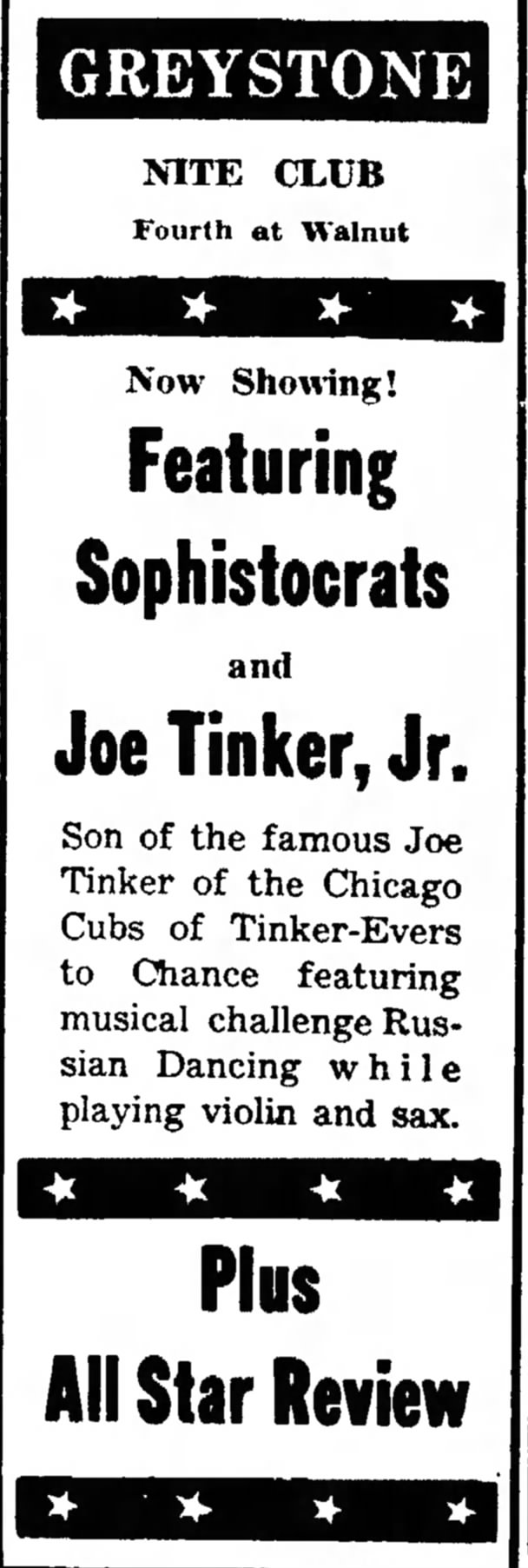
In 1938 newspapers reported that Joe Tinker Jr. had become a dancer with a vaudeville group called the Sophistocrats.  Tinker Jr. told reporters:

“Father isn’t disappointed because I took up dancing.  In fact he approves.”

It’s unclear whether “Joe Tinker Jr.” was actually Joe Tinker Jr.  The newspaper articles all said he was 22-years-old.  Joe Tinker Jr. would have been in his thirties; however his brother William Jay Tinker would have been 22 in 1938.


joetinkerjrdance


joetinkerjr1938

When Joe Tinker was elected to the Hall of Fame he compiled his all-time team for Ernest Lanigan, then curator of the Hall:

Pitchers: Mordecai Brown, Grover Cleveland Alexander, Christy Mathewson and Ed Walsh

Catchers: Johnny Kling and Roger Bresnahan

First Base: Frank Chance

Second Base: Eddie Collins

Third Base: Harry Steinfeldt

Shortstop: Honus Wagner

Outfield: Artie “Solly’ Hofman, Ty Cobb, Fred Clarke, and Sam Crawford.

Though he named several Cubs, Tinker did not include his former teammate Johnny Evers.  In 1914 Evers had famously slighted Tinker, with whom he was engaged with in a long-term feud, after Evers and his Boston Braves teammates won the World Series. William Peet wrote in The Boston Post :

“(Walter “Rabbit” Maranville’s) the best shortstop the game has ever known.

“Better than Joe Tinker; your old side partner?

“Yes, he’s better than Tinker.”

While the two finally broke their silence at Frank Chance’s deathbed in 1924, they never reconciled.

Evers died in 1947, Tinker in 1948.

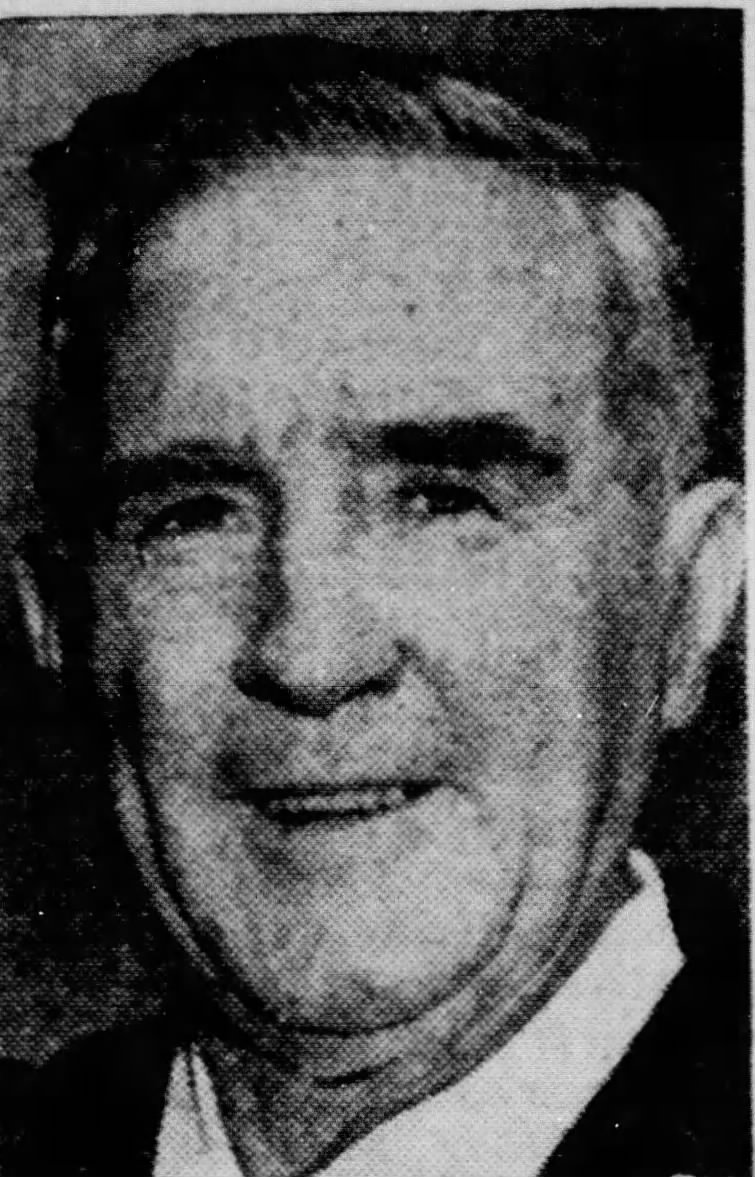
Joe Tinker circa 1946

Joe Tinker circa 1946

Joe Tinker Jr. died in 1981, Roland “Rollie” Tinker died in 1980, and William Tinker died in 1996.


“Fatty Weakened and Portland scored four runs”

24 Jan

Walter “Judge” McCredie went ahead with the scheduled spring series in California between his Portland Beavers and the Chicago American Giants despite criticism from Pacific Coast League (PCL) President Allan T. Baum and other league executives.

Much of the concern was the result of the Negro League team beating the Beavers four out of five games in the spring of 1913.

The results of the 1914 series were much different.  Foster, and most of the rest of the pitching staff were injured, and catcher Bruce Petway missed most of the games with a bad ankle.

The series began in Santa Maria with an 11-inning 8 to 8 tie.  “Smokey” Joe Williams, of the New York Lincoln Giants joined Rube Foster’s club for the series.  The Beavers pounded him for 14 hits.

"Smokey" Joe Williams

“Smokey” Joe Williams

Portland won the second game in Santa Maria 5 to 0.  Harry Krause (who would win 22 games for Portland in 1914) shut out the American Giants on eight hits; Lee Wade struck out 9, but allowed 11 hits and took the loss.  The Portland Oregonian said Krause’s:

“Southpaw slants and spitballs stood the Negro Giants, of Chicago, on their heads.”

The series moved to Santa Cruz.

Portland beat “Smokey” Joe Williams again in game 3; 6 to 2.  The Santa Cruz Evening News said Williams “Had a nice curve, plenty of speed, but was a little wild.”  The American Giants loaded the bases with two outs in the ninth, but 19-year-old rookie Elmer Hanson struck out pinch hitter Frank Duncan to end the game.

Watsonville was the site of the fourth, and final, game.

The Santa Cruz Evening News said while McCredie and Foster made the trip together to Watsonville, McCredie asked which pitcher Foster was starting the next day:

“Foster replied that he did not know, as all were ailing, one way or another.

“McCredie suggested that he (Foster) pitch.  Foster said that he would pitch if McCredie would play, and an agreement was made.”

McCredie’s last season as a regular was 1909.  After playing in 61 games in 1910, he had appeared in just eight games from 1911-1913.

“(McCredie and Foster) appeared on the ball field in uniform and the Portlanders went to bat first, big Foster began to pitch and retired the side…Then it was that McCredie got cold feet.

“He refused to carry out his side of the agreement to play, and all coaxing and teasing and jibes from  both teams could not feaze him.”

Foster pitched five innings of one-hit ball, but in the sixth “Fatty weakened and Portland scored four runs.”

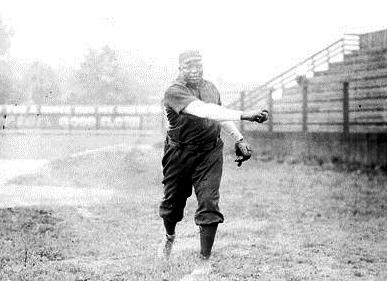
Rube Foster

Rube Foster

After the final game The Oregonian said:

“Perhaps it was taking unfair advantage, but in the recent Beaver-Negro series the Portland Coasters knew in advance nearly everything the twirlers tossed up the plate.

(James) Hi West and (Irv) Higginbotham were out on the coaching line every game stealing the catcher’s signs.”

The American Giants salvaged their West Coast trip in their series against Nick Williams’ Portland Colts. They won the opener on March 28 in Santa Rosa 6 to 0 behind a “Smokey” Joe Williams no-hitter.  Williams struck out nine of Portland’s  Northwestern Leaguers.  The Oregonian said:

“Williams, a tall, rakish looking mulatto (Williams’ mother was a member of the Comanche nation) set the Colts down without a hit or a run.”

The American Giants committed two errors, including one by third baseman Bill Francis.  The paper said:

(Duke) Whitt rolled one infield grounder toward third that might have been construed a safety, but the scorers graciously agreed to swallow race prejudices.  It was scored as an error.”

The series then went to Chico, California, and Medford and Grants Pass, Oregon, before finishing in Portland.

The Colts only managed one victory, beating the Giants 9 to 8 in Medford.  Although the colts won the game The Oregonian said the highlights were two long home runs hit by American Giants shortstop John Henry “Pop” Lloyd, including “one of the longest hits ever seen on the local field.”

John Henry lloyd

John Henry Lloyd

The American Giants continued the spring tradition of traveling west to play Portland teams through the 1916 season.

Walter “Judge” McCredie later created some doubt that playing Foster’s team was simply a business relationship and not an expression of his opinion of the color line in baseball.  When he was criticised by PCL executives in 1914 he said: “the games are nothing more or less than training affairs.”  Later that season his attempt to sign a Hawaiian player of Chinese decent named Lang Akana was thwarted by PCL officials and his own players who threatened to revolt. In 1915 McCredie was quoted in The Chicago Defender:

“I don’t think the color of the skin ought to be a barrier in baseball…If I had my say the Afro-American would be welcome inside the fold.  I would like to have two such ball players as Petway and Lloyd of the Chicago Colored Giants who play out here every spring.  I think Lloyd is another Hans Wagner around shortstop and Petway is one of the greatest catchers in the world.”

It wouldn’t be until 1917 that a Chinese player would play professional baseball.

“As an Actor? Well—”

23 Dec

The Indianapolis News said

“Mike Donlin is in the city again and he is a real actor this time.  Two years ago Mike paid Indianapolis a visit, or rather he trailed behind his wife, who theatrically, is Mabel Hite and who at the time was the leading woman in the musical comedy, “A Knight for a Day.”  On that occasion Mike remained behind the wings out of sight of the audience or put in the time while waiting for the performance to end talking baseball or otherwise entertaining friends in the lobby…But all is different now.  Mike is a real actor this time and he trails after his wife’s skirts no longer.”

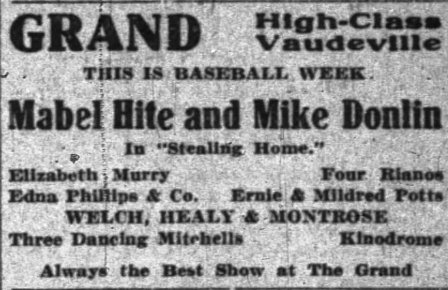
Michael Joseph “Turkey Mike” Donlin had just arrived in Indianapolis in February of 1909 while touring with his one-act play “Stealing Home,” in which Hite also appeared.  His made his previous visit while sitting out the 1907 season after a contract dispute with new York Giants owner John T. Brush and traveling the country with Hite.

He returned to the Giants in 1908 and hit .334, finishing second to Pittsburgh’s Honus Wagner (.354).  But Donlin caught the acting bug while traveling with Hite, and upon embarking on the national tour in October of 1908 he told reporters:

“There is something about the footlights that always appealed to me.  I like this show game mighty well and baseball won’t keep me forever.”

Donlin received mixed reviews throughout the tour, but it was successful enough to keep him on the road and  away from baseball until 1911.

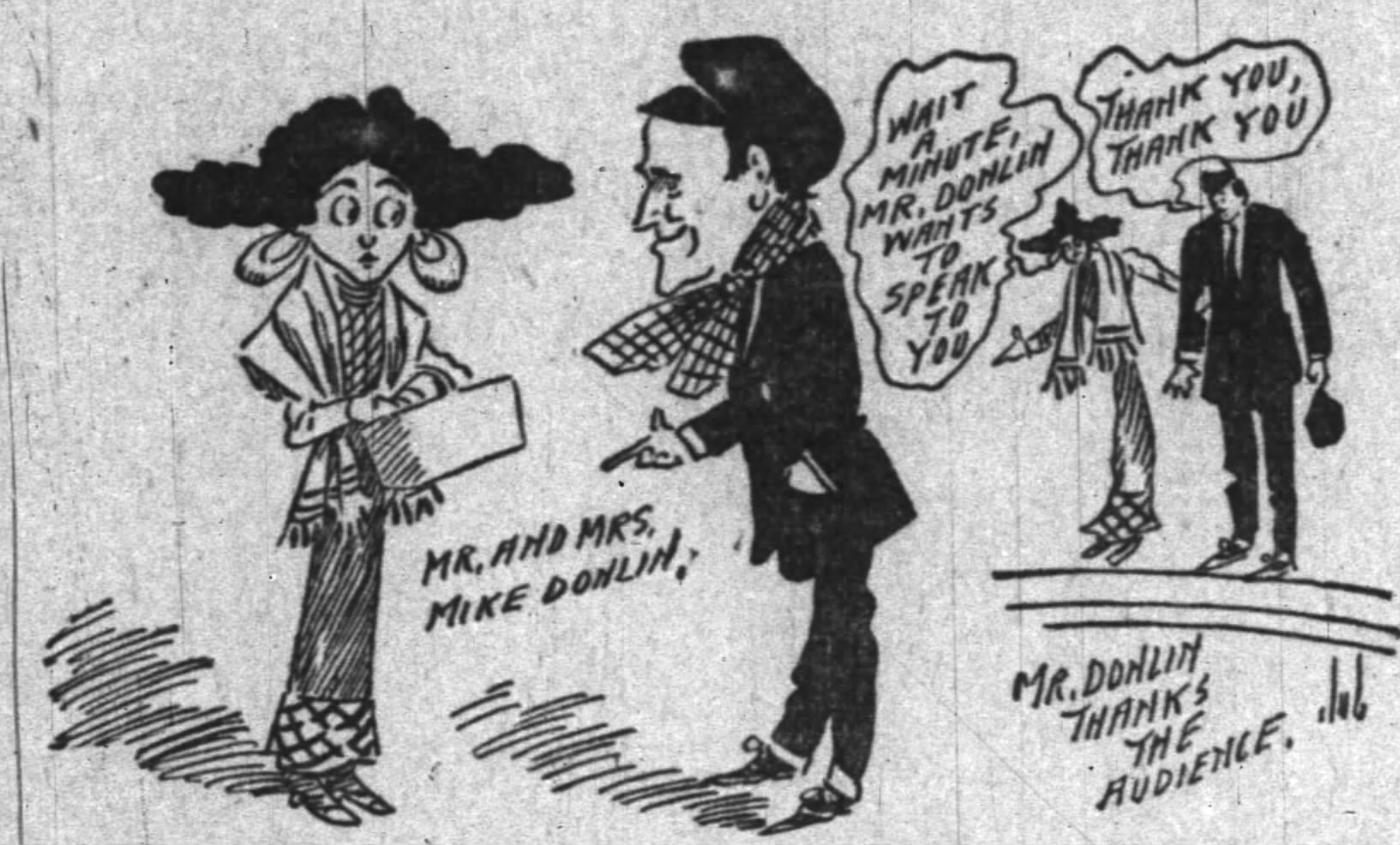
Cartoon of Donlin and Mabel Hite, 1909

Cartoon of Donlin and Mabel Hite, 1909

The following day, after his Indianapolis debut was completed, The News provided probably the most colorful review of his show—likely more colorful than the show itself:

“Once upon a time a certain walloper of the sphere had a hunch to go forth into the provinces and connect with the long green.

“And this man was Mique and he was of the tribe of Donlin.

“And it was that Mique had a helpmate, indeed, and her name was Mabel, and she was of the tribe of Hite.

“Her patience was that of Job and she taught Mike to make a few steps, how to face the multitudes and to say ‘Back to the bush leagues for you.’

“Then, lo and behold, he was of the clan of Irving, Mansfield, Mantell and ‘Bertha the Sewing Machine Girl.’

“Many persons were injured in the rush to see him and the dough came in so rapidly that the calf that tried to swallow it choked to death.

“Then, indeed, did Mique rejoice and his cup of happiness was filled to overflowing.  Even more so than on the day he socked the horse hide far beyond the reach of the hated cub in left-field and loped home to receive a box of Flora De Tar Ropes, a big bouquet and an order for a ten-pound box of dog leg.

“And now, flushed with triumph, the hero of many rag-chewing matches with the umpire and scorched by the spotlight in which he shines so brightly, Mique is in our midst.

“Even so.

“And the other half of the sketch is here, too, and she sings…very prettily and dances gracefully.  Mique also dances, but his movements are not what might be termed poetry in motion.

“Great is Mique.

“As a ball player?  Yes.

“As an actor? Well—

“Curtain.

“’Stealing Home,’ the Donlin skit has to do with the national game, of course.  Donlin is supposed to be putting it all over the Pittsburgers, but is put out of the game for ragging with the umpire.  His wife learns of it when she calls up to get the score.  A moment later he enters the room and then there is ball talk galore during which she chides him for getting no hits, while Hans Wagner gets five.  Donlin shows her how he called the umpire down and the sketch ends, following Mrs. Donlin’s song, with a few dancing steps in which she is assisted by Donlin.”

"Sliding Home" advertisement. Grand Theater, Indianapolis.

“Sliding Home” advertisement. Grand Theater, Indianapolis.

By the spring of 1911 “Stealing Home had run it’s course.  Donlin, in need of money and with no acting prospects, returned to baseball; he played with the  Giants, Boston Rustlers and Pittsburgh Pirates in 1911 and ’12 (retired again in 1913) and returned to the Giants for 1914.

Twenty-nine-year-old Mabel Hite died of cancer in 1912.

When Donlin retired again, for good this time, he returned to the stage, then the screen–with the help of his friend, actor John Barrymore.  He appeared in more than 50 films, mostly in smaller roles.  Donlin married actress Rita Ross in 1914, and died in 1933.