Tag Archives: Ty Cobb

Tragic Exits 3

23 Mar

Eddie Meade

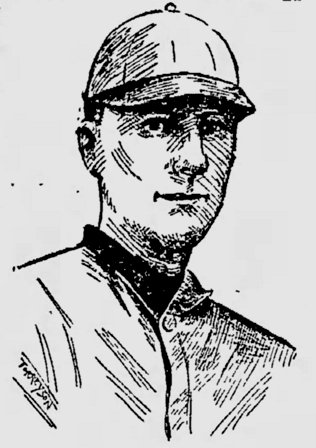
Edward “Eddie” Meade appeared headed to the big leagues.  After beginning the 1926 season with the Kinston Eagles in the Virginia League, the 24-year-old left-hander was acquired at midseason by the St. Paul Saints of the American Association and posted a 12-7 record with a 3.40 ERA in 22 games.

Meade began the 1927 season with a 6-0 shutout of the Louisville Colonels on April 17.  The same week he recorded his first victory, The Associated Press said he was about to become a member of the defending American League champions:

“The Yankees talked of possible reinforcements in the shape of Eddie Meade, of St. Paul, called the best young pitcher in the American Association.”

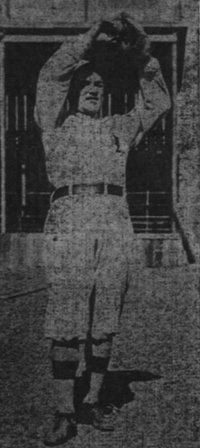
Eddie Meade

Eddie Meade

During the same week, Meade became ill; although the nature of the illness was never disclosed.  Eight days later he started a game with the Columbus Senators but was pulled after giving up six runs in the fifth inning of 9 to 8 loss.  Five days later he pitched in relief against Louisville, but The Minneapolis Journal said he lasted less than an inning due to his “impaired physical condition.”

When the Saints left Minnesota for a series in Kansas City on May 16, Meade stayed behind.  The following evening Meade checked into St. Paul’s Boardman Hotel and shot himself to death.

The day after his suicide, The Journal said, “it was learned today that Meade was slated to go to the New York Yankees in the fall.”

St. Paul Manager Nick Allen told The Associated Press:

“He was one of the hardest working youngsters we ever had on the club and the outlook for his future was bright, as he had only two years in baseball.  The only motive he could have had for such action would be mental depression.  He was not married.  The nature of his illness was no cause for alarm, but he apparently believed it otherwise.”

Tommy Coates

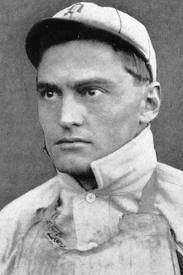
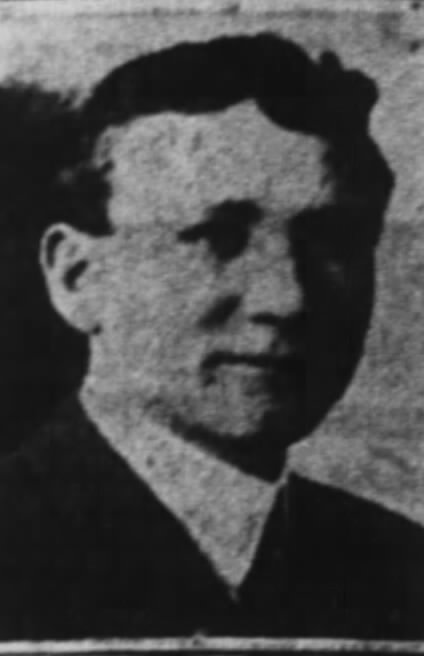
Thomas A. “Tommy” Coates was born in Omro, Wisconsin on February 18, 1886 (Baseball Reference lists his middle initial as “O” but birth and death records  list it as “A”).

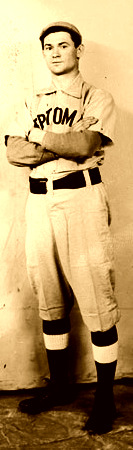
After starring, along with his older brother Hiram, on Omro High School’s undefeated baseball team in 1901—The Omro Herald called the team “possibly the best in the state”—Coates played industrial league and semi-pro ball in Central and Northern Wisconsin.

After playing in Rhinelander, Wisconsin in 1908, The Oshkosh Northwestern said:

“Coates had lots of confidence in himself, and during the winter months the Omro boy came to the city one day and sought out “Pink” Hawley. Hawley agreed to give him a trial.”

Emerson Pink Hawley, a Wisconsin native who pitched in the major leagues for a decade, was the manager of the Oshkosh Indians in the Wisconsin-Illinois League.

Tommy Coates

Tommy Coates

 “Coates came to this city from his home at Omro (for his tryout).  He donned baseball togs and he ‘made good’ from the start.”

Coates, who The Northwestern said  was “tall (and) built something like the great Ty Cobb,” became the Indians starting left fielder one week into the season and went on to lead  the team with a .299 batting average (he hit .002 better than his 19-year-old teammate Heinie Groh).

In September, The Sporting News reported that with just one season of professional experience, Coates “Looks good to Connie Mack,” and was drafted by the Philadelphia Athletics. He was the only member of the Indians drafted by a big league club in 1909.

At season’s end in September, Coates, with an invitation to train with Mack’s club in the spring, spent most of his time hunting.

On October 11 Coates was in a row-boat with a friend, hunting in a marsh near Omro.  The friend told The Omro Herald:

“Tom saw a mud hen rise up on the right hand side.  He turned about quickly and took hold of his gun which was at his left side and pulled it toward him…I turned about as soon as I heard the shot, and to my horror saw Tom lunge forward.”

Coates accidentally discharged his gun, shooting himself in the left eye.

Twelve days after the Oshkosh Indians received a $300 check from Connie Mack—his draft price—Coates was dead.

The Northwestern said:

“He was quiet and unassuming. After making a sensational play in the field or batting out the hit that won the game…the Oshkosh fans could not induce Coates to doff his hat.  He would return to the bench with face covered with blushes.”

[…]

“His more ardent admirers were confident he would make good in the American League, and one of their first thoughts upon hearing of the unfortunate accident, was the promising career he had before him.”

Lost Advertisements–The Missouri Store

30 Jan

1914ad

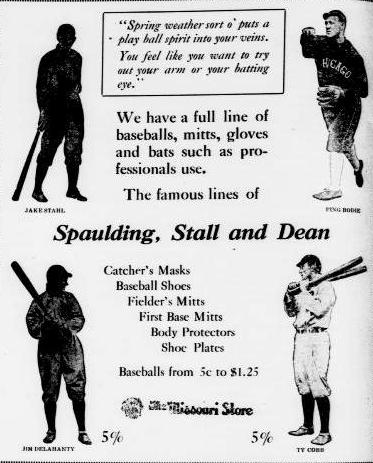
A 1914 advertisement for The Missouri Store at the University of Missouri in Columbia.  The ad features Jake Stahl, Frank “Ping” Bodie, Jim Delahanty and Ty Cobb.

“Spring weather sort o’ puts a play ball spirit into your veins.  You feel like you want to try out your arm or your batting eye.”

The store carried a full line of items “such as professionals use” from Spalding and Stall & Dean–catcher’s masks; baseball shoes, fielder’s mitts; first base mitts; body protectors, and shoe plates–with “Baseballs from 5 cents to $1.25.”


Lost Advertisements–Beer “The Proper Drink for Athletes in Training”

23 Jan

cobbbecker's

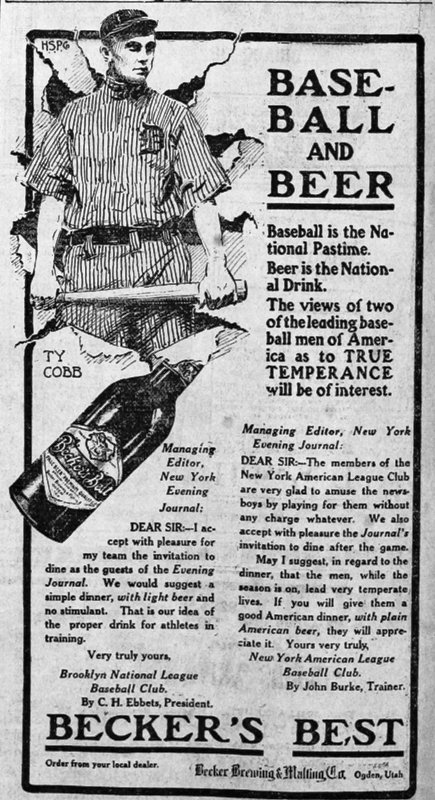
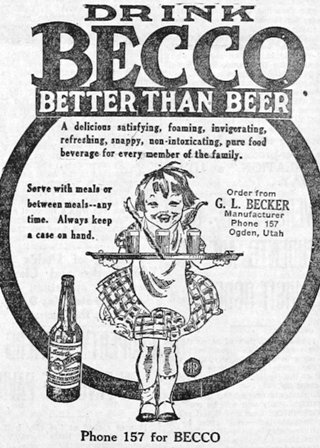
A 1918 advertisement for Becker’s Best Beer from Utah’s Becker Brewing & Malting Company, featuring Ty Cobb,  the ad said:

“Baseball is the National Pastime.  Beer is the National Drink”

It also included testimonials from “two of the leading baseball men of America as to True Temperance.”

As a result of the World War I “Food and Fuel Control Act,” malt beverages were mandated to contain less than 2.75% alcohol; brewers were trying to highlight the non intoxicating aspects of their current products as a wartime ban on the brewing of all beer was on the horizon (eventually that ban was adjusted to allow brewing of “non-alcoholic malt beverages).

The featured letters were from Brooklyn Robins President Charles Ebbets and New York Yankees Trainer John Burke to The New York Evening Journal regarding the paper’s invitation to a dinner honoring the ball clubs. Ebbet’s wrote:

“I accept with pleasure for my team the invitation to dine…We would suggest a simple dinner, with light beer and no stimulant.  That is out idea of the proper drink for athlete in training.”

Burke wrote:

“May I suggest in regard to the dinner , that men, while the season is on, lead very temperate lives.  If you will give them a good American dinner, with plain American Beer, they will appreciate it.”

Becker Brewing & Malting, according to a  1919 issue of “Brewers Journal,” was among the company’s making “laudable efforts…to meet the adverse conditions which have been imposed under the veil of ‘war time’ prohibition” by bottling soft drinks and manufacturing “Becco, a cereal beverage.”

Ty Cobb no longer appeared in the ads.

becco

“If we had a Veritable Ty Cobb among us, and no one Cared to See him, what would it Matter?”

7 Jan

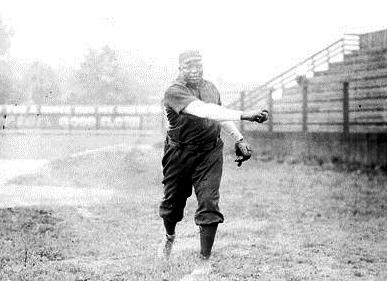
At the beginning of the 1914 baseball season, Andrew Bishop “Rube” Foster believed baseball’s color line was on the verge of being broken.

Rube Foster

Rube Foster

He talked about it with The Seattle Post-Intelligencer while touring the West Coast with the Chicago American Giants:

“Before another baseball season rolls around colored ball players, a score of whom are equal in ability to the brightest stars in the big league teams, will be holding down jobs in organized baseball…They’re taking in Cubans now, you notice and they’ll let us in soon.”

Billy Lewis, a writer for The Indianapolis Freeman did not share Foster’s optimism:

“It goes without saying it emphatically, that Foster’s opinion sounds mighty good to the ‘poor down-trodden’ colored players who have to do so much ‘tall’ figuring in order to make ends meet.  But the plain fact of the matter is that Rube has drawn on his imagination for the better part of his opinion.  For as much as I hope and as colored players and people hope for better days for the colored players there’s nothing to warrant what he had to say. Foster is having the time of his life, riding about in special cars out west, and naturally enough with the distinguished consideration paid him and his bunch of players, he feels to give out something worthwhile.

“Rube Foster nor the rest of us should expect to see any change in the baseball situation until there’s a general change…fact is, that our people are not breaking into the big leagues, and there’s no talk of them breaking into the big leagues, and there is not the slightest indication that they are needed.  This sounds rather severe, yet it is the truth, and that’s what we need even if we should not want it.  It may not make us free as it is so often insisted on.”

[…]

“As severe as the foregoing appears it has nothing to do with the playing ability of colored baseball men.  Expert sport writers long ago conceded that there were colored baseball players who played the game equal to the ‘high browed’ white players who drew their $3,000 plus per annum. It’s an old story why these competent men are not registered in the great leagues.  Really there is less opportunity for Negroes to play with the big leagues in the last few years than formerly. “

Lewis said Foster was wrong to claim that the acceptance of light-skinned Cuban players was positive sign:

“It is generally known that the Negroes stand last in the list of acceptability, hence it is rather poor diplomacy to speak of the preference shown for the Cubans.  It is right, all right.  Nevertheless, Cubans, Indians, Filipinos and Japanese have the right-of-way so to speak.  Of course they are not wholly persona grata, but they are not in the class with the colored players, who are absolutely without friends at court.”

Additionally, Lewis said fans were not ready for integration:

“If the management were inclined to take on the good ones among the colored players, they could not do so with impunity.  The box office is more often the dictator of terms than we think.  If we had a veritable Ty Cobb among us, and no one cared to see him, what would it matter?

“Foster is positive that he has the greatest player in the world in (John Henry) Lloyd.”

Foster had said of the shortstop:

“If you don’t believe it, wait until he gets into the big league—then watch the (Jack) Barrys, the (Honus) Wagners and the (Joe) Tinkers sweat to keep their jobs.”

Lewis said:

“It’s a fine boost for Lloyd, coming as it does from the famous Rube himself, yet we all know that if Lloyd was twice himself he would be no good unless it were the general sentiment that a man was a man.”

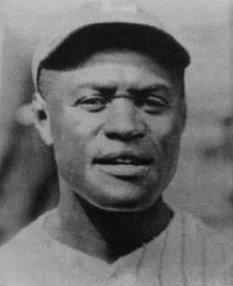
John Henry lloyd

John Henry Lloyd

Lewis felt Foster was deluded by the large percentage of white fans who watched him play when the American Giants barnstormed on the West Coast:

“The far west at this time seems ideal in the matter of patronizing games where colored and white teams are engaged.  But in spite of this there is no disposition in that seemingly fair country, to put colored men on the greater teams.  So it is not less than an iridescent dream.”

Lewis told his readers he did not disagree with what Foster desired, but said the great pitcher was basing his optimism on the of the wrong people:

“Much of the foregoing doubtless appears as an argument against mixed clubs.  It is not that way.  The object is to show up the true situation, the further object being to make the most of it. We will not be able to make the most of it as long as we fail to have the proper conception of things.  There are white managers who would gladly take on Negro players if it meant something by way of advancing their clubs.  But as said before it is the box office that dictates…the man on the bleachers and the man in the grand stand are together, and the manager must come by them…What have these to say about colored players entering the big league?  That’s the question.”

1915amgiants

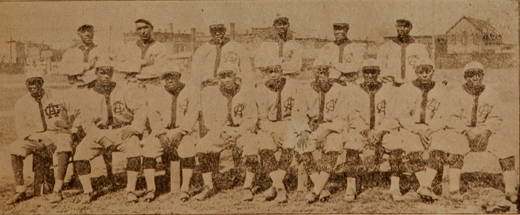
The 1915 Chicago American Giants–Rube Foster is standing third from left, John Henry Lloyd is standing fifth from left. A year after Foster’s prediction, white baseball wasn’t calling.


Lost Advertisements–Jimmy Austin for Farmers and Merchants Bank

7 Nov

austin


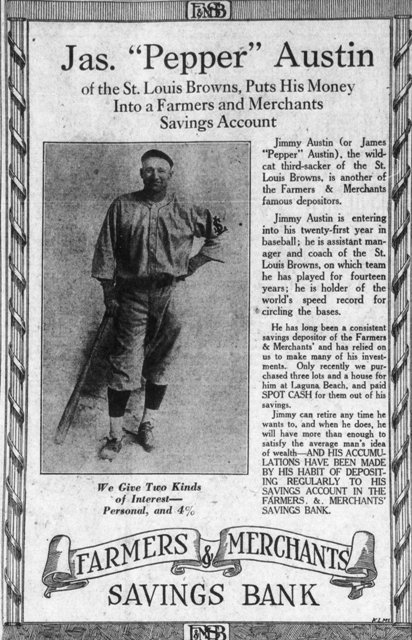
A 1924 advertisement for Southern California-based Farmers & Merchants Bank featuring Jimmy Austin:

Jimmy Austin (or James “Pepper” Austin), the wild-cat third-sacker of the St. Louis Browns, is another of Farmers & Merchants famous depositors.

Jimmy Austin is entering into his twenty-first year in baseball; he is assistant manager and coach of the St. Louis Browns, on which team he has played for fourteen years; he is holder of the world’s speed record for circling the bases.

He has long been a consistent savings depositor of the Farmers & Merchants’ and has relied on us to make many of his investments.  Only recently we purchased three lots and a house for him at Laguna Beach and paid Spot Cash for them out of his savings.

Jimmy can retire anytime he wants to, and when he does, he will have more than enough to satisfy the average man’s idea of wealth–And his accumulations have been made by his habit of depositing regularly to his savings account in the Farmers  Merchants Bank

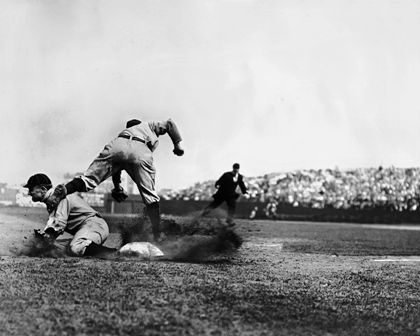
Austin is probably best known for being the third baseman in the famous 1909 Charles Conlon photograph of Ty Cobb sliding.

Conlon's 1909 photograph

Conlon’s 1909 photograph

In 1930 Conlon–then a proofreader for The New York Telegram–told  the story of how he came to capture what the paper called “the greatest baseball action picture ever taken.”

“Cobb was running wild on the bases that year, and the Tigers were fighting for a pennant.  I used to spend a lot of time down near third base chatting with Jimmy Austin who was a good friend of mine.

“Ty had worked his way down to second that day and the batter was trying to bunt.  As the pitcher’s arm went back to throw the ball Cobb sped for third.  Austin backed into the bag for the throw and Cobb hurled himself into the dirt, spikes flying.

“My first thought was that my friend Austin was going to be cut down by the Georgian.  I stood there motionless with my box in my hand.  I saw a blur of arms and legs through a screen of flying dirt It was a bright day and I could see Cobb’s lips grimly parted and the sun glinting off his clenched teeth.

“Austin never got his hands on the catcher’s throw.  He was knocked over.  He wasn’t hurt, however, and I was relieved because we were pretty good friends.

“Then I began to wonder if by any chance I had snapped the play.  I couldn’t remember, but I decided to change plates anyway.  It was lucky that I did, because when I printed up my stuff that night, there was the whole thing, as plain as day.”


Things I Learned on the Way to Looking up other Things #10

21 Jul

Trash Talk, 1886

The Philadelphia Times reported in July of 1886 about a feud between two American Association pitchers; Brooklyn Grays rookie Steve Toole and St. Louis Browns star Dave Foutz:

“Steve Toole says Foutz is the ugliest player in the Association.  Foutz returns the compliment by saying that Toole is no pitcher, but his face paralyzes the batsmen.”

Dave Foutz

Dave Foutz

Steve Toole

Steve Toole

The National Convention—1867

The Nashville Union and Dispatch’s take on a decision which would reverberate for the next 80 years:

“Still Against The Negro—The National Convention of base-ball players in session at Philadelphia last week resolved that no club composed of persons of color, or having in its membership persons of color, should be admitted into the National Association.

“To show the significance of this action we may state that there were four hundred and eighty-one clubs represented in this convention including clubs from the following states:  Massachusetts, Connecticut, New York, New Jersey, Pennsylvania, Delaware, Maryland, District of Columbia, Ohio, Indiana, Illinois, Wisconsin, Minnesota, Missouri, Oregon and Nebraska.  From which it is evident that the Northern base-ballists are opposed to Negro equality.”

Boss Schmidt—Throwing and Fighting

Charles “Boss” Schmidt is best known for leaving Ty Cobb with two black eyes and a broken nose in 1907 after Cobb slapped a black groundskeeper and choked the man’s wife when she attempted to intervene;  he also was a member of three pennant-winning Detroit Tigers teams (1907-1909).

Charles "Boss" Schmidt

Charles “Boss” Schmidt

During the era when several players received tremendous publicity for catching balls dropped from great heights. Schmidt received only minimal attention for an impressive throwing feat in 1909.

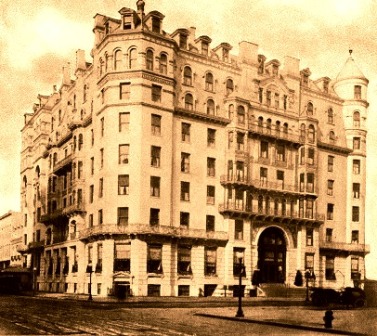
The Tigers were staying at Washington’s Arlington Hotel during an August series with the Washington Senators when Schmidt, according to The Associated Press:

“Charles Schmidt of the Detroit baseball team threw a 10-cent baseball from Vermont Avenue in front of the Arlington over the eight-story Shoreham Hotel (the one torn down in 1929, not the Omni Shoreham which was built in 1930 and is still standing), which faces on fifteenth Street.  He took a run, and the ball went up until it disappeared over the roof line of the hotel.  It was later found in Fifteenth Street.  Whether it cleared the building entirely or bounced from the roof is not known, but it was a splendid throw, for the distance from where Schmidt stood to Fifteenth Street is nearly 400 feet.”

shoreham

The Shoreham Hotel, Washington D.C., the eight story hotel Schmidt cleared with “a 10-cent baseball.”

Schmidt participated in two professional bouts in Fort Smith, Arkansas after the 1911 season—he won a six-round decision and participated in one four-round no decision.  While some thought Schmidt could potentially fight champion Jack Johnson (who some sources say he spared against during this period), it’s clear Schmidt never took seriously the idea of fighting Johnson.

In a letter later printed in The Detroit Times Schmidt told a friend:

“This white man’s hope bunk is the biggest joke ever put over on the public.  I admit I like the boxing game, but I have never even considered gathering a living from the roped arena.  I like to do just four things.  Play ball, fight, hunt and eat.  Boxing is all right for a little amusement when it’s too cold to play ball…As for this dope on my being the white man’s hope, somebody is loon, it sounds like a squirrel talking to a nut.

“I have joined the Tigers again, and mean to show by my playing that I am with the team heart and soul.  Whatever my personal opinions have been, whatever my playing is, whatever critics have said about me, no one can say that I have not given the Detroit team the best I have…I don’t know who this guy is who has been sending fight dope from Fort Smith about my challenging Jack Johnson, but whoever he is, he ought to get a job in New York.  He could sell J. Pierpont Morgan a nicely enameled brick without difficulty.

“Yours is peace, prosperity and pennants, Charlie.”

Despite being released by the Tigers before the beginning of the 1912 season, Schmidt remained true to his word that baseball, not boxing, was his sport of choice.  His big league was over, but he continued as a player and manager in the minor leagues until 1927.  He never fought again.

“This Wealth of Mr. Gertenrich has cost the Game an A-1 Player”

7 Jul

Sportswriter William A. Phelon said Louis Wilhelm “Lou” Gertenrich “is not a ball player because he has to be, but because he wants to be.”

The son of a successful candy maker, Gertenrich was rumored to be one of Chicago’s wealthiest young men.  He was also an excellent ballplayer and sprinter, but spent a great deal of time focused on business rather than sports.  Phelon said:

“Gertenrich hasn’t played ball, even when he desired to play the game, because his business interests would not allow him the leisure time.  In other words, Mr. Gertenrich, being a man of income and financial substance, cannot dally with the ball and bat as he would like, and this wealth of Mr. Gertenrich has cost the game an A-1 player.”

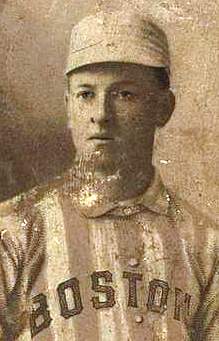
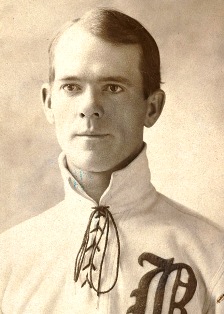
Lou Gertenrich

Lou Gertenrich

He began to be noticed as a ballplayer in 1891 as a 16-year-old pitcher with a team called the American Boys (later called the Mystics), the following year he joined the Clybourn Juniors.

At 19, in 1894 he joined Chicago’s City League, first with the Brands and then the Garden Cities, pitching and playing shortstop and outfield.  As local clubs found they could do better as independents than as members of a league the City League went from an eight, to six to finally a four-team league before disbanding at the close of the 1895 season.

Gertenrich remained a popular figure in semi-professional circles in Chicago, playing primarily for the Maroons and the Auburn Parks.

In 1898 The Sporting Life said Hank O’Day thought Gertenrich “is a sure comer.”

On September 15, 1901 the last place Milwaukee Brewers were in Chicago for a doubleheader, the final two home games for the first place White Sox.  Brewers Outfielder/Manager Hugh Duffy, and another outfielder, Irv Waldron, were injured.  As a result, The Chicago Daily News said:

“Manager Duffy gave Louis Gertenrich, a city league star, a trial.”

Starting the first game in right field, Gertenrich singled in his first big league at bat and scored a run on a home run hit by another player making his debut; Leftfielder Davy Jones.  Gertenrich was 1 for 2 before being removed in the fifth inning of a 5 to 4 loss.

In the second game he pinch hit for pitcher Ned Garvin and grounded out in the bottom of the ninth of a 9 to 4 loss to Chicago.

Gertenrich returned to the Auburn Parks with a .333 major league batting average.

He got a big league call again in 1903.  On July 21 the first place Pittsburgh Pirates were in Chicago to playing the Cubs.  Pirates Manager Fred Clarke, who was injured, had allowed outfielder Jimmy Sebring three days off to return to Williamsport, Pennsylvania for his wedding.

Gertenrich was brought in to play right field; he went 0 for 3 with a sacrifice bunt and handled two fly balls.  He returned to the Auburn Parks’ lineup the following day.

He spent most of the next decade playing in the re-formed Chicago City League—spending time with the Logan Squares, Gunthers, the Roger Parks, the West Ends, the Riverviews and Anson’s Colts.  He also coached baseball  at the Morgan Park Academy on Chicago’s South Side.

The Daily News said:

“Gertenrich is recognized as one of the heaviest hitters in local semi-pro ranks, and there is no batter more feared by the pitchers than this speedy fielder.”

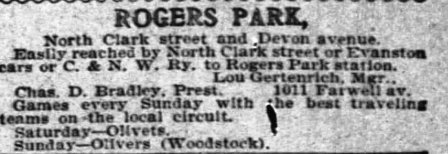
1906 advertisement for the Rogers Parks, when Gertenrich played for and managed the team

1906 advertisement for the Rogers Parks, when Gertenrich played for and managed the team

William A. Phelon wrote for The Chicago Journal when Gertenrich left Chicago briefly in 1905, at age 30,  to join the Springfield Babes in the Central League and the Decatur Commodores in the Three-I League.  Phelon told a story about Gertenrich’s stay in Springfield:

“Mr. Gertenrich was able to arrange his affairs for a lay-off of three months (in order to play for Springfield, and) the rich man negotiated with (Manager Jack) Hendricks for a position…The very next afternoon beheld Mr. Gertenrich, free from business care and happy as a proverbial lark, capering in the Springfield pasture and slamming that old ball like seven Cobbs and a Lajoie thrown in for luck.

“On his first day out he got three singles.  Next day he amassed two triples and a double.  The third day he whacked a home run and a single.  On his fourth day he drew three passes and connected for a triple.  On the morning of the fifth day Mr. Hendricks summoned him to headquarters.

“’Mr. Gertenrich,’ said Mr. Hendricks, pausing to wipe away a tear ‘you are a great batsman and a good fellow.  You are setting this league afire.  You are the wonder of the Twentieth Century.  But you are breaking the hearts of my younger players.  They cannot bat like you.  They are losing their ambition.  A few more games with you among them and they will pine away and die…Moreover Mr. Gertenrich, you have money.  You do not need this job.  The boys whom you are shoving into obscurity have little families and need the coin.  I hate to say it Mr. Gertenrich,’—and the manager again wiped away a tear—‘but you and I must part.  Here is your release.  Goodbye, Mr. Gertenrich, and good luck be with you.  Please go away, for I weep every time I look at you.”

Gertenrich also appeared in several games for Decatur after his release from the Springfield Babes, against Springfield’s other team, the Senators, and the Peoria Distillers.

For the next four seasons, Gertenrich remained one of Chicago’s best local athletes.  At 33-years-old in 1908 he was still a good enough runner to win the City League Field Day title of fastest player; The Daily News said he rounded the bases in 14 and 1/5 seconds.

The Chicago Eagle called him:

“(O)ne of the best known and most popular players in Chicago.”

In 1909 he hit .318 (5th in the league) and The Sporting Life said the Brooklyn Superbas were trying to sign Gertenrich and made an offer “which he has taken under consideration.”  The deal was never completed.

Gertenrich hit .350 in 1910 (3rd in the league), playing for Rogers Park.

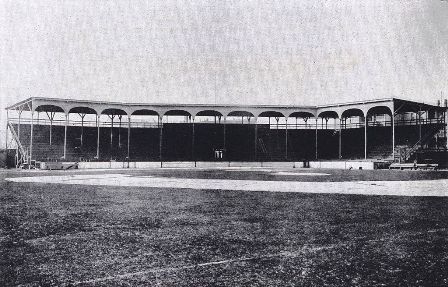
In 1912 he returned to professional baseball as a member of the Chicago Green Sox in the United States League.  William C. “Billy” Niesen, a long-time City League operator had initially been one of the organizers of another proposed outlaw organizations, the Colombian League, but when then venture failed, and after one of the proposed New York team dropped out of the United States League in late March Niesen was awarded a Chicago franchise; Niesen was a good fit for the fledgling league because already had a ballpark on the North Side of Chicago at the corner of Clark Street and Leland Avenue–called Gunther Park, also referred to frequently in the Chicago press as Niesen’s Park.

The Sporting Life said “Base ball men are still betting that the new league doesn’t open the season,” but Niesen had high hopes.  He hired Burt Keeley, a long-time City League figure who had pitched in 30 games for the Washington Senators in 1908 and 1909.

He also signed Gertenrich, who had played for Niesen’s Gunthers in the City League the year before, and according to The Chicago Examiner had hit a home run off of Bill Lindsay of the Chicago American Giants that was “the longest hit ever seen at Niesen’s Park.”

gunther

Gunther Park, where The Examiner said Gertenrich was responsible for “the longest hit ever seen at Niesen’s Park.”

An ambitious 126-game schedule was announced, but the upstart league was under-capitalized and low attendance doomed it to failure.  The league folded after just more than a month of play.  The Green Sox were 10-12.  Gertenrich returned to the candy business and semi-pro ball.

On March 8 of 1913 the Federal League rose out of the ashes of the United States League and was incorporated in Indianapolis.  Keeley was named manager, and many of the same players, including Gertenrich, who played for the Green Sox signed with the new club.

The Chicago Inter Ocean said:

“Gertenrich will be the mainstay of the outfield and is a heavy hitter.  He has made final arrangements for joining the club by procuring a competent manager for his candy business.  He will devote his time to the interests of the club.”

The team won their opener on May 6 against the St. Louis Terriers, and got off to a 7-1 start.  Chicago led the league until the middle of June when they were overtaken by Indianapolis.  They faded quickly after that; at the same time the team’s front office was in chaos, the team’s president was removed  and a new set of directors were elected in July.

On August 16 The Chicago Tribune said the team, hopelessly out of the pennant race, ten games behind Indianapolis, released Gertenrich “on the ground of cutting down expenses.”

Individual records are scare, but the 38-year-old Gertenrich was called “one of the classiest outfielders” in the league by The Associated Press.  In March of 1914 The Daily News said Gertenrich “was batting .413” at the time of his release, but had not received an offer from one the Federal League teams for 1914.

While Gertenrich relinquished some of the responsibilities of his company during 1912 and 1913 he had time to receive two United States patents for inventions for his candy company, including one described as a “corn confection” called the “Ball Tosser.”

Gertenrich was finished with professional baseball after his release in 1913, but continued playing semi-pro ball for several teams in and near Chicago, and formed a team called the Gertenrich Stars which played in Chicago through 1917.

He was a regular sponsor and attendee of alumni events for semi-pro and professional ballplayers in Chicago and played on the German Club of Chicago’s baseball team until his death from a cerebral hemorrhage in 1933.

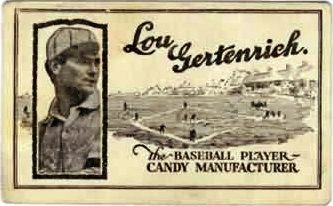
As a candy maker he had one more connection with professional baseball.  An advertisement for his company appears on the back of a baseball card set.  The 120 card set–the more common version advertises American Caramel on the back (E121)—was issued in 1922.  The Gertenrich variations are extremely rare.

The Gertenrich back variation of an E-121

The Gertenrich back variation of an E-121 card

Kid Nichols

25 Jun

Add Hall of Famer Charles “Kid” Nichols to the list of those who were convinced that players from an earlier era were of better quality than those “of today,” even if the earlier era was less than a decade before.

Kid Nichols

Kid Nichols

While pitching for the Kansas City Blue Stockings in the Western League in 1903, the 33-year-old pitcher told a group which included a reporter for The Associated Press:

“I am not so sure that the ball players of today are much superior to those of ten years ago in general utility.  It seems to me there was more life and spirit in the games of a decade ago than in those of the present regime.  They weren’t so mercenary in those days and there was much more sportsmanlike spirit.  Nowadays the paramount question with the average player is salary.  He doesn’t care so much about the record of the team he plays with makes as opportunities offered him to make himself individually famous and thus increase the value of his services.  In many clubs teamwork is lacking on account of the intense desire of some of the men to make an impressive showing by individual work.  In the old days one didn’t hear so much of the individual as the playing of the team as a whole an in my opinion baseball would stand on much firmer foundation if the same spirit prevailed nowadays.”

Among the best:

“Take old (Tommy) McCarthy for instance.  As an outfielder none of them had him beaten, and in my opinion there is not an outfielder his equal now.  It was McCarthy who originated the trap ball which he worked so effectively.

“He was absolutely the headiest man in the outfield I ever saw.  You have seen outfielders throw men out at first on line drives, but you haven’t seen it done often.  I’ve seen McCarthy spoil many a legitimate one-base hit by that same play.  Another favorite play of his was this:  A man would be on first and second.  The man at bat would drive to left.  McCarthy would snap it up on a short bound and flip it to second as quick as a flash in time to catch the man who had run off first.  In turn the second baseman would throw the ball to third in time to head off the man who had started from second.  Thus a really legitimate one-base hit was turned into a double play.

“But, speaking of outfielders, Willie Keeler was about as good as any of them for all around ability.  He was like lightning on his feet and was no slouch at hitting.  He certainly did things to me one day in Baltimore.  He faced me four times and this is what he did:  Made four hits to four different parts of the field off of four different kinds of curves.  Keeler was the hardest man to fool I ever pitched to.”

Nichols said Herman “Germany” Long, his teammate for 12 years was:

“(O)ne of the greatest shortstops in the business.  He played with Boston while I was a Beaneater, and of course I had good opportunities to watch him work.  He could cover a world of territory and was a sure and accurate fielder.  You hear many people say that Hughie Jennings in his palmy days was the best infielder ever developed.  In my opinion Long could cover a foot more territory than Jennings.

“When it comes to catchers my preference is, and always has been, Charlie Bennett, whose legs were cut off in a railroad accident at Wellsville, Kansas.  Charlie was always consistent and knew what his brain was given to him for.  He was also an accurate, quick thrower…Martin Bergen was another good catcher.  He was the one who went crazy, you know, and murdered his wife and children.  Bergen always was ‘a little bit off of the top,’ but when he took a notion to do his best, his playing was beyond criticism.  Ed McFarland and (Billy) Sullivan are two right good men, and then there was reliable old Jim McGuire and Charles Zimmer, both of whom were cracker jack.”

bergen

Martin “Marty” Bergen–” always was ‘a little bit off of the top,’

Nichols said as a pitcher “I can hardly be considered a competent judge” of fellow “slabsters,” but continued:

“Personally, I admire the old war-horse, Cy Young, more than any of the others.  He is certainly a remarkable man.  Of the left-handers there a few better than (Frank “Noodles”) Hahn, of Cincinnati; (Christy) Mathewson and (Joe) McGinnity are undoubtedly valuable men.  Clark Griffith is, I think, the headiest pitcher that ever stepped on a rubber.  Among the other great ones are Jack Taylor, Joe Corbett, (Bill) Bernhard, of Cleveland and our own Jake Weimer.

Nichols was largely forgotten as one of baseball’s great pitchers by the time the Baseball Hall of Fame’s inaugural class was selected in 1936.  In the late 1940s, a push for his inclusion was led by sportswriter Grantland Rice.  Rice frequently mentioned the pitcher in his columns and in the summer of 1948 quoted two Hall of Famers regarding Nichols’ prowess:

“A few decades ago I asked Christy Mathewson to name the best pitcher he ever faced.  ‘That’s easy,’ Matty answered.  ‘His name is Charles Kid Nichols of Boston.  Nichols isn’t a good pitcher.  He is a great one.’

“I recalled this talk when the mail brought a letter from Ty Cobb at Menlo Park, California.

“‘I think everyone has overlooked one of the greatest pitchers of all time,’ Cobb Writes.  ‘His name is Kid Nichols.  Here are just a few of his records from 1890 to 1906:

“1.  Won three consecutive games on three consecutive days, all pitched in different cities.

“2.  Won 20 or more games for 10 consecutive years.  He won 360 and lost 202. (Nichols’ record was 361-208)

“3.  Won 28 or more games for eight consecutive seasons.  (Nichols won more than 28 games seven times, and not consecutively).”

Despite the inaccuracies in the letter, Cobb and Rice continued to campaign for Nichols and the push to honor him worked.  He was elected to the Hall of Fame in 1949.

Nichols, right, with Pie Traynor, left, and Branch Rickey at the Hall of Fame in 1949. Traynor was elected in 1948, but his plaque was not presented until 1949

Nichols, right, with Pie Traynor, left, and Branch Rickey at the Hall of Fame in 1949. Traynor was elected in 1948, but his plaque was not presented until 1949

Jack Grim

2 Jun

John J. “Jack” Grim never amounted to much as a player.  Statistics are nearly nonexistent for his playing career, and those that do survive are unimpressive; primarily a catcher, he played for all, or parts of nine seasons from 1894 until 1902.  The Cincinnati native made his mark, now all but forgotten, as a manager and executive.
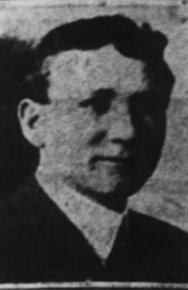
John J. "Jack" Grim

John J. “Jack” Grim

Often confused with former major league catcher John Helm “Jack” Grim—for example, most sources list John H. Grim as the manager of the 1904 Columbia Skyscrapers in the South Atlantic League, it was John J. Grim who managed that team, and during that season might have made his greatest contribution to the game.

Grim’s first managerial appointment was with the Anaconda Serpents in the Montana State League in 1900.  He guided the team to a second-place finish in the first half, and the club was in first place in the second half race on August 11, when Grim abruptly resigned.  The Anaconda Standard said Grim sent a letter to the team directors in which he charged “there is a feeling in certain quarters, against me.” He said:

“I cannot do myself justice while laboring under these conditions.”

Arthur “Dad” Clarkson, brother of Hall of Famer John Clarkson, replaced Grim; the team finished the second half of the season in second place under Clarkson.  Grim became an umpire in the league for the remainder of the season.

In 1901 Grim went to the West Coast with William H. Lucas, a former minor league pitcher who had been president of the Montana State League, to join Dan Dugdale to reestablish  the Pacific Northwest League; Lucas served as league president and Grim managed the Portland Webfoots to the championship, winning the pennant by 16 games.

The league expanded from four to six teams for 1902, and Grim was hired to manage the Spokane franchise, which had finished in last place (41-67) under three different managers in 1901.  The Sporting News said:

“(Spokane’s) stockholders have given (Grim) full power to act in signing players.”

The Sporting Life said Spokane fans were “feeling confident that (Grim) will this year sustain his reputation for always piloting winners.”  Despite the free reign, and high hopes, Spokane struggled, finishing in last place with a 46-75 record.

The following season, as a result of the West Coast baseball war—the California League expanded to the Pacific Northwest, becoming the Pacific Coast League—the Pacific Northwest League expanded into California and became the Pacific National League.  Grim managed the Portland Green Gages.

On July 1 the Portland franchised was, according to, The Oregon Journal “transferred bag and baggage to Salt Lake City.” In Salt Lake City Grim quickly wore out his welcome.

After it was reported in late July that Grim might be let go, six players, including the team’s star shortstop Charles “She” Donahue, went on strike.  They missed two games, but returned after the team’s president said: “he has no intention of letting Grim out.”  The harmony didn’t last and just weeks later Grim was released and fined $100 for what The Salt Lake Herald called “starting a mutiny within the ranks of the club.”

The trouble in Salt Lake wasn’t over.  Near the end of the season, Donahue’s contract was sold to the St. Louis Cardinals.  The sale was reportedly engineered by Grim after he was let go as manager.

The Herald said:

“What kind of a con game is Jack Grim trying to work on the Salt Lake ball club?  What right had Jack Grim, who was fired…got to sell Donahue to the St. Louis club?  How many more of the Salt Lake’s players is Grim trying to dispose of in the same way?  What did Grim do with the money he received from (Cardinals President Benjamin) Muckenfuss of the St. Louis team?”

Grim told The Cincinnati Enquirer he entered into negotiations with the Cardinals over Donahue on September 14. But The Herald noted:

“At that time Grim’s sole business in Salt Lake was to hang around with the ballplayers and try his best to create discord among them.  He had been fired long before.”

The National Commission ruled the sale/signing legal.  Garry Herrmann, chairman of the commission, said that in the contract he signed with Portland for 1903 “Donahue had a specified agreement that he was not (placed on the reserve list)” despite the fact that the Salt Lake team claimed he had already signed a contract for the following season.  As a result, there was nothing stopping Grim from delivering Donahue to the Cardinals, and the money he received—the amount was never reported—was his.

Grim was again involved in a new league in 1904, when he and fellow Cincinnati native Ed Ashenbach, helped form the first incarnation of the South Atlantic League—Grim managed the Columbia Sky Scrapers and Ashenbach managed the Charleston Sea Gulls in the six-team circuit.  Grim only lasted until mid-July as manager and finished the year as an umpire in the league.

It was that season that that he claimed he made his great contribution to the game.  According to Grim, he was the first person to alert the Detroit Tigers about a 17-year-old outfielder for the Augusta Tourists named Tyrus Raymond Cobb.

While Cobb was not sold to the Tigers until August of 1905, some credence for the claim was provided by Cobb himself in 1910, when an article appearing under his name—likely ghostwritten by Roger Tidden of The New York World—said Grim had tried to purchase his contract when he was struggling at Augusta, shortly after “I left home to show up the league.”

In 1905 Grim was one of the principal organizers of the Virginia-North Carolina League and managed the Greensboro Farmers—Grim lasted less than half a season and by August The Sporting Life said he was scouting for the Cincinnati Reds.

Grim finally found some stability in 1906.  He again helped found a league and owned and managed a club.  Grim’s Lynchburg Shoemakers won the Virginia League pennant in 1906—the team was led by pitcher Walter Moser (24-8), who would make the jump from the C-league Shoemakers to the Philadelphia Phillies in August.   But after a fifth-place finish and 1907, and a slow start the next season, Grim sold the team in July of 1908.
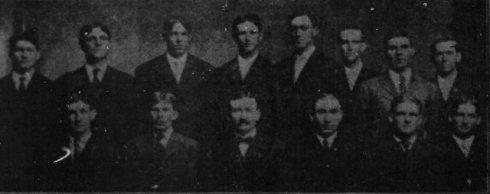
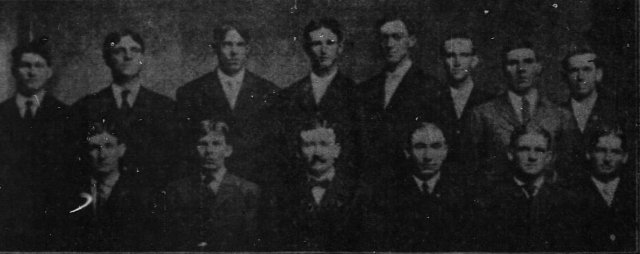
1906 Lynchburg Shoemakers, Virginia League champions. Grim is third from left on the bottom row.

1906 Lynchburg Shoemakers, Virginia League champions. Grim is third from left on the bottom row.

Just after selling the team, Grim’s wife reported him missing.  She told police in Louisville, Kentucky that she hadn’t heard from him for three weeks and thought he might be in Louisville after visiting family in Cincinnati.  Al Orth, the New York Highlanders pitcher, said he saw Grim in New York and told The Associated Press “He did not look like a man who was missing from anywhere.”
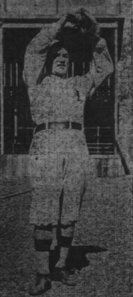
Al Orth

Al Orth


Grim eventually returned to Virginia and his disappearance was never explained.  Orth, who was from Lynchburg, returned there later that summer purchased an interest in the team and managed the club until early 1909 when he returned to the Highlanders.

For the next four years Grim bounced back and forth from team ownership (he managed, and owned part of two more Virginia League franchises (Portsmouth in 1910 and Newport News in 1912) and real estate speculating on the West Coast and in Virginia.

At the beginning of the 1912 season a small item in The Richmond Times-Dispatch hinted that there was trouble ahead:

“Jack Grim has a combination of troubles.  One is of the financial variety—well the other is nobody’s business.”

The financial troubles came to a head in August.  The Times-Dispatch said:

 “Because Manager J.J. Grim would not pay their salaries, all of the players of the Newport News baseball club except (Frank) ‘Deacon’ Morrissey, struck just before the scheduled double header between Newport News and Petersburg.”

After the game was awarded to Petersburg by forfeit, Grim’s co-owners removed him—outfielder William “Buck” Hooker was named manager for the remainder of the season.

At the end of the 1912 season, Grim found himself in an odd predicament.  The Cincinnati Enquirer said:

“Though minus a franchise, Jack Grim, formerly of Cincinnati, has a ball team under reservation, for he owns title to the players of the Newport News club…It develops that in the adjustment of the club’s affairs in August, Grim who was manager and part owner, got out without losing title to the players, though he lost the franchise.”

As a result, when the Cleveland Naps drafted third baseman Ray Bates from Newport News after the 1912 season, the draft price went to Grim.

It was the last good thing to happen to him; from there, Grim’s life spun out of control.

In October, he attended the World Series in New York (his wife later said he attempted to kill her during that trip).

In November of 1912 the Virginia League turned down his attempt to secure a franchise for 1913; next his effort to start a new league with teams in Virginia and the Carolinas fell through.

In addition to being unable to secure a franchise and running out of money—an effort to secure the New York-New Jersey League franchise in Kingston, New York also fell through–Grim’s wife had him arrested  during the first week of March 1913, and told a Lynchburg judge he had repeatedly “threatened Mrs. Grim with bodily harm.”  Grim was held in jail, but according to The Times-Dispatch “is doing everything possible to effect a reconciliation with his wife.”

Grim was released on bond after a week, but quickly rearrested, and by March 23 The Times Dispatch said:

“That a commission of lunacy will be summoned early this week to investigate the Sanity of john J. Grim, the well-known minor league baseball magnate , seems now to be a foregone conclusion…Since his incarceration Grim’s condition has grown so bad that there is no doubt in the minds of the jail attaches that he is insane…Grim has not had his clothes off in a week, and he spends his time in his cell singing, shouting, talking and pacing up and down, begging to be liberated.”

The “commission of lunacy” found Grim insane based on the testimony of Grim’s wife and a doctor named Albert Priddy, and ordered him sent to Virginia’s Southwestern State Hospital in Marion.  It was in front of the commission that Mrs. Grim related the story of the “attempt to murder her with a razor in New York City.”
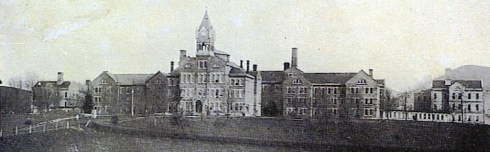
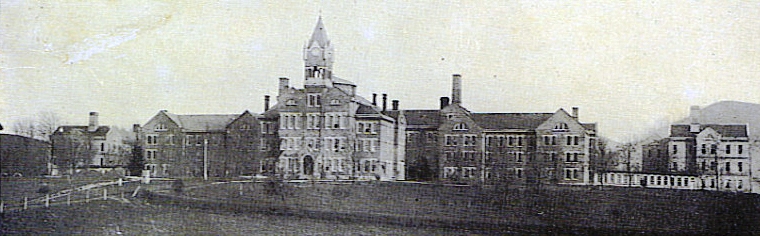
Southwest State Hospital, Marion, Virginia

Southwest State Hospital, Marion, Virginia

Contradictory reports about Grim’s condition came out during the next year.  The Associated Press said in August Grim was “A raving maniac…not far from death.”  A December story in The Cincinnati Enquirer said “he is improving rapidly and probably will be discharged at an early date…Grim expects to return to Cincinnati.”

Almost a year later, he was still in the hospital, and The Enquirer reported that “Grim is improving in health and expects to visit his Cincinnati friends soon.”

That item was the last newspaper reference to Grim; he was never released and died in the state hospital.

The doctor who testified that Grim was insane, Albert Sidney Priddy, was superintendent of the Virginia State Colony for Epileptics and Feebleminded in Madison Heights, Virginia.  The doctor, and that institution became infamous in the case of Buck v. Bell (the case was Buck v. Priddy until Priddy’s death in 1925; Bell was his successor at the State Colony).  The Supreme Court’s decision in the case–upholding the Virginia’s compulsory sterilization law– resulted in the forced sterilization of more than United States citizens in Virginia and states that enacted similar laws.

“Father isn’t Disappointed because I took up Dancing”

4 Apr

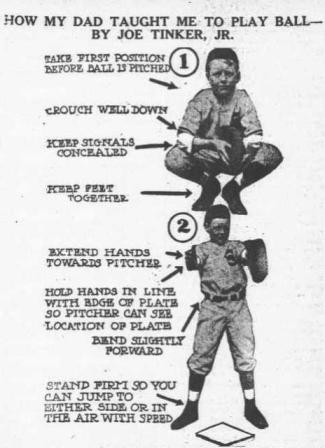
In the spring of 1916 Joe Tinker Jr., ten-year-old son of Chicago Cubs Manager Joe Tinker “wrote” a series of articles that appeared in newspapers across the country.  Tinker’s articles provided tips for playing each position:

“To be a winning pitcher you must have control…The best way to gain control is to get another boy to get in position as a batter then pitch to him.  Don’t throw at a stationary target.”

“(Catchers) Stand up close to the batter and don’t lose your head if the pitcher becomes wild.  Try to steady him with a cheerful line of talk.  Practice every spare moment.”

“Stand close to the plate when batting.  Don’t lose your nerve if the pitcher tries to bean you. Some fellows like to choke their bats or grip the handles about four inches from the end.  My father don’t approve of the style…Don’t argue with the umpire.  If you are hot-headed you hurt your chances to connect with cool-headed pitching.”

“Learn to start in a jiffy.  That is the first point emphasized by my dad in teaching me to run bases.”

“Playing short offers many chances for individual star plays and the work of a good man will have a great effect on the score card.”

Photos of Joe Tinker Jr. demonstrating what his dad taught him

Photos of Joe Tinker Jr. demonstrating what his dad taught him

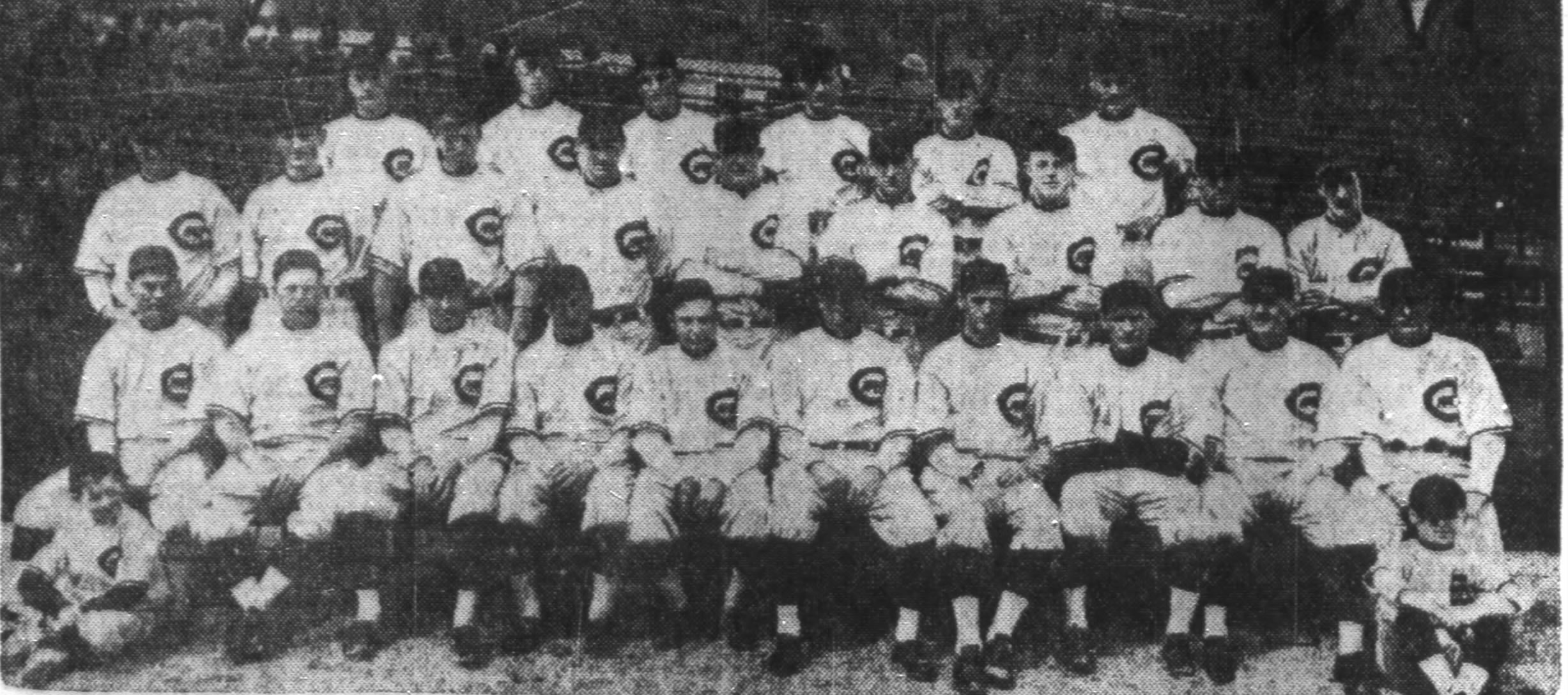
Joe Tinker Jr. and his younger brother Roland were the Cubs mascots during their father’s season as manager in 1916.  In 1924 Chicago newspapers reported that Tinker Jr. was headed to the University of Illinois to play baseball for Coach Carl Lundgren, the former Cub pitcher.  There is no record of Tinker ever playing at the school.

1916 Chicago Cubs.  Joe Tinker Jr. seated right, Roland Tinker seated left.

1916 Chicago Cubs. Joe Tinker Jr. seated right, Roland Tinker seated left.

Younger brother Roland played for two seasons in the Florida State League.

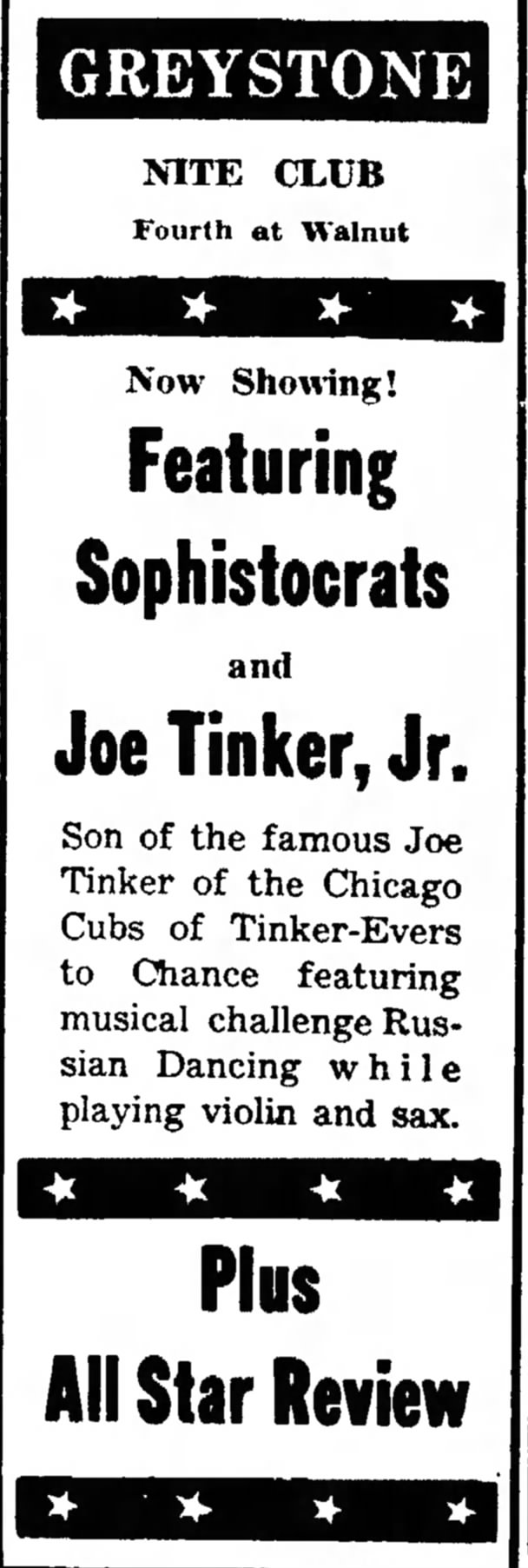
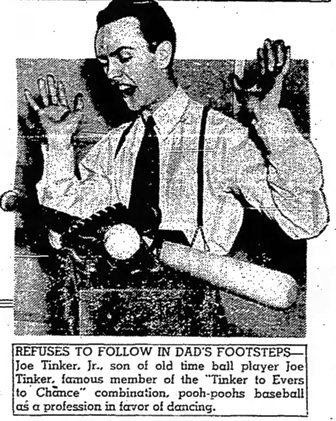
In 1938 newspapers reported that Joe Tinker Jr. had become a dancer with a vaudeville group called the Sophistocrats.  Tinker Jr. told reporters:

“Father isn’t disappointed because I took up dancing.  In fact he approves.”

It’s unclear whether “Joe Tinker Jr.” was actually Joe Tinker Jr.  The newspaper articles all said he was 22-years-old.  Joe Tinker Jr. would have been in his thirties; however his brother William Jay Tinker would have been 22 in 1938.


joetinkerjrdance


joetinkerjr1938

When Joe Tinker was elected to the Hall of Fame he compiled his all-time team for Ernest Lanigan, then curator of the Hall:

Pitchers: Mordecai Brown, Grover Cleveland Alexander, Christy Mathewson and Ed Walsh

Catchers: Johnny Kling and Roger Bresnahan

First Base: Frank Chance

Second Base: Eddie Collins

Third Base: Harry Steinfeldt

Shortstop: Honus Wagner

Outfield: Artie “Solly’ Hofman, Ty Cobb, Fred Clarke, and Sam Crawford.

Though he named several Cubs, Tinker did not include his former teammate Johnny Evers.  In 1914 Evers had famously slighted Tinker, with whom he was engaged with in a long-term feud, after Evers and his Boston Braves teammates won the World Series. William Peet wrote in The Boston Post :

“(Walter “Rabbit” Maranville’s) the best shortstop the game has ever known.

“Better than Joe Tinker; your old side partner?

“Yes, he’s better than Tinker.”

While the two finally broke their silence at Frank Chance’s deathbed in 1924, they never reconciled.

Evers died in 1947, Tinker in 1948.

Joe Tinker circa 1946

Joe Tinker circa 1946

Joe Tinker Jr. died in 1981, Roland “Rollie” Tinker died in 1980, and William Tinker died in 1996.