Tag Archives: World Series

Lost Advertisements–Pat Moran for Sloan’s Liniment

22 May

patmoran

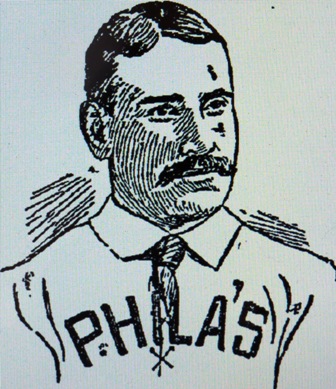
An advertisement that appeared late in the 1919 season featuring Cincinnati Reds Manager Pat Moran:

“‘When my players get sore, I don’t rub them the wrong way;  I use Sloan’s Liniment–it penetrates.’

“Moran knows how to keep his men fit for the pennant scramble–keeps Sloan’s handy for emergency.  ‘Glass arm,’ ‘Charley horse,’ stiffness, soreness, bruises, rheumatic aches, are quickly and comfortably relieved.  Penetrates without rubbing, keeping the boys ready for the winning game.”

The 1919 World Series was the fourth for Moran.  He played in two with the Chicago Cubs (1906 and ’07) and managed two, (the other was with the Philadelphia Phillies in 1915).

Moran replaced Charles “Red” Dooin as Phillies manager after the team finished in sixth place in 1914.  Under Moran, the team won 10 of their first 11 games and won the National League with a 90-62 record.

In September, Frank Menke of The International New Service said:

“Moran deserves ranking among the greatest managers the game has ever known.  It is the wonderful leadership of the red-faced, gray-haired Irishman that has put the misfit Phillies where they are today.”

Moran

Moran

Menke said Moran was saddled with a team consisting primarily of “castoffs,’ and “one wonderful pitcher (Grover Cleveland Alexander).”

Moran followed up the 1915 pennant with two second-place finishes, with teams Grantland Rice of The New York Tribune said the manager had little to work with beyond pitcher Alexander:

“(T)hose astounding Phillies, piloted by a leader who has never received anywhere near his due recognition for extraordinary ability to lead a ball club.  need it be said that we refer to Pat Moran?  It needn’t.”

As was his habit, Rice memorialized Moran’s abilities with a poem:

Pat Moran’s no Miracle Man

Nor anything like that;

Nobody ever stands and cheers

The while he tips his hat.


Pat doesn’t draw the headline space

Nor yet the picture frames;

Pat Moran’s no Miracle Man–

Buthe’shellatwinninggames”

During his nine-year managerial career in Philadelphia and Cincinnati, Moran compiled a 748-586 record, which included a total of four second-place finishes to go with his two pennants.

During spring training of what would have been his sixth season with the Reds, Moran, who had a history of excessive drinking, became ill in Orlando, Florida.

His former Cubs teammate Johnny Evers came to his bedside.  According to The Associated Press, he said:

“‘Hello John, take me out of here.’ He then lost consciousness.”

He died later that day.  The official cause was Bright’s Disease.

“Babe Ruth has a Locker full of Charms”

13 May

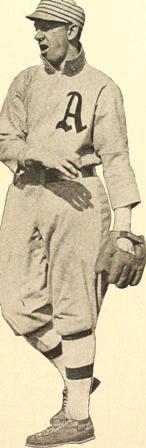
Eddie Collins had spent 25 years in the major leagues as a player, coach and manager by 1930 when he spoke to a writer for “Every Week Magazine” about superstitions.

Eddie Collins

Eddie Collins

The article noted:

“Collins, by the way, has been credited with being one of the most superstitious players in the national game.  His habit of sticking a piece of chewing gum on the button of his cap has almost become a tradition.  If the pitcher had two strikes on him, Eddie would jerk off the cap, yank the gum from the bottom, stick it in his mouth and chew violently.”

But, Collins, a graduate of Columbia University, didn’t consider himself superstitious and told the magazine:

 “The average man playing professional baseball today is too well-educated actually to believe you can make home runs by picking up hairpins or adopting any of the other numerous superstitions which have come to be so much part of the game. “

As for the obvious superstitions he and many other players, educated or not, subscribed to, Collins said they were merely “eccentricities,” and that “Having them gives confidence.”

That said:

“The late George Stallings was one of the most sensible men baseball has produced.  He was the personification of common sense and one of the last persons in the world you would credit with being superstitious.  Nevertheless, a single scrap of paper tossed on the ground in front of the dugout meant all sorts of bad things to George. It upset him completely and his managerial skill seemed to fade.”

George Stallings

George Stallings

Joe Sewell of the Cleveland Indians was another “college man,” someone who “generally loses any belief in omens.”  But, Sewell “after his last crack at the bat during practice” insisted on running towards third and touching the bag before anyone else did.  One day in Cleveland, the too educated to be superstitious Sewell started towards third, only to see Collins, also too educated to believe in superstitions, had:

“(D)ashed out of the Athletics’ dugout and touched the sack ahead of Joe and Joe didn’t get a hit during the afternoon.”

Joe Sewell

Joe Sewell

Next was Urban Shocker, who insisted no one touched his glove during a game.  Despite being “too wise a man to believe” such a thing, Collins told how during a game against the Athletics, “Eddie Rommel spotted the glove and knowing Shocker’s eccentric regard for it, walked over and picked it up, examined it and then tossed it back on the turf.”  The “too wise” Shocker:

“(S)aw red.  He became visibly unsettled.  He blew up the next inning.”

As for the game’s biggest star:

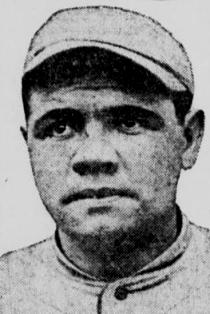
Babe Ruth has a locker full of charms, fetishes and tokens; fastened to the door is a wooden horseshoe with a four-leaf clover carved on it, and on top stands a totem pole and other curious objects guaranteed by enthusiastic donors to bring luck.”

Babe Ruth

Babe Ruth

Collins said the previous season when the Athletics were on their way to Chicago for game 3 of the World Series with the Cubs:

“(T)here was a fan on the train with us  who had a great fondness for canned pineapple.  He insisted the players eat some the morning of the game predicting we’d win if we did.  Well, we did, and we won.”

Collins said he, and the rest of the Athletics, too smart for superstition:

“Had pineapple every morning the rest of the series.”

Lost Pictures–Tris Speaker and Laddie Boy’s Brother

10 Apr

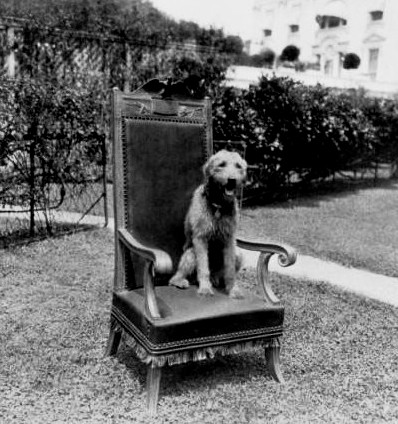
trisIn 1921, the most famous dog in the world was Laddie Boy; the Airedale Terrier was the first celebrated Presidential Dog.  Laddie Boy was presented to President Warren G. Harding on March 5, 1921–the day after his inauguration–by a Toledo, Ohio breeder–his father  was an international champion Airedale named Tintern Tip-Top.

Laddie Boy had his own chair at Harding’s cabinet meetings, “wrote” articles about his life at the White House, and after Harding’s death a statue of Laddie Boy–paid for with donations collected by newsboys across the country–was commissioned and displayed at the Smithsonian Institution.

laddieboy

Laddie Boy poses on the White House lawn in his chair.

Nearly two months after Laddie Boy went to the White House, one of his lesser-known brothers was presented to Player-Manager Tris Speaker of the defending World Series Champion Cleveland Indians on opening day of the 1921 season.

Speaker became a fan of the breed and later bought Airedales from another Ohio breeder, Walter Lingo.  Lingo, to promote his breeding business–Oorang Kennel Company–hired another one of his customers, Jim Thorpe, and together they organized the Oorang Indians National Football League franchise.

Jim Thorpe--Airedale fan

Jim Thorpe–Airedale fan

Fred Downer

30 Mar

In August of 1953, “Jet Magazine” said people were talking about:

 “That affectionate hug baseball immortal Ty Cobb gave Chicago news dealer Fred Downer.”

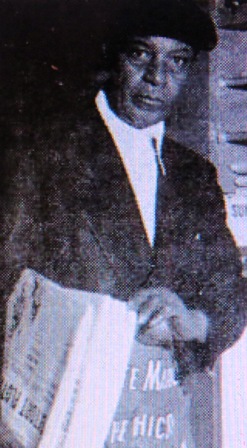
By then, Frederick Douglas Downer was largely forgotten.

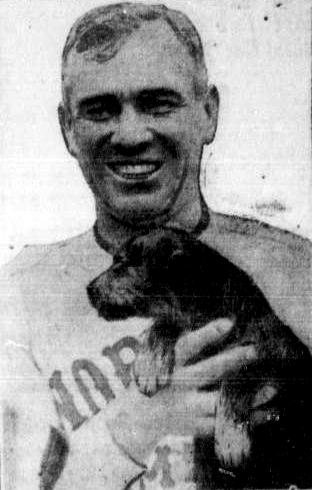
Before playing as a professional, he was, according to The Pittsburgh Courier, the “star” of the Morehouse College baseball team in Atlanta.

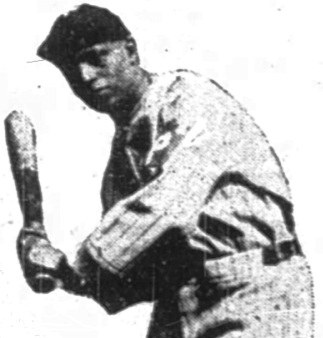
Fred Downer

Fred Downer

His first professional experience was with the Atlanta Cubs in 1919—the team was colloquially called the Atlanta Black Crackers for years, and newspapers referred to them by both names until 1922 when the “Cubs” name was permanently dropped.  Years later, Downer told The Chicago Defender he also played with the Knoxville Giants during this period.

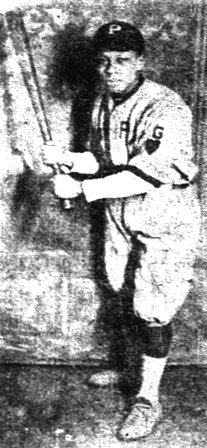
In 1921, Downer and Gerard Williams, his teammate at Morehouse and with the Atlanta Cubs, went north to join the Pittsburgh Keystones.   Downer is listed by several sources as the club’s manager, but in the 1970s he told The Defender said he “played under the management of (William) Dizzy Dismukes.”  Dismukes was also the Keystones’ manager the following year when the team entered the Negro National League.

Downer appears to have played independent and semi-pro ball during 1922.

While not listed on any extant rosters, Downer spent some time with the Cleveland Tate Stars in 1923—in an interview given in 1972 Elander “Vic” Harris, who debuted with the Tate Stars as an 18-year-old that season, said Downer, who he had gotten to know in Pittsburgh was with the club. Harris told The Van Nuys (CA) News he tried out as a first baseman but was installed in the outfield, leading to Downer being let go.

Downer returned to Pittsburgh and assumed management of the Keystones in 1924. After a single season in the Negro National League, the Keystones had dropped out, and the team continued operations as a semi-pro club.

Downer, and another Georgian who also played with the 1923 Cleveland Tate Stars, Mathis Williams, managed and played for the semi-pro version in 1924 and ’25.  The Keystones barely treaded water financially.

Mathis Williams

Mathis Williams

In June of 1925 The Pittsburgh Courier said:

“Of the colored clubs in action, none but the Homestead Grays are making any money…Fred Downer and his Pittsburgh Keystones are practically a thing of the past.”

Within a month the team disbanded and Downer was through as a player.

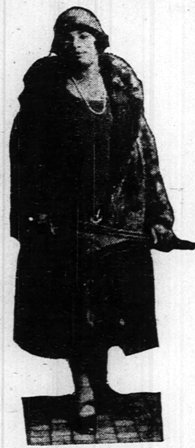
The following year, he and his wife Marian Foster Downer, a reporter for The Pittsburgh Courier—and later The Chicago Defender— relocated to Chicago.  She continued to write for The Courier’s society page while Fred began covering baseball and boxing for the paper and acted as The Courier’s Midwest circulation manager.

In addition to covering most major Midwest-based events–including the annual Negro League East-West All-Star Game and several championship fights—Downer started the Atlas News and Photo Service which distributed content to Black newspapers.


Marian Foster Downer also wrote about sports for The Defender.  Her article on the 1935 East-West All-Star Game—won by the West 11-8 on George “Mule” Suttles’ three-run home run after Webster McDonald walked Josh Gibson to face him—was headlined:

Mule Suttles

Mule Suttles

Our Girl Scribe Sees Mule’s Hit

Marian Foster Downer--The Defender's "Girl Scribe"

Marian Foster Downer–The Defender’s “Girl Scribe”

In 1945, Fred Downer proposed a new path for Negro League baseball, writing in a Chicago-based magazine called “New Vistas:”

“If the white majors won’t hire good colored players, then the Negroes should build their own parks and hire the best players regardless of race.  This will build up competition, and competition will break down many barriers.”

Downer was covering the World Series at Wrigley Field in 1932 and was on-hand for Babe Ruth’s “called shot.”  The Courier’s Sports Editor Wendell Smith said Downer was “One of Babe’s most staunch and loyal supporters,” and was determined to find the ball.

 “His decision to find the ball Ruth hit resulted in a search that has been a detailed and intensive as any by a ‘G-man.’  Fred scoured every baseball haunt in the Chicago area.”

According to Smith, Downer expanded his search throughout the Midwest, with no luck.

Downer later told The Chicago Defender he found the ball and bought it from a former Chicagoan who had moved to Michigan.  He called the ball “one of his prized possessions.”

The actual provenance of the ball and its current whereabouts are unknown.

Twenty-one years after he witnessed Ruth’s “called shot,” Downer—by then he had left  The Courier and owned three newsstands on Chicago’s South Side– was again at Wrigley Field where he had an encounter that raised questions in the Black press about a long-held opinion of another baseball legend.

Ty Cobb stopped in Chicago on his way back to his California home from Cooperstown, to attend a game between the Cubs and the Brooklyn Dodgers.

Downer was born in Cobb’s hometown of Royston, Georgia in 1896.  The Defender said of the relationship between the two:

“(Downer) got his start in baseball chasing fly balls for Ty Cobb as a kid.”

The California Eagle said:

“Downer was raised around the Cobb’s household in Royston, Georgia.”

Wendell Smith, then with The Chicago Herald-American, said of Cobb’s day at Wrigley:

“(T)here were two things said about (Cobb) that were, apparently, the gospel truth:

  • He could hit any living pitcher.

  • He would hit any living Negro.”

Smith said the second “truth” was “merely a matter of hearsay.”

And, he said:

“(H)e gives no indication today of intolerance.”

In addition to his embrace of Downer, Cobb was asked which players on the field most impressed him:

“’Why that catcher there, he said, pointing to Roy Campanella.  ‘He’s the best ball player I’ve seen in many a year…That fella’s a great catcher,’ he volunteered.  ‘The very best in the game.  He reminds me a little of Roger Bresnahan.  If he can stick around for five or six more years they’ll have to put him alongside the game’s all-time catchers.’”

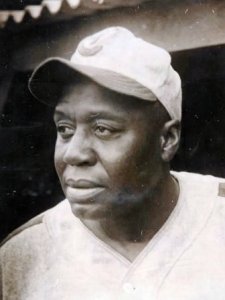
Downer continued to operate his newsstands well into his 70s.  At the corner of 53rd Street and Lake Park Avenue, The Defender said, he would:

“(S)ell morning newspapers (and) answer hundreds of questions pertaining to his long career.”

Fred Downer

Fred Downer

Frederick Douglas Downer died in Chicago on March 10, 1986.

Nick Maddox

9 Feb

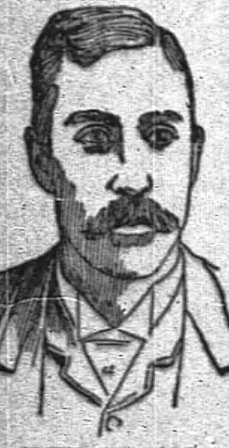
Nicholas “Nick” Maddox burst on the National League scene in 1907. Born in Maryland on November 9, 1886, Maddox’ was born Nicholas Duffy, but adopted his stepfather’s name Maddox.

In 1906 the 19-year-old was given a trial in the spring with the providence Grays in the Eastern league.  He was released before the season began and signed with the Cumberland Rooters in the Pennsylvania-Ohio-Maryland League (POM).  Maddox had played in 1905 for the Piedmont team in the semi-pro Cumberland and Georges Creek League.

He was the best pitcher in the POM; The Sporting Life said Maddox was 22-3 for the Rooters who finished the season in fourth place with a 50-45 record, and was “the fastest pitcher in the league.”
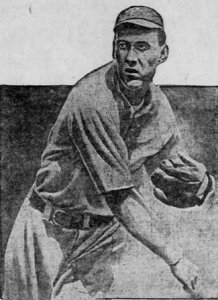
Nick Maddox

Nick Maddox

Maddox spent most of 1907 with the Wheeling Stogies of the Central League.  He posted a 13-10 record and no-hit the Terre Haute Hottentots on August 22.  Maddox was purchased by the Pirates the following month and made his big league debut on against the St. Louis Cardinals.

The Cumberland Times noted that he faced a “double-jointed hoodoo of commencing his National League career on Friday, September the 13th.”

The Pittsburgh Press said:

“Nick was ‘on the job’ yesterday from start to finish, and acted more like a man with many years’ major league experience than like a minor leaguer who has been in the business but a few seasons.”

Maddox shut the Cardinals out on just five hits, struck out 11 and got his first hit, a single in his first at bat.

Eight days later Maddox threw the first no-hitter in Pirates’ history, beating the Brooklyn Superbas 2 to 1—Brooklyn scored on two fourth-inning errors.   Years later, Maddox said of his own throwing error that put Emil Batch on base:

 “They scored me with an error, but hell man, I threw it straight to the first baseman (Harry) Swacina.  Sure it went over his head but he should have jumped for it.”

Batch scored on an error by shortstop Honus Wagner.  Maddox said:

“I don’t hold that against Honus, he saved my no-hitter in the ninth.  A ball was hit right over my head and ‘pfft’ Wagner was over there to get it.  I don’t think he ever held the ball, he just swooped it over to first.”

The rookie started six games Pittsburgh, won his first four, and finished with a 5-1 record with a 0.83 ERA.

The Pittsburgh Leader said Pirates’ President Barney Dreyfuss claimed Maddox would be “the sensation” of 1908.  He wasn’t far off.

The 21-year-old was an impressive 23-8 with a 2.28 ERA with five shutouts.  Despite his success there was concern about control—he walked 90 batters while striking out just 70 in 260 innings, and hit 11 batters.

After three second and one third-place finish the four previous seasons, Pittsburgh, and Maddox, came into 1909 with high expectations.  The Pittsburgh Press said:

“Nick Maddox is facing a very successful summer, and with an even break and barring accidents he ought to push any other twirler in the National League for first honors.  He has everything a pitcher needs, and youth with it.”

The Press also said he would “start out with good control” based on his performance in March games in Hot Springs, Arkansas.

The Pirates lived up to expectations, taking over first place on May 5 and cruising to the pennant; Maddox did not.

The 22-year-old struggled for the first half of the season.  The Leader said he was having “a hard time getting into condition,” and was wild as a March Hare.”  Maddox got on track in July pitching a 2-hit shout against the Cincinnati Reds on the 6th, and four-hit shutouts against the Brooklyn Superbas and Boston Doves on the 14th and 23rd.

He ended the season 13-8 with a 2.21 ERA—overshadowed by teammates Howie Camnitz (25-6), Vic Willis (22-11), Albert “Lefty” Leifield (19-8) and rookie Charles “Babe” Adams (13-3 as a reliever and spot starter).
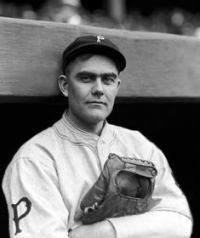
Babe Adams

Babe Adams

Despite going into the World Series against the Detroit Tigers with such a strong pitching staff, Manager Fred Clarke opted for the rookie Adams in game one and he responded with a 4 to 1 victory.

The Tigers beat Camnitz 7 to 2 in game 2.

Three years later, Fred Clarke spoke to James Jerpe of The Pittsburgh Gazette-Times about his decision on a pitcher for game three:

“I was in an awful predicament.  Adams had been used up.  It was had been raining, and it was very cold.  The chilly drizzle was something frightful.  The ball would get wet and water-logged and the problem was to get a pitcher who could handle the wet ball.  I looked the gang over.  Adams was out of the question.  He had been used up.

“I was figuring on the others, and I asked ‘Who can go out there today and handle a wet ball and win?’  Poor Maddox, sitting in a corner of the bench all bundled up with sweaters and other stuff, shed his extra clothes and jumped up.  Grabbing a ball, he said: ‘Gimme a catcher till I warm up.  I’ll handle this wet ball and beat them or break a leg.’  His confidence gave me a hunch, and I acted on it.”

Ring Lardner said of the game:

“Detroit’s record crowd, 18,277, saw the Tigers beaten by the Pirates 8 to 6, today in one of the most exciting and most poorly played world’s series games in baseball history.”

The Pirates scored five runs in the first inning off Detroit’s Ed Summers, and Maddox shut the Tigers down for the first six innings.  Detroit scored four runs in the seventh, aided by two Pirate errors.  Clarke said:

“Maddox wouldn’t have been in so much trouble if we had played ball behind him.”

The Pirates took a 8 to 4 lead into the ninth–Detroit scored two more runs, helped by another error—but Maddox held on and picked up the win.

He did not appear in another game during the series.  The Pirates won in seven; with Adams picking up complete game wins in games five and seven.
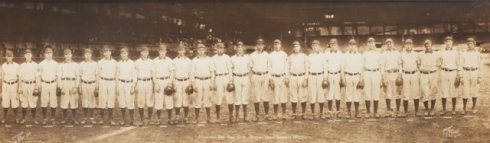
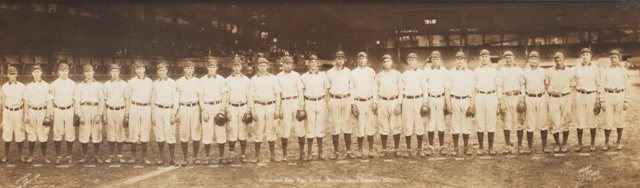
09pirates

1909 World Series Champion Pirates, Maddox is ninth from left.


The defending champions got off to a quick start again, but Maddox again started slow.  By July, The Leader said:

“Nick Maddox should have rounded into form..He is big and strong this year, but does not seem able to pitch good ball for nine rounds.”

He never “rounded into form.”  Maddox struggled all season.  He started just seven games, pitched in relief in 13 others, and was 2-3 with 3.40 ERA.

By August, with the Pirates in second place, six games behind the Chicago Cubs, The Pittsburgh Gazette asked “what was the matter?” with Maddox and why the Pirates had not cut him loose.

He made his last appearance on September 12, giving up a run, a hit and walking two batters in two innings of relief during a 4-0 loss to the Reds.  He was sold to the Kansas City Blues in the American Association 10 days later.

Maddox won 22 games for the Blues the following season, but continued to be plagued by wildness and arm trouble.  His major league career was over, and he was finished professionally in July of 1914 at 27-years-old when he was released as manager and pitcher for the Wichita club in the Western League after posting a 3-13 record.

Fred Clarke was convinced Maddox’ career really came to an end on that rainy day in Detroit.  James Jerpe of The Pittsburgh Gazette-Times said that in 1910 Dreyfuss asked Clarke to release Maddox long before he sold the pitcher to Kansas City:

“’Why don’t you let Maddox go? You aren’t pitching him.’

“’No,’ replied the Pirate Chief sadly.  “I’m not pitching him.  He ruined his arm helping Adams win the world’s series.’

“And Fred narrated (to Dreyfuss) more of Nick’s gameness on that bleak and drizzly October day in Detroit when he gave his arm for a championship.  Nick was carried for a whole year and the club has been interested in his welfare ever since.”
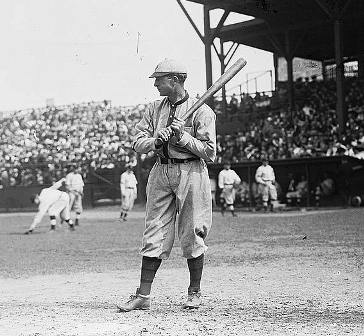
Fred Clarke

Fred Clarke

Maddox, who lived in Pittsburgh, and worked for the Fort Pitt Brewing Company, after his retirement, lived long enough to listen on the radio to the last two innings of the next no-hitter thrown by a Pirate pitcher—Cliff Chambers defeated the Boston Braves 3-0 on May 6, 1951.

Nick Maddox died in 1954 at age 68.

Things I Learned on the Way to Looking up other Things #13

22 Dec

Chief Meyers on the Plight of the Native American, 1913

John W. McConaughy, the former sports editor of The St. Louis Post-Dispatch, was no longer writing about baseball regularly as the New York Giants prepared to face the Philadelphia Athletics in the 1913 World Series.  McConaughy, who was the Washington correspondent for The New York Journal, was enlisted by the paper to write about some of the key figures of the series.

The result was, in the case of John “Chief” Meyers, a profile that went beyond a typical baseball story:

Chief Meyers

Chief Meyers

“Meyers is one of the coolest, shrewdest and quickest thinking catchers that ever came to the big leagues.  He has both gray matter and gumption, and the one is useless without the other in baseball as elsewhere.  He has a fund of general information that runs from national politics to the philosophy of Plato, and a delicately adjusted sense of humor, and these two combine to give him a good perspective of the national game.”

[…]

He is ready to fight any time for justice and fair play and he is so good-natured that he isn’t seriously annoyed when the fans perpetrate that bum war-whoop every time he comes to bat.

[…]

“One day in Cincinnati he asked the writer to go out to the art museum with him.  We came upon a bronze—an Indian turning to shoot an arrow at his pursuers.

“’There’s the idea.’ He said, pointing to the warrior.  ‘They never learned how to fight.  They had nothing but the willingness.  If Tecumseh had been as big a man as Napoleon he would have killed off the medicine men as his first official act, learned the white man’s style of warfare—and there would have been an Indian nation here today.

“’I don’t mean that the white man would not have been here, too.  But with a few leaders—real big men—our fathers would have come to see that the white man’s type of civilization was the highest, just as the (Japanese) have done.  We would have had great states and communities in the union, and we would have been useful, progressive citizens.

“’As it is the Indian is robbed by agents and shifted from reservation to reservation whenever anyone happens to want their land.  Tribe after tribe is scattered, and in another hundred years my people will have gone the way of the Aztecs.’

“Still, there will always probably be a few fans who will think it bright to pull the war-whoop when the Chief comes to bat.”

Tom Lynch Cracks Down, 1910

In June of 1910, The Associated Press said that after a 5 to 4 New York Giants victory over the St. Louis Cardinals, umpires Jim Johnstone and August Moran “stood in front of the press box and made remarks about the baseball writers.”

National League President Thomas Lynch, who had announced his intention to “break this habit of having players call the arbitrators bad names” said in response:

“I also will not stand for umpires talking back to spectators or taking it upon themselves to criticize newspaper men.”

National League President Thomas Lynch

National League President Thomas Lynch

He fined Johnstone and Moran $25 and $15 respectively for the incident.

In that era of newspapermen as frustrated poets, George E. Phair, then of The Milwaukee Sentinel, was one of the most prolific, often including a poem in his articles.  He dedicated the following verse to the National League President:

Old Thomas Lynch, who runs a league,

     Would propagate urbanity;

In fact, Sir Thomas would intrigue

     To curb the umps’ profanity.

He warns his umpires while within

     The baseball scribes vicinity

To speak no words that reek of sin,

     But emulate divinity.

He tells them not to harm the scribes,

     Nor flout at their ability;

Nor pester them with jokes or jibes;

     Nor laugh at their senility.

He plasters fines upon his umps

     For showing their ferocity

And calling scribblers ‘mutts’ and ‘chumps’

      With Teddy-like verbosity.

The veteran Sir Thomas is

     Most generous and affable,

But we’re inclined to think that his

     Solicitude is laughable.

The ump may blunder now and then

     And break into profanity;

The scribbler jabs him with his pen

     And drives him to urbanity.

Comiskey Tells a Tommy McCarthy Story, 1899

George Erskine Stackhouse, the baseball editor of the editor of The New York Tribune, spoke to Charles Comiskey in 1899 and found him in a “somewhat reminiscent mood.”  Comiskey told a story Tommy McCarthy when the two were with the St. Louis Browns:

Tommy McCarthy

Tommy McCarthy

“I heard in Chicago the other day that tom is in Boston, as fat as a Tammany alderman, and making money out of a big bowling alley.  (Hugh) Duffy owned an interest in it, but they say Tom bought him out.  I had Tom with me in St. Louis.  And say, St. Louis is the best town on earth for a winner.  They used to distribute among the players every season watches and rings and studs and pins enough to stock a jewelry store.  There was a diamond medal offered one year for the best base runner on the Browns.

“Tom McCarthy was quite a boy to steal bases, and after the medal was offered he wouldn’t run out his hits.  If he made a two-bagger, he would stop at first, and if he slammed the ball for a triple, he would manage to bring up at second, so as to get a chance to steal a base.  Of course, after a bit, I got on to him, and I had to warn him that if he didn’t stretch those hits I would have to lay him off altogether.  That helped some, but he was always hanging back when he thought he could get away with it.  I remember once that he had a chance to go down to second on a wild throw to first, and what does he do but toss his head and drop off his cap, so that he could stop and come back after it and stick at first.  He won that medal.”

“Take a Chance, any time, and Fight all the Time”

19 Dec

John W. McConaughy was just 19 when he became the sports editor of The St. Louis Post-Dispatch in 1903.  Over the next 30 years he worked as the Washington Correspondent for The New York Evening Journal, was the production manager for William Randolph Hearst’s film company, Cosmopolitan Productions, and was a member of the Creel Committee, created by President Woodrow Wilson to influence public opinion at home and abroad during World War I.  He also published several books on crime, politics and sports, including: “From Cain to Capone,” “Who rules America?: A Century of Invisible Government,” and “Big Jim Jeffries: His Twelve Greatest Battles.”

But, he continued to write about baseball long after he left St. Louis, including a profile of New York Giants Manager John McGraw on the eve of the 1913 World Series for The Evening Journal:
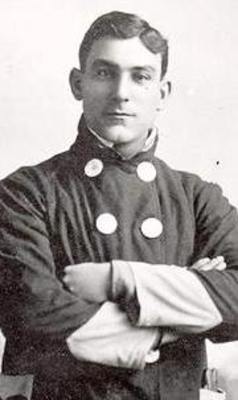
“The most distinctive and aggressive personality in baseball—this is John J. McGraw, the wonderful leader of the Giants.  He has been at one and the same time the most abused and most admired man in the national game.

John McGraw

John McGraw

“He has been called a rowdy and a Napoleon in equal parts.  He has been mixed up in more rows than any big league manager; but he has also been mixed up in more pennants… (Connie)Mack is his only rival for the title of greatest manager in the game and no two men in the world were ever more widely apart in character and methods than these two.  The old fox of Philadelphia has been dealt with elsewhere.  His system is carefully constructive work, leaving nothing to chance.

“McGraw’s motto is:

“’Take a chance, any time, and fight all the time.’

“He believes especially in fighting, but he is of the mind of Polonius in not advocating fighting as an end.  It is always a means with McGraw.  There is method in his mixing.  He has been represented as running amuck through baseball for the love of a rough-house.  Nothing is further from the truth.  When McGraw has a row on the ball field he figures that he is going to win something material at some time as a result.

“For instance, you never hear of any of the Giants being suspended or fined for battling with the umpires these days.  Why?  Because McGraw discovered that the magnates meant business in their manifestos against bully-ragging the arbiters and the chief of the Giants decided that a star on the field was worth six on the bench, recovering from the effects of ea sing their mind to an umpire.

“’I’ll do all the kicking from now on,’ he told his warriors.  ‘If any man is benched by an umpire I’ll fine him myself.  Let ‘em put me out of the game.  I’m not out there playing.’”

McConaughy said the two things McGraw looked for when evaluating players was “speed and brains,” but only the first one was non-negotiable:

“’It is possible to get good baseball out of a bonehead,’ he said once, ‘if you never expect him to think. Whenever there is any thinking to be done do it for him, and land on him with both feet if he tries to do any himself.

“By following this system he has actually made popular heroes out of notoriously slow-witted athletes.  He is out there on the coaching line thinking for them.”

McGraw, he said, was the “quickest and most daring thinker” in the game:

“It is characteristic of his aggressive mind that he is the only baseball leader who has no use for the sacrifice hit.  There is no doubt that he has lost many ball games by not using it, but there is also no doubt that he has won many a game by discarding it.  He follows offensive tactics of the dashing kind.  He is all for the hit-and-run and the double steal.  He believes in hitters and always has at least one a better than average hitting club, and his argument is that there is no sense in getting .300 hitters and ordering them to chuck away a one-in-three chance for a clean hit to advance a man a base at the cost of an out.”

McConaughy said McGraw was the ultimate player’s manager:

“He is the boss-he gives the orders and takes the blame.  He never breaks into print with anything like criticism of any man on his team no matter how much to blame any man may be for any disaster.

“He demands strict obedience and whole-hearted loyalty from his men, and he stands by them against all comers all the time and under all circumstances.  It doesn’t make any difference if every fan and sporting writer on the circuit has turned down his thumbs on a ballplayer.  This is usually a good reason, in McGraw’s system for moving him up a few places in the batting order and making him a regular player in a prominent position.

“There is scarcely a manager in the country who would have clung to (Fred) Merkle under the terrific panning that unfortunate man was let in for by his historic play at second base.  McGraw’s answer to the storm of abuse was to make him regular first baseman of the club, a place he has filled with credit.”

While McGraw did always defend Merkle for “his historic play, “he did not make him the “regular first baseman,” during “the storm of abuse” immediately following “Merkle’s Boner” in September of 1908, but  rather after the release of Fred Tenney following the 1909 season.

McConaughy summed up McGraw:

“His men are always looking for a chance to swear by him, and the fans around the circuit are equally keen for a chance to swear at him.”

Connie Mack, who McConaughy said was McGraw’s “only rival” for the title of baseball’s best manager, guided his Philadelphia Athletics to a four games to one victory over McGraw’s Giants in the 1913 world Series.

McGraw and Mack two years earlier at the 1911 World Series.

McGraw and Mack two years earlier at the 1911 World Series.

“I’ll Break your Head if I ever get out Again”

8 Dec

Before a game against the Philadelphia Quakers in 1883, Providence Grays outfielder Samuel “Cliff” Carroll was drinking from a hose.  He then turned the hose on a Providence fan named Jimmy Murphy.

After the game, an 8 to 4 Grays victory, Murphy returned to the Messer Street Grounds with a gun.

Cliff Carroll

Cliff Carroll

The Providence Evening Press said:

“Shortly after the ball game, Wednesday afternoon, the neighborhood of Messer Street was thrown into a state of great excitement by the announcement that a member of the Providence baseball club had been shot.”

The paper said the initial hysteria included reports that the player had been killed.

“A well-known baseball crank named “Jimmy” Murphy, has been in the habit, for some time past, of frequenting the ball grounds during the hours of practice, and imagining himself to me a player of extraordinary merit.  Owing to his eccentricities he was a source of great amusement to the players, and was made by them the butt of many practical jokes.  ‘Jimmy,’ who is said to be slightly ‘off’ mentally speaking, occasionally resented his treatment, but never until Wednesday did he report to violent means.”

The Evening Press said after Carroll “thoroughly drenched” Murphy with the hose:

“Murphy immediately departed, nursing his wrath, and in the afternoon returned, and waited outside the grounds until the players issued, after the game.  Carroll came out with a number of men, among whom was (Joe) Mulvey, the change shortstop, and ‘Jimmy’ at once drew a pistol and deliberately fired at Carroll, but owing no doubt to his excitement, he missed his man, and the bullet struck Mulvey in the right shoulder, inflicting a painful, though not dangerous wound.”

Murphy, the shooter, fled from the scene, and was pursued by police, citizens, and Grays second baseman Jack Farrell.  He managed to escape, but was arrested later in the evening.  Neighbors told the paper “Murphy is a ‘crank’ in other matters besides baseball, and is not considered responsible for his actions.”

It was later learned that the wound to Mulvey was superficial, the ball never penetrating his skin:

“Mr. Mulvey quietly walked to his home on Crary Street, congratulating himself upon his narrow escape.”

The following day in court, Murphy was found “probably guilty in the justice court,” and “bound over to the court of common pleas.”  While being led out of the courtroom, Murphy spotted Carroll and said:

“I will get even with you yet, I’ll break your head if I ever get out again.”

The eventual adjudication of Murphy’s case is lost to history.

Carroll was part of the 1884 “World Champion” Grays team, and remained with Providence until the club folded at the end of the 1885 season. He played with five more National League teams through 1893; although he sat out the 1889 season to operate a farm in Bloomington, Illinois.

There is no record of Murphy having ever having the opportunity to “get even.”

Carroll died in 1923 in Portland, Oregon.  The Oregonian said:

“One of the greatest baseball players of the game died in Portland recently, but so modest was he that few even knew he had been spending his last years here.”

The Providence Morning Star reported on the day of the shooting that Grays Manager Harry Wright had agreed to “loan” Mulvey to the Quakers.    Mulvey joined Philadelphia in early July.  He was switched to third base, and was a member of the Quakers through 1889, he played until 1895

Joe Mulvey

Joe Mulvey

Mulvey remained in Philadelphia after his playing days and worked as a watchman at Shibe Park.  The Associated Press said on August 20, 1928, the man who had a brush with death at a ballpark in 1883, “attended a boxing show at the ballpark,” and “was found dead of heart failure in the club locker room,” the following morning.

“Is Napoleon Lajoie a Hoodoo?”

14 Nov

Napoleon Lajoie had his share of superstitions and sought to avoid “Hoodoo,” like most players of his era.  But, as Lajoie was winding down his long career, hitting un-Lajoie like .246 for a horrible Philadelphia Athletics team (36-117) in 1916, The Philadelphia Bulletin presented a case that Lajoie himself was the problem:

“Is Napoleon Lajoie a hoodoo?

Napoleon Lajoie

Napoleon Lajoie

“Several baseball managers and ‘Larry’ himself would like to know the answer.  And here is why:

“Lajoie, for many years recognized as the king of second basemen and dubbed ‘King Larry,’ now has visions of the waning of his baseball star of fame, and he has never played on a pennant-winning team…For years he hit well over the .300 mark—once over .400—was one of the most dangerous men to pitch to in a pinch, and fielded his position around second base in a finished, manner—so finished in fact, that he won the distinction of being the classiest second-sacker in baseball.  Every move of the big Frenchman was grace personified.

“Notwithstanding the fact that he was a star of the first magnitude, ranking with Hans Wagner of Pittsburgh—and they are the two real stars of baseball of former years—he never was able to help his team to the pennant.  So, when Lajoie was sold to Connie Mack dopesters and Larry himself thought he eventually would get into a World Series.  But alas!

“Larry joined the Athletics in the spring of 1915, and while his admirers were expecting him to get back his batting eye, which had apparently been dimmed while he was in Cleveland, Connie Mack decided to tear down his wonderful machine.  (Eddie) Collins, (Ed) Plank, (Charles “Chief”) Bender, (Jack) Coombs, and (Jack) Barry were sold (or released), while (Frank) Baker played bush league ball because Connie would not meet his salary demands, and the famous $100,000 infield of the Athletics was wrecked and the run making machine of the world champions was put out of commission.  And the hopes of Larry and his enthusiastic followers went glimmering.  He is on a tail-end team, just like he was at Cleveland.

“And worst of all from Lajoie’s point of view, the Cleveland team has been holding down first place in the American League for many weeks and is a contender for the pennant.

“The question, ‘Is Napoleon Lajoie a hoodoo?’ Again presents itself.”

While Cleveland was in first place as late as July 12, the Lajoie-hoodoo-free Indians still faltered and finished seventh in 1916.

After Philadelphia’s disastrous season—they finished 54 and a half games back—Lajoie accepted the position of player-manager with the Toronto Maple Leafs in the International League.  The 42-year-old second baseman hit a league-leading .380 and led the Maple Leafs to the championship in 1917—the first, and only of his career.

Things I Learned on the Way to Looking up other Things #12

3 Nov

The Cost of Superstitions, 1913

John Phalen “Stuffy” McInnis his .324 and drove in 90 runs for the 1913 Philadelphia Athletics, but the first baseman hit just .118—2 for 17—during the World Series.

Stuffy McInnis

Stuffy McInnis

The Washington Post told how one superstition among the athletics players might have contributed to McInnis’ slump:

“Those boys believe that they can change the luck at a crucial moment by hurling their bats in the air and letting them fall where they will.  Probably you fans have often seen them do it.  They also believe that they can keep up their good luck by continuing this practice.

“During the first game, in which (Frank “Home Run”) Baker hit a home run, the Athletics started tossing their bats the minute the ball was hit.  As the bats came down Stuffy McGinnis couldn’t get out of the way in time and one of them struck him in the ankle, causing a painful bruise.  He limped to first base and for a while (Connie) Mack was afraid he couldn’t go on with the game.”

Despite McInnis’ slump, the Athletics beat the Giants four games to one.

The Case against the Spitball, 1905

Baseball’s greatest pitcher hated the games most controversial pitch.  In 1905 Denton True “Cy” Young was quoted in The Sporting Life saying it wouldn’t be long before the pitch disappeared entirely:

“I don’t think the ‘spit ball’ is going to cut a much a figure as was thought early in the season.  Many of the pitchers that were using it at the start of the campaign have cut it now, and from now on the twirlers that use it will be dropping it one by one.  I used it against Philadelphia and Washington and had it working nicely, but it hurt my arm and I have cut it altogether.  An old pitcher like myself has no business using it at all.”

Cy Young

Cy Young

Young said the pitch injured his forearm and said he was not alone.  He claimed Jack Chesbro, George Mullin, (Guy) “Doc” White all received similar injuries.   And Washington’s Case Patten, who a year earlier so loved the pitch The St. Louis Republic said he was often “giving the ball a shower bath preparatory to flinging,” was now saying the pitch “lamed his arm.”

Young said even for those who weren’t injured, the spitter would ultimately lead to pitchers losing “control of his curve ball and his fast ones.”

While Chesbro disagreed with Young’s claim that his arm problems were the result of throwing spitballs, his effectiveness diminished greatly after the injury.

Young’s prediction of the demise of the pitch was premature.  At the time of his statement, Chicago White Sox pitcher “Big Ed” Walsh was perfecting the pitch, which he learned from teammate Elmer Stricklett—who had also been instrumental in Chesbro’s use of the spitter.   Walsh started throwing the spitball regularly in 1906.

Ed Walsh circa

Ed Walsh circa

A month before his death, on his 78th birthday and bed-ridden, Walsh remained an advocate for the pitch Cy Young detested.  He told a reporter for The Associated Press:

“I admire the pitchers today who throw the pitch.  Some people call ‘em cheaters.  They’re not.  They’re just guys doing everything they can to win.”

Wahoo Sam’s Scouting Report, 1914

Coming off of the New York Giants off-season world tour with the Chicago White Sox, the consensus opinion seemed to be that Giants Manager John McGraw did not make a mistake in signing Jim Thorpe, the world’s greatest all-around athlete, to a three-year contract worth–depending on the source—from $5,000 to $6,500 per season.  Many doubted Thorpe’s prospects after he hit just .143 in 19 games for the Giants in 1913.

Jim Thorpe

Jim Thorpe

But, not to worry, said McGraw:

“All Thorpe needed was every day action, instead of idleness, although of course sitting on the bench all summer gave him a chance to learn lots of things that will stand him in good stead later on.”

The baseball world generally agreed with McGraw’s assessment.

Hugh Fullerton predicted Thorpe would be “the most sensational baseball player of 1914.”

Damon Runyon declared Thorpe was “now a star.”

Gustave (G.W.) Axelson, Sports Editor of The Chicago Record-Herald, who traveled with the teams, said of Thorpe’s development during the trip:

“The fans in the United States will see an entirely different kind of player when Thorpe Lines up for the season. “

White Sox pitcher Joe Benz, who played against Thorpe on the tour, agreed saying Thorpe “improved greatly” and would be of “great assistance to the Giants,” in 1914.

But, “Wahoo” Sam Crawford, the Detroit Tigers outfielder who traveled with the tour as a member of the White Sox disagreed with all the glowing accounts of Thorpe’s progress.  The Detroit Times said:

“Thorpe’s speed is all that commends him, according to Sam.  He is not a particularly good fielder, and he cannot hit.  He is not a natural hitter at all, but he gives the bat a little upward chop as he swings at the ball in a way that Crawford never saw any man do before.

“Furthermore Thorpe doesn’t seem to have that baseball instinct that is so necessary for a big league player, say Crawford.  He is a very chesty fellow for a man who has yet to prove that he is of big league caliber, is the assertion made by Wahoo Sam.”

Sam Crawford

Sam Crawford

Crawford’s assessment was the most accurate.  Despite the fanfare that accompanied Thorpe’s return from the tour, Thorpe was never better than a mediocre outfielder (career .951 fielding percentage) and he hit just .252 over parts of nine major league seasons.