Tag Archives: World Series

Lost Advertisements–George Gibson for Coca-Cola

13 Oct

gibsoncoke

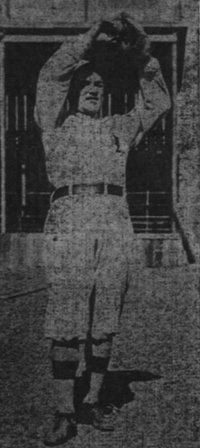
Pittsburgh Pirates Catcher George Gibson was coming off one of the most impressive seasons ever–he caught in 134 straight games and a total of 150 for the World Series Champions–when this advertisement appeared:

George Gibson of the Pittsburgh Nationals

(Champions of the World)

led the league as a catcher with a percentage of .983 and caught more games than any other catcher last year.  He writes us that he is enthusiastic about Coca-Cola.  You, too, will like Coca-Cola, because it relieves fatigue, refreshes, quenches the thirst and is absolutely wholesome.

The Coca-Cola Company wanted to attribute Gibson’s iron man performance in 1909 to his choice of beverage, but before the season Gibson, from his home in London, Ontario wrote to Barney Dreyfuss, Pirates president and told him about his secret for getting in shape for the campaign.  The Pittsburgh Dispatch printed the letter:

I had a letter from (Pirate outfielder John) Chief Wilson the other day.  All he writes about is hunting.  He says the quails are so thick down where he is (Bertram, Texas) that you have to cut a path through them when you go hunting.  Nothing like that up here.  I have seen a lone jack rabbit this season and I have been chasing him to keep in condition, but to date I have not captured him.  He is the limit for speed.  One jump and he lands in the next town.  He would make a good trainer.  If I can catch him alive I will take him to Hot Springs and let the boys get in condition by chasing him.”

Lost Team Photos–Harry Hooper’s 1907 St. Mary’s College Team

13 Jun

1907stmarypix

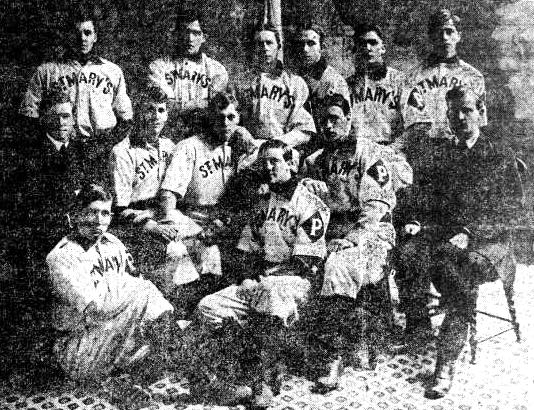
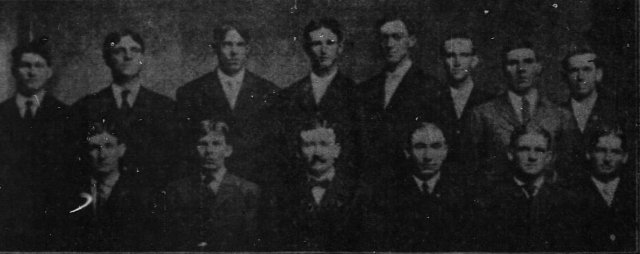
Harry Hooper, Hall of Fame outfielder for the Boston Red Sox and Chicago White Sox (standing, far right), with the 1907 St. Mary’s College team.  The team, often called the best  pre-World War I college ballclub, also included pitcher Harry Krause (center, second from left), and catchers Charlie Enwright (center, second from right), and Ed Burns center, middle)–The San Francisco Chronicle referred to the 5′ 10′ Krause and the 5′ 6″ burns as “the midget battery.”

Coach Hal Chase is in the middle row, far left.

After the team’s final game The San Francisco Call said:

“The Phoenix baseball team of St. Mary’s, satisfied that it has conquered the world, has closed its schedule for the season.”

How good were they?

“Perhaps no California team has ever had a more brilliant career than has the 1907 phoenix.  Pitted 27 times against only first class teams, professional and amateurs, it has escaped from the fray without once having to bow to a foe.  Moreover, but 39 runs have been scored against the Phoenix all season, while the Phoenix players have scored 137.  No team made more than four runs on them, and this occurred but three times.  They have had eight shutouts, eight one run games, seven two run victories (and) one three run contest.”


Hooper, left, with Red Sox teammate George "Duffy" Lewis after the 1915 World Series

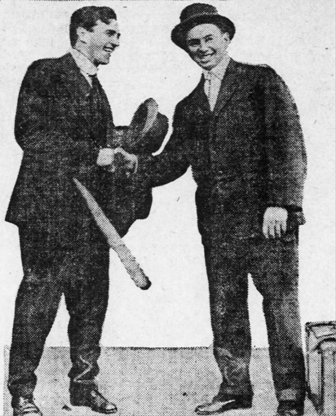
Hooper, left, with Red Sox teammate George “Duffy” Lewis after the 1915 World Series–the two were also teammates at St. Mary’s in 1906.

Jack Grim

2 Jun

John J. “Jack” Grim never amounted to much as a player.  Statistics are nearly nonexistent for his playing career, and those that do survive are unimpressive; primarily a catcher, he played for all, or parts of nine seasons from 1894 until 1902.  The Cincinnati native made his mark, now all but forgotten, as a manager and executive.
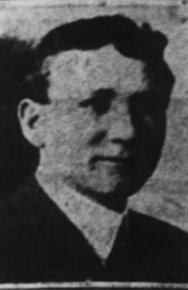
John J. "Jack" Grim

John J. “Jack” Grim

Often confused with former major league catcher John Helm “Jack” Grim—for example, most sources list John H. Grim as the manager of the 1904 Columbia Skyscrapers in the South Atlantic League, it was John J. Grim who managed that team, and during that season might have made his greatest contribution to the game.

Grim’s first managerial appointment was with the Anaconda Serpents in the Montana State League in 1900.  He guided the team to a second-place finish in the first half, and the club was in first place in the second half race on August 11, when Grim abruptly resigned.  The Anaconda Standard said Grim sent a letter to the team directors in which he charged “there is a feeling in certain quarters, against me.” He said:

“I cannot do myself justice while laboring under these conditions.”

Arthur “Dad” Clarkson, brother of Hall of Famer John Clarkson, replaced Grim; the team finished the second half of the season in second place under Clarkson.  Grim became an umpire in the league for the remainder of the season.

In 1901 Grim went to the West Coast with William H. Lucas, a former minor league pitcher who had been president of the Montana State League, to join Dan Dugdale to reestablish  the Pacific Northwest League; Lucas served as league president and Grim managed the Portland Webfoots to the championship, winning the pennant by 16 games.

The league expanded from four to six teams for 1902, and Grim was hired to manage the Spokane franchise, which had finished in last place (41-67) under three different managers in 1901.  The Sporting News said:

“(Spokane’s) stockholders have given (Grim) full power to act in signing players.”

The Sporting Life said Spokane fans were “feeling confident that (Grim) will this year sustain his reputation for always piloting winners.”  Despite the free reign, and high hopes, Spokane struggled, finishing in last place with a 46-75 record.

The following season, as a result of the West Coast baseball war—the California League expanded to the Pacific Northwest, becoming the Pacific Coast League—the Pacific Northwest League expanded into California and became the Pacific National League.  Grim managed the Portland Green Gages.

On July 1 the Portland franchised was, according to, The Oregon Journal “transferred bag and baggage to Salt Lake City.” In Salt Lake City Grim quickly wore out his welcome.

After it was reported in late July that Grim might be let go, six players, including the team’s star shortstop Charles “She” Donahue, went on strike.  They missed two games, but returned after the team’s president said: “he has no intention of letting Grim out.”  The harmony didn’t last and just weeks later Grim was released and fined $100 for what The Salt Lake Herald called “starting a mutiny within the ranks of the club.”

The trouble in Salt Lake wasn’t over.  Near the end of the season, Donahue’s contract was sold to the St. Louis Cardinals.  The sale was reportedly engineered by Grim after he was let go as manager.

The Herald said:

“What kind of a con game is Jack Grim trying to work on the Salt Lake ball club?  What right had Jack Grim, who was fired…got to sell Donahue to the St. Louis club?  How many more of the Salt Lake’s players is Grim trying to dispose of in the same way?  What did Grim do with the money he received from (Cardinals President Benjamin) Muckenfuss of the St. Louis team?”

Grim told The Cincinnati Enquirer he entered into negotiations with the Cardinals over Donahue on September 14. But The Herald noted:

“At that time Grim’s sole business in Salt Lake was to hang around with the ballplayers and try his best to create discord among them.  He had been fired long before.”

The National Commission ruled the sale/signing legal.  Garry Herrmann, chairman of the commission, said that in the contract he signed with Portland for 1903 “Donahue had a specified agreement that he was not (placed on the reserve list)” despite the fact that the Salt Lake team claimed he had already signed a contract for the following season.  As a result, there was nothing stopping Grim from delivering Donahue to the Cardinals, and the money he received—the amount was never reported—was his.

Grim was again involved in a new league in 1904, when he and fellow Cincinnati native Ed Ashenbach, helped form the first incarnation of the South Atlantic League—Grim managed the Columbia Sky Scrapers and Ashenbach managed the Charleston Sea Gulls in the six-team circuit.  Grim only lasted until mid-July as manager and finished the year as an umpire in the league.

It was that season that that he claimed he made his great contribution to the game.  According to Grim, he was the first person to alert the Detroit Tigers about a 17-year-old outfielder for the Augusta Tourists named Tyrus Raymond Cobb.

While Cobb was not sold to the Tigers until August of 1905, some credence for the claim was provided by Cobb himself in 1910, when an article appearing under his name—likely ghostwritten by Roger Tidden of The New York World—said Grim had tried to purchase his contract when he was struggling at Augusta, shortly after “I left home to show up the league.”

In 1905 Grim was one of the principal organizers of the Virginia-North Carolina League and managed the Greensboro Farmers—Grim lasted less than half a season and by August The Sporting Life said he was scouting for the Cincinnati Reds.

Grim finally found some stability in 1906.  He again helped found a league and owned and managed a club.  Grim’s Lynchburg Shoemakers won the Virginia League pennant in 1906—the team was led by pitcher Walter Moser (24-8), who would make the jump from the C-league Shoemakers to the Philadelphia Phillies in August.   But after a fifth-place finish and 1907, and a slow start the next season, Grim sold the team in July of 1908.
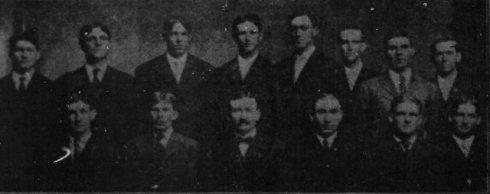
1906 Lynchburg Shoemakers, Virginia League champions. Grim is third from left on the bottom row.

1906 Lynchburg Shoemakers, Virginia League champions. Grim is third from left on the bottom row.

Just after selling the team, Grim’s wife reported him missing.  She told police in Louisville, Kentucky that she hadn’t heard from him for three weeks and thought he might be in Louisville after visiting family in Cincinnati.  Al Orth, the New York Highlanders pitcher, said he saw Grim in New York and told The Associated Press “He did not look like a man who was missing from anywhere.”
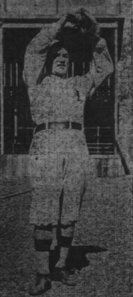
Al Orth

Al Orth


Grim eventually returned to Virginia and his disappearance was never explained.  Orth, who was from Lynchburg, returned there later that summer purchased an interest in the team and managed the club until early 1909 when he returned to the Highlanders.

For the next four years Grim bounced back and forth from team ownership (he managed, and owned part of two more Virginia League franchises (Portsmouth in 1910 and Newport News in 1912) and real estate speculating on the West Coast and in Virginia.

At the beginning of the 1912 season a small item in The Richmond Times-Dispatch hinted that there was trouble ahead:

“Jack Grim has a combination of troubles.  One is of the financial variety—well the other is nobody’s business.”

The financial troubles came to a head in August.  The Times-Dispatch said:

 “Because Manager J.J. Grim would not pay their salaries, all of the players of the Newport News baseball club except (Frank) ‘Deacon’ Morrissey, struck just before the scheduled double header between Newport News and Petersburg.”

After the game was awarded to Petersburg by forfeit, Grim’s co-owners removed him—outfielder William “Buck” Hooker was named manager for the remainder of the season.

At the end of the 1912 season, Grim found himself in an odd predicament.  The Cincinnati Enquirer said:

“Though minus a franchise, Jack Grim, formerly of Cincinnati, has a ball team under reservation, for he owns title to the players of the Newport News club…It develops that in the adjustment of the club’s affairs in August, Grim who was manager and part owner, got out without losing title to the players, though he lost the franchise.”

As a result, when the Cleveland Naps drafted third baseman Ray Bates from Newport News after the 1912 season, the draft price went to Grim.

It was the last good thing to happen to him; from there, Grim’s life spun out of control.

In October, he attended the World Series in New York (his wife later said he attempted to kill her during that trip).

In November of 1912 the Virginia League turned down his attempt to secure a franchise for 1913; next his effort to start a new league with teams in Virginia and the Carolinas fell through.

In addition to being unable to secure a franchise and running out of money—an effort to secure the New York-New Jersey League franchise in Kingston, New York also fell through–Grim’s wife had him arrested  during the first week of March 1913, and told a Lynchburg judge he had repeatedly “threatened Mrs. Grim with bodily harm.”  Grim was held in jail, but according to The Times-Dispatch “is doing everything possible to effect a reconciliation with his wife.”

Grim was released on bond after a week, but quickly rearrested, and by March 23 The Times Dispatch said:

“That a commission of lunacy will be summoned early this week to investigate the Sanity of john J. Grim, the well-known minor league baseball magnate , seems now to be a foregone conclusion…Since his incarceration Grim’s condition has grown so bad that there is no doubt in the minds of the jail attaches that he is insane…Grim has not had his clothes off in a week, and he spends his time in his cell singing, shouting, talking and pacing up and down, begging to be liberated.”

The “commission of lunacy” found Grim insane based on the testimony of Grim’s wife and a doctor named Albert Priddy, and ordered him sent to Virginia’s Southwestern State Hospital in Marion.  It was in front of the commission that Mrs. Grim related the story of the “attempt to murder her with a razor in New York City.”
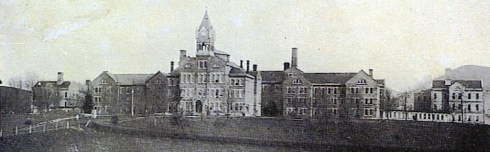
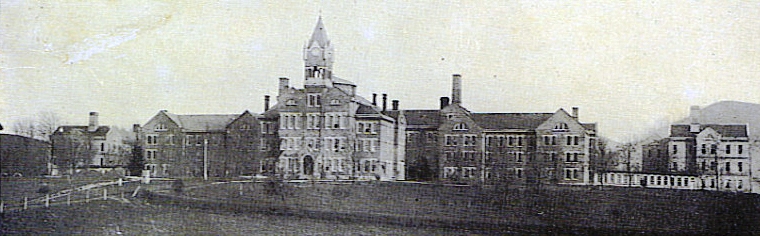
Southwest State Hospital, Marion, Virginia

Southwest State Hospital, Marion, Virginia

Contradictory reports about Grim’s condition came out during the next year.  The Associated Press said in August Grim was “A raving maniac…not far from death.”  A December story in The Cincinnati Enquirer said “he is improving rapidly and probably will be discharged at an early date…Grim expects to return to Cincinnati.”

Almost a year later, he was still in the hospital, and The Enquirer reported that “Grim is improving in health and expects to visit his Cincinnati friends soon.”

That item was the last newspaper reference to Grim; he was never released and died in the state hospital.

The doctor who testified that Grim was insane, Albert Sidney Priddy, was superintendent of the Virginia State Colony for Epileptics and Feebleminded in Madison Heights, Virginia.  The doctor, and that institution became infamous in the case of Buck v. Bell (the case was Buck v. Priddy until Priddy’s death in 1925; Bell was his successor at the State Colony).  The Supreme Court’s decision in the case–upholding the Virginia’s compulsory sterilization law– resulted in the forced sterilization of more than United States citizens in Virginia and states that enacted similar laws.

“This whole Trouble, Disgraceful to be sure, may be Blamed directly on Jack Sheridan”

14 Mar

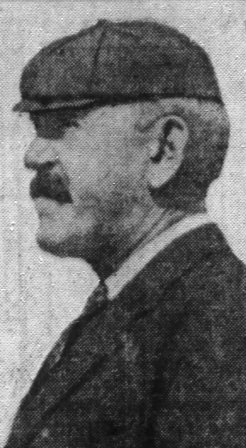
On April 7, 1901, The San Francisco Call reported that John F. “Jack” Sheridan had accepted an offer from President Ban Johnson to continue working as an umpire in the American League—which operated as a minor league the previous season.  The paper said “The National League also made a bid for his services.  He will receive $400 a month and expenses.”  It was said to be “the largest salary ever paid to an umpire.”

Sheridan was a former player, a second baseman and outfielder, who played for several San Francisco teams in the California League, including stints with the Haverlys from 1883-85.  He went East in 1885 and appeared in six games for the Chattanooga Lookouts in the Southern league, and that same season began working as an umpire.

sheridanpix

Jack Sheridan

Years later, Mique Fisher, long-time California and Pacific Coast League manager and executive told The (Spokane) Spokesman-Review that Sheridan was signed by the Lookouts after he “sold himself to Chattanooga through a glowing personal description of his own ability,” but Fisher said:

 “Sheridan couldn’t field a ball with a fish net or hit one with a tennis racket.  When the Chattanooga manager saw Sheridan in action, he swore out a warrant charging him with obtaining money fraudulently.  Sheridan had to work out the expense advance in a cigarette factory.”

He worked as an umpire in the Southern League (1885, ‘93), the California League (1886-89, ’91), the Players League (1890), the National League (1892, ’96-97), and the Western/American League (1894-95, 1898-1900).

The best-paid umpire in the game, who was also a San Jose undertaker during the off-season, traveled from his California home to Chicago in early April of 1901, but a detour in Missouri nearly cost him his job.

The Chicago Tribune said Sheridan left the train “and was taken into custody on account of his strange actions.”  The Fort Wayne Sentinel said among the “strange actions” Sheridan “donned his uniform and started to umpire an imaginary game in the middle of the street.”

Johnson sent fellow American League Umpire “Pongo” Joe Cantillon to Missouri to get Sheridan released and accompany him to Chicago.  Sheridan was admitted to St. Elizabeth Hospital.  The Tribune said he was suffering from “nervous prostration,’ while The Cincinnati Enquirer said the league president said Sheridan was “on a protracted drunk.”

The day after he was admitted to the hospital two friends were given permission to take Sheridan out for a walk, The Chicago Inter Ocean said:

“As they reached Milwaukee Avenue and Division Street, a (street) car whirled by, and Sheridan swung himself on the rear coach.  His friends yelled in vain to the conductor to stop the train, and lost sight of Sheridan.

“They at once notified the police department to look out for Sheridan…Detective Fitzgerald found Sheridan wandering aimlessly on Jackson Boulevard near Wabash…Sheridan did not know where he was, nor could he tell where he had been since escaping from his friends.”

As Sheridan waited to appear in court to determine whether he was insane, newspapers speculated that Johnson would replace the umpire with either former player Warren “Hick” Carpenter or former Western and National League umpire Al Manassau—Manassau was appointed to the American League staff two days before the season began.

Before he could be adjudicated insane Sheridan made a miraculous recovery just one week into the season.  The San Jose Evening News said:

“Mrs. Sheridan, the mother of Jack Sheridan, the noted baseball umpire, has received a telegram from her son, who is in Chicago, stating that he has fully recovered from his derangement and that he could now continue with his contract.”

Sheridan was back on the field before the month of April of over.  He was competent, served as the American League umpires “chief of staff,”  and umpired in four World Series (1905, 07, 08 and 10); he was also selected, along with National League umpire Bill Klem, to join the Chicago White Sox and New York Giants on their world tour after the 1913 season.

But he also demonstrated erratic behavior for the rest of his career.

Just a month after returning to the field The Sporting Life said “Sheridan became frantic and ran up and down the field like a crazy man,” after a disputed call at home plate in the bottom of the ninth of a May 31 game in Detroit between the Tigers and Baltimore Orioles, which led to Sheridan awarding the game to the Tigers by forfeit.

The Sporting Life’s Baltimore correspondent said Sheridan was “held by President Johnson as a competent man,” despite his “habits.”

He resigned on at least three occasions.  After the 1905 and 07 seasons he said he was retiring to return to San Jose and become a full-time undertaker, only to return the following spring and in June of 1910, he abruptly quit minutes before a game in Washington, but returned within several weeks.

When Sheridan again took the field The Washington Post said he would “establish a precedent, as he will be the only major league umpire wearing glasses.”

Sheridan was also arrested in October of 1907 after a barroom brawl that began over a dispute over $120.  The Associated Press said when police searched Sheridan he was carrying $2700.  He was released from jail the following day after being fined $10.

On July 30, 1914, Sheridan called Ray Morgan of the Washington Senators out on a close play at first base in Detroit.  The Washington Post said Morgan, who had slid, “came up with a handful of dirt and threw it on the ground at Sheridan’s feet…Sheridan evidently thought that Morgan intended to hit him, and did not even give the National’s second sacker time to put up his guard, but whaled away at his smaller opponent.”

Ray Morgan

Ray Morgan

Morgan punched Sheridan, and after both dugouts emptied, Sheridan was also punched by Washington’s Eddie Ainsmith.  The disturbance spilled over to the stands with a few Washington players, including Morgan and Ainsmith, taking on Detroit fans before police restored order.

The Post said:

“This whole trouble, disgraceful to be sure, may be blamed directly on Jack Sheridan, the umpire, who has been at fault so many times this year.  In the first place Sheridan has threatened to beat up several of the Washington players.  Sheridan told (David “Mutt”) Williams and (Joe) Engel that he would punch them in the nose, the same as he had Morgan, if they did not do as he told them.”

Ban Johnson never took action against Sheridan for the incident in Detroit, but Morgan and Ainsmith drew suspensions from the league.

On August 1, 1914, The Associated Press reported that “The baseball players fraternity intends to take steps to have Umpire Jack Sheridan retired from service on grounds of incompetence.”

The incident, and dust up on August 12 with Jack Fournier of the White Sox inspired a poem from The Chicago Tribune’s Ring Lardner:

Making Night Hideous

Oft in the stilly night,

Ere slumber’s chain has bound me

Fond memory brings the sight

Of athletes crowding round me;

The scowls, the sneers

Of Jack Fourniers

And Morgans strike my vision;

I hear the barks

And rude remarks

That greet each close decision.

Thus in the stilly night,

Ere slumber’s chain has bound me,

I sometimes get tight up and fight

The chairs and tables round me.

At the end of the 1914 season, Sheridan returned to California.  On October 31 The Associated Press reported that Sheridan would not be returning as an umpire:

“Sheridan will probably be retained as a sort of supervisor of umpires, spending his time roaming around the circuit.”

Just three days later Sheridan died of heart failure in San Jose at age 62—he was said to have suffered sunstroke during an August game and never fully recovered.  Ban Johnson supported him to the end; just weeks before the umpire died the American League president told a reporter:

“I sincerely doubt if the baseball game will ever know another Jack Sheridan.  He had all of the virtues of other arbiters, and none of their mistakes.”

Rube and Ossee

10 Mar

Connie Mack’s Philadelphia Athletics were expected to repeat as American League champions in 1906.  The 1905 team won 92 games, finishing two games ahead of the Chicago White Sox, and lost to the New York Giants in the World Series.

The 1906 Athletics were in first place as late as August 11, but faded to fourth, losing 33 of their last 52 games and finishing 12 games behind the champion White Sox.

Much of the blame for the poor finish was directed at Rube Waddell.

Rube Waddell

Rube Waddell

Waddell, 27-10 in ’05, dropped to 15-17 after fracturing his thumb in May of ’06.   The Philadelphia Inquirer said he was driving a rented carriage, “At Twenty-second Street and Ridge Avenue he became involved is a collision with a delivery wagon…he turned his horse quick to avoid the wagon, and when he found that the wagon was sure to hit the carriage he jumped and landed on his thumb.”  He sat for two weeks and never found his form from the previous season.

Waddell’s recovery was slowed, it was suspected, because of his off-field habits.  The general opinion of the fans and press was summed up by The Wilkes-Barre Times which said:

“Waddell has refused to appreciate that the modern ballplayer positively must keep in condition and ‘deliver the goods.’  The famous Mike Kelly could spend a $100 bill the night before playing a championship game and not report the next day.  It was regarded in those days as a joke.  That day has gone by.”

Waddell’s personal catcher, Ossee Schreckengost—Schreck—was also blamed for the collapse.  Schreck was sent home by Mack for the remainder of the season on September 22.  During a series in St. Louis he failed to return to the team hotel after a night out with “some German friends.”  Schreck said:

“Mack told me to pack up and go home.  That’s all there is to it.  We did not have any argument.

“Mack wants to try out a lot of juveniles this trip.  I do not think he is sore at me, and do not think I stand suspended.”

The Philadelphia Inquirer disagreed:

“For the good of the cause, Ossie [sic] Schreckengost was sent home by Manager Mack tonight suspended for the rest of the season.

“Schreck has not taken care of himself this year (as) an athlete should, and to his shortcomings more than anything else Manager Mack attributes the slump of the team in mid-season.  To Schreck St. Louis is the most attractive town on the circuit.  Yesterday he succumbed to its blandishments.”

Ossee Schrecongost

Ossee Schrecongost

Either as a result of their drinking, the fact they were said to have “tanked” the Athletics season, or both, The Washington Post suggested that “Waddell and Schreck should be dubbed the tank battery.”

The battery mates and road roommates were sent their contracts for 1907.  Waddell was threatened with a pay cut if he didn’t stay in shape.  He quickly signed.

Mack is quoted by many sources over the years saying Schreck refused to sign his contract until Waddell agreed to no longer eat crackers in the double beds they shared on the road.

It is generally considered an apocryphal story invented by Mack years later—and often even said to have happened before the 1904 or ’05 seasons rather than 1907.

But, the story was not the invention of Mack.  There was actually a letter purported to be written by Schreck “from his home in Cleveland” (it is not known who actually wrote the letter), and reprinted in several newspapers between the 1906 and ’07 seasons:

“Dear Connie:  This is not a touch for any advance, or an increase in salary, but something much more serious, and as it won’t be long before the Athletics start south for spring practice, I am going to ask you to put Waddell under another charge this year.

“While I did not mind Rube bringing mocking birds and a reptile or two into our sleeping apartments down south, I do object to his habit of eating crackers in bed.  This Rube does nightly.  Not a single night last spring did Waddell retire without his south paw containing a dozen crackers, many of them resembling animals.

“By the time Rube, or Eddie, as he wishes to be called in southland, had got outside of these crackers, I was in anything but a sleepy mood, due in a measure to his crunching of the crackers.  It did not seem to interfere with Eddie.  He would turn over and go to sleep at once when through.

“Had it stopped here, all would have been lovely.  It didn’t however, and the natural result was that the bed was full of crumbs.  This had been going on for years, and frequently have I welcomed a night on the road with an upper berth, so as to escape Waddell and his crumbs.

“This complaint may seem trivial to you, after your varied experiences with Rube, but I can assure you that the crumbs that came from those crackers were anything but ‘crumbs of comfort’ for your humble servant.  In closing, I would like to suggest that if you can put a clause in Waddell’s contract that he is not to eat crackers in bed during the season of 1907.  I am sure Waddell and I will continue to be real good friends as of yore.  Yours truly, Ossee Schreck

“P.S.—I wish all of the boys, and of course this takes in you, a happy new year.  Am doing light training.  O.S.”

Whether or not the “cracker clause” was inserted in Waddell’s contract, the Rube/Ossee battery was together for all but four of Waddell’s 33 starts in 1907, but the relationship between “the real good friend’s of yore” began to deteriorate that season;  likely because Schreck had cut back his drinking considerably, while Waddell continued to be Waddell.

Despite a 19-13 record for the second place Athletics in 1907 Waddell had become a distraction and more trouble than he was worth.   The Inquirer said he was sold to the St. Louis Browns after “Ruben made himself objectionable to his club mates, and for the good of the club’s future Manager Mack concluded that it would be the part of wisdom to let him out.”  Waddell was 33-29 in parts of three seasons in St. Louis.

Schreck remained in Philadelphia until September of 1908 when he was sold to the Chicago White Sox, his big league career was over at the end of that season, after eight games with Chicago.

The two old teammates died just three months apart in 1914, Waddell was 37, and Schreck was 39.  The Inquirer said:

“’Thuh batt’ries for today: for Philadelphia, Waddell and Schreck!’  It has lo these many days been but a memory, and now there is only memory left of the famous diamond combination.  They flashed in dazzling brilliancy across the baseball horizon and disappeared as quickly as they came.  And both died old young.”

Lost Advertisements–Old Underoof–White Sox, Cubs and “The Battle of the Century”

27 Jan

oldunderroof1910jj


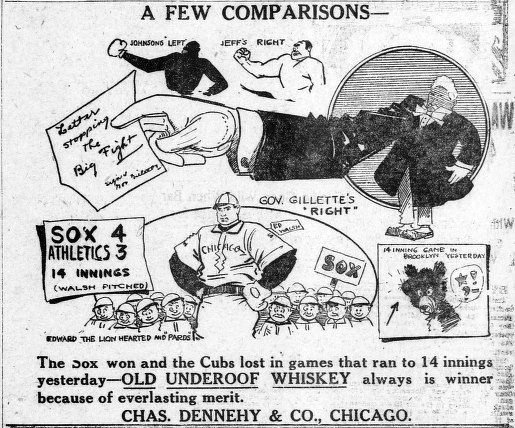
An advertisement for Old Underoof Whiskey from June 16, 1910–“A Few Comparisons.”  Most of the Old Underoof ads were exclusively about baseball, but this one also mentions the biggest sports story of that week.  California Governor James Norris Gillett  (the ad misspelled it “Gillette”) had just issued an order to stop the Jack Johnson vs Jim Jeffries “Battle of the Century,” scheduled for July 4 in San Francisco.  The San Francisco Chronicle said that despite $300,000 worth of tickets having been sold, and the construction of a new stadium for the bout being nearly completed, Gillett bowed to “Pleas to the governor to stop the fight.”  The San Francisco Church Federation was the most vocal opponent to the fight.

On the same day, the Chicago White Sox and Cubs both played 14 innings.

The seventh place White Sox, behind a complete game from “Big Ed” Walsh defeated the Philadelphia Athletics 4 to 3; he also drove in the winning run with one out in the fourteenth.

The first place Cubs lost 3 to 2.  Eros Bolivar “Cy” Barger pitched a complete game for the Brooklyn Superbas, and like Walsh, drove in the winning run with one out in the fourteenth.

The fight was moved to Reno, Nevada and Johnson won by TKO in the 15th round.

The White Sox finished in sixth place with a 68-85 record.  Walsh was 18-20 and led the American League with a 1.27 ERA

The Cubs remained in first place and won the National League pennant by 13 games.  The Athletics beat them four games to one in the World Series.


Ovie, Oh, Ovie

17 Jan

Arm trouble ended Orval Overall’s career early.  When he left baseball for the first time after the 1910 season he had a 104-66 record, won 20 games twice, and went to the World Series four times with the Chicago Cubs (3-1 in eight appearances).

orvie

Orval Overall

After a visit to John D. “Bonesetter” Reese, a self-trained Youngstown, Ohio-based practitioner of alternative medicine, who while popular among many of the era’s major stars, was condemned by medical professionals.  Despite being “healed,” Overall was unable to come to terms with the Cubs and sat out the 1911 season.

Remaining in his native California, Overall worked at the gold mine he owned with Cubs teammate Mordecai “Three Finger” Brown in Three Rivers and pitched for Stockton team in the “outlaw” California League.  His success in California during the fall of 1911 gave the Chicago press hope he would return to the Cubs in 1912.  The Chicago Inter Ocean said:

“Orval Overall’s arm seems to get better every time he pitches a game.  Last week the former Cub whom Manager (Frank) Chance is trying to persuade to return to the West Side team struck out seventeen men twirling against the All-Sacramento team for Cy Moreing’s Stockton outlaws.”

Later in the fall Overall hurt his arm again.  He returned to “Bonesetter” Reese in December and told The Youngstown Vindicator he was finished with organized baseball, and would “Confine himself to his mining business and with occasional independent ball.”

Overall pitched a few games for a semi-pro team in Visalia; thirty minutes from his mine.

Orville Overall

Orville Overall

In February of 1913, he petitioned the National Commission to reinstate him and declare him a free agent because the Cubs “omitted to send him a contract” in 1912.  The commission granted his reinstatement but returned him to the Cubs.

Overall pitched in just 11 games, with a 4-5 record and .3.31 ERA; he was released to the San Francisco Seals in the Pacific Coast League (PCL) in early August.

Overall’s return to the West Coast was an event, and Seals fans even attempted to tell the club when the popular pitcher should make his first start.  The San Francisco Chronicle said:

“Orval Overall, the famous California pitcher, who built up such a reputation with the Chicago Cubs, will pitch for San Francisco today against Venice (Tigers).  A petition signed by sixty Seal fans was sent to (Manager) Del Howard yesterday, with the request that Overall’s first appearance be billed for Sunday afternoon.”

Howard chose to start Overall the day before the fans requested, nevertheless, the game drew a crowd of nearly 10,000 and The Chronicle said: “they gave him a reception long to be remembered.”

Overall gave up five runs, and was lifted in the ninth inning for a pinch hitter.  The Seals lost 8-5 in 11 innings.  He ended the season 8-9 with a 2.14 ERA.

At the end of the 1913 season, Overall announced his retirement.  San Francisco fans were not convinced and said The Chronicle said he “was being counted upon to be one of the mainstays in the box.” But chose to take a job with Maier Brewing Company “in the South” (Venice, CA—still a separate city from Los Angeles at the time.  The Maier family also owned the PCL’s Venice Tigers).  San Francisco fans were not convinced, and there was speculation for the next four months that Overall would return.

Reporter L. W. Nelson, The San Francisco Call’s resident poet composed a verse to try to coax the pitcher back:

Ovie, Oh, Ovie

Ovie, oh, Ovie, come home to us now,

For the season is soon to begin,

And we need you, yes, badly, to show the folks how

The Seals, when they have you, can win!

Ovie, oh, Ovie, sign up with us quick,

Put your name on the contract from Cal,

For we know you can make all others looks sick,

If you pitch for our Seal crew, old pal!

Ovie, we know it is your fondest dream

To work down in Venice for Maier,

Midst the Milwaukee water, the lager and steam—

We know you would like it down there!

Ovie, oh, Ovie, sign up to play ball,

And don’t try your beer selling skill,

For the job in the brew’ry won’t help us at all,

But your pitching most certainly will!

(“Cal” was Seals owner James Calvin Ewing)

As late as March 1914 Overall hinted that he might return, but the pleas and the poem did not sway him.

He left the beer business after a year to manage his family’s large lemon and orange growing operation near Visalia, which would make him quite wealthy.  He became a banker and dabbled in politics and competitive trap shooting.  He died in 1947.

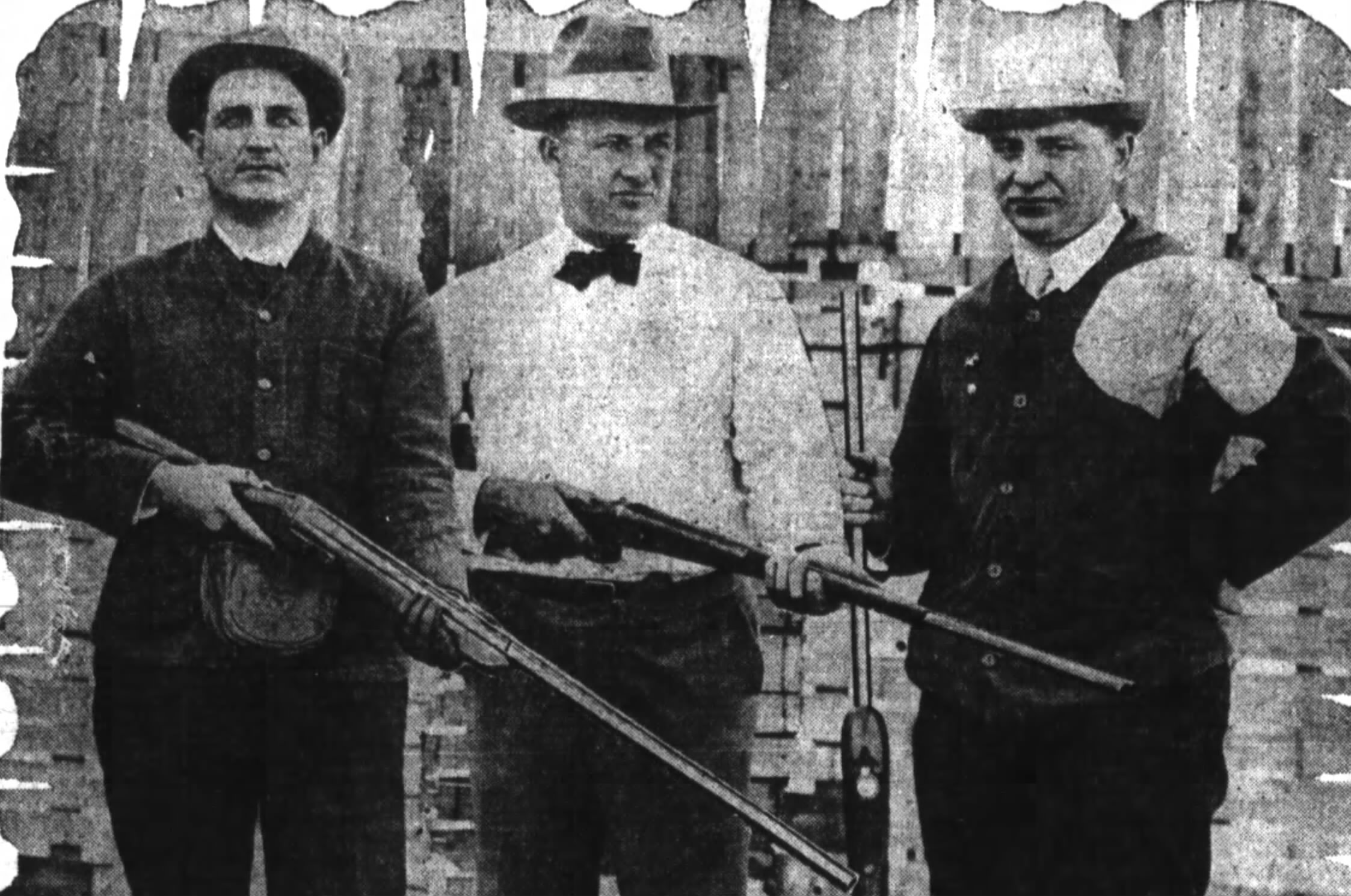
Overall (center) was president of the California-Nevada Trap Shooters Association (1918)

Overall (center) was president of the California-Nevada Trap Shooters Association (1918)

Lost Team Photos–1904 Chicago White Sox

31 Dec

1904cws


A rare photo of 1904 Chicago White Sox.  Standing left to right:  George Davis (SS), Guy “Doc” White (P), Roy Patterson (P), Gus Dundon (2B), Lee Tannehill (3B), Jimmy “Nixey” Callahan (MGR and LF), Frank Isbell (INF), John “Jiggs” Donahue (1B), Danny Green (RF), Nick Altrock (P), and Ed McFarland (C).  Kneeling: Fielder Jones (CF), Billy Sullivan (C) and James “Ducky” Holmes (OF).

Jones replaced Callahan as manager shortly after this picture was taken.  The Sox finished in 3rd place with an 89-65 record, improved to 2nd the following season and won the American League pennant, and beat the Chicago Cubs in the Worlds Series in 1906.


Lost Advertisements–“Yell For Your Team–And Help Them Win”

6 Dec

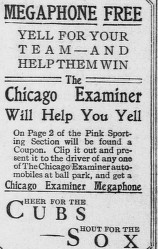
cubssoxmegaphoneA 1912 advertisement for a free megaphone available from “the driver of any one of The Chicago Examiner automobiles at ballpark.”

The Chicago Cubs and White Sox played 25 City Series’ between 1903 and 1942 (not including their World Series in 1906).  The first, in 1903 ended in a tie–both teams winning seven games before the series was forced to end because the player’s contracts had expired.  The Cubs won in 1905 and 1909, but the Sox won 18 of the next 22.

The 1912 series began with a 0-0 tie.  White Sox pitcher “Big Ed” Walsh held the Cubs to just one hit–a Joe Tinker double.   Cubs pitcher Jimmy Lavender held the Sox to six.

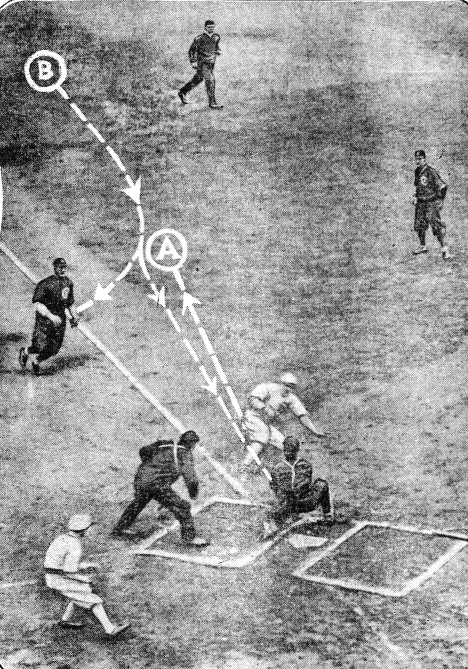
The highlight of the game came in the second inning.  With “Ping” Bodie on third and Rollie Zeider at bat.  The Chicago Tribune said:

“Zeider took a spitter for one ball, then hit the second for a high bounder to (Heinie) Zimmerman.  Bodie tried to score, but Zimmerman ran in stabbed the ball with his bare hand and got Bodie at the plate.”

The picture shows where Zimmerman was playing Zeider (B) and where he fielded the ball (A).

The picture shows where Zimmerman was playing Zeider (B) and where he fielded the ball (A).  Ping Bodie is tagged out by Cubs catcher Jimmy Archer.

The second game of the series also ended in a tie, 3 to 3.  The Cubs then won three straight, but the White Sox came back and won four in a row to take the series.

The 31-year-old Walsh, who was 27-17 in 62 games (41 starts, 32 complete games) and 393 innings pitched,  appeared in six games for the Sox, starting four.  He would only win 13 more games over parts of the next five seasons.

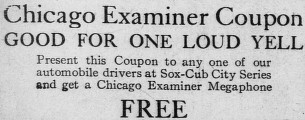
cubssoxmegaphone1912

1912 Cubs/Sox Megaphone coupon from The Chicago Examiner

“The Great Baseball Question has been what will Capt. Comiskey do next Season”

3 Dec

In January of 1890 The St. Louis Globe-Democrat said what was on the minds of every baseball executive, writer, and fan:  “The great baseball question has been what will Capt. Comiskey do next Season”

For weeks there was speculation about whether Charles Comiskey, captain and manager of the St. Louis Browns, would remain in the American Association or join the Players’ National League of Professional Baseball Clubs (Players League), the league borne out of baseball’s first union the Brotherhood of Professional Base-Ball Players.

Charles Comiskey, against slang in baseball stories.

Charles Comiskey

On January 15, in a letter to The Sporting News, Comiskey announced his decision:

“During the past few weeks many interviews have appeared with me in different newspapers of the country relative to my having signed a contract with the St. Louis and Chicago Brotherhood clubs.  Up to this writing I am mind and fancy free.  But before Saturday night, January 18, I will have signed a contract to play at first base for the Chicago Brotherhood team.  I take this step for the reason that I am in sympathy with the Brotherhood.

“I believe its aims are for the best welfare and interest of the professional players.  I believe that if the players do not this time stand true to their colors and maintain their organization they will from this day forward be at the mercy of the corporations who have been running the game, who drafted the reserve rule and give birth to the obnoxious classification system.

“I have taken all the chances of success and failure into consideration, and I believe that if the players stand true to themselves they will score the grandest success ever achieved in the baseball world.

“But besides having the welfare of the players at heart I have other reasons for wanting to play in Chicago.  My parents and all my relatives reside there, and the all the property I own is located in the city.  I was raised there and have a natural liking for the place.  But, outside of all these reasons, my relations with the management of the St. Louis club have, during the past year been so unpleasant I do not care to renew them.  I have many friends in St. Louis, and for their sake I hate to leave here, but the other reasons out-balance this friendship, so I will cast my lines with the Chicago club.

“This is the first letter I have written on the subject which seems to have interested the baseball world throughout the whole of the present winter.

“Yours respectfully, Chas. Comiskey”

A week before the season began The Chicago Tribune said Comiskey’s new club “on paper, is the greatest team ever organized.”   Despite the hype, Comiskey’s Chicago Pirates finished in fourth place.  The Players League lasted only one season and dissolved in November of 1890.

Comiskey’s backing of the Brotherhood against “the corporations who have been running the game” would probably have come as a surprise to many of those who played for him when he owned the Chicago White Sox.  Arnold “Chick” Gandil, banned from baseball for his role in the 1919 Black Sox scandal said of Comiskey in a 1956 article in “Sports Illustrated:”

“ He was a sarcastic, belittling man who was the tightest owner in baseball. If a player objected to his miserly terms, Comiskey told him: “You can take it or leave it.” Under baseball’s slave laws, what could a fellow do but take it? I recall only one act of generosity on Comiskey’s part. After we won the World Series in 1917, he splurged with a case of champagne.”

Chick Gandil

Chick Gandil