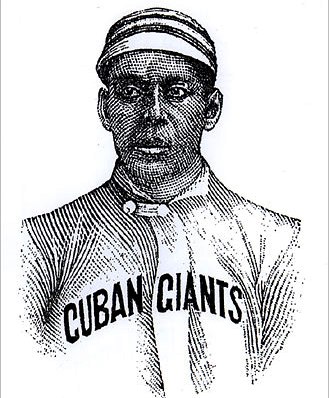
Rube and Ossee

10 Mar

Connie Mack’s Philadelphia Athletics were expected to repeat as American League champions in 1906.  The 1905 team won 92 games, finishing two games ahead of the Chicago White Sox, and lost to the New York Giants in the World Series.

The 1906 Athletics were in first place as late as August 11, but faded to fourth, losing 33 of their last 52 games and finishing 12 games behind the champion White Sox.

Much of the blame for the poor finish was directed at Rube Waddell.

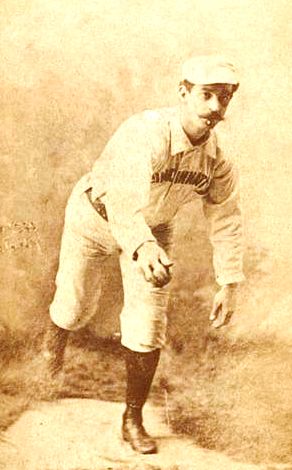
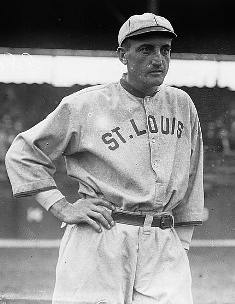
Rube Waddell

Rube Waddell

Waddell, 27-10 in ’05, dropped to 15-17 after fracturing his thumb in May of ’06.   The Philadelphia Inquirer said he was driving a rented carriage, “At Twenty-second Street and Ridge Avenue he became involved is a collision with a delivery wagon…he turned his horse quick to avoid the wagon, and when he found that the wagon was sure to hit the carriage he jumped and landed on his thumb.”  He sat for two weeks and never found his form from the previous season.

Waddell’s recovery was slowed, it was suspected, because of his off-field habits.  The general opinion of the fans and press was summed up by The Wilkes-Barre Times which said:

“Waddell has refused to appreciate that the modern ballplayer positively must keep in condition and ‘deliver the goods.’  The famous Mike Kelly could spend a $100 bill the night before playing a championship game and not report the next day.  It was regarded in those days as a joke.  That day has gone by.”

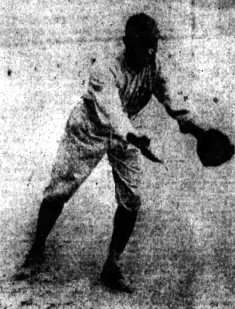
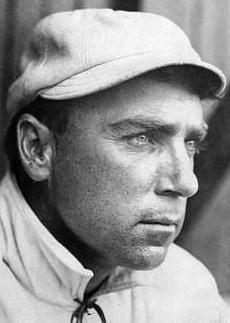
Waddell’s personal catcher, Ossee Schreckengost—Schreck—was also blamed for the collapse.  Schreck was sent home by Mack for the remainder of the season on September 22.  During a series in St. Louis he failed to return to the team hotel after a night out with “some German friends.”  Schreck said:

“Mack told me to pack up and go home.  That’s all there is to it.  We did not have any argument.

“Mack wants to try out a lot of juveniles this trip.  I do not think he is sore at me, and do not think I stand suspended.”

The Philadelphia Inquirer disagreed:

“For the good of the cause, Ossie [sic] Schreckengost was sent home by Manager Mack tonight suspended for the rest of the season.

“Schreck has not taken care of himself this year (as) an athlete should, and to his shortcomings more than anything else Manager Mack attributes the slump of the team in mid-season.  To Schreck St. Louis is the most attractive town on the circuit.  Yesterday he succumbed to its blandishments.”

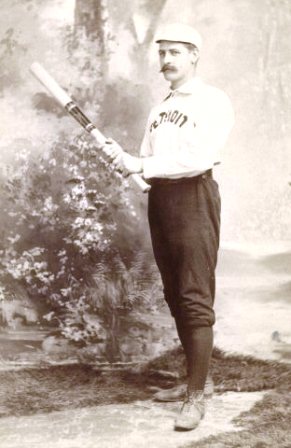
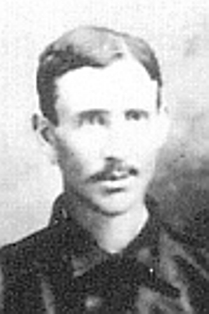
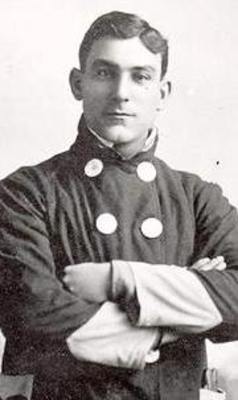
Ossee Schrecongost
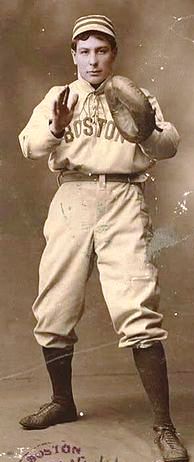
Ossee Schrecongost

Either as a result of their drinking, the fact they were said to have “tanked” the Athletics season, or both, The Washington Post suggested that “Waddell and Schreck should be dubbed the tank battery.”

The battery mates and road roommates were sent their contracts for 1907.  Waddell was threatened with a pay cut if he didn’t stay in shape.  He quickly signed.

Mack is quoted by many sources over the years saying Schreck refused to sign his contract until Waddell agreed to no longer eat crackers in the double beds they shared on the road.

It is generally considered an apocryphal story invented by Mack years later—and often even said to have happened before the 1904 or ’05 seasons rather than 1907.

But, the story was not the invention of Mack.  There was actually a letter purported to be written by Schreck “from his home in Cleveland” (it is not known who actually wrote the letter), and reprinted in several newspapers between the 1906 and ’07 seasons:

“Dear Connie:  This is not a touch for any advance, or an increase in salary, but something much more serious, and as it won’t be long before the Athletics start south for spring practice, I am going to ask you to put Waddell under another charge this year.

“While I did not mind Rube bringing mocking birds and a reptile or two into our sleeping apartments down south, I do object to his habit of eating crackers in bed.  This Rube does nightly.  Not a single night last spring did Waddell retire without his south paw containing a dozen crackers, many of them resembling animals.

“By the time Rube, or Eddie, as he wishes to be called in southland, had got outside of these crackers, I was in anything but a sleepy mood, due in a measure to his crunching of the crackers.  It did not seem to interfere with Eddie.  He would turn over and go to sleep at once when through.

“Had it stopped here, all would have been lovely.  It didn’t however, and the natural result was that the bed was full of crumbs.  This had been going on for years, and frequently have I welcomed a night on the road with an upper berth, so as to escape Waddell and his crumbs.

“This complaint may seem trivial to you, after your varied experiences with Rube, but I can assure you that the crumbs that came from those crackers were anything but ‘crumbs of comfort’ for your humble servant.  In closing, I would like to suggest that if you can put a clause in Waddell’s contract that he is not to eat crackers in bed during the season of 1907.  I am sure Waddell and I will continue to be real good friends as of yore.  Yours truly, Ossee Schreck

“P.S.—I wish all of the boys, and of course this takes in you, a happy new year.  Am doing light training.  O.S.”

Whether or not the “cracker clause” was inserted in Waddell’s contract, the Rube/Ossee battery was together for all but four of Waddell’s 33 starts in 1907, but the relationship between “the real good friend’s of yore” began to deteriorate that season;  likely because Schreck had cut back his drinking considerably, while Waddell continued to be Waddell.

Despite a 19-13 record for the second place Athletics in 1907 Waddell had become a distraction and more trouble than he was worth.   The Inquirer said he was sold to the St. Louis Browns after “Ruben made himself objectionable to his club mates, and for the good of the club’s future Manager Mack concluded that it would be the part of wisdom to let him out.”  Waddell was 33-29 in parts of three seasons in St. Louis.

Schreck remained in Philadelphia until September of 1908 when he was sold to the Chicago White Sox, his big league career was over at the end of that season, after eight games with Chicago.

The two old teammates died just three months apart in 1914, Waddell was 37, and Schreck was 39.  The Inquirer said:

“’Thuh batt’ries for today: for Philadelphia, Waddell and Schreck!’  It has lo these many days been but a memory, and now there is only memory left of the famous diamond combination.  They flashed in dazzling brilliancy across the baseball horizon and disappeared as quickly as they came.  And both died old young.”
Lost Advertisements–“Big Ed” Walsh No-Hitter, Old Underoof Whiskey

7 Mar

walshnohitter

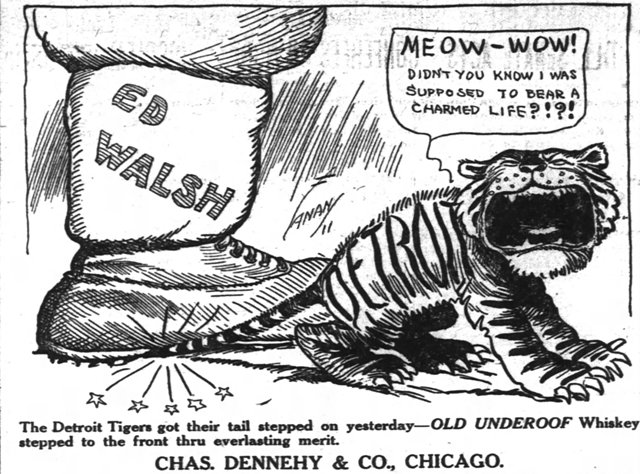
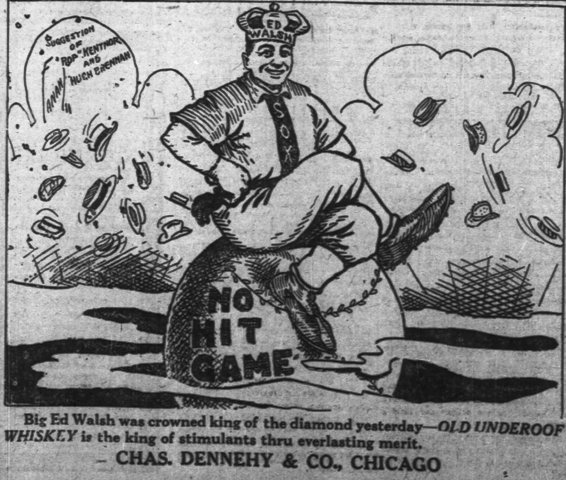
A 1911 advertisement for Old Underoof Whiskey which appeared in Chicago News papers the day after Edward Augustine “Big Ed” Walsh threw his first nine-inning no-hitter (Walsh gave up no hits in a 5-inning 8 to 1 victory over the New York Highlanders on May 26, 1907).  Walsh had also thrown five one-hitters, including one two weeks earlier against the Detroit Tigers.

Old Underoof commemorated that effort as well:

walshonehitter

The Chicago Inter Ocean said of the no-hitter:

“Never in His long and brilliant career in the box has Big Ed shone as he did on the hill in yesterday’s game.”

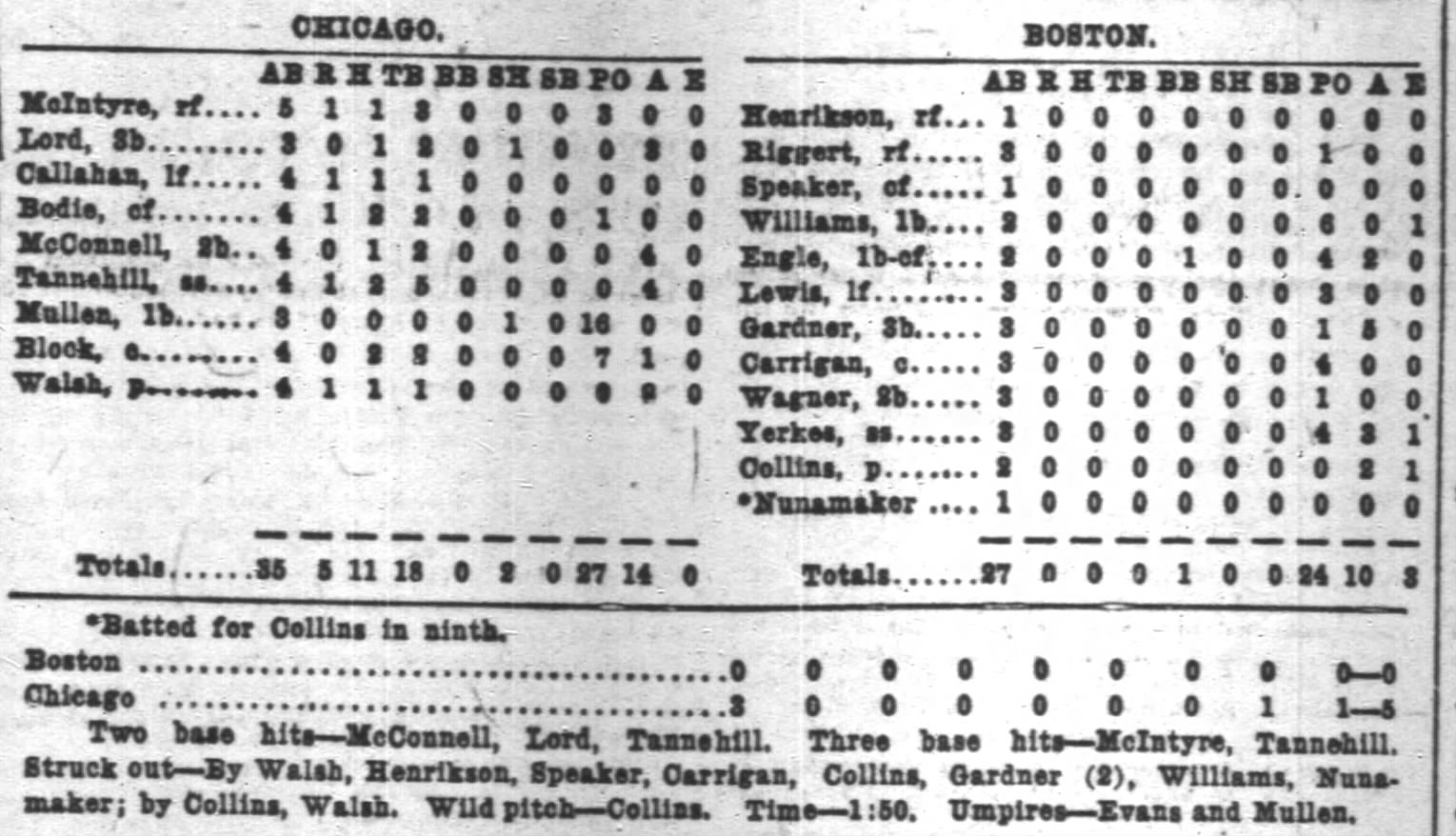
Walsh faced only 27 Boston Red Sox batters, but gave up a fourth inning walk to Clyde Engle.  The Inter Ocean said umpire Billy Evans’ call that led to the walk was “questionable.”  And that two plays helped preserve the  spitballer’s no-hitter:

“(T)here were two times when the monarch of all he expectorated nearly lost his charm.  Once the ball was driven out right over the second sack.  Lee Tannehill rushed back, scooped it up and threw out the runner easily.  Lee must have had a margin of at least three-eighths of an inch in his favor.  Another time Ping Bodie saved Ed’s dinner dishes by rushing in with the greatest burst of speed at his command and licking up the ball a little above his ankles.”

The other incident of note in the game took place in the third inning when Tannehill hit a line drive to right center field in the third inning, The Chicago Tribune said Red Sox center fielder Tris Speaker and right fielder Olaf  Henriksen came together “in a terrific collision” which knocked both unconscious and out of the game.  Henriksen got the worst of it, and was briefly hospitalized with a broken rib and injured ankle.  Speaker “was first to recover and emerged from the accident with a severe shaking up and a lame shoulder.”

The box score

The box score

Walsh came one batter away from joining Cy Young and Addie Joss as the only two modern era pitchers to that point to throw a perfect game–Joss’ perfect game was against the White Sox in 1908, Walsh was pitching for Chicago and only gave up one hit and struck out 15 in the loss.

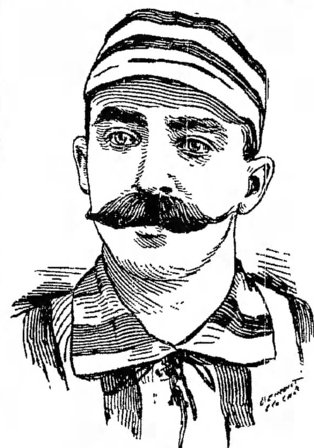
Ed Walsh circa 1904

Ed Walsh,  circa 1904

Walsh was 27-18 with a 2.22 ERA in 1911, leading the league with 255 strikeouts, in a league-leading  368 and two-thirds innings.  The Hall of Famer pitched until 1917 compiling a 195-126 record and 1.82 ERA.

He supported making the spitball legal again after the pitch was banned after the 1920 season.  The Associated Press quoted him in his 1959 obituary:

“Everything else favors the hitters.  Ball Parks are smaller and baseballs are livelier.  They’ve practically got the pitchers working in straitjackets.  Bah!  They still allow the knuckle ball and that is three times as hard to control.”

Frank Harris and “Pacer” Smith

5 Mar

Frank Harris was sentenced to die on November 29, 1895, in Freeport Illinois for shooting a man named Charles Bengel in May of that year.  Charles N. “Pacer” Smith was sentenced to die the same day in Decatur, Illinois for killing his 5-year-old daughter and 17-year-old sister-in-law and attempting to kill his estranged wife.

Smith and Harris were well acquainted, but accounts differed as to how well.  The Sporting Life said Smith “was at one time a resident of Freeport, and while here was known as Harris’ bosom friend and partner in a number of local ventures.”  The Decatur Review said the two played together on a team in Freeport in 1892. The Decatur Evening Bulletin said that the two had been teammates in Monmouth, Illinois in 1889.  (The Monmouth team was formed at the tail-end of the season to play out the Central Interstate League schedule of the Davenport Hawkeyes who  had folded–but neither Harris nor Smith are listed on any extant rosters for Monmouth).

Smith told The Decatur Daily Republican:

“I know Harris well.  He was with the Rockford club while I was with Ottawa and then we were together in the same club in the Southern League.  He was always a ratty, crazy fellow.  He married a rich girl in Freeport and will escape hanging if money is any good.”

(Surviving records show Harris with Rockford in 1890 and Smith with Ottawa in 1891. Harris played with the Chattanooga Lookouts in the Southern League in 1885; there is no record of Smith having played for the team).

Smith, who claimed he converted to Catholicism while awaiting the hangman, wrote a letter to Harris imploring him to do the same:

“Friend Frank—although in trouble myself, still I can find the time and inclination to sympathize with an old comrade in the same fix, and especially as the circumstance s connecting the two cases are so similar and out of the ordinary.  We are both to take our departure from this ‘vale of tears’ upon the same date to met [sic] him ‘who rules the universe,’ and before whom we both have to stand in judgment to hear perhaps the same verdict and sentence against us, once again in comradeship where the bickering and tribulations of this world have to part.

“I am happy to state to you I have received the consolations of religion to aid me in my extremity, and I wish you in answering this could assure me you, too, had claimed that only staff which it is possible for you to now lean upon with any surety and safety.  I have joined and been baptized in the faith of the Holy Roman Catholic Church, as I believe it to be the only and true church.  I have received its consolations and am resting easy in the confidence of its efficacy.

“I hope I will meet you in a ‘better world.’ Hoping to hear when you write that you have gone and done as well for yourself spiritually.  I will close by subscribing myself yours fraternally.

“Charles N. Smith ‘Pacer’”

Pacer Smith

Charles “Pacer” Smith

Smith also wrote a lengthy account of his life, baseball career and the murders he committed.  The Chicago Inter Ocean noted that he:

“Admits a petty double murder; but Mr. Smith avows he never threw a ballgame.”

While scaffolds were being erected in Decatur and Freeport, a group of Harris’ supporters, led by the town’s former mayor, Charles Nieman traveled to the state capital to seek a stay from Governor John Peter Altgeld.

Smith’s prediction that Harris would “escape hanging” proved to be correct.  On November 27 the governor postponed Harris’ execution until May 1, 1896.  The Sterling Gazette said the scaffolding in Freeport had been completed, the judge “strongly opposed” the governor’s decision and that the sheriff had already “sent out tickets of admission” for the hanging.

The Freeport Bulletin said:

“Harris has been very despondent for several days, and had made up his mind that he would be hanged Friday, and when informed that the governor had granted him a respite he broke down and wept like a child.  All day long he heard the carpenters at work on the scaffold, and could see the preparations made for his execution.”

As  “Pacer” Smith ascended the scaffold on November 29 a reporter from The Decatur Evening Bulletin asked him if he was aware that Harris had received a reprieve:

“He said he had, but seemed more interested in the fact that Harris had professed Christianity and been baptized.

“’It was my letter to him that is responsible for his conversion.  That was what influenced him. ‘

“When asked what he would say to a reprieve for himself, he snapped his fingers and said:

“’I don’t care that much.  I am all ready to go.’”

A few minutes later, at noon, “The drop occurred,” and “with a few convulsions the murderer died.”

Harris’ reprieve became permanent on April 23, 1896.  Governor Altgeld commuted his sentence to life in prison and he was sent to Illinois’ Joliet State Prison.   Despite the life sentence, The Joliet Republican said when Harris arrived at the prison:

“It is thought that the man will be pardoned out within a couple of years as he has the sympathy of the entire community where he lived.”

Frank Harris

Frank Harris

His release was not as quick as expected.  Harris applied unsuccessfully for parole on numerous occasions after his incarceration, and his wife divorced him in 1897.   But he did still have a large number of supporters in Freeport and other towns where he played.  In 1908, The Rockford Republic said friends from his time playing there had joined his friends from Freeport to work for his release, claiming he had been provoked by the man he shot.  Harris told the paper:

“It would be like one coming from the grave to again see the wonderful works of God and man, and oh, how I long to see it all.  Only a few days of liberty would be heaven on earth for me…there is a place in life for me and when I am released I will make a place.  I was never a bad man, but committed a crime through circumstances too strong for me to overcome.”

After more than a decade of efforts on Harris’ behalf,  Illinois Governor Charles S. Deneen pardoned him in 1911.

Harris returned to Freeport where he opened a tailor shop.  The former player had one last brush with the law in 1922.  The Freeport Journal-Standard said he threatened the chief of police and “several other people.”  As a result “A gun was taken away from Harris and he was informed by Chief Root that he would have to cease toting a gun.  Harris promised to refrain from drinking.”

A 1929 advertisement for Frank Harris' tailor business

A 1929 advertisement for Frank Harris’ tailor business

He continued operating tailor shop until March of 1939 when he went to the state hospital in East Moline, Illinois where he died eight months later on November 26 at age 81–one day short of the 44th anniversary of his reprieve.

Frank Harris

3 Mar

Frank Walter Harris spent  just one season in the big leagues–1884 with the Altoona Mountain Citys in the Union Association.  The 25-year-old had played with teams in the Pittsburgh area for nearly a decade before his 24 games in Altoona—playing outfield and first base he hit.263 in 95 at bats.  The team folded after just 25 games with a 6-19 record, which included losing their first 11.

After the club folded Harris became a baseball nomad; over seven seasons he played for at least ten different clubs, mostly in the Midwest; he was primarily a third baseman during his minor league career.

Frank Harris

Frank Harris

After his final professional season with the Rockford Hustlers and Davenport Pilgrims in the Illinois-Iowa League in 1891, he settled in Freeport, Illinois and opened a bar called “The Fashion” on Stephenson Street.   He also continued to play baseball with a local team.

In July of 1892, he married a woman named Mary Jesse Allison from the nearby town of Rock Falls.  The Sterling Gazette said the bride came from “one of the best known and highly respected families” in the area.  Harris, who appears to have been married one time before, was divorced in less than a year, and married again within 16 months.  The Freeport Bulletin said:

“Frank W. Harris is one of the best known men about time.  He is generally doing something or other to attract public attention.  If it isn’t a divorce it’s a marriage, and if he isn’t bossing a game of baseball, he is likely to be incurring the enmity of the committee of one hundred (the Freeport citizen’s committee).  He has the cutest curl to his mustache of any man in the city, and his hair is always combed down over his forehead in a pretty little bang.  His raiment is so dazzling that when he appears in public with a bull dog at his heels on a dismal autumn day the street is brightened up as if the summer sun had suddenly burst forth from behind a cloud.  It would not be safe to hazard how many pairs of trousers he has, but they would supply a good-sized clothing store and are of the most varied color and pattern imaginable.”

His new wife’s father, John Billerbeck was described by the paper as “one of the wealthiest men in Freeport.”

Harris was a well-liked figure in Freeport.  The Decatur Daily Review said he was awarded “a gold-headed cane at a fair as the most popular man” in town in 1894.

All that changed on May 19, 1895.  He was in a horse-drawn carriage with his friend William Stoops—Stoops also worked as a bartender in Harris’ tavern—when they passed a local man named Charles Bengel (sometimes spelled Bengle or Bengal) standing at the corner of Van Buren and Galena Streets.  Harris gave the reins over to Stoops and walked over to Bengel with a pistol in his hand.  The Bulletin said:

“Frank W. Harris, a saloon-keeper, shot Charles Bengel, inflicting fatal wounds.  The two men had trouble over a woman…Harris approached Bengle [sic]and pulled the trigger, but the load failed to discharge, and it was only then that Bengel realized his life was in peril.  Again Harris snapped the trigger with telling effect, the bullet plowing its way through Bengel’s heart.”

Most news accounts said Harris fired a total of three shots.  After the shooting, he got back on the carriage and drove directly to the Stephenson County jail where he surrendered to the sheriff.

Bengel died that evening.  Harris was indicted for his murder.

Within weeks, local newspapers reported that Harris was in poor shape.  The Freeport Democrat said:

“(Harris) may never be called to stand trial…He has failed rapidly…His mind has undoubtedly given way under the strain upon it…it is not improbable that the unfortunate Frank Harris may close his days in an asylum.”

When he was brought to trial on September 30, 1895, Harris entered a plea of insanity.  His three-attorney defense team was paid for by his father in law.

The trial lasted nearly two weeks.

The prosecution’s star witness was Harris’ friend and employee William Stoops.   Stoops claimed Harris was completely sane at the time of the murder, and sent him a letter while awaiting trial promising retaliation if Stoops testified against him.

The defense painted a picture of a disturbed man.  The Freeport Journal said they introduced “testimony to show that Harris has never been quite right, talked foolishly and could not carry on a conversation on any one topic for a minute.”  The defense also claimed that Harris’ family “for several generations back have been insane.”

It appeared to be going well for the defense.

The editor of The Stockton Herald visited Harris in jail and said:

“Harris appears in the best of spirits.  He was neatly dressed and smooth shaven and sported a daintily curved black mustache and appeared to relish a cigar which he was smoking at the time.  Though he must realize that his liberty is gone and his life is in the balance, he shows no sign of the terrible suspense and looked bright and happy…He would not talk for publication.”

Then the tide turned

The Freeport Journal said it happened when the defense decided to put Harris on the stand in order to introduce a threatening letter Bengel had written to him before the shooting.  The Sterling Standard said Harris “remembered everything very distinctly except the killing,” and was coherent throughout his testimony:

“The impression at Freeport is that the defense has made a mistake.”

The jury, made up of twelve local farmers, took only a few hours to find Harris guilty and sentenced him to be hanged.  When the verdict was read Harris fainted.  The Sterling Standard said, “A cot was brought in, he was placed upon it, and several strong deputies carried him to the jail, a startling contrast to the gay and jaunty Frank Harris of six months before.”

On October 30 a motion for a new trial was rejected and the execution was set for November 29.  The Standard said, “(Harris) sobbed like a child and declared that he was innocent.”  He also said “he was led up to the crime” by Stoops.

The date for Harris’ execution was the same as that for another former professional baseball player sentenced to die in Illinois.  Charles N. “Pacer” Smith killed his daughter and sister-in-law and attempted to kill his estranged wife on September 28.  Smith entered a guilty plea on October 7 and was also sentenced to hang.

Pacer Smith

Pacer Smith


The rest of the story on Wednesday

“Radbourn would only Accept the Money on Condition that the Money be bet on him”

28 Feb

Like most 19th-Century players, Arthur Irwin was convinced the game didn’t get any better after he played.  He talked to a reporter from The Buffalo Times in 1906 and said there still had never been a pitcher who was better than one of his former teammates.

Arthur Irwin

Arthur Irwin

Irwin said:

“In my opinion (Charles “Old Hoss”) Radbourn was the greatest pitcher the world ever saw and I doubt if his equal will appear.  He had a spit ball and worked it to perfection, only it was not known under that name.”

Irwin’s recollections of Radbourn highlight how open gambling was in 19th Century baseball:

“I remember on one occasion when we (the Providence Grays) were playing the Boston team one of our stockholders came to the hotel the night before the game and said he had wagered $6,000 on the Providence club.  Then he told Rad that he would give him $500 if he would pitch.  Radbourn would only accept the money on condition that the money be bet on him and the $500 was so placed.  The afternoon of the game found Radbourn in grand form and he made the Boston players look like a bunch of minor leaguers, not one of them scoring.”

If the story is not apocryphal, it could refer to Radbourn’s 4-0 shutout of the Beaneaters on August 12, 1884 in Boston—it was his only shutout there while he and Irwin were teammates.

"Old Hoss" Radbourn

“Old Hoss” Radbourn

Irwin also told the reporter about an exhibition game in 1884 against the Toledo Blue Stocking in the American Association:

“When we arrived the night before the game we found that they were betting $10 to $7 against us.  That same evening the mayor of a small town some few miles away drifted into the hotel and during the conversation remarked that he guessed we were not very anxious to win the game.  Naturally, we asked why he said that and he said the odds were against us, with no Providence money in sight, but he was willing to bet $2,500 on us if Radbourn pitched.  It was not Radbourn’s turn, but when the mayor supplemented his remarks by offering to give Rad $100 if he went into the box, the offer was snapped up.  Toledo had such stars as Curt Welch and (Tony) Mullane.  Welch, who was the first man up, got to first base.  After that there was nothing to it and not another man reached first during the entire game.”

Not only were no current pitchers as good as Radbourn, Irwin said no current catcher was nearly as tough as another of his teammates with the Worcester Ruby Legs in 1880:

“One of the most remarkable exhibitions of catching I ever saw was performed by Charles Bennett…As you know, we did not use gloves in those days and the pitcher was allowed to take a hop and step before throwing the ball from the box, which was only 45 feet from the batter.  On three successive days Bennett caught 14, 15 and 16-inning games without any protection.  The following day we were booked to play New York and Bennett went in to catch.  After half a dozen balls had been pitched , Charley suddenly dropped his hands and walked away from the plate.  I at once ran over to him and a glance at his hands told me all I wanted to know.  Both hands were black and blue from the base of the fingers almost to the wrist and the bruises went clear through the hands.  Of course it was impossible for him to continue, but imagine the torture he must have suffered before he was forced to quit.  I don’t believe you could find a catcher today who would go through that experience.”

Charlie Bennett

Charlie Bennett

Irwin also didn’t have much use for the belief that the game had progressed in terms of strategy since his playing days:

“It is amusing to hear (John) McGraw and other talk about the wonderful progress made in playing scientific baseball.  I am sure we put up just as clever a game in the 80s as they do today, but we did not have fancy names for our plays.  We worked the squeeze, hit and run and other tricks.  When I first came to the Philadelphia club (1886) I worked the trap play and got away with it.  There were men on first and second and the ball was hit into short left field.  I yelled for (George) Wood to let me have it, although it was his ball.  Then I let it drop through my hands and the bleachers let out an unearthly holler.  I picked up the ball; shot it to second in time to tag the man there and then the other man was easy.  We had taken our places on the bench before the crowd got wise to the play and then the cheers more than made up for their hisses.”

Alternate Realities

26 Feb

Philip “Leather Fisted Phil” Powers went from respected major league catcher to one of the National League’s most controversial and disliked umpires.

Phil Powers

Phil Powers

One of his most explosive episodes of his umpiring career involved a run in with Reds pitcher Tony Mullane in Cincinnati. The incident took place at the end of a 7 to 4 loss to the Chicago White Stockings on April 30, 1891; Mullane walked ten batters.

The Cincinnati Enquirer saw it this way:

 “Phil Powers’ Very Yellow Umpiring “

The Chicago Tribune:

“Mullane’s Cowardly Assault”

The Tribune said Cincinnati had turned on a local hero:

“That either baseball cranks are devoid of memory or that gratitude does not enter into their composition was amply demonstrated today at the Cincinnati ball park.  Back in 1882 a sallow-complexioned youth wore a Queen City uniform, and by his clever work behind the bat aided in no small way to bringing the only championship banner that ever waved over the Queen City.  That youth was Phil Powers.  Today that same man, grown gray in active service on the ball field in various capacities, was assaulted by Tony Mullane on the ball field after the game and 700 brutes in the stands urged the curly-headed twirler on in his dastardly work, and all because of fancied wrongs at Powers’ hand in today’s game.”

The Enquirer said Mullane was the aggrieved party:

“Phil Powers’ umpiring was something awful.  Mistakes were not the exception; they were the rule.  He gave Tony Mullane a terrible roast.  His miserable work was enough to rob any pitcher of his nerve, but it did not rattle Tony.  He stood up like a hero under Powers’ Jesse James tactics, and pitched ball that would have been a winner under ordinary circumstances.  The Chicagos owe their victory to Mr. Powers, not their own efforts.”

Tony Mullane

Tony Mullane

The papers couldn’t even agree on how much Mullane was fined during the game The Tribune said $75, The Enquirer said $150; the  altercation after was also given a local spin.

The Tribune version:

“After the game was over Powers started across the field with Mullane at his heels pouring out a tirade of abuse which made the air in the vicinity assume a sulfurous odor.  Powers with an expression of scorn on his face walked on towards the clubhouse.

“Mullane, like a tiger lashing itself into a fury, grew more and more angry, until finally he lost all self-control, and drawing back struck Powers in the face with a clenched fist.  The latter immediately increased Mullane’s fine to $250…The scene attracted the attention of the crowd, which, be it said to the shame of Cincinnati, encouraged Mullane’s ruffianly conduct.”

The Enquirer saw it differently:

“Tony Mullane and Umpire Powers had some trouble near the clubhouse.  Powers was to blame for the controversy.  He gave Mullane an awful deal while the game was in progress and then soaked him $150 in fines simply because Tony grumbled and asked him to come closer to the bat and pay more attention to his delivery.  On the way down to the clubhouse Powers said to Mullane in a sort of apologetic manner:  “I couldn’t rob the Chicagos to please you.’

“’Oh, get out,’ said Mullane.  ‘No one asked you to rob them.  I only wanted what belonged to me, and you robbed me bald-headed.’

“Powers said something in return and Mullane replied angrily.  Then Powers put on another fine of $100.  This so incensed Mullane that he drew back as if to assault Powers.  The latter in a most exasperating way put his face right up against Tony and said: ‘I dare you to strike me.’  It was a cowardly act on the part of Powers, for he well knew that if Mullane hit him it would mean disgrace…Mullane almost forgot himself.  It was all he could do to restrain himself.  He simply pushed Powers’ face away.  Then other players separated them.”

The papers did agree on the final total of Mullane’s fines: $250.  Mullane beat the Cleveland Spiders 7 to 4 two days later with Powers as umpire.  The game went off without incident.

Monte Irvin–Happy 95th Birthday

25 Feb

Montford Merrill “Monte” Irvin was born on this date in 1919.

Monte Irvin (r) with Jackie Robinson at The Jackie Robinson Store 111 West 125th Street in Harlem, 1953

Monte Irvin (r) with Jackie Robinson at The Jackie Robinson Store 111 West 125th Street in Harlem, 1953

“We used to look at each other and say, ‘We play the same game with the same rules, the same bat, the same ball, the same field. What the hell does color have to do with it? You don’t play with color. You play with talent.”  Monte Irvin

Such Clanging of Bells and Blowing of Horns has never been Equaled in Athletic Park”

24 Feb

From the formation of the Cuban Giants as the first professional black team in 1885 until the establishment of the Negro National League in 1920 there were many attempts to form an organized league; and numerous advocates for the idea.

Lester Aglar Walton, editor of The New York Age, believed the color line was borne solely out of “the white man’s fear in open competition,” but also understood that the situation was not likely to change.

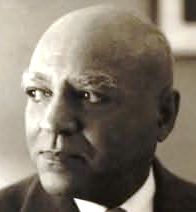
Lester Aglar Watson

Lester Aglar Watson

In 1911, Walton thought the conditions for starting a league were right, were right based on a three-game series in June—the Chicago Leland Giants traveled to St. Louis for a three-game series with Charles Alexander Mills’ St. Louis Giants:

“The figures, giving the attendance at the three games played, are interesting and furnish those who have been agitating the organization of a colored baseball league much cause for jubilation.  They are now enthusiastically pointing to figures to back up the assertion they have been making all along that a colored baseball league would pay;  also that the fans would give it their loyal support.”

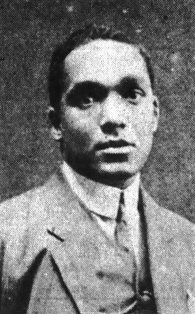
Charles Alexander Mills,

Charles Alexander Mills

The Freeman described the atmosphere at the first game:

“The Chicago Giants entered from the south entrance, headed by Captain Pettis (William “Bill” “Zack” Pettus), and followed closely by the entire squad, clad in blue caps and white uniforms.  The contrast was rich.  At the site of the Chicago boys the fans cut loose, and such cheerings in respect would be fit for a king.  Ten minutes later Captain (Richard Felix (Dick) Wallace and his squad emerged from the club house, all in a quick step, and when they came in view of the vast throng such clanging of bells and blowing of horns has never been equaled in Athletic Park.”

Bill Pettus

Bill Pettus

Walton noted that the opening game, played on June 21, drew 2,200 fans.  On the same day in Cincinnati, just 700 attended a Reds game against the St. Louis Cardinals.  The following day 2,500 hundred watched the two teams play, and about 2,600 attended on Friday.  The St. Louis Browns, playing the Chicago White Sox on Wednesday and Thursday at Sportsman’s Park, drew smaller crowds both days:

“It should not be overlooked that the fans turned out in goodly numbers to see the St. Louis Giants and the Chicago Giants on week days.  On Sundays it is not unusual for the St. Louis Giants to play before 5,000 people.  It is, however, generally admitted that strong colored teams are good Sunday attractions, but the difference of opinion has invariably come up over the question of whether the fans would put in their appearance in sufficient numbers on week days.

“What is also considered significant by those who favor the formation of a colored baseball league is that with few exceptions the crowds were composed of colored people, which proves conclusively that members of the race will support colored clubs when they put up a good article of ball.  The same can be said of white fans, and quite often, for instance, in greater New York, more whites attend baseball matches between colored clubs than colored.”

Walton said it was always understood that New York and Chicago could support a member club in an organized league, but there was “doubt as to whether devotees of the national game in St. Louis, Cincinnati, and Louisville etc…would turn out in sufficient numbers to ensure the players a nice check when payday rolled around.”  The series, he said, erased some of those doubts:

“Cincinnati, Louisville, Baltimore and other cities considered can make as good a showing as St. Louis.  Furthermore…these cities have but one big league team, while St. Louis has two, a condition which it is claimed, would argue in favor of the respective colored teams securing a larger white patronage.”

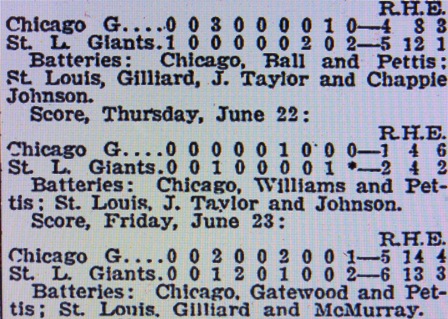
The St. Louis Giants swept the three-game series—winning all three in the bottom of the ninth inning; including a 2 to 1 victory behind “Steel Arm” Johnny Taylor over “Smokey Joe” Williams in game two—Taylor also won game one in relief.

The line scores from the three games

The line scores from the three games

Despite the enthusiasm, three excellent, well–attended games, and the resulting optimism as a result of the attendance in St. Louis during three days in June of 1911, an organized black league was still nearly a decade away.

The Tribune’s First All-Star Team

21 Feb

In 1933 The Chicago Tribune underwrote the first All-Star game, created by Arch Ward, the  paper’s sports editor,  to coincide with the Century of Progress World’s Fair—more than 30 years earlier The Tribune published one of the earliest  sportswriter selected “all-star teams.”

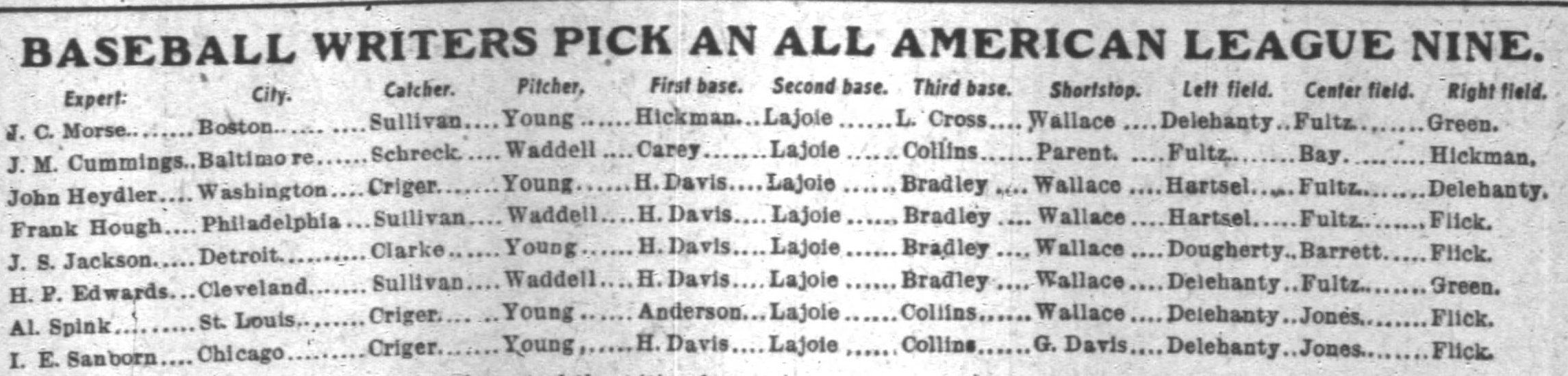
Near the end of the 1902 season, The Tribune polled sportswriters from American League cities to pick “An all American League Nine.” (No similar poll was done for the National League)

The writers polled:

Jacob Charles Morse—The Boston Herald

Joseph M. Cummings—The Baltimore News

John Arnold HeydlerThe Washington Post

Frank Leonardo HoughThe Philadelphia Inquirer

Joseph Samuel Jackson—The Detroit Free Press

Henry P. Edwards—The Cleveland Plain Dealer

Alfred Henry SpinkThe St. Louis World

Irving E. (Sy) Sanborn—The Chicago Tribune

The only unanimous choice was Cleveland Bronchos second baseman Napoleon Lajoie—Lajoie appeared in just 86 games, but hit .379.

Napoleon Lajoie --the only unanimous choice

Napoleon Lajoie –the only unanimous choice

The most disagreement was behind the plate; four different catchers received votes:  Billy Sullivan of the Chicago White Sox and Lou Criger of the Boston Americans received three votes each;  Freeman Ossee Schrecongost who played 18 games with Cleveland and 79 with the Philadelphia Athletics, and William “Boileryard” Clarke of the Washington Senators each received one vote.

Cy Young of Boston led pitchers with five votes, with Philadelphia’s Rube Waddell being the choice of the other three.

Four first basemen were also chosen, but Harry Davis of the Philadelphia Athletics was the consensus choice with five votes.  Cleveland’s Charlie “Piano Legs” Hickman, Washington’s George “Scoops” Carey, and “Honest John” Anderson of the St. Louis Browns all received one vote.

Cleveland’s Bill Bradley edged Boston’s Jimmy Collins four to three, with Philadelphia’s Lafayette “Lave” Cross getting the remaining vote.

Bobby Wallace of St. Louis was the shortstop consensus with six votes, Boston’s Freddy Parent and Chicago’s George Davis received one vote each.

Booby Wallace, the choice at shortstop

Bobby Wallace, the choice at shortstop

Washington’s Ed Delehanty got four votes in left field, Philadelphia’s Tully “Topsy” Hartsell two; one vote each went to Boston rookie Patsy Dougherty and Philadelphia’s Dave Fultz (who played center field)

With or without his vote as a left fielder, Fultz was the consensus in center field.  He received four votes at that position; Chicago’s Fielder Jones got two votes, Jimmy Barrett, the only Detroit Tiger to make the list received a single vote (from Joseph Samuel Jackson of Detroit) and Harry “Deerfoot” Bay of Cleveland received one vote.

Jimmy Barrett, the only Tiger

Jimmy Barrett, the only Tiger

Right field included a couple more out of position players, Charlie Hickman picked up one vote despite being primarily a first baseman and playing just 27 games in the outfield in 1902.  Delehanty, almost exclusively a left fielder in 1902, received one vote in right.  Elmer Flick of Cleveland was the consensus with four votes.  Danny Green of Chicago received two votes.

The Results

The Results

The 1902 effort was not repeated by the paper.

“What Earnest, Active and Capable Team Workers those Cuban Giants are”

19 Feb

The Middle States League lasted just one season, 1889.  Not part of the National Agreement, and intended as an eight-team league, the circuit included, at various times, thirteen teams representing cities in Pennsylvania, Delaware, Connecticut, and New Jersey.

The league became integrated with the inclusion of the Cuban Giants of Trenton, who had become the first salaried African-American team four years earlier, and later their biggest rivals, the New York Gorhams (the Gorhams joined the league late, and were expelled in August—they played their home games in Easton, Pennsylvania and Hoboken, New Jersey).

Despite their membership in the league, and the Gorhams’ calling Easton their part-time “home,” both black teams were refused hotel accommodations in Easton during the season.

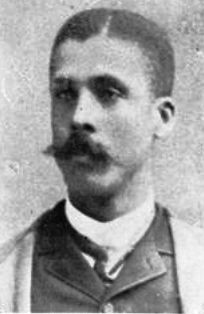
The relationship between the Cuban Giants and the rest of the league was contentious.  In May, The Philadelphia Inquirer said the league’s board of directors charged Cuban Giants’ Manager Stanislaus Kostka (variously nicknamed Cos, S.K., Siki) Govern with violating the league’s $75 a month salary cap by using “players who have not signed regular contracts,” and not using league’s official ball in games.  The Inquirer said:

“It appears that the colored club has been running things to suit its own sweet will.”

The paper said after a two-hour meeting Govern promised “to do better in the future.”

govern

S. K. Govern

The following month the league denied rumors in The Inquirer that “the Cuban Giants were to be forced out on account of their color.”  The paper said the August league meeting “was long and mainly occupied by debates between Harrisburg and the Cuban Giants.”

Most of the teams were financially troubled from the outset—at one point  a York, Pennsylvania hotel proprietor confiscated the uniforms of the Shenandoah club after the team failed to pay their bill—Shenandoah lasted just 15 games, joining the league in mid July and disbanding August 6.

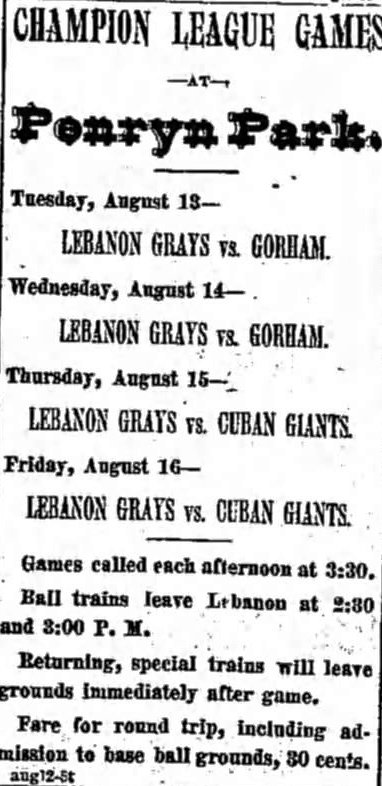
1889middlestates

Advertisement for August, 1889 games between the Lebanon Grays and the Cuban Giants, and Gorhams. The Gorhams were expelled from the league several days after these games were played.

The Harrisburg Ponies were the only team in the league that made money—the Gorhams, according to The Philadelphia Inquirer, had “few paying crowds” in Easton.  On August 21 The Inquirer said their “receipts did not amount to more than $20.”  The following day they were unable to pay the Hazelton team the guarantee for a scheduled game and were expelled from the league.  The Gorhams took to the road and barnstormed for the remainder of the year.

The Cuban Giants didn’t fare much better financially.  Owner John Bright, according to The Harrisburg Telegraph, needed to schedule his team for more than 60 exhibition games in addition to the 74 league games in order to turn a profit.

No one who followed the league, including Henry Chadwick, who watched the Cubans Giants play in August, had any doubt which team was the best in the Middle States League.  In The Brooklyn Eagle, Chadwick, “The Father of Baseball,” wrote:

“What earnest, active and capable team workers those Cuban Giants are.  In fact, I would rather see them play in a game where they had work to do to win than see half the (National) League or American Association teams play.  They are well up in the points and they play with a spirit and vigor, and with a good nature withal which makes their field work very attractive.  They have very intelligent and gentlemanly young official (manager) in Mr. McGovern [sic].  That catcher of theirs—(Arthur) Thomas—is a character, and they have an excellent strategic pitcher in (William) Seldon, and as for (Frank) Grant, he is at least a second (Fred) Dunlap on the field.  In fact, did not see a weak spot in the team in this game.”

Frank Grant

Frank Grant

Despite playing more than 60 extra games over the course of the season, the Cuban Giants managed to stay neck-and-neck with the Harrisburg Ponies all year.   In mid-September, with just four games remaining on the schedule, and with the league’s future in serious doubt, the Cuban Giants, just .001 behind the Ponies chose to cancel their last four games.  The Chambersburg Repository said the cancellations allowed “the colored club an opportunity to make a trip through New York State.”

The championship was awarded to the Ponies (who added two more victories after the Cuban Giants departed for New York).

The final official standings:

Harrisburg Ponies 64-19 .771

Cuban Giants 55-17 .764

Cuban Giants owner John Bright protested the final standings and took his case to the press.  In a long letter, published in The New York Sun, and other papers, Bright said his team “justly and honestly won” the pennant.  He claimed that Harrisburg was incorrectly awarded three victories for forfeited games–one against the Gorhams, when neither team showed up for the game, and two games against Wilmington after that team had disbanded.

Bright also charged that Harrisburg also lost a September game to Lebanon, and after the fact “Harrisburg turns it in as an exhibition game.”  He said his team was stripped of two victories in games where the official league ball was not used, while there were two games  they lost while playing with the wrong ball “but much to our amazement, only one game was not counted.”  Additionally, Bright claimed the league failed to award the Cuban Giants two games won against the Hazelton team.

Bright said the league standings should have been:

Cuban Giants 57-16 .780

Harrisburg Ponies 61-20 .753

Bright concluded:

“So any fair-minded person can see at a glance that the Cuban Giants are the real champions.”

The Philadelphia Inquirer initially seemed to side with the Cuban Giants.  They printed Bright’s charges and quoted an unnamed “prominent manager of the Middle States League” who said:

“The Giants are right in a number of their claims.  I never could see upon what grounds the Harrisburg club could claim a number of the games complained of, more than by the bulldogging tactics that they always employed throughout the season.”

The Philadelphia Press was squarely in the Harrisburg camp.  The paper referred to Bright’s “several foolish claims for the pennant,” and provided a forum for league president William Voltz-who was also the paper’s baseball editor–to respond.  Voltz called Bright’s charges “unwarranted and untrue.”  The league president/baseball editor also claimed the Cuban Giants still owed the league money and that the proper time for bright to protest the championship would be at the league meeting in December.

Newspaper reports of the December meeting make no mention of any representative of the Cuban Giants appealing the championship.

Harrisburg remains the official champion of the 1889 Middle States League

The league was reconstituted as the Eastern Interstate League for 1890.  The nucleus of the Cuban Giants jumped from Bright’s club and joined the league as the York Colored Monarchs—Frank Grant and Clarence Williams joined the previously all white Harrisburg Ponies.  The six-team league struggled, quickly became a four-team league, and folded all together in July.

Clarence Williams

Clarence Williams

York was leading the Eastern Interstate League when it disbanded.