Tag Archives: Charles Comiskey

Lost Advertisements–Cubs, White Sox and Whales Endorse Steele’s Game of Baseball

18 Dec

steeles

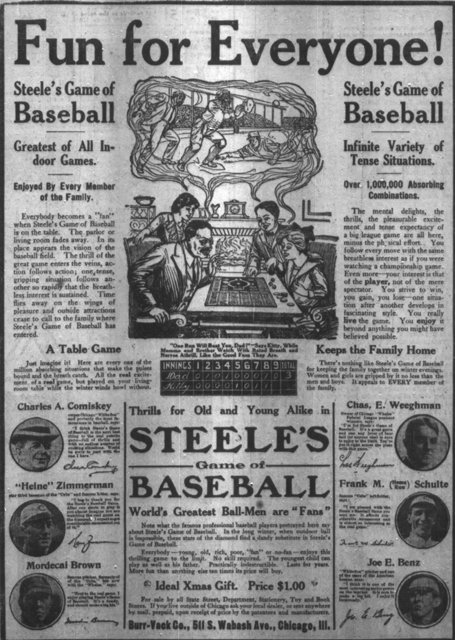
A 1915 advertisement for Steele’s Game of Baseball, a table-top game which claimed to have “Over 1,000,000 absorbing combinations,” and promised that the player would “enjoy it beyond anything you might have believed possible:”

Greatest of All Indoor Games

“Everybody becomes a ‘fan’ when Steele’s Game of Baseball in on the table.  The parlor or living room fades away.  In its place appears the vision of the baseball field.  The thrill of the great game enters the veins, action follows action; one tense, gripping situation follows another so rapidly that the breathless interest is sustained.  Time flies away on the wings of pleasure and outside attractions cease to call to the family where Steele’s Game of Baseball has entered.”

The game was produced by the Burr-Vack Company, a Chicago-based office supply dealer, and received glowing endorsements from members of the city’s three teams:

World’s Greatest Ball-Men are “Fans

Charles A. Comiskey owner Chicago ‘White Sox’ and probably the most famous man in baseball, says: ‘I think Steele’s Game of Baseball is the next best thing to the real outside game–full of thrills and with an endless number of exciting situations.  Would be sorry to part with the one I have.’

“‘Heine’ Zimmerman third baseman of the ‘Cubs’ and famous hitter says: ‘I  beg to thank you for the Steele’s Baseball Game.  After one starts to play it you almost imagine you are watching the real game on the diamond.  I expect to get considerable amusement out of it.’

Mordecai Brown famous pitcher, formerly of the ‘Cubs’ but now with the ‘Whales’ says: ‘Next to the real game, I enjoy playing Steele’s Game of Baseball.It’s a dandy and should make a big hit.’

Chas. E. Weeghman owner of Chicago ‘Whales’ Federal League pennant winners says, ‘I’m for Steele’s Game of Baseball.  It’s a great game and one any lover of baseball (or anyone else) is sure to enjoy to the limit.  You’ve put it right across the plate with this game.’

Frank M. (Home Run) Schulte famous ‘Cubs’ left fielder says: ‘I am pleased with the Steele’s Baseball Game you sent me.  It affords considerable amusement and is almost as interesting as the real game.”

Joe Benz ‘White Sox’ pitcher and one of the stars of the American League, says, ‘I think it is one of the most interesting parlor games on the market.  It is sure to make a big hit. I enjoy it immensely.'”

[…]

“Note what the famous professional baseball players portrayed here say about Steele’s Game of Baseball.  In the long winter, when outdoor ball is impossible, these stars of the diamond find a dandy substitute in Steele’s Game of Baseball.”

Despite the endorsements, the “Ideal Xmas Gift,” which cost one dollar and was “For sale by all State Street, Department, Stationary, Toy, and Book stores,” appears to have quickly disappeared–there are no mentions of the game in newspapers after 1915.

“The Duke of Minneapolis”

20 Nov

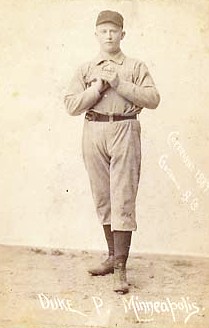
Martin F. Duck was born in Zanesville, Ohio in 1867.  He played under the name Martin Duke.   As he was becoming a well-known pitcher The Kansas City Times told a story which purported to explain why he changed his name:

 “The real name of the (Minneapolis) Millers’ best pitcher is not Duke, but Duck…Martin was pitching in a game up in Michigan and in the ninth his club led the opposing team by one run. (With two runners on base) a man up in the grandstand began imitating the quack of a duck…as the ‘quack, quack, quack continued his face became lobster-colored.  He shouted to his taunter that he would fix him after the game, but the fiend…went on with his ‘quack, quack, quack’”

At this point, Duck allegedly threw the ball into the stands at his tormentor, allowing both runs to score, “After that he dropped the name Duck entirely.”

By the time that story appeared Martin Duke seemed headed for a productive career.  He went 14-12 with the Zanesville Kickapoos in the Ohio State League in 1887.  In 1888, he again pitched for Zanesville, now in the Tri-State League and for The Toledo Maumees in the same league—no  records survive for that season.

The five-foot, five-inch Duke made a name for himself the following year.  While pitching for the Millers in the Western Association, he posted a 24-16 record and struck out 347 batters in 355 innings, earning the nickname “Duke of Minneapolis.”

In February of 1890, The Chicago Inter Ocean said Chicago’s Players League team was after the pitcher:  “Captain Comiskey of the Chicago Brotherhood has been on Duke’s trail for weeks, with the result that although Duke has not yet signed a contract we will play with the Chicago Brotherhood club this season.”

If Comiskey was, in fact, on Duke’s trail he never got his man.  Duke returned to Minneapolis, and while statistics for 1890 no longer survive, but the press routinely called him the Millers’ best pitcher.

In 1891, he slipped to 10-11, and in May he was suspended for being, as The Sporting Life said, “Out of condition” (a euphemism for his problem drinking), but earned an August trial with the Washington Statesmen in the American Association.  The Saint Paul Globe said of his departure:

“Martin Duke–the one, the only, the statuesque Duke–has bidden good-bye to the ozone of Minnesota and beer of Minneapolis…Last night he boarded the train, moved his hand in adieu, cocked his hat to one side, closed an eye, uttered a certain familiar expression peculiar to Dukes and disappeared forever.”

Martin Duke

Duke failed his Major league trial.  In four games, he posted a 0-3 record and walked 19 batters in 23 innings.

Despite his poor debut, he received another opportunity, this one with the Chicago Colts in 1892. When he was signed in January, The Chicago Tribune said:

“Duke’s last season, owing to lax discipline, was not a success, but this season he promises to regain his old form, as he is bound by an ironclad contract to abstain from intoxicating drinks.  By his contract half his salary reverts to the club if he breaks the pledge.  This should keep him straight.”

He received a big buildup in The Chicago Daily News:

“(He) is one of Captain Anson’s new colts, and he not only puts the ball over the home plate with almost the speed of a cannon shot, but he also seems to have a head studded with eyes, for stealing second base when he is in the box is always most hazardous business.  His pitching arm is so strong and shapely and so well equipped with powerful muscles that it would win admiration from a blacksmith.”

Despite the accolades he was released before the beginning of the season, The Tribune said:

“Martin Duke is also down for release. He has shown up poorly so far, and the club cannot use five pitchers anyhow.”

He signed with the New Orleans Pelicans in the Southern Association and seemed to regain his old form posting a 13-3 record.  It was his last successful season.

After getting off to a 2-5 start in 1893 Duke was released by New Orleans, and initially there were no takers for his services.  The Milwaukee Journal said why:

“Martin was always a good pitcher, but his mouth and his temper were too great a load for any team to carry any length of time.”

Duke bounced around the minor leagues after that with short stints for teams in the Eastern League, Southern Association and Western League until 1895, when he returned again to Minneapolis.  But after 13 games with the Millers, he injured his arm and was released in June.  According to The St. Paul Globe, he injured the arm again in August; rupturing a tendon while pitching for a semi-pro team in Rosemount, Minnesota.

In 1897, The Sporting Life reported that Duke, employed in a Minneapolis tavern, was “Trying to get in shape” in order to return to the diamond that season, but he never played professional ball again.

Duke died from pneumonia on December 31, 1898, in Minneapolis.  The Sporting Life said:

“He possessed great ability as a pitcher, but never lasted long with any club, as he was a hard man to control, and was given to dissipation, which ultimately led to enforced retirement from the profession and untimely death.”

Duke was 31 years-old.

A shorter version of this post appeared in October 2012

Lost Advertisements–Fit for a King

1 May

fitAn ad for Old Underoof Whiskey from April of 1910.  Chicago White Sox owner Charles Comiskey–and Chicago fans–had great expectations for the club.  After a disappointing 78-74 record and a fourth-place finish in 1909, Hugh Duffy was hired to replace Billy Sullivan as manager.

Comiskey also replaced his entire starting infield, purchasing the contracts of three minor leaguers: first baseman Chick Gandil, second baseman Rollie Zeider, and shortstop Lena Blackburne, and installing utility infielder Billy Purtell at third.

The new 1910 White Sox infield.

The new 1910 White Sox infield.

The Chicago Tribune said the Sox were now:

“Resplendent with brand new darns where were worn the biggest holes last year.”

Comiskey was confident enough to tell reporters the team “(W)ill lose their name of hitless wonders this year. I am confident we will be as strong as any club in the league in this department.”

He also maintained that Ed Walsh, Doc White, Jim Scott, and Frank Smith, who would start the opener on April 14, comprised “(T)he strongest staff of pitchers in any league.”

The Sox did not disappoint on opening day.  Behind Smith’s one-hitter, the Sox defeated the St. Louis Browns 3 to 0.

The Chicago Inter Ocean said the “New Sox lived up to every inch of the reputation they have gained this spring.” The Tribune dubbed the team “Commy’s Comets,” and said:

“When the dazzling display was over Comiskey’s face resembled the noonday sun wreathed in an aureole of smiles, which extended beyond the rings of Saturn and half the distance to the milky way.”

Old Underoof commemorated the victory with a new ad:

commy1910

The Sox quickly returned to earth and lost their next four games.  Things never got much better.  A month into the season they were 10 games out of first place; they finished 68-85, in sixth-place 35.5 games behind the Philadelphia Athletics.

With a league-worst .211 batting average, the they failed to ” lose their name of hitless wonders,” as Comiskey predicted.

As for “the strongest staff of pitchers in any league,” they could not overcome the horrible support they received all season.  Despite a 2.03 team ERA, second only to Philadelphia’s 1.79, only Doc White (15-13) had a winning record.

Walsh, who led the league with a 1.27 ERA,  was 18-20, and Scott was 8-18 with a 2.43 ERA.

Frank Smith, the 30-year-old hero of the opener, who had won 25 games with a 1.80 ERA in 1909, was 4-9, despite a 2.03 ERA and three shutouts, when he was traded with Billy Purtell to the Boston Red Sox in August.


Diet Tips from Tim Murnane

6 Apr

Tim Murnane, who began his career as a first baseman for Middletown Mansfields in the National Association in 1872 and later was a member of the Boston Red Stockings in the National League’s inaugural season in 1876, would go on to become one of the most influential baseball writers in the country.

Tim Murnane

Tim Murnane

Writing in The Boston Globe in 1906, he said he had discovered the one thing that caused the greatest harm to a baseball player.

“Over-feeding kills off more ballplayers than accidents or hard work on the ball-field.”

Murnane suggested two solutions.  First, he recommended that, “The Fletcher system should be taken up by the veteran ballplayers without delay.”

The “Fletcher System” or “Fletcherizing” was a then very popular diet technique put forth by a “self-taught nutritionist” named Horace Fletcher.  Fletcher claimed, in several books published during the first decade of the 20th Century that the key to weight loss was to chew food so completely that it was virtually liquefied before swallowing.  Called “The Great Masticator,” Fletcher counted Thomas Edison, Henry James, Franz Kafka, John D. Rockefeller, J.C. Penny—and apparently Tim Murnane—among his adherents.  His theories had fallen out of favor, replaced by diets based on calorie intake, by the time of his death in 1919.

Horace Fletcher "The Great Masticator"

Horace Fletcher, “The Great Masticator.”

Secondly, Murnane said, “(T)he rules of eating should be laid down by the management of every club.”

He said Harry Wright, who had been Murnane’s manager in Boston, “(W)as about the first baseball man to keep a close watch over his players during meal time,” and insisted they eat lightly before games.

“’Just a plate of soup.  That’s plenty,’ would be Mr. Wright’s cry as the players filed into the dining room for lunch.  The greatest athletic performances on the field have been accomplished on practically empty stomachs.”

[…]

“I have known at least half a dozen good ballplayers being passed up in Boston on account of paying no heed to the manager’s advice about overloading their stomachs.  Frank Selee was just as much of a stickler in this line as was Harry Wright, and both were remarkably successful baseball managers.  The manager who does not pay especial attention to this end of the players’ life must lose out, for his team will be unable to keep up a fast clip very long after the boys commence to take on flesh as the result of overfeeding and drinking.”

Murnane had other diet tips for readers:

“A ballplayer cannot drink too much good milk.  The greatest drinker of milk I ever knew was James O’Rourke, and Jim, after thirty-three years on the ball-field, is just as lively a 10-year-old today.  O’Rourke never used tobacco in any form, nor ever indulged in malt liquors, but what a milk drinker he has been all his life and what credit to the national game, from every angle you view the old sport!’

Jim O'Rourke

Jim O’Rourke, “The greatest drinker of milk.’

Murnane blamed the disappointing performance of the Boston Americans in 1905 (Fourth place, 78-74, 16 games out of first) on the dietary habits of the team:

“To be honest, I think the Boston Americans last season practically ignored condition from first to last.  I never witnessed on one ball team so many men out of form by being overweight…This club would have won at least one dozen more games had they taken good care of their stomachs, and no one knows this better than Captain (Manager Jimmy) Collins himself, who has said it will be a much different season with the Boston club next season.”

The next season, 1906, was much different, but not in the way Collins had hoped.  The team was 35-79 when Collins was replaced as manager by Charles “Chick” Stahl, and finished in last place with a 49-105 record.

Murnane concluded:

“Baseball was never intended for a fat man’s game, and Captain Anson was the only heavyweight who ever piloted a pennant winner, although my old friend Charley Comiskey was growing a bit stout when his boys carried off the prize five years ago.”


“A Ballplayer can’t chase ‘Chickens’ and Chase Flies”

25 Feb

With money borrowed from his brother Clarence, an oil speculator, Henry “Hen” Berry stepped in to take over ownership of the Los Angeles Angels in 1906.

"Hen" Berry

“Hen” Berry

Berry’s Angels won the Pacific Coast League championship in 1907 and ’08, and that success, along with his own profits in the oil business, made Berry a wealthy man in his own right.

He also managed, during his tenure with the Angels, to sell a player to a big league club for the highest amount ever received by a Coast League Club to that point, when he was paid $5,000 by Charles Comiskey of the Chicago White Sox for 18-year-old Lee “Flame” Delhi in 1911; Delhi appeared in just one game for the Sox the following season and was out of organized ball well before his 25th birthday.

Berry was also the driving force in getting the league to finally adopt a two-umpire system in 1912.

He also had a theory about what the type of lifestyle that best suited his players.  In 1914, he talked about it with a reporter from The Los Angeles Examiner:

“’A ballplayer can’t chase ‘chickens’ and chase flies at the same time with any degree of certainty that he’ll land the flies.’

“That is ‘Hen’ Berry’s way of saying that a player whose head is turned by the hero-worship of the fair patrons on the diamond stands a mighty slim chance at high fielding averages or of shining in the .300 batting class…Wedding bells for all players, he believes, would result in the highest possible efficiency.”

Eighteen of the 21 members of the Angels were married, and it was that way by design:

“’It is his susceptibility to the attentions of pretty hero worshippers that keep many a promising athlete from reaching the high place that otherwise would be his in the world of sport,’ asserts Berry.

“’The ballplayer is perhaps more constantly beset by these fair idolizers than any other professional athlete because women frequent the diamond more generally by far than any other sport.’

“’So we have the very thing which keeps baseball keyed up to concert pitch—the element of personal admiration for the players—becoming the most dangerous possibility in pulling a good man down or keeping him mediocre.’”

"Hen" Berry caricature

“Hen” Berry caricature

While Berry conceded that marriage didn’t guarantee that a player would be “immune from lionizing” by women, it would at least reduce the “social diversions which frazzle a man’s nerves.”

Marriage, said Berry, resulted in “Emotional calm” and provides “stability which goes far towards winning pennants.”

Berry’s theory had not resulted in any recent success; after his two pennants in 1907 and ’08, the Angels had experienced a drought that would continue in 1914 when his predominately married club finished second to the Portland Beavers.

Berry sold the Angels after the 1914 season and moved north, purchasing the San Francisco Seals.

He picked up two more championships with the Seals—it is unclear how many of the players on each pennant-winning club were married– and sold the team to group headed by former Coast League catcher Charlie Graham before the 1918 season.

San Francisco Seals owner Charlie Graham

Charlie Graham

After leaving baseball, Berry managed the family’s oil holdings in California.  On March 13, 1929 the steering broke on Berry’s car as he rounded a curve while driving near his home in Maricopa.  The car plunged 100 feet into a ravine, and the former West Coast baseball magnate was dead at age 59.

Lost Pictures–Sidney Smith’s Baseball Cartoons

26 Dec


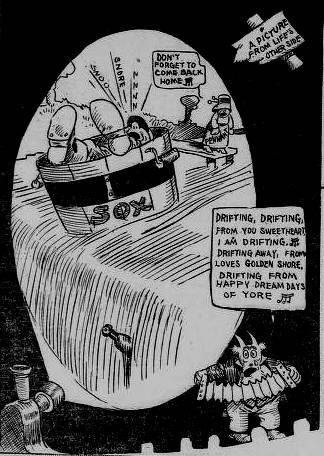
sidneysmithapril221909

By the time of his 1935 death in a car accident, Robert Sidney Smith—known professionally as Sidney Smith—was one of America’s most popular cartoonists; The New York Times said his death “will be felt by literally millions of Americans.”  His comic strip, “The Gumps,” was syndicated by The Chicago Tribune, and ran in hundreds of newspapers; it also spawned dozens of animated film shorts, nearly fifty-two-reel comedy film, a radio program and merchandise.

But, before Smith joined The Tribune, he had started in Chicago drawing baseball cartoons for The Chicago Examiner.

The cartoons featured a talking (sometimes singing) goat named Buck Nix.

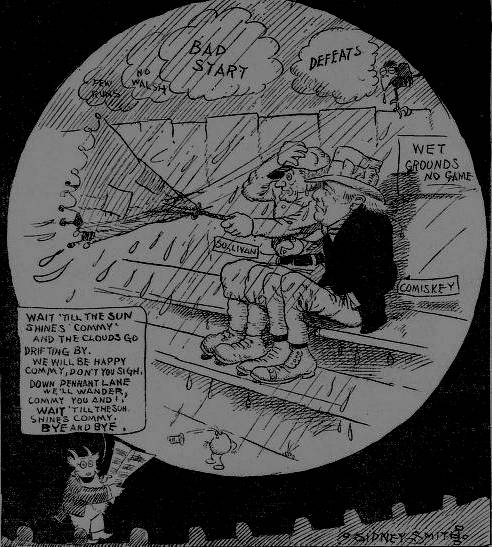
These two examples chronicled the  fortunes of the 1909 Chicago White Sox.

The first, above, appeared just seven games into the season.  Chicago had high hopes for the Sox, 86-64, the previous season, but the club limped to a 3-4 start.

As the cartoon notes, in addition to bad weather and weak hitting causing a poor start for President Charles Comiskey and Manager Billy Sullivan, Sox ace “Big Ed” Walsh was not yet with the team.  Walsh, a forty game winner the previous season held out for $7,500 and did not sign until April 28.  Still hopeful, “Buck Nix” says “Wait ’til the sun shines Commy.”

The second, below, appeared on June 26.  The Sox were 24-28, in fifth place, and as Buck Nix sings were “Drifting away from loves golden shore.”  Walsh only started 28 games, the Sox hit just .221 as a team and were never in the race.  They finished 20 games out in fourth place.sidneysmithjune261909

Things I Learned on the Way to Looking up other Things #13

22 Dec

Chief Meyers on the Plight of the Native American, 1913

John W. McConaughy, the former sports editor of The St. Louis Post-Dispatch, was no longer writing about baseball regularly as the New York Giants prepared to face the Philadelphia Athletics in the 1913 World Series.  McConaughy, who was the Washington correspondent for The New York Journal, was enlisted by the paper to write about some of the key figures of the series.

The result was, in the case of John “Chief” Meyers, a profile that went beyond a typical baseball story:
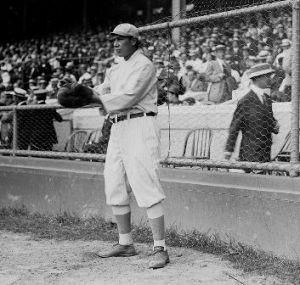
Chief Meyers

Chief Meyers

“Meyers is one of the coolest, shrewdest and quickest thinking catchers that ever came to the big leagues.  He has both gray matter and gumption, and the one is useless without the other in baseball as elsewhere.  He has a fund of general information that runs from national politics to the philosophy of Plato, and a delicately adjusted sense of humor, and these two combine to give him a good perspective of the national game.”

[…]

He is ready to fight any time for justice and fair play and he is so good-natured that he isn’t seriously annoyed when the fans perpetrate that bum war-whoop every time he comes to bat.

[…]

“One day in Cincinnati he asked the writer to go out to the art museum with him.  We came upon a bronze—an Indian turning to shoot an arrow at his pursuers.

“’There’s the idea.’ He said, pointing to the warrior.  ‘They never learned how to fight.  They had nothing but the willingness.  If Tecumseh had been as big a man as Napoleon he would have killed off the medicine men as his first official act, learned the white man’s style of warfare—and there would have been an Indian nation here today.

“’I don’t mean that the white man would not have been here, too.  But with a few leaders—real big men—our fathers would have come to see that the white man’s type of civilization was the highest, just as the (Japanese) have done.  We would have had great states and communities in the union, and we would have been useful, progressive citizens.

“’As it is the Indian is robbed by agents and shifted from reservation to reservation whenever anyone happens to want their land.  Tribe after tribe is scattered, and in another hundred years my people will have gone the way of the Aztecs.’

“Still, there will always probably be a few fans who will think it bright to pull the war-whoop when the Chief comes to bat.”

Tom Lynch Cracks Down, 1910

In June of 1910, The Associated Press said that after a 5 to 4 New York Giants victory over the St. Louis Cardinals, umpires Jim Johnstone and August Moran “stood in front of the press box and made remarks about the baseball writers.”

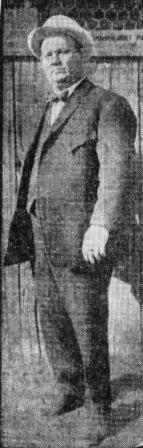
National League President Thomas Lynch, who had announced his intention to “break this habit of having players call the arbitrators bad names” said in response:

“I also will not stand for umpires talking back to spectators or taking it upon themselves to criticize newspaper men.”
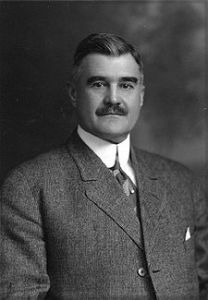
National League President Thomas Lynch

National League President Thomas Lynch

He fined Johnstone and Moran $25 and $15 respectively for the incident.

In that era of newspapermen as frustrated poets, George E. Phair, then of The Milwaukee Sentinel, was one of the most prolific, often including a poem in his articles.  He dedicated the following verse to the National League President:

Old Thomas Lynch, who runs a league,

     Would propagate urbanity;

In fact, Sir Thomas would intrigue

     To curb the umps’ profanity.

He warns his umpires while within

     The baseball scribes vicinity

To speak no words that reek of sin,

     But emulate divinity.

He tells them not to harm the scribes,

     Nor flout at their ability;

Nor pester them with jokes or jibes;

     Nor laugh at their senility.

He plasters fines upon his umps

     For showing their ferocity

And calling scribblers ‘mutts’ and ‘chumps’

      With Teddy-like verbosity.

The veteran Sir Thomas is

     Most generous and affable,

But we’re inclined to think that his

     Solicitude is laughable.

The ump may blunder now and then

     And break into profanity;

The scribbler jabs him with his pen

     And drives him to urbanity.

Comiskey Tells a Tommy McCarthy Story, 1899

George Erskine Stackhouse, the baseball editor of the editor of The New York Tribune, spoke to Charles Comiskey in 1899 and found him in a “somewhat reminiscent mood.”  Comiskey told a story Tommy McCarthy when the two were with the St. Louis Browns:
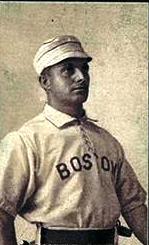
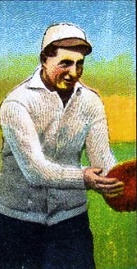
Tommy McCarthy

Tommy McCarthy

“I heard in Chicago the other day that tom is in Boston, as fat as a Tammany alderman, and making money out of a big bowling alley.  (Hugh) Duffy owned an interest in it, but they say Tom bought him out.  I had Tom with me in St. Louis.  And say, St. Louis is the best town on earth for a winner.  They used to distribute among the players every season watches and rings and studs and pins enough to stock a jewelry store.  There was a diamond medal offered one year for the best base runner on the Browns.

“Tom McCarthy was quite a boy to steal bases, and after the medal was offered he wouldn’t run out his hits.  If he made a two-bagger, he would stop at first, and if he slammed the ball for a triple, he would manage to bring up at second, so as to get a chance to steal a base.  Of course, after a bit, I got on to him, and I had to warn him that if he didn’t stretch those hits I would have to lay him off altogether.  That helped some, but he was always hanging back when he thought he could get away with it.  I remember once that he had a chance to go down to second on a wild throw to first, and what does he do but toss his head and drop off his cap, so that he could stop and come back after it and stick at first.  He won that medal.”

“The Annual Spring Typhoon has Blown up Again”

10 Nov

In 1906, despite being, on paper, the best team in the American League, the Cleveland Naps finished in third place, five games behind the Chicago White Sox.  The club had three twenty game winners—Addie Joss, Bob Rhoads, and Otto Hess—and four regulars who  hit better than .300—Napoleon Lajoie, William “Bunk” Congalton, Elmer Flick and Claude Rossman,

As the 1907 season approached, Grantland Rice, of The Cleveland News said the team was now a victim of the success of individual players:

“The annual spring typhoon has blown up again—only a bit worse than ever.  In nearly every big league camp well-known athletes are breaking into loud roars over the pay question, and there promises to be quite a batch of trouble before the storm is cleared away.  In this respect Cleveland heads the list, although Napland owners have one of the highest salary lists in the game.  Up to date Joss, Rhoads, (Terry) Turner and Congalton have balked, while neither Flick nor Hess have returned a signed contract.”

Grantland Rice

Grantland Rice

Rice said the club’s negotiations with Joss and Rhoads were at an impasse, and “just how it will end is a matter of uncertainty.”  The news of the team’s trouble signing their stars led Rice to a discussion of “just how much a major leaguer is supposed to receive for his work each season.”

“When a youngster breaks in he is never given less, or at least rarely so, than he received in his minor league berth.  His pay is boosted the greater part of the time, so the average debutante’s pay roll ranges closely around $1,800 providing he is recognized as a first class man.

“If he delivers the goods his first year out he can figure on about $2,000 or $2,200 for his next season, and then if he becomes established as a regular, his income should be somewhere in the immediate vicinity of $2,500.

“From this point upward it all depends on their rankings as stars.  You hear considerable about $5,000 contracts and better, but as a matter of cold, clammy fact, but few athletes draw over $3,000 or $3,500 at best.

“In the epoch of war salaries $3,500 or $4,000 was a fairly common figure—but no more.

“A high grade slabman along the order of Joss, Rhoads (Nick) Altrock, etc…will rake in about $3,000 now.  In his weekly letter in a Toledo paper (The News-Bee), Joss stated that he was offered $3,000 for his season’s work, but that he demanded more—just how much he didn’t say.

“George Stone drew $3,000 or there abouts last season and now that he has fought his way to the premiership in the School of Slugs he demands $5,000, at which figure Mr. (Jimmy) McAleer balks strenuously.  (Johnny) Kling also asks for $5,000, which sum Charley Murphy says he will not receive.

“From this list we jump to the drawing cards of the game such as Lajoie, (Honus) Wagner, (Wee Willie) Keeler, (Christy) Mathewson, etc…

“Lajoie’s figures range somewhere above $8,000 and something shy of the $9,000 mark.

“Wagner is supposed to draw $5,000 for his work.

“If reports sent out from New York are true, Keeler’s yearly ante is close to $6,000, while Mathewson draws in about the same.

Hal Chase won’t miss $3,500 very far.

“But the high-priced teams are not pennant winners by a jug full.

(Charles) Comiskey and (Connie) Mack hew closer to the line than any others in Ban Johnson’s circle, and yet these two have won more pennants than all the rest put together.  In fact, they’ve gotten away with all but the two which Boston nailed.

“Mack had one of the cheapest, if not the cheapest team in the American League through 1905, the last year he copped the pennant.  Comiskey’s world champions of 1906 were far below Cleveland, New York or even Boston, from the salary standpoint.

“It looks funny to figure the cellar champions of a league paid more than the holders of the world’s title, but if all the figures were given out, the White Sox payroll would loom up under Boston’s to a certainty.

“The full salary cost of running a big league club varies from $40,000 to $50,000, or maybe $55,000 a year.

“A set of figures somewhere between $45,000 and $50,000 would probably hit at the higher average.

“There was a time when Boston’s payroll was close to $70,000 and (Clark) Griffith’s was only a notch below—but this golden era for the ballplayer has passed.”

According to The Washington Post, Joss had earned $3,2000 in 1906 ($2,700 and a $500 bonus), the biography, “Addie Joss:  King of Pitchers,” said he was paid $4,000 in 1907—Joss, who was 21-9 with a 1.72 ERA in 1906, followed that up with a league leading 27 wins (against 11 loses, with a 1.83 ERA) in 1907.

Addie Joss

Addie Joss

Fellow twenty game winners Rhoads and Hess both saw their production slip (15-14, 6-6), and only two regulars—Flick .302 and Lajoie .301—hit better than .300, and the team’s batting average slipped 28 points from the previous seasons.

The Naps finished fourth in 1907.

Things I Learned on the Way to Looking up other Things #11

22 Sep

Floto on Baseball’s Most Powerful Men

Otto Clement Floto was one of the more colorful sportswriters of the late nineteenth and early twentieth century’s.  The Denver Post’s Woody Paige said of the man who was once worked for that paper:

“In the early 1900s Floto was The Denver Post’s sports editor and a drunk, barely literate, loud-mouthed columnist–sounds like a description of that guy in my mirror–who didn’t believe in punctuation marks, wrote about fights he secretly promoted on the side, got into shouting matches with legendary Wild West gunman–turned Denver sportswriter–Bat Masterson.”

Otto Floto

Otto Floto

Floto, in 1910, provided readers of The Post with his unvarnished opinion of baseball’s most powerful figures:

John T. Brush—The smartest man in baseball, but vindictive.

Garry Herrmann—Smart, but no backbone; the last man to him has him.

Ban Johnson—Bluffs a great deal and makes it stick.  Likes to talk.

Charles Comiskey—Shrewd as can be.

Connie Mack—Shrewd and clever; knows the game better than anyone.

Charles Murphy—A hard fighter, but backs up at times.

George Tebeau—More nerve than any other man in baseball, very shrewd.

Barney Dreyfus—Smart, but always following, never leading.

As for John McGraw, Floto allowed that the Giants’ manager was “Pretty wise,” but attributed his success to the fact that he “has lots of money to work worth.”

Too Much Money for Players, 1884

The Cleveland Herald was not happy when pitcher Jim McCormick jumped his contract with the Cleveland Blues in the National League to the Union Association’s Cincinnati franchise.  Although teammates Jack Glasscock and Charles “Fatty” Briody also jumped to Cincinnati, the paper saved most their anger for the first big leaguer to have been born in Scotland.

Jim McCormick

Jim McCormick

The paper noted that McCormick, who was paid $2500 by the Blues, had received a $1,000 bonus to jump:

“(A) total of $3,500 for joining the Cincinnati Unions to play the remainder of the season.  This is equal to $1750 a month, which again divided makes $437.50 a week.  Now McCormick will not play oftener than three times a week which makes his wages $145.83 per day for working days.  The game will average about two hours each, so that he receives for his actual work no less than $72.91 an hour, or over $1.21 a minute for work done.  If he was not playing ball he would probably be tending bar in some saloon at $12 a week.”

McCormick was 21-3 with a 1.54 ERA in 24 games and helped pitch the “Outlaw Reds” to a second place finish in the struggling Union Association.  After the Association collapsed was assigned to the Providence Grays, then was sold to the Chicago White Stockings.  From July of 1885 through the 1886 season McCormick was teamed with his boyhood friend Mike “King” Kelly—the two grew up together in Paterson, New Jersey and were dubbed “the Jersey Battery” by the Chicago press—and posted a 51-15 record during the season and a half in Chicago, including a run of 16 straight wins in ‘86.

He ended his career with a 265-214 record and returned home to run his bar.  In 1912 John McGraw was quoted in The Sporting Life calling McCormick “the greatest pitcher of his day.”

The pitcher who The Herald said would otherwise be a $12 a week bartender also used some of the money he made jumping from Cleveland in 1884 the following year to purchase a tavern in Paterson.

Not Enough Money for Owners, 1885

In 1885 J. Edward “Ned” Allen was president of the defending National League Champions –and winners of baseball’s first World Series—the Providence Grays.  He told The New York Sun that baseball was no longer a profitable proposition:

“The time was when a man who put his money into a club was quite sure of coming out more or less ahead, but that is past.  When the National League had control of all the best players in the country a few years ago, and had no opposition, salaries were low, and a player who received $1,500 for his season’s work did well.  In 1881, when the American Association was organized in opposition to the league, the players’ salaries at once began to go up, as each side tried to outbid the other.  When the two organizations formed what is known as the National Agreement the clubs retained their players at the same salaries.

“Several other associations were then organized in different parts of the country and were admitted under the protection of the National Agreement.   This served to make good ball-players, especially pitchers, scarce, and forced salaries up still higher, until at the present time a first-class pitcher will not look at a manager for less than $3,500 for a season.  (“Old Hoss”) Radbourn of last year’s Providence Club received the largest amount of money that has ever been paid to a ball-player.  His wonderful pitching, which won the championship for the club, cost about $5,000 (Baseball Reference says Radbourn earned between $2,800 and $3,000 in 1884), as did the work of two pitchers and received the pay of two.

The Providence Grays--Champions and unprofitable

The Providence Grays–Champions and unprofitable

“Some of the salaries which base-ball players will get next season are; (Jim) O’Rourke, (Joe) Gerhardt, (Buck) Ewing and (John Montgomery) Ward of the New York Club, $3,000 each.  (Tony) Mullane was to have played for the Cincinnati Club for $4,000 (Mullane was suspended for signing with Cincinnati after first agreeing to a contract with the St. Louis Browns).  (Fred) Dunlap has a contract with the new League club in St. Louis for $3,400.  These are only a few of the higher prices paid, while the number of men who get from $2,000 to $3,000 is large.  At these prices a club with a team costing only from $15,000 to $20,000 is lucky, but it has not much chance of winning a championship.  To this expense must be added the ground rent, the salaries of gate-keepers, and the traveling expenses, which will be as much more.

“As a high-priced club the New York Gothams leads, while the (New York) Metropolitans are nearly as expensive.  The income of these two clubs last year was nearly $130,000, yet the Metropolitans lost money and the New York Club (Gothams) was only a little ahead.  The first year the Metropolitans were in the field(1883) their salary list was light, as were their traveling expenses, and at the end of the season they were $50,000 ahead.”

The Grays disbanded after the 1885 season.

The Wealthiest Ballplayers, 1894

19 Sep

In 1894, major leaguer turned sportswriter, Sam Crane wrote about the wealthiest players in baseball in The New York Press:

(Cap) Anson is probably the wealthiest ball-player on the diamond today.  His wealth has been estimated anywhere from $50,000 to $100,000.  It is, without doubt, nearer the latter sum than the former.”

"Cap" Anson

“Cap” Anson

Anson’s fortune would be long gone, due to a series of poor investments and other financial setbacks, by the time he died in 1922.

“From the time he joined the Chicago club he has enjoyed a big salary.  In his nearly 20 years’ connection with the club he has acted as manager and captain since the retirement as a player of A.G. Spalding in 1877.  Anson, of course received extra salary as manager, and has also been a stockholder in the club…He has been fortunate, too, in real estate transactions in the “Windy City,” under the tutelage of Mr. Spalding, and could retire from active participation in the game without worrying as to where his next meal was coming from.”

The men who Crane said were the second and third wealthiest players managed to keep their fortunes.

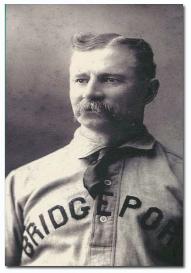
Jim O’Rourke is thought to come next to Anson in point of wealth.  Jim came out as a professional player about the same time as Anson.  He did not get a large salary at first with the Bostons, which club he joined in 1873.  He remained with the team until 1878, when he went to Providence.  Jim was young and giddy when he came from Bridgeport to Boston, in 1873, and did not settle down into the staid, saving player he now is…He was a ‘sporty’ boy then, and liked to associate with lovers of the manly art.  Patsy Sheppard was his particular friend in the ‘Hub,’ and James made the boxer’s hotel his home for some time.  When he went to Providence in 1879 Jim began to think of saving his money, and from that time on his ‘roll’ began to increase.

Jim O'Rourke

Jim O’Rourke

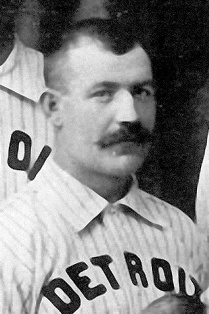
Dan Brouthers has received big salaries only since 1886, when he, as one of the famous ‘big four,’ was bought by Detroit from Buffalo.  But since then he has pulled the magnates’ legs and socked away the ‘stuff.’  He has been situated so that he has been able to make the magnates ‘pony up’ to the limit, and Dan had no mercy.  He said he was out for the ‘long green,’ and he got it.  When the Boston club bought Brouthers, (Abram “Hardy”) Richardson, (Charlie) Bennett, (Charles “Pretzels”) Getzein and (Charlie) Ganzell, Dan grasped the opportunity and got a big bonus and also a big salary.  He made the Detroit club give up a big slice of the purchase money before he would agree to be sold.

Dan Brouthers

Dan Brouthers

“The Brotherhood war, when Dan jumped to the Boston Players league was another favorable opportunity for him, and he grasped it and the boodle with his accustomed avidity.  Dan has planted his wealth in brick houses in Wappingers Falls (NY), and can lie back at his ease with his 30,000 ‘plunks’ and laugh at the magnates.  It is this feeling of contentment that has made Dan almost too independent and has affected his playing lately (Brouthers appeared in just 77 games in 1893, but hit .337, and hit .347 in 123 games in 1894).  Dan is what ballplayers call ‘hard paper,’ which was a most distinguishing characteristic of every one of the ‘big four.’”

Detroit’s “Big Four” consisted of Brouthers, “Hardy” Richardson, James “Deacon” White and Jack Rowe.

“Hardy Richardson was not so awful bad, but Jim White and Jack Rowe took the whole bake shop for being ‘hard papes.’  They have both been known to start on a three weeks’ trip with 80 cents each, and on their return Jim would ask Jack, ‘How much have you spent?’  Jack would reply:  “I haven’t kept run of every little thing, but I’ve got 67 cents left.’   Jim would remark gleefully: ‘Why, I’m three cents ahead of you; I’ve got 70 cents.’  And Pullman car porters are blamed for kicking when a ball club boards their car!  Jack and Jim would sleep in their shoes for fear they would have to pay for a shine.  The only money they spent was for stamps in sending home papers, which they borrowed from the other players.  They are both well off now, however, and can afford to laugh at the players who used to guy them.”

Deacon White

Deacon White

(Charles) Comiskey has been fortunate in getting big money since 1883.  (Chris) Von der Ahe appreciated the great Captain’s worth and paid him more and more every year.  The Brotherhood business enabled him to make a most advantageous contract, and as manager and Captain of the Chicagos he received $7,000 salary besides a big bonus.  His contract with Mr. (John T.) Brush to play and manage in Cincinnati called for $23,000 for three years and $3,000 in cash.  This was made in 1891 and runs this year (1894).  Comiskey has his money invested in Chicago real estate, which is paying him a good income at the present time.

(John “Bid”) McPhee, (William “Buck”) Ewing, (Harry) Stovey, (Paul) Radford, (Ned) Hanlon, (Jack) Glasscock, (Tim)Keefe, (Charles “Chief”) Zimmer, (Charlie) Buffington, (Charlie) Bennett, and (Fred) Pfeffer are players who are worth from $10,000 to $15,000, which has all been made by playing ball.  There are only a few more players who have much in the ‘stocking.’”