Tag Archives: Johnny Evers

Murphy’s “Billion Dollar Team”

17 Aug

“Money will not buy a pennant winner;” so said William George “Billy” Murphy, the sports editor of The St. Louis Star.  In 1914, he set out to select a team that not even “John D. Rockefeller… (With) all his wealth could buy a club that would win a World’s championship from the one we have picked…The Billion Dollar Team.”

Murphy said:

“You fans of towns that have never won a flag, how would you feel to wake up some morning and find that Dame Fortune had so arranged matters that this club had suddenly been picked to represent your fair city.”

Jimmy Archer, catcher

Behind the plate he acknowledged “There are many who would doubtless pick (John) Chief Meyers…but considering the Indian’s slowness of foot and propensity for clogging up the bases and stealing when the bags are full, we must remark we cannot see the “Chief” for a minute with Jimmy Archer, who, although not so good a hitter, is faster, a quicker thinker, greater fielder and better pegger.”

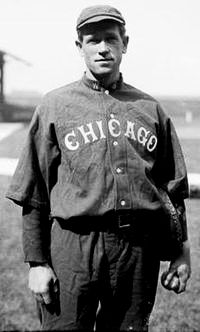
Jimmy Archer

Jimmy Archer

Murphy was in the minority questioning the baseball intelligence of Meyers, who was widely considered one of the most intelligent and articulate players of his era.  He also rated Ray Schalk and Wally Schang as superior, saying:

“In the writer’s humble opinion they are much more valuable men to their team than Meyers.”

Walter Johnson, pitcher

“There will hardly be a dissenting vote cast against Walter Johnson.  Unquestionably he is the greatest of all the pitchers.

(Charles Chief) Bender and (Christy) Mathewson are also great—great when they should show class—in championship games.  Every nerve, every fiber of their brains, every muscle necessary to their craft, is at its best when big games are being fought.

“Wonderful as they are, we must pick Johnson, who also has class and is game to the core.”

Hal Chase, first base

“For first base, there is only Hal Chase.  He is a great hitter, marvelous fielder, can run the sacks, and is a brilliant tactician.

(John) ‘Stuffy’ McInnis, Jake Daubert, Eddie Konetchy, Fred Merkle, and Jack (Dots) Miller are all stars, but they are ‘also rans’ in the class with Prince Hal of the White Sox.”

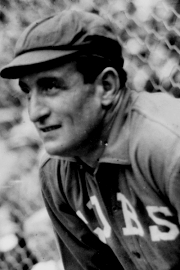
Prince Hal of the White Sox

Prince Hal of the White Sox

Eddie Collins, second base

“At second base, Eddie Collins in the potentate.  Johnny Evers, Larry Doyle, and Larry Lajoie occupy seats in the second sackers’ hall of fame, but Collins rules over the roost.”

Honus Wagner, shortstop

“At short, notwithstanding his age, the palm goes to Hans Wagner.  Taken all in all he is still the greatest man at the position in the game.  He can do everything and does it better than any of his contemporaries.  When will we look upon his like again?”

Frank Baker, third base

“At third base, there is that wonderful silent son of swat, Frank Baker, the conqueror of the wonderful Mathewson and Richard (Rube) Marquard.”

Joe Jackson, right field

“In right field we have Joe Jackson, the young Southerner with the Cleveland club.  He is one of the greatest batsmen in the game today and is a fielder and base runner of unusual ability.”

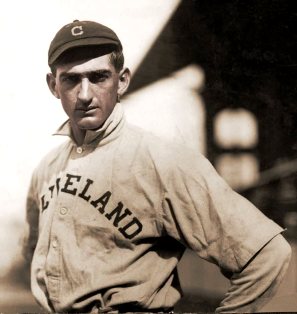
Joe Jackson

Joe Jackson

Ty Cobb, center field

“In center, there is Tyrus Raymond Cobb, the Royston, Georgia marvel, who is the greatest player baseball has ever known.”

Tris Speaker, left field

“And in left field, there is Tris Speaker of the Boston Red Sox—second only to Cobb.”

Grantland Rice’s “All-Time All-Star Round up”

10 Aug

In December of 1917, thirty-eight-year-old sportswriter Grantland Rice of The New York Tribune enlisted in the army–he spent fourteen months in Europe.  Before he left he laid out the case, over two weeks, for an all-time all-star team in the pages of the paper:

“As we expect to be held to a restricted output very shortly, due to the exigencies and demands of the artillery game, this seemed to be a fairly fitting period to unfold the results.”
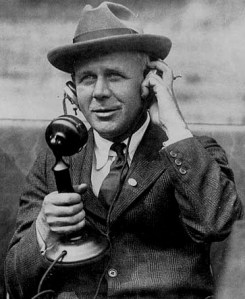
Grantland Rice

Grantland Rice

Rice said the selections were “not solely from our own limited observation, extending over a period of some eighteen or twenty years,” but included input from players, managers and sportswriters, including  “such veterans” as Frank Bancroft and Clark Griffith, and baseball writers Joe Vila of The New York Sun, Bill Hanna of The New York Herald and Sam Crane, the former major league infielder turned sportswriter of The New York Journal.

Rice said only one of the nine selections “(S)eems to rest in doubt.  The others were almost unanimously backed.”

The selections:

Pitcher:  Christy Mathewson

A. G. Spalding, John (Montgomery) Ward, Larry Corcoran, Charley Radbourn, John Clarkson, (Thomas) Toad Ramsey, Tim Keefe, Bill Hoffer, Amos Rusie, (Mordecai) Miner Brown, Addie Joss, Ed Walsh–the array is almost endless.

“In the matter of physical stamina, Cy Young has outclassed the field.  Cy won more games than almost any others ever pitched.

“(But) For all the pitching mixtures and ingredients, stamina, steadiness, brilliancy, brains, control, speed, curves, coolness, courage, is generally agreed that no man has ever yet surpassed Christy Mathewson…there has never been another who had more brains or as fine control.”


[…]

“It might be argued that Radbourn or (Walter) Johnson or (Grover Cleveland) Alexander was a greater pitcher than Mathewson.

But we’ll string with Matty against the field.”

Radbourn was the second choice.  Bancroft said:

“Radbourn was more like Mathewson than any pitcher I ever saw.  I mean by that, that like Matty, he depended largely upon brains and courage and control, like Matty he had fine speed and the rest of it.  Radbourn was a great pitcher, the best of the old school beyond any doubt.”

Catcher:  William “Buck” Ewing

“Here we come to a long array—Frank (Silver) Flint, Charley Bennett, (Charles “Chief”) Zimmer, (James “Deacon”) McGuire, (Wilbert) Robinson, (Marty) Bergen(Johnny) Kling, (Roger) Bresnahan and various others.

“But the bulk of the votes went to Buck Ewing.”
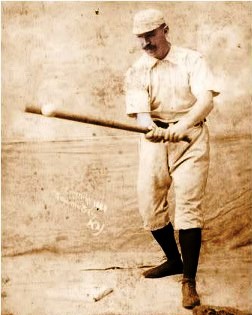
Buck Ewing

Buck Ewing

[…]

“Wherein did Ewing excel?

“He was a great mechanical catcher.  He had a wonderful arm and no man was surer of the bat…he had a keen brain, uncanny judgment, and those who worked with him say that he had no rival at diagnosing the  weakness of opposing batsman, or at handling his pitchers with rare skill.”

Kling was the second choice:

“Kling was fairly close…a fine thrower, hard hitter, and brilliant strategist…But as brilliant as Kling was over a span of years, we found no one who placed him over the immortal Buck.”

1B Fred Tenney

First Base was the one position with “the greatest difference of opinion,” among Rice and the others:

“From Charlie Comiskey to George Sisler is a long gap—and in that gap it seems that no one man has ever risen to undisputed heights… There are logical arguments to be offered that Hal Chase or Frank Chance should displace Fred Tenney at first.

But in the way of batting and fielding records Tenney wins….Of the present array, George Sisler is the one who has the best chance of replacing Tenney.”

2B Eddie Collins

 “There was no great argument about second base.

“The vote was almost unanimous.

“From the days of Ross Barnes, a great hitter and a good second baseman on through 1917, the game has known many stars.  But for all-around ability the game has known but one Eddie Collins.”

Rice said the competition was between Collins, Napoleon Lajoie and Johnny Evers:

“Of these Lajoie was the greatest hitter and most graceful workman.

“Of these Evers was the greatest fighter and the more eternally mentally alert.

“But for batting and base running, fielding skill, speed and the entire combination, Collins was voted on top.”

 SS Honus Wagner

“Here, with possibly one exception, is the easiest pick of the lot.  The game has been replete with star shortstops with George Wright in 1875 to (Walter “Rabbit”) Maranville, (George “Buck”) Weaver…There were (Jack) Glasscock and (John Montgomery) Ward, (Hardy) Richards0n, (Hugh) Jennings, (Herman)Long, (Joe) Tinker and (Jack) Barry.

“But there has been only one Hans Wagner.”
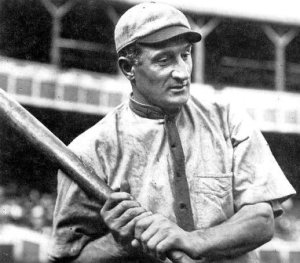
Honus Wagner

Honus Wagner

Jennings and Long were rated second and third,  “But, with the entire list  considered there is no question but that Wagner stands at the top.”

3B Jimmy Collins

Rice said:

“From the days of (Ned) Williamson(Jerry) Denny, and (Ezra) Sutton, over thirty years ago, great third basemen have only appeared at widely separated intervals.

“There have been fewer great third basemen in baseball than at any other position, for there have been periods when five or six years would pass without an undoubted star.”

The final decision came down to “John McGraw vs. Jimmy Collins.”  McGraw was “a great hitter, a fine bunter and a star base runner,” while “Collins was a marvel and a marvel over a long stretch…he was good enough to carve out a .330 or a .340 clip (and) when it came to infield play at third he certainly had no superior…So taking his combined fielding and batting ability against that of McGraw and Collins wins the place.  McGraw was a trifle his superior on the attack. But as a fielder there was no great comparison, Collins leading by a number of strides.”


OF Ty Cobb

“The supply here is overwhelming…Yet the remarkable part is that when we offered our selection to a jury of old players, managers and veteran scribes there was hardly a dissenting vote.”

[…]

“Number one answers itself.  A man who can lead the league nine years in succession at bat.

“A man who can lead his league at bat in ten out of eleven seasons.

“A man who can run up the record for base hits and runs scored in a year—also runs driven in.

“Well, the name Ty Cobb answers the rest of it.”

OF Tris Speaker

 “The man who gives Cobb the hardest battle is Tris Speaker.  Veteran observers like Clark Griffith all say that Speaker is the greatest defensive outfielder baseball has ever exploited…Speaker can cover more ground before a ball is pitched than any man.  And if he guesses incorrectly, which he seldom does, he can go a mile to retrieve his error in judgment…And to this impressive defensive strength must be added the fact he is a powerful hitter, not only a normal .350 man, but one who can tear the hide off the ball for extra bases.”
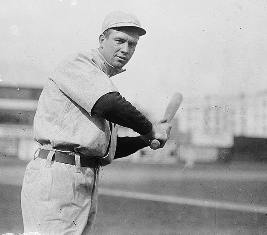
Tris Speaker "hardest hit"

Tris Speaker 

OF “Wee Willie” Keeler

Mike Kelly and Joe KelleyJimmy Sheckard and Fred Clarke—the slugging (Ed) Delehanty—the rare Bill LangeBilly Hamilton.

“The remaining list is a great one, but how can Wee Willie Keeler be put aside?

“Ask Joe Kelley, or John McGraw, or others who played with Keeler and who remember his work.

“Keeler was one of the most scientific batsmen that ever chopped a timely single over third or first…And Keeler was also a great defensive outfielder, a fine ground coverer—a great thrower—a star in every department of play.

“Mike Kelly was a marvel, more of an all-around sensation, but those who watched the work of both figure Keeler on top.”

Rice said of the nine selections:

“The above is the verdict arrived at after discussions with managers, players and writers who have seen a big section of the long parade, and who are therefore able to compare the stars of today with the best men of forgotten years.

“Out of the thousands of fine players who have made up the roll call of the game since 1870 it would seem impossible to pick nine men and award them the olive wreath.  In several instances the margin among three or four is slight.

“But as far a s deductions, observations, records and opinions go, the cast named isn’t very far away from an all-time all-star round up, picked for ability, stamina, brains, aggressiveness and team value.

“If it doesn’t stick, just what name from above could you drop?”

Lost Advertisements–Pat Moran for Sloan’s Liniment

22 May

patmoran

An advertisement that appeared late in the 1919 season featuring Cincinnati Reds Manager Pat Moran:

“‘When my players get sore, I don’t rub them the wrong way;  I use Sloan’s Liniment–it penetrates.’

“Moran knows how to keep his men fit for the pennant scramble–keeps Sloan’s handy for emergency.  ‘Glass arm,’ ‘Charley horse,’ stiffness, soreness, bruises, rheumatic aches, are quickly and comfortably relieved.  Penetrates without rubbing, keeping the boys ready for the winning game.”

The 1919 World Series was the fourth for Moran.  He played in two with the Chicago Cubs (1906 and ’07) and managed two, (the other was with the Philadelphia Phillies in 1915).

Moran replaced Charles “Red” Dooin as Phillies manager after the team finished in sixth place in 1914.  Under Moran, the team won 10 of their first 11 games and won the National League with a 90-62 record.

In September, Frank Menke of The International New Service said:

“Moran deserves ranking among the greatest managers the game has ever known.  It is the wonderful leadership of the red-faced, gray-haired Irishman that has put the misfit Phillies where they are today.”

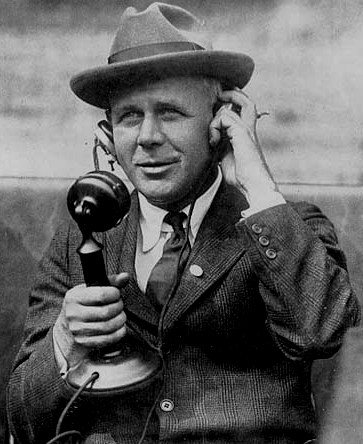
Moran

Moran

Menke said Moran was saddled with a team consisting primarily of “castoffs,’ and “one wonderful pitcher (Grover Cleveland Alexander).”

Moran followed up the 1915 pennant with two second-place finishes, with teams Grantland Rice of The New York Tribune said the manager had little to work with beyond pitcher Alexander:

“(T)hose astounding Phillies, piloted by a leader who has never received anywhere near his due recognition for extraordinary ability to lead a ball club.  need it be said that we refer to Pat Moran?  It needn’t.”

As was his habit, Rice memorialized Moran’s abilities with a poem:

Pat Moran’s no Miracle Man

Nor anything like that;

Nobody ever stands and cheers

The while he tips his hat.


Pat doesn’t draw the headline space

Nor yet the picture frames;

Pat Moran’s no Miracle Man–

Buthe’shellatwinninggames”

During his nine-year managerial career in Philadelphia and Cincinnati, Moran compiled a 748-586 record, which included a total of four second-place finishes to go with his two pennants.

During spring training of what would have been his sixth season with the Reds, Moran, who had a history of excessive drinking, became ill in Orlando, Florida.

His former Cubs teammate Johnny Evers came to his bedside.  According to The Associated Press, he said:

“‘Hello John, take me out of here.’ He then lost consciousness.”

He died later that day.  The official cause was Bright’s Disease.

“I am, I Believe, more Inclined to fear the Jinx”

12 Apr

In 1910, Johnny Evers “wrote” an article in “Baseball Magazine” about superstitions:

“’On the Cubs’ team, for instance, I am, I believe, more inclined to fear the jinx than any other member of the club.  In batting practice before the game the general belief is that if you are not hitting the ball hard or up in the air you will bat well in the game ofttimes as a result. In many cases I have seen a player hit two or three balls hard and on the line and then go to the bench and refuse to bat anymore, saying, ‘I’m saving mine for the game.’”

Johnny Evers

Johnny Evers

Some of Evers’ other superstitions:

“Going to the different parks in the cars the sight of a funeral along the road is regarded as an ill omen.  The same applies to a (handicapped person) unless you toss him a coin.  A wagon load of barrels is a good sing.  Frequently a man, having gone a mile out of the way to purchase something on a day when his club happened to win, will continue to travel the roundabout pathway so long as the club is in that particular city or until his teammates lose.”

As for superstitions during a game:

“Watch a man when the inning is over.  If the inning previous was favorable to a player, observe him go over and be particular to locate the same spot to lay down his glove.  You doubtless have often seen a player attired in a soiled and far from presentable uniform.  Beneath all that lurks our old friend the jinx.  The player will stick to the dirty garments so long as his team is winning.  When the streak is broken the laundryman gets a chance at his clothing, but not before.”

[…]

“Not for the world could you induce the average major league pitcher to resume work with a new shoe lace.  He will tie up the remnants and go ahead, hoping to make the laces last throughout the session.  The players don’t want the bat boys to hand them their clubs either.  On our home grounds of course, Red Gallagher, the bat boy, has a sort of standing job swinging the sticks, but he always tries hard to drive away the hoodoo.  Watch him salivate the handle of every bat before it goes in the hands of its owner.”

In addition to bat boy spit, Evers said there were other superstitions among the Cubs:

“Keep your eyes glued on Tinker when he goes to bat.  Joe has a habit of walking straight from the bench to the plate to the plate for the first time up.  If he gets a clean hit that time he’ll repeat in the second trip, but if he fans or fouls out or is tossed o death on an infield drive Tinker certainly will waltz out in a circle, going back to the plate.  This is the way he hopes to break the hoodoo.”

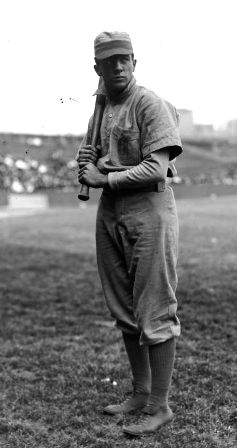
Joe Tinker

Joe Tinker

[…]

“Recall how Manager (Frank) Chance refused to have the Cubs pose for a team picture during the closing days of the League race in 1908.  He was especially fearful that the photographer might work a jinx on the players and jeopardize our chances of beating Detroit.    (Ed) Reulbach is a mighty superstitious chap.  I remember how one of Ed’s friends approached him when the big pitcher was mowing them down for his record of fourteen straight victories (In 1909 Reulbach tied the record set in 1904 by Joe McGinnity and Jack Chesbro). He wanted Reulbach’s cap, the one he had worn during all those games, but Ed refused to part with the headgear.

Yes, the ballplayer is to be listed only with the actor or the sailor when it comes to the superstitious phase of life.”

“Father isn’t Disappointed because I took up Dancing”

4 Apr

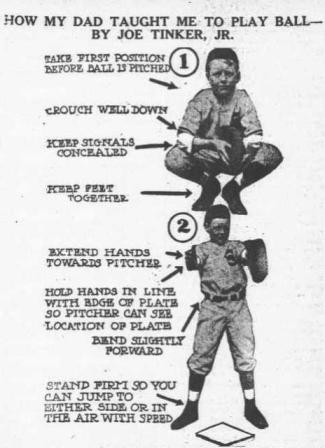
In the spring of 1916 Joe Tinker Jr., ten-year-old son of Chicago Cubs Manager Joe Tinker “wrote” a series of articles that appeared in newspapers across the country.  Tinker’s articles provided tips for playing each position:

“To be a winning pitcher you must have control…The best way to gain control is to get another boy to get in position as a batter then pitch to him.  Don’t throw at a stationary target.”

“(Catchers) Stand up close to the batter and don’t lose your head if the pitcher becomes wild.  Try to steady him with a cheerful line of talk.  Practice every spare moment.”

“Stand close to the plate when batting.  Don’t lose your nerve if the pitcher tries to bean you. Some fellows like to choke their bats or grip the handles about four inches from the end.  My father don’t approve of the style…Don’t argue with the umpire.  If you are hot-headed you hurt your chances to connect with cool-headed pitching.”

“Learn to start in a jiffy.  That is the first point emphasized by my dad in teaching me to run bases.”

“Playing short offers many chances for individual star plays and the work of a good man will have a great effect on the score card.”

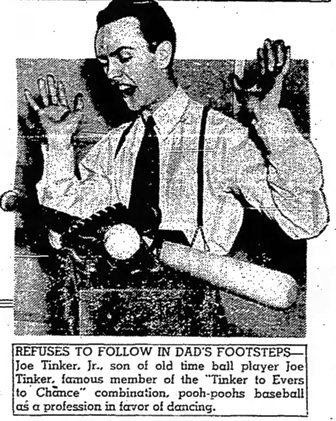
Photos of Joe Tinker Jr. demonstrating what his dad taught him

Photos of Joe Tinker Jr. demonstrating what his dad taught him

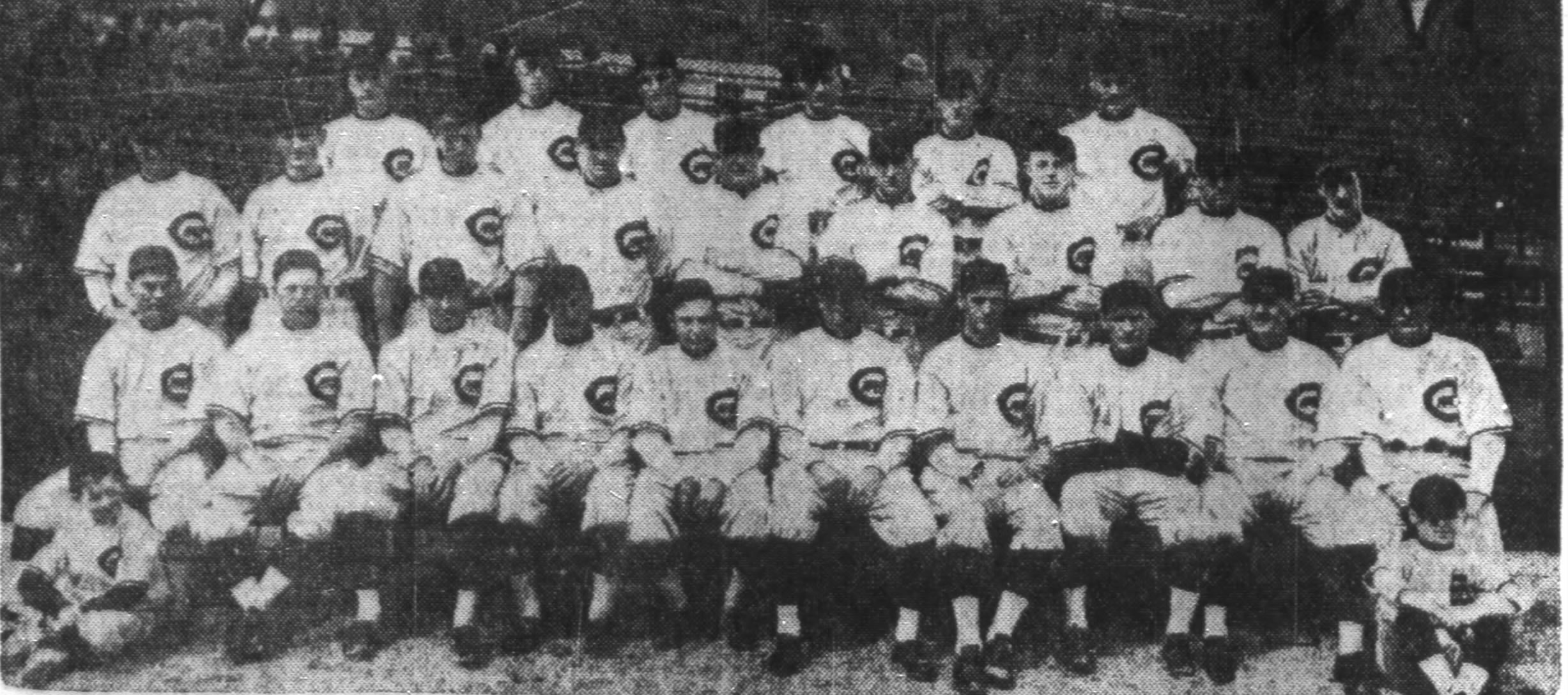
Joe Tinker Jr. and his younger brother Roland were the Cubs mascots during their father’s season as manager in 1916.  In 1924 Chicago newspapers reported that Tinker Jr. was headed to the University of Illinois to play baseball for Coach Carl Lundgren, the former Cub pitcher.  There is no record of Tinker ever playing at the school.

1916 Chicago Cubs.  Joe Tinker Jr. seated right, Roland Tinker seated left.

1916 Chicago Cubs. Joe Tinker Jr. seated right, Roland Tinker seated left.

Younger brother Roland played for two seasons in the Florida State League.

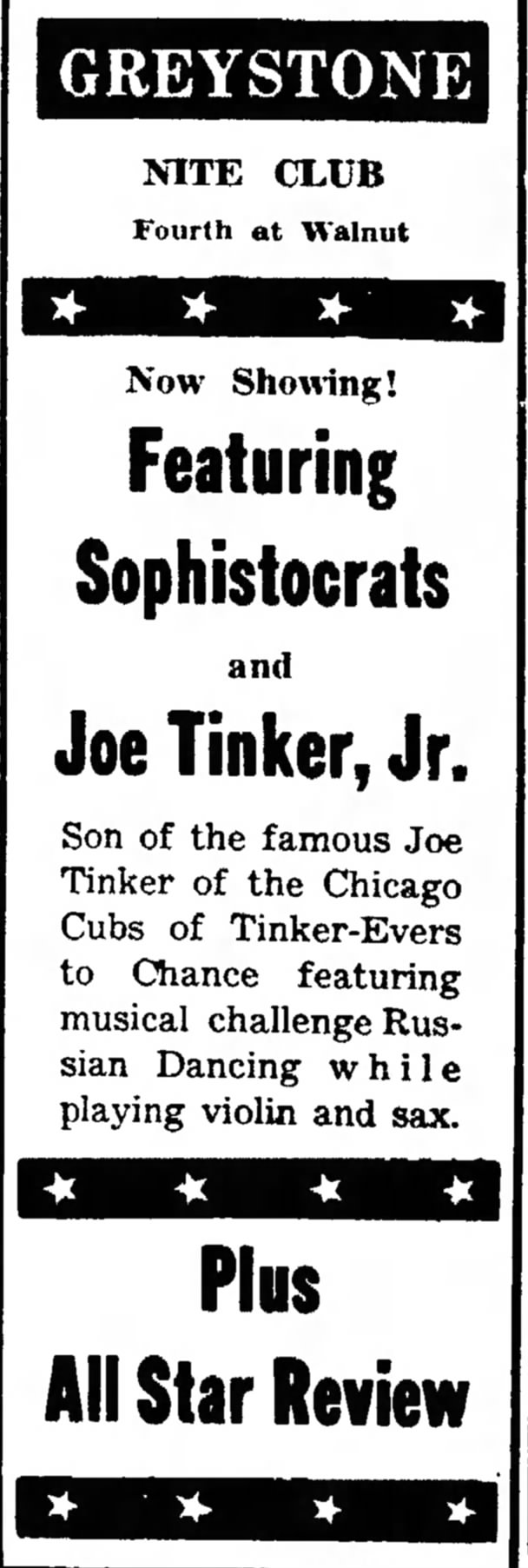
In 1938 newspapers reported that Joe Tinker Jr. had become a dancer with a vaudeville group called the Sophistocrats.  Tinker Jr. told reporters:

“Father isn’t disappointed because I took up dancing.  In fact he approves.”

It’s unclear whether “Joe Tinker Jr.” was actually Joe Tinker Jr.  The newspaper articles all said he was 22-years-old.  Joe Tinker Jr. would have been in his thirties; however his brother William Jay Tinker would have been 22 in 1938.


joetinkerjrdance


joetinkerjr1938

When Joe Tinker was elected to the Hall of Fame he compiled his all-time team for Ernest Lanigan, then curator of the Hall:

Pitchers: Mordecai Brown, Grover Cleveland Alexander, Christy Mathewson and Ed Walsh

Catchers: Johnny Kling and Roger Bresnahan

First Base: Frank Chance

Second Base: Eddie Collins

Third Base: Harry Steinfeldt

Shortstop: Honus Wagner

Outfield: Artie “Solly’ Hofman, Ty Cobb, Fred Clarke, and Sam Crawford.

Though he named several Cubs, Tinker did not include his former teammate Johnny Evers.  In 1914 Evers had famously slighted Tinker, with whom he was engaged with in a long-term feud, after Evers and his Boston Braves teammates won the World Series. William Peet wrote in The Boston Post :

“(Walter “Rabbit” Maranville’s) the best shortstop the game has ever known.

“Better than Joe Tinker; your old side partner?

“Yes, he’s better than Tinker.”

While the two finally broke their silence at Frank Chance’s deathbed in 1924, they never reconciled.

Evers died in 1947, Tinker in 1948.

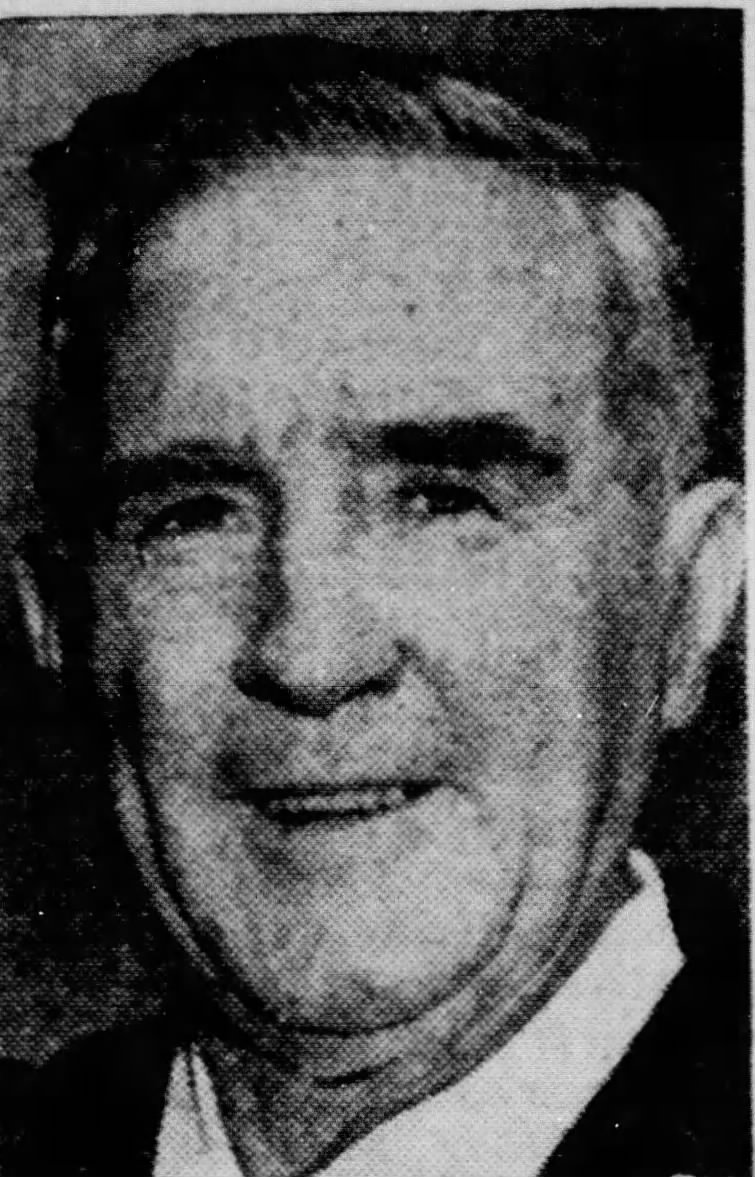
Joe Tinker circa 1946

Joe Tinker circa 1946

Joe Tinker Jr. died in 1981, Roland “Rollie” Tinker died in 1980, and William Tinker died in 1996.


Lost Advertisements–Opening Day, 1911

28 Mar

1911openingday

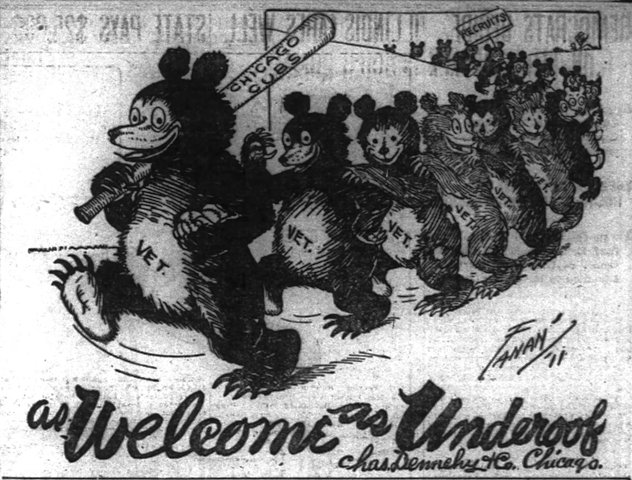
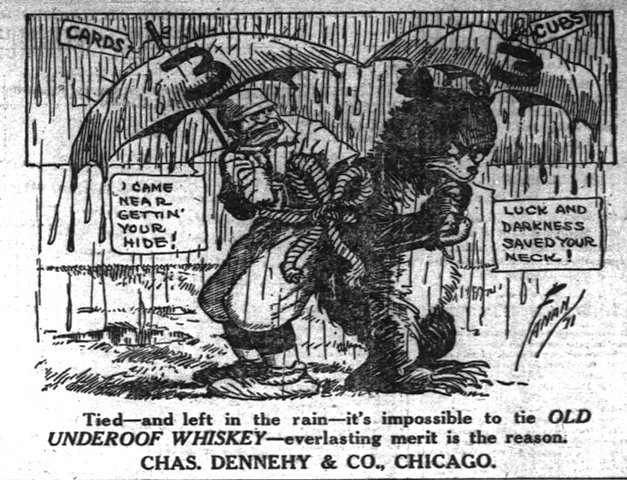
The above advertisement for Charles Dennehy Company, distributor of Old Underoof Whiskey,  appeared in The Chicago Inter Ocean on Opening Day, April 12, 1911.  The defending National League Champion Cubs met the St. Louis Cardinals at Chicago’s West Side Grounds.

The Chicago Tribune said:

“Threatening clouds and misty atmosphere did not prevent the baseball public from of Chicago turning out for the opening.  There was almost a parkful [sic] of people there before the teams had begun their preliminary practice.  A brass band livened things up before the game started, and between innings a novelty in opening features was the presence of a woman who stood on the roof of the players’ bench and sang popular songs.  Mayor Elect Carter H. Harrison Jr.  from an upper box tossed out the ball that started the contest.  The entire park was draped with American flags.”

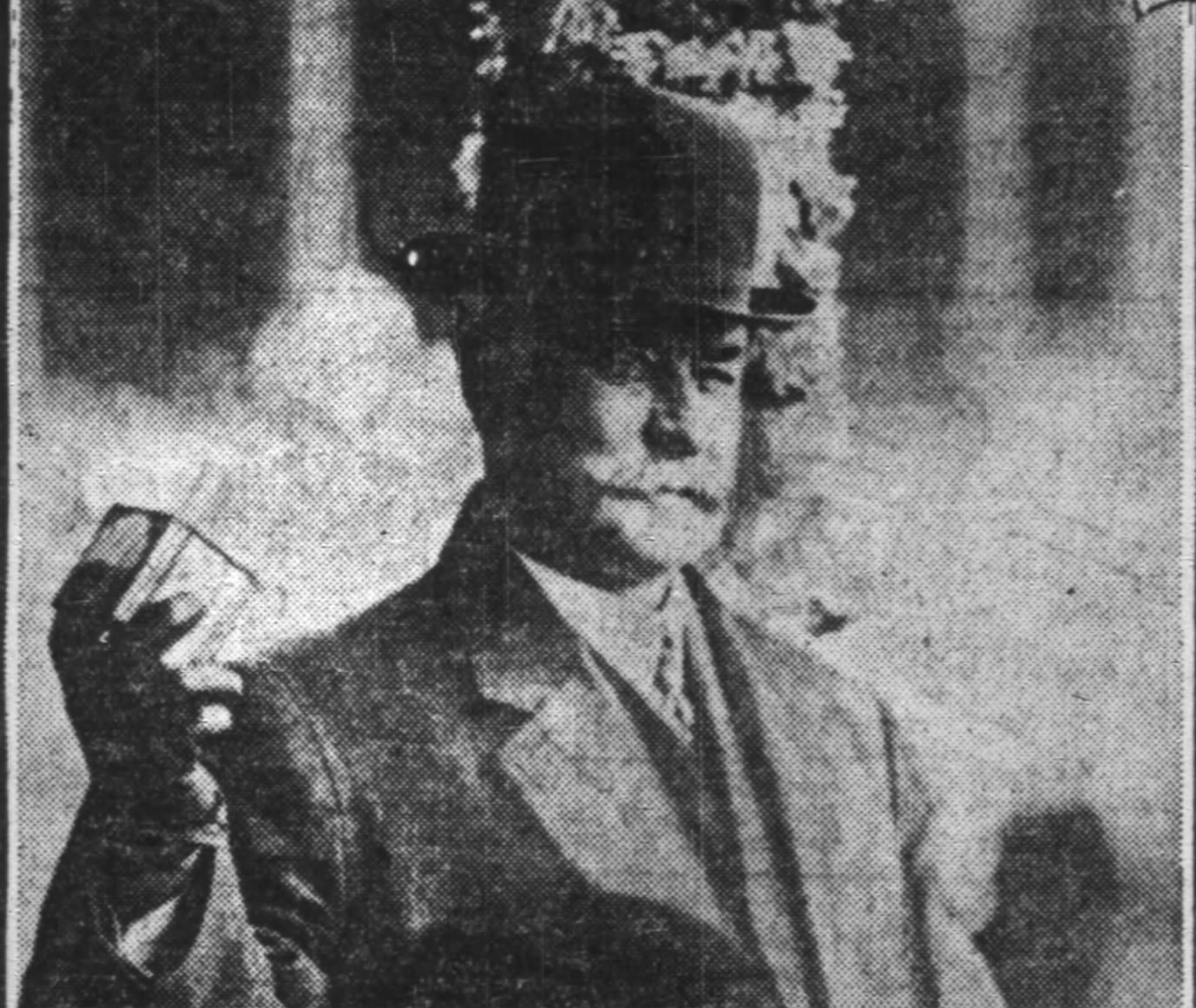
Carter Harrison at 1911 Cubs opener

Carter Harrison at 1911 Cubs opener

The game was called after 11 innings.  The Inter Ocean said:

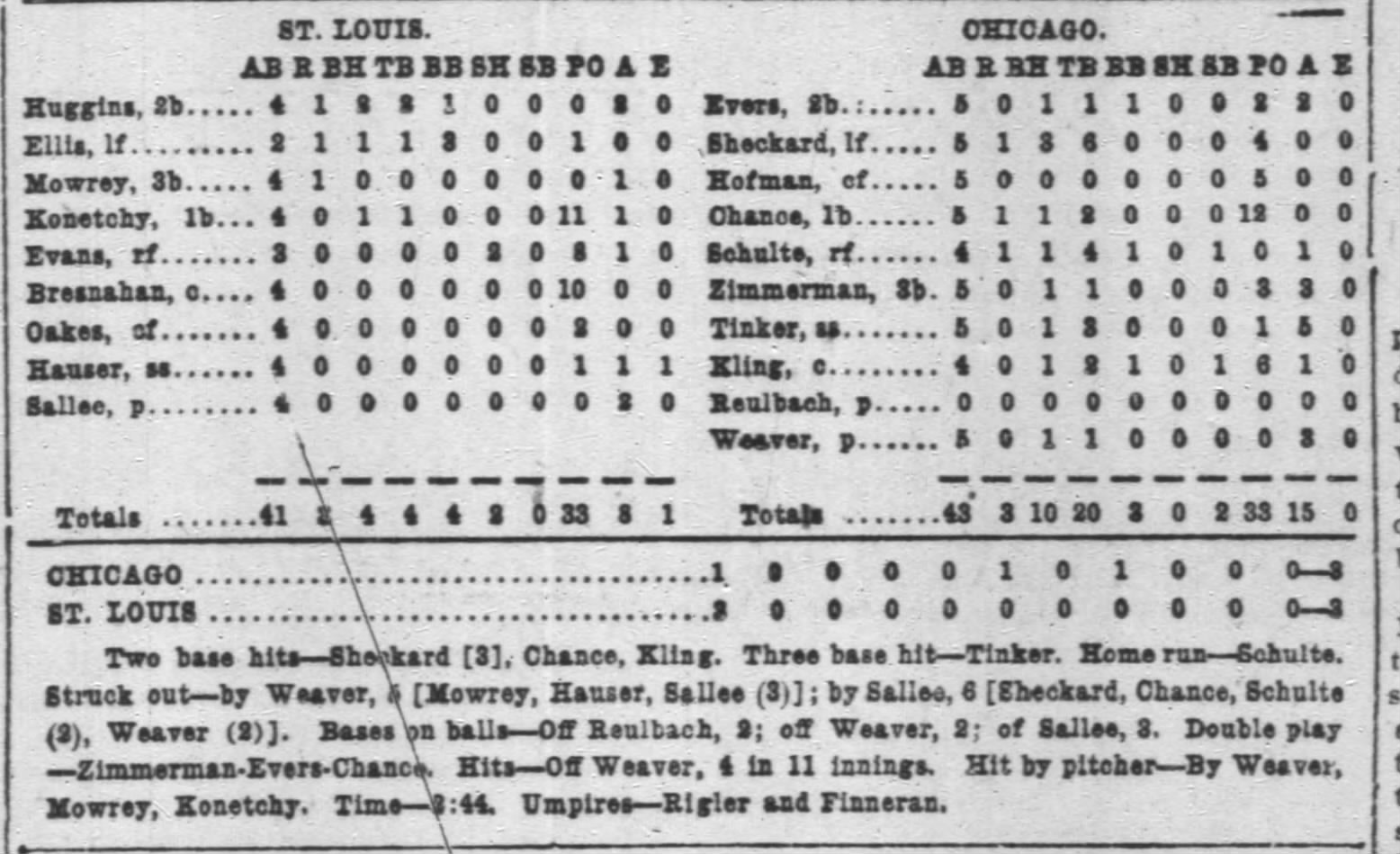
“Sometime, somewhere there may be such an opening game as was played at the West Side grounds yesterday when the thirty-sixth season of the National League was introduced with a 3 to 3 tie by the Chicago Cubs and the St. Louis Cardinals, but never again will a seventh position club of the season before hang the hoodoo on the league champions as Roger Bresnahan‘s crew did the trick on the Peerless Leader’s squad…It was a sin and a shame.”

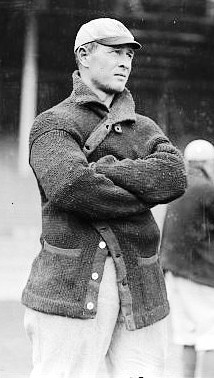
Frank Chance, "The Peerless Leader"

Frank Chance, “The Peerless Leader”

The Cardinals scored three runs in the first; starter Ed Reulbach–The Inter Ocean said he “was one wild critter–was pulled by Manager Frank Chance after throwing 10 straight balls to open the game, and was replaced by Orlie Weaver who finished the game.

The Tribune said the tie was the result of two “grievous errors of the mind.”

The first happened when Cubs third baseman Heinie Zimmerman fielded Bresnahan’s first-inning ground ball with runners on second and third:  “All Heine needed to do was toss the ball to the plate and one runner would have been caught, but he heaved to first base instead and the man coming from third (Mike Mowrey) scored, after he had actually stopped running.”

The other “grievous error” was made by second baseman Johnny Evers “incredible as it may seem, for Johnny is often talked of as the brainiest man on the team.”  Evers tried to score from first on Jimmy Sheckard‘s double in the first inning.  Cardinals first baseman Ed Konetchy took the relay throw and “there are none in the National League who can throw harder and  with greater accuracy”  Evers was thrown out by “ten feet” at the plate.

The Tribune said Chance “knows now that he acted against his better judgment in putting Ed Reulbach in to pitch the first game of the season.”  Reulbach had only appeared in 24 games in 1910 and was recovering from diphtheria (some recent references say Reulbach missed part of 1910 because his son had diphtheria–but several contemporaneous accounts say he suffered from the bacterial infection as well).

The box score

The box score


The Cubs went on to win 92 games in 1911, but finished in second place, seven and a half games behind the New York Giants.  The Cardinals finished fifth at 75-74.

Reulbach was 16-9 with a 2.96 ERA, but continued to struggle with control all season, walking 103 batters in 221 and 2/3 innings.

Below is another Old Underoof advertisement that appeared in The Chicago Examiner:

1911openingday2

“He Used to Knock Down Infielders”

4 Nov

William Alexander “Bill” Lange is best known for a play that likely never happened.  The legend was that he had made a spectacular catch that culminated with the Chicago Colts’ outfielder crashing through the left-field fence in Washington in an 1897 game with the Senators.  It is most likely another in a long line of exaggerations and apocryphal stories from Lange’s friend, Chicago sportswriter Hugh Fullerton—a story that first appeared in that paper with no byline in 1903, but was repeated by Fullerton many times in later years.   A nice analysis of that story appears here.

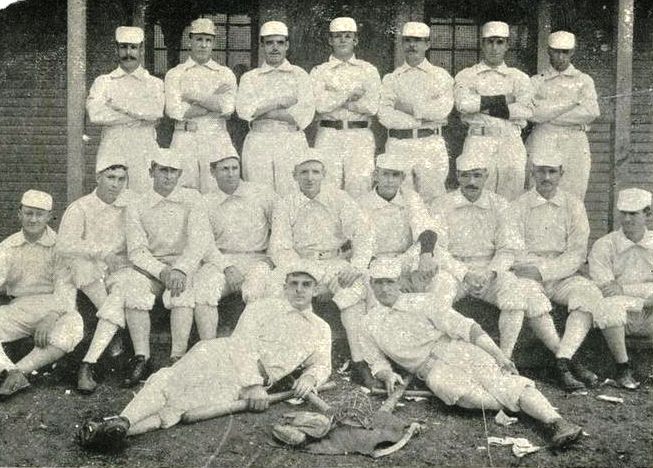
Bill Lang, seated fourth from left, with 1896 Chicago Colts

Bill Lang, seated fourth from left, with 1896 Chicago Colts

Lange played just seven seasons, retiring after the 1899 season at age 28 to join his father-in-law in the insurance and real estate business in San Francisco.

During the spring of 1900, The Chicago Daily News said “The wise ones in the baseball business” were certain he’d be back, including Chicago’s manager Tom Loftus and President James Hart, and Charlie Comiskey, “’When the season opens and the sun warms up he can’t stay away,’ remarks Comiskey, with a knowing wink.”

Despite the certainty that he would, Lange never returned.

Lange, who stole 400 career bases, was called “Little Eva” because of his gracefulness.  In 1909 Billy Sunday called him “the greatest outfielder in baseball history.”  Connie Mack called him the best base-runner he ever saw.  In fact,  Mack and Clark Griffith considered Lange so good that they petitioned the Hall of Fame in 1940 to change the “rules (which) restrict membership to players of the twentieth century” in order to allow for Lange’s induction.

Griffith said Lange was “the best outfielder that ever played behind me:”

“Lange here was rougher base-stealer than (Billy) Hamilton.  He used to knock down infielders.  Once I saw him hit a grounder to third base.  He should have been out, but he knocked down the first baseman.

“Then he knocked down the second and third baseman and scored.  Connie Mack was the catcher.  No he didn’t knock Connie down because he didn’t have to.”

Mack told the same story over the years.

Lange never made the Hall of Fame.  He died in 1950.

Bill Lange 1931

Bill Lange 1931

In his final years the story about the “catch” had become so ingrained in the legend of Bill Lange that other players told essentially the same story Fullerton did (the most widely disseminated versions appeared in “The American Magazine” in 1909 and in Johnny Evers‘ book “Touching Second,” coauthored by Fullerton), but inserted themselves into the story.  In 1946 Griffith told reporters:

“It happened right here in Washington, I was pitching for Chicago.  Bill missed the train from New York, and arrived in the fourth inning.  We were then with the Chicago Colts and Cap Anson fined Lange $100 before he put him in the game.

“I had a one-run lead when Al (“Kip”) Selbach of Washington hit a terrific drive.  Lange ran back hard, and when he crashed into the wooden fence his 210 pounds took him right through the planks.

“He caught the ball at the same time and held it.  All we could see were his feet sticking through the fence and Bill’s arm holding the ball.  When he came back to the bench, he handed the ball to Anson and said:

‘This ought to cancel that $100 fine.’ It did too.”

When Lange died Griffith said:

“I have seen all the other great outfielders—Speaker, Cobb, DiMaggio –in action and I consider Bill Lange the equal of, if not better than, all outfielders of all time.  There wasn’t anything he couldn’t do.”

“He Would let a Fast one hit him Square in the Chest”

11 Sep

Charlie Bennett was one of the best catchers of the 1880s, and is credited with inventing the chest protector.  Bennett always gave the credit for the invention to his wife. The Detroit Free Press told the story in the 1914:

“It was a constant source of worry to Mrs. Bennett to watch her husband being made a target for the speed merchants of thirty years ago.  And she fully realized the pressing necessity of some kind of armor to prevent the hot shot sent through by these speedy slabmen from caving in a rib or two which belonged to her better half.

“So she and her hubby proceeded to contrive some means of saving the aforementioned ribs.  After much deep thinking and considerable labor they gradually shaped out something that had a faint resemblance to the protector worn today.  A crude but very substantial shield was made by sewing strips of cork of a good thickness in between heavy bed ticking material.   After much hard work and many dove like spats they had it ready for trial.  Charlie didn’t have the nerve to wear it outside his shirt for fear of the fans roasting him about being chicken-hearted, so he wore it under his baseball shirt.”

Charlie Bennett

Charlie Bennett

The article said after Bennett began wearing the protector in games sometimes “he would let a fast one hit him square in the chest.  The ball would rebound back almost to the pitcher, much to the amazement of the fans and players, who weren’t on to the hidden cause.”

Bennett’s career came to an end after the 1893 season.  While taking a train with former Boston Beaneaters teammate John Clarkson for a hunting trip, Bennett slipped while getting off a moving train to speak to a friend, when the train began moving he tried to climb back aboard, slipped and fell under the wheels.  Bennett lost his left leg at the ankle and his right at the knee.

Johnny Evers, in his book “Touching Second: Science of Baseball” written in 1910 with Hugh Fullerton, told a story about Bennett watching a game years after his accident:

 “He was watching a game at Detroit when a young base runner, trying to steal second, slid straight at the baseman, who was reaching to take a high throw.  The baseman blocked him with one leg, caught the ball and touched the runner out. “’I could have beaten that myself,’ muttered Bennett in disgust. “’Without legs, Charlie?’ inquired a friend. “Yes—without legs,’  Snorted Bennett angrily, ‘for I would have had brains enough not to slide where he could block my feet.’”

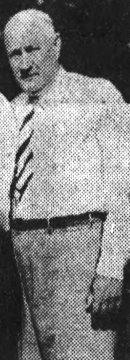
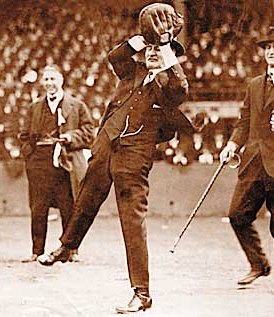
Charlie Bennett threw out the first pitch at every Detroit Opening Day from 1896-1926...he died in February of 1927.

Charlie Bennett threw out the first pitch at every Detroit Opening Day from 1896-1926…he died in February of 1927.

Things I Learned on the Way to Looking up Other Things #5

8 Aug

Johnny Evers “Ardent Worshipper of Hoodoo Lore”

Edward Lyell Fox was a war correspondent in World War I; after the war he was accused of taking money to write stories favorable to the German government.  Before that he wrote extensively about baseball for several American magazines.

In 1910, writing for “The Columbian Magazine”, Fox interviewed Johnny Evers of the Chicago Cubs about the “almost unbelievable efforts made by ballplayers to offset what they firmly believe to be ‘hoodoos.’”

Evers was one of the most superstitious players in the game, “an ardent worshipper of voodoo lore,” according to Fox, and Evers said the Cubs “are more superstitious than any team in the big leagues,” and that manager Frank Chance “is one of the most ardent respecters of diamond ‘hoodoos.’”

It’s not certain that Evers’ claim that “most players firmly believe in,” the superstitious he listed for Fox, but it’s clear he believed them:

 “If any inning is favorable to a player, he will try to lay his glove down on the same spot where he had placed it the inning before.

“While going to different parks in cars, the sight of a funeral cortege is always regarded as an ill omen.”

Evers also said the sight of a handicapped person was also an “ill omen…unless you toss him a coin.”

On the other hand Evers said a wagon load of empty barrels was a sign of good luck.

Johnny Evers,

Johnny Evers,


“Too much of a Good Thing”

Even in baseball’s infancy that were critics that said the popularity of the game was “too much of a good thing.”

In September of 1865 The Philadelphia Inquirer editorialized:

 “Let us take, for instance, the base ball (sic) pastime, which is now assuming the proportions of a violent and widespread mania.”

The culprit, according to the editorial, was the athletic club teams that were growing in popularity and  no longer “satisfied with a game or two a week.”

 “(S)ome of these associations devote, three, four or five days at a time to their games; that they are not satisfied with playing on their own grounds for their own benefit and amusement, but that they thirst for popular applause, and are rapidly transforming their members into professional athletes…They issue their challenges, and hotly contend for mastery with clubs belonging to other cities.”

 The Inquirer did predict one aspect of baseball’s new popularity:

 “It can be easily seen that this spirit must soon lead on to gambling. So far the only prize of the base ball and cricket matches has been a ball or some implement of the game, but private wagers have undoubtedly been laid upon the playing of certain clubs, and money has changed hands upon results.”

The Enquirer was also concerned that the game defied “common sense” because “during the heats of summer violent bodily exercise should be avoided; but upon this subject common sense and the base ball mania seem to be sadly at variance.”

The editorial concluded that “the young men,” make sure “they do not depreciate themselves to the level of prize fighters or jockeys, who expend their vim on horse races and matches made for money.”

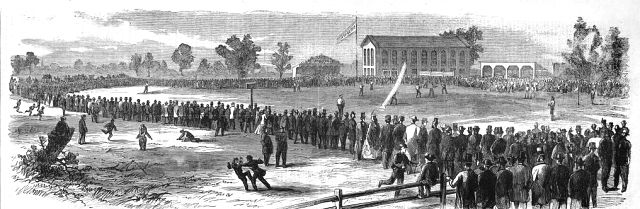
Athletic of Philadelphia versus Atlantic of Brooklyn, in Philadelphia October 30, 1865--"a violent and widespread mania."

Athletic of Philadelphia versus Atlantic of Brooklyn, in Philadelphia October 30, 1865–“a violent and widespread mania.”


Odds, 1896

Early in 1896 The New York Sun reported on “an early development of interest.”  A local bookmaker had issued odds on the 1896 National League race:

“He lays odds of 3 to 1 against Baltimore finishing first; 7 to 2 against Cleveland and Boston;  4 to 1 Philadelphia and New York; 7 to 1 Chicago; 8 to 1 Brooklyn and Pittsburgh; 15 to 1 Cincinnati; 40 to 1 Louisville; 100 to 1 Washington, while (Christian Friedrich “Chris”) von der Ahe’s outfit (St. Louis) is the extreme outsider on the list.  Any lover of the German band can wager any amount and “write his own ticket.”

The final standings:

1. Baltimore Orioles

2. Cleveland Spiders

3. Cincinnati Reds

4. Boston Beaneaters

5. Chicago Colts

6. Pittsburgh Pirates

7. New York Giants

8. Philadelphia Phillies

9. Washington Senators

10. Brooklyn Bridegrooms

11. St. Louis Browns

12.  Louisville Colonels

1896 Orioles, 3 to 1 favorites, won the National League Championship.

1896 Orioles, 3 to 1 favorites, won the National League Championship.

Butcher Boy Schmidt

25 Jul

Charles John “Butch” “Butcher Boy” Schmidt was credited by Connie Mack with being the catalyst for the Boston Braves World Series upset of Mack’s Philadelphia Athletics in 1914; one year later Schmidt walked away from baseball in his prime.

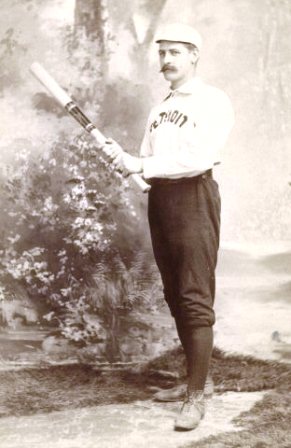
Butch Schmidt

Butch Schmidt

He was born in Baltimore in 1886, and played amateur ball while working in the family meat market, which earned him his nickname.

Schmidt signed as a pitcher with the Baltimore Orioles  in the Eastern League and assigned to the Holyoke Papermakers in the Connecticut State League, where he posted a 10-9 record.  In late August the Orioles recalled him, and he went 5-1 in 11 games with Baltimore.

The New York Highlanders drafted Schmidt and the 22-year-old pitcher started the 1909 season in New York.  He appeared in only one game, on May 11, giving up 10 hits and eight runs, four earned, in five innings.  Early in June he was returned to the Orioles.

After appearing in eight games on the mound with the Orioles, Schmidt was moved to first base.  After hitting .244 for the remainder of ’09, he hit .292, .291, and .274 the next three seasons, and was sold to the Rochester Hustlers in the International League, where he hit .321; he was purchased by the Boston Braves on August 22, and hit .308 in 22 games playing in place of Ralph “Hap” Myers.

At the end of the 1913 season Boston sold Myers’ contract to Rochester; The Boston Post reported that Braves manager George Stallings simply didn’t like Myers.  (Myers had a different theory for his release—that story next week)

Schmidt was installed as the Braves first baseman in 1914, and as Boston made their improbable run to the National league pennant Schmidt   hit .285 with 71 RBI and .990 fielding percentage, and finished 16th in the voting for the Chalmers Award, for the most valuable player in the National League; teammates Johnny Evers and Rabbit Maranville finished first and second in the voting.

Grantland Rice said in The New York Tribune:

“There are few greater first basemen in baseball and none who is steadier or a better fighter.  For Schmidt is also of the aggressive type and a hustler every second.”

The New York Times didn’t think quite as highly of Schmidt and on the eve of the World Series said the “advantage favors the Athletics” at first base:

(John “Stuffy”) McInnis makes exceptionally brilliant plays…has been through Worlds Series fire and proved just as cool as if he were playing an exhibition game in the springtime.  Schmidt has yet to face the strain and tension of the big baseball classic…While Schmidt is not a scientific batsman, he is a free swinger and hits the ball hard, but he doesn’t hit it often.”

The pressure of the series didn’t seem to bother Schmidt, the Braves first baseman hit .294 with five hits, two runs and two RBIs in the four game sweep of the Athletics; McInnis hit just .143.

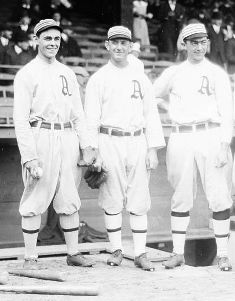
In game one he made a play in the first inning that Connie Mack said set the tone for the series and “sparked the Braves.”  With runners on first and second with one out, Athletics third baseman Frank “Home Run” Baker hit a foul pop-up into short right field.  Athletics outfielder Eddie Murphy tagged up and attempted to go to third; The Associated Press said Schmidt made a “great throw…from a difficult angle,” to third baseman Charlie Deal to retire Murphy.

Stuffy McInnis, Eddie Murphy and "Home Run" Baker,

Stuffy McInnis, Eddie Murphy and “Home Run” Baker,

Early in the 1915 season Braves manager George Stallings called Schmidt “The best first baseman in the game,” but his performance at the plate slipped.  Schmidt hit just .251 with 60 RBIs.  The Braves again found themselves in 8th place in July, and while they made another strong run, finished 2nd, seven games behind the Philadelphia Phillies.

Despite the mediocre season at the plate, it was assumed the 28-year-old Schmidt would remain the Braves first baseman.  Schmidt shocked Stallings, Boston fans, and all of baseball when he announced in January of 1916 that he was retiring from baseball.

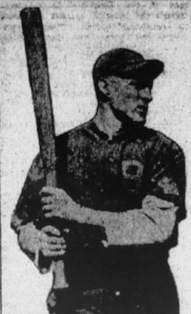
Butch Schmidt at bat

Butch Schmidt at bat

The Associated Press said Schmidt was leaving “to devote his entire time to his private business.”

Grantland Rice said Schmidt’s business included “six meat markets in Baltimore,” and that he earned $8000 a year from his stores.

The Sporting Life said it was just as likely that Schmidt, listed at 200 pounds, retired because:

Hard work in that old rubber shirt to get down to weight, especially when the extra weight comes off slowly, more slowly each succeeding season, is a trial that anyone would like to sidestep if he could. “

Boston manager George Stallings filled the void left by Schmidt by purchasing Ed Konetchy from the Pittsburgh Rebels from the newly defunct Federal League.

The Boston Post said the change at first base would not hurt the Braves:

“Konetchy, a heavier hitter than Schmidt, is just about as capable in other ways.”

Despite the confidence of The Post, Stallings was not convinced and continued to try to induce Schmidt to return; his efforts were unsuccessful.

After Konetchy hit .260 for the third place Braves in 1916 it was reported that Schmidt would return to the team.  After several weeks of speculation, Schmidt told The Boston Globe “no offer” could induce him to return to Boston.

Konetchy hit .272 and .236 the next two seasons, and each off season it was rumored Schmidt would return, and every year he stayed home where he continued to run his business and play semi-pro ball in Baltimore’s Inter-City League.

Before the 1919 season Konetchy was traded to the Brooklyn Robins and the Braves acquired Walter Holke from the Cincinnati Reds.  Holke hit .292 for the Braves in 1919, but rumors continued that Schmidt, out of organized baseball for four years, would be returning to Boston.  The Associated Press said:

“George Stallings of the Boston Braves is trying to get Charlie “Butch” Schmidt, the Baltimore butcher boy who played first base for the world’s champions of 1914, to return to the Boston Braves.  Schmidt is reported to be in wonderful condition as he has kept in practice since his retirement.”

Schmidt never returned to professional ball, and was finally removed from Boston’s reserve list in 1922.

Butch Schmidt walked away from professional baseball and never looked back; he died in 1952 of a heart attack while inspecting cattle at the Baltimore Union Stock Yards.